
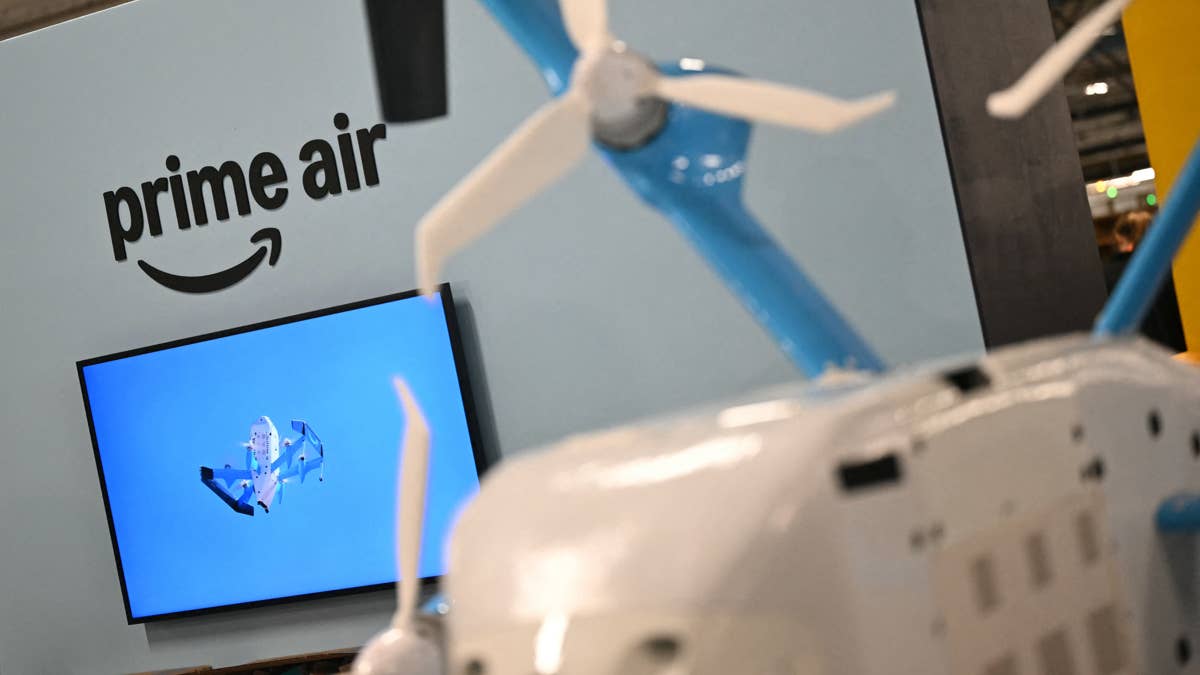
Amazon is about to revolutionize the package delivery industry once again with its drone technology, just as it did nearly two decades ago with its same-day delivery service.
Amazon introduced its “local express delivery option” across seven cities in October 2009. Today, Prime customers can have thousands of items delivered just hours after they’re ordered.
Now, Amazon is testing out its drone delivery system in the Dallas-Fort Worth area, but unlike during its previous delivery experiment, the drones are affecting residents (un)lucky enough to be the test subjects for its latest innovation.
Amazon experiments with drone deliveries
Amazon has been offering limited drone delivery options in Richardson, Texas, since 2025, but it has been expanding the service in anticipation of broadening its scope to other cities in 2026.
“We are always exploring new ways to get customers a wider selection at faster speeds,” Cait Freda, an Amazon spokesperson, told the Dallas Morning News earlier this year.
Prime Air currently offers drone delivery of more than 60,000 items from its Richardson facility in 60 minutes or less. Amazon customers in Phoenix; Pontiac, Mich.; and two other cities in Texas all have drone delivery options.
Community response is mixed, depending on who you ask
According to Amazon, the community response to the drones has been great.
“The response from customers using Prime Air has been overwhelmingly positive,” Freda said in April. But the Dallas Morning News contradicted that description, reporting that some citizens had made complaints about noise from the drones during a City Council meeting in March.
Sam Bailey, a senior manager at Amazon, told the crowd at the time that the company has been making adjustments to address the community’s concerns. But a report from The New York Times this week seems to indicate that the trillion-dollar company still has a long way to go to win community support.
Texas residents complain about noise from Amazon drones
Prime Air relies on a fleet of 80-pound drones equipped with six arms and multiple propellers that take off from a local distribution center with a range of about 7.5 miles. The drones can deliver packages of up to about five pounds within 30 minutes.
So when you absolutely have to have that roll of toilet paper immediately, currently no one can deliver it more quickly than an Amazon drone.
But since the low-altitude aircraft travel between only 225 and 400 feet above the ground, their noise profile is experienced by residents on the ground below their flight paths.
According to The Times, residents describe the sound as shifting from a high-pitched whine to a loud mechanical buzz.
But local residents have been recording the drones flying even lower than that.
One resident interviewed by The Times used a drone tracker to log 52 Amazon Prime Air drones one Friday, finding that three of them were flying between 150 and 170 feet up on what she called a “slow day.” City rules allow drone deliveries from 7 a.m. to 8 p.m., but some residents want those hours cut down due to the noise.
“The government and the FAA have failed us,” said Scott Bratcher, who heads the homeowners’ association in one of the towns in the drones’ flight path, The Times reported.
Discrepancies over what the drones can see (and record)
For residents with privacy concerns, the city of Richardson officially states that the drones flying over the town don’t take pictures or record video.
“The drones operate autonomously and use low-resolution camera sensors solely for navigation and safety purposes,” according to the city. But that declaration is directly contradicted by Amazon itself.
Prime Air’s operations page explicitly states that “people, pets, cars, and objects near the delivery or landing location may be recorded when the drone is completing the delivery process or landing. In some cases, drone cameras may collect images that include you if you are near the delivery or landing location.”
An Amazon spokesperson told The Times that the images the drone collects sit on encrypted drives that only authorized staff can access.
Amazon says it uses those images to safely complete its deliveries and improve the service. Customers can also opt out of drone deliveries at their address by submitting a request here.
Richardson residents warn other cities about drone disruption
According to The Times, some Richardson residents have been emailing officials in El Paso, Texas, and Richmond, Virginia, to warn them about the drones.
One called them “a disaster for the City of Richardson.”
Richardson is a unique case, according to Amazon. Since it is right next to a delivery hub, it gets the worst of the sound pollution as the drones take off and land.
There are nearly 900,000 registered commercial drones operating in the U.S., but the FAA estimates they could grow to 3.5 million by the end of the decade.