Author

admin

Browsing

Tyler Herro is expected to make his season debut on Monday, Nov. 24 when the Miami Heat host the Dallas Mavericks, according to ESPN’s Shams Charania.

Herro was dealing with a foot injury last season before suffering an ankle injury during an offseason workout. Herro underwent surgery on that injured ankle in September.

Herro started all 77 games he played in and served as Miami’s leading scorer for the 2024-2025 season. The All-Star guard averaged 23.9 points, 5.5 assists and 5.2 rebounds.

The Heat added Norman Powell during the offseason. He currently leads the team in scoring, averaging 24.9 points per game.

The Heat have won their last four games, including a 127-117 road victory over the Philadelphia 76ers on Sunday, Nov. 23.

This post appeared first on USA TODAY

  • Sanders shared an embrace with his son on the field before the game against the Las Vegas Raiders.
  • Deion Sanders had been undecided about attending due to his Colorado football team’s schedule and him not wanting to be a distraction
  • Family considerations ultimately led Sanders to make the trip to support his son in person.

Colorado football coach Deion Sanders made a special trip to Las Vegas on Sunday to watch his son Shedeur make his debut as starting quarterback of the NFL’s Cleveland Browns.

And what a time it was for them. Cleveland beat the Las Vegas Raiders, 24-10. Shedeur completed 11 of 20 passes for 209 yards and one touchdown with one interception.

Sanders’s Instagram account shared a video of them embracing before the game.

‘Prime Time!’ Shedeur said as he greeted his dad in a tunnel to the field at Allegiant Stadium.

A group of friends and family also came out to show their support for Shedeur, including Shedeur’s private quarterback trainer Darrell Colbert Jr., his older brother Deion Sanders Jr. and Deion Sanders’ business manager Constance Schwartz-Morini.

After Shedeur completed a 53-yard pass early in the game, CBS cameras showed the cowboy-hatted father smiling, cheering and animated in his perch at the stadium. He later was seen enjoying the game with former NBA player Matt Barnes.

‘Being able to see my family, that was important,’ Shedeur Sanders said after the game. ‘I’m happy they was here to be able to witness it.’

His mother Pilar also attended the game, leading Shedeur to tell a CBS reporter he was thankful that both of his parents are in his life. Deion Sanders filed for divorce from Pilar in 2011, but the two have been present for Shedeur’s big moments, including the NFL draft in April at the family estate in Texas.

‘That’s what life is about − just family,’ Shedeur said afterward.

Deion Sanders, a Pro Football Hall of Famer, had been undecided as recently as Nov. 20 about whether to attend his son’s NFL starting debut in person. His team just dropped a 42-17 loss at home against Arizona State the night before to fall to 3-8 this season. His team also often practices on Sundays. But family won the day in the end, with Sanders noting Shedeur came back to Boulder to surprise him during the Browns’ recent bye weekend.

Deion Sanders said on the “Colorado Football Coaches Show” Nov. 20 he was urged to attend the game.

“You don’t want to be his distraction, but not that I would ever would be,” Sanders said on the show. “But then you think, ‘You know, he came all the way up here to see you?’ So that’s even (a) shorter trip to see him. You start thinking that as a dad, you know. Because you know what it means to him if he just catch a glimpse of him before he walks out.”

That’s what the video showed, a short moment between father and son before he took the field in Las Vegas.

Deion Sanders misses his youngest son and not just as a father. His team has struggled without him in Colorado. The Buffaloes finish the season at Kansas State on Nov. 29.

Shedeur is the first of Deion Sanders’ three sons to play in an NFL game. His eldest son Deion Jr. played college football at SMU. His middle son Shilo played for his father at Colorado and signed with the Tampa Bay Buccaneers as a free agent after not getting drafted in April. But Shilo Sanders was waived by the team before the season.

Follow reporter Brent Schrotenboer @Schrotenboer. Email: bschrotenb@usatoday.com

This post appeared first on USA TODAY

For much of the 2025 college football season, the Big 12 has been wildly unpredictable.

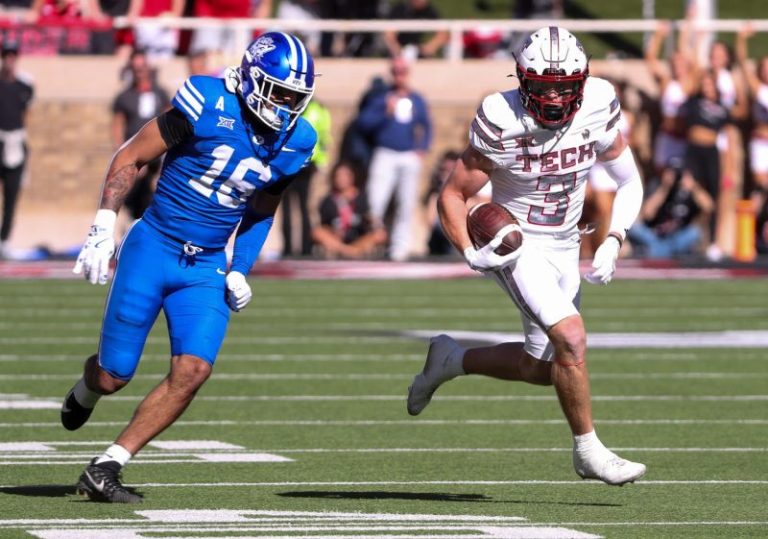
Though Texas Tech — with a 10-1 record and a 22-point win over its fellow first-place team BYU to its name — has established itself as the class of the conference, there was a packed cluster of teams behind the Red Raiders and Cougars entering Week 13 of the season, with four teams with two losses in league play.

This weekend offered some much-needed clarity.

While Texas Tech was enjoying its bye week, several other teams near the top of the conference standings either greatly enhanced their Big 12 championship game outlook or saw it get severely diminished.

No. 11 BYU went on the road and knocked off Cincinnati 26-14, improving the Cougars to 7-1 in conference play while knocking the Bearcats down to 5-3 and eliminating them from title game contention. No. 14 Utah kept its championship game and College Football Playoff dreams alive with a thrilling, come-from-behind 51-47 victory against Kansas State.

Arizona State stayed among the group of two-loss teams in Big 12 play by thumping Colorado 42-17 while No. 24 Houston missed what would have been a game-tying kick in the final minute in a 17-14 loss to TCU, knocking the Cougars out of the Big 12 championship race.

Barring massive upsets next week, with Texas Tech playing 4-7 West Virginia and BYU taking on 5-6 UCF, it will be a rematch between the Red Raiders and Cougars with a conference championship on the line.

So where do things stand now?

Here’s a look at the Big 12 standings after Week 13:

Big 12 football standings after Week 13

Here’s a full look at the Big 12 football standings after Week 13:

  • T-1. Texas Tech (10-1, 7-1 Big 12)
  • T-1. BYU (10-1, 7-1)
  • T-3. Utah (9-2, 6-2)
  • T-3. Arizona State (8-3, 6-2)
  • T-5. Houston (8-3, 5-3)
  • T-5. Arizona (8-3, 5-3)
  • T-5. Cincinnati (7-4, 5-3)
  • T-8. Iowa State (7-4, 4-4)
  • T-8. TCU (7-4, 4-4)
  • T-8. Kansas State (5-6, 4-4)
  • T-11. Baylor (5-6, 3-5)
  • T-11. Kansas (5-6, 3-5)
  • T-13. UCF (5-6, 2-6)
  • T-13. West Virginia (4-7, 2-6)
  • 15. Colorado (3-8, 1-7)
  • 16. Oklahoma State (1-10, 0-8)
This post appeared first on USA TODAY

Instead of providing answers, Week 13 of the college football season brought more confusion for the Atlantic Coast Conference standings.

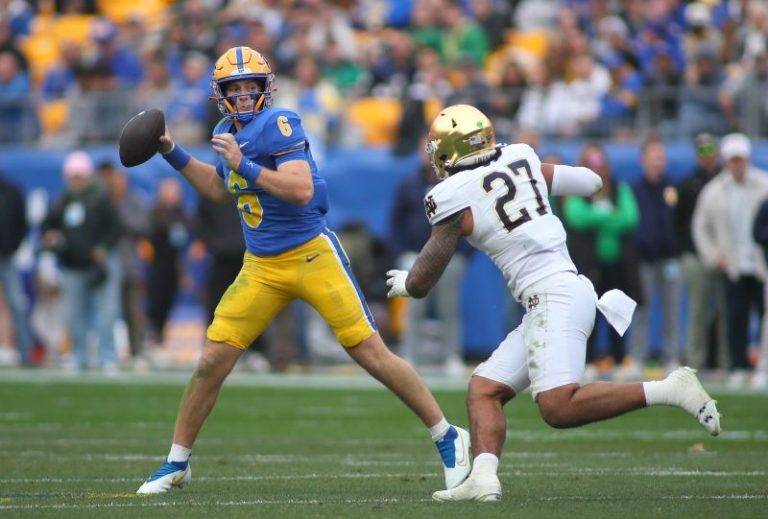
With Pittsburgh pulling off the 42-28 upset win over No. 12 Georgia Tech, the final week of the regular season will determine who is headed to the ACC championship game on Saturday, Dec. 6, in Charlotte, North Carolina.

If the Yellow Jackets had beaten the Panthers on Saturday, Nov. 22, they would have clinched a spot in the championship game. Instead, Pitt now needs to beat Miami — and needs one of SMU or Virginia to lose in Week 14 — to get into the conference title game. All three teams enter the final week with one ACC loss.

Meanwhile, two-loss teams Georgia Tech, Miami and Duke all remain alive, but will need serious help to have a chance to get to the championship game.

Here’s a look at the ACC standings after Week 13:

ACC football standings after Week 13

Here’s a full look at the ACC standings after Week 13 of the college football season.

  • T-1. Southern Methodist (8-3, 6-1 ACC)
  • T-1. Pittsburgh (8-2, 6-1 ACC)
  • T-1. Virginia (9-2, 6-1 ACC)
  • T-4. Georgia Tech (8-2, 5-2 ACC)
  • T-4. Duke (6-5, 5-2 ACC)
  • T-4. Miami (9-2, 5-2 ACC)
  • 7. Wake Forest (8-3, 4-3 ACC)
  • 8. Clemson (6-4, 4-4 ACC)
  • 9. Louisville (7-4, 4-4 ACC)
  • T-10. California (6-5, 3-4 ACC)
  • T-10. North Carolina State (6-5, 3-4 ACC)
  • 11. Stanford (4-7, 3-5 ACC)
  • T-12. Virginia Tech (3-8, 2-5 ACC)
  • T-12. North Carolina (4-7, 2-5 ACC)
  • 15. Florida State (5-6, 2-6 ACC)
  • 16. Syracuse (3-8, 1-6 ACC)
  • 17. Boston College (1-10, 0-7 ACC)
This post appeared first on USA TODAY

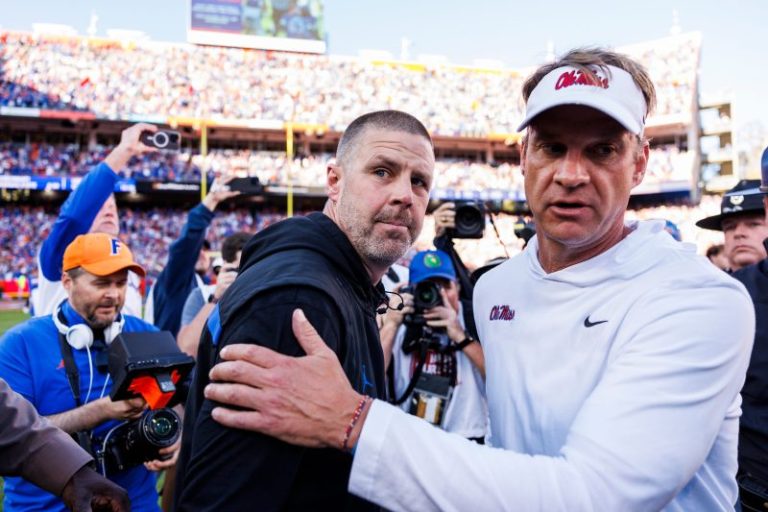
They could’ve avoided all this drama. Could’ve hired Lane Kiffin last year, and been a year ahead of the rebuild. 

Maybe even where Ole Miss is right now. 

If what should have been done last year at Florida was done immediately — Billy Napier fired, Kiffin hired — none of the crazy suffocating college football is playing out day after day.

The beauty of the College Football Playoff demolition derby is in full bloom, and the Heisman Trophy race — can you remember one with less juice? — would be at front of mind. 

Instead of where Kiffin, who has never won a Power conference championship, will coach in 2026 and be paid at the top of his profession.

Instead of Florida and LSU throwing around Monopoly money, desperately trying to recapture the magic of lost glory.

Instead of Florida, for the second time in four years, kicking a field goal in the second half of a blowout loss to extend its NCAA-record streak of avoiding a shutout. It was Tennessee last night, and Oregon State in Napier’s first season, and the record is now at 472 and counting.

But that Florida had to do it twice within the four-year Napier framework tells you all you need to know about the spectacular fail of a hire. 

Yet Florida athletic director Scott Stricklin doubled down last season after the Gators got hot and beat, ironically, LSU and Ole Miss. He ignored the obvious signs of ineptitude — too many to even explain now after the fact — and threw more good money after bad. 

If Stricklin makes the tough decision last fall, 2024 would’ve been the second-half collapse with an interim coach, and 2025 would’ve been Year 1 under Kiffin.

Think about the talented Florida roster with a coaching staff that includes Kiffin, offensive coordinator and quarterbacks coach Charlie Weis Jr. (who Napier tried to hire after the 2023 season), and former Florida coach Will Muschamp as defensive coordinator (he was interested in the DC job this season). 

It’s not a stretch to think Florida could be the team in the CFP hunt, not Ole Miss. Florida could be the team, organically built through high school recruiting and supplementing from the portal (the one thing Napier crushed), as the team no one wants to play in December.

Instead Florida sustained its first home loss to Tennessee since 2003, and worst loss to Tennessee since Steve Spurrier’s first season at Florida in 1990. And we’ll go through the next seven days — Rivalry Week, no less — debating what Kiffin will do and how it will impact three programs.

Ohio State vs. Michigan. Texas vs. Texas A&M. Georgia vs. Georgia Tech. Alabama vs. Auburn. Tennessee vs. Vanderbilt.

Significant games, with significant CFP impact. All overshadowed by the Kiffin decision.

If only what should’ve been done eventually was done immediately.

Matt Hayes is the senior national college football writer for USA TODAY Sports Network. Follow him on X at @MattHayesCFB.

This post appeared first on USA TODAY

  • Despite a previous blowout loss, the Texas Longhorns’ playoff hopes are not entirely extinguished.
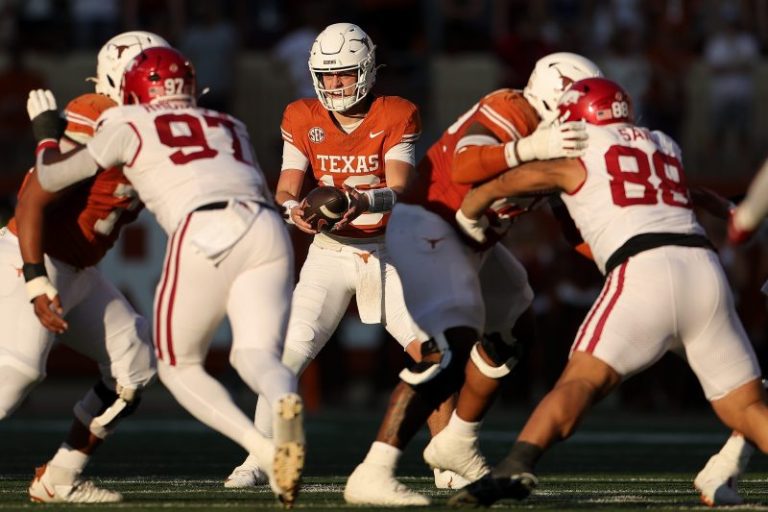
  • A decisive 52-37 victory over Arkansas, led by Arch Manning’s four touchdowns, keeps Texas in the conversation.
  • The team’s chances rely on a potential upset of undefeated Texas A&M and chaos among higher-ranked teams.

If you thought Texas’ blowout loss at Georgia served as a playoff extinction-level event, you’re confusing this 12-team bracket with a beauty contest.

It’s not.

At the tail end of the bracket, it could be much more of a they’d-do-in-a-pinch type of affair.

If the selection committee finds itself in a pinch in a couple of weeks, facing a dearth of beauties, well, Texas still lurks.

And if the Longhorns don’t look like a grand prize, just knock back a six-pack and flip on game film of this 52-37 rout of Arkansas. This didn’t look half bad.

Let’s not turn this result into more than it is. This win serves as a blowout of a bad team, an opponent with an interim coach, a rival that lost to playoff-bound Notre Dame by 43 points.

But, the Razorbacks have had a way about hanging close against SEC opponents, before ultimately losing, and Texas changed the script by burying the Hogs.

“The season’s not done,’ Texas coach Steve Sarkisian said afterward on ABC. ‘You never know what can happen.”

Don’t take this as me stumping for Texas’ playoff bona fides. I had an eyewitness view of the Longhorns’ fourth-quarter meltdown in Athens, Georgia. Sarkisian did my job for me when he called his team’s disintegration against Georgia ‘a disaster.’ Couldn’t have said it any better.

The Longhorns did not resemble a playoff team that night, much as it did not in a loss at Florida or in white-knuckle victories at Kentucky and Mississippi State.

Texas languishes on the road. It’s pretty good at home, and it boasts wins against Oklahoma and Vanderbilt, a pair of top-15 teams.

The committee suffers from an affliction known as recency bias. If Texas’ final trip down the catwalk before Selection Sunday is an upset of undefeated Texas A&M in primetime on Black Friday, well, let’s just say hold off on shoveling the dirt on this season.

‘All eyes will be on us,’ Sarkisian said. ‘We’ve got to go compete.”

Need I remind you the first-team-out last season was three-loss Alabama? If Texas reaches 9-3, it’ll tout a resume superior to that of the 2024 Tide.

Texas checked in at No. 17 in the latest CFP rankings. Its playoff hopes would benefit from a dash of chaos inflected upon teams ranked ahead of it. Southern California losing this weekend helps. Look for Texas to be ranked no worse than No. 15 in next week’s pecking order. Add in a victory against Texas A&M, and you never know. If the committee finds itself in a pinch, the Longhorns might look fine.

Blake Toppmeyer is the USA TODAY Network’s senior national college football columnist. Email him at BToppmeyer@gannett.com and follow him on X @btoppmeyer.

This post appeared first on USA TODAY

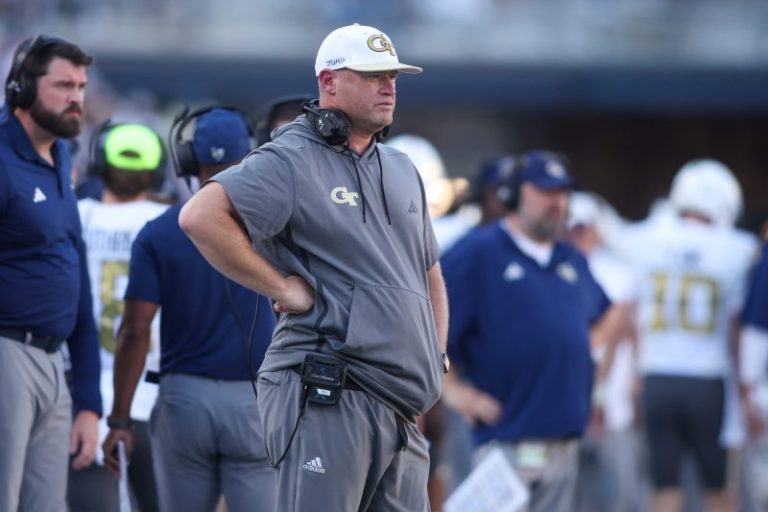
Georgia Tech entered its Week 13 matchup against Pittsburgh with a straightforward goal: Beat the Panthers and you’re in the ACC championship game.

The Yellow Jackets left the game not with a guaranteed conference title game berth, but with regrets about what could have been.

Pitt’s Ja’Kyrian Turner rushed for 201 yards and a touchdown and Georgia Tech’s Haynes King threw a pair of interceptions — including a backbreaking 100-yard pick-6 that caused a 14-point swing in the third quarter — as the Yellow Jackets fell 42-28 at Bobby Dodd Stadium in Atlanta.

The loss was Georgia Tech’s second in its past three games after an 8-0 start that had vaulted it into the top 10 of the major national polls. More consequentially, though, the setback knocked the Yellow Jackets from the ranks of ACC teams with only one loss in conference play, a crowded group that now includes Virginia, SMU and Pitt, the last of which now owns a critical head-to-head tiebreaker against Georgia Tech. Without a chance at a conference championship, coach Brent Key’s team will have a meager chance at an at-large berth to the 12-team College Football Playoff field.

What does the loss to the Panthers mean for the Yellow Jackets’ short-term outlook? Here’s a look at where Georgia Tech may fall in the US LBM Coaches Poll:

Georgia Tech rankings: Where will Yellow Jackets drop after Pitt loss?

Even before Saturday’s loss to Pitt, there were signs that Georgia Tech wasn’t being valued as much by voters in the major national polls as other teams with similar records.

With a 9-1 record, the Yellow Jackets were No. 12 in the latest US LBM Coaches Poll, making them the lowest-ranked Power Four team with one loss or fewer.

At least some of that had to do with Georgia Tech’s propensity for close games, even against subpar competition. Four of the Yellow Jackets’ nine wins had come by one score, a run that included a 27-20 win against a 3-7 Colorado team, a 24-21 victory against 6-5 Clemson and a 36-34 win last Saturday against 1-10 Boston College. What appeared to be good wins in the moment haven’t held up well over time, either. Wake Forest, at 8-3, has the most wins of any FBS team they’ve defeated this season.

Georgia Tech’s lone loss before Week 13 wasn’t easy to shake off, either, as it came against a North Carolina State team that had been 1-3 in ACC play entering the matchup.

It wasn’t just human voters that were skeptical of the Yellow Jackets, either. Georgia Tech entered this weekend at No. 36 of 136 FBS teams in ESPN’s SP+ rankings, with the No. 17 strength of record and No. 88 strength of schedule.

Key’s squad has gotten some help this week, which may mitigate the impact of the Pitt loss a bit. Three of the teams behind it in the Coaches Poll — No. 16 USC, No. 21 Missouri and No. 24 Houston — lost this week.

The Yellow Jackets are a tough-minded team that has consistently found ways to win, but it may see a sizable drop in the polls, especially since voters will likely try to contort their rankings so that an unranked Pitt team is ahead of them.

Final ranking prediction: No. 21

This post appeared first on USA TODAY

We also break down next week’s catalysts to watch to help you prepare for the week ahead.

In this article:

    This week’s tech sector performance

    This week, the stock market displayed a mixed performance amid ongoing uncertainty about artificial intelligence (AI) company valuations and policy decisions from the US Federal Reserve.

    On Monday (November 17), both the S&P 500 (INDEXSP:.INX) and the Nasdaq Composite (INDEXNASDAQ:.IXIC) fell below their 50 day moving averages for the first time since late April, a significant technical breakdown. The Dow Jones Industrial Average (INDEXDJX:.DJI) also closed below this important threshold for the first time since October 10.

    Tuesday (November 18) saw continued volatility and some attempted stabilization attempts, but market participants remained cautious. Heavyweight tech and chip stocks were down ahead of NVIDIA’s (NASDAQ:NVDA) earnings call on Wednesday (November 19), but a global relief rally followed the firm’s upbeat earnings report and raised Q4 guidance. However, enthusiasm was short-lived, with markets pulling back on midday Thursday (November 20) after September US jobs numbers temporarily dashed hopes of a December interest rate cut from the Fed.

    Comments made at the Bloomberg New Economy Forum further contributed to market caution, with Goldman Sachs (NYSE:GS) President John Waldron warning that markets could still face further declines.

    In contrast, former Barclays (NYSE:BCS) CEO Bob Diamond offered a more optimistic view, calling the recent selloff a “healthy correction” rather than the start of a bear market.

    Later on Thursday and into Friday (November 21), the odds of a December rate cut rose again as Fed officials, including San Francisco Fed President Mary Daly and New York Fed President John Williams, signaled concerns about slowing economic growth and a cooling labor market. Markets surged on the back of the news to end the trading day sharply higher after a volatile week that saw all three major indexes post losses.

    This renewed optimism quelled some selling pressure going into the weekend, although investor caution around AI valuations and Fed policy remains prevalent.

    3 tech stocks moving markets this week

    1. NVIDIA (NASDAQ:NVDA)

    NVIDIA reported stronger-than-expected Q3 earnings with revenue of US$57 billion, beating expectations of US$55 billion, and earnings per share of US$1.30 versus the predicted US$1.25. The company also offered an optimistic Q4 revenue forecast of US$65 billion, surpassing analysts’ expectations of US$62 billion.

    However, he also noted that the sustainability of this growth depends on continued investor confidence.

    He warned that, similar to past tech bubbles like the dot-com era, AI companies today may be overvalued, with expectations currently outpacing reality. Murillo cautioned that while AI is making breakthroughs, its practical applications are still limited, and there is risk that an AI bubble could burst, impacting even large tech giants.

    Despite recent share price declines amid debates of an AI bubble, CEO Jensen Huang reassured investors, stating, “There’s been a lot of talk about an AI bubble. From our vantage point, we see something very different.”

    After a midweek gain of over 5 percent due to its earnings report, NVIDIA posted a weekly loss of 3.79 percent.

    2. Alphabet (NASDAQ:GOOGL)

    Alphabet rallied in early trading on Monday after Berkshire Hathaway (NYSE:BRK.A,NYSE:BRK,B) disclosed a US$4.3 billion stake in the company and reduced its stake in Apple (NASDAQ:AAPL). Alphabet then released Gemini 3 on Tuesday. The updated AI model has enhanced reasoning, coding and multimedia, alongside Antigravity, a Gemini-powered coding platform, and Nano Banana Pro, its latest detailed image-generation model.

    The week’s momentum was further fueled by reports that Google is on the verge of securing a US$1 billion annual deal with Apple to power the next-generation Siri, underscoring its dominant AI position across rival platforms.

    The company ended the week 4.86 percent higher.

    3. Apple (NASDAQ:AAPL)

    Apple was the steady pillar of tech resilience this week.

    With no obvious catalyst driving its price action this week, the company has maintained gains and investor interest following the strong earnings and product launches from earlier weeks.

    Consistency speaks to Apple’s enduring market strength and the confidence investors have in its long-term growth trajectory as it integrates AI across its product and services ecosystem.

    The company posted a modest advance of 0.99 percent for the week.

    NVIDIA, Alphabet and Apple performance, November 17 to 21, 2025.

    Chart via Google Finance.

    Top tech news of the week

              Tech ETF performance

              Tech exchange-traded funds (ETFs) track baskets of major tech stocks, meaning their performance helps investors gauge the overall performance of the niches they cover.

              This week, the iShares Semiconductor ETF (NASDAQ:SOXX) declined by 5.28 percent, while the Invesco PHLX Semiconductor ETF (NASDAQ:SOXQ) saw a weekly loss of 5.14 percent.

              The VanEck Semiconductor ETF (NASDAQ:SMH) decreased by 4.63 percent.

              Tech news to watch next week

              With fewer major tech earnings reports expected next week, market focus will likely shift to key economic data releases. Dell Technologies (NYSE:DELL) will deliver its Q3 results on November 25.

              Analysts predict earnings of around US$2.48 per share, representing approximately 15 percent year-on-year growth. Revenue estimates hover around US$27.29 billion, suggesting nearly 12 percent annual growth.

              Important economic reports include the US Consumer Confidence Index on November 25 and the Personal Consumption Expenditures price index on November 26.

              US markets will close on November 27 for Thanksgiving and have a shortened session on November 28. November 28 will also bring Canada’s Q3 GDP release.

              Securities Disclosure: I, Meagen Seatter, hold no direct investment interest in any company mentioned in this article.

              This post appeared first on investingnews.com

              Here’s a quick recap of the crypto landscape for Friday (November 21) as of 9:00 a.m. UTC.

              Get the latest insights on Bitcoin, Ether and altcoins, along with a round-up of key cryptocurrency market news.

              Bitcoin and Ether price update

              Bitcoin (BTC) was priced at US$83,590.70, down by 10.4 percent over 24 hours. Its lowest price of the day was US$81,868.75 and its highest was US$91,971.75.

              Bitcoin price performance, November 21, 2025.

              Chart via TradingView.

              Bitcoin’s slide continues as it heads for its worst month since the 2022 crypto crash.

              The largest cryptocurrency fell and touched US$81,000 on Friday before recovering to around US$84,166, extending a monthly decline of about 23 percent that marks its heaviest drop since June 2022.

              Despite pro-crypto messaging from the Trump administration and a year of strong institutional adoption, Bitcoin has now fallen more than 30 percent from its early-October record high.

              The downturn accelerated following the massive October 10 liquidation event that erased US$19 billion in leveraged positions and wiped roughly US$1.5 trillion from the combined value of all cryptocurrencies.

              Institutional flows reflect the same caution. US-listed Bitcoin ETFs have recorded a record US$3.79 billion in outflows this month, surpassing February’s previous high, with BlackRock’s IBIT alone seeing more than US$2 billion in redemptions.

              In total, about US$1.2 trillion has been wiped from crypto markets over the past six weeks, according to CoinGecko data.

              Ether (ETH) was at US$2,736.63, down 11.2 percent over 24 hours. Its lowest price on Friday was US$2,675.70 and its highest was US$3,033.20.

              Altcoin price update

              • XRP (XRP) was priced at US$1.94, down by 12.2 percent over 24 hours. Its lowest price of the period was US$1.86 and its highest was US$2.13.
              • Solana (SOL) was trading at US$128, down by 13 percent over 24 hours. Its lowest price of the day was US$123.30 and its highest was US$141.97.

              Fear and Greed Index snapshot

              As of Friday, CMC’s Crypto Fear & Greed Index has plunged to 11, firmly in “extreme fear” and its lowest level since late 2022.

              Reports of large-scale whale liquidations have added to the uncertainty, amplifying pressure across an already fragile market. Further, traders brace for potential Federal Reserve inaction on rate cuts. CME’s FedWatch now shows only 37.6 percent expecting a 25-basis-point cut in December, while more than 62 percent anticipate no change, a reversal from near-even odds just a week ago.

              Prediction market Polymarket reflects the same trend, pricing a 63 percent chance of no move after sentiment flipped late Tuesday.

              CMC Crypto Fear and Greed Index, Bitcoin price and Bitcoin volume.

              Chart via CoinMarketCap.

              Today’s crypto news to know

              Bitcoin logs weakest month since 2022

              Bitcoin is heading for its steepest monthly decline since the wave of corporate failures that hit the crypto sector in 2022, with the token sliding below US$82,000 on Friday.

              Its November losses have now reached roughly 25 percent, reversing much of the momentum that carried prices to record highs in early October.

              Overall, data from CoinGecko shows the total crypto market value dipping back under US$3 trillion as Ether and mid-cap tokens recorded similar double-digit declines.

              Analysts link the downturn to cascading liquidations that began on October 10, when nearly US$19 billion in leveraged bets were wiped out in a single session. Selling pressure intensified again this week with a two-day liquidation tally topping US$2 billion, according to CoinGlass.

              Long-dormant whale activity has added to uncertainty after a wallet holding Bitcoin since 2011 unloaded more than US$1.3 billion in late October.

              S&P stocks shed US$2.7 trillion

              A sharp pullback across US equities sparked another wave of risk-off trading in crypto, sending Bitcoin to its weakest level in seven months.

              The S&P 500’s nearly 4 percent decline on Thursday erased more than US$2.7 trillion in market value, according to Bloomberg calculations, overshadowing an earlier bounce driven by enthusiasm around AI-linked earnings.

              Crypto assets fell in tandem, with Bitcoin briefly revisiting the US$85,000 range and total liquidations surpassing US$800 million for the day.

              Coinbase rolls out Ether-backed loans

              Coinbase has launched a new lending feature that allows eligible US users to borrow up to US$1 million in USDC by using Ether as collateral.

              The product is integrated with the Morpho protocol on Base, though users interact with it entirely through Coinbase’s interface. Borrowers keep exposure to ETH’s price movements while accessing liquidity without having to sell their holdings.

              The company says the service is available across most US states, with the exception of New York due to regulatory requirements.

              Securities Disclosure: I, Giann Liguid, hold no direct investment interest in any company mentioned in this article.

              Securities Disclosure: I, Meagen Seatter, hold no direct investment interest in any company mentioned in this article.

              This post appeared first on investingnews.com

              MP Materials (NYSE:MP) and the US Department of Defense have entered into a joint venture with Saudi Arabia’s Maaden to build a rare earths refinery in the Kingdom, marking the first major project under a new US-Saudi critical minerals cooperation framework signed in Washington this week.

              The binding agreement gives both the US and MP a collective 49 percent stake in the refinery.

              Maaden will hold not less than 51 percent, and the refinery will be built in Saudi Arabia, where it will process feedstock from both local deposits and international sources. Once operational, it will produce separated light and heavy rare earth oxides for customers in the US, Saudi Arabia and allied countries.

              Rare earths are essential for the production of weapons systems, electric vehicles, renewable energy technologies and high-performance electronics. Secure supply has become increasingly important due to China’s sector dominance.

              James Litinsky, MP’s founder and CEO, said the company views the partnership as an extension of its strategic role in Washington’s efforts to diversify global supply chains. “We are honored that the U.S. government asked MP to partner on a project of this magnitude and importance for America and its allies,” he said.

              Maaden CEO Bob Wilt said the project fits squarely within the Kingdom’s national mining and industrial strategy.

              “This JV is a significant step forward in the development of this important global sector, underpinned by the support of Saudi Arabia’s Ministry of Energy and the Ministry of Industry and Mineral Resources,” Wilt noted.

              The joint venture was negotiated under a critical minerals framework signed by senior US and Saudi officials this week. The document is intended to formalize cooperation on rare earths, battery metals and other strategic inputs.

              For Washington, the initiative reflects an effort to reshape supply chains away from geopolitical competitors. For Riyadh, it supports a long-term plan to leverage energy resources and expand its footprint in high-tech materials markets.

              Financially, the deal is structured to be light in capital for MP.

              The Department of Defense will fund the entire US contribution to the venture on a non-recourse basis, allowing MP to deploy technical expertise in separation and refining without taking on debt tied to the refinery’s construction.

              The Saudi venture also connects to MP’s growing public-private alignment with the US defense sector.

              In July, the company and the Department of Defense announced a multibillion-dollar partnership to accelerate the buildout of a domestic rare earth magnet supply chain. Under the partnership, MP is also constructing a second magnet manufacturing facility known as the 10X Facility, which is expected to begin commissioning in 2028.

              When completed, MP’s total US magnet output will reach roughly 10,000 metric tons annually.

              Beyond government partnerships, MP has also moved into large-scale commercial magnet supply. Also in July, Apple (NASDAQ:AAPL) and MP announced a US$500 million long-term agreement that will supply Apple with magnets manufactured in the US using 100 percent recycled rare earths feedstock.

              Under the arrangement, MP will expand its Fort Worth, Texas, Independence factory to produce components for hundreds of millions of Apple devices starting in 2027. Apple and MP spent nearly five years jointly developing recycling techniques to meet the company’s performance and design requirements.

              MP will add a dedicated recycling line at Mountain Pass to support commercial scale as magnet production ramps.

              Securities Disclosure: I, Giann Liguid, hold no direct investment interest in any company mentioned in this article.

              This post appeared first on investingnews.com