Author

admin

Browsing

Elliott Investment Management has reportedly taken a large stake in Barrick Mining (TSX:ABX,NYSE:B), the Financial Times reported on Tuesday (November 18), adding activist pressure to the gold producer, which is already dealing with escalating operational problems and a leadership shakeup.

The moves comes just weeks after the abrupt September exit of former CEO Mark Bristow, and as Barrick’s new chief executive, Mark Hill, begins overhauling the company’s regional structure.

In an internal memo seen by Bloomberg, Hill said Barrick will fold its Pueblo Viejo mine in the Dominican Republic into its North American division and merge its Latin America and Asia Pacific operations to improve performance.

Elliott’s investment also comes during a challenging phase for Barrick.

The company has been hit by rising costs at key North American assets and the loss of its most profitable operation, the Loulo-Gounkoto mine in Mali, after the military junta seized control earlier this year.

The dispute, which was tied to Mali’s new mining tax code, resulted in 3 metric tons of gold being taken by the state and the detention of four Barrick employees. The asset loss also triggered a roughly US$1 billion writeoff.

The setbacks have left Barrick trailing behind its peers despite a powerful gold price rally. Company shares are up 117 percent in the past year, compared with an average 130 percent gain among major rivals.

Barrick’s performance has company executives weighing their options.

As mentioned, a split into two companies is being considered. Four people told Reuters that this could involve one firm focused on North America and another holding assets in Africa and Asia. Another option would involve selling Barrick’s Africa portfolio outright, along with the Reko Diq project in Pakistan once financing is secured.

Barrick is also trying to resolve its dispute with Mali before pursuing a sale of that operation.

Investors have pushed similar ideas before, but were stifled due to the company’s North American footprint.

The company’s core US asset is Nevada Gold Mines, which it operates in partnership with Newmont (NYSE:NEM,ASX:NEM), and the sentiment has been that “there is not much of value” in Barrick’s remaining mines.

Bloomberg reported last month that Newmont was looking at whether a transaction could give it control of the Nevada operations it shares with Barrick, but discussions have not advanced since then.

Elliott, meanwhile, has a long record of targeting miners, including Anglo American (LSE:AAL,OTCQX:AAUKF) and Kinross Gold (TSX:K,NYSE:KGC), and often pushes for structural changes.

For Barrick, the challenge now is stabilizing its operations, while deciding how far to go with strategic restructuring in today’s historically high gold price environment.

Securities Disclosure: I, Giann Liguid, hold no direct investment interest in any company mentioned in this article.

This post appeared first on investingnews.com

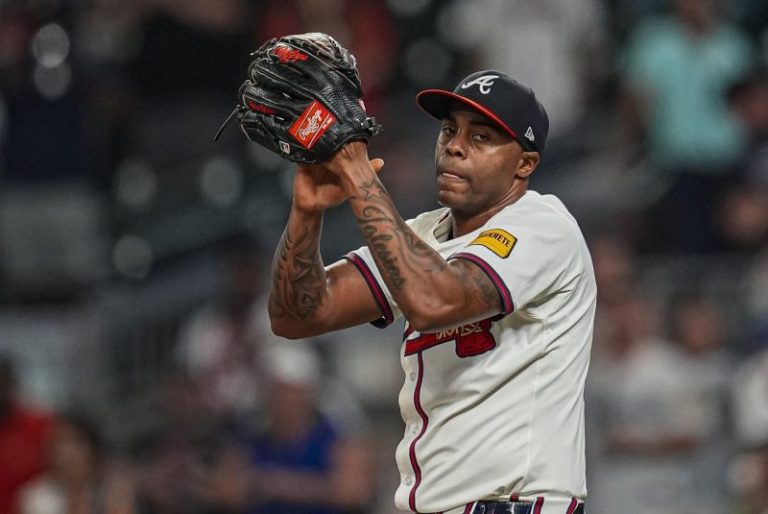
The Atlanta Braves announced Wednesday night that they have re-signed closer Raisel Iglesias to a new deal for the 2026 season.

Iglesias signed a one-year, $16 million deal to remain with the team. He spent the previous three-plus seasons in Atlanta after being traded by the Los Angeles Angels.

Iglesias, 35, has a 15-12 record as a member of the Braves, recording 97 saves in 218.2 innings pitched. He has allowed 157 hits, 69 runs and 19 home runs and struck out 239.

His 253 career saves are the fourth most among active players. The Cuban pitcher also finished first in the National League this past season with 57 games finished. He is also fourth among active players in that category with 459.

Later Wednesday night, the Braves announced they had acquired infielder Mauricio Dubon from the Astros for infielder Nick Allen.

The USA TODAY app gets you to the heart of the news — fastDownload for award-winning coverage, crosswords, audio storytelling, the eNewspaper and more.

This post appeared first on USA TODAY

The way fans watch baseball is about to drastically change, as Major League Baseball tears the Band-Aid off its distribution model and pivots toward a future where linear television and streaming coexist, even if it comes at a cost to both sports leagues and consumers.

The upshot? Welcome back, NBC. All is forgiven, ESPN. And with any luck, “buffering” won’t be a word on fans’ lips as Netflix steps onto the scene.

The league and its new/old distribution partners announced on Nov. 19 broadcast agreements covering the 2026-28 seasons. Various details or frameworks of the agreements have been reported in recent months, but it remains a lot for the average consumer to ingest.

What will it all look like come March? From the most casual fan to the hardcore seamhead, here are a few details as MLB’s new broadcast era dawns: 

NBC/Peacock: Sunday Night Baseball and the wild-card round

This game of musical chairs was fast-tracked in February, when ESPN opted out of the final three years of its deal with MLB to broadcast its franchise Sunday Night Baseball and the four wild-card series that kick off the postseason.

The remainder of that deal was for $1.65 billion over three years, a sum agreed upon before the cord-cutting crisis and general collapse of the cable model was further exacerbated. ESPN took the chance to escape.

Now, it’s NBC taking over the Sunday night franchise, and while it may be jarring to see the game’s nationally-televised weekly jewel shift from its original home at ESPN, old heads will recognize baseball’s natural home on NBC.

In the modern Nielsen era, NBC broadcast every World Series from 1968-1976, then alternated years with ABC until CBS’s ill-fated four-year run as primary rightsholder from 1990-93. NBC’s last national dalliance with MLB came in the 1999 World Series, after which Fox Sports acquiree exclusive rights to the Fall Classic.

That won’t change anytime soon: Fox and Warner Bros. Discovery – or, Turner, as you might recognize it – remain MLB’s primary partners, with regular-season games and one league championship series apiece each year through 2028.

After that, however, all bets are off, and we could see in a near-term future World Series rights back on the market and potentially divvied up among multiple rightsholders.

For now? Baseball will tuck into NBC’s canon of prime time Sunday night programming – even if Sunday Night Football and the NBA may boot baseball to Peacock for all but the summer months.

ESPN: An all-30 strategy

For the more hardcore fan, the biggest adjustment might be ESPN taking its $1.65 billion from Sunday Night Baseball and essentially using it to purchase the highly popular MLB.TV package.

The network will control rights for all 30 out-of-market teams and take over the six essentially orphaned markets in which MLB took on production and distribution, largely due to the collapse of Diamond Sports and the regional sports network model.

While MLB will continue producing the in-market games, the agreement allows ESPN to sell or distribute local TV rights for a half-dozen teams. Five of the teams – the Cleveland Guardians, San Diego Padres, Arizona Diamondbacks, Minnesota Twins and Colorado Rockies – already had their games produced by MLB. A sixth, the Seattle Mariners, will join that mix and fall under ESPN’s auspices this year.

ESPN will also broadcast 30 weeknight games per season. It will continue broadcasting the Little League Classic in August and have rights to games on Memorial Day and the standalone slot the Thursday following the All-Star break, which this year will pit the New York Mets against the Philadelphia Phillies on July 16.

The tonnage makes sense for ESPN, driving consumers to its screens of all sizes during the summer months, when its bread-and-butter of football and collegiate sports are dark. The Athletic reported the $150 annual cost for MLB.TV is expected to remain the same, but it of course gives ESPN significant options to bundle with its larger suite of broadcast inventory.

Subscription fatigue: How much is too much?

That’s something consumers will have to decide. And some of the content will likely fall under a brand they’re already paying for.

Netflix will take over coverage of the Hone Run Derby this July and also broadcast the standalone opening night game between the New York Yankees and San Francisco Giants. Consider it beta testing for a potentially deeper investment for the streaming giant, which with the NFL and boxing has dipped its toes into live sports.

At a reported 302 million subscribers, many homes won’t have to do much to access the popular Derby.

Peacock is another story. The NBC streaming offshoot is reportedly stuck at 41 million subscribers. Perhaps adding MLB to the Olympics and the one NFL wild card game it broadcasts will move the needle a little, but as of now, a Peacock household remains the exception and not the rule.

The true inflection point will come in September 2026, when eight teams will have their wild card series broadcast on NBC – with at least part of that inevitably kicked over to Peacock.

So, just what is being asked of the consumer who wants to watch their favorite team plus the jewel events in a frictionless fashion?

Well, consider that in-market streaming of your favorite team runs around $30 a month. Throw in Peacock for around $15 a month. Another $20 or so for Netflix. That’s roughly $65 already – and you haven’t yet figured out how to pay for Fox Sports and Turner come playoff time.

For the out-of-market hardcore fan or insatiable ball enthusiast, add another $150 annually for MLB.TV.

That’s a fair investment to stay up with the game. Yet it’s also the cost of doing business – for both league, network and consumer – in this atomized age.

And check back in 2028, when MLB’s entire slate of TV rights – the World Series, All-Star Game and playoffs, MLB.TV and the Sunday night package – will all be back on the market, for the highest bidders.That’s also around the time commissioner Rob Manfred might hope to unify all – or at least most – of MLB’s local television product. Sure, 2026 will bring a lot of disruption to how the game is consumed. But change is only just beginning.

This post appeared first on USA TODAY

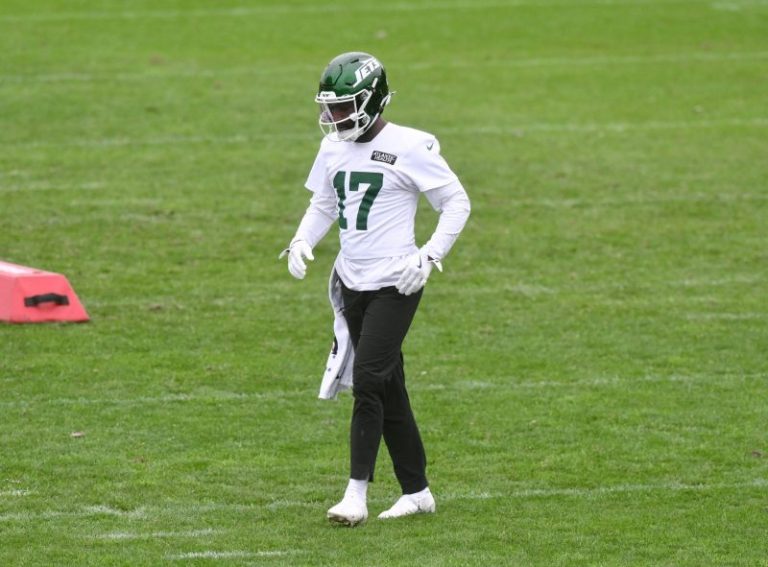
NFL fans woke up to the news Sunday morning that New York Jets cornerback and special teams contributor Kris Boyd was in critical but stable condition after being shot in the abdomen.

Today, Boyd took to Instagram to share an update from the hospital.

‘God is real, God is Powerful!’ he wrote with a photo of him smiling in a hospital bed. ‘I’m sorry I have no words at the moment..Just grateful! I’m coming along, starting to breathe on my own now. Sincerely appreciate everyone! [sic]’

Jets coach Aaron Glenn addressed what happened for the first time today as well.

‘Once I heard about the situation and I’m talking about Kris in general, the first thing I thought about: he just had a kid,’ Glenn said. ‘I’m thinking about his wife, and I’m thinking about his kid. And i want to make sure that he’s okay and that’s the only thing that really went through my mind.

There’s a process to this which I wont get into but I’m happy the fact that he’s going to come out of this thing really, really well.’

A spokeswoman for the New York Police Department told USA TODAY Sports that officers responded to a 911 call at around 2 a.m. ET and found a 29-year-old man with a gunshot wound to the abdomen, later revealed to be Boyd. The NYPD did not confirm the victim was Boyd due to department policy.

The team stated they were aware of the matter and did not comment initially before confirming what happened on Monday. His teammates took to social media to send well wishes, including defensive lineman Jermaine Johnson II.

The Jets were not playing on Sunday when Boyd was shot because they were in action for ‘Thursday Night Football’ In Week 11. New York is on the road again this week to take on the Baltimore Ravens.

Boyd was placed on injured reserve during training camp due to a shoulder injury and was expected to miss the entire 2025 season. He was drafted in the seventh round of the 2019 NFL Draft by the Minnesota Vikings and also played for the Arizona Cardinals and Houston Texans.

This post appeared first on USA TODAY

  • The Atlanta Falcons are now 3-7 and on pace for their worst finish since 2020.
  • The Atlanta Falcons are on track for a top-10 pick in the 2026 NFL Draft … which goes to the Los Angeles Rams.
  • Quarterback Michael Penix Jr. has yet to prove himself worthy of a second contract.

There’s a distinct discomfort in watching a gambler push past the boundaries of what’s advisable in pursuit of a substantial payoff.

It’s the same unease that one might have felt in recent years while watching the Atlanta Falcons try to cut against the grain to build themselves into a contender.

No one could accuse general manager Terry Fontenot of adhering to a herd mentality in his five seasons serving as the organization’s architect. Atlanta became the first team in the common draft era to select offensive skill-position players with top-eight selections in four consecutive drafts from 2021-24 with tight end Kyle Pitts, wide receiver Drake London, running back Bijan Robinson and quarterback Michael Penix Jr.

That core was put in place to set them up for a breakthrough in 2025, with first-round picks Jalon Walker and James Pearce Jr. brought on to jolt a pass rush that had languished for some time. An end to a seven-year playoff drought – tied for the second-longest active streak – seemed within reach.

‘We’re in a better place now, team-wise, coaching-wise, totally across the board than we’ve been in a number of years,’ Falcons owner Arthur Blank said in late July. ‘And so we were close last year, didn’t finish the way we wanted to finish, for sure. … And so, I look forward to the season and a different set of results at the end of the season.’

Six months later, things don’t look discernibly different – at least in any positive way – for a perpetually flailing franchise.

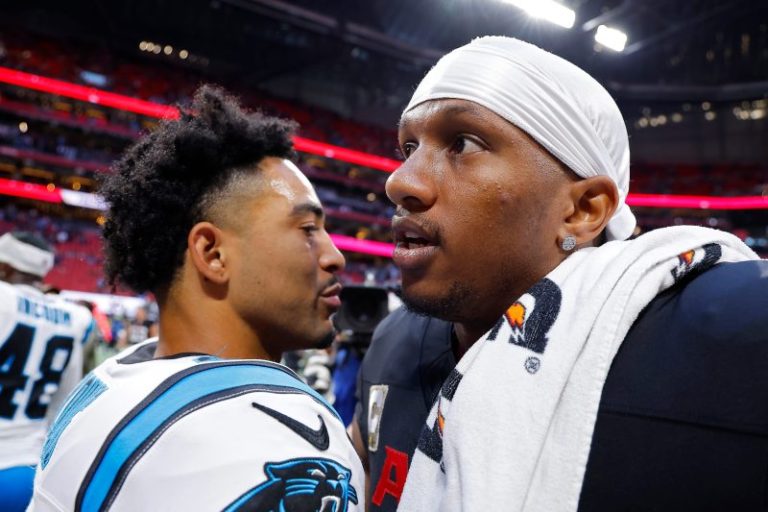
With Sunday’s 30-27 loss to the Carolina Panthers, the Falcons are now 3-7 and hurtling toward potentially their worst finish since 2020, the year prior to Fontenot’s hiring. An eighth consecutive losing ledger looks increasingly likely, with a push to the playoffs bordering on impossible.

Unlike in recent years, however, Atlanta can’t expect to solve its problems merely by adding, subtracting or shifting a key piece or two. The Falcons are without their 2026 first-round pick – which is on track to be a top-10 selection – after coughing it up in April’s trade to acquire Pearce, leaving limited avenues for any potential personnel overhaul. Penix, who will miss the rest of the season with a knee injury suffered Sunday, will head into his third season as an unreliable entity behind center. And coach Raheem Morris’ seat could be warming up, even if it doesn’t scorch him by the end of the campaign.

Getting to this point, however, entailed a series of interwoven miscalculations.

Falcons’ NFL draft trade for James Pearce has become a debacle

Atlanta’s most recent flub might also prove to be its most consequential in the near term.

The Falcons’ decision to give up their 2026 first-round pick to the Los Angeles Rams looked suspect at the time, with vanishingly small odds that the selection would be as late in the order as the No. 26 overall choice used on Pearce. Now, however, Atlanta figures to be conveying a pick somewhere in the top 10 – and possibly just its second top-five selection since 2009.

Much of modern drafting has centered on a reduction of ego, with many of the most successful franchises opting to load up on assets rather than go all in on a single player. The Falcons, however, seem to consistently operate in defiance of that trend, with April’s decision marking another bit of hubris.

‘You know with trades, it always gets to that point where you have to weigh out what you’re actually doing and what you’re doing it for,’ Fontenot said in May. ‘We look at the trade charts and all that stuff, but at some point, you have to look at who’s the player and what’s going to be. What are we really getting, and is it worth it? That’s what you really have to do at some point. When you have that kind of conviction and belief in the player, then that’s when you’re willing to do it – and we do.’

If conviction alone could save general managers, though, then no one would have to worry about their job security at the end of the season.

Pearce, for his part, has exhibited plenty of promise in his debut season. He has 22 pressures on the year, putting him behind only No. 3 overall pick Abdul Carter among rookies.

Yet trading major draft capital for non-quarterbacks is almost always bad business in the NFL. Landing the next Jared Verse or T.J. Watt isn’t simply a matter of chasing one down in the middle-to-late first round.

Yes, the Falcons have transformed themselves from ranking 31st in sacks last year with 34 to already bagging 34, putting them within reach of breaking the single-season franchise record of 55. But getting to this point has required a group effort amplified by a blitz-rate of 44.3%. There’s no one player propping this group up, and Pearce – who ranks sixth on the team with 2 1/2 sacks – has a long way to go before he can be that figure.

And with the loss to the Panthers, the Falcons became the first team in the Super Bowl era to have 18 or more sacks in a three-game span and still lose all three contests. Atlanta hounded Bryce Young for five sacks, but the quarterback ended his downfield passing woes by throwing for a career-high 448 yards – 314 of which came on plays on which he held he ball for more than 2.5 seconds, according to Next Gen Stats.

It’s clear there’s more at play here than Walker or Pearce are capable of solving.

The Michael Penix Jr. problem

The trade for Pearce might go down as one of the more costly missteps of Fontenot’s tenure, but the decision to draft Penix figures to be his defining move.

The stunning investment with the No. 8 overall pick in 2024 drew substantial scorn given that Atlanta had handed Kirk Cousins a four-year, $180 million contract one month earlier. The Falcons’ timeline, however, was thrown off when they handed the reins to Penix for the final three games of the season as the veteran unraveled down the stretch.

The gambit might have paid off had Penix established himself as clearly being worthy of a second contract. So far, he hasn’t.

With ample support around him, the second-year signal-caller has been plagued by the same problems that were evident in his college career. His ball placement has been volatile, with his 60.1% completion rate ranking 29th among all quarterbacks. He too often eschews the middle of the field entirely, heightening the degree of difficulty for Atlanta’s offense to stay on track. And the latest injury could be the fifth season-ending ailment of his career after a series of shoulder and knee setbacks at Indiana before his transfer to Washington.

That’s a problematic trajectory for any young quarterback. Penix, however, will be 26 in May and should be somewhere closer to Bo Nix, his fellow 2024 draft classmate who also had an extensive college career that only truly took off once he transferred to the Pacific Northwest. But while Nix has developed into an accomplished if imperfect leader of a playoff-ready outfit, Penix remains an unknown.

Moving on from Penix after just 12 starts would be a stunning outcome that might only come alongside the Falcons fully wiping the slate clean, which hasn’t been Blank’s style. If they continue on with him as expected, though, there aren’t a ton of clear answers for the organization heading into 2026.

Is this a Terry Fontenot problem or a Raheem Morris issue?

Regardless of how the blame is divvied up – both parties look culpable, though Fontenot has been around longer to shape things – each side is going to have to deal with the fallout.

Morris has made it clear he believes the buck stops with him.

“You have to find a way to win games,” Morris said Sunday after Atlanta lost its fifth consecutive contest. “It definitely is on me. There is no such thing as a losing team, only a losing leader. I’m the leader, and we lost.”

The CEO-style head coach appears to have kept the team united, with Cousins saying there haven’t been any fissures in the locker room amid the skid. Yet Morris is still overseeing an unquestionably failing operation.

If both the coach and Fontenot return for 2026, they’ll have to continue paying the toll for various blunders from the past two years.

Upgrading an offense that ranks 27th in scoring (19.5 points per game) and 29th in third-down conversion rate (33.9%) won’t be easy. Without that first-round selection, Atlanta will have scant options for boosting a receiving corps that has pretty much solely been the Drake London show. Fontenot’s various bold plays have left the Falcons with just $4.1 million in projected cap space for 2026, according to Over The Cap, though they can free up $35 million by designating Cousins as a post-June 1 cut. Regardless, Atlanta might end up losing more on the open market than it brings in with Pitts and running back Tyler Allgeier set to become free agents.

Is offensive coordinator Zac Robinson the figure to develop Penix and lead a turnaround? His pistol attack has more closely resembled a squirt gun through two years. Amid Morris’ proclamations that Bijan Robinson is ‘the best player in football,’ the Falcons rank just 19th in expected points added per rush in 2025.

But if the Falcons opt for another change in the assistant ranks – they fired receivers coach Ike Hilliard in September after a shutout loss to the Panthers – in lieu of a more drastic shake-up, they might be hard-pressed to find someone capable of cleaning everything up. Any accomplished play-caller or promising offensive mind likely would have doubts about joining a regime that clearly would be under fire heading into 2026.

Of course, a good deal of the problems point back to Blank. Though he’s been far more patient than many of his peers in the ownership ranks, the delusion that the Falcons were on the precipice of a postseason breakthrough might trace back to him. After all, Atlanta was the lone team to interview Bill Belichick in January 2024 before thinking better of the flirtation and pivoting to Morris. Since then, the team has repeatedly embraced the notion that it was one or two key contributors away from leveling up.

Now, a wide-ranging assessment of where the franchise really stands looks overdue. And it might be too late to undergo it without a full-scale reset.

The Falcons will play out the rest of their season as the rival Panthers – who have been far less discerning at the top levels amid a series of nearly annual reboots – try to leave Atlanta in sole possession of that playoff drought that stands second only to that of the New York Jets. Yet the greatest pain might come with the ‘Monday Night Football’ spotlight in Week 17 against the Rams, who can bolster their own playoff push while bettering the draft position of the Falcons’ pick they’re set to receive by handing the team yet another loss.

And in doing so, they’ll also provide a reminder of just how far off Atlanta really is from where the organization envisioned it would soon be.

This post appeared first on USA TODAY

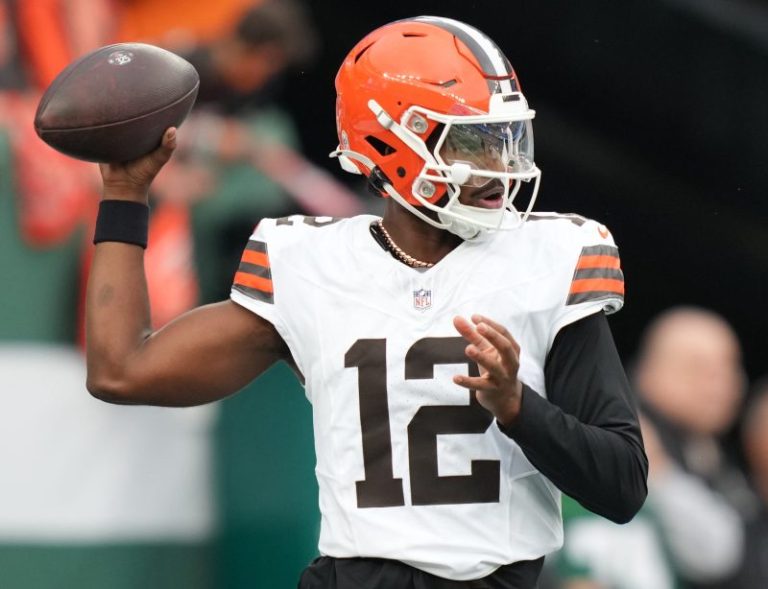
The Cleveland Browns are making their long-awaited quarterback change, but it’s mostly out of necessity.

Browns rookie quarterback Shedeur Sanders will make his first career start for the Browns against the Las Vegas Raiders in Week 12 after fellow rookie Dillon Gabriel’s head injury. Head coach Kevin Stefanski made the announcement at a press conference on Nov. 19.

‘Dillon is still in the concussion protocol,’ Stefanski said. ‘He is improving, but obviously we gotta put a plan together for all of our players, all of our offense, defense or special teams. Plan of attack. Give our guys a chance to go execute and play fast.’

Gabriel exited Cleveland’s Week 11 loss to the Baltimore Ravens with a concussion, giving Sanders the opportunity to get his first pro snaps during the regular season. Sanders entered the game in the second half and came up short on a fourth-quarter comeback in the Browns’ final offensive drive.

The son of Pro Football Hall of Famer Deion Sanders was one of the most discussed prospects in football ahead of the 2025 NFL Draft. Despite many analysts tabbing Shedeur as a potential first-round pick, the Colorado product slid down the board into the fifth round before the Browns selected him with the No. 144 overall pick.

Sanders began the year as Cleveland’s third-string quarterback behind veteran free agent signee Joe Flacco and Gabriel.

The third-round rookie out of Oregon initially took over as the Browns’ starter in Week 5 after the team stumbled out of the gate to the tune of a 1-3 start with Flacco behind center. Gabriel compiled a 1-5 record in six games as the starter before his injury and Cleveland’s ensuing quarterback change.

Browns QB depth chart

  • Shedeur Sanders
  • Dillon Gabriel (out – concussion)
  • Deshaun Watson (Reserve/PUP – Achilles)

Watson re-ruptured his Achilles in January after initially sustaining the injury in Week 7 last year. He still has yet to make a return to practice. Cleveland.com Browns insider Mary Kay Cabot told Cleveland-area radio station 92.3 The Fan on Nov. 11 that she could see Watson’s practice window opening within the next two weeks.

Outside of those three quarterbacks, former Patriots starter Bailey Zappe is on the Browns’ practice squad.

Dillon Gabriel stats

  • Completion rate: 109-of-184 (59.2%)
  • Passing yards: 937
  • Passing touchdowns: 7
  • Interceptions: 2
  • Passer rating: 80.8
  • Fumbles (Lost): 0
  • Rushing: 86 yards on 14 carries (6.14 yards per attempt)
  • Sacks taken: 8

Shedeur Sanders stats

Preseason (two games):

  • Completion rate: 17 of 29 (58.6%)
  • Passing yards: 152
  • Passing touchdowns: 2
  • Interceptions: 0
  • Fumbles (Lost): 0
  • Rushing: 19 yards on four carries (4.75 yards per attempt)
  • Sacks taken: 7

Week 11 (vs. Ravens):

  • Completion rate: 4 of 16 (58.6%)
  • Passing yards: 47
  • Passing touchdowns: 0
  • Interceptions: 1
  • Fumbles (Lost): 1 (0)
  • Rushing: 16 yards on three carries (5.3 yards per attempt)
  • Sacks taken: 2
This post appeared first on USA TODAY

Red Mountain Mining Limited (ASX: RMX, US CODE: RMXFF, or “Company”), a Critical Minerals exploration and development company with a growing portfolio in Tier-1 Mining Districts in the United States and Australia, is pleased to announce that RMXFF successfully commenced trading on the OTCQB this week. The price reached a high of A$0.054 (US$0.035) on the first day of activity.

HIGHLIGHTS

  • RMXFF successfully listed on the US Market (OTCQB) with Red Mountain trading as high as A$0.054 (US$0.035) on the first day, up 36%
  • RMXFF experienced a strong debut, with robust market activity & trading volumes and high levels of US-based investor engagement
  • RMXFF is set to present at the Australian Rare Earths & Critical Minerals Investor Conference on 19 November 2025, to be distributed across the broader US capital markets network
  • Red Mountain is continuing to be actively engaged in discussions with experienced strategic partners to fast-track its US and Australian Critical Minerals Portfolio
  • These discussions are focused on accelerating project development and leveraging partner expertise in navigating US Government funding programs and Critical Minerals project development and support
  • Red Mountain’s United States Critical Minerals Portfolio uniquely includes highly prospective and advantageously located Antimony Projects in both Idaho and Utah – adjacent to projects with significant known Antimony mineralisation
  • In Australia, Red Mountain’s highly prospective Armidale Antimony-Gold Project comprises a large, strategic tenure covering nearly 400km2 of highly prospective ground, located west of Larvotto Resources’ (ASX: LRV $580m market cap) Hillgrove Project, which is Australia’s largest and the world’s eighth largest Antimony deposit – also subject to the recent takeover attempt from United States Antimony Corp (NYSE: UAMY A$1.5b market cap)
  • Since the acquisition of Hillgrove in December 2023, LRV’s market cap has surged from less than $6 million to a high of over $700 million
  • Red Mountain expects to receive and announce the further results from its Armidale Antimony-Gold Project by the end of NovemberRed Mountain also expects to make further updates to the market regarding its US based growth initiatives with the Bureau of Land and Management (BLM) offices returning to normal operational capacity, following the resolution of the US Government shutdown this month

Red Mountain’s highly experienced US-based markets advisory team has successfully supported the RMXFF listing and the Company notes the strong initial US based investor interest and trading volumes, relative to its peers.

Red Mountain’s specialised capital markets and investor engagement advisors, have deep networks within the US capital markets, and the Company is working closely with its advisors to further enhance and complement the benefits of the RMXFF listing.

Red Mountain Mining set to continue aggressive growth strategy

Red Mountain continues to seek further opportunities to expand its portfolio of high-quality Strategic Metals projects in Tier-1 US mining jurisdictions, with a goal of building a portfolio of assets to leverage what is an unprecedented critical shortage of Western supply of Strategic and Critical Metals.

The resolution of the US federal government shutdown on 12 November 2025, allows for Red Mountain to continue its aggressive US growth and expansion strategy. Subject to the satisfactory completion of due diligence, the Company expects to announce further growth initiatives this month.

Click here for the full ASX Release

This post appeared first on investingnews.com

American Uranium Limited (ASX:AMU, OTC:AMUIF) (American Uranium, AMU or the Company) is pleased to advise that hydrogeological testing at its Lo Herma ISR uranium project in Wyoming’s Powder River Basin has commenced. Testing is being undertaken by Petrotek Corporation, a leading injection well and subsurface resources consultancy with more than 28 years of experience in hydrogeological testing and ISR resource development.

Highlights

  • Hydrogeological testing at Lo Herma has commenced, marking a key milestone in advancing towards ISR project development
  • Testing is expected to take approx. 2 weeks with results anticipated by the end of 2026
  • Phase 1 of the resource development drilling campaign at Lo Herma is underway and progressing well with over half of the planned program completed. Initial results are expected before the end of 2026
  • These programs are designed to underpin a Mineral Resource Estimate and Scoping Study update in 2026.

This testing is running concurrently with Phase 1 of the resource development drilling campaign which is progressing well and is now past the halfway point of the resource expansion program. Drilling results are expected by the end of 2026. The hydrogeological testing fieldwork program is expected to be complete during the week commencing November 24th, with results anticipated before the end of 2026.

AMU CEO and Executive Director Bruce Lane commented:

“We are very pleased to now have both the hydrogeological testing and resource development drilling programs underway at Lo Herma. These programs represent major steps toward advancing one of America’s most promising ISR uranium projects. Lo Herma is one of the few near-term, low-cost ISR projects in the U.S. The hydrogeological testing aims to validate our initial aquifer observations and confirm aquifer transmissivity.

“The first phase of drilling is now well underway and past the halfway point with an objective to grow the current 8.57Mlb resource base and ultimately feed into an updated Mineral Resource Estimate and Scoping Study in 2026, positioning us to capitalise on significant support programs in place to support the US domestic nuclear fuel supply chain.”


Click here for the full ASX Release

This post appeared first on investingnews.com

Gold exchange-traded funds, or gold ETFs, have risen in popularity among investors who want precious metals exposure.

ETFs are similar to mutual funds in that they track assets such as stocks, bonds, currencies or commodities; a key difference is that ETFs can be bought and sold on exchanges, making them widely accessible. They provide considerable flexibility in implementing various investment strategies and in building investment portfolios.

Like other ETFs, gold ETFs are traded in the same manner as individual stocks, meaning that investing in the gold ETF market is similar to trading a stock on an exchange.

There are two main types of gold ETFs: those that track the gold price and those that hold investments in gold companies.

ETFs that follow the gold price give investors access to the yellow metal by holding either physical gold bullion or gold futures contracts. It is important to keep in mind that investing in the majority of gold ETFs does not allow investors to own any physical gold — in general, even a gold ETF that tracks physical gold cannot be redeemed for actual gold, although there are a few exceptions to that.

One more thing to keep in mind is that gold ETFs that hold physical gold are taxed as collectibles in the US, giving them a higher maximum capital gains rate, which is worth noting for investors in the highest tax bracket.

The other type of gold ETF invests in gold companies, providing exposure to gold mining, development and exploration stocks, as well as gold royalty stocks.

Read on to learn about the benefits of adding gold ETFs to your portfolio, the five largest gold ETFs by total assets and five top gold miner ETFs.

In this article

    What are the benefits of gold ETFs?

    Gold ETFs are fairly common today, and are a good choice for investors who want to invest in precious metals without trading gold futures or owning physical gold, such as gold coins or bars.

    But gold ETFs are often considered a lower-risk investment, as they have a number of benefits for market participants and can open up a portfolio to diversification.

    For example, physical gold is known for being a hedge against economic and political uncertainty, and owning shares of a gold ETF that offers exposure to the gold spot price provides investors with this same security without the hassle of buying and storing the yellow metal.

    Since gold tends to rise when the US dollar is weak, purchasing a gold ETF could balance out any investment that has the potential to decline when the greenback does. Conversely, selling gold ETF holdings can be beneficial when the US dollar is making gains.

    Gold ETFs that track gold companies give investors exposure to multiple companies in the space rather than having to choose specific stocks. This is an appealing option for those who want exposure to the sector without carrying the risks of investing in an individual stock.

    Gold ETFs as a whole also offer security in that they are managed by yellow metal experts, so there is a better chance of making a profit than going it alone. Of course, it is important to keep in mind that, despite their less risky nature, gold ETFs are still affected by the rise and fall of the gold price.

    Mutual funds are often compared to ETFs, but due to the fact that mutual funds can only be bought or sold at the close of the trading day, gold ETFs become more beneficial as they can be traded whenever the stock market is open, meaning movement is more liquid and not tied down by end-of-day trades.

    Top 5 spot gold ETFs

    The five gold ETFs below offer investors exposure to the spot price of gold by holding gold bullion. These options may be worth considering when it comes to getting exposure to the yellow metal’s price movements.

    According to ETFdb.com, these gold ETFs were the largest gold ETFs by total assets as of November 13, 2025. The five largest gold ETFs all track the gold price.

    1. SPDR Gold Shares (ARCA:GLD)

    Total assets under management: US$139.14 billion
    Unit price: US$380.58

    The SPDR Gold Shares tracks the spot price of gold bullion and is determined by market forces in the 24 hour, over-the-counter market for gold. This market accounts for most global gold trade, and any quoted prices available to ETF investors reflect the latest available information.

    Physical bullion comprises 100 percent of the ETF’s holdings, and its expense ratio is 0.4 percent. It offers investors a way to invest in gold that is much less costly than purchasing, storing and insuring bars or coins.

    2. iShares Gold Trust (ARCA:IAU)

    Total assets under management: US$64.22 billion
    Unit price: US$79.04

    Like the SPDR Gold Trust, the iShares Gold Trust ETF aims to track the spot price of gold bullion. Its expense ratio is 0.25 percent, and its holdings are allocated entirely to physical gold bullion. The aim is for the trust’s value to reflect the performance of the price of gold.

    The physical gold the trust holds is in vaults in locations including New York, US; Toronto, Canada; and London, UK. Investors can purchase and sell shares through a traditional brokerage account throughout the trading day.

    3. SPDR Gold MiniShares Trust (ARCA:GLDM)

    Total assets under management: US$23.33 billion
    Unit price: US$81.89

    The SPDR Gold MiniShares Trust offers investors one of the lowest available expense ratios for a US-listed ETF backed by physical gold at 0.1 percent. This ETF represents fractional, undivided beneficial ownership interests in the trust, which holds only physical gold bullion and, from time to time, cash.

    4. Abrdn Physical Gold Shares ETF (ARCA:SGOL)

    Total assets under management: US$6.95 billion
    Unit price: US$39.43

    The abrdn Physical Gold Shares ETF aims to have its shares reflect the performance of the gold bullion price, minus the trust’s operating expenses, by holding 100 percent physical gold bars. This gold ETF has an expense ratio of 0.17 percent.

    The gold backing the fund comes only in the form of London Good Delivery gold bullion bars refined on or after January 1, 2012, and held in secure vaults in London.

    5. iShares Gold Trust Micro (ARCA:IAUM)

    Total assets under management: US$5.52 billion
    Unit price: US$41.84

    The iShares Gold Trust Micro ETP is the lowest-cost physically backed gold ETP on the market with an expense ratio of just 0.09 percent. The fund is designed to provide exposure to the day-to-day movement of the price of gold bullion. The underlying gold bars are held in vaults.

    Top 5 gold mining ETFs

    These five gold stock ETFs are designed for investors looking to gain exposure to gold miners without the risk of holding individual gold stocks.

    1. VanEck Gold Miners ETF (ARCA:GDX)

    Total assets under management: US$23.89 billion
    Unit price: US$79.18

    The VanEck Gold Miners ETF provides investors with exposure to the largest global gold producers and royalty companies involved in the precious metals space and has an expense ratio of 0.51 percent. Nearly 90 percent of its holdings have market caps above US$5 billion.

    This ETF’s top holdings include Agnico Eagle Mines (TSX:AEM,NYSE:AEM) with a weight of 7.9 percent, Newmont (NYSE:NEM,ASX:NEM) with 7.15 percent and AngloGold Ashanti (NYSE:AU,JSE:ANG) with 5.71 percent.

    Holdings are rebalanced quarterly with qualified companies having a market cap greater than US$150 million, US$1 million in average daily trading volume and a minimum of 250,000 shares traded per month.

    2. VanEck Junior Gold Miners ETF (ARCA:GDXJ)

    Total assets under management: US$8.66 billion
    Unit price: US$101.24

    Similar to the GDX above, the VanEck Junior Gold Miners ETF provides investors with exposure to gold equities; however, it has a stronger focus on smaller gold mining companies and junior stocks, which carry higher risk, but also offer greater potential returns.

    Its top holdings include Pan American Silver (TSX:PAAS) with a weight of 6.45 percent, Equinox Gold (TSX:EQX,NYSEAMERICAN:EQX) with 6.39 percent and Alamos Gold (TSX:AGI,NYSE:AGI) with 5.75 percent.

    Holdings are reviewed in March and September, and rebalanced quarterly, with qualifications matching those for the VanEck Gold Miners ETF. Like the GDX, the GDXJ has an expense ratio of 0.51 percent.

    3. iShares MSCI Global Gold Miners ETF (Nasdaq:RING)

    Total assets under management: US$2.63 billion
    Unit price: US$67.87

    BlackRock’s (NYSE:BLK) iShares MSCI Global Gold Miners ETF provides investors with exposure to a diverse portfolio of global gold mining companies within the Morgan Stanley Capital International (MSCI) index and charges an expense ratio of 0.39 percent.

    Top holdings in the fund include Newmont with a weight of 15.85 percent, Agnico Eagle with 13.33 percent and Barrick Mining (TSX:ABX,NYSE:B) with 8.92 percent.

    4. Sprott Gold Miners ETF (ARCA:SGDM)

    Total assets under management: US$611.45 million
    Unit price: US$64.64

    The Sprott (TSX:SII,NYSE:SII) Gold Miners ETF is an investment product designed to deliver returns that track the Solactive Gold Miners Custom Factors Index, which follows major gold equities listed on Canadian and US exchanges. The ETF is rebalanced quarterly and has a total operating expense of 0.5 percent.

    Top holdings in the fund include Agnico Eagle with a weight of 12.41 percent, Newmont with 8.92 percent and Wheaton Precious Metals (TSX:WPM,NYSE:WPM) with 7.83 percent.

    5. Sprott Junior Gold Miners ETF (ARCA:SDGJ)

    Total assets under management: US$280.97 million
    Unit price: US$76.56

    The Sprott Junior Gold Miners ETF has also been designed to provide results tied to its underlying index, in this case, the Solactive Junior Gold Miners Custom Factors Index, which tracks companies with a market capitalization between US$200 million and US$3 billion.

    The ETF is rebalanced semi-annually in March and September and carries a total management fee of 0.5 percent.

    Top holdings in the fund include Bellevue Gold (ASX:BGL,OTC Pink:BELGF) with a weight of 5.04 percent, Novagold Resources (NYSE:NG) with 5.03 percent and Turk Altin Isletmeleri with 4.94 percent.

    Securities Disclosure: I, Dean Belder, currently hold a direct investment in Equinox Gold.

    This post appeared first on investingnews.com

    (TheNewswire)

    Vancouver, British Columbia, November 19, 2025 TheNewswire – Prismo Metals Inc. (the ‘ Company ‘) (CSE: PRIZ,OTC:PMOMF) (OTCQB: PMOMF) is pleased to report that it has completed a detailed exploration program at the Black Diamond area of its Silver King Project located in Arizona. Work consisted of mapping and sampling of the area including the Black Diamond copper replacement body and the newly encountered strongly altered felsic intrusion with stockwork veining.  A handheld XRF analyzer was used to complete a soil geochemistry grid and to analyze selected rock samples in a qualitative manner. Additionally, an IP survey was recently initiated over the Silver King land package, with results expected by the first week of December.

    Figure 1 .  Map showing the location of the Black Diamond replacement and felsic intrusion exploration targets at the Silver King project.  Claim boundaries are shown in yellow.

    The soil survey defined a large copper anomaly over the Black Diamond replacement body along with some anomalous gold values. Previous rock samples have shown the copper-gold association of mineralization in replacement mineralization. The soil survey also showed Zn, Pb, Ag and Sb anomalies associated with the felsic intrusion. This intrusion is strongly sericitized and is cut by moderate to strong stockwork quartz veins with locally abundant iron oxides after pyrite.

    XRF analysis of rock samples in the area was also completed. Although XRF analyses on rocks are generally qualitative and are not valid assays as are rock samples assayed by the geochemical laboratories, they do indicate the presence of the metals of interest and are useful as guides to mineralization.

    XRF analyses of individual quartz veinlets in the stockwork hosted by the felsic intrusion locally indicate the presence of silver, lead and zinc as well as some antimony.  During the exploration program, Prismo’s geological team took 34 rock chip samples over the area. These samples were submitted to the laboratory with assay results expected in the coming weeks.

    Craig Gibson, Chief Exploration Officer of the Company, stated: ‘These results confirm Black Diamond as a copper-gold replacement body target as was indicated from previous work, making this area a compelling drill target. The data collected from the felsic intrusion indicated that it is mineralized, a feature that was not indicated in reports from previous work by Fischer Watt in 1980, although they considered it a prime target based on alteration mineralogy and fluid inclusion studies 1 .’

    Drill Permit Update

    Prismo also announced that the Forest Service, the federal surface land management entity for Silver King, has determined that the Company’s proposed drill plan meets the regulatory requirements for processing, and that such plan is complete, as described in the regulations at 36 CFR 228.4(c).

    The Forest Service will now proceed with the environmental analysis pursuant to 36 CFR 228(a)(5) in conformity with the National Environmental Policy Act (NEPA). This analysis will proceed as a Categorical Exclusion, the lowest level of environment reviews applicable to projects that are not expected to have a significant effect on the environment, such as Silver King.

    Alain Lambert, CEO of Prismo stated: ‘We are pleased with the steady progress on the permitting front, especially given the now resolved US government ‘shutdown.’

    Mr. Lambert added: ‘With the closing of our recent oversubscribed financing, we are fully funded for the first two phases of drilling. In Phase 1, we plan a drill program at the historic Silver King mine site for about 1,000 meters. That drill plan is designed to test the upper half of the steeply dipping pipelike Silver King mineralized body as well as potential mineralization adjacent to the dense stockwork that was the focus of historic mining.’

    Figure 2 . Cross section through the Silver King mine workings showing proposed drill holes (in black) to test the pipelike mineralized body (in red)

    Given the Company’s recent discoveries, Prismo has added a second phase of drilling for an additional 1,000 meters. This additional program will focus on the newly identified targets outside of the historic mining area, such as the polymetallic vein and the copper vein mentioned above. Drilling of the large body of replacement mineralization on the patented Black Diamond claim is also being planned and is road accessible on private ground.

    1 Haynes, F. and Reynolds, 1980, Silver King Breccia Pipe Prospect, unpublished report, Fischer-Watt Mining Co., 5p.

    QA/QC

    XRF analyses are considered to be qualitative in nature and cannot be considered to be representative of commercial assays.  XRF soil analyses are useful as they indicate variations in metal contents to represent anomalies, although the actual values of the metals present are not necessarily the same as those obtained from commercial geochemical analyses.  The company uses commercial standards when using the XRF analyzer.

    Qualified Person

    Dr. Craig Gibson, PhD., CPG., a Qualified Person as defined by NI-43-01 regulations and Chief Exploration Officer and a director of the Company, has reviewed and approved the technical disclosures in this news release.  The historic data presented in this press release was obtained from public sources, should be considered incomplete and is not qualified under NI 43-101, but is believed to be accurate. The Company has not verified the historical data presented and it cannot be relied upon, and it is being used solely to aid in exploration plans. References to mineralization at the Magma Mine and Resolution Copper deposit is not necessarily indicative to the mineralization on the Silver King property.

    About the Silver King

    Discovered in 1875, the Silver King mine was one of Arizona s most important historic producers, yielding nearly 6 million ounces of silver at grades of up to 61 oz/t.  The Silver King mine sits only 3 km from the main shaft of the Resolution Copper project — a joint venture between Rio Tinto and BHP and one of the world s largest unmined copper deposits with an estimated copper resource of 1.787 billion metric tonnes at an average grade of 1.5% copper (1) . The unique land position is fully surrounded by Resolution Copper s claim block, offering strategic upside. Selected samples from small-scale production in the late 1990s returned grades as high as 644 oz/t silver (18,250 g/t) and 0.53 oz/t gold (15 g/t), indicating that high-grade mineralization remains.

    About Prismo Metals Inc.

    Prismo (CSE: PRIZ,OTC:PMOMF) is a mining exploration company focused on advancing its Silver King, Ripsey and Hot Breccia projects in Arizona and its Palos Verdes silver project in Mexico.

    Please follow @PrismoMetals on , , , Instagram , and

    Prismo Metals Inc.

    1100 – 1111 Melville St., Vancouver, British Columbia V6E 3V6

    Phone: (416) 361-0737

    Contact:

    Alain Lambert, Chief Executive Officer alain.lambert@prismometals.com

    Gordon Aldcorn, President gordon.aldcorn@prismometals.com

    Cautionary Note Regarding Forward-Looking Information

    This release includes certain statements and information that may constitute forward-looking information within the meaning of applicable Canadian securities laws. Forward-looking statements relate to future events or future performance and reflect the expectations or beliefs of management of the Company regarding future events. Generally, forward-looking statements and information can be identified by the use of forward-looking terminology such as intends’ or anticipates’, or variations of such words and phrases or statements that certain actions, events or results may’, could’, should’, would’ or occur’. This information and these statements, referred to herein as ‘forward‐looking statements’, are not historical facts, are made as of the date of this news release and include without limitation, statements regarding discussions of future plans, estimates and forecasts and statements as to management’s expectations and intentions with respect to, among other things: the timing, costs and results of drilling at Silver King.

    These forward‐looking statements involve numerous risks and uncertainties, and actual results might differ materially from results suggested in any forward-looking statements. These risks and uncertainties include, among other things: delays in obtaining or failure to obtain appropriate funding to finance the exploration program at Silver King.

    In making the forward-looking statements in this news release, the Company has applied several material assumptions, including without limitation, that: the ability to raise capital to fund the drilling campaign at Silver King and the timing of such drilling campaign.

    Although management of the Company has attempted to identify important factors that could cause actual results to differ materially from those contained in forward-looking statements or forward-looking information, there may be other factors that cause results not to be as anticipated, estimated or intended. There can be no assurance that such statements will prove to be accurate, as actual results and future events could differ materially from those anticipated in such statements. Accordingly, readers should not place undue reliance on forward-looking statements and forward-looking information. Readers are cautioned that reliance on such information may not be appropriate for other purposes. The Company does not undertake to update any forward-looking statement, forward-looking information or financial outlook that are incorporated by reference herein, except in accordance with applicable securities laws. We seek safe harbor.

    Copyright (c) 2025 TheNewswire – All rights reserved.

    News Provided by TheNewsWire via QuoteMedia

    This post appeared first on investingnews.com