Author

admin

Browsing

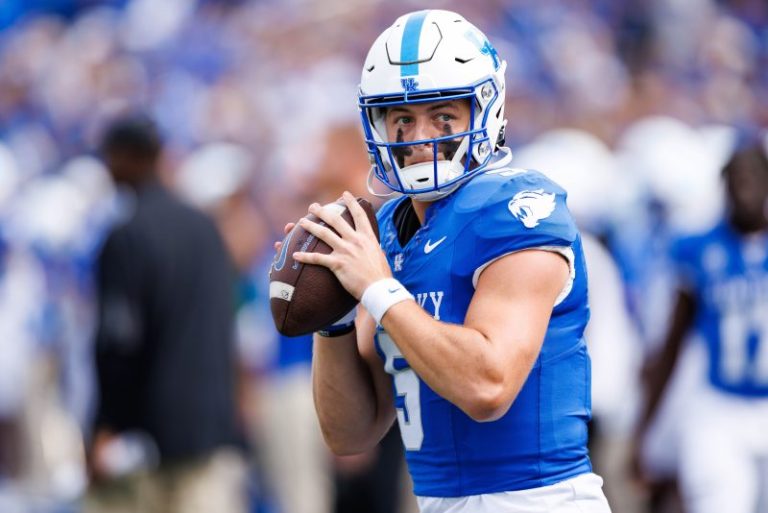
Kentucky football backup quarterback Zach Calzada issued an apology Friday, Nov. 7, after a viral video of him flaunting money made rounds on social media.

Calzada, a seventh-year senior, started his career at Texas A&M before transferring to Auburn, Incarnate Word and now Kentucky. He opened the year as the Wildcats starter but was benched for Cutter Boley after two games.

Calzada was shown in a video not posted by himself flaunting $100 bills. He said he sent the video to someone.

‘Hey, what you need to do, Garrett, is your (expletive) needs to stop hatin’ and go get you some money,’ Calzada said in the video. ‘But since you ain’t got nothing, you go ahead and you can count mine.’

Calzada then counted the bills and fanned them on the floor.

After the video went viral, Calzada addressed it.

‘I take full responsibility for the video I sent to someone on social media,’ Calzada wrote. ‘I let my emotions get the best of me. … I’ll learn from this, do better, and move forward with more respect for the opportunity I’ve been given.’

The 6-foot-4 quarterback is 25-of-53 passing for 234 yards with no touchdowns and an interception this season. He threw for 35 touchdowns last season at Incarnate Word, and FCS program.

Calzada famously led Texas A&M to a 41-38 upset win over Alabama in 2021, as he threw for 285 yards with three touchdowns to an interception in relief of the injured Haynes King, who’s now starring at Georgia Tech.

Calzada doesn’t seem likely to play another snap in his career, with Boley having passed for 1,376 yards with 10 touchdowns to seven interceptions in his six starts, including a five-touchdown performance in Kentucky’s 56-34 loss to Tennessee on Oct. 25.

This post appeared first on USA TODAY

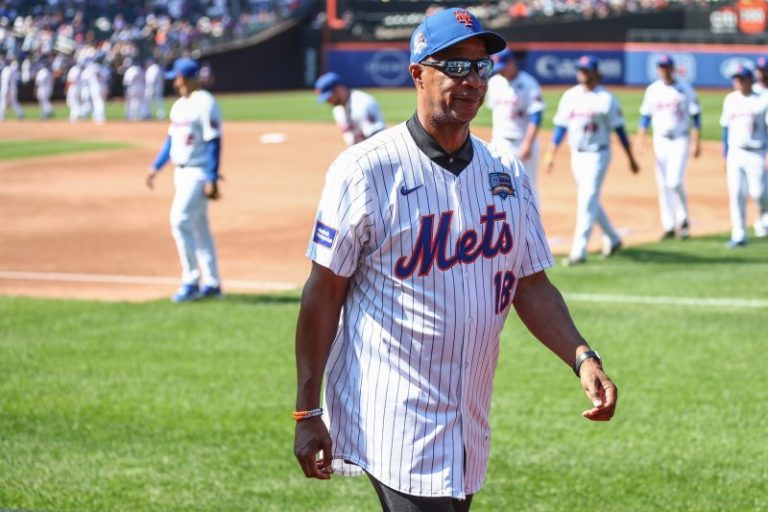
WASHINGTON ‒ President Donald Trump has pardoned former baseball star Darryl Strawberry for a past tax evasion conviction, the White House said on Nov. 7, citing his sobriety and reborn Christian faith.

Strawberry, an eight-time Major League Baseball all-star outfielder, pleaded guilty in 1995 to one count of tax evasion after admitting he knowingly failed to report more than than $350,000 in income from autograph shows.

Strawberry, who was suspended three times during his MLB career for substance abuse, later served 11 months in a Florida prison in an unrelated state case for drug possession and solicitation of prostitution. He was released in 2003.

A White House official who confirmed Trump’s approval of the pardon said Strawberry, now 63 years old, had served his time and paid back the taxes he owed the government. The official said Strawberry has since found faith in Christianity and been sober for more than a decade. Strawberry has become active in ministry and started a drug recovery center that remains active, the official said.

Strawberry, an outspoken campaign supporter of Trump, expressed gratitude for the president’s pardon in a post on Instagram. ‘Thank you, President Trump, for my full pardon and for finalizing this part of my life, allowing me to be truly free and clean from all my past,’ Strawberry wrote.

Strawberry said he received a phone call at 4:37 p.m. ET on Nov. 6 and noticed a Washington, D.C., area code, adding that ‘to my amazement’ he was directed to Trump. He said the president spoke warmly about Strawberry’s peak playing career in the 1980s and ‘then he told me he was granting me a full pardon from my past.’

‘This has nothing to do with politics ‒ it’s about a Man, President Trump, caring deeply for a friend. God used him as a vessel to set me free forever!’ Strawberry said.

The 1983 National League Rookie of the Year, Strawberry is best known for his stint with the New York Mets in the 1980s before ending his career with the New York Yankees. Strawberry also played for the Los Angeles Dodgers and San Francisco Giants. He played for three World Series champion teams, including one for both New York teams.

Trump has been active with his clemency power in recent weeks.

In October, he commuted the seven-year prison sentence of former Republican New York U.S. Rep. George Santos for wire fraud and aggravated identity theft. He later pardoned Binance founder Changpeng Zhao ‒ a key supporter of the Trump family’s crypto venture who pleaded guilty to money laundering charges. On Nov. 6, Trump pardoned former Tennessee House Speaker Glen Casada and his top aide, Cade Cothren, before both men were set to report to prison to serve sentences on public corruption charges.

Reach Joey Garrison on X @joeygarrison.

This post appeared first on USA TODAY

Nevada Sunrise Metals Corporation (TSXV: NEV,OTC:NVSGF) (OTC Pink: NVSGF) (‘Nevada Sunrise’ or the ‘Company’) is pleased to announce it has closed a non-brokered private placement (the ‘Offering’) for gross proceeds of $650,000, consisting of 13,000,000 units (the ‘Units’) at a price of $0.05 per Unit, with each Unit comprised of one common share of the Company and one common share purchase warrant (a ‘Warrant’). Each Warrant will entitle the holder to purchase one common share at a price of $0.075 for a period expiring three years from the closing date of the Offering. Due to investor demand, the Offering was increased from $600,000 (12,000,000 Units) (see news release dated October 16, 2025) to $650,000 (13,000,000 Units).

Proceeds of the Offering will be used for:

  • Exploration work on the Company’s Nevada mineral properties;
  • Other mineral property investigations, and general working capital.

The Offering was available to accredited investors and individuals that qualified under certain other statutory exemptions. The securities issued pursuant to the Offering are subject to a statutory hold period expiring March 7, 2026. In connection with the closing of the Offering, the Company paid finder’s fees consisting of a total of $31,500 cash and 630,000 finder’s warrants (each a ‘Finder’s Warrant‘) to Canaccord Genuity Corp. Each Finder’s Warrant is exercisable at a price of $0.075 for a period of three years from the closing date of the Offering. The Offering is subject to acceptance of the TSX Venture Exchange.

This news release does not constitute an offer of sale of any of the foregoing securities in the United States. None of the foregoing securities have been and will not be registered under the U.S. Securities Act of 1933, as amended (the ‘1933 Act‘) or any applicable state securities laws and may not be offered or sold in the United States or to, or for the account or benefit of, U.S. persons (as defined in Regulation S under the 1933 Act) or persons in the United States absent registration or an applicable exemption from such registration requirements. This news release does not constitute an offer to sell or the solicitation of an offer to buy nor will there be any sale of the foregoing securities in any jurisdiction in which such offer, solicitation or sale would be unlawful.

About Nevada Sunrise

Nevada Sunrise is a junior mineral exploration company with a strong technical team based in Vancouver, BC, Canada, that holds interests in gold, copper and lithium exploration projects located in the State of Nevada, USA.

Nevada Sunrise holds the right to purchase a 100% interest in the Griffon Gold Mine Project, located approximately 50 kilometers (33 miles) southwest of Ely, NV.

Nevada Sunrise holds the right to earn a 100% interest in the Coronado Copper Project, located approximately 48 kilometers (30 miles) southeast of Winnemucca, NV.

Nevada Sunrise owns 100% interests in the Gemini West, Jackson Wash and Badlands lithium projects, all of which are located in the Lida Valley in Esmeralda County, NV.

As a complement to its exploration projects in Esmeralda County, the Company owns Nevada Water Right Permit 86863, also located in the Lida Valley basin, near Lida, NV.

For Further Information Contact:

Warren Stanyer, President and Chief Executive Officer
email: warrenstanyer@nevadasunrise.ca
Telephone: (604) 428-8028
Website: www.nevadasunrise.ca

FORWARD LOOKING STATEMENTS

This release may contain forward‐looking statements. Forward looking statements are statements that are not historical facts and are generally, but not always, identified by the words ‘expects’, ‘plans’, ‘anticipates’, ‘believes’, ‘intends’, ‘estimates’, ‘projects’, ‘potential’ and similar expressions, or that events or conditions ‘will’, ‘would’, ‘may’, ‘could’ or ‘should’ occur and include disclosure of anticipated exploration activities. Although the Company believes the expectations expressed in such forward‐looking statements are based on reasonable assumptions, such statements are not guarantees of future performance and actual results may differ materially from those in forward looking statements. Forward‐looking statements are based on the beliefs, estimates and opinions of the Company’s management on the date such statements were made. The Company expressly disclaims any intention or obligation to update or revise any forward‐looking statements whether as a result of new information, future events or otherwise.

Such factors include, among others, risks related to future plans for the Company’s Nevada mineral properties; reliance on technical information provided by third parties on any of our exploration properties; changes in mineral project parameters as plans continue to be refined; current economic conditions; future prices of commodities; possible variations in grade or metallurgical recovery rates; failure of equipment or processes to operate as anticipated; the failure of contracted parties to perform; labor disputes and other risks of the mining industry; delays due to pandemic; delays due to weather; delays in obtaining governmental approvals, financing or in the completion of exploration, as well as those factors discussed in the section entitled ‘Risk Factors’ in the Company’s Management Discussion and Analysis for the Nine Months ending June 30, 2025, which is available under Company’s SEDAR profile at www.sedarplus.com.

Although Nevada Sunrise has attempted to identify important factors that could cause actual actions, events or results to differ materially from those described in forward-looking information, there may be other factors that cause actions, events or results not to be as anticipated, estimated or intended. There can be no assurance that such information will prove to be accurate as actual results and future events could differ materially from those anticipated in such statements. Nevada Sunrise disclaims any intention or obligation to update or revise any forward-looking information, whether as a result of new information, future events or otherwise. Accordingly, readers should not place undue reliance on forward-looking information.

Neither TSX Venture Exchange nor its Regulation Services Provider (as that term is defined in the policies of TSX Venture Exchange) accepts responsibility for the adequacy or accuracy of this release.

NOT FOR DISSEMINATION IN THE UNITED STATES OR TO UNITED STATES NEWSWIRE SERVICES

To view the source version of this press release, please visit https://www.newsfilecorp.com/release/273569

News Provided by Newsfile via QuoteMedia

This post appeared first on investingnews.com

Fertilizer prices remained elevated in Q3 compared to both the first half of the year and the end of 2024.

Potash prices surged at the start of the year as the Trump administration threatened tariffs on Canada, the top supplier to US farmers. During the third quarter, prices were 20 percent higher than at the end of last year.

Meanwhile, phosphate prices continued to climb through Q3 on the back of supply shortages, spurred by export restrictions from top producer China. Prices were further influenced by US tariffs.

What happened to phosphate and potash prices in Q3?

According to data from the World Bank, the average quarterly phosphate price rose to US$770.60 per metric ton (MT), up from US$673.20 in Q2, and significantly higher than the annual average of US$563.70 in 2024.

On a monthly basis, phosphate climbed to US$736 in July, then climbed to a three year high of US$795.10 in August. Since then, the price has fallen to US$780.63 in September and US$754 in October.

The quarterly average for potash fell slightly in Q3 to US$352.20 per MT, down from US$359.20 the previous quarter, but remained higher than US$283.90 in the last quarter of 2024.

On a monthly basis, potash prices eased to US$362.50 in July, and continued to fall to US$356.50 in August. They sank further to US$352.50 in September and US$352 in October.

What factors impacted phosphate in Q3?

Phosphate prices have been primarily influenced over the last several years by export restrictions from China, which have declined to 6.6 million MT in 2024 from 9 million MT in 2021. The restrictions were put in place to protect the domestic supply, and while the hope was that they would eventually ease, that hasn’t happened.

“As expected, their exports started to arrive in July to September; however, the government had a self-imposed October 15 cutoff date for export submission. That date came and went without an extension, so now the belief is their flows will slow to a crawl very soon,” he said. The situation may face additional headwinds, as China has imposed more restrictions on key battery technologies and precursors for phosphate-based batteries. These restrictions will add to demand for ex-China supply as the agricultural sector competes with battery makers for a limited supply of phosphate.

Demand for phosphate is also high, particularly from India, which has been working to increase its stockpiles since the end of 2024, when they reached a low of 1.1 million MT. However, stockpiles had more than doubled to 2.4 million MT at the start of October, with imports climbing to 4 million MT during the April to September period.

Much of the demand has been covered by supply from Saudi Arabia and Morocco, which signed several offtake agreements with Indian importers in July. “They were a major driver of higher prices for much of 2025 as they played catch up on stockpiles, and have finally reached a comfortable number of tons, which has allowed them to slow their desperate pace. The slower demand pace has allowed the market time to breathe/correct lower,” Linville said.

For US-based farmers, supply isn’t the only issue.

On August 7, a host of new tariffs as high as 25 percent were applied to phosphate imports, including from Saudi Arabia, which accounted for 54.7 percent of imports during the first five months of the year. Although there were some concerns that higher prices could prompt farmers to rethink their strategy, Linville hasn’t seen that materialize either.

With reports that farm yields this year have been higher, it may prompt farmers who have been on the fence about a fall application of phosphate to reconsider, as a significant yield would indicate some phosphate soil depletion.

“While still spoty, we are continuing to hear reports that phosphate demand is better than expected,” he said.

However, Linville noted that a surge in last-minute demand it could make supplies tighter and limit the ability for phosphate to make it onto the fields.

What factors impacted potash in Q3?

Linville said potash news was quiet during the quarter, pointing to stable prices and a well-supplied market.

In July, BHP (ASX:BHP,NYSE:BHP,LSE:BHP) announced it was delaying the opening of its Jansen mine in Saskatchewan. It was initially slated to start production in 2026, but has instead moved its timeline back to 2027 and is also considering pushing the second phase to 2031, citing cost overruns that have ballooned to US$7 billion.

Although potash has so far escaped US tariffs, Linville noted some concern following Ontario’s anti-tariff ad, which ran in the US during the World Series. “We continue to hope/believe that potash will be left alone as part of the North America Trade agreement. Assuming potash is left alone, markets should continue as normal; however, if we start seeing barriers to entry, US farmers will likely bear the brunt of most/all of those tariffs,” he said

Potash and phosphate price forecast for 2025

While potash markets remain stable, phosphate markets are much more dynamic.

Unless there is a significant shift in China’s exports, supply should remain tight. In his most recent weekly update on November 5, Linville noted that the situation could become dire for US consumers before the end of the year.

“We continue to advise our people that if they decide they need phosphate after all, do not wait to lock it up. Days very well may matter. Heck, hours might matter. Supplies are tight and can ill-afford a sudden demand jump,” he wrote.

Additionally, markets are likely to become further strained in the years to come as limited supply meets increased demand from outside the agricultural sector.

Securities Disclosure: I, Dean Belder, hold no direct investment interest in any company mentioned in this article.

This post appeared first on investingnews.com

Here’s a quick recap of the crypto landscape for Wednesday (November 5) as of 9:00 p.m. UTC.

Get the latest insights on Bitcoin, Ether and altcoins, along with a round-up of key cryptocurrency market news.

Bitcoin and Ether price update

Bitcoin (BTC) was priced at US$103,902, a 3.3 percent increase in 24 hours and its highest valuation of the day. Bitcoin’s lowest valuation on Wednesday was US$102,377.

Bitcoin price performance, November 5, 2025.

Chart via TradingView.

Both Bitcoin and Ether (ETH) are showing signs of recovery after a volatile start to the week. Current price action is driven by derivatives liquidations, options settlement dynamics and sustained retail and institutional fear.

Ether ended the trading day at US$3,448.04, an increase of 7.5 percent over the last 24 hours. Its lowest valuation of the day was US$3,326.02. Like Bitcoin, Ether is attempting a rebound near a significant technical and psychological level, but uncertainty remains elevated. The Fear and Greed Index remains in “extreme fear” at 20, reflecting persistent nervousness after long-term holders and whales triggered mass liquidations.

“Market data and technical signals suggest Bitcoin may trade within a US$94,000–US$118,000 range in the near term. The lower bound represents a healthy retracement zone consistent with subdued ETF inflows, while the upper range reflects a measured recovery below the October high near US$125K. Ethereum is likely to move between US$3,000 and US$4,400, supported by Layer-2 expansion and renewed DeFi participation,’ she said via email.

“Overall, the market appears to be stabilizing in a more disciplined, data-driven manner, signaling that confidence is returning through structural resilience and steady capital reallocation.”

Meanwhile, Galaxy’s head of research, Alex Thorn, said that the investment company has lowered its 2025 Bitcoin price forecast from US$185,000 to US$120,000.

Altcoin price update

  • Solana (SOL) was priced at US$162.69, up by 6.6 percent over the last 24 hours and at its highest valuation of the day. Its lowest was US$157.65.
  • XRP was trading for US$2.37, up by 9.7 percent over the last 24 hours to its highest valuation of the day. Its lowest was US$2.25.

Crypto derivatives and market indicators

Over the past four hours, Bitcoin has seen liquidations totaling US$16.11 million, mostly in short positions, suggesting a short-covering rally and improving near-term sentiment. Futures open interest is fractionally down 0.15 percent to US$70.17 billion, indicating a minor position reduction after aggressive selling earlier in the week.

The funding rate is neutral at 0.001, signaling balanced sentiment between longs and shorts, while implied volatility remains elevated at 45.9 percent, pointing to continued market uncertainty.

Max pain for options expiry sits at US$104,000, a level that the Bitcoin price is approaching.

Meanwhile, US$27.84 million in Ether options positions, also primarily shorts, have been liquidated in the past four hours, contributing to the uptrend as risk reversals shift. Ether has seen a 1.51 percent increase in open interest to US$40.3 billion, and its funding rate is slightly negative at -0.001, strengthening the bullish undertone.

Bitcoin dominance stands at 57.21 percent.

Today’s crypto news to know

Ripple secures US$500 million boost at US$40 billion valuation

Ripple has raised US$500 million in a new funding round led by Fortress Investment Group and Citadel Securities, valuing the company at US$40 billion. The investment follows Ripple’s US$1 billion tender offer earlier this year at the same valuation, marking a continuation of investor confidence in the firm’s long-term outlook.

Ripple said the funds will strengthen its partnerships with financial institutions and expand its services across custody, stablecoin issuance and crypto treasury management. The company’s RLUSD stablecoin has gained traction for corporate payments amid clearer US regulations under the GENIUS Act. The funding also positions Ripple to deepen its role in global payments as more firms integrate stablecoins into settlement networks.

Canada announces plans to introduce stablecoin legislation

The Canadian government announced as part of its 2025 budget that it plans to introduce legislation regulating fiat-backed stablecoins. The legislation aims to provide a secure, stable framework encouraging the development of Canadian-dollar pegged stablecoins, modernizing payment systems and fostering digital innovation.

The new rules will require stablecoin issuers to maintain sufficient asset reserves to back their digital currencies, safeguard consumer interests and comply with national security standards to protect personal data.

The Bank of Canada will receive C$10 million over two years starting in the 2026 to 2027 period to oversee the new framework, with ongoing costs expected to be covered by stablecoin issuers.

Northern Data exits Bitcoin mining in US$200 million AI transition

Northern Data Group, Europe’s largest Bitcoin-mining company, is divesting its mining arm, Peak Mining, in a deal worth up to US$200 million as it pivots entirely toward artificial intelligence (AI) infrastructure. The transaction includes US$50 million in upfront cash and up to US$150 million in performance-based payments tied to future profits.

The move follows the Bitcoin halving this past April, which cut mining revenues in half and accelerated the firm’s strategic shift. The company plans to repurpose its mining facilities in Texas for high-performance AI workloads, which can yield up to 10 times more revenue per megawatt than Bitcoin mining.

The company already owns over 220,000 GPUs through prior acquisitions.

Balancer protocol suffers major exploit

The Balancer DeFi protocol suffered a major exploit on Tuesday (November 3), losing about US$128 million in assets from its V2 Composable Stable Pools due to a precision rounding error and access control flaws in its smart contracts.

According to a report released after the attack, the infiltrator manipulated swap calculations and batch swaps to drain liquidity across multiple blockchains, including Ether, Polygon, Arbitrum and others.

Balancer promptly paused affected pools, confirmed no impact on V3 or other versions, and is collaborating with forensic and security experts to trace and recover funds. So far, US$19.3 million worth of StakeWise osETH has been recovered. Balancer has offered a white hat bounty for full asset return within 48 hours and continues investigating.

Securities Disclosure: I, Giann Liguid, hold no direct investment interest in any company mentioned in this article.

Securities Disclosure: I, Meagen Seatter, hold no direct investment interest in any company mentioned in this article.

This post appeared first on investingnews.com
Former LSU football coach Brian Kelly shared his first statement on Thursday, Nov. 6, since being fired nearly two weeks ago.

Kelly was fired midway through his fourth season with the Tigers on Oct. 26 following LSU’s 49-25 loss to Texas A&M at home.

The move has sent a shockwave through LSU athletics in the aftermath, which also parted ways with athletic director Scott Woodward. LSU president Wade Rousse, who was named as the university’s next leader on Nov. 4, then named Verge Ausberry the Tigers’ permanent athletic director after serving in an interim role for a few days.

‘As everyone heads on their way to see the Tigers play, I wish Coach (Frank) Wilson, the coaches and our players the best this weekend,’ Kelly wrote on social media. ‘I know they will do their best for themselves and for LSU. We will be watching and cheering for you.

‘This journey may have ended, but it’s a journey that will stay with me and my family forever.’

Kelly had never been fired as a college head coach before. The 64-year-old coach led Division II Grand Valley State to back-to-back national championships before moving to Central Michigan, where he finished 9-4 in his last season.

Kelly then took over at Cincinnati and led the Bearcats to back-to-back New Year’s Six bowls in 2008-09. He then went 92-39 at Notre Dame and won double-digit games in his final five seasons there.

Kelly couldn’t quite bring the same success to Baton Rouge, though, with the Tigers failing to finish ranked in the top 10 in his first three seasons with the program. LSU’s leaders said they expect to reach the College Football Playoff every season with the expanded 12-team bracket, and that wasn’t going to happen in 2025 after the Tigers’ third loss, which ultimately led to Kelly’s exit.

Each of the three coaches at LSU before Kelly – Nick Saban, Les Miles and Ed Orgeron – won national titles with the program. Kelly went 34-14 during his time with the program.

‘The losses will always hurt, but I will remember all of the wins,’ Kelly wrote.

This post appeared first on USA TODAY

This article discusses suicide and suicidal ideation. If you or someone you know is struggling or in crisis, help is available. Call or text 988 or chat at 988lifeline.org.

Dallas Cowboys defensive end Marshawn Kneeland died at age 24 early in the morning of Nov. 6, according to statements from both the Cowboys and Jonathan Perzley, his agent and friend.

Frisco, Texas Police are investigating Kneeland’s death as a possible suicide. In a statement, the department officials said they responded to a request from the Texas Department of Public Safety to assist in finding a car that evaded state troopers during a pursuit. They later found the car crashed on Dallas Parkway with signs that Kneeland, the driver, fled on foot.

The Collin County Medical Examiner’s Office will determine the cause of Kneeland’s death, the statement continued.

Tonight, the Las Vegas Raiders and Denver Broncos face off in ‘Thursday Night Football’ to kick off Week 10. The game will hold a moment of silence for Kneeland after this morning’s news.

Prime Video’s ‘Thursday Night Football’ crew of analysts took turns sharing their feelings about what happened.

Longtime NFL offensive tackle Whitworth brought up his work with veterans and their mental health.

‘This is the kind of conversations all the time about when this uniform comes off, when the helmet comes off of us, and sometimes we think of ourselves as superheroes out there on that field,’ he said. ‘But when we come off of it we’re hurt, we’re stressed just like everybody else. Just hope that for everybody out there that’s experiencing that pain of the today, they remember to reach out to one another.’

‘It’s so heavy,’ former All-Pro cornerback Richard Sherman said. ‘When you’re a former player, you recognize it so much more how much you can reach out to guys, how much more you have to reach out and check on guys mentally because we all have those demons. We have those things you’re dealing with but you don’t ever want to be dealing with them alone… You can be vulnerable. You can still be a great player.’

Current and former NFL players as well as teams paid tribute to Kneeland after news of his death. The NFL also released a statement offering condolences to Kneeland’s loved ones and help for the Cowboys.

‘We are deeply saddened by the tragic news of the passing of Cowboys’ Marshawn Kneeland,’ the NFL said. ‘Our thoughts and prayers are with his girlfriend Catalina, family, friends and his teammates. We have been in contact with the Cowboys and have offered support and counseling resources.’

This post appeared first on USA TODAY

Wisconsin won’t be searching for a new football coach this year, as the athletic director confirmed Luke Fickell will return to lead the Badgers in 2026.

Athletic director Chris McIntosh confirmed Fickell’s status to ESPN on Thursday, Nov. 6 and informed the team of the decision.

The decision comes weeks after McIntosh voiced his support for Fickell to finish what has been a disastrous year for the Badgers. Wisconsin is currently 2-6 with six consecutive losses, and one of four Big Ten teams without a conference victory. It has come while playing one of the hardest schedules in the country that includes five teams currently ranked in US LBM coaches poll, with three in the top 10.

With Washington and Indiana still left on the schedule, It’s on pace to be the worst season for Wisconsin since 1990, Barry Alvarez’s first season in Madison. Fans have voiced displeasure with Fickell and attendance has been down at Camp Randall Stadium, which is on pace to be its lowest since 1992.

‘This season has caused us all to have to look from within,’ McIntosh said. ‘Luke has had to do that. I’ve had to do that. He has a willingness to be better. So do I, and so does Wisconsin from an institutional perspective.’

The athletic director added the university is increasing its investment into the program and roster that will hopefully put the team back on track to achieve the success it sustained in the 2010s.

‘Chancellor (Jennifer) Mnookin and I are aligned on significantly elevating investment in our program to compete at highest level,’ McIntosh said. ‘We are willing to make an investment in infrastructure and staff. As important, is our ability to retain and recruit players in a revenue share and NIL era.’

Fickell is in his third season with Wisconsin after a successful tenure at Cincinnati, where he led the Bearcats to be the first Group of Five team the reach the four-team College Football Playoff in 2021.

Since he was hired in 2022, Fickell is 15-19 with an 8-15 mark in the Big Ten play. After going 7-6 in his first season with an appearance at ReliaQuest Bowl, Wisconsin finished 5-7 in 2024, ending its streak of 22 consecutive seasons with a bowl appearance. 

Fickell’s contract runs through the 2031 season. By retaining him for the 2026 season, Wisconsin avoids having to pay buyout of $27.1 million if he was fired before Dec. 1. In 2026, Wisconsin will open the season with a game against Notre Dame at Lambeau Field then home contests against Western Illinois and Pittsburgh.

This post appeared first on USA TODAY

Minnesota Wild forward Tyler Pitlick was kicked out of Thursday’s game after his hit left another Carolina Hurricanes defenseman with an injury.

Pitlick received a match penalty for an illegal check to the head in the first period after he caught Jalen Chatfield with a hit that sent the defenseman’s head snapping back.

Chatfield was down on the ice for a while before being assisted to the dressing room, adding to Carolina’s injury woes on the blue line.

Hurricanes captain Jordan Staal jumped in and fought Pitlick. Staal received 17 penalty minutes, including two for instigating and a misconduct, in his milestone game.

Staal was playing in his 910th game with the Hurricanes, breaking brother Eric’s record for most appearances since the team moved to North Carolina.

The Hurricanes announced that Chatfield would not return because of an upper body injury. That’s bad news for the Hurricanes, who have been banged up on the blue line.

They had activated defenseman K’Andre Miller from the injured list before the 4-3 Carolina win. Shayne Gostisbehere remains out with an injury and Jaccob Slavin has been limited to two games.

‘This is just the way this year has gone,’ coach Rod Brind’Amour said. ‘We just can’t get healthy and then keep losing key pieces. That’s rough. I don’t know how long (Chatfield is) going to be out, but it was a tough hit.’

The USA TODAY app gets you to the heart of the news — fast.Download for award-winning coverage, crosswords, audio storytelling, the eNewspaper and more.

This post appeared first on USA TODAY