Author

admin

Browsing
  • The Miami Dolphins have little recourse for shifting plans and adapting to Tyreek Hill’s season-ending knee injury.
  • The Dolphins’ reckless approach to managing the cap and building a roster has boxed the organization in for some time.
  • Miami largely eschewed efforts to rethink its route despite a 2024 season that presented plenty of problems.

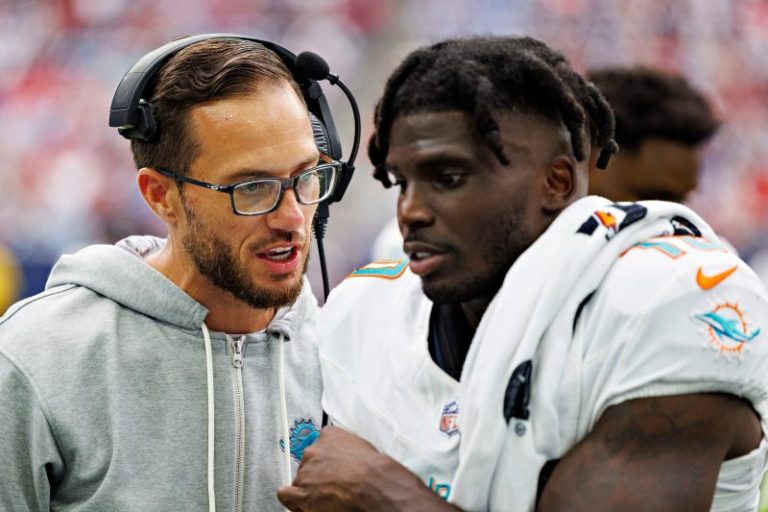
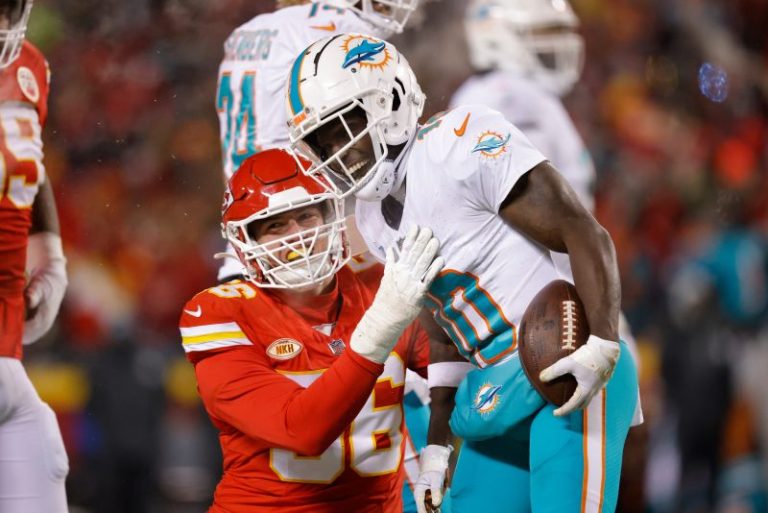
The Miami Dolphins’ prospects for a bright future have been dimming for some time. But with Tyreek Hill suffering a season-ending dislocated knee on Monday, a franchise that has long since passed a point of no return now is facing what looks like the beginning of a long-awaited end.

Few franchises could withstand having to navigate the bulk of a season without their top target, and Miami is no exception. Despite having largely struggled to rekindle his connection with Tua Tagovailoa in the early going, Hill still has more than one-third of the Dolphins’ receiving yards so far in 2025. His overall presence was instrumental to Mike McDaniel’s offense, with the rest of the skill-position crew having grown accustomed to the benefits of working alongside a player who consistently pulls defense’s attention and resources thanks to his game-breaking ability.

With Miami having vaulted to prominence under McDaniel by making splashy moves to acquire high-priced veterans, it was natural to wonder whether the organization would take bold action to try to salvage a 1-3 season that’s quickly spinning out of control.

But Hill’s injury seems more likely to come with a level of resignation for a front office that has few moves left at its disposal. Miami has the fourth-lowest available cap space of any team at just over $3 million, according to Over The Cap. Talented pass catchers don’t tend to come cheap, and those who do don’t figure to be available at the Nov. 4 trade deadline.

Tyreek Hill thanks fans for support after knee injury in video message

Now, at what could be a career-defining juncture for McDaniel and Grier, the duo has no easy recourse to clean up a mounting mess they have largely overlooked for some time.

The latest injury setback is a massive blow for a franchise that has already seen recent seasons derailed by long-term losses of Tua Tagovailoa, Bradley Chubb and Jaelan Phillips. But the Dolphins are not a mere victim of outside circumstance. Doubling down on a flawed roster pushed Miami to a point where it had limited options to either retreat or move in a different direction, even when it became apparent that blazing a new path was necessary.

McDaniel and Grier began down this road in the aftermath of a 2023 season that saw the team go 11-6 before falling to the Kansas City Chiefs in the wild-card round. With an offense that led the league in yards per game and a defense that finished 10th, Miami harbored hopes of joining the AFC’s contending class and securing the organization’s first postseason win since 2000.

But while a 12-month run that brought in Hill, Bradley Chubb and Jalen Ramsey via trades transformed the top tier of the roster, Miami didn’t see the bill for its imbalanced approach come due until the 2024 offseason.

In addition to signing Tua Tagovailoa to a four-year, $212.4 million extension, the Dolphins also inked wide receiver Jaylen Waddle to a three-year, $84.75 million extension before locking in Hill with a restructured deal that shifted significant money forward to 2024 and ’25. Crucial to solidifying that core was a free agency stretch in which standout defensive tackle Christian Wilkins and offensive guard Robert Hunt signed massive deals elsewhere. The widespread defections also included linebacker Andrew Van Ginkel, who went on to enjoy a Pro Bowl campaign with the Minnesota Vikings last season.

Paying exorbitant prices for marquee veterans doesn’t have to be a short-term play at a time when the salary cap rapidly expands year over year. But unlike the Los Angeles Rams, who secured a Super Bowl with an analogous caution-to-the-wind approach in valuing draft picks, the Dolphins failed to cover lower-investment spots with capable young starters on the cheap. The Chubb and Hill trades deprived Miami of its first-round choices in 2022 and ’23, and Miami managed to find just one notable contributor across those two classes in running back De’Von Achane.

The toll of the imbalanced roster was felt particularly along the offensive and defensive lines, which played central roles in the team’s 8-9 unraveling in 2024. Tagovailoa suffered his third documented concussion in Week 2 and missed four games, putting the team in a hole from which it would not emerge. The once-electric run game short-circuited, ranking 31st in expected points added per carry with little help from the blocking up front.

Former NFL team physician says WR Tyreek Hill’s injury possibly career-ending

After Grier and McDaniel were retained for 2025 but put on notice by owner Stephen Ross, the general manager seemed to back away from the tactics he once so readily embraced.

‘It’s just not sustainable the way the contracts are with players and what they’re making now,’ Grier said in late August in explaining the team was in the midst of a ‘reset’ rather than a rebuild. ‘So in terms of directive, no; for us, it was just good business sense working through it and trying to find value, but we also had to get younger, so we added younger players.’

Other than trading disgruntled cornerback Jalen Ramsey and tight end Jonnu Smith to the Pittsburgh Steelers and watching safety Jevon Holland walk to the New York Giants, however, it’s essentially been the ‘status quo’ that Ross insisted the organization wouldn’t settle for.

This month was hardly the first indication of a deeper problem, as franchise leadership has eschewed off-ramps and resisted other challenges to the team’s dynamic. Grier repeatedly shot down trade speculation this offseason surrounding Hill, with the receiver’s open-market value likely sapped by his end-of-season meltdown, decline in production and domestic violence allegations. Dealing him at last year’s trade deadline amid a 2-6 start might have yielded the optimal return, but doing so was almost assuredly a non-starter for an outfit that would have taken a massive competitive hit and been saddled with extensive cap ramifications.

The fallout from defensive coordinator Vic Fangio’s split with the organization after the 2023 season also might have been a harbinger for the multi-season descent. In the aftermath of Fangio’s exit, several Dolphins players – including Holland – took shots at one of the NFL’s most highly respected defensive minds. Fangio went on to orchestrate a Philadelphia Eagles defense that engineered an immediate turnaround, capped by the unit clamping down on Patrick Mahomes and the Chiefs in Super Bowl 59. The Dolphins’ internal strife only deepened, with multiple reports detailing the organization’s widespread effort to push enhanced accountability this offseason.

Yet after a 33-8 loss to the Indianapolis Colts in Week 1, a players-only meeting was called on the team’s off day.

The Colts are a meaningful reference point for how the Dolphins have done little to help themselves. Coach Shane Steichen and Chris Ballard faced a similar outlook as McDaniel and Grier did entering the campaign, with late owner Jim Irsay giving a reprieve yet stating improvements were needed after an 8-9 mark.

Steichen and Ballard took that to heart. In signing Daniel Jones and then installing him as the team’s starting quarterback, the duo sought to set things right after the disastrous start to No. 4 overall pick Anthony Richardson’s career. They managed to do so by reconfiguring the offense once dominated by Richardson’s downfield shots into a precise, on-schedule attack replete with schemed solutions for the signal-caller. The shift has unlocked levels of production that once seemed unattainable with Jones at the helm, as Indianapolis averages a league-best 6.5 yards per play.

But the reconsideration of the Colts’ previous tendencies didn’t stop there. Indianapolis brought aboard defensive coordinator Lou Anarumo to replace Gus Bradley’s largely static scheme, and the early dividends have been extremely favorable. Cornerback Charvarius Ward and safety Cam Bynum also arrived as high-priced free agents, with Ballard having the flexibility to address a problem area thanks to his discerning approach to investing. Now, the team stands at 3-1 and in a tie atop the AFC South despite not taking a sledgehammer to the coaching staff or roster.

Maybe comparable avenues for improvement were largely closed to a Dolphins franchise that only had so much room to maneuver. But some degree of creativity was clearly required for a group boxed into seeing out a vision yielding diminishing results.

With no wiggle room and only the faintest of hopes of seeing the ‘next man up’ philosophy push the organization to even the periphery of the playoff race, Miami might be a non-entity at the trade deadline – and possibly the rest of the season. The best course of action might actually be to sell off any key pieces, including Phillips, who could fetch a nice return in the final year of his deal. But going that route would entail the team’s leadership taking a short-term hit for returns to be realized down the road, and no one has prioritized the team’s timeline in that fashion.

Amid a groundswell of criticism regarding the direction of the Dolphins this offseason, McDaniel put forth a mantra for 2025: ‘They talk, we do.’ If only he and Grier had embraced that mindset when it came to reimagining the franchise’s approach before it was already too late.

This post appeared first on USA TODAY

  • Arkansas’ firing of Sam Pittman triggers motion on SEC football coaching carousel.
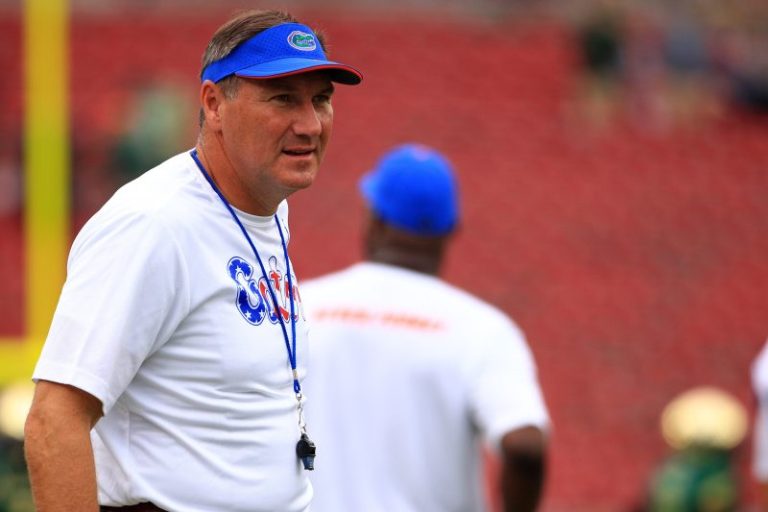
  • Dan Mullen makes more sense for Arkansas than Jon Gruden or Bobby Petrino.
  • Rhett Lashlee might make the most sense of all, if only he’d leave SMU.

We have motion on the SEC coaching carousel, and it’s full steam ahead.

Arkansas needs a coach after firing Sam Pittman, and, hey Jon Gruden’s not only available, but he wants to coach in the SEC.

A perfect match? Well, about that …

On this edition of ‘SEC Football Unfiltered,’ a podcast from the USA TODAY Network, hosts Blake Toppmeyer and John Adams consider potential candidates for the Arkansas job with a round of love it, like it or no thanks.

Arkansas is not an elite job, but with the right hire, it can be a top-25 job. The Razorbacks’ glory days occurred back in the Southwest Conference. In the years since Petrino crashed his motorcycle, the Razorbacks finished the season ranked just one time.

Fan passion isn’t an issue, and there’s money in Northwest Arkansas (see Walmart and Tyson Foods), but John Calipari’s basketball program demands financial support, and Arkansas cares about its baseball program, too.

So, who’s the coach that not only could connect with boosters but also handle the recruiting and CEO duties, alongside being a good coach on game day?

Here are seven potential candidates for the Arkansas job, and what our ‘SEC Football Unfiltered’ hosts think of the idea, with this round of ‘love it, like it, or no thanks.’:

Should Arkansas football consider hiring these coaching candidates?

Gus Malzahn, Florida State offensive coordinator

No thanks. Malzahn is right where he needs to be at this stage of his career — coordinating an offense.

Dan Mullen, UNLV coach

Like it. He won at Mississippi State. Arkansas should be no harder of a job than that. Mullen’s biggest chore would be connecting with boosters.

Jon Sumrall, Tulane coach

Like it. He’s won at Troy. He’s won at Tulane. Next stop: a Power Four job. Arkansas could cut Kentucky in line and hire Sumrall.

Rhett Lashlee, SMU coach

Love it. The Arkansas native and alumnus led the Mustangs to the playoff last season, and he’s got SMU’s booster game humming. He’d be a fit for Arkansas, but would he leave a good thing at SMU?

Ryan Silverfield, Memphis coach

No thanks. We almost like it, and Silverfield’s Tigers beat Arkansas, but if hiring from the Group of Five ranks, Sumrall seems like maybe the hotter commodity.

Bobby Petrino, interim Arkansas coach

No thanks. Even putting the motorcycle incident aside, can you imagine Petrino thriving in the SEC in the player empowerment era? We can’t. He’s suited to SEC coordinator jobs, not coaching jobs.

Jon Gruden, Barstool Sports personality

No thanks. Gruden is well suited to the job he has as an internet content creator, and where’s the evidence he’d be a good college coach? There is none. He wasn’t a good NFL coach, either, by the time he took a blowtorch to his career.

Later in the episode

∎ Is Alabama ‘back’? We’re not quite ready to go there. Impressive though the win against Georgia was, we saw this film last season. Beat Vanderbilt and Missouri, and then we’ll talk.

∎ LSU’s problems didn’t end with a loss to Mississippi. There’s trouble with the Tigers.

Week 6 picks against the spread!

Toppmeyer’s five-pack of picks (picks in bold):

∎ Kentucky at Georgia (-20.5)

∎ Vanderbilt at Alabama (-10.5)

∎ Kent Stateat Oklahoma (-45.5)

∎ Mississippi State at Texas A&M (-14.5)

∎ Iowa State at Cincinnati (-1.5)

Season record: 12-13 (1-4 last week)

Adams’ five-pack of picks (picks in bold):

∎ Kentucky at Georgia (-20.5)

Texas (-6.5) at Florida

∎ Vanderbilt at Alabama (-10.5)

∎ Kent Stateat Oklahoma (-45.5)

∎ Texas Tech (-11.5) at Houston

Season record: 11-14 (1-4 last week)

Where to listen to SEC Football Unfiltered

  • Apple
  • Spotify
  • iHeart
  • Google

Blake Toppmeyer is the USA TODAY Network’s national college football columnist. John Adams is the senior sports columnist for the Knoxville News Sentinel. Subscribe to the SEC Football Unfiltered podcast, and check out the SEC Unfiltered newsletter, delivered straight to your inbox.

This post appeared first on USA TODAY

  • Penn State coach James Franklin is facing similar scrutiny to what Ohio State’s Ryan Day experienced last season.
  • Despite a recent loss to Oregon, Penn State can look to Ohio State’s 2024 national title run as a model for recovery.
  • Fans have expressed frustration with Franklin’s record against Top 10 teams, similar to how Ohio State fans reacted to Day’s losses to Michigan.

The same lonely, desperate look. Saw it on the face of Ryan Day last season, saw it on James Franklin last weekend. 

But there’s a road back for Penn State, no matter what Franklin feels gnawing at his insides. From the lowest of lows, to maybe — just maybe — the highest of highs.

“At some point, and quickly, you make a decision to move on with a plan of how to make it right,” Day said in January, days before his Ohio State team rebounded from the worst loss of his coaching career by winning the national title. 

If there’s one takeaway following Penn State’s gut-punch of an overtime loss to Oregon, it’s this: at least it wasn’t to a bitter rival for the fourth consecutive season.

Because other than that, Franklin is mirroring Day in some sort of sick symphony of the unexplainable. Day found a way out of the crushing reality last season, rallying from another loss to Michigan to win the College Football Playoff as a No. 8 seed. 

Franklin will begin down that road this week, days removed from yet another loss to a Top 10 team despite a talented, loaded roster and a three-year starter at quarterback.

But how do you respond to an irrecoverable loss? How do you move forward when unrelenting noise from the outside begins to creep inside and infect everything? 

How do you convince a group of 18-22-year-olds, as consumed with NIL deals and social media standing as their place in a championship race, that all isn’t lost?

How do you convince a coaching staff that spent all offseason preparing for this moment — after three gimme putts to begin the season against vastly inferior opponents — the goals haven’t changed? 

This was the opportunity to make a statement early, and ride it all the way to Columbus, Ohio in early November and slay that dragon, too. 

And now what? 

Penn State is 4-21 vs. Top 10 teams under Franklin, and early in the fourth quarter of the Oregon game — after the Ducks had taken a 17-3 lead — Lions fans began chanting “Fire Franklin” for the coach with a 37-9 record since 2022. Those chants from fans in Happy Valley at the end of their rope with a coach who has won at least 11 games five times since 2016.

Meanwhile, back in last November, as Michigan celebrated its fourth straight win over Ohio State and the teams fought at midfield after the game, fans in Columbus began chanting “Fire Ryan Day.” For a coach that has won at least 11 games five times since 2019.

Day and Ohio State rallied behind a senior-laden team, and an experienced quarterback who got hot at the right time. They beat a surging SEC team (Tennessee) to begin the CFP, then beat No. 1 Oregon, SEC runner-up Texas and a Notre Dame team that had won 13 straight games.

They did it by doubling down on what they did best: run the ball and throw off play action. It was no longer about proving toughness, it was about getting the ball into the hands of the most-talented players on the team. 

It was also about continuing to play tough, punishing defense behind coordinator Jim Knowles, who spent three years tweaking and perfecting his system before moving to Penn State at the end of last season. 

Hours after the soul-stealing loss to Oregon, Franklin started talking to Knowles about how Ohio State found a way back from the abyss. Then Franklin had Knowles address the players and staff. 

You can listen to words, but can you hear it? In this highly visual society, it’s advantageous to have someone who can paint the picture of success for all to clearly see.

It’s easy to yammer on about not letting one loss turn into two, or how great teams don’t get beat twice by the same game. Or how the CFP has given teams a longer runway to find a way to the big prize. 

All of that is philosophical mind games. Teams and players today need to see it, feel it and more important, follow a step-by-step path.

Ohio State star wide receiver Jeremiah Smith caught five passes for 35 yards against Michigan. In four CFP games after Ohio State decided to double down on what it does best — Smith had 19 catches for 381 yards and five touchdowns.

There’s nothing magical to it. Do what you do best, and do it without hesitation or disruption. 

Running backs Kaytron Allen and Nick Singleton, the strength of the Penn State offense for three seasons, combined for just 96 yards and one touchdown on 26 carries against Oregon. That will drastically change over the next two months of the season. 

Because if you’re James Franklin and your career is mirroring Ryan Day’s, keep doing what he did. Get back to the basics, and do them better than you ever have to find a way out. 

“There’s a ton of football left to be played,” Franklin said. 

And a road back to the highest of highs. 

Matt Hayes is the senior national college football writer for USA TODAY Sports Network. Follow him on X at @MattHayesCFB. 

This post appeared first on USA TODAY

Locksley Resources (ASX:LKY,OTCQB:LKYRF,FSE:X5L) is a US-focused critical minerals company advancing high-grade rare earth elements (REEs) and antimony at its flagship Mojave project in California. Located just 1.4 kilometers from Mountain Pass — North America’s only producing REE mine — Locksley is strategically positioned to support the U.S. drive to onshore critical mineral supply chains, reduce dependence on China, and secure essential inputs for defense, clean energy, and advanced technologies.

The Mojave Project, Locksley’s flagship asset, is among the most strategically located critical minerals projects in the US Spanning 491 claims adjacent to MP Materials’ world-class Mountain Pass mine, Mojave offers Tier-1 infrastructure with highway access and proximity to Las Vegas. Drilling permits for REE and antimony targets are approved, and the 2025 exploration program is fully funded.

Company Highlights

  • US-focused Critical Minerals Strategy: Targeting antimony and rare earths, both on the US critical minerals list, at the Mojave project in California, within a federally prioritized supply chain hub.
  • Tier-1 Location: Just 1.4 km from the Mountain Pass mine, the only REE producer in the US, with highway access, infrastructure and proximity to major defense and technology industries.
  • Drill-ready and Fully Funded: Approvals secured for both antimony and REE drilling programs, with initial campaigns set for 2025.
  • Downstream Innovation: Partnership with Rice University to advance DeepSolv solvent-based processing technology for antimony and investigate applications in next-generation energy storage.
  • Government and Institutional Pathways: Positioned to benefit from US policies, Department of Defense initiatives, EXIM Bank financing and Department of Energy funding.

This Locksley Resources profile is part of a paid investor education campaign.*

Click here to connect with Locksley Resources (ASX:LKY,OTCQB:LKYRF,FSE:X5L) to receive an Investor Presentation

This post appeared first on investingnews.com

Copper Quest Exploration (CSE:CQX, OTCQB:IMIMF, FRA:3MX) is focused on creating shareholder value through the exploration and development of its North American critical mineral portfolio, with more than 40,000 hectares across tier-one jurisdictions in Canada and the US.

In British Columbia, the company’s assets include the Stars copper-molybdenum discovery in the Bulkley Porphyry Belt, the Stellar property with historic showings and new anomalies, an earn-in on the Rip project, a large porphyry copper-molybdenum system, and the Thane Project in the Toodoggone Belt, prospective for copper-gold-molybdenum.

The Stars project is a 9,694-hectare, road-accessible copper-molybdenum property in the prolific Bulkley Porphyry Belt, home to past producers such as Imperial Metals’ Huckleberry mine and Newmont’s Equity Silver Mine. Stars is defined by a 5 × 2.5 km annular magnetic anomaly coincident with a mineralized monzonite intrusion. Drilling in 2018 confirmed a significant porphyry system at the Tana Zone, highlighted by intercepts of 0.466 percent copper over 195.1 meters from 23 meters, including 40 meters averaging nearly 1 percent copper, and 0.20 percent copper over 396.7 meters from 28 meters. All holes to date have returned copper levels well above background, with alteration, intrusive textures, and veining typical of productive porphyry systems.

Company Highlights

  • Large, Tier-one Land Position: More than 40,000 hectares across British Columbia’s Bulkley and Toodoggone Porphyry Belts, plus a newly acquired copper-gold porphyry project in Idaho, USA.
  • Flagship Discovery at Stars: Drill intercepts of 0.466 percent copper over 195.1 m confirm a fertile porphyry copper-molybdenum system with over 30 km of untested intrusive contacts.
  • Multiple Copper Systems: Canadian portfolio includes Stars, Stellar, Rip (earn-in up to 80 percent) and Thane, each offering district-scale potential in proven belts.
  • Idaho Acquisition: The Nekash copper-gold porphyry project in Lemhi County, Idaho, is a milestone acquisition aligned with its strategy to build a portfolio of highly prospective copper assets across North America.

This Copper Quest Exploration profile is part of a paid investor education campaign.*

Click here to connect with Copper Quest Exploration (CSE:CQX) to receive an Investor Presentation

This post appeared first on investingnews.com

Golconda Gold (TSXV:GG) is a growth-focused junior producer with operations in prolific gold districts in South Africa and the US. Positioned as one of the sector’s highest-torque opportunities, Golconda offers investors profitable production, exposure to both gold and silver, and a disciplined, capital-efficient path to meaningful growth.

Golconda Gold is anchored by two cornerstone assets: Galaxy, its cash-flowing South African gold mine, and Summit, a high-grade silver-gold project in New Mexico set for restart. Together, they provide self-funded growth, U.S. exposure, and strong leverage to rising gold prices.

Galaxy, Golconda’s cornerstone asset, is a producing mine in South Africa’s prolific Barberton Greenstone Belt. The operation hosts 941,000 oz gold (M&I, 2.79 g/t) and 1.37 Moz inferred (2.62 g/t), supported by strong infrastructure and access to skilled mining services.

Company Highlights

  • Significant Production Growth: On track to triple production over three years at Galaxy while bringing Summit online in Q2 2026.
  • Summit Restart and Spin-out: Fully permitted past-producing mine in New Mexico, expected to restart in Q2 2026 and spin out as a standalone US-focused gold-silver producer in Q4 2026.
  • No Dilution Strategy: Growth funded through operating cash flow rather than equity raises, ensuring torque to gold without shareholder dilution.
  • Insider Alignment: Management and insiders control more than 40 percent of shares, aligning leadership directly with shareholder interests.
  • Jurisdictional Strengths: Operations in South Africa’s Barberton Greenstone Belt (long history of gold mining, strong infrastructure) and in the US southwest.
  • Exploration Upside: Both Galaxy and Summit hold substantial untested upside with additional ore bodies and underexplored zones.

This Goldconda Gold profile is part of a paid investor education campaign.*

Click here to connect with Goldconda Gold (TSXV:GG) to receive an Investor Presentation

This post appeared first on investingnews.com

Investor Insight

With a growth-oriented strategy, Golconda Gold is positioning itself as one of the highest-torque junior gold producers in the sector with assets in prolific gold districts in South Africa and the US. For investors bullish on gold, Golconda is a unique opportunity: a profitable producer with meaningful growth ahead, exposure to both gold and silver, and the discipline to deliver shareholder value in a capital-efficient way.

Overview

Golconda Gold (TSXV:GG;OTCQB:GGGOF) is an unhedged gold producer and explorer with operations in South Africa and the United States. The company is focused on optimizing its current mining and processing operations, reducing costs, and growing organically while pursuing accretive acquisition opportunities.

Its growth story is underpinned by two cornerstone assets: Galaxy Gold, the company’s cash-flowing, long-life South African operation; and Summit, a high-grade silver-gold project in New Mexico poised for a restart. Galaxy provides a steadily growing, self-funded production base, while Summit is positioned as the next major catalyst for Golconda, broadening investor exposure to silver and US operations. These assets enable Golconda to deliver meaningful production growth without dilution, providing investors direct leverage to gold prices at a time when juniors remain undervalued relative to commodity prices.

With strong insider ownership and a disciplined approach to capital, Golconda offers investors a unique combination of operating stability, near-term growth and upside exploration potential.

Company Highlights

  • Significant Production Growth: On track to triple production over three years at Galaxy while bringing Summit online in Q2 2026.
  • Summit Restart and Spin-out: Fully permitted past-producing mine in New Mexico, expected to restart in Q2 2026 and spin out as a standalone US-focused gold-silver producer in Q4 2026.
  • No Dilution Strategy: Growth funded through operating cash flow rather than equity raises, ensuring torque to gold without shareholder dilution.
  • Insider Alignment: Management and insiders control more than 40 percent of shares, aligning leadership directly with shareholder interests.
  • Jurisdictional Strengths: Operations in South Africa’s Barberton Greenstone Belt (long history of gold mining, strong infrastructure) and in the US southwest.
  • Exploration Upside: Both Galaxy and Summit hold substantial untested upside with additional ore bodies and underexplored zones.

Key Projects

Galaxy Gold Mine

Galaxy is Golconda’s cornerstone asset and currently the company’s sole producing mine. Situated in the Barberton Greenstone Belt, one of South Africa’s most prolific gold districts with nearly 150 years of mining history, the mine benefits from established infrastructure, sealed-road access and proximity to skilled mining services. The property hosts a large resource base of 941,000 oz of gold in the measured and indicated categories grading 2.79 grams per ton (g/t), plus 1.37 million oz (Moz) inferred at 2.62 g/t.

Snapshot of Galaxy Gold Mine Operations

The operation is an underground, trackless mechanized mine, currently producing at a run rate of ~12,000 oz/year, with a multi-stage ramp-up plan to 25,000 oz/year by 2027 and up to 45,000 oz/year by 2028. Ore is processed through a 50,000 tonnes per month (tpm) crush-mill-float plant, which was refurbished with a new mill, concentrate tanks, and a filter press. The plant is already capable of handling the full ramp-up capacity, allowing it to expand with minimal capital outlay.

Galaxy produces a refractory gold concentrate sold directly to Ocean Partners, eliminating the need for BIOX or other complex high-capex processing routes. This low-risk sales model enables Galaxy to operate profitably and reinvest cash flow into mine development. The mine plan leverages both the Princeton and Galaxy ore bodies, with development into additional levels and ore bodies among the 21 known mineralized zones on the property. Over its history, Galaxy (formerly, the Agnes mine) has produced more than 1.3 Moz of gold, with current exploration drilling continuing to identify significant upside at depth and along strike.

Economically, Galaxy is highly accretive: at $3,000/oz gold, the operation generates an after-tax NPV5 percent of US$201 million, with life-of-mine free cash flow exceeding US$270 million on conservative assumptions. The operation has a projected all-in sustaining cost (AISC) of ~US$1,000/oz once ramp-up is complete, positioning it competitively within the global cost curve.

Summit Gold-Silver Mine and Banner Mill

The Summit mine, located in the Steeple Rock Mining District of southwestern New Mexico, is a high-grade past-producing underground operation. The New Mexico portfolio also includes the Banner mill, a 240 tpd flotation facility located 57 miles from Summit via paved highways and sealed roads. Golconda acquired the project from Waterton in 2021, along with a streamlined land package totaling ~4,000 acres of patented and unpatented claims.

Summit Mine and Banner Mills snapshot

Summit hosts a defined resource of 1.4 Moz silver and 26,000 oz gold in measured and indicated categories, plus 5.1 Moz silver and 74,000 oz gold inferred. The mine is fully permitted and is expected to restart in Q2 2026, with first concentrate production within 9 to 12 months. The restart strategy is fully funded internally from Galaxy cash flows, ensuring no dilution to shareholders.

The planned annual production profile targets ~10,000 oz gold and 444,000 oz silver at steady state, with an average AISC of US$1,600/oz gold equivalent. At $3,000/oz gold and $35/oz silver, Summit delivers an after-tax NPV5 percent of US$105 million, with cumulative free cash flow of ~US$135 million over its mine life. The project is structured to be spun out into a standalone US-only gold-silver producer by Q4 2026, broadening investor appeal and potentially unlocking a higher valuation multiple.

The Banner Mill 240-tpd flotation facility 57 miles from the Summit mine

Exploration upside at Summit is significant. The Billali Zone, northwest of the main deposit, has returned historical intercepts including 681 g/t silver and 9.38 g/t gold over 4.4 m and hosts a 1992 historical resource of 288,000 tonnes grading 121 g/t silver and 3.67 g/t gold. The nearby Mohawk Area features a 2,000 ft IP anomaly with drill intercepts including 1.5 m at 437.5 g/t silver and 9.34 g/t gold at depth. Both zones remain open and underexplored, providing clear potential to extend mine life and scale production.

Summit’s restart and planned spin-out will give Golconda a second producing asset in a Tier 1 jurisdiction, diversify its commodity mix with silver exposure, and broaden its investor base, while maintaining the company’s no-dilution philosophy.

Management Team

Ravi Sood – Chairman and CEO

Ravi Sood has more than 25 years of experience in capital markets and operations. He is the founder and former CEO of Navina Asset Management, and director of Elemental Altus Royalties and Sparq Systems. He founded and/or co-founded multiple companies in mining, energy and renewables.

Andrew Bishop – Chief Financial Officer

A chartered accountant with more than 22 years of financial and mining experience in Africa and North America, Andrew Bishop brings strong financial discipline and operational insight to Golconda. He was previously with Aureus Mining, Avesoro Resources and Golden Star.

Wayne Hatton Jones – Chief Operating Officer

Wayne Hatton Jones is a mining professional with 38 years of experience in Africa, Asia and Europe. He previously worked at Goldridge, Avocet, Randgold and Harmony. His expertise includes mine development, metallurgy and operations.

This post appeared first on investingnews.com

  • Oregon has emerged as a national championship contender after defeating Penn State on the road.
  • Ole Miss is now considered a legitimate playoff contender after a win against LSU, though some question if they are overrated.
  • Despite early losses, Notre Dame is still considered a viable candidate for the 12-team College Football Playoff.

∎ Kirby Smart can’t beat Alabama.

∎ James Franklin can’t beat the best teams on his schedule.

∎ LSU can’t move the ball.

∎ Sam Pittman entered the season as a fired-coach-in-waiting.

The weekend also re-established Alabama as a top-10 team, and reaffirmed field stormings are theatrical, but dangerous.

Here’s what else lingers on my mind after an eventful weekend of ranked showdowns:

Is Alabama football back?

If Alabama wants full adoration after beating Georgia, then it must beat Vanderbilt and Missouri. I’ll believe Alabama is ‘back,’ once the Crimson Tide show consistency, something never previously attained in the Kalen DeBoer tenure.

Remember, the Tide got up for the big games last season, too. They toppled Georgia. They thrashed LSU. They won the Iron Bowl. They also wilted against a pair of teams that finished the regular season 6-6.

“We didn’t handle success last year,” DeBoer acknowledged this week.

To wit, Alabama lost to Vanderbilt a week after beating Georgia.

Seismic though this latest takedown of Georgia was, Alabama looks more like a team positioned for repeated high-wire acts, rather than the destructive Tide of yore.

Stringing together wins against Vanderbilt and Missouri on the heels of this emotional triumph would show this year’s team is not a reincarnation of last season. These next two SEC foes are the type of meat-and-potatoes opponents Alabama must beat to inspire belief it’s built to endure the rigors of an unrelenting schedule.

Alabama has made strides since its season-opening loss to Florida State. Quarterback Ty Simpson progressed from question mark to marquee asset.

Nick Saban’s “Rat poison!” phrase became something of a laugh line, but the spirit behind it rings true. His best teams avoided the pitfalls after emotional wins.

The teams that emerge from the SEC minefield and advance to the College Football Playoff will be those that show the most consistency, and not the one-week wonders.

Which is Alabama?

Vanderbilt and Missouri will help tell us.

Is Oregon a national championship contender?

What’s in the water up in Eugene that Dan Lanning keeps pumping out electric quarterbacks? From Bo Nix to Dillon Gabriel and now Dante Moore, Oregon’s cycled through one tough-as-nails competitor after another.

Moore used his dual-threat talents to squeeze the Ducks past Penn State in a daunting road environment after a cross-country flight.

The preseason hype machine told us Franklin’s Nittany Lions were the Big Ten’s option 1B candidate for the national championship, alongside Ohio State. That hype ignored the reality, to win a national championship, Franklin would need to beat a few teams of Oregon’s caliber, and his teams perpetually wilt when the spotlight shines brightest.  

Sure, Penn State rallied and made for an exciting finish, but how did the game end? With a Drew Allar interception. The same way Penn State’s playoff loss to Notre Dame ended.

Never mind the NFL mock drafts. Franklin and Allar aren’t a national championship combination, but Lanning and Moore might be.

Did Ole Miss go from underrated to overrated?

The Rebels were undervalued in preseason rankings. Voters have overcorrected. Ole Miss shot up to No. 4 in the US LBM Coaches Poll after a 24-19 win against LSU.

I’m in on the Rebels as a legit playoff contender. Their offense is punchy, and their schedule is accommodating. But, Ole Miss as the nation’s fourth-best team? I’m not there yet. How quickly we forget Ole Miss surrendered 35 points to Arkansas two weeks ago.

This was a huge moment for Lane Kiffin and his program, and the game cemented Division II transfer Trinidad Chambliss as a bona fide SEC quarterback.

Kiffin severely outcoached Brian Kelly, and Chambliss executed at a high level.

However, this result also served as a product of LSU’s month-long inability to ignite on offense. Quarterback Garrett Nussmeier isn’t throwing with his usual zip. Either he’s playing hurt, or, well, I don’t know how to explain it, but when you combine Nussmeier’s regression with LSU’s persistent lack of a ground game, LSU’s offense is limited.

Notre Dame still can make College Football Playoff, right?

Yes, yes, and yes. Was that clear enough?

Folks, it’s Notre Dame. Do you believe the committee is going to omit the Irish if they rip off 10 straight victories and finish 10-2? Notre Dame lost to a Group of Five directional school last September, and it not only made the playoff, it hosted a game.

Losses to Miami and Texas A&M add up to one loss to Northern Illinois. Bing, bang, bong, and the Irish are a No. 7 playoff seed again, touting a “signature” win against 8-4 Southern California, or some such thing.

Here’s the playoff pitch for the 10-2 Irish: Notre Dame’s redshirt freshman quarterback CJ Carr kept getting better, and the defense regrouped and improved after a bad start.

Oh, here’s the more succinct pitch: It’s Notre Dame.

The only thing that could keep 10-win Notre Dame out of a 12-team playoff would be Texas A&M tanking, after the Aggies beat the Irish in South Bend. No tanking yet for the Aggies. They’re undefeated. That’s great for Notre Dame. So is its remaining schedule.

Blake Toppmeyer is the USA TODAY Network’s senior national college football columnist. Email him at BToppmeyer@gannett.com and follow him on X @btoppmeyer.

This post appeared first on USA TODAY

The NHL is in the stretch run of the preseason schedule.

Preseason games end on Saturday, Oct. 4, giving teams time to make final roster assessments and test line combinations before the regular season begins and games start counting in the standings.

Teams will also have to figure out how to deal with key injuries, such as the two-time defending champion Florida Panthers, who lost captain Aleksander Barkov to anterior cruciate ligament surgery after he was hurt in practice.

Here’s a look at when the 2025-26 NHL regular season begins, how to watch and stream opening night and the home openers for every team in the league.

When is the NHL’s opening night?

The 2025-26 NHL season opens on Tuesday, Oct. 7 with three games.

Chicago Blackhawks at Florida Panthers, 5 p.m. ET

Pittsburgh Penguins at New York Rangers, 8 p.m. ET

Colorado Avalanche at Los Angeles Kings, 10:30 p.m. ET

The Panthers will raise their Stanley Cup banner before the first game. In the second one, new Rangers coach Mike Sullivan will face the Panthers team he had led to two championships. The last game will mark the start of the final NHL season for Kings captain Anze Kopitar.

NHL opening night: How to watch, stream

All three games will be broadcast by ESPN. They can be streamed on Fubo, which offers a free trial for new subscribers.

Follow NHL games on Fubo

NHL teams’ home openers

  • Anaheim Ducks: Oct. 14 vs. Penguins
  • Boston Bruins: Oct. 9 vs. Blackhawks
  • Buffalo Sabres: Oct. 9 vs. Rangers
  • Calgary Flames: Oct. 11 vs. Blues
  • Carolina Hurricanes: Oct. 9 vs. Devils
  • Chicago Blackhawks: Oct. 11 vs. Canadiens
  • Colorado Avalanche: Oct. 9 vs. Mammoth
  • Columbus Blue Jackets: Oct. 13 vs. Devils
  • Dallas Stars: Oct. 14 vs. Wild
  • Detroit Red Wings: Oct. 9 vs. Canadiens
  • Edmonton Oilers: Oct. 8 vs. Flames
  • Florida Panthers: Oct. 7 vs. Blackhawks
  • Los Angeles Kings: Oct. 7 vs. Avalanche
  • Minnesota Wild: Oct. 11 vs. Blue Jackets
  • Montreal Canadiens: Oct. 14 vs. Kraken
  • Nashville Predators: Oct. 9 vs. Blue Jackets
  • New Jersey Devils: Oct. 16 vs. Panthers
  • New York Islanders: Oct. 11 vs. Capitals
  • New York Rangers: Oct. 7 vs. Penguins
  • Ottawa Senators: Oct. 13 vs. Predators
  • Philadelphia Flyers: Oct. 13 vs. Panthers
  • Pittsburgh Penguins: Oct. 9 vs. Islanders
  • St. Louis Blues: Oct. 9 vs. Wild
  • San Jose Sharks: Oct. 9 vs. Golden Knights
  • Seattle Kraken: Oct. 9 vs. Ducks
  • Tampa Bay Lightning: Oct. 9 vs. Senators
  • Toronto Maple Leafs: Oct. 8 vs. Canadiens
  • Utah Mammoth: Oct. 15 vs. Flames
  • Vancouver Canucks: Oct. 9 vs. Flames
  • Vegas Golden Knights: Oct. 8 vs. Kings
  • Washington Capitals: Oct. 8 vs. Bruins
  • Winnipeg Jets: Oct. 9 vs. Stars
This post appeared first on USA TODAY