Author

admin

Browsing

  • Colts QB Anthony Richardson took responsibility for his poor performance during the 2024 season, saying ‘I didn’t do enough.’
  • Richardson’s completion percentage of 47.7% was last among qualified quarterbacks, prompting an offseason focus on improving his footwork and mechanics.
  • Richardson is also deepening his understanding of the Colts’ offense to better anticipate receiver routes and improve decision-making.

WESTFIELD, Ind. – Anthony Richardson, figuratively, pointed the finger right at himself. 

Reflecting on his dramatic 2024 season that included multiple injuries and a benching that came on the heels of some brutal optics, the Indianapolis Colts quarterback is all about accountability now. 

“I didn’t do enough. That was really my big thing, for me. I didn’t do enough,” Richardson told a small group of reporters Tuesday, July 29. “I wanted to take a deeper dive into understanding myself and what I needed to improve on. After the last game, whenever that was, I just told myself ‘I can’t be slacking anymore. I got to lock in.’” 

Richardson was inefficient during the early stretch of the Colts’ 2024 season, when he started six of the first eight games but missed two with an oblique injury. In a Week 8 loss to the Houston Texans, he asked to sit out a third-down play, which rubbed everyone from the locker room to pundits on television the wrong way and made Richardson a talking point for all of the wrong reasons. 

“Life is humbling,” said Richardson, who turned 23 in May. 

He finished the season with a 47.7% completion percentage, which ranked last among the 36 qualified quarterbacks who played in 2024. No other quarterback completed less than 60% of his throws.

That prompted him to recommit to his footwork this offseason. He noticed the sloppiness last year. Correcting the issue in-season would have been too difficult, so he talked about it with his trainer, Dr. Tom Gorley.

“The biggest thing for me is just my mechanics, my base,” Richardson said. 

The goal is to not be too narrow with his feet, Richardson said. That’s when he misses high and overthrows his receivers. With a wider base, he can keep his arm on the proper plane and drive the ball to its proper trajectory. Repping the wide base and not specific drills. Is conscious about it during warmups to set the tone mentally. 

Through the first week of camp, Richardson said he feels more in control of the football. But that’s also come from taking a deeper dive into the offense – knowing where people are supposed to be is the precursor to properly setting his feet. 

As for his shoulder, which cost him the last 13 games of his rookie season in 2023, Richardson said the injury that lingered during OTAs is not a concern. The pain would linger after lengthy throwing sessions, and even though he felt like he was ready to go, the Colts’ training staff wanted to let the issue calm down by itself. The Colts tracked Richardson’s reps during the first week of training camp, which featured four consecutive practice days, but it’s “back to (the) normal schedule now,” Richardson said. 

Knowing exactly when the receiver will break open so that the ball will be there is another way to improve accuracy for Richardson. 

“Now I feel like I’m trying to master (the offense),” said Richardson, who added that he wants to be able to teach Shane Steichen’s scheme if the coach asked him to do so. “Understanding what’s going to be available in certain coverages … trying to find answers, trying to find certain ways to beat that.” 

During Richardson’s rookie year, the staff told him to draw 10 to 15 route concepts on his iPad (the Goodnotes app, specifically) at night and show them the next morning. He said he’s been looking back at his old notes to try to understand what he didn’t then. He’ll play out different coverage scenarios such as “Who will be open if they play Cover 0?” 

Entering this season, Richardson knew he needed to improve as a leader. What does that look like to him? 

“For one, extreme ownership, even if things aren’t going the right way, even if it’s not quote unquote ‘my fault,’ it is my fault. Because I am the leader. I am the quarterback,” Richardson said. “If I’m not doing my job, then I can’t expect everybody else to do their job. So just taking accountability for everything that’s going on. 

“If I expect so much out of myself, then that only brings my teammates up to my level. I’m just trying to get everybody to that level.” 

This post appeared first on USA TODAY

Milwaukee Brewers outfielder Jackson Chourio left Tuesday night’s 9-3 win against the Chicago Cubs with a right hamstring spasm, the team announced.

Chourio hurt his hamstring legging out a triple in the fifth inning at American Family Field. He cruised into third base standing up on the play, but then reached for his hamstrings. After getting checked out by Brewers manager Pat Murphy and the team’s trainer, Chourio was pulled from the game and replaced by Blake Perkins.

‘My leg is a touch tight, but I feel good,’ Chourio said through an interpreter after the game. The Brewers’ 21-year-old emerging star player said he felt what he described as a ‘little tickle’ while accelerating from second to third base.

Murphy said that the team is in ‘wait and see’ mode in relation to Jackson’s hamstring, and won’t speculate on what the hamstring spasm could mean for the outfielder’s availability moving forward.

Jackson had a 20-game hitting streak snapped in Monday night’s 8-4 win over the division rival Cubs.

Jackson Chourio stats

Chourio’s 20-game hitting streak — one of the longest in team history — gave his season batting average a healthy boost, which now sits at .276. During the streak, Chourio hit .392 and had four home runs. Chourio is second on the team with 17 home runs, and has 67 runs batted in and 18 stolen bases on the season.

In his rookie season in 2024, Chourio hit .275 with 21 home runs, 79 RBIs and 22 stolen bases. He finished third in the National League Rookie of the Year voting behind Pittsburgh Pirates pitcher Paul Skenes and San Diego Padres outfielder Jackson Merrill.

Brewers outfield depth chart

If Chourio were to miss playing time, Perkins — Chourio’s replacement on Tuesday night — likely would become the team’s regular center fielder in the interim. Isaac Collins has been the Brewers’ primary left fielder — with Christian Yelich also playing in that spot. Sal Frelick is the team’s regular right fielder.

(This story was updated to add new information.)

This post appeared first on USA TODAY

The Cincinnati Bengals finally came to terms with top draft pick Shemar Stewart on a deal to end the rookie edge rusher’s holdout.

Four days later, the franchise is one step closer to welcoming the top sack artist in the NFL back to the fold.

Trey Hendrickson is ending his holdout and will report to Bengals training camp, per NFL Network’s Ian Rapoport and Tom Pelissero. This comes a week after the Bengals’ veterans reported to training camp on July 22.

Hendrickson is entering the final year of his contract and had not reported to training camp as he was seeking out a new deal. One week ago, Hendrickson had called the Bengals’ latest offer ‘atrociously low’ and did not seem any closer to ending his holdout.

Hendrickson is set to make $16 million in 2025 in the final year of an extension he signed two years ago. Since signing that extension, he has led the NFL in sacks with 35, including a league-high 17.5 in 2024. He finished runner-up to Patrick Surtain II for the Defensive Player of the Year award.

The most productive player on the Bengals’ defense in recent years is entering his age-31 season after making the Pro Bowl each of the last four seasons.

‘Trey Hendrickson is a fine player and a good guy,’ Bengals owner Mike Brown said on July 21. ‘We want him here. Dealing with him is sometimes not so easy. That’s all right. He’s got the right to argue his case, we’ll try to make sense of it from our perspective … as far as I’m concerned, the sooner the better.’

Brown reiterated that the team is not interested in trading Hendrickson away.

‘We are working on getting it done,’ Brown said. ‘We’ve been through a few — and he pushes hard, he gets emotional. We never have an easy time of it. And if there’s one thing that is consistent, it always gets done. I think this one will too.”

Many other edge rushers — including some in his own division — have signed extensions this offseason, including Myles Garrett (Cleveland) and T.J. Watt (Pittsburgh). Those two deals reset the market for edge rushers and at an average annual value (AAV) of $40 million and $41 million, respectively, per OverTheCap.

All the NFL news on and off the field. Sign up for USA TODAY’s 4th and Monday newsletter.

This post appeared first on USA TODAY

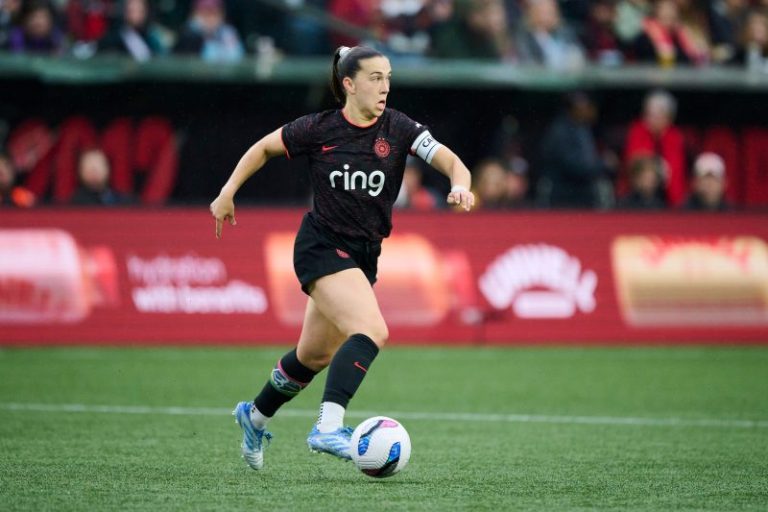
The Indiana Fever are riding a two-game win streak after defeating the Las Vegas Aces and Chicago Sky, but the Fever will face a major test on Wednesday against the Phoenix Mercury without All-Star guard Caitlin Clark.

Clark has been ruled out of Wednesday’s contest against the Mercury, marking the fifth consecutive game she’s missed due to a right groin injury suffered in the Fever’s win over the Connecticut Sun on July 15. Clark’s medical evaluations confirmed there’s ‘no additional injuries or damage,’ but the Fever said they will be cautious with Clark to ensure she’s ready to go later in the season and in the playoffs.

There’s no timetable for her return. Here’s everything you need to know about Clark’s injury status:

Is Caitlin Clark playing today? Injury status for Fever-Mercury

No. Clark was ruled out of the Fever’s matchup against the Mercury with a right groin injury.

How many games has Caitlin Clark missed this season?

The injury bug has been Clark’s biggest nemesis this season, forcing her to miss 13 of the Fever’s 26 games in her sophomore campaign, a career-high for Clark. The Fever (14-12) have gone 6-7 this season without the 2024 Rookie of the Year, but remain in playoff contention in sixth place in the standings.

Wednesday will mark the 14th regular-season game Clark has missed this season due to injury. Clark was previously sidelined five games due to a left quad injury and four games with a left groin injury. She also missed the Fever’s Commissioner’s Cup win over the Minnesota Lynx on July 1, in addition to the 2025 WNBA All-Star Game and the 3-point competition held in Indianapolis.

How was Caitlin Clark injured?

Clark suffered the right groin injury in the final minute of the Fever’s 85-77 victory over the Sun at TD Garden in Boston on July 15. With 39.1 seconds remaining in the contest, Clark completed a bounce pass to Kelsey Mitchell to put the Fever up 84-75. After the pass, Clark immediately grabbed for her right groin and grimaced as she gingerly walked over to a stanchion, which she headbutted. She did not return to the game. 

The injury happened days before the Fever were set to host the 2025 WNBA All-Star weekend in Indianapolis. Clark was voted a team captain and drafted her own team, but she ultimately pulled out of the All-Star Game and 3-point contest due to injuries, stating, ‘I have to rest my body.’

When will Caitlin Clark play again?

It’s not clear when Clark will make her return, but Fever head coach Stephanie White said the WNBA’s rigorous schedule is not helping the timeline.

‘I always think the WNBA season is like this sprint marathon,’ White said on Sunday. ‘You see more injuries when you don’t have a chance to recover, but it’s not like individual teams are the only ones that deal with it. This is a league-wide, collective issue. The NBA has a similar cadence, but they’ve got 30 teams and there’s not quite as much crisscrossing time zones and crisscrossing the country. So, it’s the challenge of the footprint of our schedule.’

The Fever start a four-game road trip on Friday and will travel to Dallas (Aug. 1), Seattle (Aug. 3), Los Angeles (Aug. 5) and Phoenix (Aug. 7) in the span of a week.

Caitlin Clark stats

Clark is averaging 16.5 points, 5.0 rebounds and a career-high 8.8 assists in 13 games this season. Her assists average is the second-highest in the league, behind Phoenix’s Alyssa Thomas (9.4).

The USA TODAY app gets you to the heart of the news — fastDownload for award-winning coverage, crosswords, audio storytelling, the eNewspaper and more.
This post appeared first on USA TODAY

After spiking above US$20,000 per metric ton in May 2024, nickel prices have experienced a downward trend, mainly remaining in the US$15,000 to US$16,000 range.

Indonesia’s elevated production levels have been a primary factor contributing to low commodity prices, as sustained high output continues to oversupply the market. The supply surplus has had a knock-on effect, putting pressure on Western producers who have been forced to slash their production to maintain profitability.

Elevated output coincides with electric vehicle (EV) demand, which is under threat as market uptake has slowed, and policy changes in the United States are expected to increase costs for consumers and lower sentiment for the vehicles.

Nickel sinks to 2020 lows

Commodity prices crashed at the start of the quarter, with nickel falling to a five-year low, reaching US$14,150 per metric ton on April 8. However, prices quickly recovered from the rout and reached US$15,880 on April 24.

The end of April saw the price once again retreat to US$15,230 as downward trend indications began to take hold. The price through May was largely rangebound, starting the month rising to US$15,850 on May 9 before collapsing again to US$15,085 on May 27.

Nickel price chart, April 01 to July 24, 2025

via TradingEconomics

June started with a short-lived rebound to US$15,510 on June 2, before falling to below the US$15,000 mark to reach US$14,840 on June 24. Since then, the price experienced some upward momentum, reaching US$15,575 on July 23.

Supply surplus causing price pressures

In a presentation at the Indonesian Mining Conference on June 30, Ricardo Ferreira, Director of Market Research and Statistics at the International Nickel Study Group (INSG) outlined the current state of the nickel market.

He suggested that high output from Indonesian miners continued to exert downward price pressures on nickel over the last several years, resulting in a decline from an average price of US$30,425 per metric ton in 2022 to an average of US$15,000 per metric ton during the first five months of 2025.

Meanwhile, combined inventories on the London Metals Exchange (LME) and the Shanghai Futures Exchange (SHFE) have exploded from 38,200 metric tons at the end of May 2023 to 230,600 metric tons at the end of April 2025.

This coincides with a 15.1 percent increase in global nickel production in 2023 and a 2.3 percent increase in 2024. The expectation is that nickel output will surge an additional 8.5 percent in 2025, with a significant portion to come from Indonesia, whose share is forecast to grow to 63.4 percent from 61.6 percent in the previous year.

The demand outlook

However, demand has not kept pace with the increase in production. Ferreira stated that demand increased by 7.8 percent in 2023, 4.8 percent in 2024, and is expected to grow by 5.7 percent in 2025.

Stainless steel has been the primary driver of nickel demand for decades. Still, Olivier Masson, Principal Analyst for Battery Raw Materials at Fastmarkets, predicts a changing demand landscape over the next couple of years.

During his CAM Minerals Market Forecast at the Fastmarkets LBRM Las Vegas conference on June 22 to 25, Masson provided insight into why he believes the current oversupply situation will begin to shift by 2027.

Currently, nickel’s primary demand driver is in the production of stainless steel, accounting for just over 2 million metric tons per year. However, the expectation is that between now and 2035, total demand for nickel will increase by 2 million tons, with stainless production accounting for just 564,000 metric tons. A compound annual growth rate (CAGR) of 2 percent.

“We expect to see more end-of-life scrap being generated within China, and then that should start slowing down the growth requirements for primary nickel in the Chinese stainless-steel industry,” Masson explained.

The remaining demand is predicted to come from a 12.8 percent, or 1.4 million metric ton, increase from the EV sector.

“Most of this growth will come from pure EV, so pure battery electric vehicles, where we expect sales growth of over 30 million vehicles… But we still expect an increase in plug-in hybrids with an additional 11.5 million vehicle sales over the next decade,” Masson said.

He went on to say that over that time, supply is expected to grow at a slower rate, with the majority owed to increases in nickel sulphate destined for battery manufacturing.

“So what does that mean for the balance for the nickel market? Well, the nickel market has been oversupplied for the past couple of years. We expect that to continue this year and for the next few years. So we are in a state of structural oversupply. That said, its only by around 2027 or 2028 that we think the market will start to return to a semblance of Balance,” Masson explained

In the long term, he stated that an additional 750,000 metric tons will be needed by 2035, which he doesn’t see as a significant problem.

Production curtailments continue

With the market currently experiencing a supply glut, more producers have taken to curtailing production or shuttering operations.

Since 2024, there have been closures of significant operations, including First Quantum’s (TSX:FM,OTC:FQVLF) Ravensthorpe and Panoramic Resources’ Savannah operations in Australia and Glencore’s (LSE:GLEN,OTC Pink:GLCNF,OTC:GLCNF) Koniambo Nickel mine in New Caledonia.

Likewise, Refiners have also been under pressure as BHP (ASX:BHP,NYSE:BHP,LSE:BHP,OTC:BHPLF) suspended operations at its Nickel West refinery in Australia until 2027, and Sibanye Stillwater (NYSE:SBSW) repurposed its Sandouville nickel refinery in France to produce precursor cathode active material during the first half of 2025.

According to INSG data, 32 percent of global nickel production lines are currently offline.

One of the few companies to buck the trend was Vale (NYSE:VALE), which announced a 44 percent year-over-year increase in nickel production in its Q2 2025 report released on July 22. The report indicated that nickel output rose to 40,300 metric tons from 27,900 during the same quarter last year. The company said gains were driven by strong performance from its Canadian assets and the Onca Puma mine in Brazil.

While there was some speculation that Indonesia may reduce its output, no cuts have materialized, which has in part led Australian investment bank Macquarie to downgrade its nickel outlook to US$14,500 per metric ton by the end of the year, from the US$15,500 it predicted at the end of Q1.

The impact of trade uncertainty

Base metals were caught up as part of the fallout from Donald Trump’s “Liberation Day” announcement on April 2. The move applied a 10 percent across-the-board baseline tariff to all but a handful of countries and threatened to impose more significant retaliatory tariffs starting on April 9.

However, a steep US$6.6 trillion sell-off in equity markets and a squeeze in the bond market that sent yields for 10-year Treasuries up more than half a percent caused the US administration to walk back its plans. Instead, it announced a 90-day pause on the higher tariff rate and stated that it would work to negotiate new trade agreements.

The commodity price rout came as more analysts began to speculate about a recession later in 2025, which would reduce consumer spending on steel-dependent goods, such as light vehicles and new home builds.

In statements made during S&P Global’s State of the Market: Mining Q1’ 25 webinar on May 14, Naditha Manubag, Associate Research Analyst of Metals and Mining Research, suggested that nickel is likely to experience headwinds from the evolving trade policy in the United States.

“We expect nickel prices to remain volatile in the near term as the Trump administration’s trade policies continue to evolve. Forecast for 2025 global primary nickel demand is lowered to 2.8 percent year-over-year due to the expected slowdown in global economic activity,” she said.

Manubag said the slowdown would have a negative impact on demand for Chinese consumer goods, which would come alongside a rising Indonesian mining quota in 2025. Although prices spiked in March, she explained that it was due to tight supplies from the rainy season and increased royalty rates.

Manubag suggested that S&P’s overall expectation is that the nickel market will be in a surplus of 198,000 metric tons in 2025. As a result, the organization has lowered its nickel price forecast to US$15,730 per metric ton.

It’s more than just US tariffs that are expected to weigh on nickel prices in the short term. When Donald Trump signed the “One Big Beautiful” spending bill into law on July 4, it marked an end to the federal EV tax credit and other tax credits aimed at expanding charging infrastructure, a cornerstone of the Inflation Reduction Act.

The consumer credit was meant to provide a US$7,500 rebate toward the purchase of new EVs, and is expected to have an impact on overall demand when it expires on September 30.

Although the majority of nickel’s demand comes from the production of stainless steel, the growing demand from EV battery production has provided additional tailwinds; however, a decline in EV demand could impact future demand growth.

“If and when this bill is passed, a slowdown of EV uptake is expected to lead to higher EV prices and slower rollout of charging infrastructure,” Manubag said.

The big picture for investors

Currently, the easiest way to sum up the nickel market is that it’s widely disliked. The fundamentals aren’t there. A significant portion of nickel is being produced at a loss.

“You know, nickel is hated right now. I think there’s a decent case for nickel, just like when we went into platinum, right? Platinum did nothing for a decade; it just hung around US$900 to US$1,000, and now we’ve finally broken out… You have no idea when, but buy it when it’s boring. At US$900, no one cares, and then you get to ride the wave up. So I think that would be it. Pay attention to what’s unloved and hated and buy that,” he said.

Others in the investment community have expressed a similar sentiment. Although fundamentals for nickel are currently lacklustre, demand, especially from the automotive sector, is expected to grow over the next 10 years.

Securities Disclosure: I, Dean Belder, hold no direct investment interest in any company mentioned in this article.

This post appeared first on investingnews.com

‘The uranium story itself is finally getting better… the near perfect storm is here.’ he said, noting that all the factors that should drive electrical demand higher are merging, particularly electrification and AI data center needs.

‘I don’t think uranium has to go to US$200 in order to make money,” said Grandich. I just think it needs to go back to where it was a couple years ago, a little above US$100 and these stocks will quadruple.’

Watch the interview above for more from Grandich on the energy sector and gold’s 2025 performance.

Securities Disclosure: I, Georgia Williams, hold no direct investment interest in any company mentioned in this article.

This post appeared first on investingnews.com

(This story has been updated with new information)

Ahead of a three-game series against the Chicago White Sox, two-time National League MVP Bryce Harper did not dispute the July 28 report by ESPN’s Jeff Passan that he cussed out MLB commissioner Rob Manfred in a recent encounter in the Philadelphia Phillies’ clubhouse.

The Phillies All-Star first baseman didn’t go further into the encounter when meeting with reporters on Monday, July 28 at Rate Field in Chicago, according to The Philadelphia Inquirer’s Scott Lauber and Lochlahn March.

‘Everybody saw the words and everything that happened, but I don’t want to say anything more than that,’ Harper said. ‘I want to focus on my teammates, and our union as a whole, and just worry about winning baseball.’

He added: ‘I’ve talked labor, and I’ve done it in a way that I don’t need to talk to the media about it. I don’t need it out there. It has nothing to do with media or anybody else. … I’ve always been very vocal, just not in a way that people can see.’

According to Passan’s report, Harper stood ‘nose to nose’ with Manfred, telling him to ‘get the (expletive) out of our clubhouse’ if the commissioner wanted to talk about the potential addition of a salary cap. Manfred was conducting one of his annual meetings with each MLB team, which resulted in tension with one of the league’s biggest stars.

ESPN reported Manfred never explicitly mentioned a salary cap, however, discussions of MLB’s economics frustrated Harper.

‘Young players need to talk with veterans like Harp. Harp has been fighting the consequences of caps his whole life,’ Harper’s agent, Scott Boras told The Athletic. ‘… Harp knows what caps can do to players’ rights, especially young players.’

That wasn’t the only heated moment to take place inside the Phillies’ clubhouse last week. According to The Athletic’s Evan Drellich and Matt Gelb, MLB Network analyst Mark DeRosa, a former MLB utility player, was also in the clubhouse alongside Manfred and said something that ‘some players took as a threat.’

‘The commissioner’s a powerful guy, don’t (expletive) around with him,’ The Athletic reported on the tone of DeRosa’s message in the Phillies clubhouse last week. DeRosa, who co-hosts MLB Network’s ‘MLB Central’ every weekday morning and holds an additional position role with MLB (which primarily owns MLB Network), told The Athletic he was ‘just joking’ with his comments.

‘Shame on me for thinking I had a better relationship with some of the players in there than I guess I do,’ DeRosa, who who is once again managing Team USA in the 2026 World Baseball Classic, told the outlet. ‘The comment I made was completely in jest, completely kidding, amongst a group of about 10-12 players. Guys were laughing, guys were joking. I had managed some of them with Team USA, I had played with Bryce in 2012. Literally making a joke.’

The tensions come as MLB and the MLB Players Association’s collective-bargaining agreement expires on Dec. 1, 2026. MLB owners and personnel alike have clamored for a salary cap implementation, as the league is the lone professional sport without one in North America.

ESPN added the MLBPA overwhelmingly opposes a salary cap.

According to Passan, Harper said if MLB were to propose a salary cap, players ‘are not scared to lose 162 games.’ After Harper stood up to Manfred, who was standing in the middle of the room, Manfred said he was ‘not going to get the (expletive) out of here.’

Phillies outfielder Nick Castellanos attempted to defuse the situation, according to the report. Harper and Manfred shook hands after the meeting, although Harper declined a phone call from Manfred the next day.

‘It was pretty intense, definitely passionate,’ Castellanos told ESPN. ‘Both of ’em. The commissioner giving it back to Bryce and Bryce giving it back to the commissioner. That’s Harp. He’s been doing this since he was 15 years old. It’s just another day. I wasn’t surprised.’

Harper and Manfred both declined to comment to ESPN.

The current CBA, which was agreed upon in 2022, ended a 99-day lockout as the two sides negotiated terms. A potential salary cap implementation is one of the biggest current talking points of the next deal, which will be needed ahead of the 2027 season.

‘(Manfred) seems to be in a pretty desperate place on how important it is to get this salary cap because he’s floating the word ‘lockout’ two years in advance of our collective bargaining agreement (expiration),’ Castellanos told ESPN. ‘That’s nothing to throw around. That’s the same thing as me saying in a marriage, ‘I think divorce is a possibility. It’s probably going to happen.’ You don’t just say those things.’

The USA TODAY app gets you to the heart of the news — fastDownload for award-winning coverage, crosswords, audio storytelling, the eNewspaper and more.
This post appeared first on USA TODAY

As MLB trade deadline week heats up, one of the top targets on the market has received a scare.

In the top of the ninth inning of a 5-1 loss to the Detroit Tigers at Comerica Park in Detroit on Monday, July 28, Arizona Diamondback third baseman Eugenio Suárez took a 96 mph fastball to his left hand from Tigers right-hander Will Vest.

Suárez, who is hitting .248 on the season with 36 home runs and 87 RBIs, was immediately tended to by a member of the Diamondbacks training staff before exiting the game in what appeared to be significant pain. He briefly fell down on his knees after the hit by the pitch while holding his hand.

USA TODAY Sports’ Bob Nightengale confirmed that Suárez underwent X-rays, which came back negative. Diamondback manager Torey Lovullo told reporters that Suárez’s left hand and finger were ‘tender to the touch,’ according to The Athletic’s Cody Stavenhagen. Lovullo added that Suárez is day-to-day for now.

‘The good thing right now is we did the X-ray, and it was negative,’ Suárez said after the game. ‘We got more tests to do tomorrow. Right now, it’s painful, obviously.

‘The good news is the X-ray was negative. We’ll see tomorrow what else they’re going to do. Right now, I will do my best to try to be back soon.’

The Diamondbacks TV broadcast mentioned that they were able to hear the sound of Suárez getting drilled in the hand from the broadcast booth in Detroit.

Monday night’s event in Detroit is the second time in a matter of weeks that Suárez has taken a pitch to his left hand. He exited the All-Star Game on July 15 in the eighth inning after being hit by Chicago White Sox right-hander Shane Smith, for which X-rays came back negative.

Suárez has been one of the hottest names being shopped around by the Diamondbacks, who began their sell on July 24 by trading away Josh Naylor to the Seattle Mariners. USA TODAY Sports’ Bob Nightengale most recently reported on July 25 that the Mariners and New York Yankees have had talks with the Diamondbacks about their All-Star third baseman, with several other teams being linked to Suárez in other reports.

The MLB trade deadline closes at 6 p.m. ET on Thursday, July 31.

(This story was updated to add new information.)

The USA TODAY app gets you to the heart of the news — fastDownload for award-winning coverage, crosswords, audio storytelling, the eNewspaper and more.

This post appeared first on USA TODAY