
Author

admin

Browsing

Investor Insight

Green Technology Metals aims to build Ontario’s first integrated lithium business, developing two mining hubs and a downstream conversion facility to supply North America’s fast-growing EV and battery industry. The company’s approach is straightforward: bring Seymour into production, secure the downstream footprint at Thunder Bay with EcoPro, and then layer in Root as a long-life second feed. The plan is underpinned by offtake agreements, government funding and a management team with direct experience building lithium mines.

Overview

Green Technology Metals (ASX:GT1) is building Ontario, Canada’s first integrated lithium business, anchored by three upstream assets and a planned downstream conversion facility. The portfolio consists of the flagship Seymour project, the large-scale Root lithium project, and the Junior exploration project, which together provide a clear pipeline of feed into a proposed lithium hydroxide facility in Thunder Bay, Ontario.

The company is actively leveraging Canadian policy support for critical minerals development and supporting a growing number of EV and battery manufacturers in Ontario. The province’s Building More Mines Act, alongside several federal programs, is creating a supportive funding environment for new projects. GT1 has already received conditional approval for C$5.5 million from the Critical Minerals Innovation Fund (CMIF) to support road and infrastructure upgrades at Seymour. In addition, the company has received a letter of intent for a C$100-million project financing support from Export Development Canada, and has pending applications with SIF/NRCan and CMIF Round 2, including a C$5-million submission tied to the Root project. These mechanisms substantially de-risk the financing path and provide tangible momentum toward development.

The strategy is being executed in three phases. First, Seymour will be brought into production with a concentrator based on a dense media separation flowsheet, taking advantage of coarse spodumene mineralogy and proven metallurgical performance. Second, GT1 will construct the Thunder Bay lithium conversion facility in partnership with EcoPro Innovation, replicating proven hydrometallurgical technology to produce battery-grade lithium hydroxide. Finally, Root will be developed as the company’s second, larger mining hub, designed to provide long-life scale and additional feed into the Thunder Bay facility.

Pilot processing of 600 kg of Seymour concentrate produced exceptional overall recoveries averaging >94 percent.

Strategic partnerships reinforce this integrated model. LG Energy Solution has secured a binding offtake for a portion of Seymour’s concentrate production and has invested directly into GT1, providing early validation of the project’s place in the EV supply chain. EcoPro Innovation, as the company’s technical partner on the Thunder Bay facility, has already piloted Seymour concentrate into high-purity lithium hydroxide.

Company Highlights

  • Integrated strategy in Ontario: The Seymour and Root projects form the foundation for a vertically integrated lithium business, supported by a proposed lithium hydroxide plant in Thunder Bay, Ontario, with rail, port, power, gas and water access.
  • Marketing and offtake secured: LG Energy Solution has a binding offtake for 25 percent of Seymour concentrate and has invested directly into the company, demonstrating strong downstream demand.
  • Strategic process partner: EcoPro Innovation is co-developing the conversion facility. Pilot work has already produced battery-grade lithium hydroxide with high recoveries.
  • Government backing: GT1 has secured conditional approval for significant funding programs, including C$5.5 million for road upgrades, a C$100 million project financing support LOI from EDC, and additional CMIF and SIF applications.
  • Resource base: A combined inventory of over 30 Mt @ ~1.2 percent lithium oxide across Seymour and Root, providing both near-term production and long-life scale.
  • By-product upside: Seymour hosts a significant rubidium resource in mica streams that could be recovered alongside lithium, creating an additional revenue line.

Key Projects

Seymour Lithium Project

The Seymour lithium project, near Armstrong, Ontario, contains a total resource of 10.3 million tonnes (Mt) @ 1.03 percent lithium oxide, including 6.1 Mt indicated @ 1.25 percent lithium oxide. Mineralization is hosted in the North and South Aubry pegmatites, which remain open along strike and at depth. An optimized preliminary economic assessment (PEA) demonstrated strong project economics based on a DMS-only concentrator producing 130 ktpa. Key numbers include a C1 cash cost of US$680/t, an after-tax NPV of US$251 million, an IRR of 33 percent, and a three-and-a-half-year payback.

The project benefits from existing road and rail access, low strip ratios, and simple metallurgy with coarse spodumene that responds well to dense medium separation (DMS). Mining leases were granted in August 2025, the environmental assessment submission has been lodged, and the closure plan is nearing completion.

An offtake agreement with LG Energy Solution secures sales for 25 percent of initial concentrate production. Seymour also includes a maiden rubidium resource (8.3 Mt @ 0.27 percent rubidium oxide, with a 3.4 Mt high-grade core at 0.40 percent), which can be recovered from mica streams already separated in the flow sheet, creating potential for a by-product circuit.

Thunder Bay Lithium Conversion Facility

GT1 and EcoPro Innovation are developing a lithium hydroxide monohydrate facility in Thunder Bay. The selected site is fully serviced with rail access, 44 kV power, municipal water and gas, and port facilities. The plant will replicate EcoPro’s operating hydromet trains, with two parallel ~13 ktpa back-end lines designed to scale with Seymour and Root concentrate supply.

Pilot-scale processing of 600 kg of Seymour concentrate at EcoPro’s Pohang facility achieved battery-grade lithium hydroxide, meeting downstream specifications with >94 percent overall recovery. This demonstration significantly de-risks the conversion step and supports ongoing financing discussions with Invest Ontario, SIF and EDC. The project is being advanced through PFS-level engineering, with permitting and JV structuring underway.

Root Lithium Project

Located in Northwestern Ontario, Root is GT1’s scale project, hosting 14.6 Mt @ 1.21 percent lithium oxide (10.0 Mt Indicated @ 1.32 percent). The April 2025 optimized PEA outlined a combined open-pit and underground mining scenario producing ~213 ktpa. The project carries a C1 cost of ~US$677/t, an after-tax NPV of US$668 million, an IRR of 53.5 percent, and a three-year payback.

Root enjoys outstanding infrastructure advantages: road and rail access, proximity to port, and most critically, grid hydro power delivered by the Watay transmission line, reducing both operating costs and upfront capex for power infrastructure. Drilling has confirmed stacked pegmatite bodies that remain open along strike and down dip, leaving scope for significant resource expansion. A bulk sample has been completed, with further testwork and pilot runs at EcoPro planned. Permitting is in its early stages, with a PFS targeted for 2026 and potential construction by late 2027.

Junior Lithium Project

The Junior project is located near Seymour and contains three drill-ready targets. Its proximity to the planned Seymour concentrator makes it a strategic satellite project, with the potential to extend Seymour’s mine life and provide incremental feed. Drilling is expected to test these targets in upcoming campaigns, potentially increasing the overall feed available for the Seymour hub.

Management Team

John Young – Non-executive Chairman

John Young co-founded Pilbara Minerals and played a key role in transforming it into a multi-billion-dollar lithium producer. His background as a geologist spans more than three decades, with significant contributions across discovery, development and financing of lithium and gold projects. At GT1, Young provides strategic oversight and proven operational expertise to scale a lithium developer into a fully integrated producer.

Cameron Henry – Managing Director

Cameron Henry was appointed managing director in June 2024, stepping up from his earlier role as executive director. A founder and substantial shareholder of GT1, Henry has over 20 years’ experience in minerals processing and project delivery. Prior to GT1, he built Primero Group into a respected global leader in lithium infrastructure EPC, successfully executing major projects in Australia and globally. His role is to drive Seymour into production and to lead the execution of the Thunder Bay downstream strategy.

Patrick Murphy – Non-executive Director

Patrick Murphy brings nearly two decades of experience in resource sector investment and deal-making. He has held senior positions at Macquarie and AMCI Group, with expertise in capital deployment, project financing and strategic partnerships. His presence on GT1’s board ensures strong connectivity to the financial community and a disciplined approach to structuring project funding.

Robin Longley – Non-executive Director

With more than 30 years of experience in exploration and project evaluation, Robin Longley is a seasoned geologist who has led successful exploration and development programs across lithium, gold and other critical minerals in Australia, Canada and Africa. His practical technical knowledge and management experience strengthen GT1’s ability to evaluate and expand its Ontario portfolio.

Han Seung Cho – Non-executive Director

Representing EcoPro Innovation, Han Seung Cho serves as a direct link between GT1 and its strategic partner on the Thunder Bay conversion facility. As general manager of EcoPro’s strategic business team, he brings decades of experience in lithium procurement, downstream offtake structuring, and project development for LHM plants. His position ensures that GT1’s downstream ambitions remain closely aligned with end-user requirements in the battery sector.


This post appeared first on investingnews.com

Coinbase Global (NASDAQ:COIN) said on Tuesday (September 16) that it is rolling out rewards on USD Coin (USDC) balances for Canadian users, offering returns of up to 4.5 percent

This marks the first time Canadians can automatically earn interest-like payouts simply by holding USDC on the platform. Coinbase customers in Canada will receive 4.1 percent annualized rewards on their USDC, paid weekly.

Members of Coinbase One, the company’s subscription service, can boost the rate to 4.5 percent on up to US$30,000 in holdings, while any amount above that earns the base 4.1 percent.

There are no lockups or opt-ins required, and users retain full access to withdraw or spend their USDC at any time.

USDC is a stablecoin that is pegged 1:1 to the US dollar and backed by reserves of cash and short-term US treasuries held with regulated institutions. Unlike volatile cryptocurrencies such as Bitcoin, stablecoins are designed to maintain price stability, making them more suitable for payments, savings and yield-generating products.

Angus Reid research conducted for Coinbase in August 2024 shows 83 percent of Canadians believe the global financial system needs an overhaul, while 91 percent think domestic banks prioritize profits over customers’ financial wellbeing.

Coinbase’s Canadian rollout builds on the company’s November 2024 introduction of USDC rewards through Coinbase Wallet, with a 4.7 percent annual yield offered to global users.

At the time, the company highlighted USDC’s utility in combining “the stability of the U.S. dollar with the power and speed of the internet,” enabling instant, borderless transactions.

“Along with earning rewards, you can send USDC on Base instantly and with zero fees,” Coinbase said when it launched the wallet-based program last year, noting that payouts would be deposited monthly into user accounts.

That feature was made available across most regions, including the US.

The wallet program also builds on another strategic advantage of stablecoins: cross-border efficiency. Transactions conducted on blockchain networks like Base, Coinbase’s Ethereum Layer 2 chain, are settled in real time, which means the fees and delays associated with traditional payment rails are sidestepped.

The Canadian launch arrives as stablecoins gain momentum in mainstream finance. Companies including Visa (NYSE:V), PayPal Holdings (NASDAQ:PYPL) and a growing number of fintech platforms have announced integrations in the past year, allowing users to pay, settle or transfer value using tokens like USDC and Tether’s USDT.

Coinbase is betting that frustration with legacy systems, combined with the appeal of higher yields and fast payments, will be enough to tip more users toward digital assets.

Securities Disclosure: I, Giann Liguid, hold no direct investment interest in any company mentioned in this article.

This post appeared first on investingnews.com

Laramide Resources (TSX:LAM,ASX:LAM,OTCQX:LMRXF) announced that it has identified multiple target areas for a 15,000 meter drill program at its Chu-Sarysu project in Kazakhstan.

Uranium remains the company’s primary focus, but the asset is also prospective for rare earths and copper.

“This inaugural exploration program for Laramide in Kazakhstan is targeting high-grade, large-scale uranium deposits, amenable to cost-efficient and environmentally responsible in-situ recovery mining, and within a district that already hosts infrastructure and producing operations, which provides clear cost advantages,” said President and CEO Marc Henderson in a press release shared on Monday (September 15).

Situated in the Suzak District of the South Kazakhstan Oblast, Chu-Sarysu is located in one of Kazakhstan’s main uranium-producing basins. The country accounted for almost 40 percent of global U3O8 production in 2024, with the Chu-Sarsyu and neighboring Syr Darya basins contributing over 75 percent of the nation’s output.

Chu-Sasryu is Laramide’s only asset outside the US and Australia, and forms part of Laramide’s three year option agreement to acquire shares of Kazakh company Aral Resources. The agreement closed in December 2024, and Laramide has the option to acquire all of Aral’s shares and gain full ownership of the project.

As part of its efforts, Laramide has compiled a large dataset from Kazakhstan’s state National Geological Services with assistance from local geological contractors over the past year.

“We have found the Kazakhstan Government to be supportive of mineral exploration with policies that encourage foreign investment and streamline permitting,” Henderson added. “This creates a favourable environment for advancing new discoveries that can ultimately contribute to the growing global demand for nuclear fuel.”

Laramide submitted the required exploration work plans to Kazakhstan’s Ministry of Industry and Construction this year, and the remaining permits for drilling are currently being finalized.

Phase 1 of drilling is expected to begin toward the end of 2025.

Securities Disclosure: I, Gabrielle de la Cruz, hold no direct investment interest in any company mentioned in this article.

This post appeared first on investingnews.com

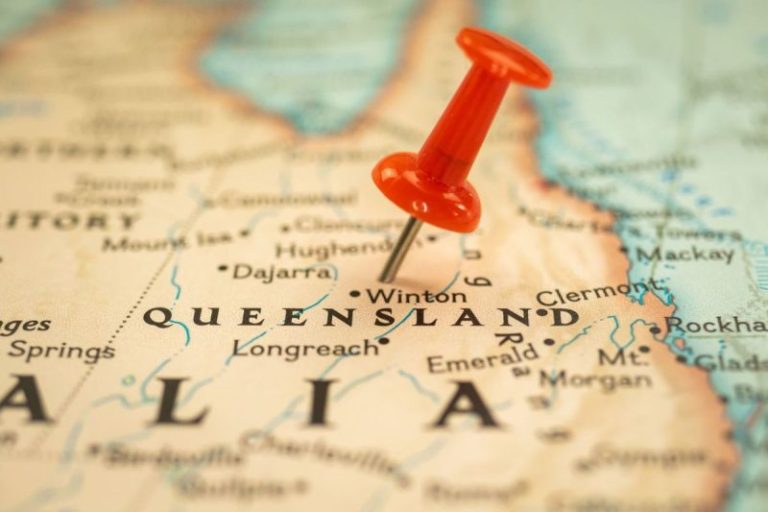
GBM Resources (ASX:GBZ) announced it has regained ownership of the Mount Coolon gold project in Queensland following Newmont’s (TSX:NEM,NYSE:NEM,ASX:NEM) termination of a 2022 farm-in agreement.

GBM made the deal with Newcrest Mining before that company was acquired by Newmont in 2023.

Newmont’s withdrawal is part of its focus on divesting non-core assets to hone in on its more profitable and stable tier one operations. The company has made substantial adjustments to its portfolio this year.

GBM reacted positively to Monday’s (September 15) news, saying that regaining full ownership of the project aligns with its strategy to build a leading gold portfolio in the Drummond Basin.

“We are excited to regain 100 percent ownership, and our exploration team are enthusiastic about getting on the ground as we see significant upside on the Mt Coolon Tenure,” commented CEO Daniel Hastings.

Located within the Drummond Basin and near GBM’s Twin Hills and Yandan projects, Mount Coolon has a JORC resource of 6.65 million tonnes at 1.54 grams per tonne gold for 330,000 ounces of the metal.

Together, Twin Hills and Yandan hold a total resource of 1.84 million ounces of gold.

“With Twin Hills and Yandan nearby, we now control a substantial area of highly prospective ground within the Drummond Basin which provides GBM with the scale and flexibility to unlock significant value,’ Hastings added.

Newmont also announced the sale of its Coffee project in Yukon, Canada, to Fuerte Metals (TSXV:FMT,OTCQB:FUEMF) on Monday for potential total consideration of US$150 million. The company said that sale was also part of its efforts to streamline its portfolio and sharpen its focus on core operations.

On September 10, Newmont said it plans to voluntarily delist from the Toronto Stock Exchange.

Securities Disclosure: I, Gabrielle de la Cruz, hold no direct investment interest in any company mentioned in this article.

This post appeared first on investingnews.com

NVIDIA’s (NASDAQ:NVDA) new RTX6000D chip, built to comply with US export curbs, is seeing little demand from major Chinese firms, sources familiar with the matter told Reuters this week.

Tests showed it lags the banned RTX5090, which remains widely available through gray market channels at less than half the RTX6000D’s price of roughly 50,000 yuan (around US$7,000).

NVIDIA currently faces a balancing dilemma in China, where the US has barred exports of its most advanced processors to limit Beijing’s artificial intelligence (AI) progress, forcing the company to design downgraded models.

While sell-side analysts had forecast robust demand, including projections of 1.5 million to 2 million RTX6000Ds produced in the second half of 2025, some of China’s biggest technology buyers appear unconvinced.

Instead, tech giants Alibaba (NYSE:BABA), Tencent Holdings (OTC Pink:TCEHY,HKEX:0770) and ByteDance are waiting for clarity on shipments of NVIDIA’s H20, the most powerful AI processor the US has permitted the firm to sell in China.

The US reinstated licenses for the H20 in July, but deliveries have not restarted. Companies are also watching closely to see whether NVIDIA’s B30A, a stronger model still under review in Washington, will win approval.

Chinese tech firms turn to local alternatives

At the same time, NVIDIA is facing a longer-term challenge: leading Chinese firms are beginning to lean more heavily on their own silicon. Alibaba and Baidu (NASDAQ:BIDU) have started using internally designed chips to train AI models, according to the Information, marking a shift away from exclusive reliance on NVIDIA hardware.

Alibaba has deployed its chips for smaller AI models since early this year, while Baidu is experimenting with training new versions of its Ernie AI model using its Kunlun P800 processor.

According to the report, three employees who have worked with Alibaba’s chip said that its performance is now competitive with NVIDIA’s H20, a sign of the rapid improvement in China’s homegrown designs.

Neither Alibaba nor Baidu responded to requests for comment from Reuters.

In response to the report, NVIDIA said: “The competition has undeniably arrived … We’ll continue to work to earn the trust and support of mainstream developers everywhere.”

Although most companies still rely on NVIDIA chips for their most advanced systems, Beijing has made clear that it wants its local firms to reduce dependence on foreign suppliers by adopting domestic alternatives where feasible.

Regulatory pressure from Beijing

Compounding NVIDIA’s difficulties, China’s market regulator has accused the US chipmaker of violating anti-monopoly laws. The watchdog did not specify what conduct was under investigation, but said it will continue its probe.

NVIDIA refuted the allegations, stating that it has complied with Chinese law “in all respects” and pledging to cooperate with “all relevant government agencies.”

The company has been under scrutiny in China since December, when regulators launched an initial inquiry seen as a countermeasure in the wider semiconductor standoff with Washington.

NVIDIA CEO Jensen Huang said late last month that discussions with the White House over licensing a less advanced version of its next-generation chip for China “will take time.”

Separately, the company has reportedly struck a deal with US President Donald Trump to exchange 15 percent of its China sales revenue from H20 chips in return for export approvals.

Securities Disclosure: I, Giann Liguid, hold no direct investment interest in any company mentioned in this article.

This post appeared first on investingnews.com

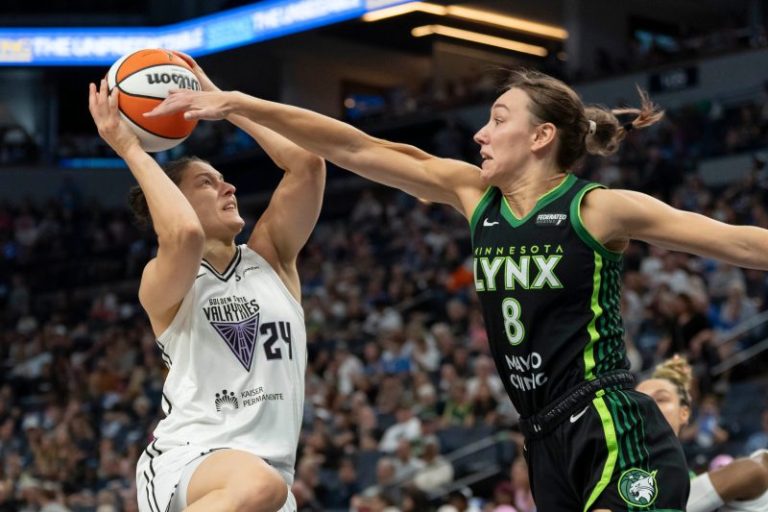
The Golden State Valkyries have completed a number of firsts, becoming the first expansion team to reach the postseason in its first year. Is the franchise’s first playoff win next?

The No. 8. Valkyries will host the No. 1 overall seed Minnesota Lynx on Wednesday, Sept. 17, in Game 2 of the best-of-three first-round WNBA playoff series. The matchup won’t be at Chase Center, where Golden State sold out all 22 home games and set a WNBA attendance record. Instead, the Valkyries will be playing at SAP Center at San Jose (home of the NHL’s San Jose Sharks) due to a scheduling conflict.

‘We have faith in our fans that they’re going to continue to show out for us,’ WNBA’s Most Improved Player Veronica Burton said. ‘Wherever we play, we’re going to bring our basketball. So, we’re confident, we’re excited, it’s another opportunity to compete.” 

The Valkyries will need all the help they can get in slowing down MVP candidate Napheesa Collier, who had 20 points, six rebounds, two assists and one steal in the Lynx’s 101-72 Game 1 victory. The Lynx controlled the glass (36-26) and the paint (44-18) in their dominant 29-point win.

Valkyries head coach Natalie Nakase called out Game 1’s officiating, saying she wants ‘a fair fight’ in Game 2. The Valkyries attempted 27 free throws in Game 1, compared to 24 for the Lynx.

‘We’re playing the No. 1 team,’ Nakase said. ‘We’re playing the best team in the league. They don’t need no help. This team is great. They’re stacked. They play well. They play beautiful basketball. They’re coached well. They don’t need the help.’

Here’s what you need to know for Game 2 between the Valkyries and Lynx:

What time is Minnesota Lynx at Golden State Valkyries?

The Golden State Valkyries host the Minnesota Lynx at 10 p.m. ET (7 p.m. PT) on Wednesday, Sept. 16, at SAP Center at San Jose in San Jose, California. The game will be broadcast nationally on ESPN.

How to watch Minnesota Lynx at Golden State Valkyries: TV, stream

  • Time: 10 p.m. ET (7 p.m. PT)
  • Location: SAP Center at San Jose (San Jose, California)
  • TV channel: ESPN
  • Streaming: ESPN+, Disney+, Fubo (free trial to new subscriber

The USA TODAY app gets you to the heart of the news — fastDownload for award-winning coverage, crosswords, audio storytelling, the eNewspaper and more.

This post appeared first on USA TODAY

The Seattle Storm’s 2025 WNBA season looked like it was over, down 14 points in third quarter of a must-win playoff game.

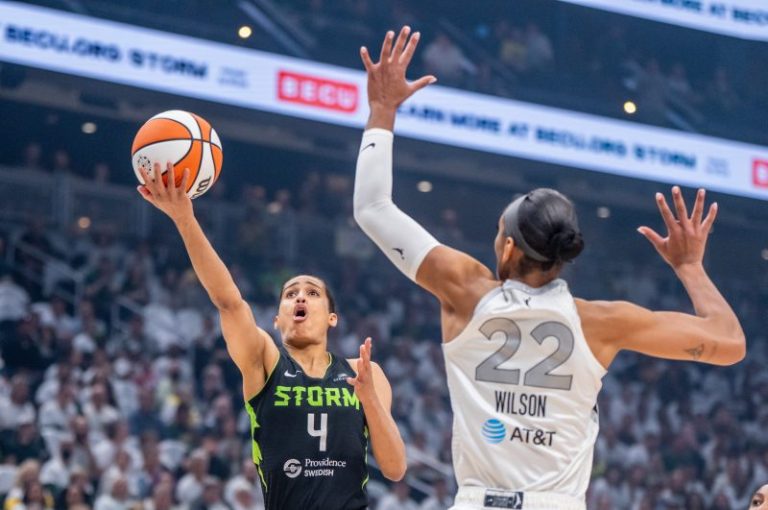
Neither Skylar Diggins nor Nneka Ogwumike would let it end. The pair combined for 50 points on Tuesday to propel the Storm past the Las Vegas Aces, 86-83, in Seattle, ending Las Vegas’ 17-game win streak and forcing a decisive Game 3 on Thursday (9:30 p.m. ET, ESPN2).

‘We weren’t scared to play against them,’ said Diggins, who finished with a game-high 26 points, seven assists and two steals. ‘In the first game, we played hesitant. I was proud of the way we responded tonight and we had a great home crowd on our back to feed off.’

The Storm went on a 7-0 run in the fourth quarter to come within two points of the Aces with 2:35 remaining in the game. Erica Wheeler spurred the outburst with 11 points in the final stanza.

Dominique Malonga made a layup and ensuing free throw to give the Storm their first lead since the second quarter, 84-83, with 31 seconds remaining. Diggins hit a jumper with 4.7 remaining to ice the game. Aces guard Jewell Loyd, who played the first 10 season of her career with the Storm, had a good look to tie it up at the end, but missed the 3-point shot that would have sent the game to overtime.

‘We know this team is hard to beat one time and we have to beat (the Aces) again,’ Diggins said. ‘We bought ourselves another 40 minutes.’

WNBA PLAYOFFS WINNERS, LOSERS: Seattle storms back, Fever fans ejected

ACES VS. STORM, GAME 1: Las Vegas dominates Seattle in Game 1 of WNBA playoff series

It was Seattle’s second-largest playoff comeback in franchise history and first playoff win since 2022, snapping a six-game postseason losing streak in the postseason. Ogwumike finished with 24 points and 10 rebounds. Malonga added a double-double, 11 points and 10 rebounds.

End of Q3: Aces 69, Storm 61

The Aces led by as many as 14 points in the third quarter, but the Storm closed their deficit to eight points heading into the fourth. Nneka Ogwumike has a game-high 24 points, six rebounds, and three assists. Skylar Diggins added 15 points and six assists. Dominique Malonga added eight points off the bench.

Jackie Young, who turned 28 on Tuesday, leads the Aces with 18 points and five rebounds. A’ja Wilson has 17 points and 12 rebounds.

Halftime: Aces 45, Storm 44

The Las Vegas Aces are shooting 58.6% from the field, yet only have a one-point lead over the Storm at halftime. A’ja Wilson is the only Aces player in double figures with 16 points, five rebounds and two assists. Jewell Loyd is up to nine points against her former team.

Skylar Diggins has a team-high 15 points for the Storm. Nneka Ogumike added 13 points and four rebounds.

End of Q1: Aces 22, Storm 21

The Aces have a one-point advantage heading into the second quarter. A’ja Wilson has a team-high eight points and two rebounds. Jewell Loyd has been money from beyond the arc to start with two made 3-pointers. The Aces need to take better care of the ball, however, after giving up five turnovers for five points.

Seattle Storm forward Nneka Ogumike leads all scorers with 11 points, while Gabby Williams added four points.

Nneka Ogwumike statistically solid

Seattle Storm Forward Nneka Ogumike has been a consistent presence in her 14th season in the WNBA. She has averaged 18.3 points while shooting 51.9% from the field. A part of the MVP conversation, she is also grabbed seven rebounds a contest.

Birthday girl Jackie Young in the house

Aces guard Jackie Young hopes to celebrate her 28th birthday with a playoff win.

You get some shoes, you get some shoes

Guard Erica Wheeler surprised the Seattle Storm dance troupe with signed AE 1s.

Here’s everything you need to know about Game 2 between the Aces and Storm:

What time is Las Vegas Aces at Seattle Storm?

The Seattle Storm host the Las Vegas Aces at 9:30 p.m. ET (6:30 p.m. PT) on Tuesday, Sept. 16, at Climate Pledge Arena in Seattle. The game will be broadcast nationally on ESPN.

How to watch Las Vegas Aces at Seattle Storm: TV, stream

  • Time: 9:30 p.m. ET (6:30 p.m. PT)
  • Location: Climate Pledge Arena (Seattle)
  • TV channel: ESPN
  • Streaming: ESPN+, Disney+, Fubo (free trial to new subscribers)

Seattle Storm starting lineup

Head coach: Noelle Quinn

  • 3 Nneka Ogwumike | F 6′ 2′ – Stanford
  • 4 Skylar Diggins | G 5′ 9′ – Notre Dame
  • 5 Gabby Williams | F 5′ 11′ – UConn
  • 13 Ezi Magbegor | F 6′ 4′ – Australia
  • 20 Brittney Sykes | G 5′ 9′ – Syracuse

Las Vegas Aces starting lineup

Head coach: Becky Hammon

  • 0 Jackie Young | G 6′ 0′ – Notre Dame
  • 1 Kierstan Bell | F 6′ 1′ – Florida Gulf Coast
  • 3 NaLyssa Smith | F 6′ 4′ – Baylor
  • 12 Chelsea Gray | G 5′ 11′ – Duke
  • 22 A’ja Wilson | C 6′ 5′ – South Carolina

Game 2 preview

Can A’ja Wilson and the Las Vegas Aces be stopped?

That’s the question on the Seattle Storm’s mind after suffering a 102-77 Game 1 loss to the Aces on Sunday in Las Vegas, extending the Aces’ win streak to 17 consecutive games. The series now shifts to Seattle for Game 2. With a win, the Aces would advance to the semifinals for the seventh consecutive season and tie the league’s longest win streak (18). It was set by Lisa Leslie and the WNBA champion Los Angeles Sparks in 2001.

Wilson and company aren’t concerned about the streak. They want to win their third title in four years.

‘In my eyes, the streak was over when the regular season ended,’ said Wilson, who had 29 points, eight rebounds, three steals and two blocks vs. the Storm in Game 1. ‘We have a whole new thing we have to start cooking here. And that’s what I am going to hold up to my teammates every single day.’

It’s safe to say the Aces were cooking Sunday. They shot 50.7% from the field and 14-of-29 from 3, continuing their barrage of 3-pointers after setting a regular-season record (22) in the regualr-season finale on Sept. 11. Jackie Young added 18 points and seven assists in the Game 1 win. Jewell Loyd had 14 off the bench.

Gabby Williams had a team-high 16 points and three rebounds for the Storm. Skylar Diggins and Dominique Malonga each added 12 points in the losing effort. The Storm were swept by the Aces in the 2024 WNBA playoffs and must pick up a win at home to keep their season alive. That’s easier said than done, as the Storm are the only team in the postseason with a losing record at home (10-12) this season.

Dominique Malonga’s quiet start is a win for both her and the Storm

No matter the sport, a top draft pick’s rookie season is usually a rough go. Your team most likely had that pick for a reason (they were bad) and you are expected to help right away. You’re getting used to a new league, and you may or may not have veteran players to ease the learning curve.

For Dominique Malonga, the No. 2 pick in this year’s draft by the Seattle Storm, it’s been the opposite experience. She got to play behind, and learn from, veterans Nneka Ogwumike, Skylar Diggins, Gabby Williams and Ezi Magbegor. She didn’t have to absorb a full load of the WNBA’s physicality every game. She was allowed the time and space to see how her game fit in the W rather than figuring it out on the fly.

Aces vs. Storm WNBA Playoffs schedule

  • Game 1: Aces 102, Storm 77
  • Game 2: Aces at Storm, 9:30 ET Tuesday (ESPN)
  • Game 3: Storm at Aces, TBD Thursday (ESPN2)

The USA TODAY app gets you to the heart of the news — fastDownload for award-winning coverage, crosswords, audio storytelling, the eNewspaper and more.

This post appeared first on USA TODAY

The status of the proposed fight between Jake Paul and Gervonta Davis – under scrutiny because of the weight discrepancy between the two fighters – has grown murky.

Rick Thompson, chairman of the Georgia Athletic and Entertainment Commission (GAEC), told USA TODAY Sports on Tuesday, Sept. 16 that the promoter had withdrawn their request for event permits and rule waivers required to hold the event in Georgia.

The promoter was Most Valuable Promotions (MVP), co-founded by Paul and business partner Nakisa Bidarian.

“I believe it’s in the public’s interest to know that because they’ve been promoting something they should not have been,’’ Thompson said when reached by USA TODAY Sports.

In fact, on Tuesday, Sept. 16, tickets still were available for purchase online and the fight still was listed on the State Farm Arena event calendar, to be held Nov. 14. MVP announced the fight, which is supposed to be carried by Netflix, on Aug. 20.

MVP did not respond to questions about the fight submitted by email and text message.

One rule waiver MVP had requested would have addressed the weight discrepancy between Paul and Davis. Paul weighed in at 199½ pounds for his last fight and Davis weighed in at 133¾ pounds for his last fight.

The GAEC commission is scheduled to meet Thursday and was expected to vote on MVP’s requests. MVP needed the votes of three of the five commissioners for approval, and the chairman – one of the five commissioners – adamantly opposed the rule waiver that would have modified restrictions on the allowed weight difference between fighters. 

“They probably evaluated a situation, knew that their weight differences were too much,’’ Thompson said.

Thompson said he was notified of MVP’s decision Tuesday by GAEC executive director Matt Woodruff.

In an interview with USA TODAY Sports Sept. 8, Thompson blasted the fight, calling it ‘the dumbest (expletive) I’ve ever heard.’ He also said he didn’t think Paul was a competitive fighter.

But on Tuesday, Thompson said he hoped MVP could reconsider holding the proposed undercard for the Paul-Davis bout in Atlanta.

“We would love for the undercard to still fight in the state of Georgia,’’ he said. “We believe the undercard is something people would like to see.’’

On Sept. 2, USA TODAY Sports reported that the proposed fight between Paul and Davis had hit an apparent snag.

This story was updated with new information.

This post appeared first on USA TODAY

The Phoenix Mercury are turning the page on Sunday’s disappointing overtime loss to the New York Liberty.

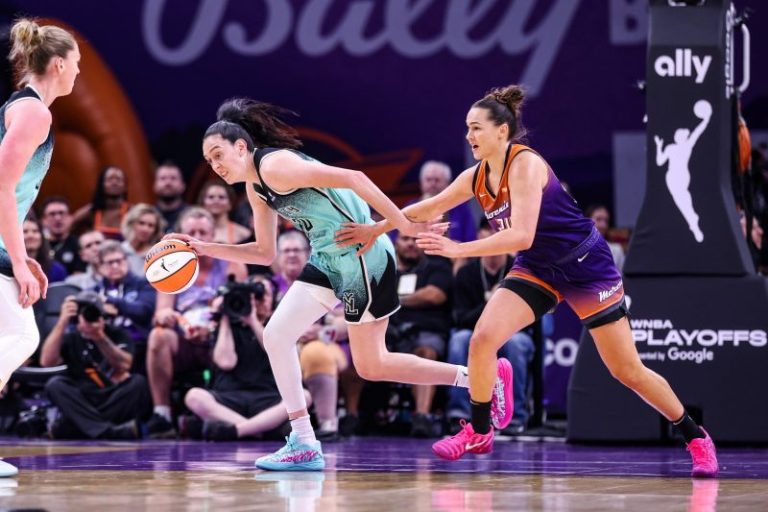
Despite shooting a dismal 32.5% from the field at home in Game 1 of the first-round WNBA playoffs series, the Mercury had a chance to win in regulation, but a would-be game-winning layup from Alyssa Thomas bounced off the rim and sent the game to overtime, where the Liberty outscored the Mercury 11-4 to steal Game 1.

‘Right after the game in our huddle, we got right to it and said, ‘(Game 1) is done. It’s over.’ Our heads are still up,’ Mercury guard Kahleah Copper said after Phoenix’s 76-69 Game 1 loss. ‘The mindset is go get it. Let’s go to New York and get it. There’s no other mindset. Whoever said ‘Liberty in 3’ or whatever, it’s cool, stay there. It’s alright. Mercury versus everybody. That’s how we feel.”

The Liberty didn’t escape with the overtime win unscathed. Forward Breanna Stewart went down on Sunday with a left knee injury with 3:01 remaining in overtime after making a driving layup. Imaging on her left knee came back ‘relatively clean.’ Liberty coach Sandy Brondello revealed on Tuesday, but Stewart is considered a game-time decision for Wednesday’s Game 2 in Brooklyn.

The Mercury will have to win on the road on Wednesday to avoid back-to-back first-round playoff exits. With a win, the defending champion Liberty will advance to the semifinals for the third consecutive season.

Here’s everything you need to know about Game 2 on Wednesday:

What time is Phoenix Mercury at New York Liberty?

The New York Liberty host the Phoenix Mercury for Game 2 on Wednesday, Sept. 17 at 8 p.m. ET (5 p.m. PT) at Barclays Center in Brooklyn, New York. The game will be broadcast nationally on ESPN.

How to watch Phoenix Mercury at New York Liberty: TV, stream

  • Time: 8 p.m. ET (5 p.m. PT)
  • Location: Barclays Center (Brooklyn, NY)
  • TV channel: ESPN
  • Streaming: ESPN+, Disney+, Fubo (free trial to new subscribers)

The USA TODAY app gets you to the heart of the news — fastDownload for award-winning coverage, crosswords, audio storytelling, the eNewspaper and more.

This post appeared first on USA TODAY

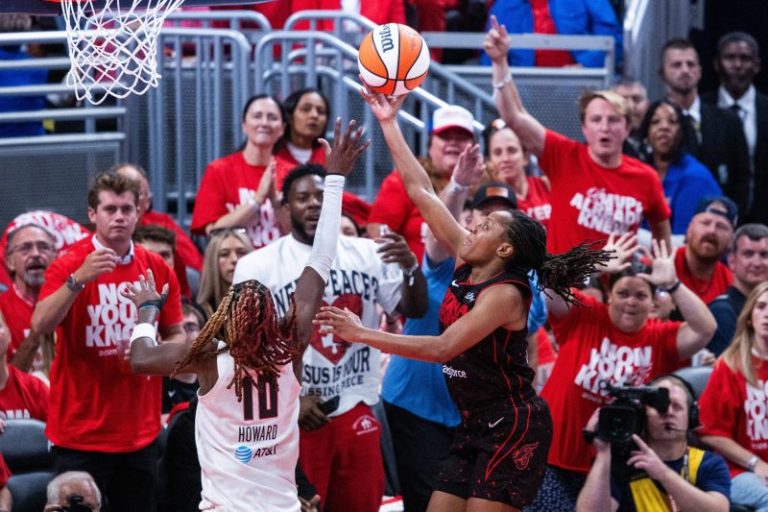
The Indiana Fever needed a win a home on Tuesday to keep their season alive. They achieved that goal.

The No. 6-seed Fever defeated the No. 3 seed Atlanta Dream 77-60 for a wire-to-wire Game 2 victory. It was the Fever’s first playoff home game at Gainbridge Fieldhouse since 2016 and sets up a decisive winner-take-all Game 3 in Atlanta on Thursday. 

Fever guard Kelsey Mitchell followed up her 27-point performance in Game 1 with a game-high 19 points on Tuesday, shooting 6-of-13 from the field including 4-of-8 from 3. Aliyah Boston added 15 points and five rebounds, and the Fever bench contributed 15 points. 

The Dream lacked a sense of urgency out of the gate and were held to 60 points, their second-lowest point total of the season. Te-Hina Paopao (11) and Rhyne Howard (10 points) were the only players to reach double digits for the Dream. Atlanta shot 37.9% from the field and 5-of-19 from the 3-point line.

WNBA PLAYOFFS WINNERS, LOSERS: Las Vegas Aces dominate, Alyssa Thomas falters

DREAM VS. FEVER, GAME 1: Dream pull away from Fever in Game 1 of WNBA playoffs 2025

Catch up with USA TODAY Sports’ live updates on Game 2 between the Dream and Fever:

Indiana Fever score today

Indiana Fever fans escorted off after exchange with Allisha Gray

Two Indiana Fever fans were escorted from their courtside seats at Gainbridge Fieldhouse in the fourth quarter after appearing to say something to Dream guard Allisha Gray. The incident happened with 6:10 remaining in the game as the Dream trailed the Fever 71-47. Gray alerted arena security of the fan’s behavior and looked visibly upset after the exchange. After the incident, Gray was comforted by teammate Rhyne Howard on the bench.

End of Q3: Fever 59, Dream 44

Guard Lexie Hull knocked down a buzzer-beating 3-pointer to end the third quarter on a 7-0 run and extend the Fever’s lead to 15-points, their largest of the series. Hull’s open shot was made possible by Shey Peddy’s inbound steal, highlighting the do-or-die mentality of the Fever. Kelsey Mitchell has a game-high 19 points and Aliyah Boston has added eight points and five rebounds.

Rhyne Howard is the leading scorer on the Dream with 10 points. No other Dream player has surpassed double digits. The Dream is shooting 38.8% from the field and is 1-of-13 from the 3-point line.

Tyrese Haliburton in the building

Indiana Pacers superstar Tyrese Haliburton pulled up to Gainbridge Fieldhouse to cheer on the Fever on Wednesday. Haliburton is just returning the favor. Caitlin Clark and several Fever players, including Lexie Hull and Aliyah Boston, attended multiple NBA playoff games in support of the Pacers during the team’s NBA Finals run.

Naz Hillmon picks up fourth foul

Dream forward Naz Hillmon picked up her third personal foul with 6:48 remaining in the third quarter as the Dream trailed the Fever 35-40. Hillmon grabbed a defensive rebound and caught Fever forward Natasha Howard in the face with her elbow while swinging her arm. The foul was reviewed for a possible upgrade, but was ultimately deemed a common foul. Hillmon picked up her fourth foul with 5:37 remaining in the third.

Atlanta’s Brionna Jones has three fouls, while Lexie Hull has four for the Fever.

How many fouls to foul out in the WNBA?

A WNBA player is disqualified from the game after picking up their sixth personal foul.

Halftime: Fever 35, Dream 29

The Fever led by as many as 11 points in the second quarter and, despite several runs from the Dream, take a six-point lead into halftime.

Fever guard Kelsey Mitchell (11) is the leader scorer, shooting 3-of-8 from the field and 3-of-5 from the 3-point line. Natasha Howard and Aliyah Boston each added six points.

Meanwhile, Atlanta is struggling to find its offensive rhythm. The Dream are shooting 39.4% from the field and 1-of-9 from beyond the arc in the first half after missing their first eight 3-point attempts. Atlanta has also left points on the board at the free throw line, shooting 2-of-6. Rhyne Howard and Allisha Gray, who combined for 40 points in Atlanta’s Game 1 win, have been held in check so far. Howard has six points (2-of-7 FG, 0-of-3 3PT) and Gray has five points (2-of-9 FG, 1-of-3 3PT).

Both teams are dealing with foul trouble. Lexie Hull has three fouls and Howard and Boston each have two fouls for the Fever. Atlanta’s Naz Hillmon and Brionna Jones each have two fouls.

Fever stars dealing with foul trouble

The Fever went on a 10-2 run in the second quarter to take an 11-point lead over the Dream, their largest lead of the game, with 4:06 remaining in the half. The run is even more impressive considering Fever center Aliyah Boston had to sit with 6:34 remaining after picking up her second personal foul. Natasha Howard and Lexi Hull also have two fouls each.

End of Q1: Fever 20, Dream 14

The Fever have a six-point lead heading into the second quarter.

Kelsey Mitchell has a game-high eight points for the Fever. Lexie Hull added four points, but was limited to five minutes in the first quarter after picking up two quick fouls. Shey Peddy and Aerial Powers each added three points off the bench.

All of the Dream’s 14 first-quarter points were scored in the paint. Brionna Jones has a team-high six points and two steals. Jordin Canada added four points and two assists. Rhyne Howard was held scoreless (0-of-2 FG), while Allisha Gray scored two points. The Dream are 0-of-3 from the 3-point line, while the Fever are 3-of-6 from 3.

Game 2 tips off between Fever-Dream

Game 2 is underway at Gainbridge Fieldhouse and the Fever have a 11-8 lead with 4:46 remaining in the first quarter. Jordin Canada and Brionna Jones combined for the Dream’s eight first-quarter points, which all came in the paint. Kelsey Mitchell leads the Fever with five points, while Lexie Hull added four points. Hull is already in foul trouble with two fouls and headed to the bench early.

What time is Atlanta Dream at Indiana Fever?

The Indiana Fever host the Atlanta Dream at 7:30 p.m. ET (4:30 p.m. PT) on Tuesday, Sept. 16 at Gainbridge Fieldhouse in Indianapolis. The game will be broadcast nationally on ESPN.

X factor: Brittney Griner coming off the bench

Atlanta coach of the Year candidate Karl Smesko moved veteran center Brittney Griner to the bench for the first time in her career during the regular season, a risky move that has paid off. Atlanta’s bench only averaged 19.2 points per game in the regular season, fourth-worst in the league, but Griner’s addition has added another dimension to the Dream’s bench. Griner had 17 points and four blocks off the bench in the Dream’s regular-season finale win over the Connecticut Sun, but was held to two points in Game 1 vs. the Fever.

Atlanta Dream starting lineup

Head coach: Karl Smesko

  • 00 Naz Hillmon | F 6′ 2′ – Michigan
  • 3 Jordin Canada | G 5′ 6′ – UCLA
  • 10 Rhyne Howard | G 6′ 2′ – Kentucky
  • 15 Allisha Gray | G 6′ 0′ – South Carolina
  • 24 Brionna Jones | F 6′ 3′ – Maryland

Indiana Fever starting lineup

Head coach: Stephanie White

  • 0 Kelsey Mitchell | G 5′ 8′ – Ohio State
  • 1 Odyssey Sims | G 5′ 8′ – Baylor
  • 6 Natasha Howard | F 6′ 3′ – Florida State
  • 7 Aliyah Boston | C 6′ 5′ – South Carolina
  • 10 Lexie Hull | G 6′ 1′ – Stanford

Indiana Fever injury report: Is Caitlin Clark playing tonight?

The Fever will be without Chloe Bibby (left knee), Caitlin Clark (right groin), Sydney Colson (left knee), Sophie Cunningham (right knee), Damiris Dantas (concussion protocol) and Aari McDonald (right foot) for Game 2 vs. the Atlanta Dream on Tuesday.

Indiana Fever stars arrive for Game 2

The Indiana Fever have arrived in style to Gainbridge Fieldhouse, which is hosting a ‘red out’ for Game 2.

Atlanta Dream is in the building

The Dream have arrived to Gainbridge Fieldhouse and are ‘ready to take care of business.’

Atlanta Dream injury report

The Dream have all players available for Game 2.

Indiana Fever ‘Stranger Things’ jerseys

The Indiana Fever will don their ‘Stranger Things’ alternate uniforms for Game 2 of the WNBA Playoffs.

The team first wore the jersey with the ‘Stranger Things’ font on the front in 2021.

Where to watch Atlanta Dream vs. Indiana Fever: TV, stream

  • Time: 7:30 p.m. ET (4:30 p.m. PT)
  • Location: Gainbridge Fieldhouse (Indianapolis)
  • TV channel: ESPN
  • Streaming: ESPN+, Disney+, Fubo (free trial to new subscribers)

Atlanta vs. Indiana WNBA playoffs schedule

  • Game 1: Dream 80, Fever 68
  • Game 2: Dream at Fever, 7:30 p.m. ET Tuesday (ESPN)
  • Game 3: Fever at Dream, TBD Thursday (ESPN2)

Allisha Gray stats

Allisha Gray averaged career highs in points (18.4), rebounds (5.3) and assists (3.5) in 42 games (all starts) this season. She had 20 points, six rebounds and four assists, three steals and one block in the Dream’s Game 1 win.

Aliyah Boston stats

Boston, the 2023 WNBA rookie of the year, averaged a career-high 15 points, 8.2 rebounds, 3.7 assists and 1.2 steals in 44 games this season. She recorded eight points, 12 rebound and five assists in 34 minutes of work in the Fever’s Game 1 loss on Sunday.

Kelsey Mitchell stats

Kelsey Mitchell averaged 20.2 points, 3.4 assists and 1.8 rebounds in 44 games (all starts) this season. Mitchell dropped a game-high 27 points, four assists and one rebounds in the Fever’s Game 1 loss.

Caitlin Clark injury timeline

  • May 24: Clark suffered a left quad injury during the Fever’s 90-88 loss to the New York Liberty, where she recorded a double-double with 18 points and 10 assists. Clark couldn’t pinpoint the specific play that caused her injury, but noted that it happened early in the contest. Clark said, ‘Adrenaline covers up a lot of stuff when you’re in the heat of battle. After the game, I had some pain, and then we got an MRI, and that kind of gave me the result that I didn’t want to see.’ She missed the Fever’s next five games.
  • June 14: Clark returned to Indiana’s lineup in the Fever’s 102-88 win over the Liberty and dropped 32 points, nine assists and eight rebounds in her first game back. 
  • June 24: Clark suffered a left groin injury in the Fever’s 94-86 winover the Seattle Storm, which resulted in Clark missing the team’s next four games. Fever coach Stephanie White said she learned of Clark’s groin injury the following night after Clark alerted team trainers of discomfort.
  • July 1: Clark was ruled out of the Fever’s 2025 Commissioner’s Cup win over the Minnesota Lynx in Minneapolis. That didn’t stop Clark from rightfully celebrating the team’s hardware.
  • July 9: Clark returned to the Fever’s lineup in the Fever’s 80-61 loss to the Golden State Valkyries. Clark was limited to 10 points, shooting 4 of 12 from the field and 2 of 5 from the 3-point line, and had six assists, five rebounds and four turnovers. Following the blowout loss, Clark said it was ‘going to take me a second to get my wind back. … Just trying to get my legs under me.’
  • July 15: Clark suffered a right groin injury in the final minute of the Fever’s 85-77 victory over the Sun at TD Garden in Boston. White later confirmed Clark ‘felt a little something in her groin.’ This marked the last game for which Clark suited up.
  • July 18: Clark announced that she would sit out the 2025 WNBA All-Star Game in Indianapolis, where she was named a team captain. Clark was also set to participate in the 3-point contest. She said, ‘I am incredibly sad and disappointed to say I can’t participate … I have to rest my body.’
  • July 24: The Fever said Clark’s medical evaluations confirmed there’s ‘no additional injuries or damage,’ but the team said it will be cautious with Clark’s rehab and recovery.
  • Aug. 7: Clark reportedly suffered a mild bone bruise in her left ankle during an individual workout session in Phoenix, according to The Indianapolis Star, part of the USA TODAY Network.
  • Aug. 8: During an appearance on Sue Bird’s podcast, ‘Bird’s Eye View,’ Clark spoke about the frustrations of her injury-filled season: “It’s not like I have a training camp to build up to play in my first game again. It’s like no, you’re tossed into Game 30 — like, ‘Go try to play well.’ It’s hard, it really is.”
  • Aug. 10: Fever coach Stephanie White said Clark has progressed in her recovery and has started running full court again, but Clark hasn’t returned to practice just yet: an important step in her ramp-up. ‘She’s been able to get a little bit more in her full-court running with all of her body weight. … She’s been able to do a little more on the court in terms of how she moves, but not into practice yet,’ White said.
  • Aug. 20: White confirmed that Clark has not returned to practice yet.
  • Aug. 24: Clark participated in a team shootaround and went through some non-contact drills with the second team, marking her first time practicing with the team since suffering a right groin injury on July 15.
  • Sept. 4: Clark shared a post on her official X account, stating that she will miss the rest of the regular season and any potential postseason action.

When is the WNBA MVP announced 2025?

The Kia WNBA Most Valuable Player will be announced on Sunday, Sept. 21.

Game 2 preview

The injury-plagued Indiana Fever have been resilient all season long, but the Fever find themselves with their backs are against the wall yet again.

The No. 6 seed Fever dropped Game 1 against the No. 3 seed Atlanta Dream 80-68, despite a 27-point performance from veteran guard Kelsey Mitchell. The Fever now must win Game 2 of the best-of-three first-round WNBA playoff series on Tuesday to keep their Cinderella season alive.

‘We shot ourselves in the foot and weren’t able to capitalize on the things that make us great,’ Mitchell said after the Game 1 loss. ‘We hurt ourselves in a lot of different areas that impact being able to make plays and do what we wanted on the offensive end. Once we stop doing that, we give ourselves more of a chance to be who we are.’

It wasn’t a particularly great shooting night for either team. The Fever were held to 34.9% from the field and 2-of-15 from beyond the arc, compared to Atlanta going 38.6% from the field with seven made 3s.

Allisha Gray and Rhyne Howard each scored 20 points for the Dream. Naz Hillmon added 16 points and nine rebounds, while Brionna Jones had 12 points and three steals in the win.

Indiana Fever roster

The USA TODAY app gets you to the heart of the news — fastDownload for award-winning coverage, crosswords, audio storytelling, the eNewspaper and more.

This post appeared first on USA TODAY