Author

admin

Browsing

Statistics Canada released its August job numbers on Friday (September 5). The report indicated a loss of 66,000 jobs in the Canadian economy and an increase in the unemployment rate to 7.1 percent from the 6.9 percent recorded in July.

The losses were primarily felt in the professional, scientific and technical services sector with a decrease of 26,000 jobs, followed by losses of 23,000 jobs in the transportation and warehousing sector and 19,000 jobs in manufacturing.

One small caveat: of the 66,000 jobs lost, 60,000 were part-time workers, while full-time employment saw little change after shedding 51,000 positions the previous month.

South of the border, the US Bureau of Labor Statistics (BLS) also released its August jobs report on Friday. The report is the first jobs report since Donald Trump fired the head of the BLS after the release of July’s labor report showed weakness trickling into the economy.

The economy added an estimated 22,000 jobs during August, well below analysts’ expectations of 75,000 new jobs. The unemployment rate also ticked up to 4.3 percent from 4.2 percent in July.

The federal workforce saw the largest job decline, losing 15,000 jobs. The mining, quarrying and oil and gas extraction sector also saw its most significant change over the last 12 months, shedding 6,000 workers.

Additionally, the BLS revised June and July’s figures. While July’s numbers rose to 79,000 added jobs from the 73,000 first reported, the agency made a significant downward revision to June’s numbers, indicating the economy lost 13,000 jobs for the month instead of gaining 14,000.

Jobs data from the last few months will play an important role when the Federal Reserve next meets on September 16 and 17 to discuss changes to the Federal Funds Rate, which is currently set in the 4.25 to 4.5 percent range. Most analysts are predicting the Fed to make a 25 point cut to the benchmark rate, with some now eyeing a larger 50 point cut.

Markets and commodities react

Canadian equity markets were mostly positive during the shortened trading week. The S&P/TSX Composite Index (INDEXTSI:OSPTX) set another new record high on Friday, closing the week up 1.7 percent to 29,050.63. The S&P/TSX Venture Composite Index (INDEXTSI:JX) did even better, climbing 3.34 percent to finish Friday at 857.25. However, the CSE Composite Index (CSE:CSECOMP) went the opposite direction, falling 5.16 percent to end the week at 158.32.

US equity markets were volatile this week, falling sharply at the open of the trading week Tuesday (September 2) before moving back into positive territory. Although the S&P 500 (INDEXSP:INX) pulled back slightly on Friday’s weak jobs data, it ultimately ended the week up 0.33 percent at 6,481.51. The Dow Jones Industrial Average (INDEXDJX:.DJI) took a larger hit Friday, and closed down 0.32 percent on the week at 45,400.87. Of the three, the Nasdaq 100 (INDEXNASDAQ:NDX) was the week’s biggest winner, rising 1.01 percent to 23,652.44.

The gold price was in focus this week as it climbed to a new record high Wednesday (September 3) on expectations of a September rate cut by the Federal Reserve and news on August 29 that a Federal Appellate court had struck down the majority of Donald Trump’s reciprocal tariffs. Gold ended the week up 4.03 percent at US$3,586.27 per ounce after the lackluster jobs report pushed gold above Wednesday’s highs.

Silver had a similarly explosive week, climbing past US$40 for the first time since 2011 and moving as high as US$41.38 on Wednesday. The precious metal finished Friday with a 3.32 percent weekly gain at US$41.07 per ounce.

On the other hand, copper was off this week, shedding 0.87 percent to US$4.54 per pound. The S&P Goldman Sachs Commodities Index (INDEXSP:SPGSCI) posted a decrease of 1.17 percent by close on Friday, finishing at 543.28.

Top Canadian mining stocks this week

How did mining stocks perform against this backdrop?

Take a look at this week’s five best-performing Canadian mining stocks below.

Stocks data for this article was retrieved at 4:00 p.m. EDT on Friday using TradingView’s stock screener. Only companies trading on the TSX, TSXV and CSE with market caps greater than C$10 million are included. Mineral companies within the non-energy minerals, energy minerals, process industry and producer manufacturing sectors were considered.

1. Carlton Precious (TSXV:CPI)

Weekly gain: 77.78 percent
Market cap: C$17.74 million
Share price: C$0.24

Carlton Precious is a mineral exploration company focused on a portfolio of precious metals projects in the Americas and Australia.

Its flagship Esquilache silver project, located in Peru, consists of two mining concessions covering an area of 1,600 hectares. Unsubstantiated records from the property indicate historic mining produced 10 million ounces of silver between 1950 and 1962. Exposed structures on the property show mineralization of silver, lead, zinc, copper and gold.

On March 19, Carlton reported assay results from a 2024 surface channel sampling program, with grades peaking at 13.45 grams per metric ton (g/t) gold and 1,018 g/t silver.

The company’s most recent announcement came on July 14, when Carlton signed an agreement with the community of San Antonio de Esquilache for the project allowing for further exploration at the property. Carlton added that its staff has designed a program of up to 40 drill holes that it expects to commence in fall 2025.

In its September 2025 investor presentation, the company stated it is submitting its drill permit applications.

2. Quantum Critical Metals (TSXV:LEAP)

Weekly gain: 73.68 percent
Market cap: C$17.31 million
Share price: C$0.165

Formerly Durango Resources, Quantum Critical Metals is a polymetallic exploration company developing a portfolio of projects in Québec and British Columbia, Canada.

Its flagship NMX East critical metals project is in the Eeyou Istchee James Bay region of Québec and lies adjacent to Nemaska Lithium’s Whabouchi mine. According to the project page, the company has drilled four holes at the property, producing a highlighted assay of 107.68 meters from surface containing average grades of 38.85 g/t gallium, 701.03 g/t rubidium, 24.98 g/t cesium and 3.61 g/t thallium.

Quantum Critical Metals has also been working to advance its Victory antimony project in Haida Gwaii, British Columbia. The site was initially discovered in the 1980s and hosts mineralization of arsenic, antimony and mercury. On August 25, the company announced it submitted an application to expand the property to 1,444 hectares.

The company’s most recent news came on Thursday (September 4), when it identified mica as a key carrier of critical minerals at its NMX project. Quantum selected samples from the 107 meter interval mentioned above, and the samples with the highest mica content returning significantly higher grades of critical metals, including gallium, rubidium, lithium and niobium.

Quantum has now sent the samples for further testing. If the testing confirms the results, stated the discovery will allow for easier removal of these elements from the rock, as the company can first isolate the mica.

3. Electric Metals (TSXV:EML)

Weekly gain: 66.67 percent
Market cap: C$79.98 million
Share price: C$0.45

Electric Metals is a mineral development company focused on advancing its flagship North Star manganese project in Minnesota, US. According to the company, the asset is North America’s highest-grade manganese resource. It plans to produce high-purity manganese sulphate monohydrate for lithium-ion batteries.

On August 26, Electric Metals released its preliminary economic assessment (PEA) for North Star. The assessment demonstrated a base-case after-tax net present value of US$1.39 billion, with an internal rate of return of 43.5 percent and a payback period of 23 months.

The report also included an updated mineral resource estimate with an indicated resource of 7.6 million metric tons of ore grading 19.07 percent manganese, 22.33 percent iron and 30.94 percent silicon, and an inferred resource of 3.73 million metric tons of ore grading 17.04 percent manganese, 19.04 percent iron and 30.03 percent silicon.

Momentum from the PEA release landed Electric Metals on this list of top performers last week, and its shares climbed even higher this week after the company announced the results of its annual and special shareholder meeting.

Shareholders approved all resolutions, including two related to Electric Metals’ plan to redomicile its business in Delaware, US. The first is continuance from the Canada Business Corporations Act to the Business Corporations Act of British Columbia. Shareholders also voted to authorize a continuance of the company to the Delaware General Corporation Law, with the condition of a successful corporate move to BC.

Electric Metals CEO Brian Savage said the change is intended to align its corporate home with the company’s mission to build a fully domestic US supply of manganese.

4. Valhalla Metals (TSXV:VMXX)

Weekly gain: 66.67 percent
Market cap: C$11.53 million
Share price: C$0.15

Valhalla Metals is a polymetallic exploration company working to advance a pair of projects in Alaska’s Ambler Mining District. Its Sun project consists of 392 claims that cover an area of 25,382 hectares.

A May 2022 technical report states that the indicated mineral resource for the project is 1.71 million metric tons of ore containing 162.96 million pounds of zinc, 55.85 million pounds of copper, 42.04 million pounds of lead, 3.3 million ounces of silver and 12,000 ounces of gold.

It also reported an inferred resource of 9.02 million metric tons containing 831.33 million pounds of zinc, 239.64 million pounds of copper, 290.26 million pounds of lead, 23.68 million ounces of silver and 73,000 ounces of gold.

The project is largely dependent on the construction of the 211 mile Ambler Access Road, which Donald Trump approved in his first term as president. Joe Biden rescinded the federal permit in 2024 due to environmental concerns.

Shares in Valhalla gained momentum this week after Congress voted 215 to 210 on Wednesday to move ahead with the project. It’s expected that the Senate will follow suit when it votes on the resolution in the next few weeks.

5. Orosur Mining (TSXV:OMI)

Weekly gain: 65.31 percent
Market cap: C$108.97 million
Share price: C$0.405

Orosur Mining is an exploration company focused on the development of early to advanced-stage assets in South America.

Exploration has revealed multiple gold deposits at its flagship Anzá gold project in Colombia, which is located 50 kilometers west of Medellin and sits along Colombia’s primary gold belt.

Orosur acquired the project, previously a 49/51 joint venture between Newmont and Agnico Eagle, in November 2024.

Since that time, the company has been working to explore the property and has made several announcements regarding its exploration efforts. The most recent came on August 26, when it reported highlights from infill drilling being carried out at the property, including one hole with 6.13 g/t gold over 71.85 meters from near surface at the Pepas gold prospect.

Orosur also owns several early-stage projects, the El Pantano gold-silver project in Argentina, the Lithium West project in Nigeria and the Ariquemes project in Brazil, which is prospective for tin, niobium and rare earths.

On Monday (September 1), Orosur reported that in August, it had issued 3.28 million new common shares for a total consideration of US$174,711.67 following its exercise of the same number of warrants. It also stated that 31.51 million warrants remained outstanding.

FAQs for Canadian mining stocks

What is the difference between the TSX and TSXV?

The TSX, or Toronto Stock Exchange, is used by senior companies with larger market caps, and the TSXV, or TSX Venture Exchange, is used by smaller-cap companies. Companies listed on the TSXV can graduate to the senior exchange.

How many mining companies are listed on the TSX and TSXV?

As of May 2025, there were 1,565 companies listed on the TSXV, 910 of which were mining companies. Comparatively, the TSX was home to 1,899 companies, with 181 of those being mining companies.

Together, the TSX and TSXV host around 40 percent of the world’s public mining companies.

How much does it cost to list on the TSXV?

There are a variety of different fees that companies must pay to list on the TSXV, and according to the exchange, they can vary based on the transaction’s nature and complexity. The listing fee alone will most likely cost between C$10,000 to C$70,000. Accounting and auditing fees could rack up between C$25,000 and C$100,000, while legal fees are expected to be over C$75,000 and an underwriters’ commission may hit up to 12 percent.

The exchange lists a handful of other fees and expenses companies can expect, including but not limited to security commission and transfer agency fees, investor relations costs and director and officer liability insurance.

These are all just for the initial listing, of course. There are ongoing expenses once companies are trading, such as sustaining fees and additional listing fees, plus the costs associated with filing regular reports.

How do you trade on the TSXV?

Investors can trade on the TSXV the way they would trade stocks on any exchange. This means they can use a stock broker or an individual investment account to buy and sell shares of TSXV-listed companies during the exchange’s trading hours.

Article by Dean Belder; FAQs by Lauren Kelly.

Securities Disclosure: I, Dean Belder, hold no direct investment interest in any company mentioned in this article.

Securities Disclosure: I, Lauren Kelly, hold no direct investment interest in any company mentioned in this article.


This post appeared first on investingnews.com

  • The Chargers led against the Chiefs in São Paulo, Brazil from start to finish.
  • The Chargers ended a seven-game losing streak against the Chiefs.
  • The Chiefs face their Super Bowl 59 opponent, the Eagles in Week 2.

The Los Angeles Chargers’ seven-game losing streak versus the Kansas City Chiefs faded away in Brazil on Friday night. Los Angeles’ upset win in South America is an early season notice for the Chiefs.

The AFC West isn’t going to be a cakewalk for Kansas City this year.

Justin Herbert and the Chargers controlled most of the game against the defending AFC champions and held on for the 27-21 victory. Herbert passed for 313 yards and three touchdowns as the Chargers preserved a lead from start to finish.  

Friday’s AFC West battle was an offensive struggle for the Chiefs, who were outgained by the Chargers, 143 to 33, in the first quarter and went 0-7 on third down in the first half.

“We can learn from this as we move forward,” Chiefs coach Andy Reid told reporters postgame. “We were a little flat in the first half and that cost us.”

Patrick Mahomes tried to will the Chiefs to victory in the second half. He had a circus third-down completion to JuJu Smith-Schuster on third down and made an amazing 49-yard pass to Hollywood Brown on fourth down in the fourth quarter. Kansas City scored on all three of its possessions in the second half, but they were playing catch up the entire evening as the Chargers seemingly padded their lead every time Mahomes and the Chiefs responded.

Kansas City’s defense had an opportunity to give Mahomes the football again, but Herbert made the game’s decisive play with a little over two minutes remaining when he scrambled 19 yards on third-and-14 and made an overemphasize slide in satisfaction.

“It wasn’t good enough. Just in general, they came out with more energy than we did. Their defense and our offense. We didn’t execute,” Mahomes told reporters after the loss. “And obviously, we didn’t play good enough in the first half.”

Herbert is now 3-7 in his career versus Kansas City. It was the Chargers’ first victory against the Chiefs since Sept. 26, 2021. The Chargers’ win also extended Jim Harbaugh’s record to 6-0 in NFL season openers.

Yet for the Chiefs, the loss was a memo that the AFC West division is bound to be more difficult to navigate this season. The Chargers are better as they illustrated Friday night. Sean Payton and the Denver Broncos reloaded, and the Las Vegas Raiders have a new identity with Pete Carroll at the helm.

“It’s a learning moment, especially for the young guys on the team. We’re gonna get everybody’s best and we have to play up to that standard if we want to win football games. I felt like we didn’t play to that standard (Friday), everybody – offense, defense and special teams,” Mahomes said. “But credit to the Chargers. They had a great plan, came in played great football and beat us. Now we have to learn from that knowing that next week is gonna be just as tough.”

The Chiefs will get the benefit of playing at home next week. However, Week 2 will pose a daunting test against the defending champion Philadelphia Eagles, a team Kansas City is still licking its wounds from the Super Bowl 59 rout.

“We got to learn fast,” Mahomes said. “We’re playing the reigning Super Bowl champs next week.”

This post appeared first on USA TODAY

  • World Series champion Dodgers are stuck in a rut to start September.
  • Los Angeles has lost four in a row against last place-teams.
  • $72 million reliever Tanner Scott has struggled mightily in recent months.

Yes, the defending World Series champion Los Angeles Dodgers are going through it. And while a title defense that’s been injury-wracked and arrhythmic from the jump has kept them from pulling away from the San Diego Padres, what they’re facing now is particularly grim.

After a 2-1 walk-off loss to the Baltimore Orioles on Sept. 5, the misfiring parts of this roster – a sputtering offense and a closer struggling to the point of despondency – were laid bare once again.

Their fourth consecutive loss by three or fewer runs has created frayed dispositions in the clubhouse.

‘They suck. They suck,’ says closer Tanner Scott of the close losses after he gave up the game-winning homer to Orioles rookie Samuel Basallo with two outs in the bottom of the ninth at Camden Yards. ‘For everyone that threw tonight that was great, for that to happen, just sucks. It sucks.

‘It feels terrible. I have to figure it out. Baseball hates me right now.’

Scott, signed to a $72 million contract to be the Dodgers’ highest-leverage reliever, instead has been a punching bag in the 78-63 Dodgers’ latest cold streak. He’s given up 10 earned runs in his last nine innings pitched, including five home runs, dating to July 6.

But scolding the pitchers during this skid is like blaming the firefighters, not the arsonists; emergency starter Shohei Ohtani did not give up a run and five relievers gave up just one run to the Orioles until Scott yielded the game-winning blast.

No, it’s the Dodger lineup that’s been flaccid in this streak, even as it is decimated.

Catcher Will Smith, probably their best player this year, was injured earlier on the trip, leaving a big hole in the lineup. Third baseman Max Muncy should return next week from an oblique strain, and that’s no small addition: The Dodgers are 54-35 when he’s in the lineup, 24-28 when he’s sidelined.

Yet this is a team of Freddie Freeman and Mookie Betts and Ohtani and 2024 hero Teoscar Hernández, right?

Freeman tallied the lone Dodgers run with his 19th home run and as such, figured he’d be questioned postgame. He thought hard, pondered potential answers and still found himself mystified.

‘I’m not going to sit here and give some cliches. We’re just not playing very good,’ says Freeman. ‘Our pitching was great tonight. Offensively, we were not good.

‘There’s no sugarcoating this. We need to figure this out and figure this out quick.’

If momentum is the next day’s starting pitcher, the Dodgers are in good stead with Yoshinobu Yamamoto. Unfortunately, Orioles lefty Trevor Rogers has been on a roll as well, and ready to dig into a Dodgers offense missing apparently indispensable cogs.

‘I’ve said it the last two weeks: Nobody’s going to feel sorry for you. You’ve got to be a pro and make it happen,’ says manager Dave Roberts. ‘This is our team. We’ve got guys coming back but for the next few days, this is what we got.’

Smith likely won’t play the rest of the weekend, and his replacement, top prospect Dalton Rushing, will get a CT scan Sept. 6 to rule out any further damage after fouling a ball off his right leg; X-rays were negative, but he was on crutches after the game.

Not exactly the sight the flailing Dodgers needed to see. Ohtani, too, can see that his mates are pressing.

‘We, individually, are trying to find ways on our own to make sure we’re hitting better than we are and I think a side effect of that is we’re a little too eager and putting a little too much pressure on ourselves,’ says Ohtani through team translator Will Ireton. ‘In a sense, that’s really hurting us more than helping us.

‘I do feel it, in a sense my job is to make hard contact and get on base, finding ways for myself and Mookie to make sure there’s runners on base for Will Smith and Freddie Freeman.’

This post appeared first on USA TODAY

Chargers defensive tackle Teair Tart slapped Kelce on the front of his helmet following a two-yard run by Chiefs running back Kareem Hunt with a little over eight minutes remaining in the third quarter.

Referees quickly threw a flag and penalized Tart for unnecessary roughness.

The penalty moved the football to the Chargers’ 11-yard line. Patrick Mahomes reached the end zone on an 11-yard run on the ensuing play to cut Kansas City’s deficit to 13-12. Harrison Butker missed the game-tying an extra point.

Kelce had just one catch for 10 yards at the time of the penalty.

This post appeared first on USA TODAY

NEW YORK — The final that everyone anticipated has come to fruition. The top two seeds will clash for the title at Flushing Meadows.

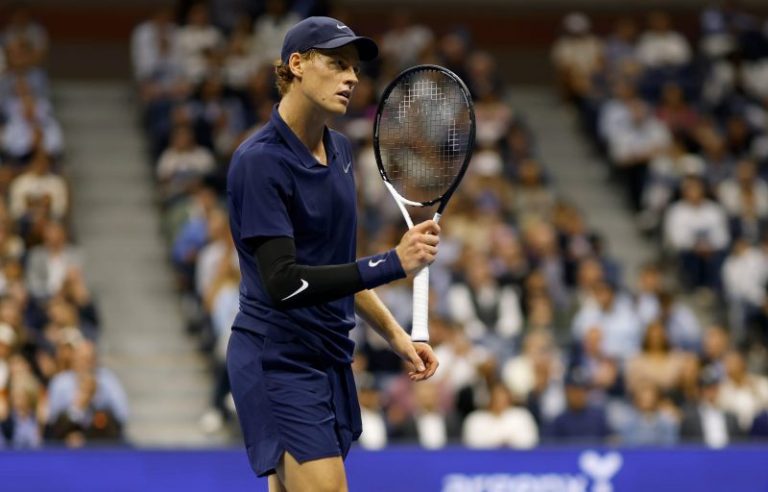
Jannik Sinner will face Carlos Alcaraz in the US Open final in defense of his title on Sunday, Sept. 7 after the top-seeded Italian took down Felix Auger-Aliassime, 6-1, 3-6, 6-3, 6-4, at Arthur Ashe Stadium on Friday night.

Auger-Aliassime, a 25-year-old Canadian making his first appearance in the US Open semifinals in four years, was aiming to become the second men’s singles player from his country to reach a Grand Slam final.

With the victory, the 24-year-old Sinner becomes the fourth and youngest man in the Open Era to play in the finals of all four Grand Slam tournaments in one season.

It will be the first time ever two male players have played in three straight Grand Slam finals within one year.

After winning the Australian Open in January over Alexander ZverevAlcaraz beat Sinner in a five-set thriller at the French Open final. Sinner returned the favor by taking home the Wimbledon title in July, and the Spaniard went on to defeat him for the Cincinnati Open championship, serving as a tune-up for the US Open. Alcaraz and Sinner have won each of the seven Grand Slam championships, and the stakes couldn’t be bigger. Not only is a $5 million check at stake, but the winner of Sunday’s match will become the No. 1-ranked player in the world.

Sinner was surgical in the first set, winning 6-1, using a powerful forehand to force Auger-Aliassime into multiple errors, and capitalizing on opportunities to establish a strong lead.

Those opportunities came in the second set, as it was Sinner who was uncharacteristically sloppy, with only two winners as both men played a chess game to see who could get over on each other’s lightning-fast serve, both sometimes topping out at over 120 mph. Auger-Aliassime took control and won the last three games of the set, sending the crowd at Ashe into thunderous applause.

Sinner called for medical personnel to check on him in between the second and third sets. When he returned from the timeout he went straight to work, winning three straight games after the score was tied at two games each and ending the set when Auger-Aliassime’s backhand went into the net.

Sinner, now on a 27-match hard-court winning streak, struggled at times to put away Auger-Aliassime, who didn’t help his cause with five double faults, but finally wrapped up the three-hour, 21-minute affair when Auger-Aliassime committed the last of his 41 unforced errors, a forehand return that hit the net.

Jannik Sinner vs. Felix Auger-Aliassime semifinal highlights

Order restored as Sinner takes the third set

Two down, one to go for Sinner as he methodically put away Auger-Aliassime in the third set 6-3. Between the second and third sets, Sinner called for medical personnel to check on him, and when he returned from the timeout, he went straight to work, winning three straight games after the score was tied at two games each and ending the set when Auger-Aliassime’s backhand went into the net.

Auger-Aliassime wins second set

Auger-Aliassime roared back into the match by taking the last three games of the second set, winning 6-3. Sinner is not getting his first serve over, and Auger-Aliassime punished him, especially in the eighth game, allowing the momentum that Sinner had from the first set to disappear completely. Sinner lost a set for only the second time all tournament.

Auger-Aliassime shows signs of life

Sinner has made some uncharacteristic errors, and Auger-Aliassime has held serve so far. If he can get the set to at least a tiebreak or break Sinner’s serve, there might be a match. Tied at three games each heading down the stretch in the second set.

Sinner takes first set in easy fashion

Sinner is rolling, winning the first set 6-1, and dominating with his forehand. Auger-Aliassime can’t get out of his own way with 11 unforced errors and is getting a workout chasing Sinner’s return all over the court. Mismatch on all levels so far.

Sinner dominant in early going

Sinner has been absolutely surgical so far, breaking Felix Auger-Aliassime and dominating when it is his turn to serve. Sinner’s lead of 3-0 might be insurmountable if the young Canadian can’t put up much of a fight.

How to watch Jannik Sinner vs. Felix Auger-Aliassime

No. 1 seed Jannik Sinner will face off against No. 25 Felix Auger-Aliassime in a U.S. Open men’s semifinal match.

  • Date: Friday, Sept. 5
  • Time: 7 p.m. ET
  • Location: Arthur Ashe Stadium (Flushing, New York)
  • TV: ESPN

Watch the US Open on Fubo

How to watch 2025 US Open: Dates, TV, streaming

  • Dates: Sunday, Aug. 24-Sunday, Sept. 7
  • Location: USTA Billie Jean King National Tennis Center in Queens, New York
  • TV: ABC, ESPN, ESPN2, ESPN Deportes
  • Stream: Fubo
This post appeared first on USA TODAY

The qualifying process for the 2026 World Cup involves nearly every sovereign nation on the planet, with every team pursuing one of the 48 berths at next summer’s massive tournament.

While the United States, Mexico, and Canada were all guaranteed places as host nations, the other 45 berths have to be earned the hard way. Qualifying kicked off all the way back on Sept. 7, 2023, with a game between Paraguay and Peru being the first to kick off. From there, each of the six continental confederations work through a sometimes byzantine process to sort out the nations that will take the field at the next men’s World Cup.

Over the last two days, four nations have sealed their places at next summer’s tournament. On Thursday, Uruguay and Colombia both clinched their places with wins in South America, while Paraguay joined them after a scoreless draw against Ecuador (and then declared a national holiday to celebrate). Morocco became the first African nation to qualify, sealing their place with a 5-0 rout of Niger on Friday.

Here’s what to know about who has qualified for the 2026 World Cup, who might join them in the near future, and a breakdown of how many berths each of the world’s regions gets:

Who has qualified for World Cup 2026?

The 2026 World Cup will be the first ever to include 48 nations, a massive jump up from the 32 that competed in Qatar in 2022. The qualifying process varies from confederation to confederation, with 17 nations having clinched their places in next summer’s massive tournament.

Here is a complete list of every country to qualify for the 2026 World Cup as of Friday, Sept. 5:

  • Host nations: Canada, Mexico, United States
  • Asia: Australia, Iran, Japan, Jordan, South Korea, Uzbekistan
  • Africa: Morocco
  • Concacaf: None yet
  • Europe: None yet
  • Oceania: New Zealand
  • South America: Argentina, Brazil, Colombia, Ecuador, Paraguay, Uruguay

World Cup qualifying: Who could clinch a 2026 spot next?

World Cup qualifying is going on worldwide, with each confederation’s schedule and process containing variations. However, in the next few days, three countries could claim their places at the 2026 tournament:

  • Algeria: A win on Monday against Guinea (which will be played in Casablanca, Morocco, as Guinea doesn’t have a stadium that meets CAF standards) combined with Uganda failing to beat Somalia in Kampala would send Algeria to their fifth men’s World Cup.
  • Egypt: With three games left to play, Egypt leads Group A by five points over Burkina Faso. Those two meet in Ouagadougou on Tuesday, and a win for the visitors would get ‘the Pharoahs’ back into the World Cup after they missed out in 2022.
  • Tunisia: Tunisia leads Group H by seven points with three games to play, leaving them with several paths to clinch qualifying. A win on Monday at Equatorial Guinea would do the job, as would Namibia failing to defeat São Tomé and Príncipe on Tuesday.

Additionally, there are two high-pressure games in South America, where Venezuela and Bolivia are fighting for the region’s only intercontinental playoff spot. Venezuela holds a one-point lead between the two (as well as a 12-goal edge in the first tiebreaker, goal difference), meaning that a win at home over Colombia will keep their hopes alive.

Bolivia must beat Brazil — something they’ve only done once, back in 2009 — and hope for Venezuela to stumble at the finish line. Otherwise, the ‘Vinotinto’ will begin looking forward to the intercontinental playoff.

World Cup 2026: How many spots for each region?

Here is a complete breakdown of how FIFA sorted out all 48 berths at the 2026 World Cup:

  • Host nations (3): Canada, Mexico, and the United States all qualified as soon as they were picked to host the tournament.
  • Asia (8): Six Asian countries have qualified. The Asian Football Confederation’s fourth round (which will settle who claims the final two automatic bids) begins on Wednesday, Oct. 8.
  • Africa (9): African qualifying sorted 54 countries into nine groups of six (though Eritrea withdrew from Group E before play began). Group winners all qualify, while the best four runners-up will have a pathway to the intercontinental playoff.
  • Concacaf (3): The region’s third round — featuring three groups of four — began on Thursday, Sept. 4. Group winners qualify directly, while the two best runners-up will enter the intercontinental playoff.
  • Europe (16): UEFA qualifying features 54 teams broken up into 12 groups. Group winners qualify for the World Cup, while the second-place finishers (along with the top four teams from the UEFA Nations League who didn’t win their qualifying groups) will enter a playoff for Europe’s final four berths that is set for March 2026.
  • Oceania (1): New Zealand has already claimed Oceania’s only guaranteed berth at the 2026 World Cup.
  • South America (6): CONMEBOL’s marathon qualifying tournament is down to one final round of games, but all six direct spots have already been clinched. The region’s seventh-place finisher (which will be either Venezuela or Bolivia) will go into the intercontinental playoff.
  • Intercontinental playoff (2): New Caledonia is the only team locked into a spot in what will be a six-team tournament scheduled for March 2026.
This post appeared first on USA TODAY

Despite the current low price environment, the long-term demand for battery metals is robust and offers opportunity for those interested in lithium stocks.

Seasoned metals investors who want to look beyond gold and silver are getting involved, while new investors are being drawn into the space by expanding battery market and lithium supply deals between auto makers and lithium producers.

Whatever the reason, it’s important to get familiar with the lithium market before investing in lithium stocks. Here’s a brief overview of some of the basics, including supply and demand, prices and companies.

In this article

    Where is lithium mined?

    Lithium is found globally in hard-rock deposits, evaporated brines and clay deposits. There’s some contention as to which type of deposit is superior, but generally there are challenges and upsides for both.

    The world’s largest hard-rock mine is the Greenbushes mine in Australia, and the bulk of the world’s lithium brine production comes from salars in Chile and Argentina. Most large lithium reserves are in Chile, and the prolific “Lithium Triangle” spans Chile, Argentina and Bolivia. Australia was once again the world’s largest lithium producer in 2024, followed by Chile and China.

    Canada and the United States, ranked as the seventh and ninth largest lithium producing countries, are increasingly becoming hotspots for lithium development and production as North American auto makers seek to secure domestic supply sources.

    What’s the difference between battery-grade and technical-grade lithium?

    Technical-grade lithium is used in ceramics, glass and other industrial applications, while battery-grade lithium carbonate and lithium hydroxide are used to make lithium-ion batteries. These lithium products can also be used for technical applications in a pinch, although battery-grade lithium fetches premium market prices over technical-grade. Those aren’t the only classifications, though. Pharmaceutical grade lithium carbonate is used in medicine.

    How is lithium priced?

    Getting a look at lithium prices isn’t easy, and that can make it difficult for investors who are looking to assess the viability of a given project. Pricing in the lithium industry has always been opaque due to the dominance of a few major producers, with investors having very little pricing information they can trust.

    Simon Moores of Benchmark Mineral Intelligence has emphasized that pricing can be a difficult concept for investors to grasp.

    “The biggest myth surrounding pricing is, ‘What is the price of lithium?’ Because there is no one price,” he said. “The newcomers want one lithium price, but the existing market has a wide range of lithium chemicals and then grades within a specification.’

    There are also distinct prices for lithium on markets in different regions, meaning lithium hydroxide in China will be priced slightly different than in Europe.

    For those looking to invest in lithium who want to learn about lithium prices, it’s best to read reports on lithium price trends from experts to help you understand what is happening in the market.

    What factors drive the lithium market?

    A major driver for the lithium market is its use in the lithium-ion batteries that power electric vehicles, energy-storage systems, smart phones and laptops.

    Global EV sales reached 17 million units in 2024, up 25 percent from the previous year, according to International Energy Agency (IEA) data. The figure represents more than 20 percent of all new cars sold worldwide. Looking forward, EV sales are expected to increase by another 25 percent to surpass 20 million in 2025, amounting to about one-quarter of total new car sales for the year.

    Tesla with its Nevada-based gigafactory was the first carmaker to stoke excitement in the lithium space. However, advancements in Chinese battery technologies, strategic pricing and government support led to Chinese EV maker BYD Company (HKEX:1211) overthrowing Tesla (NASDAQ:TSLA) as the global EV market leader in sales for 2024. That trend has continued into 2025, as Elon Musk’s involvement in US politics has also damaged Tesla’s brand for both sides of the political spectrum.

    The ascension of a Chinese automaker on the global EV stage doesn’t come as a surprise to most market insiders. The IEA is forecasting that China will see more than 14 million new EVs will be sold in 2025, representing 60 percent of all new cars sold in the country. Even more impressive, this figure is more than all EVs sold worldwide in 2023.

    When it comes to the lithium batteries that power electric vehicles, the US Energy Information Administration (EIA) data shows that in 2023, “China controlled nearly 85% of the world’s battery cell production capacity by monetary value.”

    In the US, the election of Donald Trump to a second term as president has cast a shadow over the North American EV market. On September 30, 2025, the Trump Administration is set to scrap the US$7,500 consumer tax credit for EVs offered under the Biden-era Inflation Reduction Act. Government incentives to purchase EVs has also evaporated in Canada, despite the mandate that by 2035, 100 percent of new vehicle sales must be zero-emission vehicles.

    “North America, and in particular Canada, is experiencing a slowdown of EV sales in 2025. With Trump’s latest cuts in his ‘Big Beautiful Bill,’ the USA could struggle to see any growth in the EV market overall in 2025,” said Rho Motion Data Manager Charles Lester.

    Data centers and artificial intelligence technologies represent another key demand trend for lithium as they require significant investments in battery energy storage systems.

    “Batteries are now essential — not just for EVs, but to balance power systems across sectors,” said Paul Lusty, head of battery raw materials at Fastmarkets, at Fastmarkets’ Lithium Supply & Battery Raw Materials conference in June.

    On the supply side, China has made a major push in recent years to expand its lithium mine production, leading to an oversupplied market. The resulting lithium price slump forced Australian lithium miners to stall development plans, curtail production and even place some operations on care and maintenance.

    Fastmarkets has reported that China is set to surpass Australia as the world’s largest lithium producing country by 2026.

    Lithium mine supply disruptions out of China are already having an oversized impact. In mid-August 2025, Chinese battery giant Contemporary Amperex Technology (CATL) (SZSE:300750,HKEX:3750) confirmed it had suspended operations at Jianxiawo, one of the world’s largest lithium mines, after the mine’s permit expired on August 9 and the company failed to obtain an extension.

    The news sent lithium spot prices higher as well as the stock values of ex-China lithium miners such as Lithium Americas (NYSE:LAC), Pilbara Minerals (ASX:PLS) and Mineral Resources (ASX:MIN).

    How to invest in lithium stocks

    So what’s the best way to invest in lithium? How should investors interested in lithium stocks begin? To start, it helps to understand the lithium production landscape.

    For a long time, most lithium was produced by an oligopoly of lithium producers often referred to as the “Big 3”: Albemarle (NYSE:ALB), Sociedad Quimica y Minera (SQM) (NYSE:SQM) and FMC. Rockwood Holdings was on that list too before it was acquired by Albemarle several years ago.

    However, the list of the world’s top lithium-mining companies has changed in recent years. The companies mentioned above still produce the majority of the world’s lithium, but China accounts for a large chunk of output as well. As already discussed, the Asian nation is on track to become the largest lithium-producing country by 2026.

    For now, the biggest producer continues to be Australia, which is home to many lithium mines, including up-and-comer Liontown Resources’ (ASX:LTR,OTC:LINRF) Kathleen Valley operations. The mine entered open-pit production during H2 2024, and the plant hit commercial production in January 2025. The company is currently transitioning Kathleen Valley from an open-pit to underground mining operation, making it the state of Western Australia’s first underground lithium mine.

    In other words, lithium investors need to be keeping an eye on lithium-mining companies in Australia and other jurisdictions in addition to the New York-listed chemical companies that produce the material.

    Of course, smaller lithium stocks are worth watching too — to find out which ones are currently thriving, check out our top global lithium stocks article. You can also check out our articles on the biggest lithium stocks globally, top performing Australian lithium stocks and top Canadian lithium stocks.

    Securities Disclosure: I, Melissa Pistilli, hold no direct investment interest in any company mentioned in this article.
    This post appeared first on investingnews.com

    Investor Insight

    Brazil’s expanding natural gas market, supported by an attractive and stable regulatory framework and fiscal regime, presents a unique opportunity for Alvopetro Energy to leverage its high-potential upstream and midstream assets. In early 2025, Alvopetro also announced a strategic entry into Western Canada focused on the prolific Mannville stack play fairway in Saskatchewan. With capital investment opportunities in Canada and Brazil, Alvopetro is on the pathway for long-term growth.

    Overview

    Alvopetro Energy (TSXV:ALV;OTCQX:ALVOF) is an independent energy company focused on unlocking onshore natural gas in Brazil while expanding its footprint into Canada. The company is recognized as Brazil’s first integrated onshore natural gas producer, having established a unique model that combines upstream production, midstream infrastructure and long-term sales agreements with stable pricing linked to Brent and Henry Hub benchmarks.

    Since commencing production in 2020, Alvopetro has delivered strong operating results, sector-leading netbacks and consistent dividends. With a disciplined capital allocation strategy, approximately half of the cash flow from operations has been reinvested in organic growth, while the remainder has been returned to shareholders through dividends, debt reduction and share repurchases. This balance has underpinned exceptional shareholder returns, including a cumulative 1,495 percent total shareholder return since 2018.

    Alvopetro’s growth is anchored by two pillars: its high-margin natural gas business in the Recôncavo Basin of Bahia, Brazil, and its newly established Western Canadian heavy oil platform. Together, these assets provide a diversified base of production and reserves, supporting near-term growth and long-term value creation.

    Headquartered in Calgary, Canada, and operating in Salvador, Brazil, Alvopetro is led by a proven management team with extensive international oil and gas experience. The company is committed not only to profitable growth but also to sustainable development, investing in local communities through education, entrepreneurship, cultural programs and biodiversity initiatives.

    Company Highlights

    • Alvopetro is a leading independent upstream and midstream gas operator in the state of Bahia, Brazil.
    • The company’s growth strategy targets opportunities with the best combinations of geological prospectivity and fiscal regime. In Brazil, Alvopetro is focused on unlocking Brazil’s on-shore natural gas potential, building off the development of its Caburé and Murucututu natural gas fields strategic midstream infrastructure. In Canada, four wells have been drilled and are on production and Alvopetro has expanded its land base with potential for over 100 drilling locations.
    • Over 95 percent of Alvopetro’s Brazil production is from natural gas and the company has a 2P reserve base of 9.1 million barrels of oil equivalent (MMboe) with a before-tax NPV10 of $327.8 million.
    • The company generates highly attractive operating netbacks and profitability per unit of production, setting it apart from its Latin American and North American peers. The state of Bahia boasts a favorable fiscal regime with low royalties and Alvopetro’s projects are eligible for a 15 percent income tax rate.

    Key Projects

    Caburé

    The company’s flagship Caburé asset has historically delivered the majority of the company’s production. The project is a joint development of a conventional natural gas discovery across four blocks, two held by Alvopetro and two by its partner.

    Following the first redetermination in 2024, Alvopetro’s working interest in Cabure increased to 56.2 percent, entitling the company to a larger share of production. The unitized area includes eight producing wells and all necessary production facilities. Gross unit production capacity has increased by 33 percent to 21.2 million cubic feet per day (MMcfpd), and an ongoing development program includes five additional wells, four of which have already been drilled.

    Murucututu Gas

    Immediately north of Caburé, Murucututu is a 100 percent owned Alvopetro asset with significant growth potential. Independent reserves evaluators have assigned 2P reserves of 4.6 MMboe, with an additional 4.5 MMboe of risked best estimate contingent resources and 10.2 MMboe of risked best estimate prospective resources.

    The company successfully completed the 183-A3 well in 2024 and drilled the 183-D4 well updip of the 183-A3 well in 2025, bringing the 183-D4 well online in August 2025, which achieved initial production of 953 barrels of oil equivalent per day (boepd). With field production facilities already in place, Alvopetro plans a multi-year development program targeting both the Gomo and Caruaçu formations, including at least six more development wells.

    Midstream – Infrastructure and marketing

    Alvopetro owns and operates all of the key infrastructure needed to process and deliver its natural gas. Production from Caburé and Murucututu is transported via Alvopetro’s 11-kilometre transfer pipeline to its UPGN gas processing facility, which has a capacity of more than 18 MMcfpd.

    At the UPGN, condensate and water are removed, with condensate sold at a premium to Brent. Processed natural gas is delivered to the Bahiagás city gate, with onward transportation through a 15-kilometre distribution pipeline into Bahia’s Camacari industrial complex. Under the long-term gas sales agreement with Bahiagás, pricing is set quarterly based on Brent and Henry Hub benchmarks. An updated agreement, effective January 1, 2025, increased firm sales volumes by 33 percent, further securing Alvopetro’s cash flow stability.

    Western Canadian Growth Platform

    Beyond Brazil, Alvopetro has expanded its global footprint into North America with the establishment of a new heavy oil growth platform in Western Canada. The company holds a 50 percent working interest in 27.5 sections (8,890 net acres) of Mannville conventional heavy oil lands in Alberta and Saskatchewan, in partnership with an experienced operator, where we are deploying leading edge open hole multilateral drilling technology:

    The diagram above depicts the evolution of drilling technology to develop a ¼ section of land. On the far left, traditional development would have required 32 vertical wells. Technology then advanced to horizontal wells, as depicted in the middle of the diagram with 4 separate wells. Today, multilateral drilling technology (as depicted on the far right) allows for just a single well with 6+ open-hole lateral legs developing the ¼ section of land. Alvopetro’s first 2 wells drilled in Saskatchewan each included 6 lateral legs. A total of 15 km of open-hole horizontal legs were drilled.

    The Mannville stack is a multi-zone fairway with shallow depths, lower geological risk and attractive drilling economics. The first two earning wells were drilled with more than 15 km of open hole and brought into production in April 2025. Two additional wells were drilled in Big Gully in July 2025, with more than 19 km of open hole, with oil sales from the new wells are expected to commence in September 2025.

    With the potential for more than 100 drilling locations, the Canadian platform provides Alvopetro with a complementary source of long-term production growth.

    Management Team

    Corey C. Ruttan – President, Chief Executive Officer and Director

    Corey C. Ruttan is the president, chief executive officer and director of Alvopetro. He was the president and CEO of Petrominerales, from May 2010 until it was acquired by Pacific Rubiales Energy in November 2013. Prior to that, he was the vice-president of finance and chief financial officer of Petrominerales. From March 2000 to May 2010, Ruttan was the senior vice-president and chief financial officer of Petrobank Energy and Resources, and held increasingly senior positions with Petrobank since its inception in 2000. He also served as executive vice-president and chief financial officer of Lightstream Resources from October 2009 to May 2010; served as vice-president of Caribou Capital from June 1999 to March 2000; and manager financial reporting of Pacalta Resources from May 1997 to June 1999. He began his career at KPMG where he worked from September 1994 to May 1997. Ruttan obtained his Bachelor of Commerce degree majoring in accounting from the University of Calgary in 1994 and his chartered accountant designation in 1997.

    Alison Howard – Chief Financial Officer

    Alison Howard is a chartered accountant with over 20 years of experience in Canadian and international taxation, accounting and finance. Howard joined Petrominerales in July 2011 as a tax manager and was subsequently promoted to tax director. From May 2008 to July 2011, Howard was the tax manager at Petrobank Energy and Resources. Prior to that, Howard spent a number of years at Deloitte LLP in Calgary. She obtained her Bachelor of Commerce degree from the University of Saskatchewan in 1999.

    Adrian Audet – VP, Asset Management

    Adrian Audet joined Petrominerales in 2013 and has held increasingly senior roles with Alvopetro since its inception. Audet has spent extensive time in Bahia overseeing the operations, realizing extensive cost savings and improvements in efficiency. Previously, Audet held engineering roles with increasing responsibility in the oil and gas industry. Audet began his career in 2006 and completed his masters and undergraduate degrees in mechanical engineering at the University of Alberta. Audet is a professional engineer registered with APEGA and is a CFA charterholder.

    Nanna Eliuk – Exploration Manager

    Nanna Eliuk is a professional geophysicist (M.Sc.) with over 23 years of diversified petroleum exploration and development experience. She has expertise in conventional and unconventional plays in both carbonate and clastic reservoirs in different depositional and structural settings (including pre-salt) in various basins around the world. Prior to joining Alvopetro, Eliuk was the senior explorationist of Condor Petroleum (Kazakhstan) for two years, and prior thereto, she was the vice-president of geophysics and land for Waldron Energy. Eliuk started her career in 1997, holding progressively senior roles at Husky Energy for five years, and at Compton Petroleum for over six years. Her extensive experience includes geophysical evaluation and analysis for business development opportunities and new ventures in various international basins, along with regional mapping, play fairway analysis, petroleum system evaluation, prospect definition, and seismic attribute analysis. Eliuk holds a masters degree in geology and geophysics, and a BSc. in geology.

    Darcy Reynolds – Western Canadian Business Unit Lead

    Darcy Reynolds, P.Geo is the Western Canadian Business Unit Lead with over 20 years of subsurface and asset evaluation experience across Western Canada. For the past 12 years, Reynolds has focused on heavy oil development, including horizontal multilateral wells, enhanced oil recovery (waterflood, polymer, CO₂), and thermal SAGD projects. He has held senior leadership and technical roles at Rubellite Energy (senior geologist), Cenovus Energy (geoscience director), Husky Energy (geoscience director), and Talisman Energy (geology manager). Reynolds holds a B.Sc. in Geology from the University of Alberta and is a registered professional geoscientist with APEGA

    Frederico Oliveira – Country Manager

    Frederico Oliveira has held increasingly senior roles since 2008 and has expertise in regulations, contracts, partnerships, management and cost efficiency. He has held management roles in large private companies in Brazil, performing strategic planning, project implementation, process restructuring, efficiency and productivity improvements, and cost control. Oliveira obtained an MBA from the Federal University of Minas Gerais in 2004 and a Bachelor of Science degree in Mechanical Engineering from the Pontificia Universidade Catolica de Minas Gerais.

    This post appeared first on investingnews.com

    Investor Insights

    Aurum Resources offers a compelling value proposition through its highly prospective gold assets in Côte d’Ivoire, a fast-emerging gold region in West Africa. Its cost-effective exploration strategy of drill rig ownership also distinguishes it from its peers.

    Overview

    Aurum Resources (ASX:AUE) is a mineral exploration company primarily focused on gold through its Boundiali and Napié gold projects in Côte d’Ivoire, West Africa.

    Côte d’Ivoire’s gold mining sector is experiencing significant growth and development, with several key projects contributing to the country’s economic expansion. The overall gold mining sector in Côte d’Ivoire is supported by substantial investments in infrastructure and exploration.

    Geopolitically, Côte d’Ivoire outperforms most developing countries in the world in political, legal, tax and operational risk metrics. Additionally, Côte d’Ivoire continues to make notable strides in its political stability and Absence of Violence and Terrorism Index.

    Boundiali Gold Project – BD Target 1 Artisanal Working

    In March 2025, Aurum completed the acquisition of 100 percent of Mako Gold, bringing together its strong balance sheet and industry-leading drilling efficiencies to accelerate resource growth across northern Côte d’Ivoire. The company now holds a 90 percent interest in the highly prospective Napié Project, a 224 sq km land package with a 30 km strike near Korhogo.

    Aurum has delivered a major milestone in 2025 with a +50 percent increase in the JORC Mineral Resource Estimate at its Boundiali Gold Project in Côte d’Ivoire, adding 820koz for a total of 2.41Moz. This lifts the company’s group resources to 3.28Moz, including Napié, highlighting the scale and growth potential of Aurum’s portfolio.

    Supported by a seasoned board and management team with deep gold sector expertise—and strengthened by its recent capital raising—Aurum is well-funded to expand resources and advance development plans that drive long-term shareholder value.

    Company Highlights

    • 3.28Moz and Growing in Côte d’Ivoire: Two cornerstone gold projects — Boundiali (2.41Moz) and Napié (0.87Moz) — positioned for rapid growth with multiple resource updates and development milestones in 2025–2026.
    • Outstanding Metallurgy = Simple, Profitable Processing: Boundiali delivers free milling ore with 95 percent recoveries and a straightforward flowsheet, while Napié achieves +94 percent recoveries in tests, showcasing strong economics and low technical risk.
    • Aggressive, Cost-Effective Growth Strategy: In-house drill fleet drives efficiency and scale: 100,000m at Boundiali and 30,000m at Napié planned in 2025.
    • Premier Mining Jurisdiction: Located in Côte d’Ivoire’s prolific Birimian Greenstone Belt, backed by a stable, supportive government and excellent infrastructure—creating the right conditions for mine development success.
    • Leadership with a Proven Track Record: A seasoned management team with a history of value creation, supported by committed shareholders who back the company’s long-term growth vision.

    Key Projects

    Boundali Gold Project

    The Boundiali gold project in Cote d’Ivoire is located within the Boundiali Greenstone Belt, which hosts Resolute’s Syama gold operation (11.5 Moz) and the Tabakoroni deposit (1 Moz) in Mali. Neighbouring assets also include Barrick’s Tongon mine (5 Moz) and Montage Gold’s Kone project (4.5 Moz).

    The Boundiali project area covers the underexplored southern extension of the Boundiali belt, where a highly deformed synclinal greenstone horizon traverses finer-grained basin sediments, and to the west, Tarkwaian clastic rocks lie in contact with a granitic margin. The project benefits from year-round road access and excellent infrastructure.

    The first stage of drilling at Boundiali occurred from late October 2023 to end of November 2024 for both the BM and BD tenements (BM1 and BM2; BD1, BD2 and BD3 targets) and was designed to test below-gold-in-soil anomalies oriented along NE trending structures, define new gold prospects and define maiden JORC resources. With over 63,000m diamond holes drilled during this period, Maiden JORC gold resources estimate was delivered in late December 2024.

    Drilling costs are estimated at US$45 per metre, as Aurum owns all of its eight drilling rigs and employs its operators, representing a significant value proposition relative to peers who use commercial drilling companies that charge upwards of $200 per meter. The company believes there is potential for multi-million ounce gold resources to be defined with hundreds thousands meters of drilling over years within the Boundiali Gold Project’s land holding areas.

    The Boundiali gold project comprises four contiguous granted licenses: PR0808 (80 percent interest), PR0893 (80 percent and earning to 88 percent interest), PR414 (100 percent interest), and PR283 (earning to 70 percent interest). Historic exploration at PR0893 includes 93 AC drill holes and four RC holes. Airborne geophysical surveying, geological mapping and extensive soil sampling have also been performed at PR0893, while PR0808 has had 91 RC holes drilled for 6,229 metres along with geochemical analysis and modeling. Detailed geochemical sampling and drilling at PR414 revealed three strong gold anomalies and returned impressive high-grade results.

    In May 2024, Aurum entered a strategic partnership agreement to earn up to a 70 percent interest in exploration tenement PR283, to be renamed Boundiali North (BN). Aurum, through subsidiary Plusor Global Pty Ltd, has partnered with Ivorian company Geb & Nut Resources Sarl and related party (GNRR) to explore and develop the Boundiali North (BN) tenement which covers 208.87sq km immediately north of Aurum’s BD tenement. Further to this agreement,

    Aurum announced it has earned 80 percent project interest after completing more than 20,000 m of diamond core drilling.

    Boundiali Project JORC Mineral Resource Estimate

    Aurum has announced a maiden independent JORC mineral resource estimate of 1.59 Moz gold for its 1,037 sq. km. The Boundiali Gold Project comprises the BST, BDT1 & BDT2, BMT1 and BMT3 deposits. Drilling is ongoing on these deposits, and Aurum has identified other prospects at Boundiali which have yet to be drilled. Since October 2023, the company has completed an extensive 63,927-metre diamond drilling program. This aggressive exploration campaign has rapidly defined a significant gold resource of 50.9 Mt @ 1.0 g/t gold for 1.6 million ounces.

    In August 2025, Aurum announced a 50 percent increase in the JORC Mineral Resource Estimate (MRE). The update adds 820koz, lifting Boundiali’s resource to 2.41Moz and boosting total group resources to 3.28Moz, including Napié. The 2025 MRE covers six deposits, including BST1, BDT1, BDT2, BDT3, BMT1, and BMT3, with drilling ongoing and additional untested targets offering strong growth potential.

    Aurum is working towards completing an open pit PFS for the Boundiali Gold Project by the end of 2025. This will provide an evaluation of the project’s economics and technical feasibility.

    Napié Gold Project

    Aurum holds a 90 percent interest in the Napié Project in north-central Côte d’Ivoire, acquired through its takeover of Mako Gold. Located approximately 30 km southeast of Korhogo, the project covers a 224 sq km land package with a 30 km strike length along the highly prospective Napié Shear Zone.

    As of June 2022, Napié hosts a JORC 2012 Mineral Resource Estimate of 868,000 ounces of gold (22.5 Mt at 1.20 g/t Au), based on the Tchaga and Gogbala deposits—two of four known prospects along the shear. To date, only 13 percent of the Napié Shear has been explored, leaving substantial potential for further discoveries.

    Napié Project – Previous results with detailed mapping area on Komboro Prospect shown in black rectangle

    Project Highlights:
    • Gold Resource: Shallow open pit 0.87Moz JORC Resource at 1.20g/t Au, with mineralisation open along strike and at depth. Maximum resource depth between 160 m – 195m across the two deposits
    • Exploration Upside: Less than 13 percent of the 30 km Napié Shear has been explored, offering significant potential for resource growth.
    • Preliminary Recovery Test Work: Returned more than 94 percent average gold recoveries.
    • Resource Growth Target: First MRE update planned end of 2025, to significantly expand the resource base.
    • Infrastructure: Excellent access to hydroelectricity, roads, and water, supporting future development.

    Management Team

    Troy Flannery – Non-executive Chairman

    Troy Flannery has more than 25 years’ experience in the mining industry, including nine years in corporate and 17 years in senior mining engineering and project development roles. He has a degree in mining engineering, masters in finance, and first-class mine managers certificate of competency. Flannery has performed non-executive director roles with numerous ASX listed companies and was the CEO of Abra Mining until October 2021. He has worked at numerous mining companies, mining consultancy and contractors, including BHP, Newcrest, Xstrata, St Barbara Mines and AMC Consultants.

    Dr. Caigen Wang – Managing Director

    Dr. Caigen Wang founded Tietto Minerals (ASX:TIE), where he led the company as managing director for 13 years through private exploration, ASX listing, gold resource definition, project study and mine building to become one of Africa’s newest gold producers at its Abujar gold mine in Côte d’Ivoire. He holds a bachelor, masters and PhD in mining engineering. He is a fellow of AusIMM and a chartered professional engineer of Institution of Engineer, Australia. Wang has 13 years of mining academic experience in China University of Mining and Technology, Western Australia School of Mine and University of Alberta, and over 20 years of practical experience in mining engineering and mineral exploration in Australia, China and Africa. Other professional experience includes senior technical and management roles in mining houses, including St. Barbara, Sons of Gwalia, BHP Billiton, China Goldmines PLC and others.

    Mark Strizek – Executive Director

    Mark Strizek has nearly 30 years’ experience in the resource industry, having worked as a geologist on various gold, base metal and technology metal projects. He brings invaluable geological, technical and development expertise to Aurum, most recently as an executive director at Tietto Minerals’, which progressed from an IPO to gold production at the Abujar gold project in West Africa. Strizek has worked as an executive with management and board responsibilities in exploration, feasibility, finance, and development-ready assets across Australia, West Africa, Asia, and Europe.

    Steve Zaninovich – Non-Executive Director

    Ateve Zaninovich is a qualified engineer with over 25 years of experience in mining project development, business development, maintenance, and operational readiness, with a focus on gold, base metals, and lithium. He is currently director of operations at Kodal Minerals, where he is responsible for advancing the Bougouni Lithium Project. His previous roles include project director at Lycopodium Minerals for the Akyem Gold Project in Ghana and chief operating officer at Gryphon Minerals. Following Gryphon’s acquisition by Teranga Gold Corporation, he became vice-president of major projects and a member of Teranga’s executive management team.

    This post appeared first on investingnews.com