Author

admin

Browsing

We also break down next week’s catalysts to watch to help you prepare for the week ahead.

In this article:

    This week’s tech sector performance

    The Nasdaq Composite (INDEXNASDAQ:.IXIC) ended in the green on Monday (February 9) despite a weaker open.

    A rally in tech companies drove US stocks higher ahead of an economic data release, while Asian indexes also rose, led upward by Japan’s tech‑heavy Nikkei 225 (INDEXNIKKEI:NI225).

    It hit new record highs after Prime Minister Sanae Takaichi’s Liberal Democratic Party secured a landslide victory in the Lower House, clearing the path for tax cuts and higher defense spending.

    Tax planning and wealth management stocks fell on Tuesday (February 10) after financial software provider Altruist unveiled an artificial intelligence (AI) tool for creating tax strategies, echoing last week’s selloff in legal software stocks following the debut of a lawyer-focused AI platform.

    Broader tech‑driven weakness and softer‑than‑expected retail‑sales data dragged the Nasdaq down in Tuesday’s session. The index rose again on Wednesday (February 11) after January data showed labor market stability, potentially allowing the US Federal Reserve to keep interest rates steady as it monitors inflation.

    Software stocks resumed their slide, with Alphabet (NASDAQ:GOOGL) at one point down more than 2 percent, Microsoft (NASDAQ:MSFT) falling over 2.5 percent and Amazon (NASDAQ:AMZN) slipping about 1 percent.

    Personal computer makers also fell after Lenovo Group (HKEX:0992,OTCPL:LNVGF) warned of shipment pressure from a memory chip shortage. HP (NYSE:HPQ) and Dell Technologies (NYSE:DELL) each lost about 4.5 percent.

    After a muted close, investors turned their AI disruption fears to yet another corner of the market on Thursday (February 12). This time, it was logistics and trucking stocks, which plummeted after AI logistics firm Algorhythm Holdings (NASDAQ:RIME) said it has scaled freight volumes by 300 to 400 percent without increasing headcount.

    This event showed traders that AI is now affecting sectors previously thought to be resistant to automation and AI‑driven efficiency gains, leading to selloffs that also spilled into real estate and drug distribution.

    All three major indexes closed lower, with the Nasdaq hit hardest.

    A softer-than-expected US consumer price index report released on Friday (February 13) morning reinforced beliefs that the Fed is likely to cut interest rates this year, while global concerns about potential AI-driven disruptions kept investors cautious. European and Asian indexes lost ground, tracking Wall Street’s losses.

    While the S&P 500 (INDEXSP:.INX) closed slightly ahead on the day, mega-cap tech stocks dragged on the Nasdaq, which closed the week 1.77 percent below Monday’s open.

    3 tech stocks moving markets this week

    1.Cloudflare (NYSE:NET)

    Cybersecurity firm Cloudflare saw its share price surge after its sales guidance for the current quarter exceeded expectations. Shares closed 13.07 percent higher for the week.

    2. Applied Materials (NASDAQ:AMAT)

    Applied Materials, a provider of materials engineering solutions for the semiconductor sector, saw its share price rise sharply after reporting better-than-forecast quarterly financial results. Shares advanced 10.05 percent.

    3. Taiwan Semiconductor Manufacturing Company (NYSE:TSM)

    Taiwan Semiconductor Manufacturing Company rose after D.A. Davidson analyst Gil Luria gave it a ‘buy’ rating with a US$450 price target and called it a top AI foundry name. Shares advanced 5.02 percent.

    Cloudflare, TSMC and Applied Materials performance, February 9 to 13, 2026.

    Chart via Google Finance.

    Top tech news of the week

        • Alphabet completed two bond sales this week, raising a combined total of nearly US$52 billion. On Monday, the company sold US$20 billion in US dollars, followed by a nearly US$32 billion multi‑currency bond sale in British pounds and Swiss francs completed within 24 hours on Tuesday.

                                    Tech ETF performance

                                    Tech exchange-traded funds (ETFs) track baskets of major tech stocks, meaning their performance helps investors gauge the overall performance of the niches they cover.

                                    This week, the iShares Semiconductor ETF (NASDAQ:SOXX) advanced by 2.56 percent, while the Invesco PHLX Semiconductor ETF (NASDAQ:SOXQ) advanced by 1.89 percent.

                                    The VanEck Semiconductor ETF (NASDAQ:SMH) also increased by 2.19 percent.

                                    Tech news to watch next week

                                    Tech stocks face a quieter earnings backdrop next week, with no mega‑cap AI giants reporting; instead, the sector will be trading on macro cues and any guidance hints from mid‑tier semis and software names.

                                    Key US data includes jobs‑related releases and consumer confidence surveys.

                                    Securities Disclosure: I, Meagen Seatter, hold no direct investment interest in any company mentioned in this article.

                                    This post appeared first on investingnews.com

                                    Rio Tinto (ASX:RIO,NYSE:RIO,LSE:RIO) and Glencore (LSE:GLEN,OTCPL:GLCNF) said they will no longer be pursuing a merger, with Rio Tinto noting that the combination of the businesses would not deliver value to its shareholders.

                                    Glencore responded to Rio Tinto by saying that under the terms of the proposal, the Rio Tinto executive group would retain both the chair and CEO roles, which would undervalue Glencore’s contribution to the combined company.

                                    The deal would have created the world’s largest mining company with a combined market cap of US$260 billion. While the collapse of the proposed merger is drawing headlines, it comes at an accelerated pace for mergers and acquisitions in the industry, as majors seek to replenish their project pipelines and mid-cap producers look to grow their businesses.

                                    Among other notable mergers still on the books is Anglo American’s (LSE:AAL,OTCQX:NGLOY) merger with Canada-based Teck Resources (TSX:TECK.A,TECK.B,NYSE:TECK). That deal is currently working its way through regulatory approvals, with the most recent update that it is heading toward antitrust clearance in Europe.

                                    On Wednesday (February 11), Indonesia’s resources ministry ordered Eramet (EPA:ERA,OTCPL:ERMAF) and its joint venture partners, Tsingshan Holding Group, to slash production at the world’s largest nickel mine.

                                    Under the new work and budget plan, PT Weda Bay Nickel has been granted an initial quota of 12 million metric tons, down from the 42 million metric tons it was allowed in 2025.

                                    Nickel has been elevated this year, trading as high as US$18,725 on February 2. Although prices have fallen since that high, the announcement gave nickel some momentum, pushing prices to US$17,720 per metric ton on the London Metal Exchange on Wednesday. Prices eased again on Thursday (February 12), but remain well above 2025 averages.

                                    For more on what’s moving markets this week, check out our top market news round-up.

                                    Markets and commodities react

                                    Canadian equity markets were mixed this week.

                                    The S&P/TSX Composite Index (INDEXTSI:OSPTX) gained 2.88 percent over the week to close Friday (February 13) at 33,073.71, while the S&P/TSX Venture Composite Index (INDEXTSI:JX) shed 0.48 percent to 991.99.

                                    The CSE Composite Index (CSE:CSECOMP) dropped 2.7 percent to 163.24

                                    The gold price was largely flat, losing just 0.07 percent to close at US$5,032.68 per ounce on Friday at 4:00 p.m. EST. The silver price fared worse, closing the week down 8.43 percent at US$76.92 on Friday.

                                    In base metals, the Comex copper price recorded a 2.35 percent decrease this week to US$5.83.

                                    The S&P Goldman Sachs Commodities Index (INDEXSP:SPGSCI) was down 0.13 percent to end Friday at 583.86.

                                    Top Canadian mining stocks this week

                                    How did mining stocks perform against this backdrop?

                                    Take a look at this week’s five best-performing Canadian mining stocks below.

                                    Stocks data for this article was retrieved at 4:00 p.m. EST on Friday using TradingView’s stock screener. Only companies trading on the TSX, TSXV and CSE with market caps greater than C$10 million are included. Mineral companies within the non-energy minerals, energy minerals, process industry and producer manufacturing sectors were considered.

                                    1. Trinity One Metals (TSXV:TOM)

                                    Weekly gain: 104.55 percent
                                    Market cap: C$12.83 million
                                    Share price: C$0.45

                                    Trinity One Metals is a silver exploration and development company with a portfolio of mineral projects, including the recently acquired Silver 1 project in Ecuador.

                                    The property consists of the Silver-1 mine concession, which covers an area of 3,108 hectares and lies within the same mineral belt as Lundin Gold’s (TSX:LUG,OTCQX:LUGDF) Fruta Del Norte mine. Past mining at the site occurred between 1989 and 1994 and included 3,600 meters of underground development, along with a historic resource of 200,000 to 700,000 metric tons of ore averaging 400 to 800 grams per metric ton (g/t) silver and 3 g/t gold.

                                    The company announced the closing of the property acquisition on February 4 for a total consideration of US$540,000. In the release, the company said it will work swiftly to confirm the historic resource to modern standards.

                                    The news was followed on Tuesday (February 10), when the company announced a C$3.3 million non-brokered private placement, which was upsized to C$5.3 million on Thursday. The company said it will use proceeds from the placement to advance exploration projects across its portfolio.

                                    2. Cordoba Minerals (TSXV:CDB)

                                    Weekly gain: 74.68 percent
                                    Market cap: C$123.82 million
                                    Share price: C$1.38

                                    Cordoba Minerals is an explorer whose flagship project is Alacran in Colombia. The asset is a 50/50 joint venture with JCHX Mining Management (SHA:603979). The 20,000 hectare property hosts copper, gold and silver mineralization across five deposits: Alacran, Alacran North, Montiel East, Montiel West and Costa Azul.

                                    A feasibility study for the project released in February 2024 demonstrates an after-tax net present value of US$360 million with an internal rate of return of 23.8 percent and a payback period of three years.

                                    The resource estimate for the Alacran deposit and historical tailings shows an indicated resource of 99.46 million metric tons of ore with an average grade of 0.41 percent copper, 0.24 g/t gold and 2.65 g/t silver. Contained metal totals 904.53 million pounds of copper, 765,400 ounces of gold and 8.47 million ounces of silver.

                                    Following the completion of JCHX’s earn in for 50 percent of the project in July 2025, Cordoba said it had entered into a definitive agreement to sell its remaining 50 percent interest in Alacran.

                                    However, on January 2, the company reported that not all conditions for the sale had been met, and on Tuesday, announced that it had entered into an amended agreement.

                                    Under the new terms, the closing payment was increased to US$128 million from US$88 million, payable in a lump sum at closing. The release states that the bulk of the cash payment will be distributed to shareholders after settling liabilities and obligations, with the company retaining US$10 million for corporate purposes.

                                    3. Rio Silver (TSXV:RYO)

                                    Weekly gain: 52.38 percent
                                    Market cap: C$23.74 million
                                    Share price: C$0.64

                                    Rio Silver is an exploration company advancing its Maria Norte project in Peru.

                                    The property has changed hands several times in the 18 years prior to Rio’s acquisition in March 2025, but has seen little exploration during that time. However, in a February 5 release, the company notes that historic mining occurred at the site due to the presence of a reclaimed waste dump. The property covers the western portion of the Tangana West vein system, and although it has not yet completed an economic assessment for the property. In the announcement, the company said it plans to advance surface mapping and sampling in the third quarter of 2026.

                                    Throughout January, the company made several announcements regarding its exploration and development timeline. On January 6, the company reported results from technical work at the site, confirming the presence of silver mineralization with grades up to 991 g/t in a 0.7-meter channel sample.

                                    The company also announced on January 29 that it was launching a metallurgical program at the site, which it said will assist the company in determining the project’s potential value.

                                    4. Barksdale Resources (TSXV:BRO)

                                    Weekly gain: 48.15 percent
                                    Market cap: C$28.04 million
                                    Share price: C$0.2

                                    Barksdale Resources is a copper explorer focused on advancing its Sunnyside asset in Arizona, US. The property covers approximately 21 square kilometers, south of Tucson, Arizona. It hosts an intrusive complex that the firm believes to be an extension of the copper-zinc-lead-silver system found at South32’s (ASX:S32,OTCPL:SOUHY) Taylor deposit.

                                    In 2025, the company achieved several milestones under its earn-in agreement and completed the initial 51 percent in September following a C$1 million cash payment. Prior to the payment in June, Barksdale said it would work toward increasing its interest in the property to 67.5 percent.

                                    On January 21, the company announced plans to raise C$5 million to fund a Phase 2 drill plan required to increase its ownership stake in the Sunnyside project.

                                    On Wednesday, Barksdale announced the opening of an additional private placement to raise C$930,000. Funds raised from this round will also be used to fund exploration activities at Sunnyside.

                                    5. Pirate Gold (TSXV:YARR)

                                    Weekly gain: 48 percent
                                    Market cap: C$129.48 million
                                    Share price: C$0.37

                                    Formerly Sokoman Minerals, Pirate Gold is a discovery-oriented company with a portfolio of gold projects and one of the largest land positions in Newfoundland and Labrador, Canada.

                                    It also owns a 40 percent stake in the Killick lithium project, a 40/40/20 joint venture with Benton Resources (TSXV:BEX,OTCPL:BNTRF) and Piedmont Lithium.

                                    In October, the company combined its Moosehead and Crippleback claims to form the Treasure Island project, which hosts the largest mineral license and longest strike length along the Valentine Lake fault.

                                    Along with new claims, Pirate Gold’s land holdings in the area cover approximately 58,775 hectares and host multiple untested anomalies identified through historic data and exploration efforts by Pirate Gold.

                                    On Friday, Pirate Gold announced the initiation of project-scale surveys at Treasure Island, as well as the advancement of a 50,000 meter drill program, with two rigs mobilized to the site.

                                    Additionally, the company also said it had received drill permits to operate at the Crippleback Lake and Stony Lake areas, which would allow it to extend its exploration beyond the current footprint at Moosehead and test other high-priority targets along the fault zone.

                                    FAQs for Canadian mining stocks

                                    What is the difference between the TSX and TSXV?

                                    The TSX, or Toronto Stock Exchange, is used by senior companies with larger market caps, and the TSXV, or TSX Venture Exchange, is used by smaller-cap companies. Companies listed on the TSXV can graduate to the senior exchange.

                                    How many mining companies are listed on the TSX and TSXV?

                                    As of December 2025, 898 mining companies and 71 oil and gas companies are listed on the TSXV, combining for more than 60 percent of the 1,531 total companies listed on the exchange.

                                    As for the TSX, it is home to 175 mining companies and 51 oil and gas companies. The exchange has 2,089 companies listed on it in total.

                                    Together, the TSX and TSXV host around 40 percent of the world’s public mining companies.

                                    How much does it cost to list on the TSXV?

                                    There are a variety of different fees that companies must pay to list on the TSXV, and according to the exchange, they can vary based on the transaction’s nature and complexity. The listing fee alone will most likely cost between C$10,000 to C$70,000. Accounting and auditing fees could rack up between C$25,000 and C$100,000, while legal fees are expected to be over C$75,000 and an underwriters’ commission may hit up to 12 percent.

                                    The exchange lists a handful of other fees and expenses companies can expect, including but not limited to security commission and transfer agency fees, investor relations costs and director and officer liability insurance.

                                    These are all just for the initial listing, of course. There are ongoing expenses once companies are trading, such as sustaining fees and additional listing fees, plus the costs associated with filing regular reports.

                                    How do you trade on the TSXV?

                                    Investors can trade on the TSXV the way they would trade stocks on any exchange. This means they can use a stock broker or an individual investment account to buy and sell shares of TSXV-listed companies during the exchange’s trading hours.

                                    Article by Dean Belder; FAQs by Lauren Kelly.

                                    Securities Disclosure: I, Dean Belder, hold no direct investment interest in any company mentioned in this article.

                                    Securities Disclosure: I, Lauren Kelly, hold no direct investment interest in any company mentioned in this article.

                                    This post appeared first on investingnews.com

                                    MILAN — An Olympic gold was in sight for the ‘Quad God.’ After his short program, something catastrophic would have had to happen for Ilia Malinin not to medal.

                                    And that’s exactly what happened.

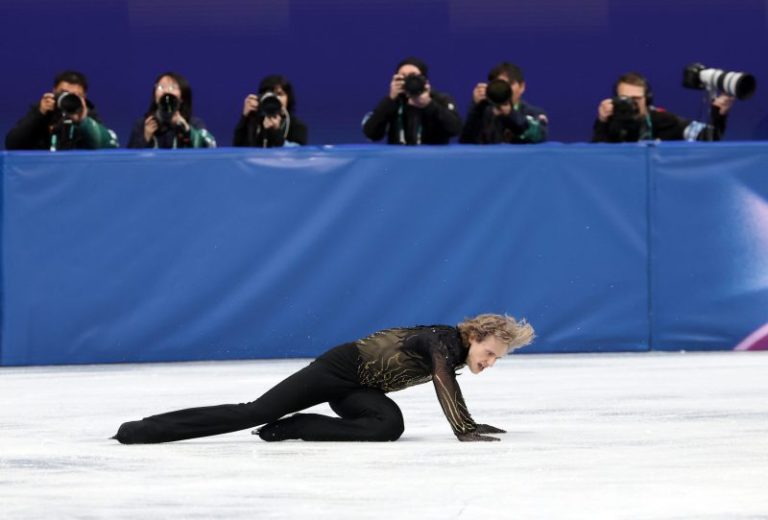
                                    Malinin fell twice and did not fully complete other elements of his typically unbeatable routine, finishing the men’s singles event at the 2026 Winter Olympics with a total score of 264.49 for eighth place overall.

                                    Mikhail Shaidorov (Kazakhstan) won the gold medal with a 291.58 total score, and Malinin congratulated him after. Silver and bronze went to a pair of skaters from Japan Yuma Kagiyama (280.06) and Shun Sato (274.90).

                                    ‘I blew it,’ Malinin said on the broadcast after the event. ‘That’s honestly the first thing that came to my mind, there’s no way that just happened. I was preparing the whole season, I felt so confident with my programs, so confident with everything. That happened. I have no words, honestly.’

                                    Watch Ilia Malinin Olympics video on Peacock

                                    The 21-year-old Malinin sat in first place — by a comfortable margin of five points — entering the free skate, but was among the many skaters who struggled to stay upright on the ice on Friday, Feb. 13 in Milan.

                                    ‘I felt really good this whole day, going really solid, and I just thought that I all I needed to do was go out there and trust the process that I’ve always been doing with every competition,’ he said. ‘But of course, it’s not like any other competitions, it’s the Olympics.”

                                    What happened to Ilia Malinin?

                                    The 21-year-old scored a 156.33 in his disastrous free skate, finishing in eighth place with a total score of 264.49. It’s the first event he’s lost since November 2023, and the first time he didn’t finish in the top three at a competition since March 2022. He didn’t land a single quad Axel the entire competition.

                                    ‘I was not expecting that. I felt like going into this competition, I was so ready,’ he said. ‘I just felt ready getting on the ice, but I think maybe that have been the reason that maybe I was too confident that I was (going to) go well. It honestly just happened. I can’t process what just happened. It happens.’

                                    ‘I think it was definitely mental. Just now experiencing that Olympic atmosphere, it’s crazy. It’s not like any other competition. It’s really different.’

                                    Breaking down Ilia Malinin’s free skate, jump by jump

                                    Here’s a breakdown of every element from Ilia Malinin’s free skate program, looking at what was planned and what actually happened.

                                    Ilia Malinin free skate video

                                    NBC broadcasts the Olympics and has replays of every event on TV, Peacock and the full video of Malinin’s routine is already on YouTube.

                                    Ilia Malinin 8th place finish

                                    Malinin finished in eight place finish in the men’s singles figure skating competition at the Olympics. It’s the first event he’s lost since November 2023, and the first time he didn’t finish in the top three at a competition since March 2022.

                                    What Ilia Malinin said on hot mic

                                    As Ilia Malinin sat in the Kiss-and-Cry section, waiting for his free skate score to be read out after his terrible performance at the 2026 Winter Olympics, he was caught on a hot mic talking about how things would have been different had he gone to the 2022 Beijing Games.

                                    ‘Beijing, I would not have skated like that,’ he was heard saying. Then, NBC commentator Johnny Weir told viewers what he said: That he would not have skated so terribly had he already had Olympic experience under his belt. 

                                    Malinin could be heard saying: ‘It’s not easy.’ The 21-year-old was later asked about the comment.

                                    ‘I think if I went to ’22, then I would have had more experience and know how to handle this Olympic environment,’ he said. ‘But also, I don’t know what the next stages of my life would look like if I went there.’

                                    Mikhail Shaidorov wins figure skating gold

                                    Ilia Malinin congratulates Mikhail Shaidorov

                                    Men’s singles figure skating results

                                    1. Mikhail Shaidorov (Kazakhstan): 291.58 total score, 198.64 free skate, 92.94 short program.
                                    2. Yuma Kagiyama (Japan): 280.06 total score, 176.99 free skate, 103.07 short program.
                                    3. Shun Sato (Japan): 274.90 total score, 186.20 free skate, 88.70 short program.
                                    4. Junhwan Cha (Korea): 273.92 total score, 181.20 free skate, 92.72 short program.
                                    5. Stephen Gogolev (Canada): 273.79 total score, 186.37 free skate, 87.42 short program.
                                    6. Petr Gumennik (Neutral Athlete): 271.21 total score, 184.49 free skate, 86.72 short program.
                                    7. Adam Siao Him Fa (France): 269.27 total score, 166.72 free skate, 102.55 short program.
                                    8. Ilia Malinin (United States): 264.49 total score, 156.33 free skate, 108.16 short program.
                                    9. Daniel Grassl (Italy):263.71 total score, 170.25 free skate, 93.46 short program.
                                    10. Nika Egadze (Georgia): 260.27 total score, 175.16 free skate, 85.11 short program.
                                    11. Kevin Aymoz (France): 259.94 total score, 167.30 free skate, 92.64 short program.
                                    12. Andrew Torgashev (United States): 259.06 total score, 170.12 free skate, 88.94 short program.
                                    13. Kao Miura (Japan): 246.88 total score, 170.11 free skate, 76.77 short program.
                                    14. Lukas Britschigi (Switzerland): 246.64 total score, 165.77 free skate, 80.87 short program.
                                    15. Matteo Rizzo (Italy): 243.18 total score, 158.88 free skate, 84.30 short program.
                                    16. Aleksandr Selevko (Estonia): 236.82 total score, 154.80 free skate, 82.02 short program.
                                    17. Boyang Jin (China): 229.08 total score, 142.53 free skate, 86.55 short program.
                                    18. Deniss Vasiljevs (Latvia): 226.46 total score, 144.02 free skate, 82.44 short program.
                                    19. Kyrylo Marsak (Ukraine): 224.17 total score, 137.28 free skate, 86.89 short program.
                                    20. Maxim Naumov (United States): 223.36 total score, 137.71 free skate, 85.65 short program.
                                    21. Vladimir Samoilov (Poland): 222.25 total score, 144.68 free skate, 77.57 short program.
                                    22. Donovan Carrillo (Mexico): 219.06 total score, 143.50 free skate, 75.56 short program.
                                    23. Yu-Hsiang Li (Chinese Taipei): 214.33 total score, 141.92 free skate, 72.41 short program.
                                    24. Adam Hagara (Slovakia): 202.38 total score, 122.08 free skate, 80.30 short program.

                                    Simone Biles stops by figure skating

                                    Eleven-time Olympic medalist and seven-time Olympic gold medalist Simone Biles stopped by the Milano Ice Skating Arena on Friday night to watch ‘Quad God’ Ilia Malinin and the rest of the men’s singles figure skaters compete for Olympic hardware.

                                    Maxim Naumov’s free skate

                                    Despite the mixed performance, the crowd shared its love for the skater. He even earned a standing ovation from actor Jeff Goldblum, who is in the crowd at Milano Ice Skating Arena. He again shared the photo of him as a child with his parents.

                                    Here’s more about his backstory:

                                    After Naumov finished in fourth place at the 2025 U.S. figure skating championships for the third straight year, his father, Vadim, wanted to game plan.

                                    Vadim and Maxim’s mother, Evgenia Shishkova, were two-time Olympic pair skaters for Russia, and they knew Maxim’s upcoming year was critical with the 2026 Winter Olympics on the horizon.

                                    A few days later, Vadim and Shishkova were among the 67 people killed in the midair collision between American Airlines Flight 5342 and an Army helicopter near Washington, D.C. They were among the 28 figure skating coaches, young athletes and parents who were returning from a development camp. An unimaginable tragedy, and Naumov didn’t know if he could skate anymore.

                                    Read the full story from reporter Jordan Mendoza.

                                    Why is Ilia Malinin called the ‘Quad God’?

                                    Simply put, Ilia Malinin has the greatest array of jumps any figure skater in history has ever possessed. He’s launched himself into the air for seven quadruple jumps in a single long program at last month’s Grand Prix Final and was the first skater to land a quad Axel.

                                    Malinin’s username used to be Lutz God, but he changed it to Quad God after landing his first quad jump. 

                                    “i didn’t think much about it … Days go by and people started asking, ‘Why’d you name yourself Quad God, you only landed one jump,’’ he said on Milan Magic, USA TODAY’s new Olympics podcast that drops its first episode Saturday. ‘And then I was like, ‘Oh, OK maybe I should be come a Quad God.’ From there I found my rhythm of landing quad after quad after quad and then of course landing the first quad axel.”

                                    “In the most humble way possible, I think it’s definitely helped my confidence in not only to skating in general but just feeling like I deserve to be recognized as who I am.”

                                    What makes Ilia Malinin so great? Skaters marveled by the ‘Quad God’

                                    These are the few ways to describe Ilia Malinin, and none of them are an exaggeration. Every sport gets an athlete that redefines everything you know about it. Basketball had Michael Jordan. Football had Tom Brady. Baseball has Shohei Ohtani. 

                                    Now, figure skating has its phenom, and it’s not just fans that are amazed by the 21-year-old. Those who have championed the sport and been through the grind are just as flabbergasted by how he’s turned figure skating upside down.

                                    ‘All the skaters that I sit with in the audience, they throw up their hands, and they think, ‘Oh, my God, this guy’s just so amazing,’” 1988 Olympic champion Brian Boitano said on USA TODAY’s Milan Magic podcast.

                                    Now, the entire world has its chance to be the next spectators wowed at the 2026 Winter Olympics. It’s been a journey four years in the making, and in his Olympic debut, Malinin is out to show why he is the present and future of figure skating. 

                                    He already did it in the team event, and now it’s time for him to do it in the men’s singles to become the next great American figure skating champion.

                                    Figure skating Olympics schedule

                                    Here is the remaining figure skating schedule in Milan. All times Eastern.

                                    • Feb. 15, 1:45 p.m.: Pairs short program
                                    • Feb. 16, 2 p.m.: Pairs free skate
                                    • Feb. 17, 12:45 p.m.: Women’s short program
                                    • Feb. 19, 1 p.m.: Women’s free skate

                                    Ilia Malinin’s parents

                                    Malinin was born into figure skating. His mother, Tatiana Malinina, is from the Soviet Union, Siberia specifically, and competed at 10 consecutive world figure skating championships for Uzbekistan. She finished eighth at the 1998 Winter Olympics in Nagano, the competition in which Tara Lipinski won the gold medal and Michelle Kwan the silver. Malinina finished fourth at the 1999 world championships as well, and she also competed at the 2002 Salt Lake City Olympics, but withdrew after the short program with the flu.

                                    Malinin’s father, Roman Skorniakov, represented Uzbekistan at the same two Olympics, 1998 and 2002, finishing 19th both times. He and Malinina were married in 2000 and became skating coaches in the United States, moving to the Northern Virginia suburbs of Washington, D.C., where, in December 2004, Ilia was born. He took the Russian masculine form of his mother’s last name because his parents were concerned that Skorniakov was too difficult to pronounce. 

                                    Are backflips allowed in figure skating?

                                    They are now. For nearly 50 years, the backflip was banned in figure skating, after American skater Terry Kubicka became the first one to execute it at the 1976 Innsbruck Games. French skater Surya Bonaly did it at the 1998 Winter Olympics, landing it on one blade, but the move was illegal and she was deducted for it. 

                                    The International Skating Union reversed course and made the move legal in 2024, paving the way for it to be done at the 2026 Winter Olympics, 50 years after it was first done.

                                    Ilia Malinin backflip

                                    The ‘Quad God’ performed his first skate during the team event Saturday, Feb. 7, and he became the first skater since 1998 to perform a backflip at the Games, and the first since it was unbanned.

                                    Malinin closed his performance with the stunning move than wowed the crowd at the Milano Ice Skating Arena. However, Malinin finished second in the event with a score of 98.00 after Japan’s Yuma Kagiyama pulled off a stunning routine that received 108.67 points.

                                    Malinin then landed a backflip on one foot during his long program of the team event. Malinin was the first to pull off the one-foot move since French figure skater Surya Bonaly at the 1998 Nagano Winter Games. Bonaly landed it on one blade despite it being banned at the time and was deducted for it.

                                    Quad axel in figure skating

                                    Malinin is the only skater in history to achieve a quadruple axel in competition. That feat earned him the nickname ‘Quad God.’

                                    What is a quad axel though? Here’s a full explanation of Malinin’s iconic move. A quadruple axel requires four-and-a-half rotations in order to complete. It’s so difficult, in fact, that it was once considered impossible to perform.

                                    When did figure skating start in the Olympics?

                                    Figure skating first made its Olympic debut at the Summer Games in London in 1908 and made another appearance in Antwerp in 1920, before becoming a Winter Olympic staple at the inaugural 1924 Chamonix Winter Games with men’s singles, women’s singles and pair skating events. Ice dancing was added to the program at the 1976 Innsbruck Winter Olympics, and the team event was first contested at the 2014 Sochi Winter Olympics.

                                    How is figure skating scored?

                                    A figure skating routine is made up of two scores: Technical elements score and program components score. The technical elements score is exactly what it sounds like: It’s for the jumps, spins and step sequences in a performance. The program components score is made of up composition, presentation and skating skills.

                                    This post appeared first on USA TODAY

                                    Valentine’s Day has a funny way of bringing toxic relationships to light.

                                    After Chris Paul announcement his retirement from the NBA on Feb. 13 following his release from the Raptors, scuttling his initial plan to retire after the season, the team that arguably expedited his retirement shared a thank you video on social media. The Clippers, the team whose jersey many fans will associate Paul with in the annals of NBA history, shared a post on X (formerly known as Twitter) after they effectively booted him from the team in December.

                                    The thank you video from the team, posted after midnight ET, features a voiceover from Paul talking about his dreams for the Clippers cut in with some of his highlights, and ends with the words ‘FOREVER A LEGEND. THANK YOU, CP3.’

                                    Paul, of course, established himself as a franchise icon as part of the Lob City Clippers alongside Blake Griffin and DeAndre Jordan. But what was meant to be his swan song was cut short when he was effectively sent home from the team Dec. 3. At the time, president of basketball operations Lawrence Frank said in a statement:

                                    ‘Chris is a legendary Clipper who has had a historic career. I want to make one thing very clear. No one is blaming Chris for our underperformance. I accept responsibility for the record we have right now. There are a lot of reasons why we’ve struggled. We’re grateful for the impact Chris has made on the franchise.’

                                    It was later reported by ESPN’s Shams Charania Paul wasn’t on speaking terms with Clippers coach Tyronn Lue ahead of the ousting.

                                    Paul was traded to the Raptors with the Brooklyn Nets as a third trade partner on Feb. 5 ahead of the NBA trade deadline. After he was waived by Toronto on Feb. 13, he announced his retirement at 40 years old and after 21 seasons.

                                    This post appeared first on USA TODAY

                                    MILAN, Italy — Kendall Coyne-Schofield’s fourth trip to the Winter Olympics with the U.S. women’s hockey team has been decidedly different than the first three.

                                    “Yeah, you’re worried about diapers, pack-and-play strollers, food, whole milk, where are they staying, how do I get there?’’ Coyne-Schofield said, referring to her 2½-year-old son, Drew. “…So the logistics are definitely a little different.

                                    “I warned our (equipment) managers, ‘Hey, I have about a couple boxes of diapers in my hockey bag, just so you know.’ But yeah, definitely a little bit different, but I wouldn’t change it for the world.’

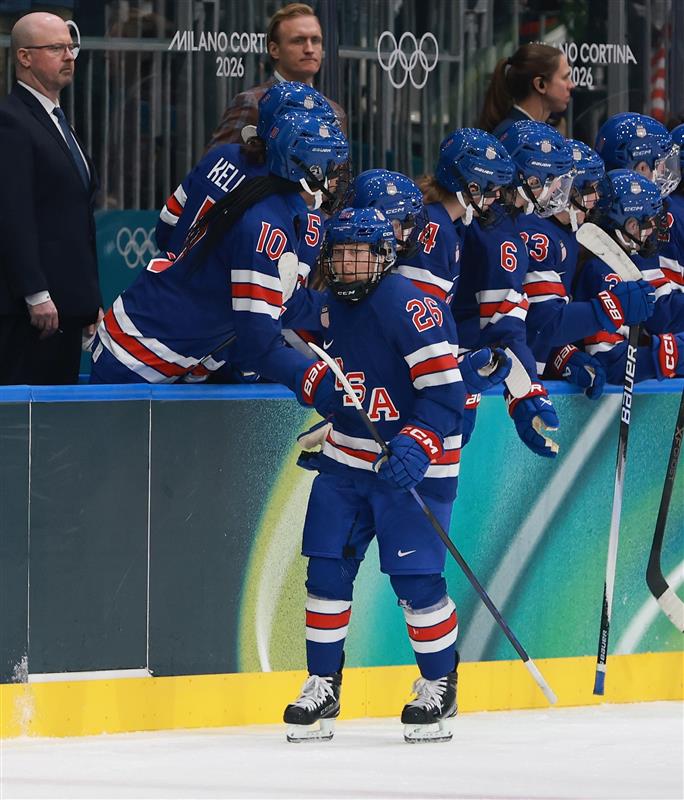
                                    The United States beat Italy 6-0 in the quarterfinals at the 2026 Winter Olympic Friday, Feb. 13, and the victory also served as validation for Coyne-Schofield, an experienced forward. At 32, she’s the team’s second oldest player (behind captain Hilary Knight, 36) and the only mother.

                                    Against Italy, she scored back-to-back goals – her first at the Milano Cortina Winter Games – while Drew was in the stands with his father, Michael, at the Milano Rho Ice Hockey Arena.

                                    “I think it’s special to have him here,’’ Coyne-Schofield. “I think I look up and it’s a reminder of the journey that it took to get back here.’’

                                    She also said she hopes to serve as inspiration for women who want to start a family without giving up there careers.

                                    “It’s not easy, but it’s absolutely worth it,’’ she said.  “And every time I look up and see ’em, a reminder of how worth it it was.’’

                                    ‘One of my heroes’

                                    Coyne-Schofield scored consecutive goals in the second period, extending Team USA’s lead over Italy to 3-1.

                                    The performance and her ability to juggle motherhood and hockey came as no surprise to Team USA coach John Wroblewski.

                                    “Kendall’s one of my heroes, honestly, I just love her,’’ Wroblewski said.

                                    He recalled his first experience with her, following the 2022 Olympics, a “small game jamboree.’’  But for Coyne-Schofield, apparently there was nothing small about it.

                                    “Kendall was so angry about a rule in the small game jamboree and wanted clarity,’’ Wroblewski said with a smile. “Some coaches weren’t dishing the pucks the same way at this end as they were at that end. … that woman is as driven as you can possibly be, and I love her. I’m so glad we got her.’’

                                    They lost her temporarily when she gave birth to her son July 1, 2023.

                                    But now she’s back, scoring goals as Team USA heads into the semifinals in pursuit of it’s first Olympic gold medal since 2018.

                                    “I think anyone that has a child knows it takes a village to raise one,’’ she said. “And I think about the village that it took to help me get back here after going through childbirth and the process to return to hockey at the highest level.’’

                                    As Coyne-Schofield put it, when Drew shows up, he has 22 aunts – all members of the U.S. women’s hockey team.

                                    Of course the village also includes her husband and Drew’s father, Michael, who at an earlier game, helped Drew catch a puck.

                                    This post appeared first on USA TODAY

                                    • Japan’s Yuto Totsuka won the gold medal in a highly competitive men’s halfpipe final.
                                    • Australian Scotty James took silver, while Japan’s Ryusei Yamada earned the bronze.
                                    • The event showcased a significant progression in the sport, with the top four riders all scoring in the 90s.
                                    • A broadcast camera cable snapped during the final run but did not affect the competition’s outcome.

                                    LIVIGNO, Italy – This is what sports are about. This is what the Olympics are about. What happened Feb. 13 in the men’s halfpipe final is the gold standard – pun intended – for high-level athletics.

                                    What a treat it truly was.

                                    Competitors pushed each other, and the sport, to levels that would have been incomprehensible even a few years ago. One country, Japan, dominated the top of the leaderboard, a display of the might they carry on the international snowboarding circuit in between the spotlight the Olympics provides the sport every four years. Plenty of heartbreak to go around, from those who gave their all to those who even made the podium. A nearly shocking moment – the cable of the overhead camera snapped during the final run of the night, with the gold medal very much still up for grabs – that did not actually, and thankfully, affect the integrity of the competition.

                                    In the end, Yuto Totsuka of Japan stood atop the podium. His compatriot Ryusei Yamada took bronze. Between them was Australia’s Scotty James, still in search of that elusive gold medal, yet clearly successful in his quest to push the sport to the next stratosphere.

                                    Because that’s where these guys were flying. The conditions were perfect – a cool but not too cold night, a slick pipe that was perfect for both speed and landing (the opposite of what the women dealt with in their finals a night earlier).

                                    Campbell Melville Ives of New Zealand went for it all on his three runs and fell on his last hit as he ran out of room on the pipe each time. The lack of landing zone did not prevent his daring. South Korea’s Chaeun Lee was inconsolable after he put down an astounding final run after falling on his first two. But when his score of 87.50 (sixth place) came up, he was simply devastated. Japan’s Ruka Hirano had to be peeled off the snow once he realized he wouldn’t stand on the podium. Ziyang Wang of China spun like a thimble. The top four riders all had scores in the 90s, with 1.50 points separating Totsuka (95.00) and James (93.50).

                                    Even the two Americans who occupied the final qualifying spots, Jake Pates and Chase Josey, threw down runs they were more than proud of – as they should have been.

                                    Aussie Valentino Guseli, who went 5.8 meters in the air on his first hit of his last run and ended up with an 88.00 and a shrug that said “well, what can ya do,” understood why many of the women could not put down the runs they wanted the night prior in their final. The Olympic pressure is real, he said.

                                    Scotty James’ gamble on final run backfires, but what a show it was

                                    Like the best Olympic events, the gold medal came down to the final moment, with James needing another huge run to leapfrog Totsuka.

                                    But James couldn’t land his final run. To put the exclamation point on the night, he went for a backside 1620, instead of settling for a 1440. The 1440 perhaps could have been enough for gold, Guseli said. James wasn’t feeling that last hit Friday night and during training. He tried it anyway.

                                    For his own conscience – and he snowboards for Scotty James, not for the judges, not for the fans, not for his family – he needed to try the 1620.

                                    That’s the sign of a healthy sport. He wasn’t thinking about the medal. He was thinking about the run, the process, the bettering of the product without an emphasis on the – literally subjective – results.

                                    “I’ll have to keep pushing in the future, I guess,” he said, adding: “The difference was me. If I executed well, I feel pretty confident I would have won.”

                                    Had James landed his first run, he believed, from an execution standpoint, it would have generated more than the 1.50 points needed to overtake Totsuka and he’d leave Italy with a different-colored medal.

                                    “What I can live with is that I tried my best,” James said.

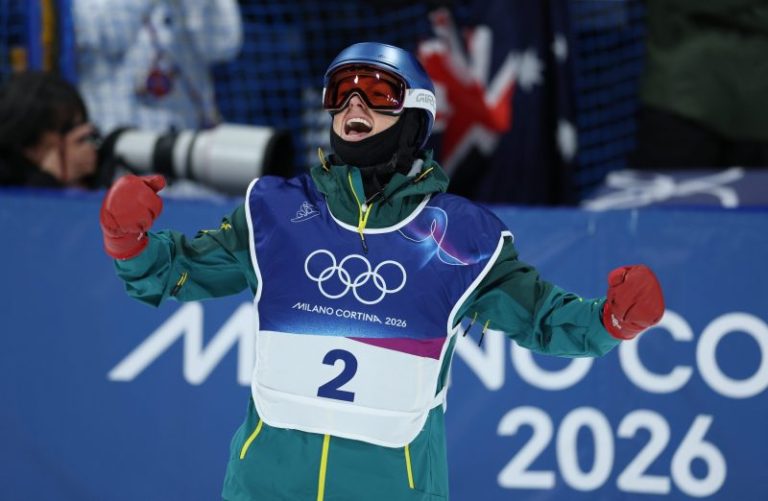
                                    James admitted he was numb and in that in the next 24 hours he’ll have a “bit of a cry.” Nonetheless, he exuded pride in winning a medal for Australia as he became the country’s most-decorated Winter Olympian ever with a second silver to join a bronze. James, wearing his customary red mittens that resemble boxing gloves, waved to doting fans who called his name as he hugged his family after the medal ceremony, when he kept his eyes down for half of the Japanese national anthem.

                                    A cable that held the broadcast camera hovering over the halfpipe snapped as James tried to complete the 1620 of his final run. Fortunately, it fell harmlessly into the bottom of the pipe. James did not notice the commotion.

                                    “Everyone’s talking about the cable. I should blame it on the cable,” James joked.

                                    Guseli thought, at first, it was a good omen from the “shred gods.”

                                    “He was riding that pipe, he was tearing it apart … like it was the craziest thing that ever happened … I guess they weren’t with him,” he said.

                                    Watching the progression of the sport over the duration of his Olympic career, which dates back to 2010, has been “crazy,” he said. Even wilder, James added, is how rapidly it has advanced in the last 12 months.

                                    “It’s times where I was like ‘I hope it slows down, but it didn’t,’” he said with a smile. “And I’m pushing it myself as well. I’m pushing it, so they’re pushing it, so I’m equally responsible. But yeah, it’s been cool to be a part of it.”

                                    Japan exerts its dominance in men’s halfpipe

                                    Even in defeat, James held empathy for others, such Hirano, who has been his biggest rival along with Totsuka over the past 12 years. Seeing him on the ground hurt James, too. He’s been there. He’s been on the winning side over Totsuka, one of his rivals, plenty of times over the years.

                                    “I just respect them as a country, as riders,” James said of Japan, which had four of the top seven riders, including 2022 gold medalist Ayumu Hirano. “It’s hard to see anyone be upset with a result like that.”

                                    What’s clear is that Japan’s place as the epicenter of men’s halfpipe is not going away anytime soon with that deadly combination of depth and success.

                                    “I think they just are born with snowboards on their feet, honestly,” he joked. “They’re amazing. I think they have a natural ability and gift in skateboarding and snowboarding that, to be honest, you don’t really see that from anyone else.”

                                    In all seriousness, James said, the collective work ethic makes them an overwhelming force on the world stage. The Japanese reign does not appear to be ending any time in the near future.

                                    “I’ve competed in many events before, but today’s competition was among the highest caliber,” Totsuka said. “The level was exceptionally high right from the qualifiers.”

                                    And on this stage, that’s exactly how it should be.

                                    This post appeared first on USA TODAY
                                    INGLEWOOD, CA — Give credit to the young stars of the NBA.

                                    As the NBA All-Star Game has faced criticism from fans and league executives alike for a lack of competitive spirit, the Rising Stars tournament delivered in entertainment and quality play. In the end, it was Team Vince, led by NBA Hall of Famer Vince Carter, who won the championship behind the play of 76ers rookie guard VJ Edgecombe.

                                    He led all players across the competition with 23 combined points in the semifinal and final round. Team Vince toppled Team Melo by one point, 25-24, in the championship game.

                                    ‘This is what we wanted to get out of this, guys competing,’ Carter said in the postgame interview with NBC. ‘I thought the competition was great.’

                                    Edgecombe won the Rising Stars Most Valuable Player award for his performance.

                                    ‘We appreciate people tuning in, even to the Rising Stars Game,’ Edgecombe told reporters after the game. ‘We just tried to make it fun, tried to make it competitive and worth your time. …

                                    ‘And I wanted to win. I hate losing, I really hate losing. We had the chance to win it all, so why not go for it?’

                                    Rising Stars Championship: Team Vince 25, Team Melo 24

                                    Needing a 3 to win, Team Melo tried to find an open look from beyond the arc, but Team Vince’s defense made it tough to get a clean shot off. So Jeremiah Fears drove to the hoop and missed the layup, but Stephon Castle cleaned it up with the putback, to give Team Melo a 24-23 lead.

                                    On the other end, as he had done all night for Team Vince, 76ers rookie VJ Edgecombe was the standout. He drove down the left side of the paint, got to the basket and drew a shooting foul from Team Melo center Donovan Clingan.

                                    Edgecombe, calm as ever, knocked down the two free throws to win the game. He led Team Vince with 6 points.

                                    Second timeout: Team Vince 23, Team Melo 22

                                    Straight out of the Team Melo timeout, Spurs rookie Dylan Harper laced a corner 3. Then, after a stop on the other end, Jeremiah Fears rattled home a 3 from the opposite corner to take back the lead.

                                    Team Melo then got 3 happy and missed its next three attempts, all of which were from beyond the arc. That let Team Vince go on a little run.

                                    Now, each team is just one basket away from the title, as the first team that gets to 25 will win the game.

                                    First timeout: Team Vince 15, Team Melo 11

                                    Team Vince missed its first three shots, while Team Melo’s Donovan Clingan nailed a 3 to open scoring. On the way down, Matas Buzelis (Vince) thundered home a dunk and then VJ Edgecombe added a basket.

                                    The pace has been quick and engaging, with both teams looking to get quick offensive actions early in the shot clock. Team Melo, though, has only had two players — Clingan and Dylan Harper — score points. The rest of Team Melo has combined to go 0-for-5.

                                    It has been the opposite for Team Vince, which has had six of its seven players score at least 2 points. Team Vince is now just 10 points away from the Rising Stars title.

                                    Rising Stars Semifinal Game 2: Team Vince 41, Team T-Mac 36

                                    76ers rookie guard VJ Edgecombe took over down the stretch. As Team Vince continued to stack baskets, it was Edgecombe who set the tone and finished with a game-high 17 points. He added 5 rebounds and 1 assist, but he scored Team Vince’s final 10 points of the game.

                                    Team T-Mac did start to mount a little comeback, but it missed a few attempts inside the paint.

                                    Now, Team Vince will face Team Melo in the Rising Stars championship game.

                                    Second timeout: Team T-Mac 24, Team Vince 22

                                    Team Vince has settled in and has found its rhythm. It has hit 4 of its last 9 shots, as 76ers rookie guard VJ Edgecombe has come off the bench to pour in 7 quick points, including a corner 3 assisted from Derik Queen that forced a Team T-Mac timeout.

                                    Team T-Mac has cooled off a touch, but Heat center Kel’el Ware continues to lead the team with 7 points. One player having a rough go? Hawks second-year wing Zaccharie Risacher, the 2024 No. 1 overall selection, who is 0-for-5 from the field.

                                    First timeout: Team T-Mac 15, Team Vince 7

                                    In a battle of cousins and NBA icons, Vince Carter and Tracy McGrady, it was Team T-Mac that took an early lead.

                                    Miami Heat center Kel’el Ware flushed a 3-pointer and, later, slammed home an alley-oop that he received off of a pick-and-roll. He and Wizards point guard Tre Johnson are tied for most points on Team T-Mac, with 5.

                                    Team Vince, however, has had a tough time hitting shots, opening the game just 3-of-10 (30%) from the field. That compares to Team T-Mac’s shooting clip of 54.5%.

                                    Rising Stars Semifinal Game 1: Team Melo 40, Team Austin 34

                                    Just when it looked like Team Austin and the G Leaguers would scratch out an upset, Team Melo locked in. Rockets guard Reed Sheppard (Melo) drained consecutive 3s to reclaim the lead.

                                    Then, Spurs guard Stephon Castle attacked the paint and got to the line for a pair of free throws, before Pelicans guard Jeremiah Fears floated a bank jumper, leaving Team Melo two points away from victory.

                                    After Team Austin airballed a 3, Spurs rookie Dylan Harper ended the game with a short stepback jumper in the paint.

                                    Sheppard and Donovan Clingan led Team Melo with 9 points apiece, while Fears added 7.

                                    For Team Austin, Yanic Konan Niederhauser paced the way with 11 points on 5-of-7 shooting, while Yang Hansen chipped in 10 points on 4-of-5 from the field.

                                    Second timeout: Team Austin 30, Team Melo 26

                                    The young G Leaguers have taken control of the game. Now just 10 points away from a win, the pair of Team Austin bigs Yanic Konan Niederhauser (9 points and 2 rebounds) and Yang Hansen (8 points) have attacked the basket.

                                    Niederhauser has flushed home a couple of alley-oop dunks, while Hansen has flashed steady footwork to create space; on the most recent basket, Hansen jab stepped multiple times, getting Donovan Clingan out of position and allowing Hansen to cruise through the paint for an easy lay-in.

                                    First timeout: Team Melo 16, Team Austin 12

                                    The first semifinal game of the showcase features Team Austin, led by former NBA guard Austin Rivers, against Team Melo, led by NBA Hall of Fame forward Carmelo Anthony. Team Melo is arguably the most balanced and complete roster, with high-profile second-year players and rookies. Team Austin features G League stars.

                                    Early on, however, Team Austin held its own, fighting back from a six-point deficit to close the Team Melo lead.

                                    It has been a showcase of bigs, as Trail Blazers center Donovan Clingan (Melo) leads all players with 9 points. On Team Austin, it was Yanic Konan Niederhauser who scored 5 early points, including a 3 he swished.

                                    Ron Harper Jr. (Austin), who is battling against his brother, Spurs rookie Dylan Harper (Melo), scooped 5 early rebounds.

                                    How to watch NBA Rising Stars Game?

                                    Where: Intuit Dome (Inglewood, California)

                                    When: Friday, Feb. 13, 9 p.m. ET (6 p.m. PT)

                                    TV/Stream: Peacock

                                    Who will play in NBA Rising Stars Game?

                                    Team Melo: Ace Bailey, Stephon Castle, Dylan Harper, Jeremiah Fears, Donovan Clingan, Collin Murray-Boyles

                                    Team T-Mac: Kon Knueppel, Kel’el Ware, Tre Johnson, Ajay Mitchell, Jaylon Tyson, Cam Spencer, Bub Carrington

                                    Team Vince: VJ Edgecombe, Derik Queen, Kyshawn George, Matas Buzelis, Egor Demin, Cedric Coward, Jaylen Wells

                                    Team Austin: Sean East II, Ron Harper Jr., Yanic Konan Niederhauser, Alijah Martin, Tristen Newton, Yang Hansen, Mac McClung, David Jones Garcia

                                    NBA Rising Stars game schedule

                                    • Game 1: Team Melo vs. Team Austin
                                    • Game 2: Team Vince vs. Team T-Mac
                                    • Rising Stars championship: (G1 winner vs. G2 winner)
                                    This post appeared first on USA TODAY

                                    Latvian startup Deep Space Energy announced it has raised approximately US$1.1 million in a combination of private investment and public funding to advance a radioisotope-based power generator designed to operate on the Moon.

                                    The company closed a US$416,500 pre-seed round led by Outlast Fund and angel investor Linas Sargautis, a former co-founder of NanoAvionics. It also secured an additional US$690,200 in public contracts and grants from the European Space Agency (ESA), NATO’s Defense Innovation Accelerator for the North Atlantic (DIANA), and the Latvian government.

                                    Deep Space Energy is building a compact power system that uses radioisotopes, which are materials derived from nuclear waste that generate heat through natural decay, to produce electricity.

                                    Founder and CEO Mihails Ščepanskis said the system converts that heat into electrical power while using significantly less fuel than conventional radioisotope thermoelectric generators (RTGs) currently deployed in space.

                                    “Our technology, which has already been validated in the laboratory, has several applications across the defense and space sectors.

                                    “First, we’re developing an auxiliary energy source to enhance the resilience of strategic satellites. It provides the redundancy of satellite power systems by supplying backup power that does not depend on solar energy, making it crucial for high-value military reconnaissance assets,” Ščepanskis said.

                                    The company emphasized that the generator is not designed for weapons applications. Instead, it is targeting dual-use satellites operating in Medium Earth Orbit (MEO), Geostationary Orbit (GEO) and Highly Elliptical Orbit (HEO), all of which focus on communications, early warning systems, and reconnaissance capabilities.

                                    These satellites support defense functions including synthetic aperture radar for detecting troop movements, signal intelligence systems, and missile-launch detection platforms.

                                    According to Ščepanskis, recent geopolitical events have underscored their importance.

                                    The war in Ukraine demonstrated the decisive role of satellite-based reconnaissance data. In 2025, Ukraine lost its beachhead in Russia’s Kursk Oblast during a period when the US temporarily halted the sharing of satellite intelligence.

                                    “As Europe is trying to become more independent, it is imperative to produce satellites with advanced capabilities on our own. Our technology provides an auxiliary energy source for satellites, which makes them more resilient to non-kinetic attacks and malfunctions,” he added.

                                    Beyond defense, Deep Space Energy is positioning its technology for lunar exploration. The company says its generator could support upcoming programmes such as NASA and ESA’s Artemis and Argonaut initiatives, as well as future lunar rover missions and the Moon Village framework.

                                    On the Moon, temperatures can fall below minus 150 degrees Celsius during night cycles that last roughly 354 hours, making solar power unreliable.

                                    Deep Space Energy estimates that about two kilograms of Americium-241 could generate 50 watts of power for a rover, compared with around 10 kilograms required by legacy RTG systems for similar output.

                                    By reducing fuel requirements, the company argues it could extend rover lifetimes across multiple lunar day-night cycles, potentially lasting years.

                                    Securities Disclosure: I, Giann Liguid, hold no direct investment interest in any company mentioned in this article.

                                    This post appeared first on investingnews.com

                                    Copper Quest Exploration Inc. (CSE: CQX,OTC:IMIMF; OTCQB: IMIMF; FRA: 3MX) (‘Copper Quest’ or the ‘Company’) announces that it has entered into a securities for debt settlement agreement dated February 11, 2026 (the ‘Agreement’) with a professional advisor of the Company.

                                    Pursuant to the Agreement, the Company has agreed to settle debt in the amount of $113,405.28 through the issuance of 872,348 units (each, a ‘Unit‘) at a deemed price of $0.13 per Unit, whereby each Unit shall be comprised of one (1) common share in the capital of the Company (each a ‘Share‘) and one (1) Share purchase warrant (each whole, being a ‘Warrant‘). Each Warrant will be convertible into an additional Share (a ‘Warrant Share‘) at an exercise price of $0.165 per Warrant Share and will expire on the date that is two (2) years following the date of issuance (the ‘Expiry Date‘). The Expiry Date shall be subject to acceleration should the closing price of the Shares on the Canadian Securities Exchange (or any such other stock exchange in Canada as the Shares may trade at the applicable time) equal or exceed $0.50 for ten (10) consecutive trading days at any time from the date which is 4 months following their date of issue, the Company may accelerate the expiry date of the Warrants such that the Warrants shall expire on the date which is 30 calendar days following the date a news release is issued by the Company announcing the accelerated expiry date of the Warrants.

                                    The Agreement and the issuance of the securities thereunder are subject to the approval of the CSE. The securities will be subject to a hold period of four months and one day pursuant to CSE policies and applicable securities laws.

                                    About Copper Quest

                                    The company’s land holdings comprise 7 projects that span over 45,000 hectares in great mining jurisdictions of Canada and the USA. Copper Quest is committed to building shareholder value through acquisitions, discovery-driven exploration, and responsible development of its North American critical mineral portfolio of assets. The Company’s common shares are principally listed on the Canadian Stock Exchange under the symbol ‘CQX’. For more information on Copper Quest, please visit the Company’s website at www.copper.quest.

                                    Copper Quest has a 100% interest in the past-producing Alpine Gold Mine located approximately 20 kilometers northeast of the City of Nelson British Columbia, spanning 4,611.49 hectares with a 2018 National Instrument 43-101 Standards of Disclosure for Mineral Projects historical inferred resource of 268,000 tonnes, estimated using a cut-off grade of 5.0 g/t Au and an average grade of 16.52 g/t Au, that represents an inferred resource of 142,000 oz of gold (McCuaig & Giroux, 2018)*. Apart from the Alpine Mine itself the property hosts 4 other less explored significant vein systems including the past-producing King Solomon vein workings, the Black Prince and the Cold Blow veins system, and the Gold Crown vein system. *The Company has not yet completed sufficient work to verify the 2018 historic inferred resource results.

                                    Copper Quest has a 100% interest in the road accessible Stars Porphyry Copper-Molybdenum Property, spanning 9,693 hectares in central British Columbia’s Bulkley Porphyry Belt with Tana Zone discovery drill intersection highlights of 0.466% Cu over 195.07m* in drill hole DD18SS004 from 23.47m, 0.200% Cu over 396.67m* in drill hole DD18SS010 from 29.37m, and 0.205% Cu over 207.27m* in drill hole DD18SS015 from 163.98m. This highly prospective, approximately 5 X 2.5 kilometer annular magnetic anomaly is interpreted to represent an altered monzonite intrusion and surrounding hornfels.

                                    Copper Quest has a 100% interest in the road accessible Kitimat Copper-Gold Property, spanning 2,954 hectares within the Skeena Mining Division of northwestern British Columbia located northwest of the deep-water port community of Kitimat, British Columbia. The property benefits from exceptional infrastructure, being within 10 km of tidewater, 1.5 km of rail, and 6 km of high-voltage hydroelectric transmission lines. Exploration on the Kitimat property dates to the late 1960s, with the most significant historical work conducted by Decade Resources Ltd. (2010), which completed 16 diamond drill holes totaling 4,437.5 meters in the Jeannette Cu-Au Zone, and drill intersection highlights of 1.03 g/t Au, 0.54% Cu over 117.07 m in Hole J-7 from 1.52 m, 1.00 g/t Au, 0.55% Cu over 103.65m in Hole J-1 from 9.15 m, 0.80 g/t Au, 0.45% Cu over 107.01m in Hole J-2 from 6.10 m, and 0.41 g/t Au, 0.33% Cu over 112.20m in Hole J-8 from 11.89 m.

                                    Copper Quest has a 100% interest in the Nekash Copper-Gold Project, a porphyry exploration opportunity located in Lemhi County, Idaho, USA, along the prolific Idaho-Montana porphyry copper belt that hosts world-class systems such as Butte and CUMO. The project is fully road-accessible via maintained U.S. highways and forest service roads and consists of 70 unpatented federal lode claims covering 585 hectares.

                                    Copper Quest has a 100% interest in the road accessible Stellar Property, spanning 5,389-hectares in British Columbia’s Bulkley Porphyry Belt contiguous to the Stars Property.

                                    Copper Quest has a 100% interest in the Thane Project located in the Quesnel Terrane of Northern British Columbia spanning over 20,658 hectares with 10 priority targets identified demonstrating significant copper and precious metal mineralization potential.

                                    Copper Quest has an earn-in option of up to 80% and joint-venture agreement on the road accessible Rip Porphyry Copper-Molybdenum Project, spanning 4,700-hectares located in the Bulkley Porphyry Belt in central British Columbia.

                                    On behalf of the Board of Copper Quest Exploration Inc.

                                    Brian Thurston, P.Geo.
                                    Chief Executive Officer and Director
                                    Tel: 778-949-1829

                                    For further information contact:
                                    Investor Relations
                                    info@copper.quest

                                    https://x.com/CSECQX
                                    https://ca.linkedin.com/company/copper-quest

                                    Forward Looking Information

                                    This news release contains certain ‘forward-looking information’ and ‘forward-looking statements’ (collectively, ‘forward-looking statements‘) within the meaning of applicable securities legislation. All statements, other than statements of historical fact included herein, including without limitation, future operations and activities of Copper Quest, are forward-looking statements. Forward-looking statements are frequently, but not always, identified by words such as ‘expects’, ‘anticipates’, ‘believes’, ‘intends’, ‘estimates’, ‘potential’, ‘possible’, and similar expressions, or statements that events, conditions, or results ‘will’, ‘may’, ‘could’, or ‘should’ occur or be achieved. Forward-looking statements reflect the beliefs, opinions and projections on the date the statements are made and are based upon a number of assumptions and estimates based on or related to many of these factors. Such factors include, without limitation, risks associated with possible accidents and other risks associated with mineral exploration operations, the risk that the Company will encounter unanticipated geological factors, risks associated with the interpretation of exploration results, the possibility that the Company may not be able to secure permitting and other governmental clearances necessary to carry out the Company’s exploration plans, the risk that the Company will not be able to raise sufficient funds to carry out its business plans, and the risk of political uncertainties and regulatory or legal changes that might interfere with the Company’s business and prospects. Readers should not place undue reliance on the forward-looking statements and information contained in this news release concerning these items. The Company does not assume any obligation to update the forward-looking statements of beliefs, opinions, projections, or other factors, should they change, except as required by applicable securities laws.

                                    The Canadian Securities Exchange has not reviewed, approved or disapproved the contents of this press release, and does not accept responsibility for the adequacy or accuracy of this release.

                                    News Provided by GlobeNewswire via QuoteMedia

                                    This post appeared first on investingnews.com

                                    Rua Gold INC. (TSXV: RUA,OTC:NZAUF) (OTCQB: NZAUF) (‘Rua Gold’ or the ‘Company’) is pleased to announce that the Company will be uplisting to the Toronto Stock Exchange (the ‘TSX’). The common shares of the Company (the ‘Common Shares’) will be voluntarily delisted from the TSX Venture Exchange effective as of close of market on Friday, February 13, 2026, and will commence trading on the TSX effective at the opening of the market on Tuesday, February 17, 2026 under its current ticker symbol, ‘RUA’.

                                    Robert Eckford, CEO of Rua Gold, commented: ‘Graduating to the TSX is a significant milestone for Rua Gold. The uplisting will enhance our visibility in the capital markets and enable us to continue to attract key institutional and retail investors as we continue to develop the Reefton Project and Glamorgan Project in New Zealand.’

                                    Rua Gold will continue to remain a ‘reporting issuer’ under applicable Canadian securities laws, and the Common Shares will also remain listed on the OTCQB under the symbol ‘NZAUF’. Shareholders are not required to take any action in connection with the TSX uplisting.

                                    About Rua Gold

                                    Rua Gold is an exploration company, strategically focused on New Zealand. With decades of expertise, their team has successfully taken major discoveries into producing world-class mines across multiple continents. The team is focused on maximizing the asset potential of Rua Gold’s two highly prospective high-grade gold projects.

                                    The Company controls the Reefton Gold District as the dominant landholder in the Reefton Goldfield on New Zealand’s South Island with over 120,000 hectares of tenements, in a district that historically produced over 2Moz of gold grading between 9 and 50g/t.

                                    The Company’s Glamorgan Project solidifies Rua Gold’s position as a leading high-grade gold explorer on New Zealand’s North Island. This highly prospective project is located within the North Islands’ Hauraki district, a region that has produced an impressive 15Moz of gold and 60Moz of silver. Glamorgan is adjacent to OceanaGold Corporation’s biggest gold mining project, Wharekirauponga.

                                    FOR FURTHER INFORMATION PLEASE CONTACT:
                                    Robert Eckford
                                    Phone: (604) 655-7354
                                    Email: reckford@ruagold.com

                                    Neither the TSXV nor its Regulation Services Provider (as that term is defined in the policies of the TSXV) accepts responsibility for the adequacy or accuracy of this release.

                                    Forward-Looking Information

                                    This news release includes certain statements that may be deemed ‘forward-looking statements’. All statements in this news release, other than statements of historical facts, that address events or developments that the Company expects to occur, are forward-looking statements. Forward-looking statements are statements that are not historical facts and are generally, but not always, identified by the words ‘expects’, ‘plans’, ‘anticipates’, ‘believes’, ‘intends’, ‘estimates’, ‘projects’, ‘potential’ and similar expressions, or that events or conditions ‘will’, ‘would’, ‘may’, ‘could’ or ‘should’ occur and specifically include statements regarding: the Company’s strategies, expectations, planned operations or future actions including but not limited to exploration programs at its New Zealand properties; the intended listing date on the TSX and the delisting date on the TSX Venture Exchange. Although the Company believes the expectations expressed in such forward-looking statements are based on reasonable assumptions, such statements are not guarantees of future performance and actual results may differ materially from those in the forward-looking statements.

                                    Investors are cautioned that any such forward-looking statements are not guarantees of future performance and actual results or developments may differ materially from those projected in the forward-looking statements. A variety of inherent risks, uncertainties and factors, many of which are beyond the Company’s control, affect the operations, performance and results of the Company and its business, and could cause actual events or results to differ materially from estimated or anticipated events or results expressed or implied by forward looking statements. Some of these risks, uncertainties and factors include: general business, economic, competitive, political and social uncertainties; risks related to the effects of the Russia-Ukraine war; risks related to climate change; operational risks in exploration, delays or changes in plans with respect to exploration projects or capital expenditures; the actual results of current exploration activities; conclusions of economic evaluations; changes in project parameters as plans continue to be refined; changes in labour costs and other costs and expenses or equipment or processes to operate as anticipated, accidents, labour disputes and other risks of the mining industry, including but not limited to environmental hazards, flooding or unfavorable operating conditions and losses, insurrection or war, delays in obtaining governmental approvals or financing, and commodity prices. This list is not exhaustive of the factors that may affect any of the Company’s forward-looking statements and reference should also be made to the Company’s documents filed under its SEDAR+ profile at www.sedarplus.ca for a description of additional risk factors.

                                    Forward-looking statements are based on the beliefs, estimates and opinions of the Company’s management on the date the statements are made. Except as required by applicable securities laws, the Company undertakes no obligation to update these forward-looking statements in the event that management’s beliefs, estimates or opinions, or other factors, should change.

                                    To view the source version of this press release, please visit https://www.newsfilecorp.com/release/283786

                                    News Provided by TMX Newsfile via QuoteMedia

                                    This post appeared first on investingnews.com