
Author

admin

Browsing

Homerun Resources Inc. (TSXV: HMR,OTC:HMRFF) (OTCQB: HMRFF) (‘Homerun’ or the ‘Company’) is pleased to announce that Strand Hanson Limited has been appointed as its UK Financial Adviser.

This engagement marks a significant step as Homerun evaluates a potential dual listing on the international commercial companies secondary listing segment of the FCA’s Official List, and admission to trading on the Main Market of the London Stock Exchange (LSE).

Strand Hanson Limited is a leading independent financial advisory firm based in London, known for its expertise in corporate finance and capital markets. With a strong track record in advising growth companies, particularly in the natural resources and energy sectors. Their extensive experience in advising international companies on LSE listings brings valuable insight to Homerun’s growth objectives and ambition to increase its global investor base.

Homerun is a vertically integrated materials leader revolutionizing green energy solutions through advanced silica technologies. As an emerging force outside of China for high-purity quartz (HPQ) silica innovation, the Company controls the full industrial vertical from raw material extraction to cutting-edge solar, battery and energy storage solutions.

The decision to pursue a dual listing on the London Stock Exchange supports Homerun’s strategy of expanding its capital markets presence, improving share liquidity, and enhancing visibility with institutional and retail investors worldwide. London, as one of the world’s premier financial centers, offers unparalleled access to international capital and a diverse range of sophisticated investors.

This move will position Homerun to:

  • Broaden its shareholder base beyond North America.
  • Access deeper pools of capital and improve funding flexibility.
  • Enhance the Company’s brand recognition in the UK and European markets.
  • Attract high-caliber institutional investors who are active on the LSE.
  • Offer investors increased trading flexibility, transparency, and regulatory standards associated with London’s Main Market.

Commenting on the partnership, CEO, Brian Leeners, stated: ‘We are excited to welcome Strand Hanson Limited as our UK Financial Adviser. Their proven track record and expertise with London listings will be instrumental as we assess the merits of a dual listing on the Main Market of the London Stock Exchange, aligning with our objectives to create greater value for our shareholders.’

About Homerun (www.homerunresources.com)

Homerun (TSXV: HMR,OTC:HMRFF) is a vertically integrated materials leader revolutionizing green energy solutions through advanced silica technologies. As an emerging force outside of China for high-purity quartz (HPQ) silica innovation, the Company controls the full industrial vertical from raw material extraction to cutting-edge solar, battery and energy storage solutions. Our dual-engine vertical integration strategy combines:

Homerun Advanced Materials

  • Utilizing Homerun’s robust supply of high purity silica sand and quartz silica materials to facilitate domestic and international sales of processed silica through the development of a 120,000 tpy processing plant.

  • Pioneering zero-waste thermoelectric purification and advanced materials processing technologies with University of California – Davis.

Homerun Energy Solutions

  • Building Latin America’s first dedicated high-efficiency, 365,000 tpy solar glass manufacturing facility and pioneering new solar technologies based on years of experience as an industry leader in developing photovoltaic technologies with a specialization in perovskite photovoltaics.

  • European leader in the marketing, distribution and sales of alternative energy solutions into the commercial and industrial segments (B2B).

  • Commercializing Artificial Intelligence (AI) Energy Management and Control System Solutions (hardware and software) for energy capture, energy storage and efficient energy use.

  • Partnering with U.S. Dept. of Energy/NREL on the development of the Enduring long-duration energy storage system utilizing the Company’s high-purity silica sand for industrial heat and electricity arbitrage and complementary silica purification.

With six profit centers built within the vertical strategy and all gaining economic advantage utilizing the Company’s HPQ silica, across, solar, battery and energy storage solutions, Homerun is positioned to capitalize on high-growth global energy transition markets. The 3-phase development plan has achieved all key milestones in a timely manner, including government partnerships, scalable logistical market access, and breakthrough IP in advanced materials processing and energy solutions.

Homerun maintains an uncompromising commitment to ESG principles, deploying the cleanest and most sustainable production technologies across all operations while benefiting the people in the communities where the Company operates. As we advance revenue generation and vertical integration in 2025, the Company continues to deliver shareholder value through strategic execution within the unstoppable global energy transition.

On behalf of the Board of Directors of

Homerun Resources Inc.

‘Brian Leeners’

Brian Leeners, CEO & Director
brianleeners@gmail.com / +1 604-862-4184 (WhatsApp)

Tyler Muir, Investor Relations
info@homerunresources.com / +1 306-690-8886 (WhatsApp)

FOR THE ADEQUACY OR ACCURACY OF THIS RELEASE
The information contained herein contains ‘forward-looking statements’ within the meaning of applicable securities legislation. Forward-looking statements relate to information that is based on assumptions of management, forecasts of future results, and estimates of amounts not yet determinable. Any statements that express predictions, expectations, beliefs, plans, projections, objectives, assumptions or future events or performance are not statements of historical fact and may be ‘forward-looking statements’.

Neither the TSX Venture Exchange nor its Regulation Services Provider (as that term is defined in policies of the TSX Venture Exchange) accepts responsibility for the adequacy or accuracy of this release.

To view the source version of this press release, please visit https://www.newsfilecorp.com/release/260662

News Provided by Newsfile via QuoteMedia

This post appeared first on investingnews.com

The psychedelic drugs market is emerging as a strategic investment opportunity in healthcare, with forecasts generally placing its value around US$6.4 billion in 2025.

This burgeoning sector is set for robust, double-digit compound annual growth, significantly driven by North America, which is anticipated to account for approximately 45–50 percent of this market.

The first half of 2025 was characterized by clinical advancements and softening policy stances, furthering momentum and contributing to growing market interest.

Clinical progress and policy shifts drive market interest

Interest in the space continued in H1 as drug candidates advanced into pivotal trials, particularly in the treatment of depression, anxiety and PTSD. Cybin (NYSEAMERICAN:CYBN) reported meaningful progress, citing investor and regulatory confidence in the therapeutic potential of psilocybin, LSD analogs and DMT derivatives.

Cybin’s 2025 financial results, released on June 30, highlighted significant progress in its lead programs, as well as its strong financial position, with C$135 million in cash reported.

CEO Doug Drysdale emphasized the company’s progress in building a strong foundation for anticipated clinical and regulatory milestones.

Key highlights include strengthened intellectual property with new patents for CYB003 and CYB004, strategic partnerships with Osmind and Thermo Fisher Scientific, and promising Phase 2 efficacy data for CYB003 in MDD, showing 100 percent responder rates and 71 percent remission with two 16 mg doses. The Phase 2 study for CYB004 in GAD is underway and expected to be completed around mid-2025.

Likewise, COMPASS Pathways (NASDAQ:CMPS) announced that its COMP360 psilocybin treatment successfully met its primary goal in a Phase 3 trial for treatment-resistant depression on June 23.

A single 25mg dose of COMP360 significantly reduced depression symptoms compared to a placebo at six weeks, showing a clinically meaningful difference and strong statistical significance. This marks the first Phase 3 efficacy data reported for a classic psychedelic, and Compass Pathways said it plans to discuss these positive results with the FDA.

Policy signals were equally consequential. Notably, the Texas House and Senate passed SB 2308 in May, which will provide up to US$100 million in state funds for ibogaine trials.

The results of the trials will be presented to the US Food and Drug Administration (FDA) for potential approval of ibogaine for opioid use disorder, co-occurring substance use disorder and other neurological or mental health conditions. Governor Abbott signed the bill into law on June 11, representing a notable and progressive shift in the Republicans’ approach to drug policy.

However, the sector continues to face real challenges, such as costly clinical access and inconsistent regulatory frameworks that have resulted in a patchwork of state-level regulations. Despite these challenges, there are ongoing efforts towards federal reform and standardized guidelines.

Health Secretary Robert F. Kennedy Jr. recently told members of Congress that new therapeutics using psychedelic substances could revolutionize treatment for mental health challenges.

‘This line of therapeutics has tremendous advantage if given in a clinical setting and we are working very hard to make sure that happens within 12 months,” he said during a House subcommittee meeting regarding the Trump administration’s proposed budget for the US Department of Health and Human Services (HHS).

FDA head Marty Makary has likewise labeled the assessment of MDMA and other psychedelics as a “top priority,” announcing initiatives aimed at potentially expediting their approval.

One new program in particular aims to accelerate drug approval, potentially cutting review times from six months to one month.

This initiative might relax requirements for some drugs, possibly waiving placebo-controlled studies, which have been a hurdle for psychedelic research because patients often know if they’ve received the drug.

Looking ahead

The National Psychedelic Landscape Assessment (NPLA) identifies 11 states with a high likelihood of future movement based on legislative viability, advocacy strength, public support, legislative momentum and strategic impact: New Mexico, Nevada, Texas, Illinois, Missouri, California, Massachusetts, Connecticut, Indiana, New York and Arizona.

The report also points to several key trends and persistent challenges in the current psychedelic market.

Decriminalization at the state level has seen an enactment rate of just two percent, despite being a frequently introduced legislative concept, with 67 bills introduced since 2020. Movements have been hampered by public health and safety concerns, although local efforts are gaining momentum.

However, adult-use access has seen no legislative enactments through state legislatures, with existing programs in Oregon and Colorado being implemented predominantly via citizen-led ballot initiatives.

When it comes to medical access programs, New Mexico stands out as the sole state to successfully enact a licensed and regulated psilocybin therapy program through SB 219, battling hurdles such as regulatory complexity, affordability and securing sufficient provider participation.

The report also found that clinical trials have been gaining traction, particularly when state-funded and focused on vulnerable populations like veterans and first responders, with Indiana emerging as a leader in this area.

The state established a therapeutic psilocybin research fund in 2024 that compares psilocybin against existing treatments, and ensures transparent fund administration and research application processing.

A more moderate approach is seen in pilot programs, which offer a controlled environment for access and data collection. The crucial step of implementing legislation, necessary to operationalize enacted policies, shows a 50 percent success rate, according to the report’s findings.

The report also points to corporate influence and the strategic efforts by corporate entities to gain commercial advantage through state trigger laws and compound-specific legislation favoring patented compounds like COMP360.

Securities Disclosure: I, Meagen Seatter, hold no direct investment interest in any company mentioned in this article.

This post appeared first on investingnews.com

Here’s a quick recap of the crypto landscape for Wednesday (July 30) as of 9:00 p.m. UTC.

Get the latest insights on Bitcoin, Ethereum and altcoins, along with a round-up of key cryptocurrency market news.

Bitcoin and Ethereum price update

Bitcoin (BTC) was priced at US$16,964, down by 0.5 percent over the last 24 hours. Its highest valuation on Wednesday was US$118,644, while its lowest valuation was US$116,079.

Bitcoin price performance, July 30, 2025.

Chart via TradingView

Markets rallied briefly following the release of the White House’s crypto policy report, which called for greater SEC clarity and new legislation to regulate digital assets, but pulled back after the Federal Reserve left interest rates unchanged and warned of slowing economic growth.

Ethereum (ETH) was priced at US$3,764.26, down by 0.1 percent over the past 24 hours. Its lowest valuation on Wednesday was US$3,708.13, and its highest was US$3,820.17.

Altcoin price update

  • Solana (SOL) was priced at US$176.09, down by 2.9 percent over 24 hours. Its lowest valuation on Wednesday was US$173.22, and its highest was US$179.83.
  • XRP was trading for US$3.10, down by 0.6 percent in the past 24 hours. Its lowest valuation of the day was US$3.04, and its highest valuation was US$3.15.
  • Sui (SUI) is trading at US$3.77, down 1.3 percent over the past 24 hours. Its lowest valuation of the day was US$3.66, and its highest was US$3.81.
  • Cardano (ADA) was trading at US$0.7600, down by 2.3 percent over 24 hours. Its lowest valuation on Wednesday was US$0.7414, and its highest was US$0.7759.

Today’s crypto news to know

Ethereum marks a decade since launch

Ethereum marked its 10th anniversary on July 30 with growing corporate interest in Ether as a potential treasury reserve asset.

The Ethereum network launched in 2015 and has since maintained uninterrupted uptime, becoming the backbone of the decentralized finance (DeFi) movement. In the lead-up to the anniversary, Ether’s price approached US$4,000, driven in part by renewed institutional inflows and growing confidence in the asset’s long-term utility.

The Ethereum Foundation will commemorate the milestone by issuing celebratory NFTs and organizing more than 100 events globally.

A live broadcast featuring Vitalik Buterin, Joseph Lubin, and Tim Beiko will also be hosted to reflect on the network’s origins and future direction.

SEC greenlights in-kind ETP creations and redemptions

On Tuesday, July 29, the Securities and Exchange Commission (SEC) gave its approval for in-kind creations and redemptions by authorized participants for crypto asset exchange-traded products (ETPs).

“It’s a new day at the SEC, and a key priority of my chairmanship is developing a fit-for-purpose regulatory framework for crypto asset markets,” said Chairman Paul Atkins in the announcement. “Investors will benefit from these approvals, as they will make these products less costly and more efficient.

“Today’s approvals continue to build a rational regulatory framework for crypto, leading to a deeper and more dynamic market, which will benefit all American investors. This decision aligns with the standard practices for similar ETPs.”

Authorized institutions can now directly exchange crypto assets like Bitcoin or Ethereum for shares of a crypto ETP, and vice versa, making these products more efficient and potentially cheaper to manage than when only cash transactions were allowed.

Senator Lummis proposes bill to allow digital assets for mortgages

In a Tuesday notice, Wyoming Senator Cynthia Lummis introduced the 21st Century Mortgage Act, a law that could compel mortgage purchasers to consider digital assets in applications.

Lummis said her proposed bill would initiate congressional action following a June order from the US Federal Housing Finance Agency (FHFA) that mandated US mortgage purchasers Fannie Mae and Freddie Mac “consider cryptocurrency as an asset for single-family loans.”

“This legislation embraces an innovative path to wealth-building, keeping in mind the growing number of young Americans who possess digital assets,” said Lummis.

A similar crypto mortgage proposal, the American Homeowner Crypto Modernization Act, was introduced by Republican Representative Nancy Mace on July 14. Mace’s proposed bill would mandate that mortgage lenders incorporate the value of a borrower’s digital assets held in cryptocurrency brokerage accounts into their mortgage credit evaluations.

The bill is one of three that the US Senate may consider after a month-long recess, alongside a digital asset market structure bill and a bill aimed at barring the Federal Reserve from launching a central bank digital currency.

eToro expands 24/5 trading and tokenizes US stocks

Trading platform eToro has announced plans to expand its current 24/5 trading for 100 popular US stocks and ETFs, meaning customers can now trade these assets five days a week, almost around the clock, even outside regular market hours.

Co-founder and CEO Yoni Assia spoke with Yahoo Finance Executive Editor Brian Sozzi about the move on Tuesday (July 29).

“We’re expanding a lot of the trading universe and trading hours on the eToro platform. Announced today, more 24-hour stock trading on the platform, as well as near 24/5 trading on exchange CME traded futures, a new type of futures product,” Assia said.

“That’s very exciting for our users worldwide. And very excited also about revamping tokenization in eToro, launching those 100 stocks that trade 24/5 on the eToro platform as tokenized assets, gradually available to people with the eToro crypto wallet.”

The company also announced the launch of tokenized versions of these same US stocks as ERC20 tokens on the Ethereum blockchain.

This will eventually enable true 24/7 trading and transfers, and is part of eToro’s strategy to tokenize all assets on their platform and integrate them into the broader decentralized finance world. They’re also rolling out spot-quoted futures with CME Group, a simpler futures product, currently in Europe, with plans for wider availability.

Trump Working Group calls for aggressive federal action on crypto markets

A White House-appointed working group on digital asset markets has released a sweeping set of recommendations to overhaul US crypto policy, according to a preview.

The group, established under an executive order by Donald Trump in January, urged Congress to pass the Digital Asset Market Clarity Act and called on regulators to use existing powers to support immediate crypto market growth.

The report recommends that the Commodity Futures Trading Commission be granted broader oversight over spot markets for non-security tokens and that safe harbor provisions be used to accelerate product launches.

It also advises federal banking regulators to clarify permissible crypto-related bank activities and modernize capital rules to reflect token-based risks.

The Trump administration said the proposals would help ensure US leadership in the “blockchain revolution” and usher in a “Golden Age of Crypto.”

JPMorgan to let Chase customers buy Crypto via Coinbase

JPMorgan Chase (NYSE:JPM)has announced a major partnership with Coinbase that will allow Chase credit card users to purchase cryptocurrencies directly from the exchange.

The service is expected to roll out in fall 2025, with full account-linking functionality available by 2026. Customers will also be able to redeem Chase credit card reward points for USDC, a stablecoin pegged to the US dollar.

The move marks a notable shift in the firm’s stance toward crypto, going from a cautious observer to an active participant in retail-focused blockchain infrastructure.

With crypto’s total market cap recently crossing US$4 trillion, large banks are now racing to integrate digital asset capabilities into their core offerings.

Securities Disclosure: I, Giann Liguid, hold no direct investment interest in any company mentioned in this article.

Securities Disclosure: I, Meagen Seatter, hold no direct investment interest in any company mentioned in this article.

This post appeared first on investingnews.com

The US Federal Reserve held its fifth meeting of 2025 from Tuesday (July 29) to Wednesday (July 30) against a backdrop of trade tensions, spurred on by the Trump administration’s tariffs.

The central bank met analysts’ expectations by holding its benchmark rate in the 4.25 to 4.5 percent range.

Chair Jerome Powell stated that although there were differences of opinion among the Federal Open Markets Committee members, they were clear on why they made their decisions, noting that inflation was tracking higher, but the job market remained stable.

“The labor market looks solid, inflation is above target, and even if you look through the tariff effects, we think it’s still a bit above target, and that’s why our stance is where it is,” Powell said.

The Fed chair also noted a slowing in gross domestic product, which he pointed out was up 2.5 percent in 2024, but initial data from 2025 points to a slowing in growth to 1.1 percent.

The vote to hold the rate was 9-2, with Governors Michelle Bowman and Christopher Waller being the dissenters who advocated for cuts. It marks the first time since December 1993 that two board members have broken with consensus.

Both Bowman and Waller were appointed by Donald Trump during his first term in office, with Waller being one of the front-runners to replace Powell when his term as board chairman ends in May 2026.

Trump has been critical of Powell in recent months, with the latest statements coming just minutes before the Fed meeting. The president has said Powell has not moved quickly enough to make rate cuts, despite data suggesting inflation has been starting to increase.

North of the Border, the Bank of Canada (BoC) also held its June meeting on Wednesday.

It also met expectations by holding its benchmark rate at 2.75 percent, with Bank Governor Tiff Macklem citing resilience in the economy despite trade disputes brought on by the Trump administration in the United States.

The BoC last changed its rate with a 0.25 percent cut in March to the current 2.75 percent from 3 percent.

Gold was down in the day’s trading, losing 1.6 percent to US$3,272.75 per ounce. Silver declined more sharply, losing 3.37 percent to US$36.93 per ounce at 3:30 p.m. EST.

The S&P 500 (INDEXSP:INX) was down, recording a 0.4 percent decline to reach 6,344.17. The Nasdaq-100 (INDEXNASDAQ:NDX) slipped 0.17 percent to come in at 23,265 , and the Dow Jones Industrial Average (INDEXDJX:DJI) lost 0.74 percent, coming to 44,297.

Securities Disclosure: I, Dean Belder, hold no direct investment interest in any company mentioned in this article.

This post appeared first on investingnews.com

The New York Mets have landed perhaps the most coveted relief pitcher on the market as the MLB trade deadline draws near.

The St. Louis Cardinals have traded right-hander Ryan Helsley to the Mets in exchange for prospects Jesus Baez, Nate Dohm and Frank Elissalt, the Mets announced.

Helsley first took over closing duties in St. Louis in 2022 and has enjoyed a highly successful run in the role, racking up a major league-leading 49 saves last season while pitching to an ERA of 2.04.

He has endured some rocky outings this season, however, as the Cardinals have faded from the playoff picture. He has 21 saves and a 3.00 ERA on the season, but has been much better over the past six weeks. Since June 15, Helsley has allowed only one run in his last 11 innings.

Ryan Helsley trade details

The Cardinals trade RP Ryan Helsley to the Mets for Jesus Baez, Nate Dohm and Frank Elissalt.

Baez, an infielder, is the Mets’ eighth-ranked prospect. Dohm and Elissalt are both right-handed pitchers, the former the Mets’ 14th-ranked prospect.

Ryan Helsley stats

This season, Helsley has converted 21 of 26 save opportunities with a 3.00 ERA and 1.39 WHIP in 36 innings. He also has struck out 10.3 batters per nine innings.

Ryan Helsley contract details

Helsley, 31, is in his final year of arbitration with the Cardinals, making him a free agent for the first time in his career at the end of the season.

He is currently making $8.2 million this season.

Cardinals depth chart update

With Helsley moving on, the Cardinals could turn to veteran right-hander Phil Maton or left-hander JoJo Romero to close out games.

Mets depth chart update

This story has been updated with new information.

This post appeared first on USA TODAY

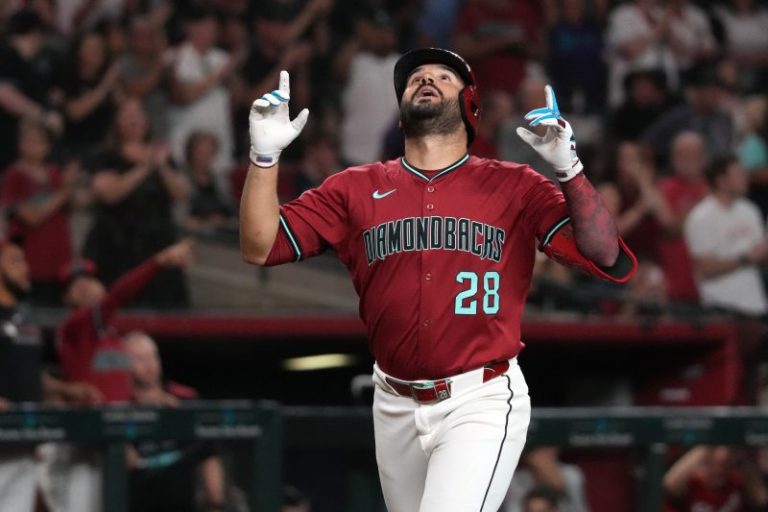
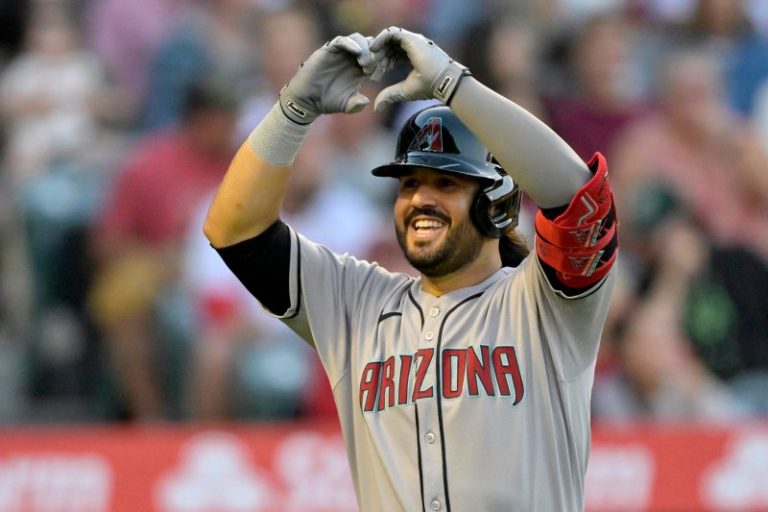
The Mariners made a huge splash on the eve of the MLB trade deadline, agreeing to a deal that will bring slugger Eugenio Suárez back to Seattle from the Arizona Diamondbacks, according to a person with knowledge of the deal.

The person spoke to USA TODAY Sports on the condition of anonymity because the deal wasn’t official and pending medical reviews.

It’s the second big trade between the clubs in the past week with the Mariners also acquiring first baseman Josh Naylor from the Diamondbacks in a deal on July 24.

Suárez has 36 home runs and 87 RBIs and is on pace to become the first player traded in-season to finish with 50 homers since Mark McGwire in 1996. He has been on fire for the past 12 months, clubbing 53 home runs with 134 RBIs in 161 games beginning on July 28, 2024 – including a four-homer game in April, tying the MLB record.

Mariners third basemen have totaled just five home runs and 35 RBIs this season, bottom-five in the majors in both categories.

Suárez became one of baseball’s top power hitters at the end of the 2010s with the Cincinnati Reds, slugging 34 home runs in 2018 and 49 in 2019, topping 100 RBIs each year. But his struggles began after his 49-homer campaign, posting a .221 average – including a .198 mark in 2021 – from 2020-2023, the latter two years with the Mariners.

The Mariners traded Suárez to the Diamondbacks after the 2023 season and he totaled 53 home runs with a .751 OPS in 312 games during his first tenure in Seattle.

Suárez is a free agent at the end of the season and his exploits over the past year may have earned him a multi-year deal.

Eugenio Suárez trade details

Seattle Mariners receive:

  • 3B Eugenio Suárez

Arizona DIamondbacks receive:

  • 1B Tyler Locklear
  • RHP Juan Burgos
  • RHP Hunter Cranton

Eugenio Suárez contract

Eugenio Suárez is making $15 million in 2025 and will be a free agent after the season.

This story was updated to include new information.

This post appeared first on USA TODAY

PHOENIX — The Seattle Mariners, who made the painful mistake of trading third baseman Eugenio Suarez two years ago to the Arizona Diamondbacks only to watch him become one of the game’s premier power hitters, swallowed their pride Wednesday night and traded for him back.

Suarez, who has 36 homers and 87 RBIs, becomes the first player in baseball history to hit at least 35 homers before he was traded in-season.

“Super excited, it’s a great move,’’ Mariners MVP candidate Cal Raleigh told reporters after their game Wednesday night. “He’s pretty much everything you look for in a teammate. He’s supportive. Super nice. Keeps it light in the room. Always positive. And you add on to that, he’s a great player.

“We saw that when he was here the first time, and we were obviously all sad that he left, but we’re happy that he’s coming back …. Very, very excited for it. Obviously, we know how great a guy he is, how great he’s playing this year. Great, great add.”

It was the second deal the Mariners and Diamondbacks made in a week with the D-backs also trading first baseman Josh Naylor to Seattle for two pitching prospects. Now, they sent his corner infield teammate to provide the Mariners much-needed power to reach the postseason for only the second time since 2001 after near-misses the last two years.

The Mariners, fortunate that the market for Suarez never materialized the way the Diamondbacks envisioned, were able to pull off the deal without touching any of their prized prospects. The cost was first baseman Tyler Locklear, their ninth-best prospect, who leads all Triple-A hitters with 16 homers and 56 RBIs since June 1; and minor-league pitchers Hunter Cranton and Juan Burgos, their 16th- and 17th-ranked prospects, respectively.

Just like that, they now have a team built to win their first World Series championship in franchise history.

The Mariners (57-52) are five games behind the Houston Astros in the AL West, and are tied with the Texas Rangers for the third and final wild-card berth. Yet, with their star-studded rotation of Logan Gilbert, Bryan Woo, George Kirby, Luis Castillo and Bryce Miller, they can scare the living daylights out of any team in the postseason.

And now, they finally have the power they have long coveted, with Suarez hitting 53 home runs over the past year, trailing only Shohei Ohtani (60 homers) and Aaron Judge (58). Raleigh (41 homers) and Suarez (36) make the Mariners the second team in MLB history to enter August with at least two players having at least 35 homers, joining the 1961 Yankees who had Roger Maris (40) and Mickey Mantle (39).

The Mariners now have one of the deepest and most-talented lineups in the American League, rectifying the blunder they made two years ago when they traded Suarez.

The Mariners thought his career was in a steep decline after the 2023 season, which saw him hit .232 with 22 homers, 96 RBIs and a league-leading 214 strikeouts. The Mariners sent him to Arizona, receiving only minor-league reliever Carlos Vargas and backup catcher Seby Zavala, while saving about $11 million in salary.

It looked like a shrewd move when Suarez was struggling so badly — hitting just .193 — that the Diamondbacks considered designating him for assignment in late June 2024. He instead caught fire, hitting .307 with 20 homers and a .942 OPS in the second half, and never cooled off.

Now, all the Mariners need is for Suarez to stay hot for three more months, their starting pitching to stay healthy, maybe grab one more late-inning reliever by Thursday’s trade deadline, and take the franchise on a magical ride to its first World Series.

It has been a long time coming, but now the Mariners have the lineup, the pitching, and the burning desire to pull it off.

They’ve saved prized prospects long enough.

Now, it’s time for a parade.

Follow Nightengale on X: @BNightengale

This post appeared first on USA TODAY

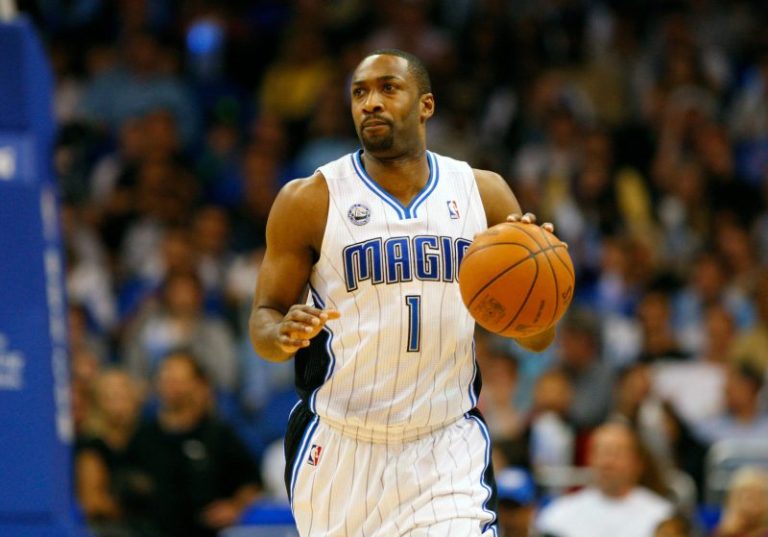
  • Former NBA player Gilbert Arenas and five others were indicted on federal charges for operating an illegal gambling business.
  • The operation allegedly involved high-stakes poker games at an Encino mansion owned by Arenas.
  • Arenas faces up to five years in prison for each count if convicted.

Former NBA player Gilbert Arenas and five other people, including ‘a suspected high-level member of an Israeli transnational organized crime group,’ were arrested Wednesday, July 30 on a federal indictment alleging they operated an illegal gambling business in Encino, California, according the U.S. Department of Justice’s Attorney’s Office, Central District of California.

Arenas, 43, is charged with one count of conspiracy to operate an illegal gambling business, one count of operating an illegal gambling business and one count of making false statements to federal investigators.

Also charged with one count of conspiracy to operate an illegal gambling business and one count of operating an illegal gambling business:

  • Yevgeni Gershman, 49, a suspected organized crime figure from Israel
  • Evgenni Tourevski, 48
  • Allan Austria, 52
  • Yarin Cohen, 27
  • Ievgen Krachun, 43

According to the indictment that was unsealed Wednesday, July 30, Arenas and the other defendants ‘operated an illegal gambling business. Arenas rented out an Encino mansion he owned for the purpose of hosting high-stakes illegal poker games. At Arenas’ direction, Arthur Kats, 51, of West Hollywood, staged the mansion to host the games, found co-conspirators to host the games, and collected rent from the co-conspirators on Arenas’ behalf.

‘Gershman, Tourevski, Austria, and Cohen managed illegal ‘Pot Limit Omaha’ poker games, among other illegal games, at the Encino mansion, collected a ‘rake’ – a fee the house charged from each pot either as a percentage or a fixed amount per hand – and invited players to compete.

‘Gershman hired young women who, in exchange for tips, served drinks, provided massages, and offered companionship to the poker players. The women were charged a ‘tax’ – a percentage of their earnings from working the games. Chefs, valets, and armed security guards also were hired to staff these illegal poker games.’

Gershman and Valentina Cojocari, 35, are also charged with three additional counts: conspiracy to commit marriage fraud; marriage fraud; and making a false statement on an immigration document.

If convicted, the defendants face a statutory maximum sentence of five years in federal prison for each count.

Arenas spent 11 seasons in the NBA, including seven-plus seasons with the Washington Wizards. He was a three-time All-Star and three-time All-NBA selection. In the 2009-10 season, it was discovered Arenas had brought guns into the Wizards locker room and had an alteracation with then-teammate Javaris Crittenton involing firearms in the locker room. The NBA suspended both players indefinitely, and Arenas ended up serving a 50-game suspension.

This post appeared first on USA TODAY

The on-air relationship between ESPN and Shannon Sharpe appears to be over less than two weeks after the Pro Football Hall of Fame tight end and media commentator settled a $50 million lawsuit related to sexual assault and battery accusations by an ex-girlfriend.

The network has decided to cut ties with Sharpe, according to a report from The Athletic on Wednesday, July 30. Sharpe last appeared on ESPN in April, stepping away after the lawsuit was initially filed. But he publicly denied the allegations, calling it a ‘shakedown,’ and maintained his relationship with the accuser was ‘100% consensual.’

Sharpe said at the time he planned to return to ESPN’s airwaves when NFL training camps began ahead of the 2025 season.

The settlement in Sharpe’s case came to light on July 18 when Tony Buzbee, the attorney for the woman identified as ‘Jane Doe’ in the court filing, announced the sides had reached a resolution and the lawsuit would be dismissed. No details of the agreement were released.

The woman accused Sharpe of sexually assaulting her twice, in October 2024 and January 2025, after previously engaging in the intentional infliction of emotional distress. She said Sharpe became violent over the course of their relationship and recorded their sexual encounters without her consent. Sharpe never faced criminal charges in the matter.

‘On April 20, 2025, The Buzbee Law Firm filed a complaint in Nevada making several allegations against Shannon Sharpe on behalf of our client,’ Buzbee said in a statement on X. ‘Both sides acknowledge a long-term consensual and tumultuous relationship. After protracted and respectful negotiations, I’m pleased to announce that we have reached a mutually agreed upon resolution. All matters have now been addressed satisfactorily, and the matter is closed. The lawsuit will thus be dismissed with prejudice.’

Sharpe, 57, initially joined ESPN’s ‘First Take’ in 2023 for twice-weekly appearances alongside Stephen A. Smith after a long run debating Skip Bayless on FS1’s ‘Undisputed.’ He retired from the NFL in May 2004 after a 14-year career in which he won three Super Bowls and became the first tight end with more than 10,000 career receiving yards.

Sharpe also appears on the podcasts “Club Shay Shay” and “Nightcap” with former wide receiver Chad Ochocinco. They are produced and distributed by The Volume, a sports media company founded by FS1 star Colin Cowherd.

This post appeared first on USA TODAY

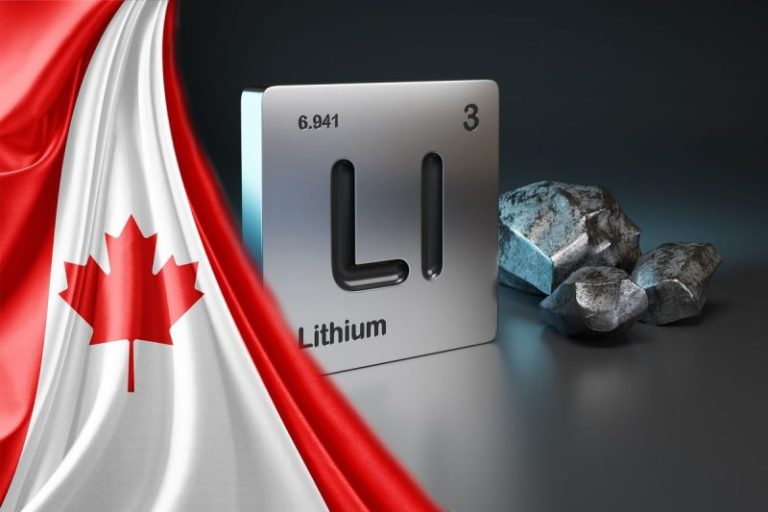
As the global push toward electrification accelerates, lithium remains a critical piece of the energy transition.

Continued oversupply remained a persistent headwind for lithium prices through the first half of 2025. Demand for the battery metal jumped 29 percent year-over-year in 2024, fueled by surging electric vehicle sales and rising power needs from sectors like data centers and heavy industry.

Fastmarket’s analysts expect lithium demand to grow 12 percent annually through 2030, supported by structural trends such as renewable energy integration and battery energy storage.

However, a rapid increase in global supply — particularly from China, Australia and South America — has driven prices to multi-year lows, raising concerns about project economics and the sustainability of new production.

Against this backdrop, Canadian lithium stocks are gaining attention as investors look for companies positioned to benefit from long-term demand growth while navigating short-term price pressure.

1. NOA Lithium Brines (TSXV:NOAL)

Year-to-date gain: 58.82 percent
Market cap: C$488.32 million
Share price: C$0.30

NOA is a lithium exploration and development company with three projects in Argentina’s Lithium Triangle region. The company’s flagship Rio Grande project and prospective Arizaro and Salinas Grandes land packages total more than 140,000 hectares.

As NOA works to advance its flagship asset, the company brought on Hatch in April to lead the preliminary economic assessment (PEA).

The PEA will evaluate the project’s economic and development potential with a target production of 20,000 metric tons of lithium carbonate equivalent (LCE) annually, with a scalable plant design that could double capacity to 40,000 metric tons per year.

NOA has also been working to secure a water source in the arid region through a drilling program targeting fresh water. In late June, the company discovered a fresh water source at the project, located near high-grade lithium zones in the project’s northeast area. According to the company, the location means the water source could support future production facilities or evaporation ponds.

The well, drilled to 190 meters in the northern part of the property, is being tested and developed.

Shares of NOA reached a year-to-date high C$0.425 on July 17, 2025.

2. Wealth Minerals (TSXV:WML)

Year-to-date gain: 40 percent
Market cap: C$23.93 million
Share price: C$0.07

Wealth Minerals is focused on the acquisition and development of lithium projects in Chile, including the Yapuckuta project in Chile’s Salar de Atacama, as well as the Kuska Salar and Pabellón projects near the Salar de Ollagüe.

Wealth Minerals’ shares spiked to a year-to-date high of C$0.095 on February 9, 2025, following the company’s acquisition of the Pabellón project.

According to Wealth, Pabellón has been shortlisted by Chile’s Ministry of Mining as a potential site for a Special Lithium Operation Contract based on its geological and environmental suitability. Located in Northern Chile near the Bolivia border, the project spans 7,600 hectares across 26 exploration licenses about 70 kilometers south of the Salar de Ollagüe.

In May, Wealth formed a joint venture with the Quechua Indigenous Community of Ollagüe to advance the Kuska project. The new entity, Kuska Minerals SpA, is 95 percent owned by Wealth and 5 percent by the community, which also holds anti-dilution rights and a seat on the five-member board.

3. Avalon Advanced Materials (TSX:AVL)

Year-to-date gain: 37.5 percent
Market cap: C$38.26 million
Share price: C$0.055

Avalon Advanced Materials is a Canadian mineral development company focusing on integrating the Ontario lithium supply chain. Avalon is developing the Separation Rapids and Snowbank lithium projects near Kenora, Ontario, and the Lilypad lithium-cesium project near Fort Hope, Ontario.

Separation Rapids and Lilypad are part of a 40/60 joint venture between Avalon and SCR Sibelco, with Sibelco serving as the operator.

Avalon started the year with a revised mineral resource estimate for the Separation Rapids project, which boosted resources in the measured and indicated category by 28 percent.

Company shares rose to C$0.07, a year-to-date high, on July 15, the day after Avalon released its results for its fiscal quarter ended May 31.

A week later, Avalon announced an additional C$1.3 million in funding through its C$15 million convertible security agreement with Lind Global Fund II. The drawdown, expected to close within two weeks, will support project development and general corporate needs, according to the company.

4. Frontier Lithium (TSXV:FL)

Year-to-date gain: 20 percent
Market cap: C$125.41 million
Share price: C$0.54

Pre-production mining company Frontier Lithium aims to be a strategic and integrated supplier of premium spodumene concentrates as well as battery-grade lithium salts in North America.

The company’s flagship PAK lithium project, which is a joint venture with Mitsubishi (TSE:8058), holds the “largest land position and resource” in a premium lithium mineral district located in the Great Lakes region of Ontario, Canada. Frontier also owns the Spark deposit, located northwest of the PAK project.

Shares of Frontier Lithium reached a year-to-date high of C$0.79 on March 4. The stock uptick coincided with a government release reporting the federal and provincial governments supported the company’s plans to build a critical minerals refinery in Northern Ontario.

Once complete, the proposed lithium conversion facility will process lithium from the PAK mine project into approximately 20,000 metric tons of lithium salts per year.

In late May, Frontier released a definitive feasibility study for the mine and mill segment of its PAK project. The study outlines a 31 year mine life with average production of 200,000 metric tons of spodumene concentrate. As for the economics, it projects net revenue of C$11 billion, an after-tax NPV of C$932 million and a 17.9 percent internal rate of return.

5. Century Lithium (TSXV:LCE)

Year-to-date gain: 17.31 percent
Market cap: C$51.58 million
Share price: C$0.30

US-focused Century Lithium is currently advancing its Angel Island lithium project in Esmeralda County, Nevada. The company is also engaged in the pilot testing phase at its on-site lithium extraction facility, which will process material from the lithium-bearing claystone deposit.

On May 6, Century Lithium announced the successful completion of testwork on the direct lithium extraction (DLE) process at its demonstration plant.

The results exceeded expectations, showing 91.6 percent lithium recovery and an eluate grade of 575 milligrams per liter (mg/L) from a 328 mg/L lithium concentrate feed. The company says these improvements could significantly reduce capital and operating costs at its Angel Island project.

Shares of Century Lithium registered a year-to-date high of C$0.49 on May 19.

Recently, the company participated in First Phosphate’s (CSE:PHOS,OTCQB:FRSPF) successful production of commercial-grade lithium iron phosphate (LFP) 18650 battery cells.

As noted in the press release, the cells were made using North America-sourced materials, including lithium carbonate from Century’s Angel Island project in Nevada that was processed at its demonstration plant alongside high-purity phosphoric acid and iron from First Phosphate’s Bégin-Lamarche project in Québec, Canada.

Securities Disclosure: I, Georgia Williams, hold no direct investment interest in any company mentioned in this article.

This post appeared first on investingnews.com