Author

admin

Browsing
  • The SEC cares so deeply for its rivalries. Enough to keep secondary rivalries on the long-term schedule? We’ll see.
  • If SEC persists long term with eight-game schedule, that puts secondary rivalries like Auburn-Georgia and Alabama-Tennessee in jeopardy. A nine-game schedule format allows room to keep more key games.
  • The ‘Deep South’s Oldest Rivalry’ is long on history, but other rivalries have been much better for the past decade.

The SEC cares so deeply for its rivalries that it once built its interdivisional schedule model around preserving the Auburn-Georgia and Alabama-Tennessee games. And those matchups don’t even rank as the No. 1 rivalry for those schools.

Then, the SEC built an eight-game conference schedule model for the 2024 and 2025 seasons that retained primary and prominent secondary rivalries after the conference expanded to 16 teams.

The two-year schedule format to accommodate Oklahoma and Texas joining the league served as a stop gap while conference brass continued to mull a long-term schedule plan.

SEC officials have, for years, debated increasing from an eight- to a nine-game conference schedule. The league membership consistently decided to stay at eight.

The SEC must soon consider that age-old question again, with a scheduling solution needed for 2026 and beyond.

The SEC spring meetings, which begin May 27, offer a stage for the schedule debate to revive. Oklahoma and Texas could help tip the vote to approve expansion.

The rivalry tentacle attaches to the debate. A nine-game conference schedule offers avenues to annually retain not only primary rivalries, but also secondary rivalry games. Continuing with an eight-game schedule probably would mean dialing back secondary rivalries that the SEC steadfastly protected for so long.

Some matchups like the Iron Bowl, Egg Bowl and Red River are non-negotiable. They’re going nowhere, no matter the format. The importance of other rivalries varies based on factors such as your age, where you’re from, and the extent to which history matters to you.

Here’s how I rate the conference’s 10 best rivalries, some of which likely would go on the chopping block if the eight-game schedule persists in perpetuity.

1. Alabama-Auburn (Iron Bowl)

Instate rivalries hit differently, especially when that state is football-crazed Alabama. As an Auburn fan once said, the Iron Bowl isn’t life or death. It’s much bigger than that. There been national title implications and memorable moments that serve to add to the lore.

2. Oklahoma-Texas (Red River)

When the SEC added Oklahoma and Texas, the conference didn’t just gain two iconic brands, it acquired one of college football’s best rivalries. Most games are better when played on college campuses, but this one at the Cotton Bowl during the State Fair of Texas stands as an exception to that rule.

3. Mississippi-Mississippi State (Egg Bowl)

Mississippians’ chosen side in this rivalry points not just to their allegiance, but to their identity. Opposing sides don’t just dislike each other. They despise each other. This rivalry often features a dash of zaniness. When Ole Miss won the game in 1926, fans of both teams stormed the field. Rebels fans went for the goal posts, and Mississippi State (then Mississippi A&M) fans rushed to fight Ole Miss fans.

4. Florida-Georgia

This rivalry touts its own hall of fame dedicated to the series. The longtime designation of this rivalry as “The World’s Largest Outdoor Cocktail Party” sums up the vibe for this game played in Jacksonville, Florida.

5. Texas-Texas A&M

Thanksgiving week felt incomplete during the 12 seasons this rivalry went dormant after the Aggies left the Big 12 for the SEC. The SEC’s addition of Texas rekindled the series. This game packs its stiffest punch when scheduled for Black Friday, like it is this year. The Texas fight song and the Aggie War Hymn each includes a line needling their in-state rival.

6. Alabama-LSU

LSU counts as many rivals as any SEC team, but none is more collectively hated than Alabama. You can thank Nick Saban (and copious amounts of liquor in Louisiana) for that. LSU fans even burned Saban in effigy in 2008. Vitriol for Saban aside, this game became one of the nation’s most influential clashes throughout the 2010s.

7. Auburn-Georgia

As the “Deep South’s Oldest Rivalry,” no SEC series touts more history. Georgia’s stretch of 11 victories in the past 12 matchups dulled the luster of a series that once delivered such thrills as the “Prayer at Jordan-Hare.” Throughout its history, this ranks as one of the SEC’s most evenly matched rivalries.

8. Alabama-Tennessee

Saban’s dominance took some shine off this series, but the Vols renewed vigor to “The Third Saturday in October” after they upset Alabama in 2022, then tore down the goal posts and baptized them in the river. This rivalry features a distinct smell. When cigar smoke wafts through the stadium, you know the outcome has been decided.

9. LSU-Mississippi (Magnolia Bowl)

The rivalry that supplied Billy Cannon’s Halloween run and “The Night the Clock Stopped” found its peak stride the past few seasons. Fans from the winning side stormed the field in each of the past three years. This rivalry is not as heated as some others, but its games usually supply rich entertainment value.

10. Florida-Tennessee

This rivalry lacks the tradition of others, but at its crescendo in the 1990s and early 2000s, this September clash charted the course for SEC supremacy. The game peaked when it pitted Steve Spurrier against Phillip Fulmer, but, even now, animosity lingers between these fan bases.

Blake Toppmeyer is the USA TODAY Network’s national college football columnist. Email him at BToppmeyer@gannett.com. Follow him on X @btoppmeyer.

This post appeared first on USA TODAY

In this video, Frank dives into some of his favorite features on StockCharts.com. He then dissects the S&P 500 and Bitcoin price action, before exploring the the XLK Technology ETF’s explosive move off the lows. He also highlights a few recent trade ideas and setups worth watching. Get trade ideas and chart setups worth watching in today’s technical review.

This video originally premiered on May 20, 2025.

You can view previously recorded videos from Frank and other industry experts at this link.

Despite economic and geopolitical upheaval, 2024 was relatively calm for platinum-group metals (PGMs).

In its new PGMs report, research firm Metals Focus notes that all five PGMs — platinum, palladium, rhodium, iridium and ruthenium — ended 2024 in physical deficit, marking a pivotal year of stabilization and supply strain.

With tightening mine output, rising hybrid vehicle demand and industrial shifts driving ruthenium and iridium gains, 2025 is set to test the sector’s resilience amid constrained supply and cautious investor sentiment.

As the sector looks to 2025, the outlook remains constrained but cautiously optimistic.

PGM supply constraints widen deficits

While all five PGMs were in physical deficit last year, overall mine supply did edge on 2 percent year-on-year.

However, Metals Focus notes that this figure masks underlying weaknesses.

Much of the gain stemmed from temporary factors, such as the release of work-in-process stockpiles, particularly in South Africa, which accounted for a significant portion of the PGMs inventory processed during the year.

Platinum mine supply rose 3 percent to 5.77 million ounces, mainly due to output from South Africa, whose production exceeded 4 million ounces for the first time since 2021. Yet stripping out the one-time work-in-process boost, global production was more than 1 million ounces below the 2010 to 2021 average of 14.95 million ounces.

For palladium, mine supply rose less than 1 percent, bolstered by modest gains in Russia and stock drawdowns in South Africa, even as Canadian output dropped 10 percent due to price pressure.

The report notes that production cuts in high-cost regions were inevitable, owing to closures like Sibanye-Stillwater’s (NYSE:SBSW) shutdown of Stillwater West and curtailed operations at East Boulder.

In total, platinum ended the year with a second consecutive shortfall. Palladium was short by 407,000 ounces, continuing a near-decade trend of tightness. Rhodium, ruthenium and iridium also closed the year with deficits of 178,000 ounces, 219,000 ounces and 49,000 ounces, respectively — an across-the-board supply squeeze not seen in years.

Demand for PGMs shifts under electrification and industrial dynamics

On the demand side, the automotive sector — the dominant consumer of PGMs — saw a 4 percent contraction in fabrication demand to 12.14 million ounces, the first such drop since the pandemic year of 2020.

The continued rise of battery electric vehicles (BEVs), which do not use PGMs in their drivetrains, contributed to a 2 percent decline in catalyzed vehicle output. Although BEV growth slowed to 9 percent — its weakest since the technology gained mainstream traction — its market share still rose from 12 percent to 13 percent.

Hybrids, however, offered a bright spot for PGMs, with production jumping 28 percent and often requiring heavier PGM loadings than traditional internal combustion engine (ICE) vehicles. This helped cushion demand for autocatalysts, particularly platinum, which saw slower rates of palladium substitution as the price gap narrowed.

Platinum demand, in contrast, overall fell by 2 percent to 7.79 million ounces. Automotive and industrial usage were also dragged down by a 27 percent plunge in chemical applications, particularly in China’s paraxylene sector.

But jewelry demand surged 9 percent — its strongest growth since 2019 — driven by India’s booming export orders and Japanese consumers shifting from gold due to its soaring price.

Ruthenium and iridium, the lesser-known PGMs, also saw rising industrial relevance.

Ruthenium demand surged by 20 percent — reaching its highest level since 2006 — fueled by China’s caprolactam chemical sector and artificial intelligence-driven growth in hard disk drive production.

Meanwhile, iridium demand jumped 15 percent to a record 298,000 ounces, driven by ballast water treatment systems, acetic acid output, and early stage copper foil applications.

Palladium, long buoyed by ICE reliance, saw total demand fall 4 percent to 9.75 million ounces.

Automotive fabrication dropped 5 percent, with thrifting and substitution playing an increasing role, though the latter slowed due to narrowing discounts with platinum. Industrial use remained stable, down less than 1 percent, with electronics up 1 percent amid recovering consumer tech and AI hardware growth.

Recycling gains traction, but can’t fill supply gap

Secondary supply helped offset falling mine output, with autocatalyst recycling up 9 percent year-on-year.

Metals Focus largely attributes this gain to higher vehicle scrappage rates, improved new car sales and aggressive recycling incentives in China. Still, recycling fell short of restoring equilibrium.

Platinum secondary supply rose just 1 percent as jewelry recycling remained weak, with Chinese and Japanese flows down due to sustained low prices and reduced scrap availability.

Palladium fared better with a 9 percent increase — its strongest growth in five years — again led by China, where palladium dominates catalytic converter formulations.

Yet, even with these gains, total recycling volumes were insufficient to offset underlying shortfalls. Jewelry scrap fell by 29 percent for platinum and 45 percent for palladium compared to 2021, underscoring a structural shift in the recycling base amid changing consumer behavior and metal substitution.

PGMs prices stabilize, but caution prevails

PGMs prices stayed fairly in 2024, with volatility restrained.

Platinum traded within a tight US$850 to US$1,100 per ounce band, hovering mostly from US$900 to US$1,000.

Palladium, despite ongoing bearish sentiment, found support at US$900 per ounce, while rhodium stabilized around US$4,400 per ounce after collapsing from highs above US$29,000 in 2021. Meanwhile, iridium fell 12 percent in price over the year, though bargain hunters helped maintain a floor around US$4,000 per ounce.

Ruthenium rebounded 24 percent from September lows, ending the year supported by robust Chinese demand.

While the PGMs markets appear to be finding their bottom, the Metals Focus report emphasizes that the risk of supply squeezes and price spikes remains.

Indeed, short positioning on the CME contributed to sporadic rallies, especially for palladium. Net managed money positions averaged 1.05 million ounces short for the year, peaking at 1.63 million ounces in August.

Metals Focus’ 2025 PGMs outlook

Looking ahead, 2025 is expected to continue many of 2024’s trends.

Physical deficits will persist, particularly in rhodium, ruthenium, and platinum. Above-ground stocks (AGS) remain elevated for platinum and palladium, muting potential price rallies, but continued mine cutbacks could shift this balance over time.

Forecasts suggest platinum will average US$970/oz, up slightly from 2024. Palladium is expected to average US$930, down 5 percent year-on-year, while rhodium may rise 8 percent to US$5,000, supported by its deficit and scarce above-ground reserves.

Ruthenium is forecast to jump 26 percent to US$550, with iridium expected to average US$4,100, a 14 percent drop driven largely by 2024’s elevated base.

In sum, 2024 marked a transitional year for the PGMs—one of normalization rather than expansion. Supply remains tight, demand is recalibrating in the face of technological shifts, and investors are returning cautiously.

Whether 2025 brings further recovery or renewed disruption for the collective will depend not just on markets—but on mines, metals, and momentum-shifting market sentiment.

Securities Disclosure: I, Giann Liguid, hold no direct investment interest in any company mentioned in this article.

This post appeared first on investingnews.com

In the absence of unified federal legislation on cryptocurrencies, New York is establishing its own comprehensive regulations for the sector as it looks to become the world’s crypto capital.

Adrienne Harris, superintendent of the New York Department of Financial Services (DFS), is playing a key role in this endeavor, and she says her approach is grounded in experience, not ideology.

“I have never been a believer that you should have ideology in financial regulation,” Harris said during a discussion at last week’s Consensus conference, held from May 14 to 16 in Toronto.

“I really am a firm believer that you can protect consumers and markets, look after the safety and soundness of companies and be good for business all at the same time. And we really seek to prove that out every day at DFS.”

Appointed in 2021, Harris described her stints in big law, the US Department of the Treasury, the Obama White House, Silicon Valley and academia. Her influence as a regulator has arguably been most deeply felt in crypto, where New York’s licensing regime — particularly its much-discussed BitLicense — has served as both a gatekeeper and a benchmark.

“There is unnecessarily tough, and then there’s necessarily tough,” Harris explained. “I think prior to me and my team coming in, things were probably unnecessarily tough … the team was under-resourced. There were maybe 30 people in the crypto unit. Now we have 60 people that are dedicated to virtual currency every day, all day.”

Under Harris’ leadership, the DFS has implemented an applications manual, instituted pre-application meetings and issued nine pieces of regulatory guidance. These reforms aim to demystify a process long criticized as opaque.

And while the BitLicense remains difficult to obtain, Harris believes the outcome justifies the rigor: “FTX, Voyager and Celsius didn’t pass our test, and therefore couldn’t do business in New York.”

This tough-but-fair regulatory stance has elevated New York’s position not only domestically, but also globally.

Even with various international counterparts, Harris told the Consensus audience that New York has become “the gold standard” in how virtual currencies are regulated. That international recognition is becoming increasingly formalized through initiatives like the DFS’ transatlantic regulatory exchange program with the Bank of England.

“They’ve sent us some senior staff. We’ve sent them some senior staff. It was really an arm-wrestling match to see who was going to get to move to London for six months to a year,” Harris joked. The program, which focuses on payments and cryptocurrencies, is already expanding to include other regulators in Europe and Asia.

Closer to home, Harris said the DFS is also working closely with Congress on stablecoin legislation.

“There isn’t a version of any of those bills — be it House or Senate, Rs or Ds — that don’t come to me and to the team to say, ‘Give us your feedback, give us your technical assistance, your insights,’” she said.

The DFS has already pioneered its own stablecoin guidelines, which require that any licensed stablecoin in New York be fully backed by a reserve of assets. That initiative, like much of DFS’ crypto framework, has been driven by a regulatory unit that Harris described as perhaps the largest of its kind anywhere in the world.

“We have folks that came from the (US Federal Reserve), we have cryptographers, we have financial crime experts … we have some real sort of crypto bros on the team. So it’s a great mix of expertise.”

Despite building out that workforce to 60 full-time crypto regulators, Harris admitted that resource constraints remain.

She noted that the DFS has hired more than 600 people across the department during her tenure and continues to recruit — especially amid talent shifts from federal agencies.

The result of all this work, Harris argued, is a regulatory environment that fosters innovation rather than hinders it.

“It used to be that people would say the regulations stifled that ecosystem, that innovation. But what we’ve learned over time is that that clarity, that certainty, that transparency really provides a fertile ground for that innovation,’ she said.

That sentiment is reflected in how regulated firms market themselves abroad. “Our regulated crypto companies market the fact that they are regulated by DFS,” Harris continued. “When they go overseas, they are telling those other regulators, ‘We have a license from DFS.’ And it goes a long way toward growing the ecosystem in New York.”

She also credited state leadership for supporting a dual agenda of consumer protection and economic development, citing New York Governor Kathy Hochul’s ‘steadfast commitment’ to making sure New York is a hub for responsible innovation. This growth aligns with Mayor Eric Adams’ ambition to make New York City the crypto capital not just of the US, but also the world — an aspiration Harris sees as within reach, if not already reality.

“When we think about crypto — having the fastest-growing sector in New York — put that together with the fact that New York is really the financial capital of the world. That is an environment, I think, perfect for the crypto ecosystem.”

Looking ahead, Harris said the DFS will continue on its current path, even as it hopes for stronger federal engagement.

“Hopefully we have federal legislation done, and some of those federal rules will be coming into place,” she said.

“We’re thinking about, of course, (artificial intelligence) and crypto. We’re thinking about deepfakes and market manipulation and crypto, and how those things overlap.”

Securities Disclosure: I, Giann Liguid, hold no direct investment interest in any company mentioned in this article.

This post appeared first on investingnews.com

Thanks to exchange-traded funds (ETFs), investors don’t have to be tied to one specific stock. When it comes to biotech ETFs, they give sector participants exposure to many biotech companies via one vehicle.

ETFs are a popular choice as they allow investors to enter the market more safely compared to investing in standalone stocks. A key advantage is that even if one company in the ETF takes a hit, the impact will be less direct.

All other figures were also current as of that date. Read on to learn more about these investment vehicles.

1. ALPS Medical Breakthroughs ETF (ARCA:SBIO)

AUM: US$80.23 million

Launched in December 2014, the ALPS Medical Breakthroughs ETF tracks small- and mid-cap biotech stocks that have one or more drugs in either Phase II or Phase III US FDA clinical trials. Its holdings must have a market cap between US$200 million and US$5 billion.

There are 100 holdings in this biotechnology fund, with about 60 percent being small- and micro-cap stocks. Its top holdings include Verona Pharma (NASDAQ:VRNA) at a weight of 5.31 percent, Alkermes (NASDAQ:ALKS) at 4.41 percent and Axsome Therapeutics (NASDAQ:AXSM) at 4.24 percent.

2. Tema Oncology ETF (NASDAQ:CANC)

AUM: US$63.67 million

The Tema Oncology ETF provides exposure to biotech companies operating in the oncology industry. It includes companies developing a range of cancer treatments, including CAR-T cell therapies and bispecific antibodies.

Launched in August 2023, there are 52 holdings in this biotechnology fund, of which about half are small- to mid-cap stocks and 4 percent are micro-cap stocks. Among its top holdings are Revolution Medicines (NASDAQ:RVMD) at a 6.05 percent weight, Roche Holding (OTCQX:RHHBF,SWX:RO) at a weight of 5.08 percent and Eli Lilly and Company (NYSE:LLY) at 4.87 percent.

3. Tema GLP-1 Obesity and Cardiometabolic ETF (NASDAQ:HRTS)

AUM: US$51.5 million

Launched in November 2023, the Tema GLP-1 Obesity and Cardiometabolic ETF tracks biotech stocks with a focus on diabetes, obesity and cardiovascular diseases. The fund was renamed on March 25 from Tema Cardiovascular and Metabolic ETF. More than three-quarters of its holdings are based in the US.

There are 47 holdings in this biotechnology fund, with about 75 percent being large-cap stocks and 18 percent mid-cap. Its top holdings are Eli Lilly and Company at a 9.92 percent weight, Abbott Laboratories (NYSE:ABT) at 4.77 percent and AstraZeneca (NASDAQ:AZN) at 4.14 percent.

4. ProShares Ultra NASDAQ Biotechnology (NASDAQ:BIB)

AUM: US$44.19 million

The ProShares Ultra NASDAQ Biotechnology ETF was launched in April 2010 and is leveraged to offer twice daily long exposure to the broad-based NASDAQ Biotechnology Index, making it an ideal choice “for investors with a bullish short-term outlook for biotechnology or pharmaceutical companies.” However, analysts also advise investors with a low risk tolerance or a buy-and-hold strategy against investing in this fund due to its unique nature.

Of the 268 holdings in this ETF, the top biotech stocks in the ETF are Gilead Sciences (NASDAQ:GILD) at a 6.06 percent weight, Vertex Pharmaceuticals (NASDAQ:VRTX) at 5.99 percent and Amgen (NASDAQ:AMGN) at 5.84 percent. Additionally, over a third of its holdings are in United States Treasury Bills.

5. Direxion Daily S&P Biotech Bear 3x Shares (ARCA:LABD)

AUM: US$43.42 million

The Direxion Daily S&P Biotech Bear 3x Shares ETF is designed to provide three times the daily return of the inverse of the S&P Biotechnology Select Industry Index, meaning that it rises in value when the index falls and falls in value when it rises. Leveraged inverse ETFs are designed for short-term trading and are not suitable to hold long-term. They also carry a high degree of risk as they can be significantly affected by market volatility.

The top three life science holdings in this ETF are Exact Sciences (NASDAQ:EXAS) at a weight of 2.23 percent, Alnylam Pharmaceuticals (NASDAQ:ALNY) at a weight of 2.15 percent and Neurocrine Biosciences (NASDAQ:NBIX) at 2.03 percent.

Securities Disclosure: I, Meagen Seatter, hold no direct investment interest in any company mentioned in this article.

This post appeared first on investingnews.com

The NFL unanimously voted to allow its players to participate in flag football at the 2028 Los Angeles Olympics.

Minnesota Vikings wide receiver Justin Jefferson is among many who are excited about the league’s decision.

‘Just to think about the chances of playing in the Olympics and getting a gold medal, it’s a dream,’ Jefferson told reporters following the Tuesday announcement at the NFL’s spring meeting in Minneapolis.

Jefferson was named one of the NFL’s global flag football ambassadors in 2023. He has since worked with the league to raise the fast-growing sport’s profile.

Even so, the 25-year-old never expected the work to so quickly lead to a potential opportunity to compete in the Olympics.

‘Just reverting back to being a kid and watching the track and field meets, watching basketball win the gold medal – that’s something that as a kid, I always wanted to be a part of,’ Jefferson said. ‘But football wasn’t [global.] So now that we’re expanding the game and we’re going more globally, it’s pretty cool.’

While Jefferson is interested in potentially participating in the 2028 Olympics, he noted he would take time to weigh his decision to play, as the Summer Games aren’t for another three years.

‘I definitely would look forward to it if it came down to it, but that’s something I have to ask myself,’ Jefferson said of participating in the Olympics, per ESPN’s Brooke Pryor.

Jefferson isn’t the only NFL player considering participating in the Olympics. Patrick Mahomes and Tyreek Hill are among the most notable players to express an interest in playing flag football at the Los Angeles Games.

Like Jefferson, those athletes figure to take time to contemplate their decisions, but the NFL’s ruling has at least cleared a path for those stars to compete for spots on the Olympic team if they so desire.

This post appeared first on USA TODAY
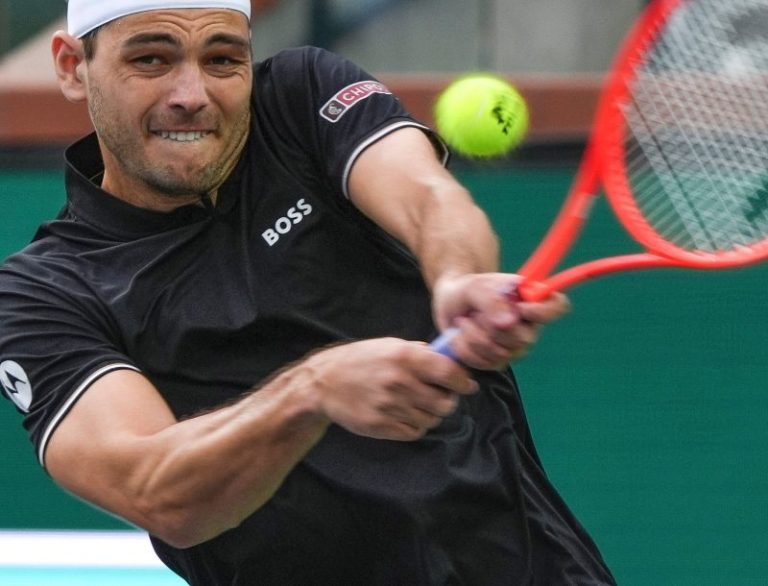
The veteran quarterback took a step toward his return Tuesday, as he was on the field for seven-on-seven drills during the Dallas Cowboys’ second day of OTAs.

Prescott, who turns 32 in July, acknowledged it felt good to get back on the field. He also explained he has just one, longer-term obstacle to clear as he looks to fully return to action.

‘Pretty much can do it all. Feel good,’ Prescott said, per ESPN’s Todd Archer. ‘Yeah, I think I’m just not cleared for contact, which we’ve got a while for that anyways. Yeah, I’m out there in the team activities, feel good. Just trying to stay that way.’

Prescott injured his hamstring during the Cowboys’ Week 9 game against the Atlanta Falcons. He tore part of the muscle off the bone, which resulted in him needing season-ending surgery.

The longtime Dallas starter spent the offseason aggressively rehabbing the injury. That’s why he believes he’s in a good spot with his recovery.

‘My offseason started way earlier so that’s really essentially why I’m ahead,’ Prescott said, ‘on top of working with (director of rehabilitation Britt Brown), working with this training staff and (Prescott’s personal trainer) Luke (Wilson).’

Prescott doesn’t think he’ll be limited much as he continues to recover from the injury. As Archer reported, members of Dallas’ organization were originally concerned he would be limited as he returned from surgery.

‘People say a lot of things about me, man,’ Prescott said. ‘I just show up and control what I can control healthy. Trying to stay healthy. Feels good. Just trying to push the energy and make sure I continue to get better.’

This post appeared first on USA TODAY
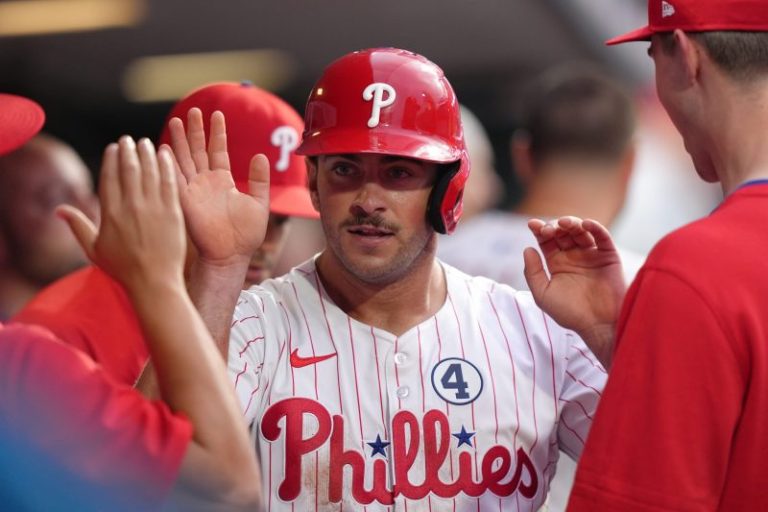
A late rally by Caitlin Clark and the Indiana Fever fell just short as the Atlanta Dream won 91-90 in a thrilling finish at Gainbridge Fieldhouse in Indianapolis.

The Fever trailed by 11 entering the final quarter but started the fourth on an 11-4 run, keyed by two 3-pointers from Clark and one by Lexie Hull to make it 80-76. After the Dream worked their lead back up to nine with 4:33 to go, the Fever found another gear. Indiana proceeded on a 12-2 run, led by Kelsey Mitchell’s seven points, which included the game-tying layup with 1:04 remaining.

After a defensive stand on each end, Indiana’s Aliyah Boston was sent to the free throw line, where she missed the first and made the second to give the Fever a 90-89 lead with 21.1 seconds remaining. On the ensuing possession, Atlanta’s Rhyne Howard was fouled by Mitchell with 9.1 seconds on the clock. Howard made both of her free throws to make it 91-90.

Indiana’s Natasha Howard missed her shot at the buzzer to secure Atlanta’s win.

Clark finished with a game-high 27 points on 9-of-20 shooting, which included a 5-for-11 mark on 3-pointers. Clark added 11 assists, five rebounds and two steals. Brittney Griner led the Dream with 21 points and eight rebounds, while Howard scored 20.

Here is how the Fever vs. Dream game unfolded.

Fever vs. Dream highlights

Caitlin Clark stats tonight

  • Points: 27
  • Field goal shooting: 9 for 20
  • Free throw shooting: 4 for 6
  • 3-point shooting: 5 for 11
  • Rebounds: 5
  • Assists: 11
  • Steals: 2
  • Blocks: 0
  • Turnovers: 3
  • Fouls: 3

End Q3: Dream 76, Fever 65

Atlanta opened things up in the third quarter.

Rhyne Howard was on another level to start the third, knocking down three three-pointers in the first minute and a half to spark an 11-0 run for the Dream. After Indiana got to within five at 57-52, Atlanta proceeded on a 15-7 run during the next three minutes to take a 14-point lead.

Caitlin Clark has a game-high 19 points with eight assists, five rebounds and two steals. Natasha Howard has a team-best 18 points for the Dream and Brionna Jones has 16 points and nine rebounds.

End Q2: Dream 44, Fever 42

After scoring only five points in the first quarter, Caitlin Clark more than tripled her output in the second, recording 11 points and sinking 2-of-3 shots from deep.

Clark has three triples on the night on five attempts, matching the Dream’s total three-pointers on less than one-third of the attempts. After attempting 11 three-pointers in the first, the Dream cooled off a bit, shooting just five in the second, but the team went 0-for-5 from beyond the arc.

While the Dream starters have been able to build leads for their team, the Dream have struggled when going to their bench. Not a single starter has a negative plus-minus through the first half, but their bench is a combined -12 on the night. If the Dream starters are forced out of the game, Indiana might have an easy time securing the win in the second half.

End Q1: Dream 31, Fever 23

The Dream got off to a sizzling start in this one, tallying eight points before Indiana could get their second basket. While the Fever did make a slight comeback in the middle of the quarter, the Dream eventually pulled away at the end, finishing the first ten minutes on a 13-7 run.

What really stands out is the lack of three-point attempts from Indiana. The Dream attempted 11 shots from beyond the arc in the first, while Indiana only attempted two, both from Caitlin Clark. While Atlanta only went 2-of-11 from three, it’s clearly opening up the Dream down low as they shot over 50% from the floor in the first quarter.

Atlanta’s Brionna Jones leads all scorers with 11 points so far. Clark has five for the Fever.

Dream starting lineup

  • Te-Hina Paopao
  • Allisha Gray
  • Rhyne Howard
  • Brionna Jones
  • Brittney Griner

Fever starting lineup

  • Caitlin Clark
  • Kelsey Mitchell
  • DeWanna Bonner
  • Natasha Howard
  • Aliyah Boston

What time is Fever vs. Dream WNBA game?

The Indiana Fever will play the Atlanta Dream at the Gainbridge Fieldhouse in Indianapolis, Indiana, on Tuesday. Tip-off is scheduled for 7 p.m. ET.

How to watch Fever vs. Dream WNBA game: TV, stream

  • Time: 7 p.m. ET
  • Location: Gainbridge Fieldhouse (Indianapolis)
  • TV: NBATV, MeTV Indianapolis, PeachtreeTV (Atlanta)
  • Stream: WNBA League Pass
This post appeared first on USA TODAY

Chicago Sky All-Star Angel Reese says ‘there’s no place in this league’ for racism and discrimination after hateful comments directed her way during the Sky’s season opener against the Indiana Fever led to a league-wide investigation.

‘It’s tough … and obviously in the moment it’s hard to hear,’ Reese told reporters on Tuesday when asked how the comments affected her play on Saturday. But Reese credited her ‘support system’ with aiding her: ‘I’ve gone through so many different things in the past couple of years of my life, but I think … being part of an organization that really supports me and loves me is something that I couldn’t imagine not being part of.’

Following Chicago’s 93-58 loss to Indiana at Gainbridge Fieldhouse on Saturday, the WNBA launched an investigation into fan conduct, saying, ‘The WNBA strongly condemns racism, hate and discrimination … We are aware of the allegations and are looking into the matter.’ Both the Sky and Fever organizations welcomed the investigation and pledged to cooperate.

The WNBA didn’t specify the allegations, but a person with knowledge of the situation told IndyStar, part of the USA TODAY Network, that the league is looking into racist comments directed at Reese by fan(s) in the crowd.

The league has not issued a timeline for the investigation and will not make an announcement about findings until it is complete.

Angel Reese says WNBA ‘has done great job supporting me’

Reese applauded the league and the Sky for taking quick action, pointing to the WNBA’s recently-launched ‘No Space for Hate’ initiative that aims to combat hate and promote respect across the league after racism, discriminatory comments and bullying reached a boiling point in the league during the 2024 season.

‘I think the WNBA and our team and our organization has done a great job supporting me. I’ve had communication from everyone, from so many people across this league,’ Reese said. ‘Going through this process, obviously if it could happen to me, it could happen to anyone. I think they’ve done a great job supporting us in this.’

Reese added: ‘The (WNBA) understands that this is the priority … I believe every player in this league deserves to be treated with respect and want to come to work and just have fun, and have a great environment to work at.’

The ‘No Space for Hate’ initiative features a task force of league and team representatives that focuses on ‘enhanced technological features to detect hateful comments online; increased emphasis on team, arena, and league security measures; reinforcing mental health resources; and alignment of core against hate,’ the WNBA announced last week.

Angel Reese says she has continually faced racism

Reese and Indiana Fever rookie Caitlin Clark have frequently been pitted against each other dating back to their collegiate days at LSU and Iowa, respectively. The popularity surrounding Reese and Clark has translated to increased viewership and support for the league, but it hasn’t always been support in good faith.

In September, Reese was vocal about lack of action by the league and media against racism against players, including her.

‘The media has benefited from my pain & me being villainized to create a narrative,’ she wrote on X at the time. ‘They allowed this. This was beneficial to them… Y’all a little late to the party and could have tried to put out this fire way before it started.’

‘I sometimes share my experiences of things that have happened to me but I’ve also allowed this to happen to me for way too long and now other players in this league are dealing with & experiencing the same things,’ Reese wrote at the time. ‘This isn’t OK at all. Anything beyond criticism about playing the game we love is wrong. I’m sorry to all the players that have/continue to experience the same things I have.’

This post appeared first on USA TODAY