It’s the day that all struggling NBA franchises have been dreaming of: the NBA draft. (The first day, anyways.)
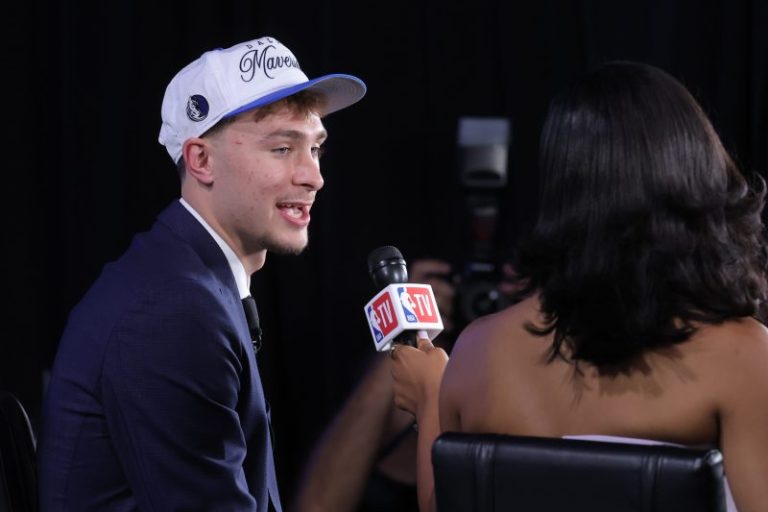
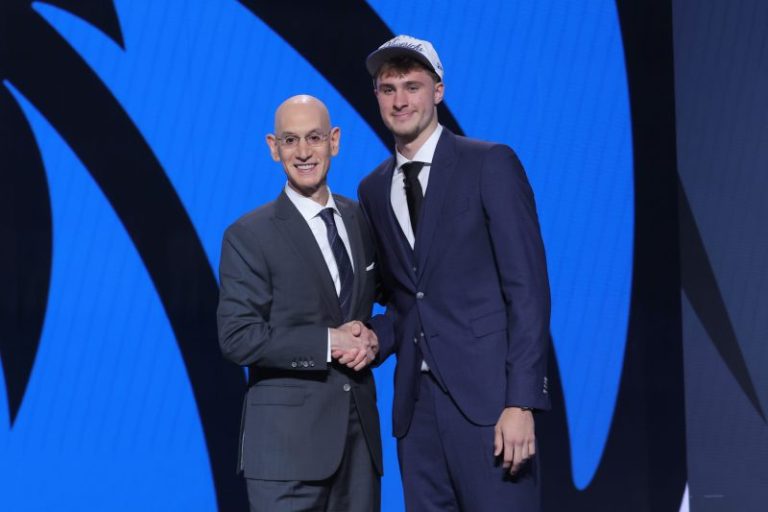
Duke freshman and national player of the year Cooper Flagg was selected as the top pick by the Dallas Mavericks, tabbing him as the future face of the franchise in the post-Luka Dončić era. He is expected to wear No. 32 for Dallas.
“I think just hearing my name get called,’ Flagg told ESPN about what made the night special. ‘Sharing that moment with my mom, my dad and two brothers. That’s a moment I am going to remember for the rest of my life. … It was a blur as soon as I heard it happen.”
The forward from Newport, Maine, spent just one season with the Duke Blue Devils. Flagg’s season ended with a loss to Houston in the Final Four.
The do-it-all young star led the Blue Devils in scoring, rebounding, assists and steals. Flagg, who added more muscle since the start of the year, is a physical player who initiates contact, is confident and plays with force when necessary.
Here’s everything else that unfolded in the first round of the NBA draft, including the full rundown of picks:
No. 30 Los Angeles Clippers, Yanic Konan Niederhauser, Penn State
The 6-11 Niederhauser, who is from Switzerland, averaged 12.9 points, 6.3 rebounds and 2.3 blocks in one season at Penn State after transferring from Northern Illinois. He performed well at the G League Elite Camp and earned an invite to the draft combine, where his athleticism in the paint stood out. – Jeff Zillgitt
No. 29 Phoenix Suns, Liam McNeeley, UConn
Trade: McNeeley is heading to Charlotte as the 29th pick was part of the Hornets’ return for sending Mark Williams to Phoenix.
His slide is over. What McNeeley may lack in fluid athleticism, he more than makes up for with a smooth, natural shot and knack for drawing fouls and getting to the free throw line. He also has a quick release and plenty of range to suggest that he should get early minutes. He bounced back since suffering an ankle injury on New Year’s Day that sidelined him for a few weeks. McNeeley struggled with his shot at times down the stretch. – Lorenzo Reyes
No. 28 Boston Celtics, Hugo Gonzalez, Real Madrid (Spain)
One of Europe’s top young NBA prospects, Gonzalez is a versatile wing with the ability to score inside and out. He can handle the basketball, pass and is a surprising shot-blocker. – Jeff Zillgitt
No. 27 Brooklyn Nets, Danny Wolf, Michigan
The busy Brooklyn Nets drew a roar out of their fans still in the building when they announced this pick. The Yale transfer turned into a first-round selection thanks to his fluid scoring and play-making portfolio in the package of a 7-foot stretch big. Wolf played point guard at times this past season for the Wolverines just like he played center. His handles make him a threat as the initiator in pick-and-roll actions and his range should translate to the NBA. – Lorenzo Reyes
No. 26 Brooklyn Nets, Ben Saraf, Ratiopharm Ulm (Germany)
He’s just as comfortable knocking down a step-back jumper, finding creases in the paint and dishing the ball with excellent vision. He may need some time to develop as he adjusts to NBA athletes, but his length and size at point guard make him an intriguing pick. – Jeff Zillgitt
No. 25 Orlando Magic: Jase Richardson, Michigan State
Richardson improved as the season progressed and turned into the Spartans’ steady hand with the basketball as a shooter (inside and out) and facilitator. He is an active defender with surprising bouts of athleticism. He also has a knack for collecting rebounds, big plays and poise under pressure. – Lorenzo Reyes
No. 24 Oklahoma City Thunder, Nique Clifford, Colorado State
Trade: Clifford is heading to the Sacramento Kings.
Clifford is a versatile wing who does a lot of things – scoring, rebounding, passing and defending. He has a quick burst on drives to the basket and can finish with force or finesse. He logged big minutes for Colorado State and was excellent in the Rams’ final six games before the NCAA tournament, posting 25.3 points, 7.8 rebounds, 5.2 assists and 1.5 steals and shooting 60% from the field, including 54.8% on 3s. – Jeff Zillgitt
No. 23 New Orleans Pelicans, Asa Newell, Georgia
Trade: Newell is heading to the Atlanta Hawks.
This was originally an Indiana pick but was part of the Pascal Siakam deal some years ago. Based on his size, Newell wouldn’t appear to be as quick and fluid as he is, which should make him an instant threat in pick-and-roll situations. He was one of the lone bright spots for the Bulldogs in a loss against No. 1 Auburn with a team-high 20 points. His scoring dipped at the end of the regular season, however, he had 20 points and eight rebounds in a first-round NCAA Tournament loss to Gonzaga. – Lorenzo Reyes
No. 22 Brooklyn Nets (via Atlanta), Drake Powell, North Carolina
Trade: The Nets acquired this pick in the Kristaps Porzingis trade.
Powell is active on both ends of the court as a shot-blocker and physical and versatile defender, and as a player who likes to run the court, launch catch-and-shoot 3s and go one-on-one in the halfcourt. Playing on a deep team, especially on the perimeter, Powell doesn’t possess eye-popping offensive stats but his shooting stats reveal his potential. Was an efficient scorer in limited opportunities and can be a solid rebounder from the perimeter. – Jeff Zillgitt
No. 21 Utah Jazz, Will Riley, Illinois
Trade: Riley is heading to the Washington Wizards.
Riley (12.6 ppg, 4.1 rpg, 2.2 apg) has good size and playmaking ability for a shooting guard who can make 3s and find open teammates. Like many, he will look for offensive rebounds, but his shot is a work in progress. The mechanics are there and he improved as a shooter and scorer as the season progressed. He shot 37-for-72 (51.4%) from the field and averaged 16.3 points in the Illini’s final six games. – Scooby Axson
No. 20 Miami Heat, Kasparas Jakucionis, Illinois
This pick came as part of the trade that sent Jimmy Butler to the Warriors, and Miami, which got thumped in the first round of the playoffs, is getting play-making at guard. Jakucionis is a scorer and passer. He has range with a nice 3-ball, can shoot off the dribble from deep, including on step-back 3s, and looks for an open teammate when he draws multiple defenders. Jakucionis sees the court well with savvy passes and likes to get to the rim for layups. But he can be turnover-prone. – Lorenzo Reyes
No. 19 Brooklyn Nets, Nolan Traore, Saint-Quentin (France)
Traore is a point guard who can score and pass and has court awareness but also a propensity for bad turnovers. He’s quick, can get to the rim and is comfortable taking his defender off the dribble. Needs to work on his shooting efficiency, especially on 3s. – Jeff Zillgitt
No. 18. Washington Wizards, Walter Clayton, Florida
Trade: Clayton is heading to the Utah Jazz.
The Jazz went with another bucket getter who can create his own shot in Clayton, who helped the Florida Gators win the national championship and was named the Most Outstanding Player of the Final Four. He had 34 points in the national semifinals against Auburn and 11 points, seven assists and five rebounds in the championship victory against Houston. He also scored 30 points in a regional final against Texas Tech and was 21-for-42 from the field in the Gators’ final three games. – Scooby Axson
No. 17 Minnesota Timberwolves, Joan Beringer, KK Cedevita (Adriatic League)
After consecutive trips to the Western Conference finals, the Timberwolves are getting a boost of athleticism in the low block. Beringer had gained traction among NBA scouts and executives as a mobile big man who can run the pick-and-roll as a screener on offense and guard the pick-and-roll. He doesn’t have a lot of experience but his potential, especially as a rim protector, made him a first-round prospect. Another player who improved throughout the season. He has played basketball for only four years. – Lorenzo Reyes
No. 16 Memphis Grizzlies, Yang Hansen, Qingdao (China)
Trade: Hansen is heading to the Portland Trail Blazers.
The 7-2 center was named the Chinese Basketball Association Rising Star in his first two seasons and averaged 16.6 points, 10.5 rebounds and 3.0 assists in 2024-25. – Jeff Zillgitt
No. 15 Oklahoma City Thunder, Thomas Sorber, Georgetown
At this point, the world champion Thunder are collecting assets, as all of their core players plan to run it back for years to come. General manager Sam Presti has assets to play with if they want to wheel and deal, including nearly a dozen first-round picks from here to the end of the decade.
Sorber, a forward-center, required surgery to repair a foot injury suffered Feb. 15 and missed the rest of the season. But Sorber is a stellar inside threat who’s just as comfortable cutting to the basket on pick-and-rolls as he is backing down opponents. His rebounding and rim protection will make him an asset, as he continues to grow into his frame. — Scooby Axson
No. 14 San Antonio Spurs, Carter Bryant, Arizona
Their second pick of the night, the Spurs get more athleticism at forward, and continue building a solid, young core. The athletic forward provides a solid combination of strength and fluidity. He has lateral quickness to stay in front of the ball and the ability to block shots. He can still improve on his technique as a finisher and in scoring efficiency. – Lorenzo Reyes
No. 13 Atlanta Hawks, Derik Queen, Maryland
Trade: Queen is heading to the New Orleans Pelicans.
An active, physical big man, Queen has a soft touch around the rim with either hand and has a power game, too. He can run the court and handle the basketball well for a power forward-center. He has good hands, footwork and the mechanics to become a shooter who can stretch the floor. Queen had 27 points, five rebounds and two steals in a Sweet 16 loss to eventual champion Florida. – Jeff Zillgitt
No. 12 Chicago Bulls, Noa Essengue, Ratiopharm Ulm (Germany)
The Bulls have been stuck in the play-in window, but their play improved toward the end of the season as point guard Josh Giddey commanded the offense. Now, Chicago is getting a competitive and active young player. The next forward with elite finishing ability to come out of France, Essengue figures to be more of a developmental prospect, but his size, instincts at the rim and plus-defensive ability could make him a star if he bulks up. – Lorenzo Reyes
No. 11 Portland Trail Blazers, Cedric Coward, Washington State
Trade: Coward is heading to the Memphis Grizzlies.
Coward, is an experienced player who can contribute right away. He started his college career at Division III Willamette University, transferred to Eastern Washington and then to Washington State. He played in just six games in 2024-25 with a shoulder injury ending his senior season in November. Coward has great size for a guard, is solid on catch-and-shoot 3s and has the ability to get to the rim. – Jeff Zillgitt
No. 10 Phoenix Suns (via Houston), Khaman Maluach, Duke
This pick was part of the trade that shipped Kevin Durant to the Rockets, so Houston selected on behalf of Phoenix, which gets much-needed height. Playing about 20 minutes per game, Maluach is a mobile big who excels in pick-and-rolls and has the hands to catch lobs for easy dunks; soft touch at the rim; shot-blocker/rim protector; active on the offensive glass; will get stronger and has a great aptitude for the game, learning concepts quickly. — Lorenzo Reyes
No. 9 Toronto Raptors, Collin Murray-Boyles, South Carolina
Although he’s a bit undersized for a power forward, Murray-Boyles plays with intense effort and determination, which will very quickly please his NBA coaches. He also has plenty of strength to finish at the rim and was the SEC’s No. 3 rebounder. Murray-Boyles had 35 points and seven rebounds against Arkansas late in the regular season and had 20 points and 12 rebounds in a loss to Arkansas in the SEC tournament. He is the Gamecocks’ first lottery pick. — Jeff Zillgitt
No. 8 Brooklyn Nets, Egor Demin, BYU
For the first of the five first-round picks they entered the night with, the Nets are looking to bolster their production along the wing. Demin is a Russian playmaker who can make quick decisions and facilitate for others. Demin is the size of a wing player but has guard-like skills. On defense, he uses his length to his advantage while forcing turnovers and being active in passing lanes. His shooting efficiency is a concern. Demin had difficulty with his offense as the season progressed. — Lorenzo Reyes
No. 7 New Orleans Pelicans, Jeremiah Fears, Oklahoma
Fears is quick on the dribble, has strength going to the rim, can finish and draws fouls. He operates well in the pick-and-roll as a scorer and passer but needs to improve his 3-point shot. Fears scored a season-high 31 points and added five assists and four rebounds in a win against ranked Missouri. Fears had a strong SEC tournament, producing 29 points, six rebounds and five steals plus five turnovers in a victory against Georgia and 28 points, five assists, four rebounds and three steals (just one turnover) in a loss to Kentucky. — Jeff Zillgitt
No. 6 Washington Wizards, Tre Johnson, Texas
Johnson is a natural shooter and scorer, with the ability to blow by defenders with ease and should fit in well with a Wizards team that is desperately in need of a spark of any kind. He does well when scoring on the move and is a decent playmaker for his size. He still needs to work on his ability to make plays for others. He must also work on his strength and his explosiveness in order to assert himself as a finisher at the rim. — Scooby Axson
No. 5 Utah Jazz, Ace Bailey, Rutgers
Bailey has prototypical size for a wing in the NBA, but there have been questions about him since he decided not to work out for teams, and reportedly put together a wish list of possible destinations instead of being content with being drafted. Bailey’s game on the court starts with his shooting; he is not great from long distance but can have an impact in the mid-range and score with the best of them. Shot selection is a concern, and his success will depend on how he is used. But he displays an array of shots to get his points, whether it’s floaters, catch-and-shoot off the break, or going to the rim. — Scooby Axson
No. 4 Charlotte Hornets, Kon Knueppel, Duke
The Hornets need shooting, and Knueppel can ignite an offense with his 3-point shot, thanks to an efficient motion, seemingly always ready to receive the ball in his shooting pocket. He can also lace shots from midrange, take care of the ball and is money on free throws. In the ACC tournament, Knueppel averaged 21 points (28 against Georgia Tech) and shot 48.6% from the field, stepping up with Flagg injured. — Jeff Zillgitt
No. 3 Philadelphia 76ers, VJ Edgecombe, Baylor
The first thing you notice about Edgecombe is his supreme athleticism and a strong, NBA-ready frame. That means he will put a lot of players on a poster with his jumping ability and can use his quickness to be a pest on the defensive end. The Bahamian native has displayed his athleticism, has shown he can be explosive and has an elite knack for steals. He will be able to contribute at the NBA level and can be aggressive at the point of attack. — Scooby Axson
No. 2 San Antonio Spurs, Dylan Harper, Rutgers
The lefty stroke will remind some of Jalen Brunson, but Harper has far more size at 6-6 and tremendous length with a wingspan of 6-foot-10. Harper’s best asset at the next level might be his versatility to run point and play off the ball. But the Spurs suddenly have a surplus at guard with De’Aaron Fox — whom they acquired in a midseason trade — and Stephon Castle already in the fold. San Antonio could look to move one of them later in a corresponding move. — Lorenzo Reyes
No. 1 Dallas Mavericks, Cooper Flagg, Duke
The do-it-all young star led the Blue Devils in scoring, rebounding, assists and steals. Flagg has outstanding footwork, especially in the low post. He can use either hand on shots in the paint, knows how to run plays, can hit catch-and-shoot 3s and is an active weakside defender. Flagg, who added more muscle since the start of the year, is a physical player who initiates contact, is confident and plays with force when necessary. He led Duke to an impressive season, which included the ACC regular-season title, ACC tournament title and Final Four appearance. — Jeff Zillgitt
What time does the NBA draft start tonight
The NBA Draft starts Wednesday, June 25 at 8 p.m. ET. The draft is being held at the Barclays Center in Brooklyn, New York. Day 1 of the draft can be viewed on ESPN and ABC.
Where to watch NBA draft
- Time: 8 p.m. ET (7 p.m. CT)
- Location: Barclays Center (Brooklyn, New York)
- TV: ABC and ESPN
- Stream: Fubo, Sling TV
Watch the NBA Draft with Fubo
First trade of the night
The San Antonio Spurs are trading the No. 38 pick (second round) in tonight’s NBA draft to the Indiana Pacers for a future second-round pick and cash, according to ESPN’s Shams Charania.
2025 NBA Draft order: Round 1
- Dallas Mavericks
- San Antonio Spurs
- Philadelphia 76ers
- Charlotte Hornets
- Utah Jazz
- Washington Wizards
- New Orleans Pelicans
- Brooklyn Nets
- Toronto Raptors
- Phoenix Suns (via Houston Rockets)
- Portland Trail Blazers
- Chicago Bulls
- Atlanta Hawks (via Sacramento Kings)
- San Antonio Spurs (via Atlanta Hawks)
- Oklahoma City Thunder (via Miami Heat, L.A. Clippers)
- Memphis Grizzlies (via Orlando Magic)
- Minnesota Timberwolves (via Detroit Piston, New York Knicks, Portland Trail Blazers, New Orleans Pelicans)
- Washington Wizards (via Memphis Grizzlies)
- Brooklyn Nets (via Milwaukee Bucks, New York Knicks, Detroit Pistons, Portland Trail Blazers, New Orleans Pelicans)
- Miami Heat (from Golden State Warriors)
- Utah Jazz (via Minnesota Timberwolves)
- Atlanta Hawks (via L.A. Lakers, New Orleans Pelicans)
- New Orleans Pelicans (from Indiana Pacers)
- Oklahoma City Thunder (via L.A. Clippers)
- Orlando Magic (via Denver Nuggets)
- Brooklyn Nets (via New York Knicks)
- Brooklyn Nets (via Houston Rockets)
- Boston Celtics
- Phoenix Suns (via Cleveland Cavaliers, Utah Jazz)
- L.A. Clippers (via Oklahoma City Thunder)
2025 NBA Draft odds
- Dallas Mavericks: Cooper Flagg, Duke (-10000)
- San Antonio Spurs: Dylan Harper, Rutgers (-2500)
- Philadelphia 76ers: VJ Edgecombe, Baylor (-285)
- Charlotte Hornets: Kon Knueppel, Duke (+150)
- Utah Jazz: Tre Johnson, Texas (+160)
- Washington Wizards: Ace Bailey, Rutgers (+220)
- New Orleans Pelicans: Jeremiah Fears, Oklahoma (+200)
- Brooklyn Nets: Khaman Maluach, Duke (+400)
- Toronto Raptors: Khaman Maluach, Duke (+240)
NBA draft projections 2025
USA TODAY: Kon Knueppel and Kharman Maluach each go in top 10
Flagg is obviously the top prospect in the draft, but he had a lot of help around him, particularly his teammates Kon Knueppel and Khaman Maluach, who USA TODAY Sports has going in the top 10. Regarding Knueppel, USA TODAY Sports writes, ‘He can ignite an offense with his 3-point shot, thanks to an efficient motion, seemingly always ready to receive the ball in his shooting pocket. He can also lace shots from midrange, take care of the ball and is money on free throws.’ Knueppel is predicted to go seventh overall to the New Orleans Pelicans.
Maluach is expected to go right after to the Brooklyn Nets. USA TODAY Sports writes: ‘Maluach is a mobile big who excels in pick-and-rolls and has the hands to catch lobs for easy dunks; soft touch at the rim; shot-blocker/rim protector; active on the offensive glass; will get stronger and has a great aptitude for the game, learning concepts quickly.’
More draft projections and predictions from USA TODAY Sports’ Jon Hoefling.
2025 NBA Draft prospects
Presumptive No. 1 pick Cooper Flagg will dominate the proceedings. However, here is a list of 20 other prospects to know ahead of Round 1, with the top five listed below.
1) Dylan Harper, Rutgers
- Position: G
- Height: 6’5′
- Weight: 213
- Strengths: Big frame for a guard, great playmaker, good shot creator, solid finisher
2) Ace Bailey, Rutgers
- Position: G
- Height: 6’8′
- Weight: 203
- Strengths: Long frame, elite scorer from all around the court, high-energy defender
3) VJ Edgecombe, Baylor
- Position: G
- Height: 6’4′
- Weight: 193
- Strengths: Athleticism, great on-ball defender
4) Tre Johnson, Texas
- Position: G
- Height: 6’5′
- Weight: 190
- Strengths: Scoring, high-energy defender
5) Kon Knueppel, Duke
- Position: G
- Height: 6’5′
- Weight: 219
- Strengths: Shooting, solid playmaker and defender, can fit into practically any role placed on him
How many rounds in NBA draft?
The NBA Draft consists of two rounds with the first round taking place on Wednesday night, followed by the second round on Thursday. In total, there will be 59 picks across the draft.
Note: The New York Knicks lost their 2025 second-round pick in December 2022 after the NBA ruled it engaged in free agency discussions with Jalen Brunson prior to when they were allowed to occur the previous offseason. — Mark Giannotto.
Who has first pick in 2025 NBA Draft?
The Dallas Mavericks own the No. 1 pick after winning the draft lottery with just a 1.8% chance. They are widely expected to select Duke’s Cooper Flagg.
What channel is the NBA Draft on tonight?
ABC and ESPN will be televising the entirety of the draft’s first round. The second round will be avaiable to watch on ESPN Thursday night.
How to stream the NBA Draft
The 2025 NBA Draft will be available to stream across Fubo, which offers a free trial to new users, as well as Sling TV.
Cooper Flagg: How will Duke star fare in NBA?
USA TODAY Sports Lorenzo Reyes states: ‘Given his size and skill set, and given his ability to play multiple positions on the floor, Flagg should be an instant contributor for the Mavericks and will enter the season as the odds-on favorite to win NBA Rookie of the Year. He’s a player with an already-polished portfolio that includes ball handling, passing, rebounding and scoring, all of which means he can find different ways to impact games. And it’s not just against college kids; Flagg’s experience scrimmaging against Team USA — when he was just 17 years old — drew praise from LeBron James, Kevin Durant and others.
‘With Kyrie Irving (torn anterior cruciate ligament) set to miss most of the season, Flagg could be asked to assist Dallas with distribution and playmaking, but his best fit is as a versatile wing who can blossom into a consistent All-Star, with a potential arc like that of a fellow Blue Devil, Celtics forward Jayson Tatum.’
USA TODAY Sports’ Steve Gardner has more on Cooper Flagg and expert predictions around the draft.
Ace Bailey projections: Predictions for Rutgers star
USA Today: No. 8 pick to the Brooklyn Nets
Staff writes: ‘Bailey is a hyper-athletic wing with length and size coming into a league that prioritizes players built exactly the way he is with exactly the skill set he has: an effortless and reliable shot and an attack-first mentality with an ability to finish at the rim. Needs to improve as a playmaker on the pass and free throws. But even when offense isn’t easy, he remains active on defense. He had 17 points, seven rebounds, three steals and one block in season-ending loss to USC. He is the only U.S. player who has not worked out for any teams, and his approach to the draft could impact where he is drafted.’
USA TODAY Sports’ Elizabeth Flores has more projections for Ace Bailey at the NBA Draft.
NBA Draft order: Round 2
- Minnesota Timberwolves (from Utah Jazz)
- Boston Celtics (from Washington Wizards via Detroit and Brooklyn)
- Charlotte Hornets
- Charlotte Hornets (from New Orleans Pelicans via San Antonio, Phoenix and Memphis)
- Philadelphia 76ers
- Brooklyn Nets
- Detroit Pistons (from Toronto Raptors via Dallas and San Antonio)
- San Antonio Spurs
- Toronto Raptors (from Portland Trail Blazers via Sacramento)
- New Orleans Pelicans (from Phoenix Suns via Washington)
- Golden State Warriors (from Miami Heat via Brooklyn and Indiana)
- Sacramento Kings (from Chicago Bulls via San Antonio)
- Utah Jazz (from Dallas Mavericks)
- Oklahoma City Thunder (from Atlanta Hawks)
- Chicago Bulls (from Sacramento Kings)
- Orlando Magic
- Milwaukee Bucks (from Detroit Pistons via Washington)
- Memphis Grizzlies (from Golden State Warriors via Washington and Brooklyn)
- Cleveland Cavaliers (from Milwaukee Bucks)
- New York Knicks (from Memphis Grizzlies via Oklahoma City and Boston)
- Los Angeles Clippers (from Minnesota Timberwolves via Atlanta and Houston)
- Phoenix Suns (from Denver Nuggets via Charlotte and Minnesota)
- Utah Jazz (from Los Angeles Clippers via Los Angeles Lakers)
- Indiana Pacers
- Los Angeles Lakers
- Memphis Grizzlies (from Houston Rockets)
- Orlando Magic (from Boston Celtics)
- Cleveland Cavaliers
- Houston Rockets (from Oklahoma City Thunder via Atlanta)
NBA second-generation golden era continues with 2025 NBA Draft
(Jase) Richardson will join a growing NBA trend this week when he becomes the league’s latest second-generation player. He and Rutgers guard Dylan Harper, the son of longtime NBA player Ron Harper, are projected to be first-round picks ahead of the 2025-26 season. It would be the seventh time in eight years multiple players were drafted with a father who played in the NBA.
The rise can be attributed to a variety of reasons, according to experts, from genetics to exposure, access and socioeconomic factors thanks the rising cost of youth sports. The number of NBA alumni is also bigger now with the league more than 75 years old. But the pattern is more distinguishable than ever.
This past season, there were at least 33 second-generation players who appeared in an NBA game (or more than 7% of the league’s players). Of the 30 NBA teams, 21 had at least one second-generation player on their roster at some point.
Read more on second-generation NBA players and their golden era by Mark Giannotto.
Khaman Maluach and navigating Trump’s visa ban
A quirk related to Maluach’s visa situation will play out on Wednesday night at the 2025 NBA Draft. The NBA is preparing for the complicated scenario that would be triggered if Maluach were to be taken by the Toronto Raptors with the No. 9 overall pick.
Given the current Trump administration policy related to South Sudan, Maluach would have to apply for a United States tourism visa and a waiver to South Sudan’s visa ban any time he enters the United States if he plays for the Raptors, according to the NBA. That would also be in addition to having to obtain a Canadian work visa. The Raptors had to cross the United States border from Canada for road games 19 times based on their 2024-25 schedule.
USA TODAY Sports’ Mark Giannotto dives into Khaman Maluach’s situation around the draft and visa bans.
NBA Mock Drafts: AI predicts top picks
USA TODAY Sports Jack McKessy asked ChatGPT to predict the first 14 selections in Thursday’s draft. Here is the full list with the top three below.
1. Dallas Mavericks: Cooper Flagg, F, Duke
ChatGPT wrote: ‘Unanimous top pick; versatile two-way star, Wooden winner.’
2. San Antonio Spurs: Dylan Harper, G, Rutgers
It wrote: ‘Elite driver and scorer, shooting remains a question; consensus No. 2.’
3. Philadelphia 76ers: V.J. Edgecombe, G/F, Baylor
It wrote: ‘Athletic playmaker and defensive force; top fit for Philly’
This post appeared first on USA TODAY