Author

admin

Browsing

Jalen Ramsey and the Miami Dolphins mutually agreed to seek a trade for the veteran cornerback in the weeks ahead of the 2025 NFL Draft.

Despite this, Ramsey remains on Miami’s roster. That may not be the case for long, if some of Ramsey’s recent social media posts are to be believed.

Ramsey took to X (formerly Twitter) Wednesday and made a few cryptic posts about his future. His final one ended with him saying ‘a new chapter awaits.’

The timing of Ramsey’s posts is noteworthy. They came just days ahead of June 1, which is a key date on the NFL’s yearly calendar.

Once June 1 passes, NFL teams are able to split a player’s dead-cap hit – which is guaranteed money allocated to a player no longer on a roster – over two seasons. Players traded or released before June 1 see all of their dead-cap hit accelerate onto the current year’s salary cap, unless an NFL team uses one of its two post-June 1 release designations on a player.

With that in mind, it would be more palatable for Miami to trade Ramsey after June 1, if possible. The Dolphins would actually save $5.9 million in cap space by trading Ramsey after that date, per Spotrac. If they move him before June 1, it would cost them more than $12.5 million in 2025 cap space.

The cost to release Ramsey would also decrease after June 1. The Dolphins would lose just $14.3 million in 2025 cap space by cutting him after that date instead of the roughly $32.8 million it would cost them to do so before then.

Given the timing of Ramsey’s social media posts – including one that just read ‘5…,’ five days ahead of June 1 – his status will be worth monitoring over the coming days.

The USA TODAY app gets you to the heart of the news — fastDownload for award-winning coverage, crosswords, audio storytelling, the eNewspaper and more.

This post appeared first on USA TODAY

MIRAMAR BEACH, Fla. – SEC officials arrived here this week with a goal of zeroing in on a conference schedule format for football for 2026 and beyond. And they probably will leave here Thursday without approving a format.

Two factors continue to hold up a vote on a schedule format.

One: There’s not consensus behind a model. Some stakeholders want to stay at eight games. Others want to move to nine. Generally, the SEC’s coaches sound mostly interested in staying at eight, while the conference’s athletic directors seem to leave the door cracked a little wider toward nine. But, even within those groups, there’s not consensus.

LSU’s Brian Kelly said he’d favor nine conference games. Arkansas’ Sam Pittman prefers eight.

Texas athletic director Chris Del Conte would like nine, but he acknowledged he doesn’t speak for the room.

Back and forth the Ping-Pong ball goes.

The other element delaying the vote? The SEC is not up against a hard deadline. The conference’s 2025 schedule is set, and it retains some runway to drag out the decision for 2026. Amid the pandemic in 2020, the SEC scrapped its schedule and devised a new one less than six weeks before kickoff.

Don’t expect the SEC to repeat that 2020 timeline, but also don’t expect that all these diverging opinions will coalesce behind a solution within the conference’s spring meetings that end here Thursday.

Also affecting the decision: The College Football Playoff format for 2026 and beyond remains undecided, and multiple SEC coaches and administrators expressed reluctance to decide the conference schedule model until more information comes to light about the future playoff format and selection process.

Even Kelly, a proponent of nine conference games, says he’d slow-play this conference schedule vote, if it were up to him, and not give up that chip before knowing more about the playoff’s future.

The SEC has considered increasing to nine conference games for many years but consistently stayed at eight. The Big Ten and Big 12 play nine conference games. The ACC plays eight.

Around the conference, there remains “a variety of perspectives,” Sankey said.

“Some would say, ‘Let’s just go play nine games. More SEC games is better,’’ Sankey said. ‘Some would say, ‘Wait a second, I’m looking at bowl qualification, and it’s going to be harder to get to that six-win threshold as I build my program.’

“And then you have some who look at last year and say, ‘Our interpretation is, under the current selection criteria, losing weighs more (on the committee’s decision) than winning a solid game. Losing a game is more problematic, and until we have a better understanding on the future criteria or entry points for the CFP, we’re not willing to go to nine games.’

“I think those are three philosophies, but I think there are some who are ready to go to (nine).”

A majority vote would be required to reach a decision.

Will the SEC break camp on Thursday without making a decision?

“That’s my expectation,” Sankey said on “The Paul Finebaum Show.”

And, so, the can is kicked, a little further down the road. In the past, this familiar road always ends at eight.

Blake Toppmeyer is the USA TODAY Network’s national college football columnist. Email him at BToppmeyer@gannett.com and follow him on X @btoppmeyer.

This post appeared first on USA TODAY

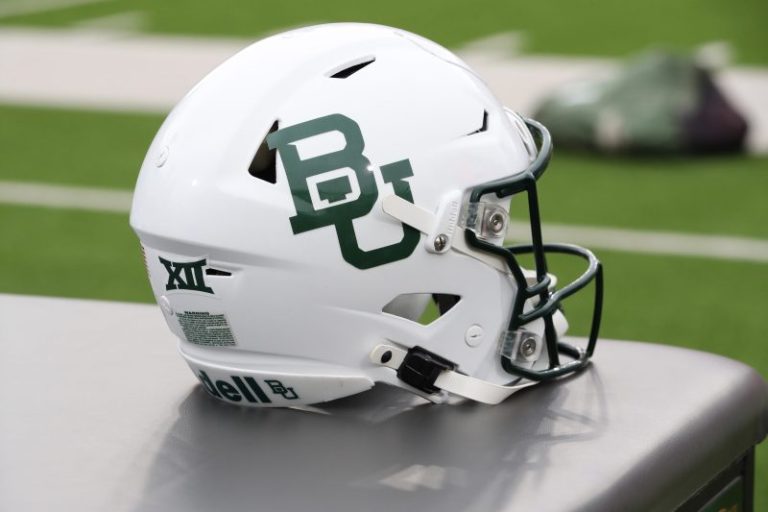
Baylor defensive lineman Alex Foster has died after being shot multiple times in Greenville, Mississippi, the Washington County Coroner’s Office confirmed to the Clarion Ledger, part of the USA TODAY Network. He was 18.

‘We are heartbroken by the unexpected loss of Alex Foster, a beloved teammate, friend and a cherished part of the Baylor Family,’ vice president and director of athletics Mack B. Rhoades and head football coach Dave Aranda said in a joint statement on Wednesday. ‘Our thoughts and prayers are with Alex’s family and all those who loved him.’

Authorities responded to a call of shots fired in the early morning of May 28 at 12:11 a.m., the Greenville Police Department confirmed to the Clarion Ledger. Officers found a male victim who had been shot multiples times in a car at the scene. He was transferred to Delta Health Center, where he died from his injuries less than an hour later.

‘In this time of deep sorrow, we draw strength from our faith and the unwavering love of the Baylor community,’ the university added in a statement. ‘Our immediate focus is on supporting Alex’s family and his teammates through this devastating loss. Alex’s memory will forever be a part of Baylor University.’

The 6-foot-5, 292-pound defensive lineman is a native of Greenville, Mississippi and attended St. Joseph High School, where he was a three-star recruit and the No. 13 overall recruit in Mississippi, according to 247sports. Foster received offers from multiple colleges, including Georgia Tech, Arkansas, Mississippi State, Kentucky and Texas before ultimately signing with the Baylor Bears in July 2023. He redshirted his freshman year and was set to enter his sophomore year this season.

John Baker, head coach of the St. Joseph Catholic football, told the Clarion Ledger that Foster was back home in Greenville for summer break. Baker added that Foster was scheduled to return to Baylor in Waco, Texas this weekend.

‘He was just a great guy,’ Baker told the newspaper. ‘Real quiet, soft-spoken guy, you know. Had his head on right and was wanting to make it out. He was a good dude, man.’

In a follow-up posted on X, Aranda described Foster as a ‘beloved member of our Baylor Family.’ He added, ‘In his time at Baylor he made a long-lasting impact on all of us in the program. Our hearts are broken, and our prayers are with his family, friends and all those who loved him so deeply.’

The Big 12 also shared condolences, writing, ‘The Big 12 Conference extends its deepest condolences to the family and loved ones of Baylor football student-athlete Alex Foster. We are deeply saddened by his passing and join the entire Baylor community during this time of mourning.’

This post appeared first on USA TODAY

There could be two winners in some girls events this weekend at the California state high school track and field meet − a transgender athlete and a cisgender athlete.

The scenario is part of rule changes made after President Donald Trump demanded a transgender athlete not be allowed to compete in girls track and field events.

The California Interscholastic Federation (CIF), the state’s governing body for high school athletics, clarified the new rules in a press release May 28.

A new division will not be created to separate transgender athletes from cisgender athletes. But athletes assigned female at birth will receive medals based on where they would have finished if a transgender athlete had not competed in the same event − part of what the CIF is calling a ‘pilot entry process.”

Governor Gavin Newsom’s spokesman, Izzy Gardon, in a statement provided to USA TODAY Sports, said, “CIF’s proposed pilot is a reasonable, respectful way to navigate a complex issue without compromising competitive fairness. The Governor is encouraged by this thoughtful approach.”

AB Hernandez, a 16-year-old transgender athlete, won titles in the triple jump and long jump at the southern California regional championship last weekend and is scheduled to compete in those events and the high jump in girls’ varsity.

On May 27, Trump threatened to withhold federal funds from California if the state does not follow an executive order seeking to bar transgender athletes from women’s sports. His post on social media referred to a trans athlete who competes in girls track and field.

Later in the day, the CIF changed the rules for the championship, which will be held May 30-31 in Clovis.

‘The CIF values all of our student-athletes and we will continue to uphold our mission of providing students with the opportunity to belong, connect, and compete while complying with California law and Education Code,” the federation said in a statement. ‘With this in mind, the CIF will be implementing a pilot entry process for the 2025 CIF State Track and Field Championships.

As part of the changes, additional female athletes were invited to compete in the 2025 state championships.

Medals at the state meet

Hernandez, a top contender in the girls triple jump and long jump, could end up standing on the medal podium next to the athlete who finishes second in the overall standings. Both would receive a first-place medal.

A duplicate medal would be created to accomodate the two athletes.

Hernandez would receive a medal based on her finish in the overall standings while the other athletes will receive medals based on their finish in the standings excluding Hernandez’s results.

The CIF awards nine medals to the top boys and girls finishers in each event. (By contrast, other states create up to five divisions for each event to accomodate the athletes representing schools with a wide range of enrollments.)

Hernandez also is expected to contend for a medal in the high jump.

Also, as part of the rule changes, the CIF said in a statement that it would invite ‘any biological female student-athlete who would have earned the next qualifying mark’ to compete in the state championships.

“Under this pilot entry process, any biological female student-athlete who would have earned the next qualifying mark for one of their Section’s automatic qualifying entries in the CIF State meet, and did not achieve the CIF State at-large mark in the finals at their Section meet, was extended an opportunity to participate in the 2025 CIF State Track and Field Championships,” the CIF said in a statement. “The CIF believes this pilot entry process achieves the participation opportunities we seek to afford our student-athletes.”

The CIF did not say how many athletes that could impact.

Trump’s post on social media

Although the CIF did not cite Trump, the rule changes took place hours after his social media post that in part read, ‘THIS IS NOT FAIR, AND TOTALLY DEMEANING TO WOMEN AND GIRLS.’

Trump isn’t the only one who has sounded off on the matter. So has Hernandez.

 “I’m still a child, you’re an adult, and for you to act like a child shows how you are as a person,’’ she told Capital & Main in a story published May 15.

Certain things remain unknown. Such as how many female athletes will be impacted by the new rules and whether they’ll be applied only in events in which Hernandez is competing.

The CIF did immediately respond to requests for information submitted by USA TODAY Sports.

In March, Newsom said on his podcast that it is ‘deeply unfair’ to allow transgender girls and women to compete in women’s sports.

California law prohibits discrimination based on gender identity, including at schools. State law also allows trans student athletes to compete on sports teams that align with their gender identity.

Last month Democratic state lawmakers blocked two bills that would have banned transgender athletes from girls sports.

This post appeared first on USA TODAY

Technology Back in Top-5

Last week’s market decline of 2-2.5% (depending on the index) has led to some notable shifts in sector performance and rankings.

This pullback, coming after a strong rally, is changing the order of highs and lows on the weekly chart — a particularly significant development, at least for me.

Let’s dive into the details and see what’s flying around in the market.

The composition of the top five sectors has seen some notable changes. Here’s how it stands now:

The big surprise here is Technology making its way into the top five, displacing Consumer Staples (now at #6). This shift suggests a gradual move from a more defensive positioning to sectors that are more cyclical and economically sensitive.

Another eye-catching move comes from Consumer Discretionary, jumping from #10 to #7 — a significant leap, albeit still in the bottom half of the ranking. Real Estate and Materials saw minor shifts, while Energy dropped to #10 and Health Care remains at #11.

  1. (1) Industrials – (XLI)
  2. (4) Communication Services – (XLC)*
  3. (3) Utilities – (XLU)
  4. (2) Financials – (XLF)*
  5. (6) Technology – (XLK)*
  6. (5) Consumer Staples – (XLP)*
  7. (10) Consumer Discretionary – (XLY)*
  8. (7) Real-Estate – (XLRE)*
  9. (8) Materials – (XLB)*
  10. (9) Energy – (XLE)*
  11. (11) Healthcare – (XLV)

Weekly/Daily RRG Analysis

The weekly Relative Rotation Graph (RRG) provides some interesting insights:

  • Utilities maintains very high readings, but Consumer Staples (highest on RS-Ratio ranking) is likely to be pushed down by weak daily chart readings.
  • Industrials continues to push further into the leading quadrant with stable momentum.
  • Financials and Communication Services are inside the weakening quadrant but have room to curl back towards leading.
  • Technology, despite having the second-lowest RS-Ratio reading, is rapidly improving with a strong RS-Momentum heading over recent weeks.

Remember, the ranking combines daily and weekly readings.

Technology’s high daily chart reading is propelling it into the top five, while Consumer Staples’ weak daily reading is pushing it out.

Industrials: The Leader Holding Strong

XLI is now pushing against its all-time high, just below 145. After two weeks of attempts, last week’s slight market decline confirms that this resistance level has worked.

We’re now looking for where any potential decline might stop and form a new low. The gap area from two weeks ago seems to be a good support area to watch.

The relative strength line breaking out of its consolidation formation continues to drag the RRG lines higher. XLI, for good reason, remains the strongest sector at the moment.

Communication Services: Stable Relative Uptrend

XLC is continuing its move higher with remarkable stability. The uptrend in the RS line is still valid, currently testing the lower boundary of the rising channel.

Due to the lack of upward relative momentum in recent weeks, both RRG lines are now pointing lower.

However, the RS-Ratio line remains well above 100, keeping the XLC tail on the right-hand side of the RRG.

Utilities: Testing Resistance

XLU is pushing against overhead resistance but has yet to manage a decisive break higher.

With defensive sectors under pressure, it’s questionable whether this breakout will happen in the short term.

The RS line versus SPY is dropping back into its trading range, unable to break away decisively. This drop is causing the RS-Momentum line to roll over and start pointing lower.

It’s the recent strength in relative strength that’s keeping Utilities inside the leading quadrant for now.

Financials: At a Crossroads

The Financial sector seems to be respecting the old rising support line as resistance, with the market dropping off that line last week and now trading around $50.

This move is affecting the relative strength line, which has returned to the lower boundary of the rising channel — a level that needs to hold to maintain a positive outlook for XLF.

The RS-Ratio line is stable around 102.50, high enough to keep Financials on the right-hand side of the graph.

The RS-Momentum line has just dropped below 100, positioning the XLF tail inside the weakening quadrant, but with enough room to curl back up before hitting lagging.

Technology: The Week’s Winner

XLK saw a significant jump two weeks ago and has since returned to test the old resistance area as support. If last week’s decline continues, there’s a bit more room to the downside — $220 seems to be a good level to watch for support, marking the bottom of the gap range from two weeks ago.

The jump has pushed the relative strength line above its falling resistance line, a good sign that seems to be breaking the relative downtrend in place since mid-last year.

This is changing the characteristics of the relative strength move for the Technology sector.

For now, it has only pushed the RS-Momentum line above 100, moving XLK into the improving quadrant on the weekly RRG, but it’s already starting to drag the RS-Ratio line higher.

Portfolio Performance

We’re clawing back some of the losses from recent weeks. The underperformance of almost 6% last week has now shrunk to 4.6%. Still behind the benchmark, but closing in again and narrowing the gap.

It’s a long-term game, so we keep pushing forward. So far, nothing out of the ordinary. Let’s wait and see whether we’ve seen the low in underperformance and how long it will take to return to SPY’s performance since inception.

#StayAlert –Julius

In this must-see market update, Larry Williams returns with timely stock market analysis, trading insights, and macroeconomic forecasts. Discover what’s next for the Federal Reserve, interest rates, and inflation — and how it could impact top stocks like Tesla (TSLA), Nvidia (NVDA), Apple (AAPL), and consumer staples (XLP).

This video originally premiered on May 27, 2025. Watch on StockCharts’ dedicated Larry Williams page!

Previously recorded videos from Larry are available at this link.

In this video, Chip Anderson, President of StockCharts, sits down with Tony for a conversation in the StockCharts studio! During this in-depth Q&A session, Chip and Tony explore the powerful features that make the OptionsPlay add-on a must-have for options traders using the StockCharts platform. They discuss the integration of the StockCharts Scanning Engine with OptionsPlay strategies—showcasing how this tool enhances your ability to find trade setups quickly and effectively.

This video premiered on May 23, 2025.

Confused by mixed market signals? Follow along as Julius analyzes sector rotation, asset rotation, and global market trends using daily and weekly Relative Rotation Graphs (RRGs).

In this video, Julius puts the current sector rotation in perspective on both weekly and daily Relative Rotation Graphs (RRGs). He also examines asset rotation and the position of the U.S. markets in relation to international equities.

This video was originally published on May 27, 2025. Click on the icon above to view on our dedicated page for Julius.

Past videos from Julius can be found here.

#StayAlert, -Julius

Get the latest stock market update with Mary Ellen McGonagle. Learn key downside signals, how to manage pullbacks, and which earnings reports could impact the market next week.

In this week’s episode, Mary Ellen reviews where the markets currently stand and what to watch for to signal further downside. She also highlights ways to combat inevitable pullbacks and shares the key earnings reports that are likely to move the markets in the upcoming week.

This video originally premiered May 23, 2025. You can watch it on our dedicated page for Mary Ellen’s videos.

New videos from Mary Ellen premiere weekly on Fridays. You can view all previously recorded episodes at this link.

If you’re looking for stocks to invest in, be sure to check out the MEM Edge Report! This report gives you detailed information on the top sectors, industries and stocks so you can make informed investment decisions.

Alzheimer’s disease treatment stocks are focused on Alzheimer’s disease, a degenerative brain disorder that results in declining memory and thinking skills and typically affects people in their mid-60s.

According to the Alzheimer’s Association, neurons in other areas of the brain also begin to deteriorate as Alzheimer’s disease gets worse, resulting in the loss of basic human functions and overall cognitive impairment.

This condition affects more than 7 million people in the US alone; it’s also the most common form of dementia and is the seventh leading cause of death in America. Treatments are available to alleviate Alzheimer’s disease symptoms, but there are currently none that affect the underlying causes of this neurodegenerative disease.

Alzheimer’s disease therapies that have been approved by the US Food and Drug Administration (FDA) include: rivastigmine by Novartis (NYSE:NVS); galantamine, developed by Janssen, a division of Johnson & Johnson (NYSE:JNJ); donepezil by Pfizer (NYSE:PFE); and memantine by AbbVie (NYSE:ABBV).

Since there is no cure for Alzheimer’s disease, death is often the result for patients as the ailment causes brain deterioration. And unfortunately, Alzheimer’s disease is rising in prevalence — a report from Grand View Research suggests that the global Alzheimer’s disease treatment market will be worth a significant US$15.57 billion by 2030 as more patients need treatment, and as more investments are made in biomarkers for diagnosis and drug development.

1. Biogen (NASDAQ:BIIB)

Market cap: US$18.43 billion
Share price: US$125.81

The first NASDAQ-listed Alzheimer’s drug company on this list is Massachusetts-based Biogen, a pioneer in the field of neuroscience. The firm is focused on developing, manufacturing and marketing therapies aimed at treating serious neurological, neurodegenerative, autoimmune and rare diseases.

The global biotechnology firm’s research areas include Alzheimer’s disease and dementia. However, the launch of Biogen’s FDA-approved Alzheimer’s disease drug Aduhelm faced a lot of pushback in 2022, both from the market and from Congress, over what was viewed as a hasty fast-track approval process and exorbitant costs to patients.

Biogen gave it another go with Leqembi (lecanemab-irmb), its amyloid-beta monoclonal antibody for the treatment of Alzheimer’s disease, which the FDA approved in 2023 under its accelerated approval pathway. The drug was jointly developed by Biogen and Tokyo-based pharmaceutical company Eisai (OTC Pink:ESALF,TSE:4523). It is for patients with mild cognitive impairment or mild dementia, and is the first drug shown to slow the progression of Alzheimer’s disease to win FDA approval.

In January 2025, Leqembi received another FDA approval, this time for intravenous maintenance dosing for early-stage Alzheimer’s. Later, in April, the European Commission granted Leqembi Marketing Authorization in the EU for the treatment of mild early-stage Alzheimer’s disease.

That same month, the FDA granted fast track designation to Biogen’s investigational tau-targeting therapy BIIB080 for the treatment of Alzheimer’s.

Biogen’s earnings report for Q1 shows that first quarter global in-market sales of Leqembi reached approximately US$96 million, including US in-market sales of approximately US$52 million.

2. Acadia Pharmaceuticals (NASDAQ:ACAD)

Market cap: US$3.68 billion
Share price: US$21.98

Acadia Pharmaceuticals specializes in neuroscience and neuro-rare diseases. The biotech’s product portfolio includes the first and only FDA-approved drug to treat hallucinations and delusions associated with Parkinson’s disease psychosis, as well as the first and only approved drug in the United States and Canada for the treatment of Rett syndrome.

Acadia’s clinical-stage pipeline includes drug candidates targeting Prader-Willi syndrome and Alzheimer’s disease psychosis.

The company expects to enroll its final patient in its RADIANT Phase 2 study of ACP-204 in Alzheimer’s disease psychosis by early 2026 and release topline data in mid-2026.

According to the company, there are currently no approved treatments for hallucinations and delusions associated with Alzheimer’s disease psychosis.

3. Anavex Life Sciences (NASDAQ:AVXL)

Market cap: US$642.85 million
Share price: US$7.53

Anavex Life Sciences is a clinical-stage biopharmaceutical company developing treatments for neurodegenerative, neurodevelopmental and neuropsychiatric disorders, such as Alzheimer’s disease, Parkinson’s disease, schizophrenia, Rett syndrome and other central nervous system disorders.

Anavex’ lead drug candidate, Anavex 2-73 (blarcamesine), has successfully completed Phase 2a and a Phase 2b/3 clinical trials for Alzheimer’s disease.

In early January, the company announced positive topline safety and efficacy data from more than three years of continuous treatment with blarcamesine for early Alzheimer’s disease patients. Later that month, Anavex announced it had been issued a US patent for the treatment.

Securities Disclosure: I, Melissa Pistilli, hold no direct investment interest in any company mentioned in this article.

This post appeared first on investingnews.com