Author

admin

Browsing

The round of 16 has arrived in the NCAA softball tournament. The remaining teams are set to square off in eight super regional series, with the winners earning a ticket to the sport’s showcase event, the Women’s College World Series in Oklahoma City.

Two of the eight best-of-three matchups, hosted by fifth-seeded Florida State and No. 6 Texas, will get started Thursday night, with the rest starting on Friday. All could be wrapped up as early as Saturday, but the odds are there will be at least one series that will require a decisive third contest.

Here’s a breakdown of the matchups and the schedule with TV channels for each series (all times eastern).

No. 16 Oregon vs. Liberty

Liberty made the biggest splash of the regionals by eliminating top overall seed Texas A&M. Outfielder Rachel Roupe provides much of the pop from the plate with 23 homers and 73 RBI. Oregon’s Lyndsey Grein has a 28-2 record with a 2.15 ERA.

Friday, May 23

Game 1, 10 p.m., ESPNU

Saturday, May 24

Game 2, 7 p.m., ESPN or ESPN2

Sunday, May 25

Game 3, if necessary.

No. 2 Oklahoma vs. No. 15 Alabama

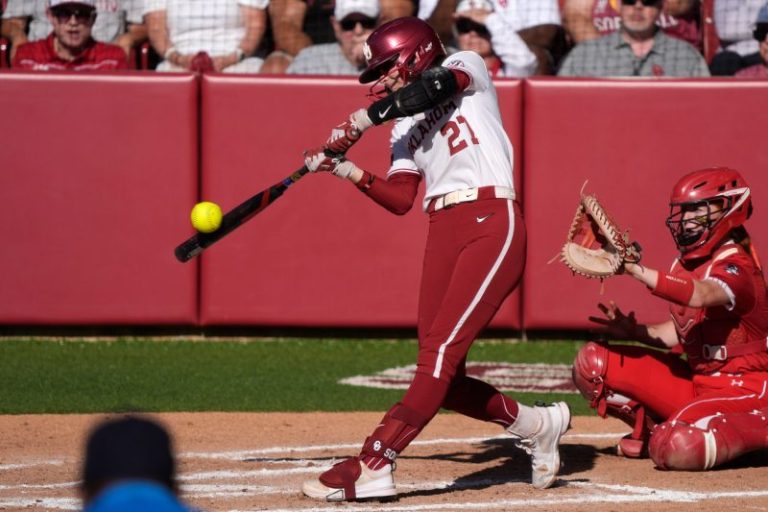
This Sooners team might not be quite as dominant as some of its recent championship squads, but it finds ways to win more often than not. It usually starts in the circle with Sam Landry, who is 22-4 with an ERA of 2.00. The sparkplug for the Crimson Tide is freshman sensation Audrey Vandagriff, who bats .406 and has swiped 50 bases.

Friday, May 23

Game 1, 5 p.m., ESPN2

Saturday, May 24

Game 2, 3 p.m., ESPN

Sunday, May 25

Game 3, if necessary.

No. 3 Florida vs. Georgia

The Bulldogs had to go on the road for their regional but overcame Duke in extra innings in an elimination game to earn this date with the archrival Gators. Florida’s Taylor Shumaker (.387, 21 HR, 83 RBI) was named national freshman of the year by Softball America.

Friday, May 23

Game 1, 11 a.m., ESPN2

Saturday, May 24

Game 2, 11 a.m. ET, ESPN

Sunday, May 25

Game 3, if necessary.

No. 4 Arkansas vs. Mississippi

Arkansas overcame an early challenge by Oklahoma State but powered through the remainder of its regional. The catalyst for the Razorbacks is Bri Ellis (.457, 26 HR, 72 RBI), who already has single-season school records in the latter two categories. Ole Miss, however, took two of three from the Razorbacks in Oxford back in March.

Friday, May 23

Game 1, 8 p.m., ESPNU

Saturday, May 24

Game 2, 9 p.m., ESPN or ESPN2

Sunday, May 25

Game 3, if necessary.

No. 5 Florida State vs. No. 12 Texas Tech

The Seminoles and Red Raiders take the field first this weekend. FSU shortstop Isa Torres is a textbook leadoff hitter with a .448 batting average and 70 runs scored. But she and the ‘Noles will be up against one of the nation’s most dominant pitchers in Red Raiders junior NiJaree Canady, who has struck out 272 over 191 innings.

Thursday, May 22

Game 1, 7 p.m., ESPN2

Friday, May 23

Game 2, 3 p.m., ESPN2

Saturday, May 24

Game 3, 7 p.m., if necessary.

No. 6 Texas vs. No. 11 Clemson

National runners-up in Oklahoma City a year ago, the Longhorns look to take the next step on their redemption tour. If they do it, it will likely be battery mates Teagan Kavan and Reese Atwood setting the tone. The Tigers feature ACC pitcher of the year Reese Basinger and do-everything freshman Macey Cintron.

Thursday, May 22

Game 1, 9 p.m., ESPN2

Friday, May 23

Game 2, 9 p.m., ESPN2

Saturday, May 24

Game 3, 9 p.m., if necessary.

No. 10 Tennessee vs. Nebraska

The star power in this series makes it arguably the most compelling of the weekend. In this corner, the Volunteers have the nation’s ERA leader in Karlyn Pickens with a minuscule 0.90 average through 186.1 innings pitched. The Cornhuskers, meanwhile, have two-way standout Jordyn Bahl, who can take over a game with her arm and her bat.

Friday, May 23

Game 1, 7 p.m., ESPN2

Saturday, May 24

Game 2, 5 p.m., ESPN

Sunday, May 25

Game 3, if necessary.

No. 8 South Carolina vs. No. 9 UCLA

The overall strength of the SEC likely helped the Gamecocks’ case for hosting privileges for this series that could certainly go either way. Jori Heard and the rest of the South Carolina pitching staff will have their hands full with the Bruins’ one-two power punch of Megan Grant (25 HRs) and Jordan Woolery (22).

Friday, May 23

Game 1, 1 p.m., ESPN2

Saturday, May 24

Game 2, 1 p.m., ESPN

Sunday, May 25

Game 3, if necessary.

This post appeared first on USA TODAY

Dallas Stars coach Peter DeBoer noted before Game 1 that during last year’s Western Conference finals, his team went 0-for-14 on the power play against the Edmonton Oilers.

It looked like that was going to be a problem again Wednesday after not much was going on with the man advantage in the first 1½ opportunities.

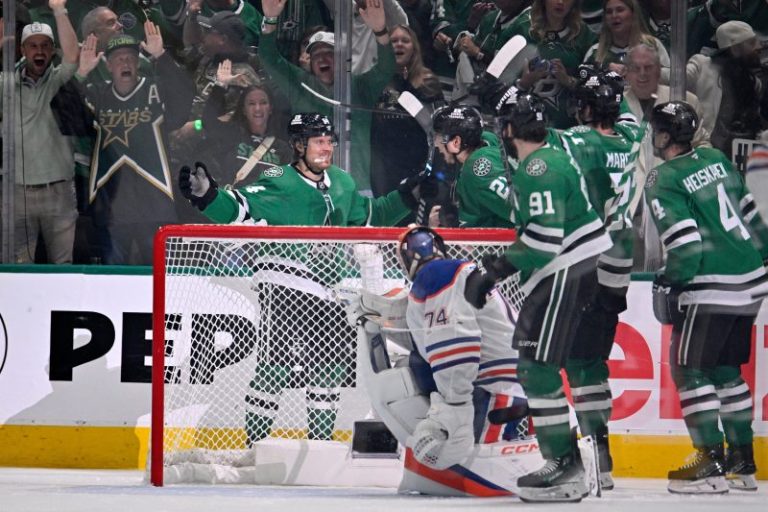
But the Stars had 58 seconds remaining on a carry-over power play heading into the third period. Miro Heiskanen scored and Dallas turned it on, scoring five unanswered goals (three on the power play) in the period for a 6-3 victory and another come-from-behind win.

“I’m happy for our power play,” DeBoer said. “It took a lot of heat last year at this point of the year. It was a difference tonight for us.”

The turnaround was stunning, considering that Edmonton led 3-1 going into the final period and was dominating play. The Stars were unable to contain Leon Draisaitl (three points) or the speed of Connor McDavid (two points) in the first two periods.

Mikael Granlund and Matt Duchene followed Heiskanen with power-play goals and Tyler Seguin scored his second goal of the game before Esa Lindell added an empty-netter.

“We have a lot of belief in us,” Seguin said. “We never really think we’re fully out of a game.”

Duchene, snake-bitten in the playoffs after a 30-goal regular season, hit teammate Roope Hintz with a shot on a wide-open net before picking up the rebound and getting his first goal of the postseason.

“That one bounced for me for tonight,” Duchene said. “Hopefully, there’s more of that to come and less of hitting my own teammate.”

Oilers goalie Stuart Skinner, coming off back-to-back shutouts, gave up five goals on 27 shots.

‘They’re competing to get goals, get guys around the net and make my life a lot harder,’ he said. ‘I just got to fight through that. I’ve got to battle them as much as battling for sight of the puck.’

The Stars won Game 1 for a second consecutive series after having lost their previous eight.

USA TODAY provided live updates from Game 1. Highlights:

Stars vs. Oilers highlights

Game recap

Stars-Oilers final score: Stars 6, Oilers 3

Stunning turnaround after the Stars trailed 3-1 heading into the third period. Their power play came to life and they scored five unanswered goals for a 1-0 lead in the Western Conference final.

Stars-Oilers score: Stars pile on

Esa Lindell scores into an empty net. Five unanswered goals. Stars 6, Oilers 3

Stars-Oilers score: Tyler Seguin scores again

Seguin deflects in a Sam Steel backhander. Stars 5, Oilers 3

Oilers go on power play

Lian Bichsel is called for hooking. Edmonton already has a power-play goal in the game. But not this time. Dallas kills the penalty, allowing only one shot.

Stars-Oilers score: Dallas strikes again on power play

That’s three consecutive power-play goals for Dallas and three goals in less than six minutes. Matt Duchene gets his first of the playoffs (after 30 in the regular season). Roope Hintz and Mikko Rantanen (20 point of the playoffs) get the assists. Stars 4, Oilers 3

Stars back on power play

Evander Kane is called for high-sticking.

Stars-Oilers score: Mikael Granlund ties it up

A second power-play goal for the Stars this period. Granlund rips a shot from the faceoff circle into the net. Officials initially waved it off but it went off the back bar, not the crossbar. Stars 3, Oilers 3

Stars go on power play

Corey Perry is called for high-sticking.

Stars-Oilers score: Miro Heiskanen scores on power play

Heiskanen scores from the point at 32 seconds as Mason Marchment screens Stuart Skinner. The power-play goal is a good sign for the Stars, who didn’t get one in the 2024 conference finals. Oilers 3, Stars 2

Third period underway

Stars start off the period with an abbreviated power play.

End of second period: Oilers 3, Stars 1

The Oilers once again are the more dangerous team, and they score twice on goals by Ryan Nugent-Hopkins and Evan Bouchard. The Stars can’t handle Connor McDavid’s speed as he enters the zone. He has two points, Leon Draisaitl has three and Nugent-Hopkins has two. Dallas forwards Matt Duchene, Wyatt Johnston and Jason Robertson are minus-2 each. Stars coach Peter DeBoer is juggling his lines a little with Dallas unable to mount much of an attack.

Stars go on power play

Brett Kulak’s second penalty of the game. Not much going on again, but 58 seconds will carry into the third period.

Oilers go on power play

Thomas Harley off for interference. The Oilers scored on their first opportunity, but Dallas kills this one.

Stars-Oilers score: Evan Bouchard adds to Edmonton lead

Evan Bouchard takes a pass, skates to the left faceoff circle and beats Jake Oettinger at 7:48. Leon Draisaitl picks up his third point of the game and Ryan Nugent-Hopkins his second. Oilers 3, Stars 1

Stars-Oilers score: Edmonton connects on power play

A Connor McDavid centering pass deflects off a Stars defender to Ryan Nugent-Hopkins, who scores to give Edmonton the lead at 6:08. Oilers 2, Stars 1

Oilers go on power play

Mason Marchment trips Zach Hyman. Oilers had four power-play goals in the 2024 conference final.

Second period underway

Game tied at one.

End of first period: Stars 1, Oilers 1

The Oilers have the more dangerous chances in that period. Connor McDavid is flying. Leon Draisaitl factors in both goal. He keeps the puck alive in the Dallas zone before scoring the opening goal. But he gives up the puck, leading to a Tyler Seguin tying goal on a breakaway. Shots are 12-9 Oilers and hits are even at 12.

Stars-Oilers score: Tyler Seguin ties it up

Seguin grabs the puck after a Leon Draisaitl giveaway and beats Stuart Skinner on a breakaway at 15:22. That ends Seguin’s 10-game goal drought and is the first goal allowed by Skinner since Game 3 of the second round.

Stars-Oilers score: Leon Draisaitl goal lifts Edmonton

The Oilers always put Connor McDavid and Leon Draisaitl out after the team kills a penalty, and they connect for the opening goal. Draisaitl’s shot beats Jake Oettinger to the far side at 10:19. Oilers 1, Stars 0

Stars go on power play

Brett Kulak is called for hooking. Stars power play is clicking at 30.8%. Dallas didn’t get a power-play goal in his last year’s series against the Oilers. Edmonton kills it off. No shot attempts for Dallas.

Edmonton Oilers chance

Connor McDavid uses his speed to get around the Stars defense but is stopped by Jake Oettinger. The Stars goalie stops Zach Hyman’s rebound.

Game underway

Second year in a row these teams are meeting in the conference finals. Dallas going 12 forwards, six defensemen after going recently with 11 and 7.

Starting lines

Strength vs. strength. Edmonton starting the Connor McDavid line. Dallas countering with the Mikko Rantanen line.

What time is Stars vs. Oilers NHL playoff game?

Game 1 of the NHL’s Western Conference finals between the Dallas Stars and Edmonton Oilers begins Wednesday night at 8 p.m. ET at American Airlines Center in Dallas.

How to watch Stars vs. Oilers NHL playoff game: TV, stream

  • Time: 8 p.m. ET/7 p.m. local
  • Location: American Airlines Center (Dallas)
  • TV: ESPN
  • Stream: ESPN+, Fubo

Watch Game 1 of the Stars-Oilers series on Fubo

Dallas Stars lineup

Edmonton Oilers lineup

Connor Brown taking warmups

Brown, a game-time decision, is listed as playing on the NHL roster report.

Goaltending matchup

Edmonton’s Stuart Skinner (2-3, 3.05 goals-against average, .884 save percentage) has back-to-back shutouts. Dallas’ Jake Oettinger (8-5, 2.47, .919) has won six consecutive home games.

Stars seek better power-play numbers this year

A big factor in the Oilers’ win in the 2024 Western Conference finals: Edmonton went 14-for-14 on the penalty kill vs. Dallas. The Stars, though, enter this year’s series with the top playoff power play (30.8%) among the four conference finals teams. Roope Hintz leads the way with three power-play goals. Mikko Rantanen, who was acquired at the trade deadline, and Thomas Harley are tied with six points on the power play.

Stars still deciding defense/forward split vs. Oilers

Coach Peter DeBoer said Wednesday morning he hadn’t decided whether he’ll stick with seven defensemen and 11 forwards in games against the Oilers. He did that in the last round when Miro Heiskanen returned from injury, so the defenseman didn’t have to play big minutes right away. Forward Mikko Rantanen got double-shifted.

Oilers’ Connor Brown is game-time decision

Oilers forward Connor Brown is a game-time decision, coach Kris Knoblauch said.

If Brown (undisclosed injury) can’t go, Viktor Arvidsson would get into Game 1 after missing the past two games.

“I have no hesitation to have him in the lineup,” Knoblauch said of Arvidsson.

Western Conference finals predictions

Predictions from USA TODAY staffers:

Jason Anderson: Stars in 6. Both teams have players lighting it up on the offensive end in the postseason. Mikko Rantanen has 19 points for Dallas, while Connor McDavid and Leon Draisaitl have combined for 25 assists. It’s at the other end where each team has had issues, with Edmonton’s goalies combining for a .886 save percentage. The Stars have given up a whopping 408 shots in the playoffs, but Jake Oettinger has been up to the challenge, leading the league in some key underlying metrics for goaltenders. Expect plenty of goals in this series, but ultimately Dallas moves on.

Mike Brehm: Stars in 7. The Oilers are deeper than they were last season, but so are the Stars, with the additions of forwards Mikko Rantanen and Mikael Granlund. Defenseman Thomas Harley took a big jump when Miro Heiskanen was hurt, and now Heiskanen is back. This series will go the distance because Oilers defenseman Mattias Ekholm will return at some point. The Stars get the edge in the series finale because they’re at home, and coach Peter DeBoer is 9-0 in Game 7.

Jace Evans: Oilers in 6. Seeking to erase last season’s heartbreak, Edmonton has some team of destiny vibes. They looked completely on the ropes against the Kings in the first round only to rally in wild fashion and win six consecutive games after switching to Calvin Pickard in net. After Pickard was injured, Stuart Skinner got his job back and responded with two consecutive shutouts to oust the Golden Knights. You need some magic to win the Stanley Cup. It certainly feels like the Oilers have it. (And having Connor McDavid and Leon Draisaitl also helps.)

This post appeared first on USA TODAY

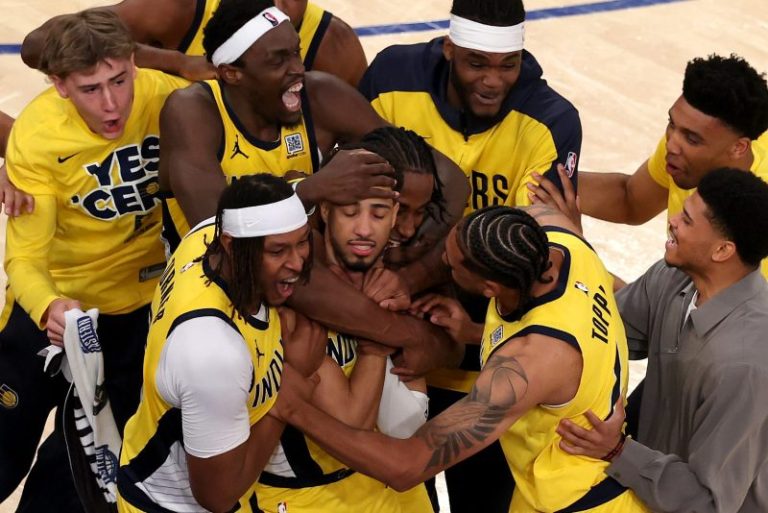
NEW YORK – Tyrese Haliburton scored 31 points, posted 11 assists and made a game-tying step-back jumper to force overtime, and Aaron Nesmith scored 30 points with eight 3-pointers to key the Pacers’ 138-135 overtime victory in Game 1 of the Eastern Conference Finals at Madison Square Garden.

Game 2 is Friday in New York (8 p.m. ET, TNT).

Andrew Nembhard scored seven overtime points and finished with 15. Pascal Siakam scored 17 points and center Myles Turner had 14. Jalen Brunson led the Knicks with 43 points and Karl-Anthony Towns added 35.

Here are three observations:

Andrew Nembhard keys Pacers in overtime

Andrew Nembhard had just eight points on 3-of-6 shooting in regulation and he struggled with foul trouble, but as he tends to do, he stepped up in overtime and helped the Pacers win a game they trailed by 17 points in the fourth quarter.

The Knicks scored the first four points in overtime, but Nembhard hit a 3-pointer and then hit two more buckets, found Obi Toppin for a key dunk in the final minute and deflected the ball off Jalen Brunson with 20 seconds left. He scored seven of the Pacers’ 13 overtime points to make sure their wild comeback in the fourth quarter wasn’t in vain.

Aaron Nesmith 3s, Tyrese Haliburton step-back force OT

The Pacers seemed to be finished when they allowed the Knicks to go on a 14-0 run while Brunson was on the bench with five fouls early in the fourth quarter. They fell behind by as many as 17 points in the fourth, but just as all hope seemed lost, Nesmith went wild from beyond the 3-point arc and willed the Pacers back into it.

The Knicks were up 113-98 with 4:55 to go when Nesmith hit the first of six straight 3-pointers, somehow keeping the Pacers alive with a chance in the final seconds. They were down three with the ball with 13 seconds left when the Knicks’ OG Anunoby fouled Nesmith before he could get off a score-tying 3-pointer. Nesmith made both free throws. Anunoby was fouled on the ensuing possession but made just one of two. The Knicks stopped the Pacers’ initial advance but Haliburton hit a step-back jumper that got an incredible bounce and somehow went in. The Pacers initially thought they had won. However, it was ruled that Haliburton’s foot was on the 3-point line and the shot tied the score rather than winning the game at the buzzer, forcing overtime.

Pacers show no early rust

If there was any question that the eight days the Pacers had between games cost them any rhythm, they answered it in the first 5:30 of the first quarter. They made nine straight shots in that stretch to start the game and 11 of their first 12 field goals, taking a 27-20 lead with 4:45 to go in the first. They cooled some in the period but not much, finishing 14 of 19 from the floor, 3 of 7 from 3 and 3 of 4 at the line in the first period to post 34 points, 1.49 per possession.

The Pacers got no separation in the period as the Knicks scored 36 points, shooting 15 of 23 from the floor and 4 of 6 from 3, for 1.59 points per possession. But the two teams spent much of the rest of Game 1 going shot for shot and the Pacers established out of the gate that time off hadn’t been a problem. After having already won last year’s Second-round series here, they aren’t intimidated by Madison Square Garden.

This post appeared first on USA TODAY
  • The SEC cares so deeply for its rivalries. Enough to keep secondary rivalries on the long-term schedule? We’ll see.
  • If SEC persists long term with eight-game schedule, that puts secondary rivalries like Auburn-Georgia and Alabama-Tennessee in jeopardy. A nine-game schedule format allows room to keep more key games.
  • The ‘Deep South’s Oldest Rivalry’ is long on history, but other rivalries have been much better for the past decade.

The SEC cares so deeply for its rivalries that it once built its interdivisional schedule model around preserving the Auburn-Georgia and Alabama-Tennessee games. And those matchups don’t even rank as the No. 1 rivalry for those schools.

Then, the SEC built an eight-game conference schedule model for the 2024 and 2025 seasons that retained primary and prominent secondary rivalries after the conference expanded to 16 teams.

The two-year schedule format to accommodate Oklahoma and Texas joining the league served as a stop gap while conference brass continued to mull a long-term schedule plan.

SEC officials have, for years, debated increasing from an eight- to a nine-game conference schedule. The league membership consistently decided to stay at eight.

The SEC must soon consider that age-old question again, with a scheduling solution needed for 2026 and beyond.

The SEC spring meetings, which begin May 27, offer a stage for the schedule debate to revive. Oklahoma and Texas could help tip the vote to approve expansion.

The rivalry tentacle attaches to the debate. A nine-game conference schedule offers avenues to annually retain not only primary rivalries, but also secondary rivalry games. Continuing with an eight-game schedule probably would mean dialing back secondary rivalries that the SEC steadfastly protected for so long.

Some matchups like the Iron Bowl, Egg Bowl and Red River are non-negotiable. They’re going nowhere, no matter the format. The importance of other rivalries varies based on factors such as your age, where you’re from, and the extent to which history matters to you.

Here’s how I rate the conference’s 10 best rivalries, some of which likely would go on the chopping block if the eight-game schedule persists in perpetuity.

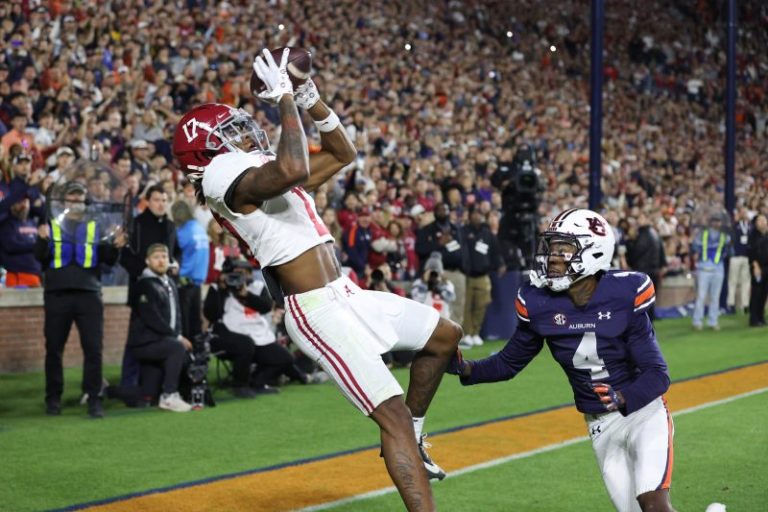
1. Alabama-Auburn (Iron Bowl)

Instate rivalries hit differently, especially when that state is football-crazed Alabama. As an Auburn fan once said, the Iron Bowl isn’t life or death. It’s much bigger than that. There been national title implications and memorable moments that serve to add to the lore.

2. Oklahoma-Texas (Red River)

When the SEC added Oklahoma and Texas, the conference didn’t just gain two iconic brands, it acquired one of college football’s best rivalries. Most games are better when played on college campuses, but this one at the Cotton Bowl during the State Fair of Texas stands as an exception to that rule.

3. Mississippi-Mississippi State (Egg Bowl)

Mississippians’ chosen side in this rivalry points not just to their allegiance, but to their identity. Opposing sides don’t just dislike each other. They despise each other. This rivalry often features a dash of zaniness. When Ole Miss won the game in 1926, fans of both teams stormed the field. Rebels fans went for the goal posts, and Mississippi State (then Mississippi A&M) fans rushed to fight Ole Miss fans.

4. Florida-Georgia

This rivalry touts its own hall of fame dedicated to the series. The longtime designation of this rivalry as “The World’s Largest Outdoor Cocktail Party” sums up the vibe for this game played in Jacksonville, Florida.

5. Texas-Texas A&M

Thanksgiving week felt incomplete during the 12 seasons this rivalry went dormant after the Aggies left the Big 12 for the SEC. The SEC’s addition of Texas rekindled the series. This game packs its stiffest punch when scheduled for Black Friday, like it is this year. The Texas fight song and the Aggie War Hymn each includes a line needling their in-state rival.

6. Alabama-LSU

LSU counts as many rivals as any SEC team, but none is more collectively hated than Alabama. You can thank Nick Saban (and copious amounts of liquor in Louisiana) for that. LSU fans even burned Saban in effigy in 2008. Vitriol for Saban aside, this game became one of the nation’s most influential clashes throughout the 2010s.

7. Auburn-Georgia

As the “Deep South’s Oldest Rivalry,” no SEC series touts more history. Georgia’s stretch of 11 victories in the past 12 matchups dulled the luster of a series that once delivered such thrills as the “Prayer at Jordan-Hare.” Throughout its history, this ranks as one of the SEC’s most evenly matched rivalries.

8. Alabama-Tennessee

Saban’s dominance took some shine off this series, but the Vols renewed vigor to “The Third Saturday in October” after they upset Alabama in 2022, then tore down the goal posts and baptized them in the river. This rivalry features a distinct smell. When cigar smoke wafts through the stadium, you know the outcome has been decided.

9. LSU-Mississippi (Magnolia Bowl)

The rivalry that supplied Billy Cannon’s Halloween run and “The Night the Clock Stopped” found its peak stride the past few seasons. Fans from the winning side stormed the field in each of the past three years. This rivalry is not as heated as some others, but its games usually supply rich entertainment value.

10. Florida-Tennessee

This rivalry lacks the tradition of others, but at its crescendo in the 1990s and early 2000s, this September clash charted the course for SEC supremacy. The game peaked when it pitted Steve Spurrier against Phillip Fulmer, but, even now, animosity lingers between these fan bases.

Blake Toppmeyer is the USA TODAY Network’s national college football columnist. Email him at BToppmeyer@gannett.com. Follow him on X @btoppmeyer.

This post appeared first on USA TODAY
In this video, Frank dives into some of his favorite features on StockCharts.com. He then dissects the S&P 500 and Bitcoin price action, before exploring the the XLK Technology ETF’s explosive move off the lows. He also highlights a few recent trade ideas and setups worth watching. Get trade ideas and chart setups worth watching in today’s technical review.

This video originally premiered on May 20, 2025.

You can view previously recorded videos from Frank and other industry experts at this link.

Despite economic and geopolitical upheaval, 2024 was relatively calm for platinum-group metals (PGMs).

In its new PGMs report, research firm Metals Focus notes that all five PGMs — platinum, palladium, rhodium, iridium and ruthenium — ended 2024 in physical deficit, marking a pivotal year of stabilization and supply strain.

With tightening mine output, rising hybrid vehicle demand and industrial shifts driving ruthenium and iridium gains, 2025 is set to test the sector’s resilience amid constrained supply and cautious investor sentiment.

As the sector looks to 2025, the outlook remains constrained but cautiously optimistic.

PGM supply constraints widen deficits

While all five PGMs were in physical deficit last year, overall mine supply did edge on 2 percent year-on-year.

However, Metals Focus notes that this figure masks underlying weaknesses.

Much of the gain stemmed from temporary factors, such as the release of work-in-process stockpiles, particularly in South Africa, which accounted for a significant portion of the PGMs inventory processed during the year.

Platinum mine supply rose 3 percent to 5.77 million ounces, mainly due to output from South Africa, whose production exceeded 4 million ounces for the first time since 2021. Yet stripping out the one-time work-in-process boost, global production was more than 1 million ounces below the 2010 to 2021 average of 14.95 million ounces.

For palladium, mine supply rose less than 1 percent, bolstered by modest gains in Russia and stock drawdowns in South Africa, even as Canadian output dropped 10 percent due to price pressure.

The report notes that production cuts in high-cost regions were inevitable, owing to closures like Sibanye-Stillwater’s (NYSE:SBSW) shutdown of Stillwater West and curtailed operations at East Boulder.

In total, platinum ended the year with a second consecutive shortfall. Palladium was short by 407,000 ounces, continuing a near-decade trend of tightness. Rhodium, ruthenium and iridium also closed the year with deficits of 178,000 ounces, 219,000 ounces and 49,000 ounces, respectively — an across-the-board supply squeeze not seen in years.

Demand for PGMs shifts under electrification and industrial dynamics

On the demand side, the automotive sector — the dominant consumer of PGMs — saw a 4 percent contraction in fabrication demand to 12.14 million ounces, the first such drop since the pandemic year of 2020.

The continued rise of battery electric vehicles (BEVs), which do not use PGMs in their drivetrains, contributed to a 2 percent decline in catalyzed vehicle output. Although BEV growth slowed to 9 percent — its weakest since the technology gained mainstream traction — its market share still rose from 12 percent to 13 percent.

Hybrids, however, offered a bright spot for PGMs, with production jumping 28 percent and often requiring heavier PGM loadings than traditional internal combustion engine (ICE) vehicles. This helped cushion demand for autocatalysts, particularly platinum, which saw slower rates of palladium substitution as the price gap narrowed.

Platinum demand, in contrast, overall fell by 2 percent to 7.79 million ounces. Automotive and industrial usage were also dragged down by a 27 percent plunge in chemical applications, particularly in China’s paraxylene sector.

But jewelry demand surged 9 percent — its strongest growth since 2019 — driven by India’s booming export orders and Japanese consumers shifting from gold due to its soaring price.

Ruthenium and iridium, the lesser-known PGMs, also saw rising industrial relevance.

Ruthenium demand surged by 20 percent — reaching its highest level since 2006 — fueled by China’s caprolactam chemical sector and artificial intelligence-driven growth in hard disk drive production.

Meanwhile, iridium demand jumped 15 percent to a record 298,000 ounces, driven by ballast water treatment systems, acetic acid output, and early stage copper foil applications.

Palladium, long buoyed by ICE reliance, saw total demand fall 4 percent to 9.75 million ounces.

Automotive fabrication dropped 5 percent, with thrifting and substitution playing an increasing role, though the latter slowed due to narrowing discounts with platinum. Industrial use remained stable, down less than 1 percent, with electronics up 1 percent amid recovering consumer tech and AI hardware growth.

Recycling gains traction, but can’t fill supply gap

Secondary supply helped offset falling mine output, with autocatalyst recycling up 9 percent year-on-year.

Metals Focus largely attributes this gain to higher vehicle scrappage rates, improved new car sales and aggressive recycling incentives in China. Still, recycling fell short of restoring equilibrium.

Platinum secondary supply rose just 1 percent as jewelry recycling remained weak, with Chinese and Japanese flows down due to sustained low prices and reduced scrap availability.

Palladium fared better with a 9 percent increase — its strongest growth in five years — again led by China, where palladium dominates catalytic converter formulations.

Yet, even with these gains, total recycling volumes were insufficient to offset underlying shortfalls. Jewelry scrap fell by 29 percent for platinum and 45 percent for palladium compared to 2021, underscoring a structural shift in the recycling base amid changing consumer behavior and metal substitution.

PGMs prices stabilize, but caution prevails

PGMs prices stayed fairly in 2024, with volatility restrained.

Platinum traded within a tight US$850 to US$1,100 per ounce band, hovering mostly from US$900 to US$1,000.

Palladium, despite ongoing bearish sentiment, found support at US$900 per ounce, while rhodium stabilized around US$4,400 per ounce after collapsing from highs above US$29,000 in 2021. Meanwhile, iridium fell 12 percent in price over the year, though bargain hunters helped maintain a floor around US$4,000 per ounce.

Ruthenium rebounded 24 percent from September lows, ending the year supported by robust Chinese demand.

While the PGMs markets appear to be finding their bottom, the Metals Focus report emphasizes that the risk of supply squeezes and price spikes remains.

Indeed, short positioning on the CME contributed to sporadic rallies, especially for palladium. Net managed money positions averaged 1.05 million ounces short for the year, peaking at 1.63 million ounces in August.

Metals Focus’ 2025 PGMs outlook

Looking ahead, 2025 is expected to continue many of 2024’s trends.

Physical deficits will persist, particularly in rhodium, ruthenium, and platinum. Above-ground stocks (AGS) remain elevated for platinum and palladium, muting potential price rallies, but continued mine cutbacks could shift this balance over time.

Forecasts suggest platinum will average US$970/oz, up slightly from 2024. Palladium is expected to average US$930, down 5 percent year-on-year, while rhodium may rise 8 percent to US$5,000, supported by its deficit and scarce above-ground reserves.

Ruthenium is forecast to jump 26 percent to US$550, with iridium expected to average US$4,100, a 14 percent drop driven largely by 2024’s elevated base.

In sum, 2024 marked a transitional year for the PGMs—one of normalization rather than expansion. Supply remains tight, demand is recalibrating in the face of technological shifts, and investors are returning cautiously.

Whether 2025 brings further recovery or renewed disruption for the collective will depend not just on markets—but on mines, metals, and momentum-shifting market sentiment.

Securities Disclosure: I, Giann Liguid, hold no direct investment interest in any company mentioned in this article.

This post appeared first on investingnews.com

In the absence of unified federal legislation on cryptocurrencies, New York is establishing its own comprehensive regulations for the sector as it looks to become the world’s crypto capital.

Adrienne Harris, superintendent of the New York Department of Financial Services (DFS), is playing a key role in this endeavor, and she says her approach is grounded in experience, not ideology.

“I have never been a believer that you should have ideology in financial regulation,” Harris said during a discussion at last week’s Consensus conference, held from May 14 to 16 in Toronto.

“I really am a firm believer that you can protect consumers and markets, look after the safety and soundness of companies and be good for business all at the same time. And we really seek to prove that out every day at DFS.”

Appointed in 2021, Harris described her stints in big law, the US Department of the Treasury, the Obama White House, Silicon Valley and academia. Her influence as a regulator has arguably been most deeply felt in crypto, where New York’s licensing regime — particularly its much-discussed BitLicense — has served as both a gatekeeper and a benchmark.

“There is unnecessarily tough, and then there’s necessarily tough,” Harris explained. “I think prior to me and my team coming in, things were probably unnecessarily tough … the team was under-resourced. There were maybe 30 people in the crypto unit. Now we have 60 people that are dedicated to virtual currency every day, all day.”

Under Harris’ leadership, the DFS has implemented an applications manual, instituted pre-application meetings and issued nine pieces of regulatory guidance. These reforms aim to demystify a process long criticized as opaque.

And while the BitLicense remains difficult to obtain, Harris believes the outcome justifies the rigor: “FTX, Voyager and Celsius didn’t pass our test, and therefore couldn’t do business in New York.”

This tough-but-fair regulatory stance has elevated New York’s position not only domestically, but also globally.

Even with various international counterparts, Harris told the Consensus audience that New York has become “the gold standard” in how virtual currencies are regulated. That international recognition is becoming increasingly formalized through initiatives like the DFS’ transatlantic regulatory exchange program with the Bank of England.

“They’ve sent us some senior staff. We’ve sent them some senior staff. It was really an arm-wrestling match to see who was going to get to move to London for six months to a year,” Harris joked. The program, which focuses on payments and cryptocurrencies, is already expanding to include other regulators in Europe and Asia.

Closer to home, Harris said the DFS is also working closely with Congress on stablecoin legislation.

“There isn’t a version of any of those bills — be it House or Senate, Rs or Ds — that don’t come to me and to the team to say, ‘Give us your feedback, give us your technical assistance, your insights,’” she said.

The DFS has already pioneered its own stablecoin guidelines, which require that any licensed stablecoin in New York be fully backed by a reserve of assets. That initiative, like much of DFS’ crypto framework, has been driven by a regulatory unit that Harris described as perhaps the largest of its kind anywhere in the world.

“We have folks that came from the (US Federal Reserve), we have cryptographers, we have financial crime experts … we have some real sort of crypto bros on the team. So it’s a great mix of expertise.”

Despite building out that workforce to 60 full-time crypto regulators, Harris admitted that resource constraints remain.

She noted that the DFS has hired more than 600 people across the department during her tenure and continues to recruit — especially amid talent shifts from federal agencies.

The result of all this work, Harris argued, is a regulatory environment that fosters innovation rather than hinders it.

“It used to be that people would say the regulations stifled that ecosystem, that innovation. But what we’ve learned over time is that that clarity, that certainty, that transparency really provides a fertile ground for that innovation,’ she said.

That sentiment is reflected in how regulated firms market themselves abroad. “Our regulated crypto companies market the fact that they are regulated by DFS,” Harris continued. “When they go overseas, they are telling those other regulators, ‘We have a license from DFS.’ And it goes a long way toward growing the ecosystem in New York.”

She also credited state leadership for supporting a dual agenda of consumer protection and economic development, citing New York Governor Kathy Hochul’s ‘steadfast commitment’ to making sure New York is a hub for responsible innovation. This growth aligns with Mayor Eric Adams’ ambition to make New York City the crypto capital not just of the US, but also the world — an aspiration Harris sees as within reach, if not already reality.

“When we think about crypto — having the fastest-growing sector in New York — put that together with the fact that New York is really the financial capital of the world. That is an environment, I think, perfect for the crypto ecosystem.”

Looking ahead, Harris said the DFS will continue on its current path, even as it hopes for stronger federal engagement.

“Hopefully we have federal legislation done, and some of those federal rules will be coming into place,” she said.

“We’re thinking about, of course, (artificial intelligence) and crypto. We’re thinking about deepfakes and market manipulation and crypto, and how those things overlap.”

Securities Disclosure: I, Giann Liguid, hold no direct investment interest in any company mentioned in this article.

This post appeared first on investingnews.com

Thanks to exchange-traded funds (ETFs), investors don’t have to be tied to one specific stock. When it comes to biotech ETFs, they give sector participants exposure to many biotech companies via one vehicle.

ETFs are a popular choice as they allow investors to enter the market more safely compared to investing in standalone stocks. A key advantage is that even if one company in the ETF takes a hit, the impact will be less direct.

All other figures were also current as of that date. Read on to learn more about these investment vehicles.

1. ALPS Medical Breakthroughs ETF (ARCA:SBIO)

AUM: US$80.23 million

Launched in December 2014, the ALPS Medical Breakthroughs ETF tracks small- and mid-cap biotech stocks that have one or more drugs in either Phase II or Phase III US FDA clinical trials. Its holdings must have a market cap between US$200 million and US$5 billion.

There are 100 holdings in this biotechnology fund, with about 60 percent being small- and micro-cap stocks. Its top holdings include Verona Pharma (NASDAQ:VRNA) at a weight of 5.31 percent, Alkermes (NASDAQ:ALKS) at 4.41 percent and Axsome Therapeutics (NASDAQ:AXSM) at 4.24 percent.

2. Tema Oncology ETF (NASDAQ:CANC)

AUM: US$63.67 million

The Tema Oncology ETF provides exposure to biotech companies operating in the oncology industry. It includes companies developing a range of cancer treatments, including CAR-T cell therapies and bispecific antibodies.

Launched in August 2023, there are 52 holdings in this biotechnology fund, of which about half are small- to mid-cap stocks and 4 percent are micro-cap stocks. Among its top holdings are Revolution Medicines (NASDAQ:RVMD) at a 6.05 percent weight, Roche Holding (OTCQX:RHHBF,SWX:RO) at a weight of 5.08 percent and Eli Lilly and Company (NYSE:LLY) at 4.87 percent.

3. Tema GLP-1 Obesity and Cardiometabolic ETF (NASDAQ:HRTS)

AUM: US$51.5 million

Launched in November 2023, the Tema GLP-1 Obesity and Cardiometabolic ETF tracks biotech stocks with a focus on diabetes, obesity and cardiovascular diseases. The fund was renamed on March 25 from Tema Cardiovascular and Metabolic ETF. More than three-quarters of its holdings are based in the US.

There are 47 holdings in this biotechnology fund, with about 75 percent being large-cap stocks and 18 percent mid-cap. Its top holdings are Eli Lilly and Company at a 9.92 percent weight, Abbott Laboratories (NYSE:ABT) at 4.77 percent and AstraZeneca (NASDAQ:AZN) at 4.14 percent.

4. ProShares Ultra NASDAQ Biotechnology (NASDAQ:BIB)

AUM: US$44.19 million

The ProShares Ultra NASDAQ Biotechnology ETF was launched in April 2010 and is leveraged to offer twice daily long exposure to the broad-based NASDAQ Biotechnology Index, making it an ideal choice “for investors with a bullish short-term outlook for biotechnology or pharmaceutical companies.” However, analysts also advise investors with a low risk tolerance or a buy-and-hold strategy against investing in this fund due to its unique nature.

Of the 268 holdings in this ETF, the top biotech stocks in the ETF are Gilead Sciences (NASDAQ:GILD) at a 6.06 percent weight, Vertex Pharmaceuticals (NASDAQ:VRTX) at 5.99 percent and Amgen (NASDAQ:AMGN) at 5.84 percent. Additionally, over a third of its holdings are in United States Treasury Bills.

5. Direxion Daily S&P Biotech Bear 3x Shares (ARCA:LABD)

AUM: US$43.42 million

The Direxion Daily S&P Biotech Bear 3x Shares ETF is designed to provide three times the daily return of the inverse of the S&P Biotechnology Select Industry Index, meaning that it rises in value when the index falls and falls in value when it rises. Leveraged inverse ETFs are designed for short-term trading and are not suitable to hold long-term. They also carry a high degree of risk as they can be significantly affected by market volatility.

The top three life science holdings in this ETF are Exact Sciences (NASDAQ:EXAS) at a weight of 2.23 percent, Alnylam Pharmaceuticals (NASDAQ:ALNY) at a weight of 2.15 percent and Neurocrine Biosciences (NASDAQ:NBIX) at 2.03 percent.

Securities Disclosure: I, Meagen Seatter, hold no direct investment interest in any company mentioned in this article.

This post appeared first on investingnews.com

The NFL unanimously voted to allow its players to participate in flag football at the 2028 Los Angeles Olympics.

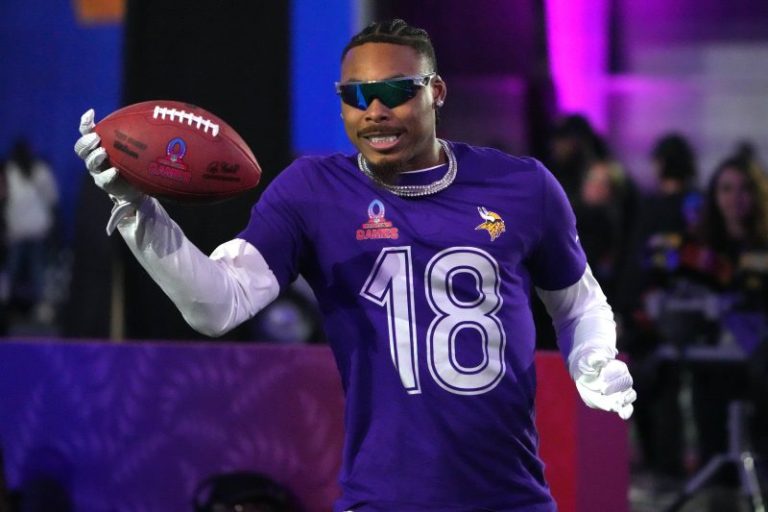
Minnesota Vikings wide receiver Justin Jefferson is among many who are excited about the league’s decision.

‘Just to think about the chances of playing in the Olympics and getting a gold medal, it’s a dream,’ Jefferson told reporters following the Tuesday announcement at the NFL’s spring meeting in Minneapolis.

Jefferson was named one of the NFL’s global flag football ambassadors in 2023. He has since worked with the league to raise the fast-growing sport’s profile.

Even so, the 25-year-old never expected the work to so quickly lead to a potential opportunity to compete in the Olympics.

‘Just reverting back to being a kid and watching the track and field meets, watching basketball win the gold medal – that’s something that as a kid, I always wanted to be a part of,’ Jefferson said. ‘But football wasn’t [global.] So now that we’re expanding the game and we’re going more globally, it’s pretty cool.’

While Jefferson is interested in potentially participating in the 2028 Olympics, he noted he would take time to weigh his decision to play, as the Summer Games aren’t for another three years.

‘I definitely would look forward to it if it came down to it, but that’s something I have to ask myself,’ Jefferson said of participating in the Olympics, per ESPN’s Brooke Pryor.

Jefferson isn’t the only NFL player considering participating in the Olympics. Patrick Mahomes and Tyreek Hill are among the most notable players to express an interest in playing flag football at the Los Angeles Games.

Like Jefferson, those athletes figure to take time to contemplate their decisions, but the NFL’s ruling has at least cleared a path for those stars to compete for spots on the Olympic team if they so desire.

This post appeared first on USA TODAY