Author

admin

Browsing

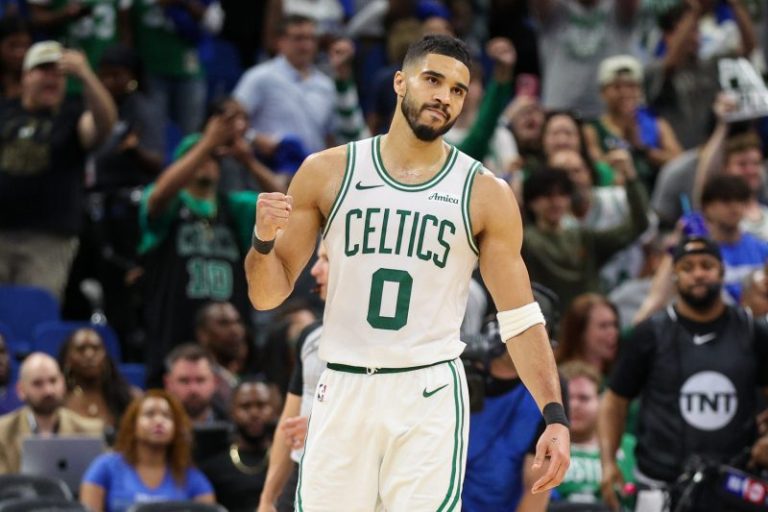
Jayson Tatum collected game highs of 37 points and 14 rebounds to lead the visiting Boston Celtics to a 107-98 victory over the Orlando Magic on Sunday in Game 4 of their NBA Eastern Conference first-round playoff series.

The second-seeded Celtics made 30 of their 32 free-throw attempts in the victory, which gave Boston a 3-1 edge in the best-of-seven series.

Orlando tied the score at 91 on a Wendell Carter Jr. putback with 4:18 to play, but the reigning NBA champions seized control by scoring 10 of the next 11 points.

Four of Boston’s five starters scored at least 18 points. Jaylen Brown had 21 points and 11 rebounds, Kristaps Porzingis tossed in 19 points and Derrick White finished with 18.

Paolo Banchero led seventh-seeded Orlando by scoring 31 points. Franz Wagner added 24 points, six rebounds and seven assists, and Carter finished with nine points and a team-high 11 rebounds.

Cory Joseph (12) and Anthony Black (10) were the other Magic players who scored in double figures.

Boston’s Jrue Holiday missed his second straight game in the series with a hamstring strain. Boston’s reserves were limited to six points, all from Sam Hauser.

The Celtics were 9 of 31 on 3-point attempts (29 percent). Orlando was 8 of 30 from behind the 3-point arc (26.7 percent).

Boston led 32-29 after one quarter and stretched its lead to nine, 42-33, with 7:46 left in the second. Orlando went in front 48-46 on a Banchero layup with 3:17 remaining in the first half. The Celtics finished the quarter on a 7-0 run and had a 53-48 halftime lead.

Orlando edged Boston 27-26 in the third quarter, which left Boston with a 79-75 advantage entering the final 12 minutes. Brown scored 11 of his 21 points in the third.

The Celtics can advance if they win Game 5 on Tuesday night in Boston.

This post appeared first on USA TODAY

It couldn’t have gone much worse for the Milwaukee Bucks on Sunday.

After suffering a 129-103 loss to the Pacers in Game 4 at Fiserv Forum, the Bucks will head to Indiana facing elimination in the first round of the NBA playoffs for the third consecutive season.

There isn’t much time for Bucks head coach Doc Rivers to ponder season-saving solutions. Game 5 is at Gainbridge Fieldhouse in Indianapolis on Tuesday.

The Bucks played without Lillard when he had a blood clot that kept him out a month before returning for Game 2 of this series.

Kevin Porter Jr. provides some hope

If there was any bright spot for the Bucks it was the play of backup guard Kevin Porter Jr.

Lillard left the game with just under six minutes left in the first quarter with a non-contact leg injury. Porter was thrust into a larger role and finished with 23 points, six assists and five rebounds.

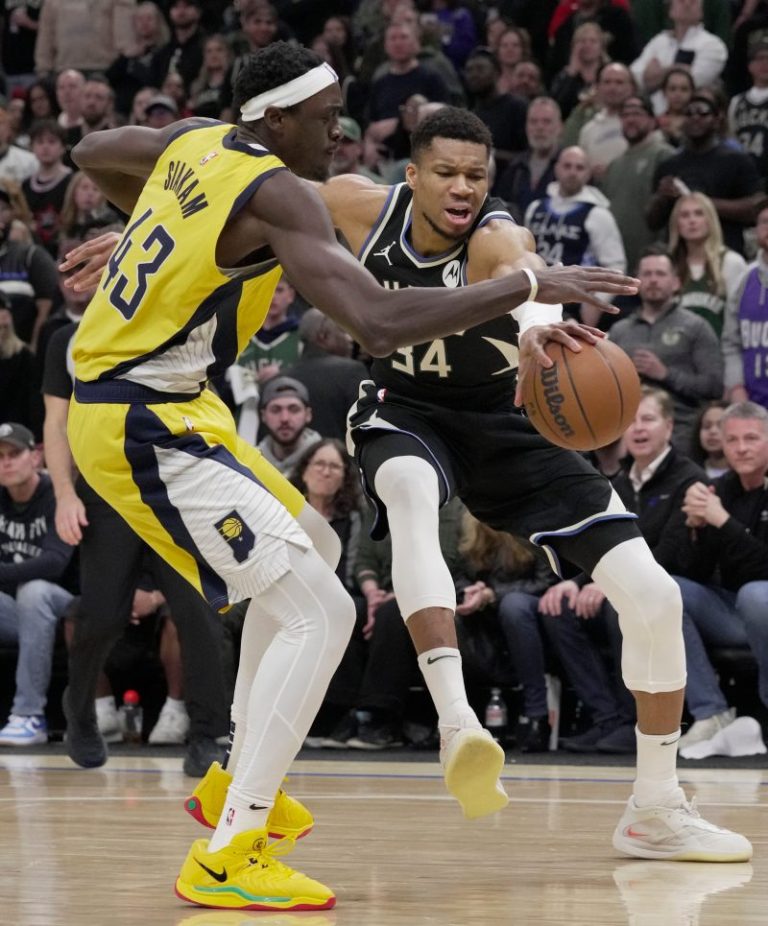
Giannis Antetokounmpo carrying a heavy burden

Giannis Antetokounmpo came into the game averaging 35.7 points and 14 rebounds per game in the series.

He struggled in the first half with eight points on 3-for-10 shooting. But he still finished with 28 points, 15 rebounds and six assists.

The short-handed Bucks couldn’t keep up with the go-go Pacers, who were led by Tyrese Haliburton (17 points and 15 assists) and Myles Turner (23 points).

This post appeared first on USA TODAY

The Zweig Breadth Thrust for the S&P 1500 triggered on Thursday as stocks surged last week. In poker terms, this thrust signals an abrupt participation shift as stocks move from folding to all-in within ten days. A bullish thrust signal is only part of the puzzle. How do we know when this signal fails? Today’s report will look at the ZBT signal in the S&P 1500 and offer an exit strategy. Stick around to the end for an offer to access a fully quantified strategy based on the Zweig Breadth Thrust.

******************************************

TrendInvestorPro subscribers have access to three timely reports. The first report/video explains the mechanics of the original NYSE-based Zweig Breadth Thrust indicator and then shows a modern version using S&P 1500 Advance-Decline Percent. Second, we also presented a trading strategy using ZBT signals for entry and another indicator for exits. The third report/video covers the setups and thrust signals for the percent above SMA indicators. Some of these indicators also triggered this week, but not all. Click here to take a trial and get full access.

*****************************************

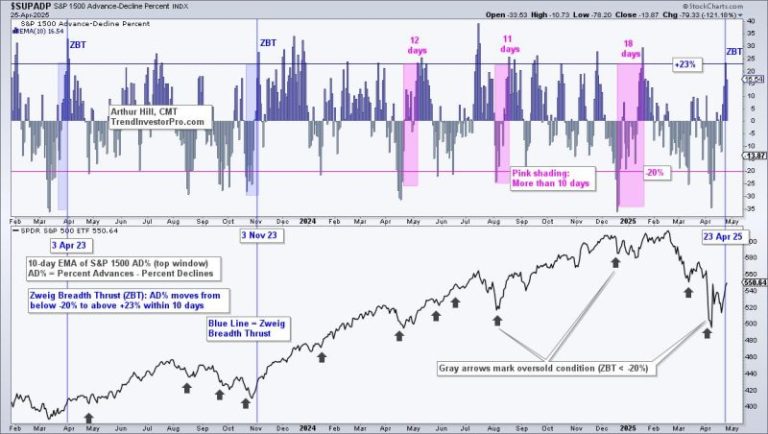
ZBT Triggers for S&P 1500, but Not S&P 500

The first chart shows the Zweig Breadth Thrust (ZBT) indicator triggering bullish as it moved from below -20% to above +23% within ten trading days (blue line). This thrust signal means S&P 1500 advance-decline breadth became oversold with strong selling pressure and then recovered in dramatic fashion with a surge in upside participation. Moreover, this shift occurred within a 10 day window. This reversal of fortune was both sudden and sharp.

Note that the Zweig Breadth Thrust triggered an epic signal in November 2023, and we were on it. See this report (11-November-2023) for details on the original NYSE-based Zweig Breadth Thrust. See this report (18-November-2023) for details on using S&P 1500 Advance-Decline Percent to create a Zweig Breadth Thrust indicator.  

S&P 500 ZBT Falls Short

The ZBT indicator for the S&P 500 did not trigger. The indicator was below -20% on April 8th and did not make it back above +23% within the 10 day window. In fact, the indicator did not make it back above +23% this week. This shows less upside participation within the S&P 500, and more upside participation within the S&P 1500. Small and mid cap breadth outperformed large-cap breadth this week.

Where’s the Exit?

The Zweig Breadth Thrust is only used for bullish signals, which means chartists must find another indicator to signal a failed thrust. As its name implies, a thrust is a strong upward move that is powerful enough to foreshadow an extended advance. The Zweig Breadth Thrust in November 2023 provides a classic example as SPY continued higher, never looking back. The blue line shows when both the S&P 1500 and S&P 500 ZBT indicators triggered in early November.

Chartists looking for an exit strategy can consider prior support levels based on reaction lows (troughs). The horizontal blue lines show these support levels, starting with the late October 2023 low. SPY forged a reaction low in January 2025, hit a new high in February and then broke support to trigger an exit. Current support levels are based on the April lows.

Chartists looking for a more dynamic approach can consider a trend-following indicator, which we will explore next (subscribers). This strategy is fully disclosed and quantified with backtest results. Click here to take a trial and get immediate access! 

/////////////////////////////////////////

Here’s a quick recap of the crypto landscape for Friday (April 25) as of 9:00 p.m. UTC.

Get the latest insights on Bitcoin, Ethereum and altcoins, along with a round-up of key cryptocurrency market news.

Bitcoin and Ethereum price update

Bitcoin (BTC) was priced at US$95,030.17 as markets closed for the day, up 1.8 percent in 24 hours. The day’s range has seen a low of US$94,367.25 and a high of US$95,563.75.

Bitcoin performance, April 25, 2025.

Chart via TradingView.

As the crypto market stages its comeback after weeks below its key resistance level, ARK Invest increased its most optimistic Bitcoin price forecast for 2030 from US$1.5 million to US$2.4 million. The firm attributes this upward revision to growing interest from institutional investors and Bitcoin’s expanding role as ‘digital gold.’ Cointelegraph’s market analysis cites five technical indicators pointing to valuations above US$100,000 by May.

Ethereum (ETH) ended the day at US$1,796.65, a two percent increase over the past 24 hours. The cryptocurrency reached an intraday low of US$1,772.18 and a high of US$1,819.79.

Altcoin price update

  • Solana (SOL) ended the day valued at US$151.24, down 0.1 percent over 24 hours. SOL experienced a low of US$150.90 and peaked at $155.18.
  • XRP traded at US$2.19, reflecting a 0.6 percent decrease over 24 hours. The cryptocurrency recorded an intraday low of US$2.19 and reached its highest point at US$2.22.
  • Sui (SUI), this week’s outperformer, was priced at US$3.60, showing an increaseof 8.8 percent over the past 24 hours. It achieved a daily low of US$3.56 and a high of US$3.73. Sui is up by over 67 percent for the week.
  • Cardano (ADA) was trading at US$0.7127, down 1.7 percent over the past 24 hours. Its lowest price on Friday was US$0.7099, with a high of US$0.7268.

Today’s crypto news to know

ARK Invest sees Bitcoin hitting US$2.4 million by 2030

Cathie Wood’s ARK Invest has revised its already-optimistic bitcoin forecast, now projecting the asset could reach as high as US$2.4 million by 2030 in its most bullish scenario.

The firm’s April 24 report outlines three trajectories: a bear case of US$300,000, a base case of US$710,000, and a sky-high scenario that factors in growing institutional allocations and rapid expansion of on-chain financial services.

The US$2.4 million target assumes bitcoin captures 6.5 percent of the US$200 trillion global investable asset pool, with sustained 60 percent annual growth in BTC-driven financial infrastructure. National reserves, corporate treasuries, and rising adoption in emerging markets also play critical roles in the model, but ARK identifies institutional capital as the most transformative force.

While skeptics still cite volatility and regulatory uncertainty, ARK argues that BTC’s asymmetric upside—especially amid global monetary shifts—makes it a once-in-a-generation investment thesis.

Saylor predicts BlackRock ETF will eclipse all ETFs within a decade

MicroStrategy Chairman Michael Saylor declared that BlackRock’s iShares Bitcoin Trust (IBIT) will become the largest ETF in the world within 10 years, following a record-breaking week where U.S. bitcoin ETFs drew US$2.8 billion in net inflows.

IBIT led the pack with US$1.3 billion, lifting its total assets to roughly US$54 billion and driving daily trading volumes above US$1.5 billion. For context, the current largest ETF, Vanguard’s VOO, commands a market cap over US$593 billion—nearly ten times IBIT’s current size.

Bloomberg ETF analyst Eric Balchunas acknowledged Saylor’s claim wasn’t farfetched, but said IBIT would need to consistently attract US$3 billion US$4 billion per day to overtake VOO within a decade.

The bold prediction reflects mounting institutional appetite for BTC exposure, but also underlines the extraordinary capital movement that would be required for such a paradigm shift in ETF rankings.

$ TRUMP meme coin rallies after president offers private dinner

Donald Trump’s $TRUMP meme coin surged over 70 percent after the president promised an exclusive gala dinner for the token’s top 220 holders, including a VIP reception at his Washington DC golf club for the top 25.

Launched just before Trump’s January inauguration, the coin has exploded in both market cap—now estimated around US$2.5 billion—and political intrigue, reflecting the former president’s aggressive expansion into crypto.

This latest move aims to blend campaign optics with digital asset hype, positioning Trump not just as a “crypto president,” but as an active participant in speculative retail culture.

Critics have slammed the dinner-for-holders gimmick as a political stunt and potential conflict of interest, while others say it signals a new model of decentralized donor engagement.

Regardless, the announcement caused a major pump and reignited interest across meme coin forums and pro-Trump financial channels.

Swiss central bank rejects Bitcoin in reserves

Swiss National Bank Chairman Martin Schlegel flatly rejected proposals to include bitcoin in the country’s currency reserves, stating it ‘cannot currently fulfil the requirements’ needed for official holdings.

At the SNB’s annual meeting in Bern, Schlegel cited bitcoin’s extreme volatility and insufficient liquidity as major concerns, making it unsuitable for maintaining the stability and convertibility of the national reserve portfolio.

This comes as activists behind the ‘Bitcoin Initiative’ mount a constitutional referendum campaign that would legally compel the SNB to hold BTC alongside gold. Luzius Meisser, one of the movement’s leaders, argued bitcoin could prove invaluable in a future marked by declining trust in government debt.

The SNB’s resistance, however, signals continued institutional reluctance to enshrine bitcoin as a strategic monetary asset, even in one of the world’s most financially progressive nations.

CME Group to launch XRP futures

The Chicago Mercantile Group (CME) announced plans to launch XRP futures contracts, according to an announcement by the derivatives marketplace on Thursday (April 24).

“As innovation in the digital asset landscape continues to evolve, market participants continue to look to regulated derivatives products to manage risks across a wider range of tokens,” said Giovanni Vicioso, Global Head of Cryptocurrency Products at CME Group. “Interest in XRP and its underlying ledger (XRPL) has steadily increased as institutional and retail adoption for the network grows, and we are pleased to launch these new futures contracts to provide a capital-efficient toolset to support clients’ investment and hedging strategies.”

Pending regulatory approval, participants will be able to trade micro-sized contracts comprising 2,500 XRP and/or large contracts of 50,000 XRP starting on May 19.

Nasdaq calls for consistent digital asset regulation

A letter to the US Securities and Exchange Commission (SEC) from the Nasdaq exchange on Friday (April 25) called on regulators to apply the same regulatory standards to digital assets as they do to securities, particularly if these assets function as ‘stocks by any other name.’

Nasdaq asserted that the SEC needs to develop a more distinct classification system for cryptocurrencies, suggesting that some digital assets should be categorized as ‘financial securities.’ The exchange contended that these tokens should continue to be regulated in the same manner as traditional securities, irrespective of their tokenized format.

“Whether it takes the form of a paper share, a digital share, or a token, an instrument’s underlying nature remains the same and it should be traded and regulated in the same ways,” the letter said.

The letter also proposed categorizing some cryptocurrencies as “digital asset investment contracts,” which would still be overseen by the SEC, but subject to “light touch regulation”.

Securities Disclosure: I, Giann Liguid, hold no direct investment interest in any company mentioned in this article.

Securities Disclosure: I, Meagen Seatter, hold no direct investment interest in any company mentioned in this article.

Keep reading…Show less
This post appeared first on investingnews.com

Here’s a quick recap of the crypto landscape for Wednesday (April 23) as of 9:00 p.m. UTC.

Get the latest insights on Bitcoin, Ethereum and altcoins, along with a round-up of key cryptocurrency market news.

Bitcoin and Ethereum price update

Bitcoin (BTC) was priced at US$93,529.14 as markets closed for the day, up 2.2 percent in 24 hours. The day’s range has seen a low of US$92,078.75 and a high of US$94,122.31.

Bitcoin performance, April 23, 2025.

Chart via TradingView.

Fueledby the re-entry of institutional investment, the crypto markets appear to be headed towards a robust recovery; however, the long-term trajectory remains to be seen.

Ethereum (ETH) ended the day at US$1,785.14, a 5.2 percent increase over the past 24 hours. The cryptocurrency reached an intraday low of US$1,767.67 and a high of US$1,815.24.

Altcoin price update

  • Solana (SOL) ended the day valued at US$150.05, up four percent over 24 hours. SOL experienced a low of US$149.31 and peaked at $153.47.
  • XRP traded at US$2.22, reflecting a three percent increase over 24 hours. The cryptocurrency recorded an intraday low of US$2.20 and reached its highest point at US$2.29.
  • Sui (SUI) was priced at US$2.98, showing an increaseof 21 percent over the past 24 hours. It achieved a daily low of US$2.89 and a high of US$3.06.
  • Cardano (ADA) was trading at US$0.6981, up 6.3 percent over the past 24 hours. Its lowest price on Wednesday was US$0.6873, with a high of US$0.7138.

Today’s crypto news to know

Bitcoin becomes fifth largest global asset, overtakes Google

Bitcoin has climbed to a market capitalization of US$1.86 trillion, overtaking Alphabet (NASDAQ:GOOGL) to become the world’s fifth-largest asset by market value. The price of Bitcoin surged past US$94,000, helped by easing trade tensions between the US and China and renewed bullish sentiment across tech and risk-on assets.

This marks a symbolic milestone for the cryptocurrency, which has now outpaced several of the world’s most valuable tech giants. Analysts point to Bitcoin’s increasing correlation with macroeconomic tailwinds — such as falling bond yields and speculative interest in risk assets — as drivers of the recent price action.

Its breakout relative to the Nasdaq also suggests growing investor confidence in crypto as a parallel to tech. If Bitcoin maintains this trajectory, some believe it could soon challenge silver’s position as the fourth-largest global asset.

Brandon Lutnick forms new Bitcoin investment vehicle

Brandon Lutnick, son of Howard Lutnick, US secretary of commerce and former Cantor Fitzgerald chair, will launch a listed Bitcoin investment vehicle through a reverse merger with Cantor Equity Partners, a special purpose acquisition company. This is according to a Tuesday (April 22) report from the Financial Times.

The newly established entity, purportedly named Twenty One Capital, will be led by co-founder Jack Mallers, CEO of Bitcoin-focused payments app Strike, and majority owned by Tether (USDT) and cryptocurrency exchange Bitfinex. SoftBank Group (TSE:9984) will also own a ‘significant minority’ stake.

Financial Times sources said Tether will contribute at least US$1.5 billion worth of Bitcoin.

The company will also raise US$385 million through a convertible bond and US$200 million via a private equity placement, which it will use to acquire more Bitcoin. Eventually, SoftBank, Tether and Bitfinex’s investments will be converted from Bitcoin into shares in Twenty One Capital, with a price of US$13 per share for the private placement and US$10 per share for the convertible bond.

According to the report, Twenty One Capital will launch with 42,000 BTC, making it the world’s third-largest Bitcoin reserve. “With a visionary leader at the helm and backing from two renowned industry leaders, Twenty One is designed to help investors capture value from Bitcoin’s growing global demand and increasing institutional adoption,” Lutnick said in a press release on Wednesday. The deal values the new company at US$3.6 billion based on an approximate US$85,000 Bitcoin valuation. As of writing, Bitcoin is valued at US$93,808.31.

Trump backs crypto regulation, Trump Media eyes retail crypto products

During a public appearance, US President Donald Trump called for regulatory certainty in the crypto industry and vowed to provide ‘clear rules of the road’ for digital asset innovation.

His statement coincided with Trump Media & Technology Group’s announcement that it will partner with Crypto.com and Yorkville America Digital to launch retail investment products, including crypto-focused ETFs aligned with Trump’s “America First” platform. The planned offerings aim to capitalize on the president’s growing presence in the digital asset space following prior ventures like Trump NFTs and crypto-affiliated partnerships.

While no official ETF filings have been submitted yet, the initiative signals Trump’s commitment to making crypto a policy priority as part of his economic strategy.

Trump to host dinner for $TRUMP token holders

Trump will host a dinner for the top 220 holders of his $TRUMP token in Washington, DC, on May 22.

News of the event sent $TRUMP’s valuation up by over 55 percent in under an hour. $TRUMP reached US$14.44 at around midday on Wednesday, its highest valuation since mid-February. As of writing, $TRUMP is valued at US$13.46.

Top token holders are required to link their wallets for holding verification. The top 25 holders will gather for a private reception with the president before dinner.

Around 40 million $TRUMP tokens, or roughly 20 percent of the tokens’ circulating supply, were unlocked on April 17; they were valued at slightly above US$300 million at the time.

$TRUMP reached an all-time high of US$75.35 on January 19, according to data from CoinMarket Cap. This was followed by an abrupt reversal and steady decline in Q1 to valuations between US$9 to US$7 in April.

Tesla reports US$951 million in Bitcoin holdings despite earnings miss

Tesla (NASDAQ:TSLA) revealed it continues to hold $951 million worth of Bitcoin on its balance sheet, despite posting weaker-than-expected quarterly revenue of US$19.34 billion.

The automaker’s Bitcoin holdings, totaling 11,509 BTC, remained unchanged during the quarter, with no buy or sell activity recorded. This comes as Bitcoin’s price dipped from late December highs, impacting Tesla’s valuation of its digital asset portfolio under the new Financial Accounting Standards Board rules.

These rules now require corporations to mark digital assets to market on a quarterly basis, increasing transparency but also exposing earnings to crypto market volatility. Tesla’s crypto exposure, while relatively small compared to its core business, still makes it one of the top public holders of Bitcoin globally.

Riot Platforms secures US$100 million credit facility backed by Bitcoin

Riot Platforms (NASDAQ:RIOT) secured a US$100 million credit facility from Coinbase Global (NASDAQ:COIN) on Wednesday using a massive Bitcoin stockpile as collateral.

Data from Bitcoin Treasuries indicates that Riot holds 19,223 BTC valued at approximately US$1.8 billion, making the company the third-largest corporate Bitcoin treasury behind Michael Saylor’s Strategy and MARA Holdings.

“Riot has entered into its first bitcoin-backed facility, which provides us with non-dilutive funding at an attractive cost of financing,” said Jason Les, CEO of Riot, in a press release. “This credit facility is a key part of our efforts to diversify sources of financing to support our operations and strategic growth initiatives, with a view towards long-term stockholder value creation.”

Securities Disclosure: I, Giann Liguid, hold no direct investment interest in any company mentioned in this article.

Securities Disclosure: I, Meagen Seatter, hold no direct investment interest in any company mentioned in this article.

Keep reading…Show less
This post appeared first on investingnews.com

This week brought major developments in the tech space as interest rate speculation impacted the market and Alphabet (NASDAQ:GOOGL) saw developments in its high-stakes antitrust battle.

Meanwhile, Motorola Solutions (NYSE:MSI) made waves with new artificial intelligence (AI) integrations, and earnings reports impacted shares of Tesla (NASDAQ:TSLA), IBM (NYSE:IBM) and Intel (NASDAQ:INTC).

Meanwhile, the EU continued its regulatory push against Apple (NASDAQ:APPL) and Meta Platforms (NASDAQ:META).

Read on to dive deeper into this week’s top stories.

1. DOJ pushes for radical remedies in Google’s antitrust trial

This week, federal attorneys presented possible remedies before Judge Amit Mehta in the Google search antitrust case, following his August 2024 ruling that Google is illegally monopolizing the search market.

The US Department of Justice (DOJ) recommended that Google be forced to share its user data with rivals and advocated for the sale of Google’s Chrome business, arguing that the divestiture would give other companies a fighting chance in the search engine market. As the week progressed, executives from OpenAI, DuckDuckGo, Perplexity and Yahoo said they would consider acquiring Chrome if Mehta were to force a sale.

“Google can compete, but they simply don’t want to compete on a level playing field,” DOJ attorney David Dahlquist said during his opening remarks on Monday (April 21). He added, “Google is now fearful of competing against rivals who will only get stronger with the proposed remedies in place.” Dahlquist also called for forward-looking remedies that would prevent future monopolization in the burgeoning field of AI-powered search and related AI services, proposing that Google be banned from making deals with phone manufacturers that make Google Search the default search.

Google’s attorney, John Schmidtlein, said the proposal is “fundamentally flawed” and argued that it is a “wishlist” for competitors that would immediately benefit from technology that Google has spent years developing.

In a blog post on Sunday (April 20), Lee-Anne Mulholland, Google’s vice president of regulatory affairs, wrote, “At trial, we will show how DOJ’s unprecedented proposals go miles beyond the Court’s decision, and would hurt America’s consumers, economy, and technological leadership.” Mulholland contends that the DOJ’s antitrust proposals would hinder user access to preferred services, raise costs, slow innovation, jeopardize privacy, impede AI development and undermine the functionality and security of key platforms like Chrome and Android.

Illustrating the challenge that Google’s competitors face, Dmitry Shevelenko, head of product for Perplexity AI, said that on on Android devices, the process of setting Perplexity AI as the default AI assistant over Google’s pre-set Gemini is like navigating a “jungle gym.’ However, he also expressed concern that forcing Google to sell Chrome to a competitor, like OpenAI, could lead to the discontinuation of Chrome’s open-source model, which many developers rely on.

Google presented ongoing arguments that users choose Google Search because of its high-quality results, not as a result of anticompetitive practices. The defense also presented evidence that OpenAI, Microsoft (NASDAQ:MSFT) and Meta have sought deals with Samsung Electronics (KRX:005930) to put their AI chatbots onto Samsung phones.

This week’s proceedings laid bare starkly contrasting visions for the future of the search market. The result of the trial will be a pivotal moment and could lead to a major shake-up in the tech world.

2. Motorola to enhance smartphones with multi-partner AI integration

Motorola announced a strategic move on Thursday (April 24) to enhance its smartphones through key partnership agreements with Google, Meta, Microsoft and Perplexity. The company’s new deal takes a “best-of-breed” approach by integrating specialized technologies from each partner into Moto AI.

The Perplexity app will be pre-installed on the new Razr series, allowing users to access Perplexity’s search and assistant capabilities directly within Moto AI. Other Motorola devices launched after March 3, 2025, will receive this feature via a future update. The deal will make Motorola the first smartphone brand to fully integrate Perplexity.

Besides Perplexity, Motorola’s partnership with Google integrates Gemini and Gemini Live models for on-device AI features. Meta’s Llama model will enhance on-device processing, providing notification summaries and enabling mixed-reality notifications and app viewing. Microsoft’s Copilot serves as another option for a conversational chatbot.

Motorola introduced its newest lineup of Razr phones on Thursday. They are equipped with four new features that leverage the specific strengths of each partner: Next Move for recommendations, Playlist Studio for curated music, Image Studio for text-to-image generation and Look and Talk (exclusive to Razr 60 Ultra) for hands-free AI activation.

3. Tesla, IBM, Intel and Alphabet release results

This week brought Q1 earnings releases from prominent tech firms Tesla, IBM and Intel.

The market’s reaction to these reports often sets the tone for the broader market sentiment and trading activity, underscoring the intense scrutiny these updates now hold.

Tesla released its report after markets closed on Tuesday (April 22), showing lower-than-expected revenue and earnings. Despite that news, the company’s share price moved upward on Wednesday. During an earnings call, CEO Elon Musk said that he will begin reducing his time spent at the White House overseeing the Department of Government Efficiency and spend more time at Tesla, news that likely contributed to this upward momentum.

Musk also highlighted a focused approach to bringing robotaxis to Austin by June, with more cities to follow, alongside piloting automated Cybercab production for next year. While 2025 delivery targets were unspecified, he reaffirmed the affordable vehicle’s development and ongoing Full Self-Driving progress.

Conversely, IBM’s stock price fell by over 6 percent on Thursday after the company reported its results after Wednesday’s closing bell; the decline came even after it beat analysts’ estimates for both revenue and earnings. This negative reaction has been attributed to a slowdown in IBM’s consulting businesses, sparking concerns about the company’s future growth. Cautious language regarding the economic outlook may have also weighed on investor sentiment.

Tesla and IBM performance, April 22 to 25, 2025.

Chart via Google Finance.

Meanwhile, Intel’s Thursday release of its Q1 results revealed flat revenue and lower earnings per share alongside a lower-than-expected outlook for Q2. The report resulted in a decline in Intel’s stock price, erasing earlier gains that followed a Fortune report that the company planned to lay off 20 percent of its workforce.

Intel and Alphabet performance, April 22 to 25, 2025.

Chart via Google Finance.

Finally, Alphabet shares rose in after-hours trading following its earnings release on Thursday, closing higher on Friday (April 25) as investors reacted positively to a strong report that revealed increases across the board.

4. EU hits Apple and Meta with DMA fines

The European Union fined Apple and Meta on Wednesday on the grounds that the companies have breached the Digital Markets Act (DMA). Apple was fined 500 million euros after the European Union found that the company imposed restrictions that prevented app developers from informing users about offers available outside of Apple’s App Store, thereby breaching the DMA’s “anti-steering” obligation. Additionally, the European Commission issued a cease-and-desist order to Apple, giving the iPhone maker 60 days to comply with the DMA.

Meta was fined 200 million euros for allegedly violating the DMA’s rules on user consent for data usage with its “pay or consent” model, which requires either personalized advertising or a subscription for ad-free service.

Both companies have said they plan to appeal.

“We have spent hundreds of thousands of engineering hours and made dozens of changes to comply with this law, none of which our users have asked for. Despite countless meetings, the Commission continues to move the goal posts every step of the way,” a representative for Apple told CNN.

Meanwhile, Meta told the Wall Street Journal that the penalties amount to “a multibillion-dollar tariff on Meta while requiring us to offer an inferior service.”

5. Apple plans iPhone manufacturing shift

Apple is reportedly planning a significant shift in its iPhone manufacturing strategy, aiming to move the assembly of iPhones destined for the US market from China to India as early as next year, according to a Thursday report in the Financial Times. This potential move signals a considerable departure from Apple’s longstanding dependence on China as its primary iPhone production hub. The impetus behind this strategic realignment is largely attributed to the escalating trade tensions between the US and China, which have compelled numerous multinational corporations to re-evaluate and diversify their global supply chains to mitigate risks.

Apple’s efforts to establish a manufacturing footprint in India have been underway for several years, with a gradual increase in iPhone production in the South Asian nation. However, the latest reports suggest a much more ambitious plan. Insiders familiar with the matter have indicated to the Financial Times that Apple’s ultimate objective is to transfer its entire iPhone production capacity for the US market to India by the end of 2026.

This would represent a complete overhaul of Apple’s current manufacturing arrangement and a major boost to India’s aspirations of becoming a global electronics manufacturing center.

Securities Disclosure: I, Meagen Seatter, hold no direct investment interest in any company mentioned in this article.

Keep reading…Show less
This post appeared first on investingnews.com

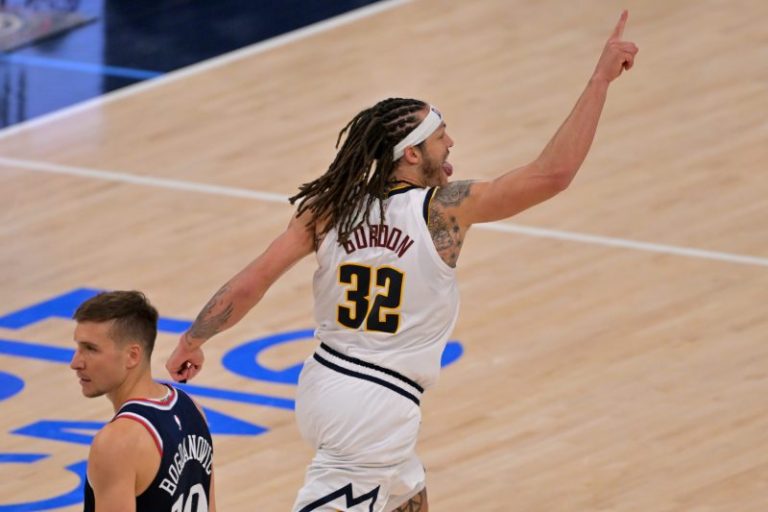
INGLEWOOD, Calif. − Denver Nuggets forward Aaron Gordon positioned himself to be the villain in the eyes of the Los Angeles Clippers’ home crowd Saturday night.

Gordon secured a 101-99 victory for the Nuggets with a putback dunk with .01 seconds left on the clock. Gordon had an opportunity to collect the rebound before the clock expired after Nikola Jokić’s 3-pointer fell short of the basket.

“Joker shot an airball and we weren’t expecting that,” Clippers coach Ty Lue said. “(Christian) Braun cut to the middle of the floor and James (Harden) and Norman (Powell) were in between trying to check with him and Gordon made a hell of a play. It is what it is.’

Gordon began running toward the tunnel as he celebrated, but was called back by teammates to stay on the court as officials reviewed the play.

The Clippers rallied from a 22-point deficit in the second half and even briefly held a one-point lead in the fourth quarter.

“It was tough, but I’m glad we fought and we didn’t lay down being down 20 in the fourth quarter,” Clippers star Kawhi Leonard said. “We kept fighting and rallied back. That’s the NBA. They made a great play.”

Powell was pivotal to the team’s comeback attempt, scoring nine points in the final period while going 3-for-3 from long range.

The matchup also featured a scuffle that led to six players receiving technical fouls after things got heated in the final seconds of the first half.

Braun and Harden exchanged words before a brief scuffle began. Braun was initially called for a personal foul. The two were seen earlier in the game getting chippy with one another.

Officials assigned techs to Harden, Powell and Kris Dunn of the Clippers after a review. Jokic, Gordon and Braun of Denver also received techs.

‘After the altercation, we went to the video review, and looking at all the angles, we felt everyone involved had an equitable role in the altercation,’ crew chief Zach Zarba said in a pool report after the game. ‘Due to that, they were all given equitable penalties.’

Gordon received consistent boos from Clippers fans throughout the second half when he touched the ball because Gordon’s hand made contact with Powell’s face.

In the moments after the scrum broke out, Gordon’s actions were shown on the Halo board at the Intuit Dome. Fans chanted, ‘Kick him out.’

The officials stated after the review that nobody would be ejected from the game, as nobody was seen on the replay throwing an intentional closed-fisted punch.

“They were aggressive, the way they were supposed to be, being down 2-1 (in the series),” Lue said of the Nuggets’ play in Game 4. “We didn’t meet that intensity until the fourth quarter. That’s just a lesson for us. We just have to stay the course and do what we have to do.”

Nuggets dealing with injuries

The Nuggets had a pair of players who were considered game-time decisions before the start of Game 4.

Michael Porter Jr. and Russell Westbrook are dealing with injuries.

Porter came out of the Nuggets’ locker room with the team and participated in the layup line. While he didn’t have a hoodie on like his teammates, he did have his game jersey on. There was a taped pad visible on his left shoulder.

Porter finished with 17 points, four rebounds and two assists in 42 minutes of play.

Nuggets guard Russell Westbrook did not play in Game 4 after he was initially a game-time decision. Westbrook was a limited participant in Game 3 on Thursday after being injured during pregame warmups. 

The former Clipper scored three points, and had a rebound and an assist in nine minutes of play. He shot 1-for-5 from the field (all attempts from the 3-point line).

Second-round opponent set

The winner of this series knows who’s next.

The Oklahoma City Thunder closed out their first-round series Saturday, sweeping the Memphis Grizzlies. The Thunder will meet the winner of the Nuggets-Clippers series in the second round.

Clippers-Nuggets next game

The Clippers will travel to play the Nuggets at Ball Arena in Denver for Game 5. The game is scheduled to air on TNT at 10 p.m. ET on April 29.

This post appeared first on USA TODAY

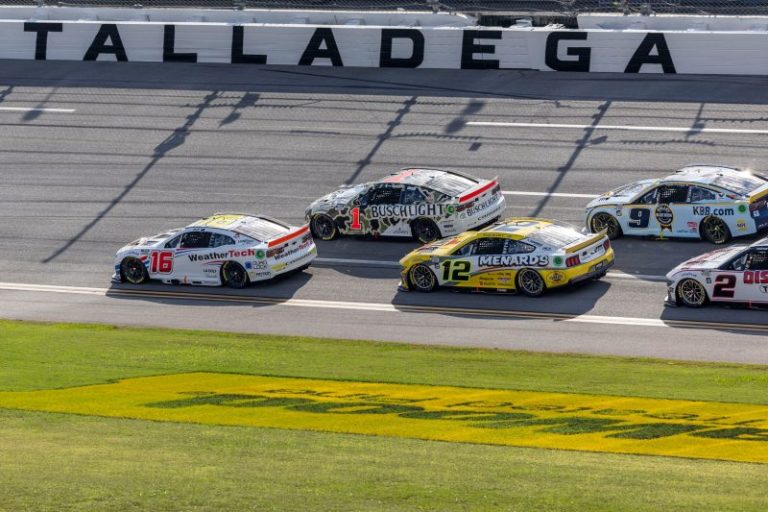
The NASCAR Cup Series is back after a one-week break for Easter and it’s returning to the largest track on the schedule for the first of two visits this season.

Talladega Superspeedway in Alabama will host the Jack Link’s 500 on Sunday, April 27 as part of the NASCAR Cup Series, and it’ll headline a race weekend that also includes the Xfinity Series and ARCA Menards Series.

Denny Hamlin and Kyle Larson do not enter as the favorites to win Sunday’s Cup Series event despite splitting wins over the past four NASCAR races. Larson won most recently at the Food City 500 at Bristol Motor Speedway. Tyler Reddick is the defending champion of this race, and Ryan Blaney has the most favorable odds as a three-time winner at Talladega.

NASCAR set a record the last time it raced here for the YellaWood 500 in October 2024 when 23 cars were involved in a late-race wreck. Nine different drivers have won the past nine NASCAR Cup Series races at Talladega. The eventual winner has started in the 10th position or worse in nine of the past 10 Cup Series races at Talladega, according to NASCAR.

Here’s all the information you need to get ready for the Jack Link’s 500 at Talladega Superspeedway:

What time does the NASCAR Cup race at Talladega start?

The Jack Link’s 500 starts at 3 p.m. ET Sunday, April 27 at Talladega Superspeedway in Alabama.

Will there be a live stream of the NASCAR Cup race at Talladega?

The Jack Link’s 500 can be live streamed on Max and the FoxSports app. Viewers can also stream the race on Fubo, which is offering a free trial to new subscribers.

Watch the Jack Link’s 500 with Fubo

How many laps is the NASCAR Cup race at Talladega?

The Jack Link’s 500 is 188 laps around the 2.66-mile oval for a total of 500 miles. The race will feature three segments (laps per stage) — Stage 1: 60 laps; Stage 2: 60 laps; Stage 3: 68 laps.

SCHEDULE: How to watch NASCAR Cup Series races in 2025

Who won the most recent NASCAR Cup races at Talladega?

Ricky Stenhouse Jr. won a wild playoff race in overtime on Oct. 6, 2024 despite not being playoff-eligible, narrowly beating Brad Keselowski and William Byron in an exciting three-wide finish. The ending was set up by a 23-car wreck that took out a large portion of the field with five laps to go.

During the 2024 Geico 500 that took place at Talladega Superspeedway one year ago, Tyler Reddick emerged from third place around the final corner of the race and passed race leader Michael McDowell for the win. It was the first time 23XI Racing team owner Michael Jordan was at the track when one of his drivers won a race.

What is the lineup for the Jack Link’s 500 at Talladega?

(Car number in parentheses)

  1. (38) Zane Smith, Ford
  2. (8) Kyle Busch, Chevrolet
  3. (22) Joey Logano, Ford
  4. (60) Ryan Preece, Ford
  5. (3) Austin Dillon, Chevrolet
  6. (17) Chris Buescher, Ford
  7. (2) Austin Cindric, Ford
  8. (21) Josh Berry, Ford
  9. (12) Ryan Blaney, Ford
  10. (54) Ty Gibbs, Toyota
  11. (20) Christopher Bell, Toyota
  12. (41) Cole Custer, Ford
  13. (11) Denny Hamlin, Toyota
  14. (71) Michael McDowell, Chevrolet
  15. (34) Todd Gilliland, Ford
  16. (24) William Byron, Chevrolet
  17. (19) Chase Briscoe, Toyota
  18. (48) Alex Bowman, Chevrolet
  19. (16) AJ Allmendinger, Chevrolet
  20. (23) Bubba Wallace, Toyota
  21. (10) Ty Dillon, Chevrolet
  22. (6) Brad Keselowski, Ford
  23. (35) Riley Herbst, Toyota
  24. (99) Daniel Suarez, Chevrolet
  25. (5) Kyle Larson, Chevrolet
  26. (45) Tyler Reddick, Toyota
  27. (4) Noah Gragson, Ford
  28. (77) Carson Hocevar, Chevrolet
  29. (42) John H. Nemechek, Ford
  30. (9) Chase Elliott, Chevrolet
  31. (62) Anthony Alfredo, Chevrolet
  32. (1) Ross Chastain, Chevrolet
  33. (51) Cody Ware, Ford
  34. (43) Erik Jones, Toyota
  35. (47) Ricky Stenhouse Jr., Chevrolet
  36. (88) Shane Van Gisbergen, Chevrolet
  37. (7) Justin Haley, Chevrolet
  38. (78) BJ McLeod, Chevrolet
  39. (44) JJ Yeley, Chevrolet
This post appeared first on USA TODAY

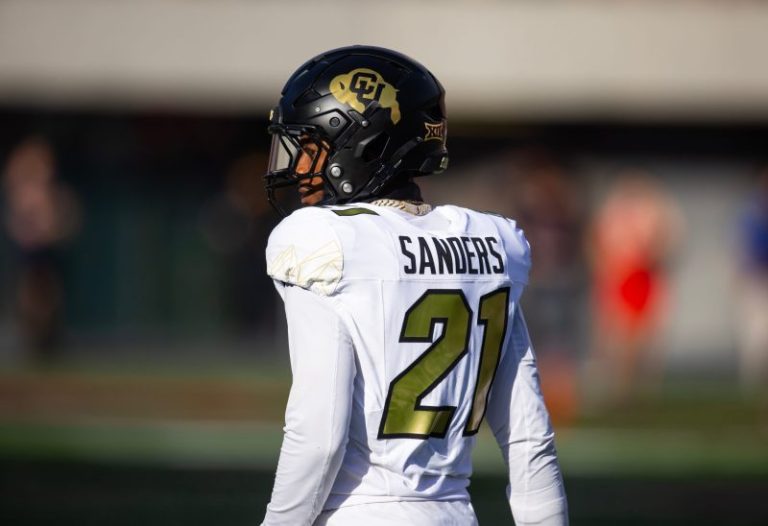
Colorado safety Shilo Sanders did not get selected in the NFL draft this week but revealed after the draft Saturday that he has agreed to join the Tampa Bay Buccaneers as a free agent.

Sanders, the middle son of Colorado coach Deion Sanders, held his phone and monitored the final picks of the seven-round draft Saturday hoping he’d get selected, as documented by his livestream on Twitch. But after not getting drafted, he had more freedom to decide which team to join.

Shilo’s younger brother Shedeur, a quarterback, was picked in the fifth round by the Cleveland Browns the same day after previously being projected by many draft experts to be a first-round pick.

“Both of y’all, you’re resilient,” Deion Sanders told his sons Saturday.

“They tested us this draft,” Shilo said, as shown on Twitch.

“They tested the whole family,” Deion Sanders said.

“I’m thankful,” Deion Sanders later added. “Tampa’s a wonderful spot.”

Shilo Sanders led the Buffaloes in tackles in 2023 (70) and was their third-leading tackler last year (67) despite missing three games in 2024 with a broken forearm.

Even though he wasn’t projected to be a draft pick, Sanders is known as a hard hitter and ball hawk and is ripe for the NFL at age 25. He started his college career at South Carolina in 2019 before deciding to play for his father at Jackson State in 2021 and 2022 and then Colorado in 2023 and 2024.

Last year, he also rang up two pass breakups, two fumble recoveries, one sack, one forced fumble and a defensive touchdown.

“Turnovers win games,” Sanders wrote on X on April 22. “Somebody’s getting a dawg this week! Believe That.”

NFL Network analyst Brian Baldinger also praised Sanders’ potential before the draft on social media, noting he brings “56 games of experience and a lot of splash plays from the safety position” and is a “good open field tackler.”

Follow reporter Brent Schrotenboer @Schrotenboer. Email: bschrotenb@usatoday.com

This post appeared first on USA TODAY

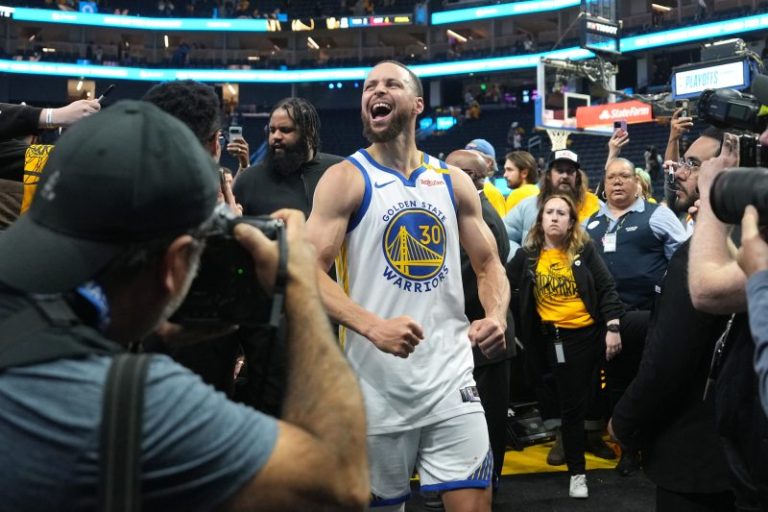
Understanding he would need to outwork Houston’s athletic defenders, with Jimmy Butler sidelined for the night, Stephen Curry was undeniable.

Curry overcame a two-point first quarter to will the Golden State Warriors past the Rockets, 104-93, to take a 2-1 lead in their first-round series against Houston.

No player logged more minutes Saturday night than Curry, 37, whose 40:59 of game time was nearly seven minutes more than the closest Golden State player, Draymond Green.

Curry dropped 36 points on an efficient 12-of-23 (52.2%) day that included a 5-of-13 showing (38.5%) from 3-point range. He also collected seven rebounds and dished out nine assists, willing the undermanned Warriors to the crucial Game 3 victory.

Although Curry is widely known to be one of the most well-conditioned players in the NBA, Golden State’s reliance on him raises the question of sustainability. As it was, before Butler’s injury, the Warriors were heavily dependent on the duo to manufacture their offense. Saturday night showed how precarious the formula can be.

When Curry took his first breather late in the first quarter, the Warriors failed to score a single point and missed all eight of their attempts in that span. Typically, those would be minutes when Butler would be asked to take on more offensive responsibilities. That led to coach Steve Kerr altering his rotation and playing Curry more minutes than he normally would.

Eventually, Curry and Golden State would settle, though it wouldn’t be easy.

Houston harassed Curry throughout the game, holding him and face guarding him, making him fight through contact on screens and making him sprint all over the court just to find tiny spaces from which to operate. It looked exhausting, but Curry’s conditioning and savvy allowed him to carry Golden State’s offense.

It helped that role players stepped up; as Curry drew more and more defensive attention, especially late in the game, Curry entrusted his teammates with open looks. Gary Payton II recorded a postseason career high with 16 points, including a massive stretch in the fourth in which he scored nine consecutive points and 11 in the period. In fact, during that span with the nine consecutive points, it was Curry who assisted three of the four field goals Payton converted.

Buddy Hield added 17 points off the bench and Green’s defense helped seal the game.

Now, attention turns to the rest of the series, and — potentially — beyond.

Butler, who’s nursing a “pelvis and deep gluteal muscle contusion” suffered Wednesday, had been listed as questionable and was a game-time decision. But after going through a pre-game workout, the Warriors opted to rule him out. That he was a game-time decision suggests that his return may be imminent, as soon as the next game.

Golden State, at the risk of burning Curry out, may need Butler back as soon as possible.

Steph Cury highlights vs. Rockets

Saturday night against the Rockets, Stephen Curry was masterful, especially in the fourth quarter. Curry expertly managed the additional defensive attention he drew and operated both as a scorer and distributor in the quarter.

Curry even amped up his defensive effort, swatting away a pair of blocks, one of which led to a Warriors fast-break opportunity.

Curry also moved into 10th on the NBA’s all-time playoff scoring list, currently with 4,046 points; Jerry West is in ninth, with 4,457.

This post appeared first on USA TODAY