
Author

admin

Browsing

For a long time, most of the world’s lithium was produced by an oligopoly of US-listed producers. However, the sector has transformed significantly in recent years.

Interested investors should cast a wider net to look at global companies — in particular those listed in Australia and China, as companies in both countries have become major players in the industry.

While Australia has long been a top-producing country when it comes to lithium, China has risen quickly to become not only the top lithium processor and refiner, but also a major miner of the commodity. In fact, China was the third largest lithium-producing country in 2024 in terms of mine production, behind Australia and Chile.

Chinese companies are mining in other countries as well, including top producer Australia, where a few are part of major lithium joint ventures. For example, Australia’s largest lithium mine, Greenbushes, is owned and operated by Talison Lithium, which is 51 percent controlled by Tianqi Lithium Energy Australia, a joint venture between China’s Tianqi Lithium (SZSE:002466,HKEX:9696) and Australia’s IGO (ASX:IGO,OTC Pink:IPDGF). The remaining 49 percent stake in Talison is owned by Albemarle (NYSE:ALB). Joint ventures can offer investors different ways to get exposure to mines and jurisdictions.

Mergers and acquisitions are common in the lithium space, with the biggest news in the industry recently being Rio Tinto’s (ASX:RIO,NYSE:RIO,LSE:RIO) acquisition of Arcadium Lithium for US$6.7 billion in March of this year. The acquisition transforms Rio Tinto into a global leader in lithium production with one of the world’s largest lithium resource bases.

As for Chile, the country’s lithium landscape is changing following the December 2024 announcement that as a part of its National Lithium Strategy toward public-private partnerships, the government opened up the process of assigning special lithium operation contracts to a total of 12 priority areas.

All in all, lithium investors have a lot to keep an eye on as the space continues to shift. Read on for an overview of the current top lithium-producing firms by market cap. Data was current as of April 4, 2025.

Biggest lithium-mining stocks

1. Rio Tinto (ASX:RIO,NYSE:RIO,LSE:RIO)

Market cap: US$99.83 billion
Share price: AU$112.70

Rio Tinto, a global powerhouse in the resource sector for decades, is mostly known for its iron and copper production. However, in recent years, the mining giant has been expanding its position in the world’s lithium market.

In March 2025, the company cemented its position as one of the biggest lithium-producing companies in the world with the US$6.7 billion all-cash acquisition of Arcadium Lithium, the lithium giant formed after the US$10.6 billion merger of lithium majors Allkem and Livent.

Following the acquisition, Rio Tinto is consolidating Arcadium’s portfolio with its own lithium projects under the name Rio Tinto Lithium. Arcadium’s portfolio includes the Salar del Hombre Muerto and Olaroz lithium brine operations in Argentina, as well as the Mount Cattlin hard-rock mine in Western Australia, which is entering care and maintenance in the second half of this year. It also has lithium hydroxide production capacity in the US, Japan and China.

At the time, Rio Tinto said it will increase its lithium carbonate equivalent production capacity to over 200,000 metric tons (MT) annually by 2028.

Lithium acquisitions are not new to Rio Tinto. In 2022, it acquired the Rincon project in Argentina from Rincon Mining. Rincon has an expected annual capacity of 53,000 MT of battery-grade lithium carbonate over a 40 year mine life, although Rio Tinto plans to expand production at the site to 60,000 MT per year. A pilot battery-grade lithium carbonate plant is scheduled for completion in H1 2025.

As of March 2025, Rio Tinto is also reportedly in talks to develop the Roche Dure lithium deposit in the Democratic Republic of Congo, one of the world’s largest hard-rock lithium deposits.

2. SQM (NYSE:SQM)

Market cap: US$10.93 billion
Share price: US$37.05

SQM has five business areas, ranging from lithium to potassium to specialty plant nutrition. Its primary lithium operations are in Chile, where it is a longtime producer, and it is also working to bring production online in Australia.

In Chile, SQM sources brine from the Salar de Atacama; it then processes lithium chloride from the brine into lithium carbonate and hydroxide at its Salar del Carmen lithium plants located near Antofagasta.

Chile’s aforementioned National Lithium Strategy has created some uncertainty for SQM, but the government has stated that it will respect its current contracts, which run through 2030. In May 2024, the state-owned mining company Codelco and SQM formed a joint venture in which Codelco will hold a 50 percent stake plus one share to give it majority control. As of 2031, the state will begin receiving 85 percent of the operating margin of the new production from SQM’s operations.

Outside of South America, SQM owns and operates the Mount Holland lithium mine and concentrator in Australia; the mine hosts one of the world’s largest hard-rock deposits. Mount Holland is a joint venture with Wesfarmers (ASX:WES,OTC Pink:WFAFF), which took over Australian lithium-mining company Kidman Resources in 2019.

Overall, the company sees its total sales volumes from all its lithium operations increasing by 15 percent this year.

SQM has a long-term supply deal with Hyundai (KRX:005380) and Kia (KRX:000270) to provide lithium hydroxide for electric vehicle batteries from its future lithium hydroxide supply. SQM also has supply agreements with Ford Motor Company (NYSE:F) and LG Energy (KRX:373220).

3. Ganfeng Lithium (OTC Pink:GNENF,SZSE:002460,HKEX:1772)

Market cap: US$7.5 billion
Share price: US$2.51

Founded in 2000 and listed in 2010, Ganfeng Lithium has operations across the entire electric vehicle battery supply chain. Even though it is relatively new compared to some companies on the list, Ganfeng has become one of the world’s largest producers of both lithium metals and lithium hydroxide. This is due to its strategy of investing heavily in overseas projects to secure long-term lithium resources, with its first such investment in 2014.

Ganfeng has interests in lithium resources around the world, from Australia to Argentina, China and Ireland; its operations include a 50/50 joint venture with Mineral Resources for the Mount Marion mine in Western Australia. In Argentina, the company has 51 percent stake in Lithium Americas’ (TSX:LAC,NYSE:LAC) Caucharí-Olaroz lithium brine project.

Ganfeng has a controlling interest in Mexico-focused Bacanora Lithium and its Sonora lithium project; it also has a 50 percent stake in a lithium mine in Mali, as well as a 49 percent stake in a salt lake project in China owned by China Minmetals. It owns the private company LitheA, which holds the rights to two lithium salt lakes in Argentina’s Salta province.

Ganfeng purchased Leo Lithium’s (ASX:LLL,OTC Pink:LLLAF) Goulamina project in Mali in May 2024 and brought it into production in December. Goulamina has a mine capacity of 506,000 MT of spodumene per year. The company’s goal is to double that capacity to 1 million MT per year.

In February 2025, Ganfeng brought its US$790 million Mariana project in Argentina into production. The Mariana mine is situated on the Llullaillaco salt flat, and has the capacity to produce 20,000 MT of lithium chloride per year.

Ganfeng has supply deals with companies such as Tesla (NASDAQ:TSLA), BMW (OTC Pink:BMWYY,ETR:BMW), Korean battery maker LG Chem (KRX:051910), Volkswagen (OTC Pink:VLKAF,FWB:VOW) and Hyundai.

4. Albemarle (NYSE:ALB)

Market cap: US$6.92 billion
Share price: US$58.88

North Carolina-based Albemarle is dividing into two primary business units, one of which — the Albemarle Energy Storage unit — is focused wholly on the lithium-ion battery and energy transition markets. It includes the firm’s lithium carbonate, hydroxide and metal production.

Albemarle has a broad portfolio of lithium mines and facilities, with extraction in Chile, Australia, China and the US. Looking first at Chile, Albemarle produces lithium carbonate at its La Negra lithium conversion plants, which process brine from the Salar de Atacama, the country’s largest salt flat. Albemarle is aiming to implement direct lithium extraction technology at the salt flat to reduce water usage.

Albemarle’s Australian assets includes the MARBL joint venture with Mineral Resources (ASX:MIN,OTC Pink:MALRF). The 50/50 JV owns and operates the Wodgina hard-rock lithium mine in Western Australia. Albemarle wholly owns the on-site Kemerton lithium hydroxide facility. The company’s other Australian joint venture is the aforementioned Greenbushes mine, in which it holds a 49 percent interest alongside Tianqi and IGO.

As for the US, Albemarle owns the Silver Peak lithium brine operations in Nevada’s Clayton Valley, which is currently the country’s only source of lithium production. In its home state of North Carolina, Albemarle is planning to bring its past-producing Kings Mountain lithium mine back online, subject to permitting approval and a final investment decision. The mine is expected to produce around 420,000 MT of lithium-bearing spodumene concentrate annually.

Albemarle has received US$150 million in funding from the US government to support the building of a commercial-scale lithium concentrator facility on site. The US Department of Defense has given the company a US$90 million critical materials award to boost its domestic lithium production and support the country’s burgeoning EV battery supply chain.

5. Tianqi Lithium (SZSE:002466,HKEX:9696)

Market cap: US$6.61 billion
Share price: 30.26 Chinese yuan

Tianqi Lithium, a subsidiary of Chengdu Tianqi Industry Group, is the world’s largest hard-rock lithium producer. The company has assets in Australia, Chile and China. It holds a significant stake in SQM.

In Australia, Tianqi, as mentioned, has a significant position in the Greenbushes mine and Kwinana lithium hydroxide plant through the Tianqi Lithium Energy Australia JV with IGO. The hydroxide plant, which is one of the world’s largest fully automated battery-grade lithium hydroxide facilities, processes feedstock from Greenbushes with a capacity of 24,000 MT per year.

Construction work for the Phase 2 expansion at Kwinana, which would have doubled its capacity, was terminated in January 2025 due to the current low-price environment for lithium making it economically unviable.

Tianqi Lithium Energy Australia updated the total mineral resources at Greenbushes in February 2025 to 440 million MT at an average grade of 1.5 percent lithium oxide, and its total ore reserve estimate to 172 million MT grading 1.9 percent lithium oxide.

In March 2025, Tianqi Lithium announced collaborations with a number of academic research institutions including the Institute for Advanced Materials and Technology of the University of Science and Technology Beijing on the research and development of next-generation solid-state battery materials and technology.

6. PLS (ASX:PLS,OTC Pink:PILBF)

Market cap: US$2.92 billion
Share price: AU$2.92

PLS, formerly named Pilbara Minerals, operates its 100 percent owned Pilgangoora lithium-tantalum asset in Western Australia. The operation entered commercial production in 2019 and consists of two processing plants: the Pilgan plant, located on the northern side of the Pilgangoora area, which produces a spodumene concentrate and a tantalite concentrate; and the Ngungaju plant, located to the south, which produces a spodumene concentrate.

PLS has recently completed a few critical expansion projects at Pilgangoora. Its P680 expansion, for a primary rejection facility and a crushing and ore-sorting facility, was completed in August 2024. The P1000 expansion, targeting a spodumene production increase at the site to 1 million MT per year, was completed in January 2025 ahead of schedule and within budget. The company says the ramp-up to full capacity is expected to be completed in the third quarter of 2025.

PLS and its joint venture partner Calix are developing a midstream demonstration plant at Pilgangoora using Calix’s electric kiln technology to reduce the carbon footprint of spodumene processing, decreasing transport volumes and improving value-add processing at the mine. After garnering a AU$15 million grant from the Western Australian Government, construction of the project is expected to be completed in the fourth quarter of 2025.

The company made a move to expand its footprint in Brazil in August 2024 with the acquisition of Latin Resources (ASX:LRS,OTC Pink:LRSRF) and its Salinas lithium project. The project’s resource estimate, which covers the Colina and Fog’s Block deposits, stands at 77.7 million MT at 1.24 percent lithium oxide. The AU$560 million deal was approved by the Western Australia Government in January 2025.

PLS and joint venture partner POSCO (NYSE:PKX) launched South Korea’s first lithium hydroxide processing plant in late 2024, which will be supplied with spodumene from Pilgangoora. PLS also has offtake agreements with companies such as Ganfeng, Chengxin Lithium Group, and Yibin Tianyi Lithium Industry.

7. Mineral Resources (ASX:MIN,OTC Pink:MALRF)

Market cap: US$2.59 billion
Share price: AU$18.95

Australia-based Mineral Resources (MinRes) is a commodities company that mines lithium and iron ore in the country. As mentioned, both of MinRes’ lithium mines are joint ventures with other companies on this list. In addition to the Wodgina mine in Western Australia, which is operated under the MARBL joint venture with Albemarle, MinRes holds a 50 percent stake in Albemarle’s Qinzhou and Meishan plants in China.

MinRes owns 50 percent of the Mount Marion lithium operation, which is a joint venture with Ganfeng Lithium. Production of lithium concentrate began at Mount Marion in 2017, and all mining is managed by MinRes, which also has a 51 percent share of the output from the spodumene concentrator at the site. MinRes completed the expansion of Mount Marion’s spodumene processing plant in 2023. Currently, the plant has an annual production capacity of 600,000 MT spodumene concentrate equivalent.

However, in late August 2024, in light of lithium’s low demand environment, MinRes decided to reduce its operations at Mount Marion to between 150,000 and 170,000 MT of spodumene production in its financial year 2025 compared to the 218,000 metric tons of output achieved in its financial year 2024.

MinRes acquired the Bald Hill lithium mine, which is also located in Western Australia, in 2023. The company released an updated mineral resource estimate in November 2024 of 58.1 MT at 0.94 percent lithium oxide, up 168 percent from the prior June 2018 estimate. In the same news release, MinRes announced that it would have to place the mine on care and maintenance until global lithium prices improve. The final shipment of Bald Hill spodumene concentrate was made in December 2024.

Other lithium companies

Aside from the world’s top lithium producers, a number of other large lithium companies are producing this key electric vehicle raw material. These include Sigma Lithium (TSXV:SGML,NASDAQ:SGML), Liontown Resources (ASX:LTR,OTC Pink:LINRF), Jiangxi Special Electric Motor (SZSE:002176), Yongxing Special Materials Technology (SZSE:002756), Sinomine Resource (SZSE:002738) and Youngy (SZSE:002192).

FAQs for investing in lithium

Is lithium a metal?

Lithium is a soft, silver-white metal used in pharmaceuticals, ceramics, grease, lubricants and heat-resistant glass. It’s also used in lithium-ion batteries, which power everything from cell phones to laptops to electric vehicles.

How much lithium is there on Earth?

Lithium is the 33rd most abundant element in nature. According to the US Geological Survey, due to continuing exploration, identified lithium resources have increased to about 115 million metric tons worldwide. Global lithium reserves stand at 30 million MT, with production reaching 240,000 MT in 2024.

How is lithium produced?

Lithium is found in hard-rock deposits, evaporated brines and clay deposits. The largest hard-rock mine is Greenbushes in Australia, and most lithium brine output comes from salars in Chile and Argentina.

There are various types of lithium products, and many different applications for the mineral. After lithium is extracted from a deposit, it is often processed into lithium carbonate, lithium hydroxide or lithium metal. Battery-grade lithium carbonate and lithium hydroxide can be used to make cathode material for lithium-ion batteries.

What country produces the most lithium?

The latest data from the US Geological Survey shows that the world’s top lithium-producing countries are Australia, Chile and China, with production reaching 88,000 metric tons, 49,000 metric tons and 41,000 metric tons, respectively.

Global lithium production reached 240,000 metric tons of lithium in 2024, up from 204,000 MT in 2023, according to the US Geological Survey. About 87 percent of the lithium produced currently goes toward battery production, but other industries also consume the metal. For example, 5 percent is used in ceramics and glass, while 2 percent goes to lubricating greases.

Who is the largest miner of lithium?

The world’s largest lithium-producing mine is Talison Lithium and Albemarle’s Greenbushes hard-rock mine in Australia, which put out 1.38 million MT of spodumene concentrate in the fiscal year 2024. The top-producing lithium brine operation was SQM’s Salar de Atacama operations in Chile, with 2023 production of 166,000 metric tons of lithium carbonate.

Who are the top lithium consumers?

The top lithium-importing country is China by a long shot, and second place South Korea is another significant importer. China is also the top country for lithium processing, and both are home to many companies producing lithium-ion batteries.

Why is lithium so hard to mine?

The different types of lithium deposits come with their own challenges.

For example, mining pegmatite lithium from hard-rock ore is known for being expensive, while extracting lithium from brines requires vast amounts of water and processing times that can sometimes be as long as 12 months. Lithium mining also comes with the difficulties associated with mining other minerals, such as long exploration and permitting periods.

What are the negative effects of lithium?

Both major forms of lithium mining can have negative effects on the environment. When it comes to hard-rock lithium mining, there have been incidents of chemicals leaking into the water supply and damaging the local ecosystems; in addition, these operations tend to have a large environmental footprint.

As mentioned, lithium brine extraction requires a lot of water for the evaporation process, but it’s hard to understand the scope without numbers. It’s estimated that approximately 2.2 million liters of water are required to produce 1 metric ton of lithium, and that can sometimes mean diverting water from communities that are experiencing drought conditions. This form of lithium extraction also affects the condition of the soil and air.

Will lithium run out?

Although future demand for lithium is expected to keep rising due to its role in green energy, the metal shouldn’t run out any time soon, as companies are continuing to discover new lithium reserves and are developing more advanced extraction technologies. Additionally, there are companies working on technology to recycle battery metals, which will eventually allow lithium from lithium-ion batteries to re-enter the supply chain.

What technology will replace lithium?

Researchers have been working on developing and testing a variety of lithium alternatives for batteries. Some of these options include hydrogen batteries, liquid batteries that could be pumped into vehicles, batteries that replace lithium with sodium or magnesium and even batteries powered by sea water. While nothing looks ready to replace lithium-ion batteries right now, there is potential for more efficient or more environmentally friendly options to grow in popularity in the future.

How to buy a lithium stock?

Investors are starting to pay attention to the green energy transition and the raw materials that will enable it.

When it comes to choosing a stock to invest in, understanding lithium supply and demand dynamics is key, as there are unique factors to watch for in lithium stocks. The main demand driver for lithium is what happens in the electric vehicle industry, which is expected to keep growing, and also the energy storage space. Analysts remain optimistic about the future of lithium, with many predicting the market will be tight for some time.

Investors interested in lithium stocks could consider companies listed on US, Canadian and Australian stock exchanges. They can also check out our guide on what to look for in lithium stocks today.

Securities Disclosure: I, Melissa Pistilli, hold no direct investment interest in any company mentioned in this article.

Securities Disclosure: I, Georgia Williams, hold no direct investment interest in any company mentioned in this article.


Keep reading…Show less
This post appeared first on investingnews.com

Cryptocurrencies such as Bitcoin and Ethereum offer an alternative route for building and storing wealth. While directly holding these digital assets is a popular option, investors are also clamoring for financial products such as crypto exchange-traded funds (ETFs).

Canada first launched Bitcoin and Ethereum ETFs in 2021. These Canadian Bitcoin and Ethereum ETFs allow investors to place returns in tax-sheltered accounts like tax-free savings accounts or registered retirement savings plans.

“There is a high demand for a Bitcoin product that has all the features that people love about ETFs — that they trade on an exchange, that they’re liquid,” Ross Mayfield, investment strategy analyst at Robert W. Baird & Co., told Bloomberg in mid-2021.

Interest has only increased since then. In the US, Bitcoin ETFs’ net assets surpassed US$100 billion in November 2024, gaining ground on US gold ETFs. Sean Farrell, head of digital asset strategy at Fundstrat, wrote in mid-2023 that the Bitcoin ETF category at large has the potential to surpass the precious metals ETF market in terms of asset value. ‘Bitcoin ETF eventually could become >$300 billion category,’ he stated in the note.

Ethereum ETFs have also become a major talking point. Ethereum is the most widely used blockchain technology, and Ether, the digital currency of this platform, is the second largest cryptocurrency after Bitcoin.

With that in mind, it’s worth taking a look at the currently available Canadian cryptocurrency ETFs. The list below includes 13 Ether and Bitcoin ETFs available on the Canadian market sorted by assets under management, and all data presented is current as of April 17, 2025.

1. Purpose Bitcoin ETF (TSX:BTCC)

Assets under management: C$2.6 billion

Billed as the world’s first physically settled Bitcoin ETF, the Purpose Bitcoin ETF launched in February 2021 and is backed by Bitcoin in cold storage. This means the fund allows investors to add and sell Bitcoin with no digital wallet required.

Hosted by Canadian investment company Purpose Investments, the Purpose Bitcoin ETF is backed by 22001.42 Bitcoins and has a management expense ratio of 1.5 percent.

2. CI Galaxy Bitcoin ETF (TSX:BTCX.B)

Assets under management: C$1.07 billion

Launched in March 2021, the CI Galaxy Bitcoin ETF was born out of a partnership between cryptocurrency leaders Galaxy Fund Management and CI Global Asset Management. Galaxy Fund Management is part of Galaxy Digital, a diversified financial services firm with a focus on digital assets and the blockchain technology sector.

The ETF’s objective is to give investors exposure to Bitcoin via an institutional-quality fund platform, as its holdings are wholly Bitcoin and are kept in cold storage. At 0.4 percent, this fund boasts one of the lowest management fees of all the crypto funds on the market.

3. Fidelity Advantage Bitcoin ETF (TSX:FBTC)

Assets under management: C$931.07 million

The newest Bitcoin fund on this list, the Fidelity Advantage Bitcoin ETF, launched in November 2021. It offers the security of Fidelity’s in-house cold storage services for its holdings.

While it previously had a management fee of 0.39 percent, the Fidelity Advantage Bitcoin ETF lowered it in January 2025 to an ultra-low management fee of 0.32 percent.

4. 3iQ CoinShares Bitcoin ETF (TSX:BTCQ)

Net asset value: C$285.91 million

Launched in March 2021, the 3iQ CoinShares Bitcoin ETF offers exposure to the price movement of Bitcoin in US dollar terms. The company holds its Bitcoin assets in cold storage. This ETF has a management fee of 1 percent.

5. CI Galaxy Ethereum ETF (TSX:ETHX.B)

Assets under management: C$284.3 million

The CI Galaxy Ethereum ETF, another collaboration between CI and Galaxy, offers investors exposure to the spot Ethereum price through Ether holdings in cold storage. The fund launched on April 20, 2021, the same day as two of the other Ether ETFs on this list.

At the time, CI Global Asset Management suggested that “owning Ether is similar to owning a basket of early-stage, high-growth technology stocks.”

The CI Galaxy Ethereum ETF also has notably low management fees of just 0.4 percent.

6. Evolve Bitcoin ETF (TSX:EBIT)

Assets under management: C$229.8 million

Evolve ETFs partnered with cryptocurrency experts, including Gemini Trust Company, CF Benchmarks, Cidel Bank & Trust and CIBC Mellon Global Services, to launch the Evolve Bitcoin ETF. The fund, which holds its own Bitcoin, has a management fee of 0.75 percent.

Launched a week after the Purpose Bitcoin ETF, its holdings of Bitcoin are priced based on the CME CF Bitcoin Reference Rate, a once-a-day benchmark index price for Bitcoin denominated in US dollars.

7. Purpose Ether ETF (TSX:ETHH)

Assets under management: C$215.8 million

The Purpose Ether ETF is a direct-custody Ether ETF that launched on April 20, 2021. This fund holds 97598.07 Ether, which it stores in cold storage.

The Purpose Ether ETF offers investors exposure to the daily price movements of physically settled Ether tokens with a management fee of 1 percent.

8. Purpose Bitcoin Yield ETF (TSX:BTCY)

Assets under management: C$140 million

The Purpose Bitcoin Yield ETF uses a covered call strategy to generate yield for investors, which involves writing call options on Bitcoin. Call options give the buyer an option to purchase an asset at a specific price on or before a specific date.

Its structure allows the fund to earn income from option premiums while providing investors with exposure to Bitcoin’s price movements. Its distributions are paid monthly.

9. Evolve Cryptocurrencies ETF (TSX:ETC)

Assets under management: C$61.35 million

The Evolve Cryptocurrencies ETF launched in September 2021 as the first multi-cryptocurrency ETF, providing combined exposure to both Bitcoin and Ether.

This product from Evolve ETFs allows investors to diversify their crypto portfolios and provides indirect exposure to the two coins, weighing them by market capitalization and rebalancing its holdings on a monthly basis. Bitcoin makes up the majority of its portfolio.

While this ETF has no management fee, the underlying funds that hold both Bitcoin and Ether have management fees of 0.75 percent plus applicable taxes.

10. 3iQ CoinShares Ether Staking ETF (TSX:ETHQ)

Net asset value: C$‪49.6 million

Following the success of its Bitcoin ETF, 3iQ Digital Asset Management launched its CoinShares Ether Staking ETF in April 2021. This fund has a similar objective, offering exposure to Ether and its daily US dollar price movements. It also has a management fee of 1 percent.

11. Purpose Ether Yield ETF (TSX:ETHY)

Assets under management: C$44.5 million

Like the Purpose Bitcoin Yield ETF, the Purpose Ether Yield ETF offers investors an opportunity to invest in Ether while also generating yield. Purpose Investments lends a portion of its Ether holdings to institutional borrowers and earns interest on those loans.

Investors who purchase shares of this ETF receive a portion of the interest earned in monthly distributions.

12. Evolve Ether ETF (TSX:ETHR)

Assets under management: C$40.52 million

The Evolve Ether ETF offers investors an easier route to investing directly in Ether. The fund’s holdings of Ether are priced based on the CME CF Ether-Dollar Reference Rate, a once-a-day benchmark index price for Ether denominated in US dollars. As with the Evolve Bitcoin ETF, the Evolve Ether ETF has a management fee of 0.75 percent.

13. Fidelity Advantage Ether ETF (TSX:FETH)

Assets under management: C$24.2 million

Following the successful launch of its Bitcoin fund, Fidelity brought its Advantage Ether ETF to market in September 2022, making this the newest Ether ETF in Canada. Its holdings are stored in Fidelity’s in-house cold storage.

The Fidelity Advantage Ether ETF has a management fee of 0.4 percent.

Securities Disclosure: I, Meagen Seatter, hold no direct investment interest in any company mentioned in this article.

Keep reading…Show less
This post appeared first on investingnews.com

NorthStar Gaming Holdings Inc. (TSXV: BET) (OTCQB: NSBBF) (‘NorthStar’ or the ‘Company’) has announced a change of date for its upcoming Q4 and Year-End 2024 Earnings Webinar to May 1, 2025 at 11:00 am EDT. Further, the Company now expects to announce its fourth quarter and year-end 2024 financial results and file its condensed consolidated financial statements for the year ended December 31, 2024 (‘FY2024 Financial Statements’) and associated management’s discussion and analysis as soon as possible, but no later than April 30, 2025, as permitted under applicable securities laws. The webinar is being delayed because the Company requires additional time to finalize its FY2024 Financial Statements and complete its year-end audit process.

NorthStar invites all investors and other interested parties to register for the webinar at the link below. Michael Moskowitz, Chairman and CEO, will be presenting the Company’s financial results and an update on current operations and strategic priorities.

Date: Thursday, May 1st, 2025
Time: 11am EDT
Register: Webinar Registration

HAVE QUESTIONS? Management will be available to answer your questions following the presentation on the webinar platform. You may submit your question(s) beforehand in the registration form linked above.

About NorthStar

NorthStar proudly owns and operates NorthStar Bets, a Canadian-born casino and sportsbook platform that delivers a premium, distinctly local gaming experience. Designed with high-stakes players in mind, NorthStar Bets Casino offers a curated selection of the most popular games, ensuring an elevated user experience. Our sportsbook stands out with its exclusive Sports Insights feature, seamlessly integrating betting guidance, stats, and scores, all tailored to meet the expectations of a premium audience.

As a Canadian company, NorthStar is uniquely positioned to cater to customers who seek a high-quality product and an exceptional level of personalized service, setting a new standard in the industry. NorthStar is committed to operating at the highest level of responsible gaming standards.

NorthStar is listed in Canada on the TSX Venture Exchange (‘TSXV’) under the symbol BET and in the United States on the OTCQB under the symbol NSBBF. For more information on the company, please visit: www.northstargaming.ca.

No stock exchange, securities commission or other regulatory authority has approved or disapproved the information contained herein. Neither the TSXV nor its Regulation Services Provider (as that term is defined in the policies of the TSXV) accepts responsibility for the adequacy or accuracy of this press release.

Cautionary Note Regarding Forward-Looking Information and Statements

This communication contains ‘forward-looking information’ within the meaning of applicable securities laws in Canada (‘forward-looking statements’), including without limitation, statements with respect to the following: expected performance of the Company’s business, and the timing of the release of the Company’s financial results. The foregoing is provided for the purpose of presenting information about management’s current expectations and plans relating to the future and allowing investors and others to get a better understanding of the Company’s anticipated financial position, results of operations, and operating environment. Often, but not always, forward-looking statements can be identified by the use of words such as ‘plans’, ‘expects’, ‘is expected’, ‘budget’, ‘scheduled’, ‘estimates’, ‘continues’, ‘forecasts’, ‘projects’, ‘predicts’, ‘intends’, ‘anticipates’ or ‘believes’, or variations of, or the negatives of, such words and phrases, or state that certain actions, events or results ‘may’, ‘could’, ‘would’, ‘should’, ‘might’ or ‘will’ be taken, occur or be achieved. This information involves known and unknown risks, uncertainties and other factors that may cause actual results or events to differ materially from those anticipated in such forward-looking statements. This forward-looking information is based on management’s opinions, estimates and assumptions that, while considered by NorthStar to be appropriate and reasonable as of the date of this press release, are subject to known and unknown risks, uncertainties, assumptions and other factors that may cause the actual results, levels of activity, performance, or achievements to be materially different from those expressed or implied by such forward- looking information. Such factors include, among others, the following: risks related to the Company’s business and financial position; risks associated with general economic conditions; adverse industry risks; future legislative and regulatory developments; the ability of the Company to implement its business strategies; and those factors discussed in greater detail under the ‘Risk Factors’ section of the Company’s most recent annual information form, which is available under NorthStar’s profile on SEDAR+ at www.sedarplus.com. Many of these risks are beyond the Company’s control.

If any of these risks or uncertainties materialize, or if the opinions, estimates or assumptions underlying the forward-looking information prove incorrect, actual results or future events might vary materially from those anticipated in the forward-looking statements. Although the Company has attempted to identify important risk factors that could cause actual results to differ materially from those contained in the forward-looking statements, there may be other risk factors not presently known to the Company or that the Company presently believes are not material that could also cause actual results or future events to differ materially from those expressed in such forward-looking statements. There can be no assurance that such information will prove to be accurate, as actual results and future events could differ materially from those anticipated in such information. No forward-looking statement is a guarantee of future results. Accordingly, you should not place undue reliance on forward-looking information, which speaks only as of the date made. The forward-looking information contained in this press release represents NorthStar’s expectations as of the date specified herein, and are subject to change after such date. However, the Company disclaims any intention or obligation or undertaking to update or revise any forward-looking information whether as a result of new information, future events or otherwise, except as required under applicable securities laws.

All of the forward-looking information contained in this press release is expressly qualified by the foregoing cautionary statements.

For further information:

Company Contact:

Corey Goodman
Chief Development Officer 647-530-2387
investorrelations@northstargaming.ca

Investor Relations:

RB Milestone Group LLC (RBMG)
Northstar@rbmilestone.com

To view the source version of this press release, please visit https://www.newsfilecorp.com/release/249726

News Provided by Newsfile via QuoteMedia

This post appeared first on investingnews.com

The Los Angeles Lakers are imposters.

Or they’re the real deal.

Either way, they’re a mystery headed into Game 3 against the Minnesota Timberwolves on Friday night in Minneapolis with the NBA first-round playoff series tied at 1-1.

Perhaps that was the real deal in Game 1 when the Lakers got clobbered 117-95. Or were those imposters?

Perhaps those were imposters in Game 2 when the Lakers beat the Timberwolves 95-84. Or was that the real deal?

Another possibility: this team settled into an erratic state that will be on display in Game 3.

Among the Lakers, here’s the popular narrative: They needed 2½ quarters while getting blown out in Game 1 before adjusting to playoff intensity.

“Playoffs require a different level,’’ Lakers coach JJ Redick said.

A lot depends on LeBron James and Luka Doncic.

In Game 1, the co-stars were underwhelming, combining for 56 points but just 13 rebounds and four assists. As a team, the Lakers had just 15 assists.

In Game 2, however, Doncic and James combined for 52 points along with 23 rebounds and 16 assists. As a team, the Lakers had 23 assists.

“I think we shared the ball great today,’’ said Doncic, who had just one assist in Game 1 and then nine in Game 2.

So the Lakers are a club now embracing teamwork. Or so it appears.

They can rely on something else.

“The one thing you can go back to is competing as hard as you possibly can,’’ Lakers guard Austin Reaves said.

All-out effort is something that helped define the Lakers in the second half of the season, when they won 20 of 24 games and eight consecutive. Is it something unsustainable. It can be tied to a buzzword through two playoff games.

Physicality.

The Lakers’ lack of it in Game 1 and demonstration of it in Game 2. The results:

The Lakers gave up 25 fastbreak points in Game 1 but only six fastbreak points in Game 2.

The Lakers watched Minnesota make 21-of-42 3-pointers in Game 1 but in Game 2 the Timberwolves made only 5-of-25 3-pointers.

In Game 2, the Lakers offense began to degrade in the fourth quarter. But rather than panic, they leaned on their defense.

With 2:43 left and the Lakers up by nine points, James stole the ball from Anthony Edwards and went coast-to-coast for a layup.

With 1:25 left and the Lakers up by 11, Reaves drew a charge on Jayden McDaniels.

Clutch plays. Whether the Lakers can deliver them again likely depends on who exactly they are.

This post appeared first on USA TODAY

They may as well have rolled out Quantum mechanics at this point. The attention span in this legal fight has flatlined for Joe Sixpack. 

And that’s exactly what they want.

But before those running college sports – do we really know who they are at this point? – get comfortable with their shrewd shell game in the unfolding House settlement case impacting college football, understand this: no one in the history of business has survived by ignoring who they serve.

And with each passing month over the last four torturous years of paradigm change, those running college sports are on the edge of a catastrophic misread.

The fans, who fuel their collective sports, can only take so much. 

So while attorneys for the NCAA and players fight it out in court over billions in lost revenue and billions more in future revenue, the fans – the one constant that has grown college football to unthinkable heights – have had a bellyful. 

They’ve tuned out the monetary fight. They don’t care about billions made annually by Football Bowl Subdivision programs (some much more than others) and don’t give a rip how it’s split. 

They don’t care about roster size and/or management, or that coaches continue to declare the loss of walk-ons is somehow, in some way, a death knell to the sport.

They just want their ball on fall Saturdays. 

They want to roll into town Friday night, reconnect and avoid the grind of life, and hope like all hell this is the season they finally beat State. Simple, easy stuff.

But the flood of structural moves over the last four years – most made with zero foresight into how it impacts the product being sold – is now bleeding into their beautiful symphony of an escape. Tailgates and touchdowns have ben interrupted by lengthy litigation 

Before we go further, this must be said: a majority of fans don’t care about money. It’s a titillating point of argument within the sport of arguing.

Our team is better than yours. Our conference is better than yours. Our band is better than yours.

And now, our quarterback makes less than your quarterback, and wins more games. 

That’s it.

What does matter is player movement. What could lead to fans backing away from college football and not spending billions on the No. 2 sport in the country (behind only the NFL), is free player movement every single season. 

They’ll put-up with a lot, these generational fans. An ever-changing postseason that morphed from media choosing a champion, to computer dorks and something called the Harris poll choosing it. 

To a four-team playoff, and now a 12-team playoff, and what looks like at least at 14- or 16-team playoff beginning in 2026. They put up with Indiana and SMU being selected in the College Football Playoff, for the love of all things pigskin.

But players moving freely from team to team at an alarming rate, and the idea of school pride and loyalty dying at a similar rate, is where they may begin to draw the line. 

The connection with fans and universities and school pride goes beyond school colors. It’s the development of players and coaches, and the investment of a three- or four-year journey of growing with your school.

It may sound hokey and contrived, but those at the top making decisions in the name of the NCAA better sit up and take notice. Because when you’re asking those you serve to spend more money on seat licenses and tickets, on apparel and flights and hotel rooms and rental cars and tailgating and everything else that goes into seven or eight home games every year, there will be hesitation. 

Do you spend and invest time in a product that doesn’t align with what’s important to you, or do you sit home in your comfortable living room, with your own clean bathroom, and – here’s the key – when the game is over, you switch off your 70-inch television and a few minutes later, you’re on to the next thing. 

Not sitting in traffic for the next four hours. 

This isn’t that difficult. Figure out a financing plan that pays players their value, and then add hefty buyouts to all player contracts. That’s not collusion, that’s business. 

If it were collusion, coaches could’ve argued it and won in court decades ago. They didn’t because it’s a legally sound move. 

And if you want to keep your lower Bowl Subdivision schools from dying, force power conference schools to pay a premium talent fee to sign a player from Group of Five schools. They developed the players, they should be compensated. 

University presidents have instead sent attorneys to argue semantics while bickering over billions, and sent conference commissioners to swanky hotels to bicker over a playoff. 

Meanwhile, the DNA of the sport – its loyal and passionate fans – are minimized and marginalized. 

And they can only take so much. 

Matt Hayes is the senior national college football witer for USA TODAY Sports Network. Follow him on X at @MattHayesCFB.

This post appeared first on USA TODAY

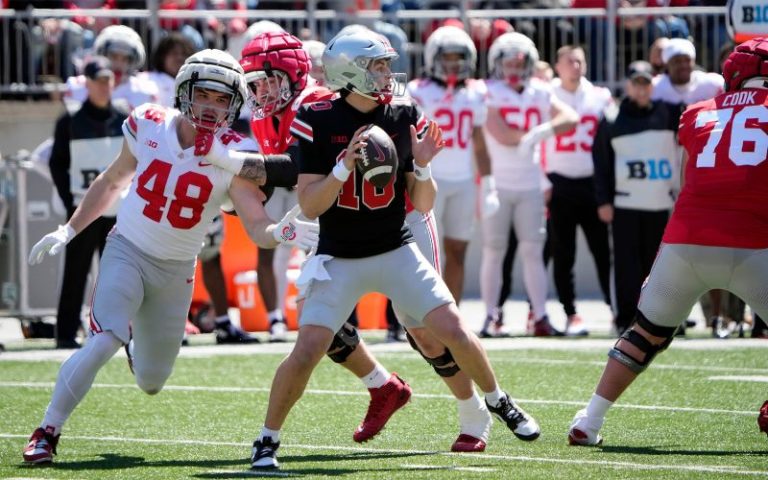
While college football adopted offseason workouts not long after Rutgers beat Princeton — Harvard claims to have conducted the first out-of-season practice on March 14, 1889 — the spring game truly flourished this century, as programs began to stage largescale recruiting spectacles around what had evolved into one of the tentpole events on the sport’s annual calendar.

Steadily, the traditional end-of-spring scrimmage began to adopt a far less essential on-field purpose. One contributing factor was the increase in overall interest in these showcases. In response to ESPN and conference-branded networks starting to broadcast dozens of games every spring, many programs opted for an overly narrow glimpse at personnel and the playbook so as not to provide any insight for opponents on that season’s schedule.

That represented a deviation from the spring game’s original intent: to provide a game-like atmosphere as a way to evaluate a larger roster and specific position-by-position competitions.

Now, amid similar concerns stemming from dramatic changes to the NCAA model, spring games are approaching the territory of leather helmets, wishbone offenses and the four-team playoff — former college football hallmarks that have drifted into antiquity.

“What I think is happening with spring games is a consequence of what is happening in college football in general,” said Baylor coach Dave Aranda.

Conventional spring games have gone from a luxury to a liability because of NIL and the transfer portal, which have combined to turn roster management and retention into a free-for-all frenzy. With very little to gain but much to lose by mirroring a realistic game-day environment, many coaches who once embraced the positives of the spring showcase have shifted toward a closed-door approach as a way to combat widespread player movement.

“There’s more potential downside than upside for us,” said SMU coach Rhett Lashlee.

Said Illinois coach Bret Bielema, “I always worry about outside voices. I’m not oblivious to the fact that our guys were probably contacted by college programs that want their services.”

Twenty-five Power Four teams have decided against the traditional spring scrimmage, including nearly half of the Big Ten. Among the programs opting for something more closely resembling a practice-like setting are Nebraska, Florida State, Southern California, Oklahoma, LSU and Texas.

The reasoning is simple: Coaches and programs have become openly wary of having their rosters poached by teams that see potential contributors on tape and, because of NIL enticements and the ease of the portal, have the wherewithal to sway players through unofficial channels.

“The word ‘tampering’ doesn’t exist anymore,” Nebraska coach Matt Rhule said. “It’s just an absolute free, open, common market. I don’t necessarily want to open up to the outside world and have people watch our guys and say, ‘He looks like a pretty good player. Let’s go get him.’

“Honestly, to me, it’s about protecting the roster and protecting through that portal period.”

This weekend is the final weekend where a significant portion of the Power Four schools will wrap up spring practice and look toward offseason preparations.

Texas coach Steve Sarkisian said the Longhorns will conduct NFL-style training sessions in lieu of a normal game. Arizona State is more focused on situational gameplay such as red-zone offense, coach Kenny Dillingham said. Nebraska will hold skills competitions and 7-on-7 games involving current and former players, among other events, and then a scrimmage featuring backup players battling for spots on the Cornhuskers’ roster.

Concerns that holding a spring game could influence roster makeup isn’t reserved for the Power Four. While major-conference teams might worry about the loss of depth and young talent not quite ready for larger roles, those on the Group of Five fear that starting-caliber players could be lured away by programs with much deeper pockets and ample NIL offerings.

“My primary intent is both to protect and retain our current roster and to keep our schemes and strategies unknown from our opponents for as long as possible,” Utah State coach Bronco Mendenhall said in announcing the Aggies will not hold a spring game and will close all spring practices to the public.

Overall, thousands of players have entered the portal since the first transfer window opened in December. The spring window closes on Friday, though players are only required to enter the portal during this period in order to be immediately eligible this season.

Canceling these spring games may have a minimal impact on the overwhelming amount of roster turnover every Bowl Subdivision program has encountered since the portal and NIL legislation went into effect earlier this decade.

“Listen, whether you have a spring game or not, it’s going to be tampering,” Clemson coach Dabo Swinney said.

A largely unregulated landscape has been intensified by the potentially seven-figure payouts handed out to college football’s best players at key positions such as quarterback, to the point where even starters at high-profile programs are evaluating their options in advance of the expected House settlement that will set an annual cap on athletics department spending on NIL.

In the most glaring example, former Tennessee quarterback Nico Iamaleava decided to transfer this month amid a dispute over his NIL contract. But Iamaleava’s departure for UCLA came before the Volunteers’ spring game; there was already plenty of tape establishing the sophomore as one of the most promising young passers in the FBS.

“People are going to tamper with our players whether we like it or not,” Sarkisian said. “That’s fine. Hopefully, we’ve built a culture and they believe in the development of the other guys before them in the program and feel this is the best place for them.”

Yet many programs have stayed the course and closed spring drills with an intrasquad scrimmage, accepting the tradeoff between the clear positives behind conducting a game-like setting — player development and the chance to evaluate the competition for a starring role — and the potential fallout of losing players into the portal.

“We have enough players that will benefit from the work that we think that offsets any of the other implications,” Utah coach Kyle Whittingham said. “You can’t be scared to do everything. We have to get guys better. That’s our number one objective.”

Even as these holdouts cling to tradition, the concept of a realistic, game-like scrimmage to close spring practices seems destined to be replaced by either modified jamborees or, as with the Longhorns, types of offseason training sessions designed to maximize development away from prying eyes.

One option raised this spring by Colorado coach Deion Sanders was a controlled scrimmage between two teams, which would mirror the NFL model. While Sanders’ call for an opponent was answered by Syracuse coach Fran Brown, the waiver was denied by the FBS oversight committee.

“Under current NCAA Bylaws, teams cannot play another school in the spring,” an NCAA spokesperson told USA TODAY Sports.

With no ready solution for balancing the need for development with the chance of largescale player movement, traditional spring games face an increasingly high likelihood of being erased from the college football schedule.

“To each his own,” said Florida coach Billy Napier. “I’m either going to have coaches tampering with my players, or I’m going to have a fanbase that’s pissed off at not having a spring game. It’s pick your poison.”

This post appeared first on USA TODAY

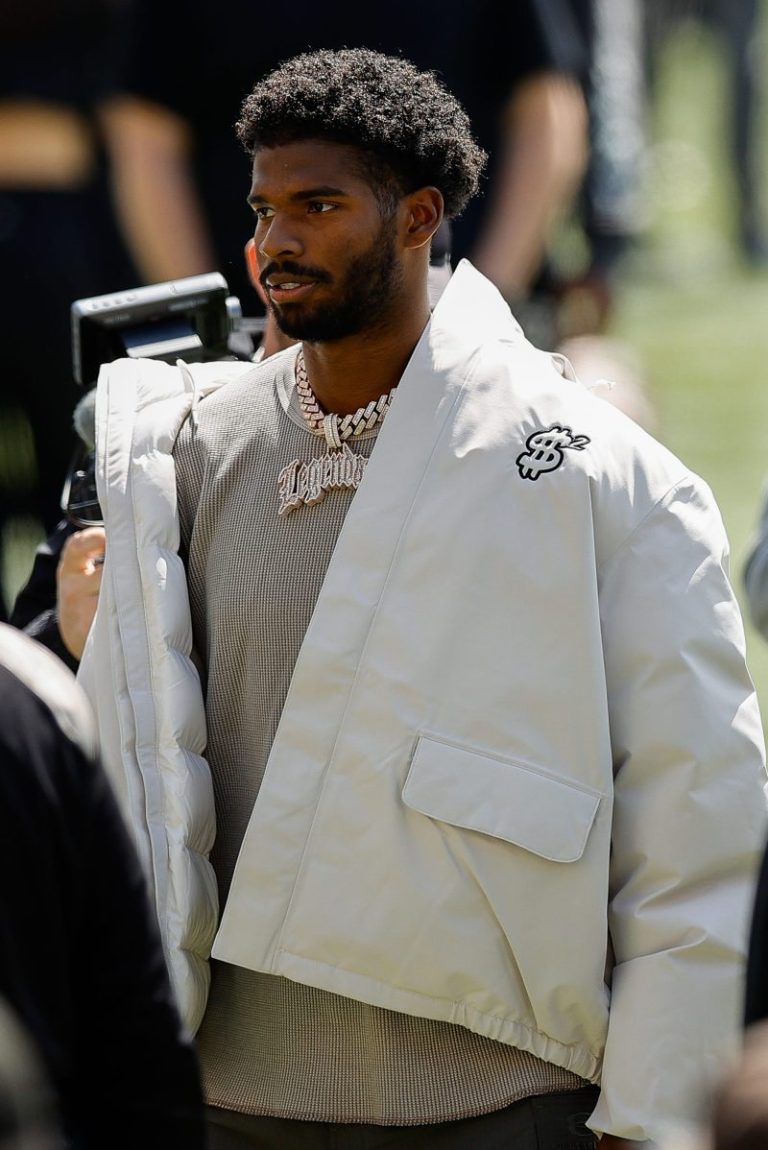
Shedeur Sanders’ wait to hear his name called will extend into the second day of the 2025 NFL draft. The former Colorado and Jackson State quarterback watched the first round from a party at the Sanders residence in Texas, without receiving a call from a team with the news that he’d been drafted. 

‘We all didn’t expect this of course, but I feel like with God, anything’s possible, everything’s possible,’ Sanders said while addressing his supporters in a video posted by his father, Deion Sanders, on Instagram. ‘I feel like this didn’t happen for no reason. All of this is, of course, fuel to the fire. Under no circumstance, we all know that this shouldn’t have happened. But we understand we onto bigger and better things. (Friday is) the day. We’re gonna be happy regardless.’

Sanders was never going to be drafted before Cam Ward, taken by the Tennessee Titans first overall. But he lost the race for second signal-caller off the board to Mississippi’s Jaxson Dart, who went to the New York Giants after “Big Blue” traded back into the first round to select Dart at No. 25. 

Sanders will feature prominently on the “Best Available” lists as the second round of the draft begins Friday. The Cleveland Browns, one of the teams that will almost certainly leave the draft with a quarterback, hold the first pick of the second round, 33rd overall, and three selections later pick at No. 36.

The son of Hall of Famer and Colorado head coach Deion Sanders, Shedeur Sanders was also linked to the Pittsburgh Steelers. But once they passed on him with the 21st overall pick, another team would have had to trade back into the first round to select Sanders. None did. And his wait continues.

This post appeared first on USA TODAY

A lot can change during the pre-draft season.

Colorado quarterback Shedeur Sanders once seemed to be a lock for the first round of the 2025 NFL Draft. He even appeared to be as high as being selected with a top-five pick to a quarterback-needy squad.

But that wasn’t meant to be. Instead, two quarterbacks heard their name called during the first round this year: No. 1 overall pick Cam Ward, and No. 25 selection Jaxson Dart, whom the Giants traded back into the first round to pick.

That leaves Sanders as one of the best available players on the board entering Day 2, and he should still have plenty of suitors entering the second day of the draft. Here’s who they could be:

Shedeur Sanders mock draft

Cleveland Browns

Pick: Round 2, No. 33

The Browns made a stunning trade on Thursday night, when they opted not to take Travis Hunter and instead trade down and select Mason Graham. Sanders to the Browns seems like a solid pick on paper: Sanders comes from a pro-ready offense where he operated under offensive coordinator Pat Shurmur. Shurmur has crossed paths with Browns head coach Kevin Stefanski, so the fit makes sense. With Deshaun Watson likely out for the 2025 season, the Browns roster features just Kenny Pickett and Joe Flacco. That room doesn’t exactly inspire confidence moving forward, and lacks a true long-term answer.

Las Vegas Raiders

Pick: Round 2, No. 37

Could the Raiders and Sanders be on a collision course after all?

The Raiders were another hotly rumored team to want to pick the passer in the first round in recent months, but they opted for running back Ashton Jeanty instead. Even though Pete Carroll and Geno Smith are reunited in Sin City, having Sanders as a potential successor to Smith could make sense for a few reasons: Carroll’s reputation boasts offenses that rely heavily on the running game, and Sanders sitting on the bench for a year or two could provide enough time for the passer to get acclimated to the NFL game.

While Smith signed an extension with the Raiders, Vegas can get out of the deal in a few years’ time. That could provide a convenient window to turn the keys over to the most pro-ready passer in the draft.

New Orleans Saints

Pick: Round 2, No. 40

Another team that faces major quarterback questions after Round 1 of the draft, the Saints have the Derek Carr shoulder casting a shadow over the QB room. With Spencer Rattler showing modest returns in limited action in 2024, Sanders could come in as a passer of new head coach Kellen Moore’s choosing.

Some rumors connected the Saints to quarterbacks in recent months, but they left Round 1 instead with offensive tackle Kelvin Banks.

Indianapolis Colts

Pick: Round 2, No. 45

The Anthony Richardson-Colts marriage took more than a few left turns this past season, and the seeming distrust led to a one-year, $14 million contract for quarterback Daniel Jones. That’s not exactly backup quarterback money, and the desire to bring in competition for the 2023 first-round pick means patience might be wearing a little thin for Richardson.

If Indianapolis is still so unsure of the passer they took No. 3 overall just two years ago, it might benefit head coach Shane Steichen and Co. to just rip the Band-Aid off and give Sanders the opportunity to be a long-term answer. It would ruffle feathers, but the Richardson tenure has seemed to do just that, anyway.

All the NFL news on and off the field. Sign up for USA TODAY’s 4th and Monday newsletter.

This post appeared first on USA TODAY

In this video, Joe highlights key technical setups in select country ETFs that are showing strength right now. He analyzes monthly and weekly MACD, ADX, and RSI trends that are signaling momentum shifts. Joe also reviews the critical level to watch on the S&P 500 (SPX), while breaking down important patterns in the QQQ, IWM, and Bitcoin. As always, he finishes with analysis on your most-requested stocks, applying his trusted multi-timeframe approach.

The video premiered on April 23, 2025. Click this link to watch on Joe’s dedicated page.

Archived videos from Joe are available at this link. Send symbol requests to stocktalk@stockcharts.com; you can also submit a request in the comments section below the video on YouTube. Symbol Requests can be sent in throughout the week prior to the next show.

The oil sector faced volatility throughout the first quarter of 2025.

Concerns around weak demand, increasing supply and trade tensions came to head in early April, pushing oil prices to four year lows and eroding the support Brent and West Texas Intermediate (WTI) had above the US$65 per barrel level.

Starting the year at US$75 (Brent) and US$72 (WTI), the oil benchmarks rallied in mid-January, reaching five month highs of US$81.86 and US$78.90, respectively. Tariff threats and trade tensions between the US and China, along with soft demand in Asia and Europe, dampened the global economic outlook for 2025 and added headwinds for oil prices.

This pressure caused oil prices to slip to Q1 lows of US$69.12 (Brent) and US$66.06 (WTI) in early March.

“The macroeconomic conditions that underpin our oil demand projections deteriorated over the past month as trade tensions escalated between the United States and several other countries,” a March oil market report from the International Energy Agency (IEA) notes, highlighting the downside risks of US tariffs and retaliatory measures.

The instability and weaker-than-expected consumption from advanced and developing economies prompted the IEA to downgrade its growth estimates for Q4 2024 and Q1 2025 to about 1.2 million barrels per day.

Despite the uncertain outlook, an announcement that OPEC+ would extend a 2.2 million barrel per day production cut into Q2 added some support to the market amid global growth concerns and rising output in the US.

Prices spiked at the end of March, pushing both benchmarks to within a dollar of their 2025 start values. However, the rally was short-lived and prices had plummeted by April 9.

Oil prices fall as OPEC hikes output and supply risks mount

WTI price performance, December 31, 2024, to April 23, 2025.

Sinking to four year lows, Brent and WTI fell below the critical US$60 per barrel threshold, to US$58.62 (Brent) and US$55.38 (WTI), lows not seen since April 2021. The decline saw prices shed more than 21 percent between January and April shaking the market and investor confidence.

Watch Hansen discuss where oil and other commodities are heading.

According to Hansen, if prices remain in the high US$50 range US production will likely decrease, aiding in a broader market realignment. ‘Eventually we will see production start to slow in the US, probably other places as well, and that will help balance the market,” the expert explained in the interview. “Helping to offset some of the risk related to recession, but also some of the production increases that we’re seeing from OPEC.”

In early April, OPEC+ did an about face when it announced plans for a significant increase in oil production, marking its first output hike since 2022. The group plans to add 411,000 barrels per day (bpd) to the market starting in May, effectively accelerating its previously gradual supply increase strategy.

Although the group cited “supporting market stability” as the reasoning behind the increase, some analysts believe the decision is a punitive one targeted at countries like Iraq and Kazakhstan who consistently exceed production quotas.

“(The increase) is basically in order to punish some of the over producers,” said Hansen. He went on to explain that Kazakhstan produced 400,000 barrels beyond its quota.

If these countries return to their agreed limits, it could offset OPEC’s planned production hikes.

At the same time, US sanctions on Iran and Venezuela may tighten global supply further, while a growing military presence in the Middle East also signals rising geopolitical risks, particularly involving Iran.

Oil price forecast for 2025

As such Hansen expects prices to fluctuate between US$60 to US$80 for the rest of the year.

“(I am) struggling to see, prices collapse much further than that, simply because it will have a counterproductive impact on supply and that will eventually help stabilize prices,” said Hansen.

Hansen’s projections also fall inline with data from the US Energy Information Administration (EIA). The organization downgraded the US$74 Brent price forecast it set in March to US$68 in April.

The EIA foresees US and global oil production to continue rising in 2025, as OPEC+ speeds up its planned output increases and US energy remains exempt from new tariffs.

Starting mid-year, global oil inventories are projected to build. However, the EIA warns that economic uncertainty could dampen demand growth for petroleum products, potentially falling short of earlier forecasts.

“The combination of growing supply and lower demand leads EIA to expect the Brent crude oil price to average less than US$70 per barrel in 2025 and fall to an average of just over US$60 per barrel in 2026,” the April report read.

Supply concerns add tailwinds for natural gas

On the natural gas side, Q1 was marked by tight conditions amid rising demand. A colder-than-normal winter led to increased consumption, with US natural gas withdrawals in Q1 exceeding the five-year average.

Starting the year at US$3.59 per metric million British thermal units, prices rose to a year-to-date high of US$4.51 on March 10. Values pulled back by the end of the 90 day period to the US$4.09 level, registering a 13.9 percent increase for Q1.

‘Cold weather during January and February led to increased natural gas consumption and large natural gas withdrawals from inventories,” a March report from the EIA explains.

Natural gas price performance, December 31, 2024, to April 23, 2025.

“(The) EIA now expects natural gas inventories to fall below 1.7 trillion cubic feet at the end of March, which is 10 percent below the previous five-year average and 6 percent less natural gas in storage for that time of year than EIA had expected last month,’ the document continues.

Natural gas price forecast for 2025

Following record setting demand growth in 2024 the gas market is expected to remain tight through 2025, amid market expansion from Asian countries.

The IEA also pointed to price volatility brought on geopolitical tensions as a factor that could move markets.

“Though the halt of Russian piped gas transit via Ukraine on 1 January 2025 does not pose an imminent supply security risk for the European Union, it could increase LNG import requirements and tighten market fundamentals in 2025,” the organization notes in a gas market report for Q1.

Although the market is forecasted to remain tight the IEA expects growth in global gas demand to slow to below 2 percent in 2025. Similarly to 2024’s trajectory, growth is set to be largely driven by Asia, which is expected to account for almost 45 percent of incremental gas demand, the report read.

THe US-based EIA has a more optimistic outlook for the domestic gas sector, projecting the annual demand growth rate to be 4 percent for 2025.

“This increase is led by an 18 percent increase in exports and a 9 percent increase in residential and commercial consumption for space heating,” an April EIA market overview states.

The report attributes the expected export growth to increased liquefied natural gas (LNG) shipments out of two new LNG export facilities, Plaquemines Phase 1 and Golden Pass LNG.

Venture Global’s (NYSE:VG) Plaquemines LNG facility in Louisiana commenced production in December 2024 and is currently in the commissioning phase.

Once fully operational, it is expected to have a capacity of 20 million metric tons per annum. The facility has entered into binding long-term sales agreements for its full capacity

Golden Pass LNG, a joint venture between ExxonMobil (NYSE:XOM) and state-owned QatarEnergy, is under construction in Sabine Pass, Texas. The project has faced delays due to the bankruptcy of a key contractor, with Train 1 now expected to be operational by late 2025 . Upon completion, Golden Pass LNG will have an export capacity of up to 18.1 million metric tons per annum.

The EIA forecasts natural gas prices to average US$4.30 in 2025, a US$2.10 increase from 2025. Farther ahead the EIA has a more modest forecast of US$4.60 for 2026.

Securities Disclosure: I, Georgia Williams, hold no direct investment interest in any company mentioned in this article.

Keep reading…Show less
This post appeared first on investingnews.com