Author

admin

Browsing

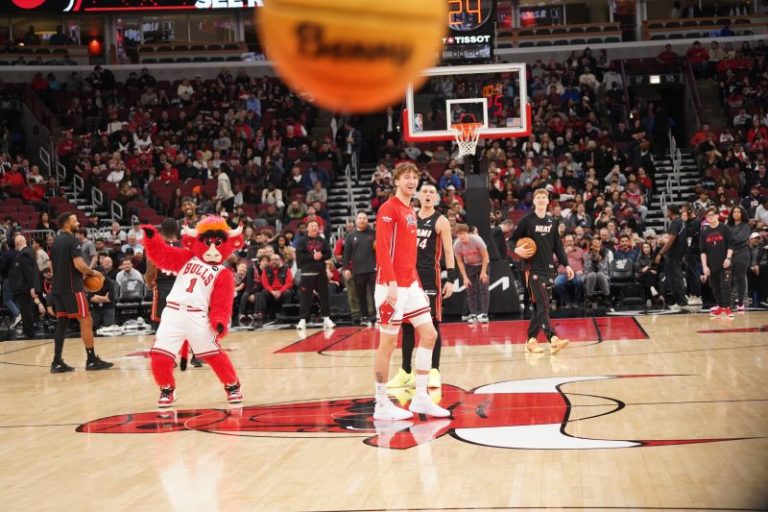
Thursday night’s Miami Heat-Chicago Bulls game has been postponed ‘due to moisture on the floor rendering the court unplayable,’ the NBA said in a statement.

The announcement that the game at Chicago’s United Center was off came nearly two hours after the contest was supposed to tip off.

Per the NBA, ‘the date for the rescheduled game will be announced at a later time.’

The Jan. 8 game was scheduled to start a little after 8 p.m. ET (7 p.m. local). CHSN’s K.C. Johnson had reported at 8:49 p.m. ET that players had returned to the locker room and at 9:46 p.m. ET, Johnson reported that players had come back out to ‘mingle/talk and now are headed back to locker room.’

The Bulls said tickets for Thursday’s game ‘will be valid for the rescheduled game.’

‘We apologize for any inconvenience,’ the Bulls said.

Johnson reported the decision to postpone ‘was reached by the NBA in consultation with the officiating crew and both head coaches.’

‘We always want to try to go. But players were complaining about it on both sides,’ Heat coach Erik Spoelstra said, per Johnson. ‘Staff went out there and pretty much immediately we felt that it wasn’t playable.’

This story has been updated with new information.

This post appeared first on USA TODAY

  • Figure skater Maxim Naumov honored his late parents with his short program at the U.S. championships.
  • Naumov’s parents, both former Olympic skaters, were killed in a plane crash in January 2025.
  • He held a photo of his parents while awaiting his score, which temporarily put him in first place.
  • Naumov finished the short program in fourth place and is a contender for a spot on the 2026 U.S. Olympic team.

ST. LOUIS — Maxim Naumov wasn’t going to find out his score alone.

As the 24-year-old figure skater awaited the results of his short program at the U.S. championships on Thursday, he pulled out a photo. It was a picture of him, about 3 years old, holding hands with his mom and dad. It was the first time on the ice with white skates.

Naumov’s parents, Russian Olympic pair skaters Vadim Naumov and Evgenia Shishkova, were two of the 67 people killed in the January 2025 plane crash near Ronald Reagan Washington National Airport in Arlington, Virginia, that devastated the figure skating community. Vadim and Evgenia were two of the 28 coaches, young skaters and parents who were returning from a development camp in Wichita, Kansas, held in conjunction with last year’s 2025 U.S. nationals.

Naumov gave the photo a kiss. All he could think about were their smiles and what they would say to him.

The score was revealed. An 85.72. It put Naumov in first place for the moment. He burst into tears, holding that photo to his face as the crowd erupted in ovation.

It was his parents who got him on the ice, and in one of the biggest moments of his career, they were there to hold him one more time. 

“This program is very meaningful to me, and I spent so much time in practice connecting with it and evolving it and developing it to be as good as I can possibly make it,” Naumov told USA TODAY Sports. “To go out there and really share that emotion with everybody has been unreal.”

It’s been an emotional 12 months for Naumov. He didn’t know if he was going to continue competing after he lost his parents. But he decided to return to the ice, and it led to the beautiful moment inside Enterprise Center.

Anticipation had been building. The crowd gave him one of the loudest cheers of the night when he was announced for the warmups, and it only got louder when it was his time to take the ice. He told the NBC broadcast his family has a mantra: We have to fight. He was repeating it in his head as he walked the hallway before his performance.

He admitted it wasn’t a perfect skate, adding his dad probably would’ve told him to be “a little bit more confident.” However, he landed his jumps and avoided any major tumbles. He conveyed the emotions of the skate, the crowd taking the journey alongside him.

“I felt like I learned something new about myself every single competition that I did. Something new to work on after each one, something to focus on, something to drill in training, all leading up to this exact thing right here,” Naumov said. “It wasn’t perfect, but we still did so many of the things that we worked on, and I continue to do so.”

When he finished and he sat on the ice, the audience gave him a standing ovation. He soaked up all of it as he looked around the arena to see all the people applauding him.

“Sharing the vulnerability with the audience and me feeling their energy back has been something I remember for the rest of my life,” he said.

By the end of everyone’s short program, Naumov was in fourth place, less than three points behind third-place Jason Brown. He finished fourth at each of the last three nationals, but there is a chance for him to finish this year on the podium – and possibly achieve more by the end of the weekend.

Naumov is in the conversation to claim one of the three men’s spots the U.S. has for the 2026 Winter Olympics. Ilia Malinin is a shoe-in and Jason Brown will likely get the second selection, but the third spot is completely up for grabs. It could go to Naumov, Tomoki Hiwatashi, Andrew Torgashev or another skater.

Naumov has his eyes set on achieving “the ultimate goal” of his first Winter Olympics. He said one of the last conversations he had with his parents was about making it to Milano Cortina.

If he does get the nod, it won’t just be a major accomplishment, but also one of the biggest stories at the Games. But if he doesn’t, he has shown he is one of the most resilient skaters in the world, becoming someone you can’t help but root for.

“Even at a time like this, having the opportunity to be here again was just another example of how capable I am in really difficult times,” Naumov said. 

And he’s done it with mom and dad by his side.

Get our Chasing Gold Olympics newsletter in your inbox for coverage of your favorite Team USA athletes

This post appeared first on USA TODAY

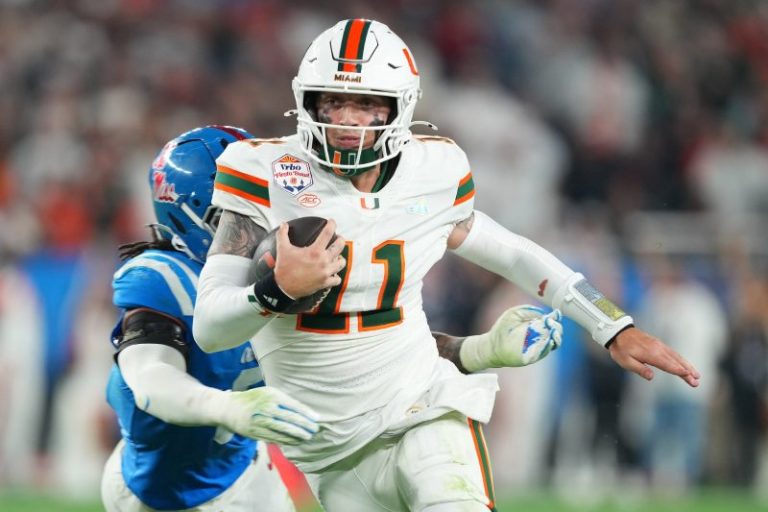
But Beck and the Hurricanes decided they weren’t done, and the sixth-year senior delivered. Beck capped off a 15-play, 75-yard drive ending in a 3-yard touchdown run with 18 seconds left after making huge throws to set up the scramble.

The Georgia transfer completed 23-of-37 passes for 268 yards with two touchdowns to an interception, also rushing for a score. Beck never started in a CFP game at Georgia but is now leading the Hurricanes into the national championship game.

Now, Miami gets to return home, with the Jan. 19 national title game being held at Hard Rock Stadium in Miami Gardens, Florida. It has been a storybook run for the Hurricanes, who have gone from CFP bubble team to the national championship, where it’ll face the winner of Indiana and Oregon.

Here are the highlights from Miami’s 31-27 win over Ole Miss in the Fiesta Bowl.

Fiesta Bowl: Ole Miss vs Miami score

Fiesta Bowl: Ole Miss vs Miami highlights

This section will be updated.

Miami heading to national championship

Chambliss’ throw for the end zone is too long, and Miami comes back to win 31-27. The Hurricanes make a statement and are heading to the national championship game despite barely reaching the CFP.

Ole Miss not done yet

Chambliss hits on gains of 23 and 17 yards to put Ole Miss on Miami’s 35-yard line with five seconds left. The Rebels going to have a shot at the end zone here.

Miami goes on top

Carson Beck takes it himself for a 3-yard touchdown scramble to give Miami a 31-27 lead with 18 seconds left. What a drive for Beck, who leads the Hurricanes on a 15-play, 75-yard scoring drive where he made numerous big throws.

The sixth-year senior quarterback has delivered tonight.

Ole Miss takes lead

Ole Miss and Miami keep trading punches, and the Rebels deliver the latest jab. Trinidad Chambliss finds Dae’Quan Wright for a 24-yard touchdown, then hits Caleb Odom for the 2-point conversion.

The Rebels lead 27-24 with 3:13 left in the fourth quarter after the huge drive by Chambliss.

Miami responds

Carson Beck fires a quick pass to Malachi Toney, who does the rest as he runs 36 yards for the touchdown to give Miami a 24-19 lead with 5:04 remaining in the fourth quarter. It’s a huge response for the Hurricanes, who need only four plays and 1:56 of game clock on the scoring drive.

Ole Miss has to go find the end zone now.

Ole Miss takes lead

Miami holds Ole Miss out of the end zone, although the Rebels take a 19-17 lead on a 21-yard field goal by Lucas Carneiro. Ole Miss caps off its 13-play, 86-yard drive inside Miami’s 5-yard line without a touchdown.

Xavier Lucas disqualified for targeting

Xavier Lucas is called for targeting on Cayden Lee on a third-and-9 catch for a first down. The play results in a 15-yard penalty and Lucas being disqualified for the remainder of the game and likely the first half of the national championship game, should Miami win.

Kewan Lacy re-enters

Kewan Lacy takes his first carry of the second half. He’s now wearing a sleeve on his right leg as he battles a hamstring injury.

Ole Miss forces punt after back-to-back sacks

Ole Miss gets to Carson Beck on second and third down sacks by Suntarine Perkins and Will Echoles, respectively. The Rebels are up to four sacks on the night and have a chance to take the lead with 12:19 left in the fourth quarter.

This one is shaping up to have a fun finish.

Ole Miss makes field goal

Lucas Carneiro hits the upright again, however this time it doinks in for a 54-yard field goal make. Ole Miss trails 17-16 with 22 seconds left in the third quarter.

Carneiro is 3-of-4 on field goal attempts tonight.

Ole Miss intercepts Carson Beck

Ole Miss gets a huge turnover, as Carson Beck’s pass is tipped into the air at the line of scrimmage and intercepted by Kapena Gushiken in the red zone.

The Rebels take over at their own 24-yard line after the huge play, which keeps Miami from potentially taking a two-score lead late in the third quarter. Ole Miss still trails 17-13.

Ole Miss misses field goal

Multiple Miami defenders bobble a would-be interception on third-and-10, but it doesn’t matter as Lucas Carneiro misses a 51-yard field goal off the left upright. The miss is Carneiro’s first of his eight field goal attempts in the College Football Playoff.

Miami misses field goal

Carter Davis misses a 51-yard field goal to end the opening drive of the second half. Miami was set behind the chains on an intentional grounding penalty from Carson Beck, which came after Ole Miss dialed up some pressure.

Kewan Lacy injury update

Ole Miss star running back Kewan Lacy is dealing with a hamstring injury, and coach Pete Golding told ESPN’s Holly Rowe at halftime that the team would go over his issue in the locker room. Losing Lacy, who led the SEC in rushing touchdowns this season, would be a huge blow for the Rebels.

Lacy appeared to suffer the injury on his touchdown run in the second quarter and hasn’t appeared since.

Read more on Lacy’s status here.

Lucas Carneiro hits deep field goal

Wow, Lucas Carneiro sinks a 58-yard field goal to reduce Ole Miss deficit to 17-13 with 11 seconds before halftime. That kick would’ve been good from much deeper than 58 yards, as it had plenty of distance.

Ole Miss punts

Ole Miss hasn’t found much success offensively outside of Kewan Lacy’s long touchdown run. The Rebels have gained 43 yards on 17 plays outside of the 73-yard touchdown early in the second quarter.

Trinidad Chambliss is 6-of-8 passing for 42 yards.

Miami scores again

Keelan Marion is wide open downfield, and Carson Beck hits him easily for a 52-yard touchdown. Looks like a busted coverage by Ole Miss.

Beck is off to a fabulous start, as he has completed 14-of-18 passes for 156 yards with a touchdown. His yardage is already more than he had against Texas A&M and Ohio State in Miami’s other CFP wins.

Ole Miss ties it

Lucas Carneiro, the hero of Ole Miss’ win over Georgia in the Sugar Bowl, hits from 42 yards out to even the score at 10-10 with 4:38 left before halftime.

Miami might have been bailed out there, as it avoids being flagged for a late hit on Chambliss on third-and-7 from the 24-yard line.

Miami responds with long scoring drive

Miami responds with a huge drive ending in a 4-yard touchdown run by CharMar Brown to regain the lead. The Hurricanes take a whopping 7:41 of game clock after the 15-play, 75-yard drive.

Miami’s blueprint of long, grinding drives in the CFP continues to work.

Ole Miss strikes

All it takes is one play for this Ole Miss offense. Kewan Lacy houses a handoff after outrunning Miami for a 73-yard touchdown. The Rebels lead 7-3 after the first play of the second quarter, gaining its first first down of the game in the process.

Miami punts

A holding penalty and a false start on third-and-9 result in Miami punting on its second possession. Ole Miss takes over on its own 20-yard line and can likely run a play before the first quarter ends.

Miami forces another three-and-out

This Miami defensive just keeps getting pressure, as it has all postseason. The Hurricanes force another three-and-out and are living in the backfield so far, making things quite uncomfortable for Chambliss.

Miami takes 3-0 lead

Miami caps off a 13-play, 44-yard drive with a 38-yard field goal to take a 3-0 lead in the first quarter. The Hurricanes’ drive burns 6:59 of clock as Beck attempts four passes.

Ole Miss goes three-and-out

Miami picks up right where it left off defensively, forcing Ole Miss to a three-and-out. The Hurricanes take over with good field position on their own 45-yard line.

Ole Miss starts on offense

The first of two CFP semifinal games is underway. Ole Miss starts with possession in the Fiesta Bowl, and here comes Trinidad Chambliss.

Nick Saban assistants in CFP

All four remaining head coaches in the CFP are former assistants under Nick Saban at Alabama, including Ole Miss’ Pete Golding and Miami’s Mario Cristobal. ESPN’s ‘College GameDay’ asked each coach what they learned from Saban:

Will Trinidad Chambliss play next season?

Chambliss is currently awaiting a decision from the NCAA for a retroactive redshirt for the 2022 season, which would allow him to play the 2026 season.

The fifth-year senior spent four seasons at Ferris State, although he redshirted as a true freshman in 2021 before sitting out in 2022 as he battled health issues. He has already agreed to return to Ole Miss for next season, should he receive the eligibility waiver.

Mark Fletcher stats

Miami running back Mark Fletcher has been the Hurricanes’ best offensive player in the CFP so far. Here’s a look at how he performed in Miami’s two CFP wins, along with his season stats.

  • vs. Ohio State: 19 carries for 90 yards with two receptions for 25 yards and a touchdown
  • at Texas A&M: 17 carries for 172 yards
  • 2025-26 stats: 177 carries for 943 yards with 10 touchdowns; 16 receptions for 132 yards with two touchdowns

Where is Miami vs Ole Miss game today?

  • Location: State Farm Stadium (Glendale, Arizona)

Miami and Ole Miss will face in the Fiesta Bowl at State Farm Stadium in Glendale, Arizona, where the NFL’s Arizona Cardinals play their home games.

What TV channel is Miami vs Ole Miss on today?

  • TV: ESPN
  • Streaming: ESPN app | Fubo (free trial)

The CFP Fiesta Bowl semifinal between Miami and Ole Miss will air nationally on ESPN, with Chris Fowler (play-by-play) and Kirk Herbstreit (analyst) calling the game and Holly Rowe serving as the sideline reporter.

Streaming options for the game include the ESPN app (with a cable login) and Fubo, the latter of which offers a free trial to potential subscribers.

Miami vs Ole Miss time today

  • Date: Thursday, Jan. 8
  • Time: 7:30 p.m. ET
  • Location: State Farm Stadium (Glendale, Arizona)

Miami and Ole Miss are scheduled to kick off at 7:30 p.m. ET from State Farm Stadium in Glendale, Arizona.

Miami vs Ole Miss predictions, picks, odds

Odds courtesy of BetMGM as of Sunday, Jan. 4

  • Spread: Miami (-3.5)
  • Over/under: 51.5
  • Moneyline: Miami (-180) | Ole Miss (+150)

Prediction: Ole Miss 27, Miami 20

The magical run for Ole Miss continues, while the clock strikes midnight for Cristobal and Miami’s run. While the Hurricanes’ defense has carried them, Chambliss presents a different challenge and continues to make heroic plays to help the Rebels advance to the championship game. — Ehsan Kassim, USA TODAY.

Here’s who experts within the USA TODAY Sports Network picked to win the Fiesta Bowl:

  • Ole Miss 31, Miami 24: The Hurricanes’ pass rush put Julian Sayin in a blender in the Cotton Bowl. Trinidad Chambliss’ mobility and whirling dervish style should give the Rebels’ offense a chance the Buckeyes never had. On the other side of the ball, I trust Pete Golding to scheme up a defense that forces Carson Beck to win the game. Beck hasn’t thrown for more than 150 yards in either of Miami’s CFP wins, while the Rebels have proven you’ll need to score more than 24 points to beat them – heck, you may have to score 40. — Matt Glenesk, USA TODAY
  • Ole Miss 23, Miami 7: Miami has come out and exceeded all expectations, and that should be recognized. Beating Texas A&M and Ohio State in back-to-back weeks is huge for a program that backed into the CFP at the last moment. But Pete Golding proved his mettle as a coach going toe-to-toe against an SEC behemoth in Georgia, and he should find a way to make Carson Beck’s life difficult. Combine that with how difficult it is to contain Trinidad Chambliss, despite the utterly elite pass rushers Miami has, and it’s a tough matchup for Miami. To its credit, the past two have been tough as well. But the buck stops in Glendale. — Kevin Skiver, USA TODAY
  • Miami 27, Ole Miss 23: At some point —and this may just be stubbornly holding on to a week-old opinion — the inherent instability and awkwardness of the Rebels’ situation is going to be a factor, though it obviously hasn’t through two games in the playoff. Trinidad Chambliss is mesmerizing, but he hasn’t faced a pass rush quite as ferocious as Miami’s, and the Hurricanes’ offense will do just enough to keep their run going all the way to the title game. The prospect of a turnover-filled dud for Carson Beck only makes me so confident in this pick, though. — Craig Meyer, USA TODAY
This post appeared first on USA TODAY

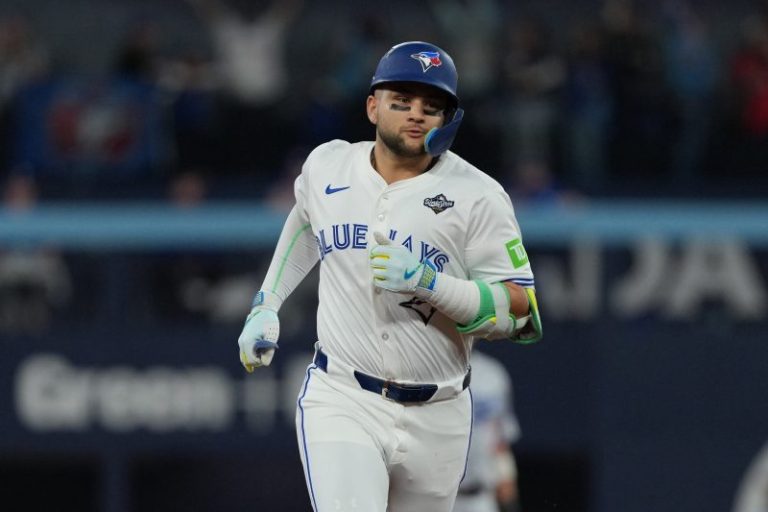
The Philadelphia Phillies, frustrated in their negotiations to bring back free-agent catcher J.T. Realmuto, are looking into the possibility of shaking up their roster and finding a creative way to add free-agent infielder Bo Bichette, a high-ranking Phillies executive told USA TODAY Sports.

The official spoke on the condition of anonymity due to the sensitivity of ongoing talks, but confirmed a report by The Athletic that the Phillies scheduled a virtual meeting with Bichette on Monday, Jan. 12 to discuss the possibility of joining the Phillies.

Two Phillies executives cautioned that signing Bichette remains a long-shot, insisting it would be complicated and involve significant roster changes, but that it’s certainly possible.

The Phillies would have to cut off negotiations with Realmuto, trade third baseman Alec Bohm and his $10.2 million salary, find a team who would take right fielder Nick Castellanos and pay at least a small portion of his $20 million salary, and perhaps move others as well.

The Phillies’ interest in potentially signing Bichette came about after the holidays when Bichette expressed a desire in playing for them, particularly after the hiring last week of Don Mattingly as their bench coach. Mattingly was the Toronto Blue Jays’ bench coach the past three years and became close to Bichette.

Bichette, 27, who has played shortstop throughout his career, also said he would be willing to move to second base, where he appeared during the World Series, or even third base.

Certainly, there is competition for Bichette, who is seeking a long-term deal likely worth at least $250 million. If the Boston Red Sox can’t re-sign shortstop Alex Bregman, they’ll turn to Bichette. The Chicago Cubs have expressed interest in both infielders. The Los Angeles Dodgers would gladly sign Bichette if he was interested on a short-term contract. And the door isn’t shut on a return to Toronto, where he has spent his entire career.

Still, with a projected luxury payroll of about $300 million, according to Spotrac, the Phillies say they would need to clear salary for Bichette. They would also need to find a catcher to replace Realmuto, 35, their three-time All-Star and two-time Gold Glove winner, who has been instrumental in their four-year playoff run.

The Phillies say they’re serious, and perhaps by next week we’ll find out just how realistic this could actually become, with Bichette being the latest high-priced star to join the Phillies.

Follow Bob Nightengale on X @Bnightengale.

This post appeared first on USA TODAY
Investor Insight

E-Power Resources offers investors high-grade exposure to the rapidly expanding flake graphite sector through one of Québec’s most promising districts. With a strategic land position, near-surface discoveries, and a leadership team experienced in exploration and capital markets, E-Power is positioned to help supply North America’s critical battery materials chain.

Overview

E-Power Resources (CSE:EPR) is a Montréal-based company focused on advancing its flagship Tetepisca graphite property in Québec’s North Shore region. The company’s mission is to delineate and develop a high-grade, near-surface flake-graphite resource capable of supplying future North American battery-anode demand.

Since entering the Tetepisca district in 2019, E-Power has systematically advanced its project from regional geophysics to mapping, sampling, drilling and metallurgical testing. This disciplined exploration pipeline has confirmed the presence of district-scale, high-purity graphite mineralization within the same geological sequence that hosts neighboring deposits such as Focus Graphite’s Lac Tetepisca and Nouveau Monde Graphite’s Uatnan, which together hold more than 120 million tons (Mt) measured + indicated at approximately 14 percent Cg.

Graphite demand is accelerating globally as electric-vehicle production and energy-storage capacity expand. Québec’s hydroelectric grid, pro-mining policy environment, and rapidly developing anode-manufacturing infrastructure make it a world-class jurisdiction for low-carbon graphite development. Within this setting, E-Power’s land position, grade profile and technical results uniquely position the company to become a core participant in Canada’s graphite-to-battery supply chain.

Company Highlights

  • Flagship project in Québec’s premier graphite district: 100-percent-owned Tetepisca Property, 234 contiguous claims covering ≈ 12,840 ha, the largest land position in the district
  • Exceptional grades: 2025 surface sampling returned up to 68.7 percent Cg (carbon in graphite form) at the Graphi-Centre target, among the highest reported globally
  • High-purity metallurgy: 2024 bulk sampling produced concentrates grading up to 96.4 percent Cg, validating commercial potential.
  • Strategic infrastructure advantage: ~220 km from Baie-Comeau and within trucking distance of a planned 200,000 tons per year (tpy) graphite-anode facility, anchoring Québec’s battery-materials hub.
  • Surging Market Demand: With global battery production accelerating, the graphite market is forecast to soar, positioning E-Power to benefit from one of the most dynamic growth trends in the energy materials sector.
  • Led by Experience: Backed by a strong, technically skilled management team, E-Power is strategically positioned to advance North American graphite independence and capture growing demand in the energy transition economy.

Key Project

Tetepisca Graphite Project

The Tetepisca graphite property is approximately 220 km north of Baie-Comeau, covering 234 contiguous claims (~12,840 ha) in the heart of the Tetepisca Graphite District (TGD). The property is 100-percent-owned by E-Power and hosts the same graphitic metasedimentary units that define the district’s producing and feasibility-stage assets.

District-Scale Opportunity

The TGD is an emerging flake-graphite camp that now hosts more than 120 Mt of measured and indicated resources averaging ~14 percent Cg across nearby projects such as Nouveau Monde Graphite’s Uatnan and Focus Graphite’s Lac Tetepisca deposits.

E-Power controls the largest contiguous land position in the district, strategically covering the same graphitic metasedimentary horizons that host these deposits. The district’s proximity to the planned 200,000 tpy graphite-anode facility in Baie-Comeau creates a unique alignment of resource, infrastructure and processing capability, positioning E-Power as a potential key upstream feed source for Québec’s integrated graphite-to-anode supply chain.

2024–2025 Exploration Results

E-Power’s work since 2021 has validated the property’s high-grade, near-surface potential.

  • The 2025 Phase 1 program returned grab samples up to 68.7 percent Cg at the Graphi-Centre target, one of the highest surface graphite grades reported globally.
  • New discoveries on the northern claim block (N3 and N4 targets) yielded multiple samples exceeding 20 percent Cg, extending graphite mineralization across more than 330 meters of strike within continuous conductive trends.
  • The Syndicate Trend, a 12 km linear conductor in the southwest, produced a new showing with grades of 54.7 percent Cg within a broader corridor that includes a historical drill intercept of 12.74 percent Cg over 9.55 meters.
  • Metallurgical test work from 2024 bulk sampling confirmed high-purity concentrates of up to 96.4 percent Cg, with additional mineralogy and flake-size distribution studies underway to define commercial product potential.

E-Power’s 2025–2026 work program will focus on advancing the Tetepisca property toward an initial resource estimate. Key activities include expanded fieldwork and metallurgical testing at the Graphi-Centre, Captain Cosmos and Syndicate showings; follow-up ground and drone-borne geophysical surveys to refine drill targets; and a focused drilling campaign designed to define near-surface, high-grade graphite zones. In parallel, the company is initiating early environmental baseline and access studies to support future development and potential partnerships within Québec’s growing graphite-to-anode supply chain.

Management Team

Jean-Michel Gauthier – Chief Executive Officer

Jean-Michel Gauthier contributes significant expertise in capital markets, corporate development and strategic positioning within the resource sector. His focus will be on ensuring the optimal deployment of capital and maximizing the inherent value of the Tetepisca Project as it advances through key de-risking stages.

Mark Billings – Chairman of the Board

Mark Billings is a highly respected finance professional in the Canadian resource sector, bringing extensive investment banking and corporate finance experience. His prior roles, including VP corporate finance at Desjardins Securities, provide a crucial foundation for guiding E-Power’s capital formation and strategic financing plans necessary for the Tetepisca Project’s development phases.

Jamie Lavigne – Chief Operating Officer

Jamie Lavigne is a professional economic geologist with over 30 years of experience in exploration and mine development. He has worked with major Canadian and Australian mining companies and several junior explorers and operates his own consulting firm. Lavigne holds a B.Sc. from Memorial University and an MSc. from the University of Ottawa. He is a member of L’Ordre des Géologues du Québec and the Northwest Territories and Nunavut Association of Professional Engineers and Geoscientists.

Paul Haber – Chief Financial Officer and Corporate Secretary

Paul Haber brings over 20 years of experience in corporate finance and capital markets. He has served as CFO, board member, and audit chair for numerous public and private companies, including XTM (CSE:PAID), South American Silver (TSX:SAC), and Migao Corporation (TSX:MGO). A CPA and CA, Haber began his career at Coopers & Lybrand and holds an Honours B.A. in Management from the University of Toronto. He also holds a Chartered Director designation from the DeGroote School of Business and the Conference Board of Canada.

Christian Falk – Advisory Board Member

Christian Falk is co-founder of Camet AG, Zug Switzerland and Vega Metals Trading in Montreal, Canada. He offers more than 16 years of global mining and metals trading experience, including significant tenure with Glencore International AG. His expertise in global graphite and critical metals markets will be critical in formulating E-Power’s downstream commercial strategy and understanding customer specifications.
This post appeared first on investingnews.com

Alain Corbani, head of mining at Montbleu Finance and manager of the Global Gold and Precious Fund, sees the gold price reaching US$5,000 per ounce in the near term.

He sees real interest rates and the US dollar as the key factors to watch, but noted that other elements are also adding tailwinds.

Securities Disclosure: I, Charlotte McLeod, hold no direct investment interest in any company mentioned in this article.

This post appeared first on investingnews.com

Discoveries made by companies in the genetics sector help support every other life science industry in a variety of ways.

One of the genetic sector’s major contributions is the discovery of new genetic drivers of diseases. Genetic testing has grown substantially over the last few years, thanks to advances in technology; growth has also been spurred by an increase in chronic diseases and the continuing development of test kits for therapeutic areas with unmet medical needs.

Gene therapy is also a huge driver of growth in the overarching genetics market. This important segment of the life science market is focused on how genes can help treat or prevent serious conditions in patients. This includes the potential for healthcare professionals to implement gene therapy at the cellular level instead of using medication or surgery, replacing ‘faulty’ genes with new ones to potentially cure diseases.

Pharma and biotech companies often dabble in genetics along with their core disciplines, meaning that some firms may also have operations in other areas.

The top NASDAQ genetics stocks listed below have products related to gene therapy, genetic testing, genetically defined cancers and rare genetic diseases.

Data for this list of genetics stocks on the NASDAQ was collected on December 31, 2025, using TradingView’s stock screener, and stocks with market caps above US$50 million were considered.

1. Avidity Biosciences (NASDAQ:RNA)

Year-over-year gain: 143.8 percent
Market cap: US$10.87 billion
Share price: US$72.14

Avidity Bioscience is a biopharma firm developing a new form of RNA therapy called antibody oligonucleotide conjugates (AOC) that target the genes causing rare muscle diseases.

Through its proprietary AOC platform, Avidity developed programs for three rare muscle diseases: AOC 1001 for myotonic dystrophy type 1, AOC 1044 for Duchenne muscular dystrophy and AOC 1020 for facioscapulohumeral muscular dystrophy. The company is also working to expand its pipeline into cardiology and immunology.

In October 2025, Avidity entered into a definitive agreement to be acquired by Novartis (NYSE:NVS), which will include the company’s late-stage neuromuscular programs (AOC 1001, 1020, 1044) and the AOC platform, for US$12 billion.

Avidity’s early-stage precision cardiology programs will spin off into a new public company prior to closing in H1 2026. The spin-off will also have rights to use and develop the AOC platform for cardiology applications.

2. Wave Life Sciences (NASDAQ:WVE)

Year-over-year gain: 36.52 percent
Market cap: US$3.13 billion
Share price: US$17.12

Wave Life Sciences is another clinical-stage firm focused on unlocking insights from human genetics to deliver RNA-based medicines. The company’s PRISM platform is targeting both rare and prevalent disorders. Its pipeline includes clinical programs for Duchenne muscular dystrophy, alpha-1 antitrypsin deficiency and Huntington’s disease, as well as a preclinical program for WVE-007 in obesity.

Wave Life Sciences advanced its PRISM RNA platform across multiple programs in 2025. It is also performing a Phase 1 trial testing its WVE-007 obesity candidate, which is an investigational INHBE GalNAc-siRNA using Wave’s proprietary SpiNA design.

In December, the company reported positive interim data from the WVE-007 trial, which showed that a single dose resulted in sustained Activin E reduction, supporting infrequent dosing. Target engagement updates and body composition readouts are planned for Q1 2026.

3. UniQure (NASDAQ:QURE)

Year-over-year gain: 33.15 percent
Market cap: US$1.47 billion
Share price: US$23.86

UniQure is a gene therapy company focused on patients with severe medical needs. In November 2022, the US Food and Drug Administration (FDA) approved the company’s gene therapy Hemgenix (etranacogene dezaparvovec), which is the world’s first gene therapy for hemophilia B.

Today, uniQure’s proprietary gene therapy pipeline includes treatments for patients with Huntington’s disease, refractory temporal lobe epilepsy, ALS and Fabry disease.

Its gene therapy pipeline advanced in 2025, with positive Phase I/II topline data for Huntington’s disease candidate AMT-130 showing 75 percent slowing of disease progression at three years via cUHDRS, alongside 60 percent functional capacity preservation.

While data from the Phase I/II study led the FDA to grant AMT-130 breakthrough therapy designation in April, in December the agency told UniQure it believes the data may not be adequate to support a pre-biologics license application under the accelerated approval pathway. The company is pursuing a follow-up meeting.

4. Stoke Therapeutics (NASDAQ:STOK)

Year-over-year gain: 186.96 percent
Market cap: US$1.81 billion
Share price: US$31.74

Stoke Therapeutics is another biotech company with a focus on developing RNA medicine. With its proprietary research platform TANGO, which stands for targeted augmentation of nuclear gene output, the company is developing antisense oligonucleotides to selectively restore protein levels.

Stoke’s first product candidate, zorevunersen (STK-001), is in clinical testing for the treatment of Dravet syndrome, a severe form of genetic epilepsy. The company is also developing STK-002 for the treatment of autosomal dominant optic atrophy, an inherited optic nerve disorder.

Both candidates advanced in 2025, with STK-001 enrolling patients in Phase 3 after positive long-term data showed seizure reductions and cognitive gains. Likewise, STK-002’s clinical development program is being informed by results, presented in October, of a Phase 1 two year natural history study on the disease progression of autosomal dominant optic atrophy.

Securities Disclosure: I, Meagen Seatter, hold no direct investment interest in any company mentioned in this article.

This post appeared first on investingnews.com

The copper price climbed to a fresh record on Tuesday (January 6), with persistent supply disruptions and trade uncertainty pushing the metal to a nearly 30 percent rally since October.

Benchmark three month copper on the London Metal Exchange (LME) rose as much as 3.1 percent in early trading to an all‑time high of US$13,387.50 per metric ton before settling slightly lower, but still above US$13,200.

The jump marks another milestone in a rally that first saw copper breach US$12,000 late in December last year.

Copper is widely used across the industrial economy, from construction and power infrastructure to electric vehicles and data centers that support artificial intelligence growth. Analysts attribute the gains to a combination of production setbacks at major mines and heightened concerns that prospective US trade tariffs could further disrupt flows.

Large copper-mining operations such as Freeport-McMoRan’s (NYSE:FCX) Grasberg complex in Indonesia have faced challenges since last year, while a strike at Capstone Copper’s (TSX:CS,ASX:CSC,OTC Pink:CSCCF) Mantoverde mine in Chile has reduced output prospects in one of the world’s top copper‑producing nations.

The threat of new tariffs under the Trump administration has also shaped expectations. Traders have moved to ship refined copper into the US ahead of any potential levies, tightening supply elsewhere. Furthermore, data show copper stocks in Comex warehouses have jumped to more than 450,000 metric tons, well above last year’s levels.

Copper outlook for 2026

Market watchers expect many of the forces that drove copper through 2025 to persist.

Supply constraints are expected to remain acute this year as aging mines and capacity shortfalls weigh on availability. New projects such as Arizona Sonoran Copper Company’s (TSX:ASCU,OTCQX:ASCUF) Cactus project and the long‑anticipated Resolution mine in the US are still years from significant output.

Copper demand is projected to grow as the global energy transition accelerates.

“A huge amount of this tightness has to do with US tariff concerns,” she said.

China, the world’s largest copper consumer, is also shaping the outlook. Despite weakness in its property sector, the country posted economic growth and is expected to prioritize copper‑intensive sectors under its new five year plan.

Longer‑term projections from industry groups suggest structural demand growth will outpace supply additions.

A UN report estimates that copper demand could rise 40 percent by 2040, requiring substantial investment and new mines just to keep pace. Likewise, Wood Mackenzie forecasts that copper demand will increase 24 percent by 2035, while the International Copper Study Group predicts a refined copper deficit of 150,000 metric tons in 2026 alone.

Securities Disclosure: I, Giann Liguid, hold no direct investment interest in any company mentioned in this article.

This post appeared first on investingnews.com

PARADISE VALLEY, AZ – He’s clearly tired of getting dragged into these hypotheticals, the delicious soundbites feeding the starving masses.

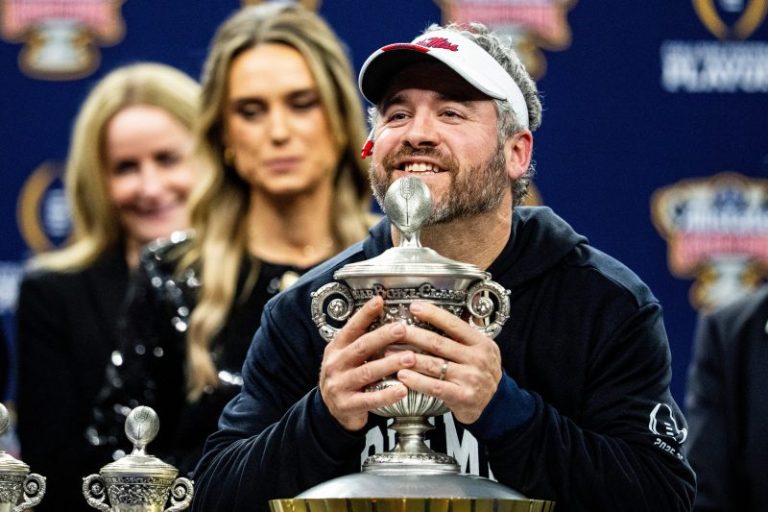
But since everyone wants an answer, Pete Golding finally relented the day before the biggest game in Ole Miss history. Before we find out if this storybook, screw you ride continues for a team, a university and a community hell-bent on exposing the one thing we’ve all overlooked. 

Did Lane Kiffin make Ole Miss, or did Ole Miss make Kiffin?

“I don’t have a message for anybody else,” Golding said — because that’s how he has played the past month as the new Ole Miss coach. Stick to the script, coach the team, win the day. 

And then it happened. 

“I do think the message is I’m replaceable,” Golding continued. “You’re replaceable. Our players are replaceable. You want to build a program where it’s headed in the right direction, and one person or one player is not going to derail that.”

Let me explain for those not skilled at reading between the lines: the Ole Miss team, the program, is more than Lane Kiffin. 

In fact, it may very well be better off without him.

If this team was built Kiffin-centric, it falls apart in the College Football Playoff — instead of winning two games to set up a Fiesta Bowl semifinal showdown with Miami.

Instead of the team’s biggest and brightest players — including star quarterback Trinidad Chambliss and tailback Kewan Lacy — committing to return to Oxford next season. They and many others on the Ole Miss roster have been actively recruited by Kiffin to join him at LSU, not long after he left Oxford for the bright lights and championship history of the school that just fired its coach after he won 34 games in three and a half seasons.

When you think about it, there’s really no decision to be made. Stay at Ole Miss, or leave for LSU and play for the coach who flat left you to fend for yourselves in the biggest moments of your playing careers?

Or leave for the coach who, prior to this season, hadn’t proven to be an elite coach. Hadn’t proven he could build a championship roster at the Power conference level. 

His best team — even better than this year’s white-hot group — did what his teams seem to always do: play down to competition. The 2024 Ole Miss team could’ve made the CFP and advanced this far if it didn’t collapse at home against an awful Kentucky team, and to a reeling Florida team in Gainesville.

And while Kiffin was set on the transition of former five-star quarterback recruit Austin Simmons for 2025, Ole Miss offensive coordinator Charlie Weis Jr. found Chambliss at Division II Ferris State, and convinced him to join the Rebels as a backup. Hey, you never know what could happen. 

“There’s a plan for everything,” Chambliss said. 

This is beginning to feel like the Ole Miss plan all along. Find the one coach who can illuminate the path to winning and convince high-rolling boosters to bankroll it, and then get there and squeeze the life out of the moment. 

Kiffin showed the path, did the heavy lifting and got Ole Miss to the party. Then Golding took over and began producing a sweet symphony that only underscored the undeniable reality of sports. 

“It’s always about the players,” said Ole Miss associate head coach Joe Judge. “There’s a reason coaches aren’t out there playing. We’re here drinking coffee and eating potato chips.”

Or doing daily hot yoga sesh, and avoiding red meat.

Look, I’m not trying to minimize what Kiffin accomplished at Ole Miss. The results paint a clear picture of where it was in Oxford before he arrived in 2020, and what it became.

He had four double-digit win seasons in the past five, an unheard of string of success at a school that has never played in the SEC championship game, and hasn’t won a conference championship game since the days of legendary coach Johnny Vaught.  

He marketed the hell out of the program — “Come to the ‘Sip” — and made it hip to play in a tiny southern town where life moves as slow and sweet as sugarcane molasses. He embraced the transfer portal quickly and with robust intent while most other coaches complained about it. 

But understand this: He was given free reign at Ole Miss by an athletic director and a president that said yes to everything. 

Want to place a Ferrari in front of the Carrier House, the stately Oxford mansion and home of the university president for decades, to attract recruits? Why not.

Or an expanded staff of analysts to help build out recruiting and development, a staff so deep with coaching experience that some of those analysts could move to on-field roles while Kiffin played games with what coaches would be allowed to leave LSU and coach Ole Miss during the CFP.

Or an NIL war chest so deep, Ole Miss could annually rebuild and turn over a roster through the transfer portal, and then supplement with high school recruiting. Or the exact opposite of how championship teams are typically built.

Give all of that to many FBS coaches, and watch what happens. For every Kiffin, there will obviously be more like Billy Napier, who received the same framework from Florida and failed miserably. 

But there are also coaches like Golding, who bust their tails for years in the NCAA lower divisions, get a job at the FBS level as an assistant, and then one day find themselves staring at an opportunity they could only dream of early in their career.

Ole Miss lost at Georgia in October under Kiffin, and came back two months later — against an improved Georgia defense — and beat the Bulldogs in the Sugar Bowl quarterfinal under Golding. Does that mean the Rebels are better off without Kiffin?

Not by a long shot.

But it does mean everybody is replaceable. 

When is Fiesta Bowl? What TV channel is Ole Miss vs Miami on?

The Fiesta Bowl is 7:30 p.m., Thursday, Jan. 8 and the main broadcast will be on ESPN.

CFP schedule, bracket

Here’s the CFP schedule with the bracket moving into the semifinals:

  • CFP semifinal Fiesta Bowl: No. 6 Ole Miss vs. No. 10 Miami, 7:30 p.m. ET, Thursday, Jan. 8, State Farm Stadium (Glendale, Arizona); ESPN (Fubo)
  • CFP semifinal Peach Bowl: No. 1 Indiana vs. No. 5 Oregon, 7:30 p.m. ET, Friday, Jan. 9, Mercedes-Benz Stadium (Atlanta); ESPN (Fubo)
  • National championship game: No. 1 Indiana/No. 5 Oregon vs. No. 6 Ole Miss/No. 10 Miami, 7:30 p.m. ET, Monday, Jan. 19, Hard Rock Stadium (Miami Gardens, Florida); ESPN (Fubo)
This post appeared first on USA TODAY
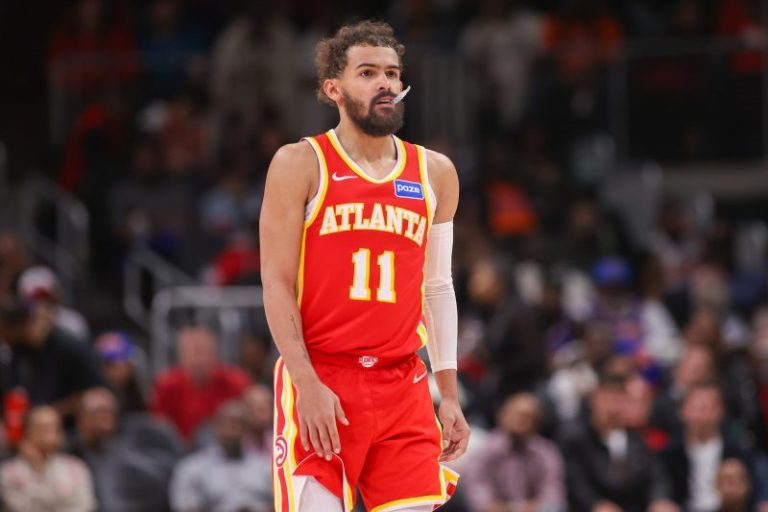
The Atlanta Hawks have traded guard Trae Young to the Washington Wizards for CJ McCollum and Corey Kispert, a person with knowledge of the deal told USA TODAY Sports.

The person spoke on the condition of anonymity because the deal was not yet official.

Young was in his eighth season with the Hawks, but the signs that his tenure was coming to a close had become apparent in recent months. He leaves as the franchise’s all-time leader in assists (4,837) and 3-pointers (1,295).

Young has only played in 10 games this season and did not play on Wednesday due to a quad injury. Reports of the trade emerged during the team’s game against the New Orleans Pelicans and Young was seen being embraced by members of the organization.

The four-time NBA All-Star has averaged 19.3 points, 8.9 assists and 1.5 rebounds per game this season.

Entering Thursday’s game, the Hawks had an 18-21 record this season and were ninth in the Eastern Conference standings. When Young is not in the lineup, though, the Hawks have produced a 16-13 record.

The trade will keep Young in the Eastern Conference, joining the Wizards, who have a 10-26 record and are 14th out of 15 teams in the conference standings.

Trae Young trade grades

Wizards

Young helps provide an offensive spark to a team that’s struggled in recent seasons and has been missing a superstar-level player on the roster since Bradley Beal’s departure after the 2022-23 season.

Young is not known for his defensive ability and could be seen as a liability on that end of the floor. He also could be a free agent after the season, owning a player option for 2026-27.

Grade: B

Hawks

McCollum may not be the standout player he was during his days in Portland, but he will bring a veteran presence to the locker room in Atlanta, which is one of the younger teams in the NBA this season. On the court, he’s averaged 18.8 points, 3.6 assists and 3.5 rebounds per game in 35 games played.

Kispert played the first five seasons of his career in Washington. After playing in 80 games during the 2023-24 season, he played just 61 last season and didn’t start a game. He started two of the 19 games he played in for the Wizards this season. He has averaged 10.9 points, 2.8 rebounds and 1.5 assists during his career. Kispert did not play on Tuesday due to a hamstring injury and McCollum also sat.

Grade: B

This post appeared first on USA TODAY