Author

admin

Browsing

The New Year is bringing some parity to the NBA.

No team is flashing the dominance that we had seen over recent stretches, as the longest active winning streak going in the league is just three games, currently held by the Boston Celtics and Philadelphia 76ers.

It’s interesting because the Celtics suddenly are creeping up the standings and are making a case for the second spot in the East – and with star player Jayson Tatum yet to play a game and possibly out all season. All of this begs the question: if Boston remains competitive deep into the season, and if Tatum is eventually cleared to return, how should the Celtics handle that?

Here are USA TODAY Sports’ NBA power rankings after Week 10 of the 2025-26 regular season:

USA TODAY Sports NBA power rankings

Note: Records and stats through Jan. 4. Parentheses show movement from last week’s rankings.

NBA Week 11 power rankings: Top 10

1. Oklahoma City Thunder, 30-6 (+1)

2. Detroit Pistons, 26-9 (+1)

3. San Antonio Spurs, 25-10 (-2)

4. Boston Celtics, 22-12 (+2)

5. Denver Nuggets, 23-12 (—)

6. New York Knicks, 23-12 (-2)

7. Minnesota Timberwolves, 23-13 (—)

8. Los Angeles Lakers, 22-11 (+1)

9. Houston Rockets, 21-11 (-1)

10. Phoenix Suns, 21-14 (—)

After prying away the top spot from the Thunder last week, the Spurs have lost three of their last five as Victor Wembanyama suffered another injury scare. So, even though the Thunder have been vulnerable, and even though they have struggled against teams with defensive length and athleticism at the wing, OKC regains No. 1 status.

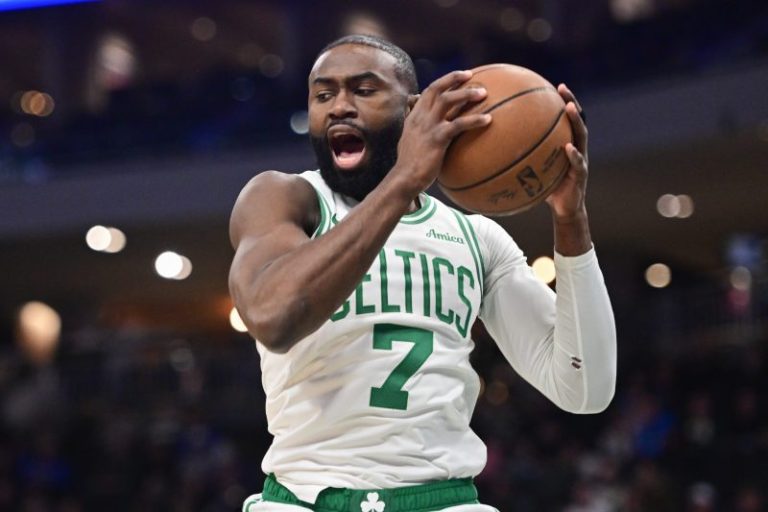
The Celtics, though, have been quiet risers behind Jaylen Brown, who is having an MVP-caliber season without Jayson Tatum (Achilles); Boston suddenly has the NBA’s second-ranked offensive rating. The Lakers are seemingly dealing with internal tension amid lingering questions about their subpar defense and offensive fit issues with Luka Dončić and LeBron James, but L.A. keeps on winning.

NBA Week 11 power rankings: Nos. 11-20

11. Toronto Raptors, 21-15 (+1)

12. Philadelphia 76ers, 19-14 (+3)

13. Miami Heat, 20-16 (—)

14. Orlando Magic, 20-16 (-3)

15. Cleveland Cavaliers, 20-17 (-1)

16. Golden State Warriors, 19-17 (—)

17. Chicago Bulls, 17-18 (+1)

18. Milwaukee Bucks, 16-20 (+1)

19. Portland Trail Blazers, 16-20 (+2)

20. Atlanta Hawks, 15-18 (-5)

Joel Embiid is playing more minutes for the Sixers and is averaging 28.7 points per game over his last seven. The Heat, after losing nine of 11 throughout December, have course corrected and have returned to their offensive pace with Norman Powell making an All-Star push. Miami has won five of its last six, including one against the top seed in the East, the Pistons.

The Magic have to figure out how to incorporate Paolo Banchero into the offense more efficiently, as his on-off numbers remain relatively underwhelming. And the Hawks are simply out of sorts – whether Trae Young is on the floor or not – losing 12 of their last 16 games.

NBA Week 11 power rankings: Nos. 21-30

21. Los Angeles Clippers, 12-22 (+2)

22. Memphis Grizzlies, 15-20 (-5)

23. Dallas Mavericks, 13-23 (+1)

24. Utah Jazz, 12-22 (-2)

25. Charlotte Hornets, 12-23 (—)

26. Brooklyn Nets, 11-22 (—)

27. Washington Wizards, 9-25 (+2)

28. New Orleans Pelicans, 8-29 (-1)

29. Sacramento Kings, 8-28 (-1)

30. Indiana Pacers, 6-30 (—)

Are the Clippers all the way back? Over their last 10 games, no team has posted a higher offensive rating than Los Angeles (123.0), and Kawhi Leonard has been on an absolute heater, averaging 36.6 points per game over his last seven. The Mavericks got Anthony Davis back and upset the Rockets on Jan. 3, but Dallas will need the big man healthy to climb into the playoff picture.

The Nets have been more competitive on defense, but that hasn’t led to consistency with victories. Winners of four of their last six, the Wizards are getting decent contributions from young starters and from Justin Champagnie and Bub Carrington off the bench.  

This post appeared first on USA TODAY

The WNBA and WNBPA appear to be at an impasse as the deadline for new collective bargaining agreement approaches on Friday, Jan. 9.

The league has not moved off of any of the numbers from its last offer reported in December.

‘We are at a bit of standstill,’ WNBPA vice president Napheesa Collier said when asked about the CBA on ‘Good Morning America’ on Monday, Jan. 5. ‘The timeline is coming up in a couple of days. It’s gonna expire.’

Collier, who was appearing on GMA to tout the second season of Unrivaled, a 3-on-3 league she co-founded with Breanna Stewart, said no one wants a work stoppage but the players will continue to ask for what they believe they deserve.

‘We’re just excited to show at Unrivaled that it is possible to pay the players and create a successful business,’ Collier said. ‘And that’s what we hope to do in the WNBA as well.

‘We feel really confident in what we’re asking for, and I just feel really blessed to be able to play and create something that is already showing that these things are possible.’

WNBA players voted to authorize the WNBPA’s executive committee to ‘call a strike when necessary,’ in late December. The current CBA is set to expire on Jan. 9, 2026, following two extensions from the original Oct. 31 deadline.

The league has proposed a system where players would receive in excess of 70% of net revenue, a person with direct knowledge of the situation told USA TODAY Sports. The WNBA’s offer includes a maximum $1 million base salary, with a projected revenue sharing component that raises players’ max total earnings to more than $1.3 million in 2026. The maximum salary would grow to nearly $2 million over the life of the agreement. The proposal raises the minimum salary to more $250K and the average salary to more than $530K, growing to more than $780,000 over the life of the deal.

The players have prioritized increased revenue sharing and salary structures in negotiations. According to The Athletic, the league has offered revenue sharing at 15% while the union has proposed 30%. The sides also differ on how that percentage, as well as the salary cap, would be calculated.

When asked to comment on the bargaining, WNPBA executive director Terri Jackson sent this statement to USA TODAY Sports:

“The players know the difference between doing business and creating click-bait. They are focused on the system. Despite what the league and the teams are trying to do, the players are not confused by the numbers. The players want a meaningful share of the revenue they are creating. They want to be properly valued in these negotiations and this next CBA. They do not want to be paid last with only a fraction of the dollars left over. 

‘I cannot comment on the specifics of any proposal but I can speak hypothetically.  The players would not have opted out of the 2020 CBA with a fixed salary system giving them less than 10% of the revenue that their labor drives only to agree to a salary system that is arguably tied to revenue but now gives them less than 15%. The business has grown considerably and the league and the teams project incredible sustainable growth into the (foreseeable) future.

‘How do the capital investors, Changemakers, any one who cares about women’s sports, supports women athletes, understands the value of this investment believe this could be a good deal? Again, hypothetically speaking.”

This post appeared first on USA TODAY

The lithium market heads into 2026 after one of its most punishing years in recent memory, shaped by deep oversupply, weaker-than-expected electric vehicle (EV) demand and sustained price pressure.

In 2025, lithium carbonate prices in North Asia sank to four year lows, forcing production cuts and project delays as the industry grappled with the consequences of years of aggressive supply growth.

The second half of the year saw a rebound as lithium carbonate began a slow ascent. By December 29, prices had risen 56 percent from their January start position of US$10,798.54 per metric ton to US$16,882.63.

While volatility and brief price rallies highlighted the market’s sensitivity to sentiment and policy signals, analysts increasingly see the sector’s first-half downturn as an inflection point. With high-cost supply under strain and inventories gradually tightening, expectations are building that 2026 could mark the start of a rebalancing phase, supported by long-term demand tied to electrification, energy storage and the broader energy transition.

Battery energy storage systems to drive lithium growth

Energy storage is emerging as the fastest-growing pillar of battery demand, with major implications for the lithium market heading into 2026. Indeed, according to Benchmark Mineral Intelligence’s Iola Hughes, growth in this segment is accelerating well ahead of the broader battery market.

“We’re expecting about 44 percent growth (in 2025),” she said. That’s compared with roughly 25 percent growth across total battery demand. As a result, energy storage is set to account for about a quarter of total global battery demand in 2025, a share that is rising rapidly. The shift is even more pronounced in the US, where Hughes expects storage to make up a significant “35 to 40 percent of battery demand in the next few years.”

That growth is being driven by falling costs and the growing role of lithium iron phosphate (LFP) chemistry, which Hughes described as the dominant technology in stationary storage.

“It very much is the story of LFP right now,” she said, pointing to recent innovation and lower costs, which have helped to make LFP “the best chemistry” for most storage applications.

Globally, deployment remains highly concentrated. China and the US account for roughly 87 percent of cumulative grid-scale storage installations, but new markets are emerging quickly.

Saudi Arabia, Hughes noted, has surged from effectively zero to the world’s third largest market in a matter of months, deploying around 11 gigawatt-hours in the first quarter alone. “That really goes to show just how early this market is in its story,” she said; it also indicates how quickly new sources of battery demand can materialize.

Cost declines sit at the core of the expansion. Fully integrated storage systems in China are now approaching, and in some cases falling below, US$100 per kilowatt-hour. Hughes said this has fundamentally changed the economics of storage, making deployments viable even as policy support tightens. “The prices are so much cheaper, the economics are a lot stronger, even in a normal, unsubsidized environment,” she said.

In the US, growth remains concentrated in a handful of states — led by California and Texas — but Hughes stressed how early stage the market still is. New Mexico, now the fifth largest storage market, is built on just a few projects.

At the same time, the scale of energy storage projects is increasing rapidly. Giga-scale installations, defined as projects larger than 1 gigawatt-hour, are moving from novelty to norm.

Hughes said nine such projects are expected to come online this year, accounting for about 20 percent of battery demand, with more than 20 in the pipeline for next year, representing close to 40 percent.

Policy remains a key variable. While investment tax credits for storage remain in place in the US, Hughes warned that tighter sourcing and eligibility rules are reshaping supply chains, particularly for LFP. The pipeline of announced LFP gigafactories has grown sharply this year — up more than 60 percent — led largely by Korean manufacturers.

“We’re in a much better position when it comes to sourcing of cells for energy storage than we were even three months ago,” she said, though challenges remain around production tax credits and heavy reliance on Chinese cathode supply.

Underlying the storage boom is a broader shift in electricity demand.

After more than a decade of stagnation, US power demand is rising again, driven by data centers, AI, electrification and reshoring of manufacturing. Hughes said estimates now point to electricity demand rising 20 to 30 percent by 2030, placing energy storage at the center of energy security planning. “Storage has become a central topic in the energy security conversation,” she said, adding that its role will only grow.

Looking ahead, Hughes said LFP is likely to dominate shorter-duration storage, while sodium-ion and other battery technologies compete in longer-duration segments.

For the lithium market, the message is clear: as storage scales up in size, geography and strategic importance, it is becoming one of the most powerful demand drivers shaping the sector’s outlook for 2026 and beyond.

Lower costs driving LFP adoption

Howard Klein, RK Equity co-founder and partner, argued that falling costs remain a central driver of LFP battery adoption, reflecting a familiar economic dynamic: as prices decline, demand accelerates.

While lithium is a key input, he suggested that ongoing manufacturing efficiencies and economies of scale are likely to continue pushing LFP battery costs lower over time, potentially offsetting upward pressure from higher lithium prices.

Klein emphasized that even if LFP costs rise modestly, battery storage will remain highly competitive as a source of grid power. Compared with conventional generation options such as gas or coal, storage already offers a compelling cost and performance proposition, he said, and does not rely solely on subsidies to remain economically viable.

Geopolitical instability on the rise

Critical minerals are increasingly at the center of US foreign policy, and that shift is set to reshape the lithium value chain through 2026, according to Klein. He noted that geopolitics now underpins many of Washington’s strategic priorities, from Eastern Europe to Africa and the Arctic.

“The entire foreign policy agenda is largely being driven by critical minerals,” Klein said, citing regions including Ukraine, Russia, the Democratic Republic of Congo, Greenland and Canada.

China’s willingness to weaponize its dominance in key supply chains has sharpened that focus.

On that note, Klein pointed to Beijing’s renewed rare earths export restrictions in October, noting that these measures were applied globally, not just against the US.

“They showed that they wield a significant negotiating stick, and they’re willing to use it,” he said.

In Klein’s view, that move has triggered a forceful response from western governments. “I think they’ve overplayed their hand to some degree, because now you’ve had this very big reaction from the US.”

That reaction is translating into a renewed push to localize and reshore critical mineral supply chains — an effort that has gained rare bipartisan backing in Washington.

“Unlike so many other things in America, which are hyper-partisan, both sides agree we need to resolve this,” Klein said, adding that the policy momentum will continue to shape the lithium industry.

While rare earths remain the immediate pressure point, Klein said the policy lens is widening. The US recently added 10 minerals to its critical minerals list, which now stands at a total of 60. Lithium, he said, sits high on that agenda, not out of enthusiasm for the metal itself, but because of its role in batteries.

“It’s an understanding by the government that batteries and battery technology are very, very important, and the entire battery supply chain needs to be supported,” Klein said. That support extends beyond lithium to graphite, manganese, nickel, cobalt and battery components such as anodes and cathodes.

The approach is increasingly coordinated across western economies. Klein described it as “a G7 effort,” with the EU and Canada aligned alongside the US through a mix of bilateral and multilateral initiatives.

That coordination is already translating into capital flows. He pointed to US-backed progress at Thacker Pass, EU funding for Vulcan Energy Resources (ASX:VUL,OTC Pink:VULNF) and a 360 million euro grant for European Metals Holdings (LSE:EMH,ASX:EMH,OTCQB:EMHLF) as early examples. Canada, he added, is also ramping up support.

“Canada announced C$6 billion over 26 investments,” Klein said, adding that more announcements are likely by the time the Prospectors & Developers Association of Canada convention rolls around in March.

Klein sees geopolitics, industrial policy and supply chain security converging into powerful lithium tailwinds. “This is a super hot topic,” he said, and one that is likely to drive increased lithium-related activity well into 2026.

Should the US build a strategic lithium reserve?

To dilute China’s grip on the sector, Klein is advocating for a strategic lithium reserve in the US as a more effective and market-neutral alternative to company-specific subsidies. He argues that the industry’s core challenge is not demand, but extreme price volatility caused by global oversupply and what he describes as non-market behavior, which has driven prices below sustainable levels and distorted investment signals across the sector.

“The problem in lithium is volatile prices — prices below the marginal cost, catastrophically low prices that put companies out of business,” he said, pointing to persistent oversupply as the primary distortion.

In Klein’s view, a reserve would act as a counterweight by creating steady, large-scale demand that stabilizes prices within a sustainable range. “The main focus is to stabilize price … not at a super high level, but at a level where companies can make an economic return,” he said. That stability, he added, is essential to incentivize investment in mines, processing and conversion facilities across the US, Canada and allied jurisdictions.

Unlike targeted government support, Klein said a reserve would allow the market to determine which projects succeed.

“I want the market to decide which projects and companies are the best, not necessarily the government,” he said, noting the diversity of competing lithium resources, from US clay and brine projects to Canadian hard-rock deposits.

A more predictable price environment with fewer large swings would lower the cost of capital and give private investors greater confidence to finance viable projects.

Klein stressed that a lithium reserve should not be confused with a stockpile.

“People use ‘stockpile’ and ‘reserve’ like they’re the same thing, and they’re not,” he said. While a stockpile focuses on availability for emergencies, a reserve is designed as a market-stabilizing mechanism that can buy and sell material to smooth volatility. Availability, he said, is a secondary benefit.

He sees the concept as most relevant for mid-sized, fast-growing markets like lithium, graphite and other battery materials that lack deep futures markets and long-term hedging tools.

“Those are the markets that could be amenable to a reserve,” he said, contrasting them with large, liquid commodities like copper or very small, niche minerals tied mainly to military use.

Looking longer term, Klein said a lithium reserve aligns closely with the growth of EVs, energy storage, data centers and grid electrification, as well as geopolitical efforts to diversify supply chains away from China.

“This is no longer just a renewables or EV thing — this is national security, clean energy and building an electro-state,” he said, arguing that reducing volatility would make it easier for automakers, utilities and manufacturers to commit capital without fear of being caught on the wrong side of wild price swings.

North American cooperation key for lithium

Gerardo Del Real, publisher at Digest Publishing, also highlighted the impact of geopolitics on the lithium value chain, emphasizing the need for North American coordination to reduce reliance on dominant producers like China.

“I think this is the path towards that. It has to happen,” he said, noting that collaboration between the US, Canada and potentially Mexico could strengthen regional supply security and reduce vulnerability to global disruptions.

Del Real framed the issue in broader energy terms, pointing to the strategic value of domestic resources: “If we are serious as a country and as a region in being somewhat independent from China and from the Russians … we have a luxury of resources in the US, in Canada … there could be a very powerful path forward.”

On market dynamics, he suggested investors are focused on timing and catalysts, with policy shifts, demand surprises or supply disruptions likely to drive sentiment in 2026.

He also warned that the market may be underestimating the importance of coordinated regional supply initiatives as a factor shaping pricing and project economics.

Securities Disclosure: I, Georgia Williams, hold no direct investment interest in any company mentioned in this article.

This post appeared first on investingnews.com

While it was a disappointing tournament for the host Americans, the 2026 world juniors have been a thrill ride for any hockey fan tuning in. Team USA was bounced in the quarterfinal by Finland – in overtime, no less – but the semifinals produced two beguiling games.

Sweden punched its ticket to the gold-medal game by besting archrival Finland in a shootout, while the Canadians and Czechs added another chapter to their burgeoning rivalry with a nasty back-and-forth game eventually won 6-4 by the Czechs.

It has been more than a decade since any country other than Canada, Finland or the U.S. has won gold at the world juniors and that streak now officially ends. With Sweden (2012) and Czechia (2001) both looking for a title after many years, the final game of the tournament promises to hold intrigue.

But what about the players themselves? There have been some fantastic individual performances in the tournament, so let’s take a look at some of the standouts.

Zayne Parekh, D, Canada

Loaned out by the Calgary Flames for the world juniors, Parekh has shown why Canada wanted him for the tournament. Despite being a defenseman, Parekh entered the bronze-medal game tied for the tourney lead in scoring with 11 points in six games.

Anton Frondell, C, Sweden

The Chicago Blackhawks first-rounder has been a monster for the Swedes and perhaps his most important goal to date came in the semifinal against Finland when he iced the contest with the winning shootout goal. Frondell’s shot is a weapon and it has been on full display.

Will Zellers, LW, USA

Though the Americans were much weaker than in previous years, Zellers was a very pleasant surprise. The University of North Dakota winger and Boston Bruins pick led the U.S. in scoring with eight points in five games while playing an electric style.

Tomas Galvas, D, Czechia

Now the highest-scoring defenseman in Czech world junior history, Galvas continues to add to his totals. Undrafted because of his small stature, he plays a similar game to Lane Hutson and could very well be selected in this summer’s draft. Why not take a chance, right?

Tomas Chrenko, C, Slovakia

Slovakia brought a young team to Minnesota and one of the best was 2026 draft prospect Chrenko, whose awesome shot propelled him up the scoring charts. His five goals in five games paced his team and he certainly helped his draft stock.

Gavin McKenna, LW, Canada

Heavily scrutinized thanks to his top-prospect status, McKenna nonetheless has been one of the top scorers at the world juniors with 10 points in six games. The potential No. 1 pick in the 2026 draft got in trouble in the Czech game due to some fiery behavior.

Michael Hage, C, Canada

Another top scorer in the tournament, Hage is a Montreal Canadiens first-rounder and a star at the University of Michigan. He made a ton of skilled plays for Canada and his chemistry with McKenna and Brady Martin (Nashville Predators) was something to see.

Jack Berglund, C, Sweden

The captain of the Swedes, Berglund is a two-way center and a Philadelphia Flyers prospect who has made an impact at both ends of the ice for his team. Should Sweden win gold, Berglund undoubtedly will be part of the winning formula.

Joona Saarelainen, C, Finland

A speedster with skill, Saarelainen is a Tampa Bay Lightning prospect who plays back home in Finland in the top pro league. He was very involved in Finland’s offense against Sweden and is one to watch in the bronze-medal game against Canada.

Viggo Bjorck, RW, Sweden

A first-round draft prospect for 2026, Bjorck is fast and skilled. He is clearly trusted by Sweden’s coaches too, as they sent him over the boards every other shift in overtime against Finland, where he had an amazing four breakaways. While he couldn’t convert, he’s a talent.

This post appeared first on USA TODAY

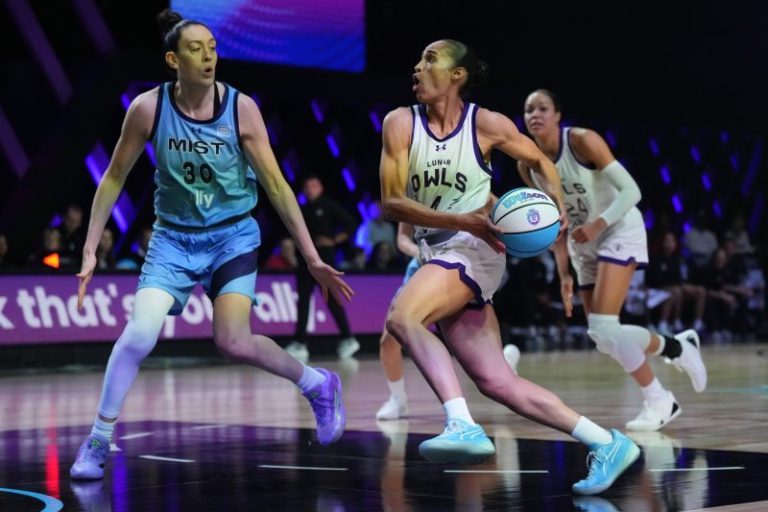
The second season of Unrivaled, a 3-on-3 women’s professional basketball league, tips off on Monday, Jan. 5, in Miami with four games.

Unrivaled expanded from six teams to eight for 2026, with 48 players and a development pool of six ready to step in if someone gets hurt. Twenty six players return from last season including co-founder Breanna Stewart. Twenty two new players join them including rookies Paige Bueckers, Sonia Citron and Kiki Iriafen.

Rose BC won the inaugural title but will be without Angel Reese, who decided not to play this season. One other notable absence is Unrivaled co-founder Napheesa Collier, who will miss the season because of surgery on both ankles.

Here’s a look at how to watch the Monday’s games and the rosters:

How to watch Unrivaled women’s basketball

The 2026 Unrivaled women’s basketball league tips off on Monday, Jan. 5, on TNT, truTV, and streaming on HBO Max. Games will air Friday, Saturday, Sunday and Monday. The season runs from January through early March.

What time in Unrivaled women’s basketball?

Monday, Jan. 5

  • Mist vs. Hive, 1 p.m. ET (truTV)
  • Vinyl vs. Laces 2:15 p.m. ET (truTV)
  • Lunar Owls vs. Rose 8 p.m. ET (truTV, TNT)
  • Phantom vs. Breeze 9:15 p.m. ET (truTV, TNT)

2026 Unrivaled club rosters

*Players making their Unrivaled debut

Breeze BC

Head coach: Noelle Quinn

  • *Paige Bueckers
  • Rickea Jackson
  • *Dominique Malonga
  • *Aari McDonald
  • Kate Martin
  • *Cameron Brink

(Cameron Brink was a member of the Lunar Owls last season, but did not play while recovering from an ACL injury. She is set to make her debut in 2026.)

Hive BC

Head coach: Rena Wakama

  • *Kelsey Mitchell
  • *Sonia Citron
  • *Ezi Magbegor
  • *Natisha Hiedeman
  • *Saniya Rivers
  • *Monique Billings

(Natisha Hiedeman was a member of Unrivaled last season as a relief player, but did not spend the entire season with one club.)

Laces BC

Head coach: Andrew Wade

  • Jackie Young
  • Brittney Sykes
  • Alyssa Thomas
  • Jordin Canada
  • *Maddy Siegrist
  • *Naz Hillmon

(Naz Hillmon was a member of Unrivaled last season as a relief player, but did not spend the entire season with one club.)

Lunar Owls BC

Head coach: DJ Sackmann

  • Skylar Diggins
  • Marina Mabrey
  • *Temi Fagbenle
  • *Rachel Banham
  • *Rebecca Allen
  • Aaliyah Edwards

(Temi Fagbenle replaces Napheesa Collier, who will miss the 2026 season following ankle surgery)

Mist BC

Head coach:  Zach O’Brien

  • Allisha Gray
  • Breanna Stewart
  • *Alanna Smith
  • *Veronica Burton
  • Arike Ogunbowale
  • *Li Yueru

Phantom BC

Head coach: Roneeka Hodges

  • *Kelsey Plum
  • Satou Sabally
  • Aliyah Boston
  • *Dana Evans
  • Natasha Cloud
  • *Kiki Iriafen

(Kelsey Plum was invited to play in Unrivaled last season, but later declined her invite, opting to return for her first full year in 2026.)

Rose BC

Head coach: Nola Henry

  • Chelsea Gray
  • Kahleah Copper
  • *Sug Sutton
  • Azurá Stevens
  • Lexie Hull
  • Shakira Austin

Vinyl BC

Head coach: Teresa Weatherspoon

  • Courtney Williams
  • Rhyne Howard
  • Dearica Hamby
  • *Erica Wheeler
  • Rae Burrell
  • Brittney Griner

Developmental Pool

Laeticia Amihere

Makayla Timpson

 Hailey Van Lith

Aziaha James

Haley Jones

Emily Engstler

This post appeared first on USA TODAY

The NFL doesn’t believe in cliffhangers for the season finale.

While most scripts call for that kind of tactic to keep viewers coming back, the NFL’s reality show certainly tries to provide answers. A season that began in early September featured 272 games over 18 weeks. In total, it took over 16,320 minutes to play the entire regular season.

Of course, it came down to the final minute of Game 272.

The Pittsburgh Steelers prevailed in the winner-take-all AFC North clash, defeating the Baltimore Ravens, 26-24. It was mostly a quiet contest until the final 15 minutes, when both sides began landing haymakers.

There were 27 points scored between the two teams, but it was the four that weren’t that promised to tell the story in the end.

It started with a missed extra point from Chris Boswell, his first of the season. That miss ensured that the Steelers would only hold a two-point edge with 55 seconds left. Lamar Jackson and the Ravens quickly responded, working the ball into field goal range.

In the end, it was rookie kicker Tyler Loop who missed the 44-yard kick wide right, ending Baltimore’s season in crushing.

There was speculation that this could have been Aaron Rodgers’ final game in the NFL, as retirement looms.

Turns out, he’ll have at least one more game in the black-and-gold when the Steelers host the Houston Texans in the wild-card round of the NFL playoffs.

It was a finale filled with chaos, a fitting conclusion to the mayhem that reigned supreme all season long.

Here’s how the action unfolded on “Sunday Night Football” in Week 18.

Steelers vs. Ravens SNF takeaways: Week 18

  • The NFL is king: Only the NFL. In a world where sequels and remakes dominate television and movies, the NFL provides some of the best content that anyone could ever ask for. No other league can produce this level of drama every season, especially in the finale. There are so many games, so many twists and turns, yet it always comes down to the last one. With everything on the line, it came down to the final seconds of the final regular-season game. Take a bow.
  • Aaron Rodgers isn’t done yet: We knew it was win-and-in for both teams, but we’ll never know if it was lose-and-retire for Rodgers. The four-time NFL MVP now gets a chance to play in the playoffs again. After a couple of rough seasons with the New York Jets, this one with the Steelers is bound to end in much better fashion. Time will tell if there’s another season, but the veteran still has more to say before closing this chapter.
  • Pittsburgh keeps finding a way: The Steelers offense isn’t pretty. The Steelers’ defense looked like it forgot how to play at times in Week 18. Rodgers had to use the Steelers’ final timeouts to deal with some bad helmet communication. Boswell missed his first extra point of the season. None of that mattered. They still found a way to win. Now they’ll have a chance to win their first playoff game since 2017.
  • Ravens enter offseason with more questions than answers: What does the future hold for John Harbaugh? Lamar Jackson? Questions were swirling before this game. Who knows what they’ll be like when the dust finally settles? Jackson’s contract remains a key talking point and Harbaugh’s inability to get Baltimore over the top will take on a new life this offseason. There appears to be one thing guaranteed for the Ravens – change is coming.
  • The Ravens invent new ways to lose: It’s the type of thing you often say about some of the league’s worst teams, but the Ravens are unique. There was Mark Andrews’ famous drop that ended last season. There was the 15-point fourth-quarter blown lead in Week 1. There was the Thanksgiving disaster against the Bengals. Then there was the Loop missed field goal to end the season. Baltimore is no stranger to losing games excruciatingly. Add Week 18 of the 2025 NFL season to the increasingly long list.

NFL playoff schedule: Wild-card games

Jan. 10

  • Los Angeles Rams at Carolina Panthers, 4:30 p.m. ET, FOX
  • Green Bay Packers at Chicago Bears, 8 p.m. ET, Prime Video

Jan. 11

  • Buffalo Bills at Jacksonville Jaguars, 1 p.m. ET, CBS
  • San Francisco 49ers at Philadelphia Eagles, 4:30 p.m. ET, FOX
  • Los Angeles Chargers at New England Patriots, 8 p.m. ET, NBC

Jan. 12

  • Houston Texans at Pittsburgh Steelers, 8 p.m. ET, ESPN/ABC

Who will the Steelers play in playoffs?

Pittsburgh will host the Houston Texans in the wild-card round. The Steelers earned the No. 4 seed and will play the highest-seeded wild-card team – the Texans. The matchup will be on Monday, Jan. 12, at 8:15 p.m. on ESPN.

Are the Ravens eliminated from playoff contention?

Baltimore has been eliminated from playoff contention with its loss to the Steelers on Sunday night in Week 18.

Steelers vs. Ravens Week 18 highlights

Steelers vs. Ravens final score: Pittsburgh 26, Baltimore 24

Steelers defeat Ravens on Tyler Loop missed field goal

The Ravens charged down the field to get into field goal range, but the Ravens’ rookie kicker, Tyler Loop, pushed his 44-yard field goal attempt wide right. Pittsburgh wins the game and the AFC North title.

Aaron Rodgers stats vs. Ravens

  • 31-of-47 (65.9% completion rate)
  • 294 passing yards
  • 1 passing touchdown
  • 0 interceptions
  • 90.2 passer rating

Lamar Jackson stats vs. Steelers

  • 11-of-18 (61.1% completion rate)
  • 238 passing yards
  • 3 passing touchdowns
  • 1 interception
  • 121.5 passer rating
  • 4 rushing attempts, 8 rushing yards

Steelers vs. Ravens score update: Steelers back in front with 55 seconds left

Aaron Rodgers isn’t done yet. A vintage throw from the quarterback to a wide-open Calvin Austin III gives the Steelers the lead right back with 55 seconds to go. However, Boswell missed his first extra point all season and now the Ravens can win it with a field goal. They have all three timeouts and a big return from Keaton Mitchell set Baltimore up at around midfield.

Steelers 26, Ravens 24

Steelers vs. Ravens score update: Baltimore retakes lead with Zay Flowers’ second TD of the game

Football fans are certainly familiar with Zay Flowers. The Steelers, however, must be just finding out who this guy is. For the second time in as many drives, the Ravens take the lead on a Flowers’ touchdown. He got behind the defense and Baltimore marched 73 yards in just 1:29.

Now the Steelers will look to respond with 2:20 to go. Again, they are out of timeouts.

Ravens 24, Steelers 20

Steelers vs. Ravens score update: Kenneth Gainwell scores go-ahead TD with 3:49 to go

The Steelers had to answer and they did. Despite some helmet communication woes, Gainwell punched it into the end zone for the lead. Notably, Pittsburgh is out of timeouts now, adding another layer of intrigue to the final minutes of regulation.

Steelers 20, Ravens 17

Aaron Rodgers contract details, incentives

Rodgers signed a one-year deal with the Steelers, which has a base value of $13.65 million, according to Spotrac. He received a $10 million signing bonus and will have a cap hit of $14.15 million in 2025.

Rodgers’ contract can be worth up to $19.5 million in total value thanks to a $5.85 million incentive package tied to the deal. His incentives for the 2025 NFL season are as follows:

  • Playoff berth: $500,000
  • Wild card win: $600,000
  • Divisional win: $750,000
  • Conference championship: $1 million
  • Super Bowl win: $1.5 million
  • League MVP: $1.5 million

Steelers vs. Ravens score update: Zay Flowers TD puts Baltimore back in front

Pittsburgh had two free runners coming for Lamar Jackson. It didn’t matter. The two-time MVP did two-time MVP things and escaped pressure to direct Flowers toward the end zone, where he beat Patrick Queen for the 50-yard touchdown. Baltimore leads by four with 8:42 to go in the regular season.

Ravens 17, Steelers 13

Steelers vs. Ravens score update: Chris Boswell gives Pittsburgh the lead

Just like that, the home team snags the lead for the first time tonight. Boswell’s kick is good from 25 yards and now it’s Baltimore’s turn to come from behind.

Steelers 13, Ravens 10

Who are the Heyward brothers on Pittsburgh Steelers?

Steelers football is a family affair. Cameron and Connor Heyward are the latest brother duo to play for the Pittsburgh Steelers. Cameron has been a mainstay on the defensive line for years, while Connor is part of a deep tight end room.

The Steelers have been no strangers to fielding rosters with brothers over the years. In the past, they had Nate and Nick Herbig, T.J. and Derek Watt, as well as Terrell and Trey Edmunds.

Lamar Jackson deflected pass intercepted by T.J. Watt

If you’re a believer in momentum shifts, then this game is about to change dramatically. Just a few plays after the Steelers tied the game, Jackson attempted a pass that was deflected by Cameron Heyward and eventually intercepted by Watt. It puts Pittsburgh in excellent field position and gives them a chance to take the lead.

Steelers vs. Ravens score update: Connor Heyward ‘tush push’ TD ties the game

After failing to convert on fourth down earlier, the Steelers went right back to Heyward in a big spot in the third quarter. He gets the job done this time and scores the game-tying touchdown after back-to-back pushes from his brother, Cameron.

The Steelers couldn’t convert from the same distance to end the first half, but it’s a brand-new ball game halfway through the third after Boswell knocks through the extra point. The game is tied with 8:22 left in the third quarter.

Steelers 10, Ravens 10

Did Aaron Rodgers get married? Who is his wife? 

Rodgers was married during the 2025 offseason. Rodgers’ wife has not publicly appeared with him yet.

Before acknowledging his marriage, Rodgers last mentioned having a significant other during a December 2024 appearance on ’The Pat McAfee Show.’  During the appearance, Rodgers said her name was ‘Brittani,’ clarifying that she spelled it with an ‘I.’ 

Rodgers has not clarified whether she is the woman he married in 2025.

Kyle Hamilton injury update

Hamilton was on the receiving end of a helmet-to-helmet hit early in the third quarter from teammate Alohi Gilman. The safety remained down after the play and replays showed his head also hit the field as Hamilton fell to the ground.

He walked off the field under his own power.

Steelers vs. Ravens score at halftime: Baltimore 10, Pittsburgh 3

Steelers’ last playoff win

The Steelers haven’t won a playoff game since Jan. 15, 2017 when they defeated the Kansas City Chiefs on the road in the division round. They have lost six playoff games in a row since that game and two of those losses came at home.

Steelers denied at the goal line before halftime

Baltimore’s Kyle Hamilton was flagged for pass interference with just two seconds left in the opening half. That gave Pittsburgh the ball at the one-yard line. The Steelers went for the game-tying touchdown and instead go into halftime down seven after Kenneth Gainwell was stuffed behind the line on a toss play. It was a curious play design for the Steelers, since it seemed dead from the start. They’ll get the second half kickoff, but have plenty of work to do in the final 30 minutes. 

Steelers vs. Ravens score update: Chris Boswell gets Pittsburgh on the board

Pittsburgh’s drive stalled after an off-target throw from Rodgers, but Boswell was able to convert from 57 yards to cut into the Baltimore lead.

Ravens 10, Steelers 3

Steelers vs. Ravens score update: Tyler Loop extends Baltimore’s lead

The rookie kicker knocks it through from 40 yards to give his team a two-score lead early in the second quarter. This drive was set up by the Steelers’ inability to convert on fourth down around midfield. It’s an important upcoming drive for Aaron Rodgers and the Steelers’ offense. Already down 10-0 and struggling on offense, this game can get away from them quickly.

Ravens 10, Steelers 0

Steelers vs. Ravens score at end of first quarter: Baltimore leads, looking to add

Just like that, 15 minutes have come and gone in Game 272. The Ravens have been the better team by far. They also have the edge on the scoreboard, taking a 7-0 lead into the second. A fourth-down stop by the Ravens’ defense set them up with great field position and they’ll continue the drive at the edge of the red zone when play resumes.

Ravens 7, Steelers 0

Where did Aaron Rodgers go to college?

Rodgers attended Butte Community College for a year in 2002 before playing two seasons at California from 2003-04.

Steelers punt on opening drive

Pittsburgh is still trying to find its footing without Metcalf on offense and that remained the case on the opening drive. It was a quick possession for the home team and Baltimore takes back over inside its own 15.

Why is DK Metcalf suspended?

In this winner-take-all showdown, there is a notable absence for the Steelers – DK Metcalf. The receiver is serving the second and final game of his suspension. The NFL issued the penalty to Metcalf for his involvement in an altercation with a Detroit Lions fan in Week 16. He reached into the stands to strike the fan on the sideline and the league promptly suspended Metcalf for the remainder of the regular season.

Oldest NFL players in 2025

Philip Rivers turned 44 on Dec. 8 and is now the oldest active NFL player. Aaron Rodgers turned 42 on Dec. 6. There are 12 players aged 39 or older playing in the NFL in 2025:

  • Philip Rivers, QB, Indianapolis Colts: 44 years old
  • Aaron Rodgers, QB, Pittsburgh Steelers: 42 years old
  • Nick Folk, K, New York Jets: 41 years old
  • Matt Prater, K, Buffalo Bills: 41 years old
  • Marcedes Lewis, TE, Denver Broncos: 41 years old
  • Joe Flacco, QB, Cincinnati Bengals: 40 years old
  • JJ Jansen, LS, Carolina Panthers: 39 years old
  • Jon Weeks, LS, San Francisco 49ers: 39 years old
  • Morgan Cox, LS, Tennessee Titans: 39 years old
  • Thomas Morstead, P, San Francisco 49ers: 39 years old
  • Josh Johnson, QB, Washington Commanders: 39 years old
  • Calais Campbell, DL, Arizona Cardinals: 39 years old

Steelers vs. Ravens score update: Baltimore strikes first with Devontez Walker TD

It was an eventful opening drive for the visitors. They were called for a holding penalty on the opening kickoff, negating a nice return. They were called for an illegal blindside block on a 47-yard run by Derrick Henry – which was a bad call, according to NBC’s rules analyst, Terry McAulay.

None of that mattered. The Ravens still managed to find the end zone with a 38-yard passing touchdown from Lamar Jackson to Walker on fourth down.

Ravens 7, Steelers 0

What is the temperature in Pittsburgh?

The temperature at tonight’s kickoff was 28 degrees in Pittsburgh.

What TV channel is the Steelers vs. Ravens game?

  • TV channel: NBC

Week 18’s ‘Sunday Night Football’ game – the final regular season game of the year – between the Steelers and Ravens will be broadcast by NBC on Jan. 4. Mike Tirico (play-by-play), Cris Collinsworth (game analyst) and Melissa Stark (sideline reporter) will be on the call for the battle for the AFC North.

What time is the Ravens at Steelers game?

  • Start time: 8:20 p.m. ET

The Steelers vs. Ravens game will kick off at 8:20 p.m. ET on Sunday, Jan. 4.

Steelers vs. Ravens live stream

  • Live stream: Peacock

As with every iteration of ‘Sunday Night Football,’, NBC will simulcast its prime-time offering on Peacock, its proprietary streaming service. Cord-cutters can also watch the game on NFL+, the NFL’s own streaming service.

Catch ‘SNF’ with a Peacock subscription

Steelers vs. Ravems prediction, picks

  • Mike Middlehurst-Schwartz: Ravens, 24-17
  • Jarrett Bell: Steelers, 23-20
  • Nick Brinkerhoff: Steelers, 23-20
  • Chris Bumbaca: Ravens, 21-20
  • Nate Davis: Ravens, 23-20
  • Tyler Dragon: Ravens, 25-20

Steelers vs. Ravens odds, moneyline, O/U

  • Moneyline (ML): Ravens -190 (Bet $190 to win $100) | Steelers +160 (Bet $100 to win $160)
  • Against the spread (ATS): Ravens -3.5 (-105) | Steelers +3.5 (-115)
  • Over/Under (O/U): 41.5 (O: -110 | U: -110)

Is Lamar Jackson playing tonight vs. Steelers?

Lamar Jackson has had a full week of practice for the first time since November and will play in Sunday night’s AFC North title game in Pittsburgh. He missed Week 17 with a back contusion but is expected to be a full go tonight.

Is T.J. Watt playing tonight vs. Ravens?

The Steelers’ four-time All-Pro linebacker will be back on the field for Pittsburgh tonight against Baltimore. Watt has missed the last two weeks following surgery stemming from a partially collapsed lung on Dec. 10. That lung injury happened during a routine dry needling treatment at a team facility. He was subsequently hospitalized but has made a full recovery.

‘It’ll be great to have him back,’ Steelers defensive coordinator Teryl Austin said via the team. ‘What capacity we’ll find out really, not till Sunday. But it’ll be great to have him back… I would think that he’ll only strengthen our group and how we play and all those things.’

Steelers vs. Ravens weather report

The temperature is expected to be 28 degrees around kickoff in Pittsburgh. There is no snow in the forecast and wind gusts will max out at just 5 MPH.

Steelers inactives today vs. Ravens

  • WR Roman Wilson
  • RB Kaleb Johnson
  • CB Tre Flowers
  • OLB Jeremiah Moon
  • OL Jack Driscoll
  • QB Will Howard (emergency third QB)

Ravens inactives today vs. Steelers

  • WR Rashod Bateman (illness)
  • CB Keyon Martin
  • T Joseph Noteboom
  • DL Aeneas Peebles
  • WR Keith Kirkwood
  • CB Amani Oruwariye
  • QB Cooper Rush (emergency third QB)

Steelers schedule 2025

Ravens schedule 2025

AFC North standings

Week 18’s ‘Sunday Night Football’ game will determine the AFC North champion. The Steelers are entering the matchup with a one-game lead in the standings:

  • Pittsburgh Steelers: 9-7 (3-2 AFC North)
  • Baltimore Ravens: 8-8 (3-2)
  • Cincinnati Bengals: 6-11 (3-3)
  • Cleveland Browns: 5-12 (2-4)

NFL playoff picture: AFC bracket

  1. Denver Broncos (14-3, AFC West winners)*
  2. New England Patriots (14-3, AFC East winners)*
  3. Jacksonville Jaguars (13-4, AFC South winners)*
  4. Pittsburgh Steelers (9-7, AFC North leaders)
  5. Houston Texans (12-5, wild card No. 1)*
  6. Buffalo Bills (12-5, wild card No. 2)*
  7. Los Angeles Chargers (11-6, wild card No. 3)*

In the hunt: Baltimore Ravens (8-8)

NFL playoff picture: NFC bracket

  1. Seattle Seahawks (14-3, NFC West winners)*
  2. Chicago Bears (11-6, NFC North winners)*
  3. Philadelphia Eagles (11-6, NFC East winners)*
  4. Carolina Panthers (8-9, NFC South winners)*
  5. Los Angeles Rams (12-5, wild card No. 1)*
  6. San Francisco 49ers (12-5, wild card No. 2)*
  7. Green Bay Packers (9-7-1, wild card No. 3)*

2026 NFL Draft order

Here’s a look at the latest draft order for the first round with strength of schedule information via Tankathon:

  1. Las Vegas Raiders: 3-14 record; .538 strength of schedule
  2. New York Jets: 3-14, .552 SOS
  3. Arizona Cardinals: 3-14; .571 SOS
  4. Tennessee Titans: 3-14, .574 SOS
  5. New York Giants: 4-13; .524 SOS
  6. Cleveland Browns: 5-12, .486 SOS
  7. Washington Commanders: 5-12; .507 SOS
  8. New Orleans Saints: 6-11; .495 SOS
  9. Kansas City Chiefs: 6-11; .516 SOS
  10. Cincinnati Bengals: 6-11; .521 SOS
  11. Miami Dolphins: 7-10; .488 SOS
  12. Dallas Cowboys: 7-9-1; .438 SOS
  13. Atlanta Falcons (pick belongs to Los Angeles Rams): 8-9; .495 SOS
  14. Tampa Bay Buccaneers: 8-9, .529 SOS
  15. Indianapolis Colts (pick belongs to Jets): 8-9; .538 SOS
  16. Baltimore Ravens: 8-8; .503 SOS
  17. Detroit Lions: 9-8; .490 SOS
  18. Minnesota Vikings: 9-8; .514 SOS
  19. Carolina Panthers: 8-9, .522 SOS
  20. Green Bay Packers (pick belongs to Cowboys): 9-7-1; .483 SOS
  21. Pittsburgh Steelers: 9-7; .507 SOS
  22. Los Angeles Chargers: 11-6; .467 SOS
  23. Philadelphia Eagles: 11-6; .476 SOS
  24. Buffalo Bills: 12-5, .470 SOS
  25. Chicago Bears: 11-6; .458 SOS
  26. San Francisco 49ers: 12-5, .498 SOS
  27. Houston Texans: 12-5; .524 SOS
  28. Jacksonville Jaguars (pick belongs to Browns): 13-4; .478 SOS
  29. Los Angeles Rams: 12-5, .528 SOS
  30. New England Patriots: 14-3; .390 SOS
  31. Denver Broncos: 14-3; .422 SOS
  32. Seattle Seahawks: 14-3; .497 SOS

4th & Monday: Our NFL newsletter always brings the blitz 

Do you like football? Then you’ll enjoy receiving our NFL newsletter in your inbox.   

This post appeared first on USA TODAY

Verizon has just the ticket for sports fans: freebies to the 2026 FIFA World Cup and the Super Bowl.

This fall, as FIFA initiated the ticket draw for matches at the World Cup, which begins June 11, 2026 in Mexico City and ends July 19 at MetLife Stadium in East Rutherford, New Jersey, Verizon began giving away ‘thousands of free tickets to the games’ and hundreds of ‘Golden Tickets’ for pitchside viewing.

In Verizon’s third phase of its FIFA Ultimate Access promotion, from Wednesday, Jan. 7 to Sunday, Jan. 11, customers get a chance to get free tickets – including pairs of tickets to all group stage matches in every U.S. city.

Prefer U.S. football? Verizon will give customers a chance to win Super Bowl tickets, chances to meet players and a VIP on-field experience, plus travel and accommodations, as part of its Super Bowl LX sweepstakes, which runs Friday, Jan. 9, to Sunday, Jan. 18.

Only Verizon customers are eligible; the provider is using its sport connections – Verizon is the official telecommunication services sponsor for both events – to drive defections from the competition.

How to win FIFA World Cup tickets from Verizon

Connect to Verizon Access, the loyalty program that gives customers tickets to events and access to experiences, by going to the myAccess section of the My Verizon app or the Verizon Access portal on the web at 3 p.m. ET daily starting Wednesday, Jan. 7 to Sunday, Jan. 11. It’s there that Verizon will drop hundreds of FIFA tickets.

Have a specific game or venue want to win tickets for? You can choose from any group stage game. See the schedule here.

How to win Super Bowl LX tickets from Verizon

Go to myAccess section of the My Verizon app or the Verizon Access portal on the web to enter the Super Bowl LX experience sweepstakes starting Friday, Jan. 9, to Sunday, Jan. 18. Verizon customers can also attempt to claim pairs of game-day tickets on a first-come, first-serve basis from Friday, Jan. 9, to Sunday, Jan. 11 at 4 p.m. ET each day.

In an new commercial, actor Kevin Hart urges a sad sack football team to ‘tap that app’ for a chance to win tickets and possibly get an experience handing out towels to the winning team.

Mike Snider is a national trending news reporter for USA TODAY. You can follow him on Threads, Bluesky, X and email him at  mikegsnider  &  @mikegsnider.bsky.social  &  @mikesnider & msnider@usatoday.com.

This post appeared first on USA TODAY
The playoff field for the 2025 NFL season is set, the wild and crazy 272nd and final game of the regular season between the Ravens and Steelers determining the field’s final entry − Pittsburgh, newly crowned champs of the AFC North, as it turns out.

One other division was determined Sunday − a day after the NFC South-winning Panthers lost in Tampa … before the Falcons backed them onto the throne. Seeding in both conferences was also finalized Sunday, including the Broncos wrapping up the top spot in the AFC.

Here’s where things stand with the regular season now complete:

AFC playoff picture

yz − 1. Denver Broncos (14-3), AFC West champions: Sunday’s win over the Chargers, who rested a lot of key players, gave the Broncos home-field advantage and a first-round bye in a season which brought Denver’s first division title in a decade − which was also the last time they won the Super Bowl. The common-games tiebreaker gives the Broncos the No. 1 seed instead of New England. Remaining schedule: Bye, TBD

y − 2. New England Patriots (14-3), AFC East champions: They have their first division title since 2019 even if they couldn’t quite get up to the conference’s top spot, as Tom Brady and Co. so frequently did. Their Week 1 loss to the Raiders cost them in the tiebreaker department. Remaining schedule: vs. Chargers, Jan. 11 (8 p.m. ET)

y − 3. Jacksonville Jaguars (13-4), AFC South champions: They won their ninth straight game with ease, capturing the division crown for the first time since 2022. Remaining schedule: vs. Bills, Jan. 11 (1 p.m. ET)

y − 4. Pittsburgh Steelers (10-7), AFC North champions: In a wild finale, their kicker’s late-game letdown wasn’t nearly as bad as Baltimore’s. Aaron Rodgers and Co. forge ahead. Remaining schedule: vs. Texans, Jan. 12 (8 p.m. ET)

x − 5. Houston Texans (12-5), wild card No. 1: They’ve won 10 of 11, including nine in a row after Sunday’s narrow defeat of Indianapolis. But the Texans weren’t able to overtake similarly surging Jacksonville for the top spot in the AFC South. However Houston, which beat both the Chargers and Bills this season, locks into the fifth seed and a guaranteed wild-card matchup on the road against Pittsburgh. Remaining schedule: at Steelers, Jan. 12 (8 p.m. ET)

x − 6. Buffalo Bills (12-5), wild card No. 2: Their subs whacked the Jets and moved the Bills up to the sixth seed and a trip to Duval County. Remaining schedule: at Jaguars, Jan. 11 (1 p.m. ET)

x − 7. Los Angeles Chargers (11-6), wild card No. 3: They’ll be on the road as long as they’re postseason relevant. Remaining schedule: at Patriots, Jan. 11 (8 p.m. ET)

NFC playoff picture

yz − 1. Seattle Seahawks (14-3), NFC West champions: Huge win at Silicon Valley on Saturday night assured them of staying home in the Pacific Northwest − with a week off − unless they get back to Santa Clara for Super Bowl 60. Remaining schedule: Bye, TBD

y − 2. Chicago Bears (11-6), NFC North champions: They hung on to the second seed and the two home playoff games it could bring despite losing to Detroit. Next? A 2025 season trilogy matchup with Green Bay. Remaining schedule: vs. Packers, Jan. 10 (8 p.m. ET)

y − 3. Philadelphia Eagles (11-6), NFC East champions: They’re the first team to win this division in successive years since they last did it 21 years ago. Successive Super Bowl wins feels like a much longer shot. Remaining schedule: vs. 49ers, Jan. 11 (4:30 p.m. ET)

y − 4. Carolina Panthers (8-9), NFC South champions: Turns out Saturday’s loss at Tampa didn’t finish the Panthers. Atlanta saved them Sunday by beating New Orleans and creating a three-way tie atop the division. The Panthers’ 3-1 record against the Falcons and Bucs proved to be the determining tiebreaker. Remaining schedule: vs. Rams, Jan. 10 (4:30 p.m. ET)

x − 5. Los Angeles Rams (12-5), wild card No. 1: They became the first team this season to clinch a playoff spot but lost the pathway to home-field advantage and a first-round bye after consecutive losses. But they got back on track against Arizona on Sunday, claiming the fifth seed − and a matchup with the NFC South champion Panthers − to wrap the regular season. Remaining schedule: at Panthers, Jan. 10 (4:30 p.m. ET)

x − 6. San Francisco 49ers (12-5), wild card No. 2: They could have stayed home for the next month as long as they kept winning. Alas, they lost Saturday and plummeted to the sixth seed Sunday − which means a trip to the City of Brotherly Love. Remaining schedule: at Eagles, Jan. 11 (4:30 p.m. ET)

x − 7. Green Bay Packers (9-6-1), wild card No. 3: Locked into the seventh seed a week ago, they won’t play another game at Lambeau Field this season. Remaining schedule: at Bears, Jan. 10 (8 p.m. ET)

NFL playoff schedule: Wild-card games

Jan. 10

Los Angeles Rams at Carolina Panthers, 4:30 p.m. ET, FOX

Green Bay Packers at Chicago Bears, 8 p.m. ET, Prime Video

Jan. 11

Buffalo Bills at Jacksonville Jaguars, 1 p.m. ET, CBS

San Francisco 49ers at Philadelphia Eagles, 4:30 p.m. ET, FOX

Los Angeles Chargers at New England Patriots, 8 p.m. ET, NBC

Jan. 12

NFL playoff schedule: Divisional-round games

Jan. 17

TBD vs. TBD

TBD vs. TBD

Jan. 18

TBD vs. TBD

TBD vs. TBD

NFL playoff schedule: Conference championship games

Jan. 25

AFC championship game, TBD

NFC championship game, TBD

NFL playoff schedule: Super Bowl 60

Feb. 8

AFC champion vs. NFC champion, NBC

NFL teams eliminated from playoff contention in 2025

x – clinched playoff berth

y – clinched division

z – clinched home-field advantage, first-round bye

This post appeared first on USA TODAY