Author

admin

Browsing

Luka Doncic was ruled out by the Los Angeles Lakers for the second half of Saturday night’s game against the L.A. Clippers.

The Lakers announced in the early minutes of the third quarter that Doncic would miss the rest of the game due to a left leg contusion.

He had a noticeable limp during the second quarter. The Lakers trailed the Clippers 54-39 at halftime.

Doncic has had three different stints in which he’s missed time this season, including one as a result of a leg injury on Nov. 3.

He also missed the early part of the season in October with a combination of a knee and foot injury. He was away from the team earlier this month for the birth of his second child.

What is a leg contusion?

‘A muscle contusion is a muscle bruise. It happens from a direct, blunt blow to your muscle,’ according to the Cleveland Clinic.

Luka Doncic stats vs. Clippers

Doncic was 4-for-13 from the field for 12 points in 20 minutes of play. He also had five rebounds, two assists and four turnovers. He was 1-for-6 from the 3-point line.

This post appeared first on USA TODAY

The Green Bay Packers appeared to be well on their way to a win over the Chicago Bears in Week 16 of the 2025 NFL season when they took a 10-point lead with about five minutes remaining in regulation.

Instead, the Bears came storming back thanks to an onside kick from Cairo Santos and heroics from Caleb Williams to earn a critical, 22-16 victory.

Chicago is now in firm control of the NFC North and can clinch a playoff berth if the Detroit Lions lose to the Pittsburgh Steelers on Sunday.

Even so, the divisional race is not over, and both the Packers and Lions will be hoping against hope they can make a last-ditch effort to challenge the Bears as they look to win a divisional title for the first time since Matt Nagy was the team’s head coach.

Here’s what to know about the NFC North standings after the result of the Bears vs. Packers Week 16 game.

NFC North standings

Below is a look at the pecking order in the NFC North after the Bears’ 22-16 win over the Packers:

  1. Chicago Bears (11-4)
  2. Green Bay Packers (9-5-1)
  3. Detroit Lions (8-6)
  4. Minnesota Vikings (6-8)

The Bears now hold a one-and-a-half game lead over the Packers atop the NFC North. As such, Chicago needs only to win one of its final two games to clinch the division title for the first time since 2018.

Chicago’s win over Green Bay also prevented the Packers from earning a head-to-head tiebreaker over the Bears. That likely won’t be consequential, as the Packers’ tie made it unlikely they’d finish with an identical record to the Bears, but it will give Chicago just a modicum more flexibility in the unlikely event of another tie.

Meanwhile, the Bears’ win figures to make it difficult, but not impossible, for the Lions to win the division. Detroit would need to win out and have Chicago lose out to have a chance at winning the divisional crown.

The Lions’ best chance of making the playoffs is now to catch the Packers in the NFC standings. With a win over the Pittsburgh Steelers in Week 16, Detroit can position itself to be a half-game back of Green Bay in the NFC North and wild-card standings.

That said, the Lions may have actually preferred a Bears loss. Why? Because Detroit still has a game remaining on the schedule against Chicago, which would have put the Lions in a better position to control their playoff chances. They would only have needed to be within one game of the Bears in the standings before their Week 18 matchup to have a potential win-and-in scenario.

Instead, the Lions will have less ground to make up on the Packers, but no control over Green Bay’s potential results. As such, the Lions will rely on a slip-up from the Packers or another NFC wild-card team down the stretch, while Detroit will also need to take care of business on its own end to mount an 11th-hour playoff push.

Bears remaining schedule

The Bears can clinch the NFC North with a win in one of their last two games. That won’t be an easy task, however, as Chicago is playing a couple of teams who are in the thick of the NFC playoff race to close the season.

Below is a look at the Bears’ remaining opponents:

  • Week 17: at San Francisco 49ers (10-4)
  • Week 18: vs. Detroit Lions (8-6)

Packers remaining schedule

Neither of the Packers’ two remaining opponents has a winning record entering Week 16. Below is a look at Green Bay’s schedule over the season’s final two weeks:

  • Week 17: vs. Baltimore Ravens (7-7)
  • Week 18: at Minnesota Vikings (6-8)

Lions remaining schedule

The Lions still have to play their Week 16 game against the Steelers. After that, they will hit the road for a couple of divisional contests, including what could prove to be a critical, Week 18 battle with the Bears, pending the shape of the NFC playoff picture.

Below is a look at the Lions’ remaining opponents:

  • Week 16: vs. Pittsburgh Steelers
  • Week 17: at Minnesota Vikings
  • Week 18: at Chicago Bears

NFC North division winner odds

The Bears’ win has established them as the clear-cut favorites to win the NFC North, according to odds from DraftKings Sportsbook. Below is a look at each team’s chances of winning the tightly packed division:

  • Chicago Bears (-380)
  • Green Bay Packers (+650)
  • Detroit Lions (+750)
This post appeared first on USA TODAY

The final spot in the College Football Playoff quarterfinals has been secured, and it belongs to Oregon football.

Behind a big game from quarterback Dante Moore, the fifth-seeded Ducks defeated No. 12 James Madison 51-34 on Saturday, Dec. 20 at Autzen Stadium in Eugene, Oregon. It’s the first win in the College Football Playoff for the Ducks under Dan Lanning.

Moore was outstanding for the Ducks’ offense, as he completed 19-of-27 passes for 313 yards with four passing touchdowns on the night. He also had a rushing touchdown on the night, which came near the end of the first quarter.

Here’s a quick look at what you need to know about who the Ducks/Dukes play next in the College Football Playoff:

Who does Oregon football play next in CFP?

With its first-round win, Oregon will now face fourth-seeded Texas Tech in the next round of the College Football Playoff. The Ducks will have their hands full in the CFP quarterfinals against the Red Raiders, who have one of the top defenses in the country, led by their Chuck Bednarik Award-winning linebacker Jacob Rodriguez. The Red Raiders’ defense ranks third in scoring defense (10.9 points allowed per game), fifth in total defense (254.4 yards per game), and first in rushing defense (68.5 points per game).

The Red Raiders secured the top-four seed in the CFP bracket with their Big 12 Championship win over BYU, a game in which Texas Tech’s defense created four takeaways and two sacks.

Texas Tech football: What to know on Red Raiders vs Oregon

Here’s three things to know on the Red Raiders:

Stat leaders:

  • Leading passer: QB Behren Morton, 2,643 yards with 22 touchdowns and four interceptions
  • Leading rusher: RB Cameron Dickey, 1,095 rushing yards with 14 rushing touchdowns
  • Leading receiver: WR Caleb Douglas, 846 receiving yards and seven receiving touchdowns on 54 receptions
  • Top defender: LB Jacobs Rodriguez, 117 total tackles, seven forced fumbles, six broken-up passes, four interceptions, two fumble recoveries (one touchdown score) and a sack

How they got here:

  • Schedule: 12-1 overall, 8-1 in Big 12 play
  • Big wins: at Utah, vs. BYU, vs. BYU (Big 12 championship game)

Playoff history:

  • Have they been here before? No, Texas Tech is making its first appearance in the College Football Playoff.

Texas Tech vs Oregon in CFP quarterfinals time, date, schedule

  • Date: Thursday, Jan. 1
  • Time: Noon ET
  • Where: Hard Rock Stadium (Miami Gardens, Fla.)
  • TV channel: ESPN
  • Streaming option: ESPN app | Fubo (free trial)

Texas Tech and Oregon will meet in the Orange Bowl on Thursday, Jan. 1 at noon ET inside the Hard Rock Stadium in Miami Gardens, Florida. ESPN will broadcast the game with streaming options consisting of the ESPN app (with a TV login) and Fubo, which carries the ESPN family of networks and offers a free trial to new subscribers.

This post appeared first on USA TODAY

Statistics Canada released November’s consumer price index (CPI) data on Monday (December 15). The data showed all-items inflation rose 2.2 percent compared to November 2024 and 0.1 percent on a monthly basis compared to October.

One contributor to the rise was a 4.7 percent year-over-year increase in grocery prices, higher than the 3.4 percent annual increase in October and the biggest since the 4.7 percent increase in December 2023.

On the other hand, gasoline prices decreased 7.8 percent year-over-year and natural gas decreased by 16.5 percent, although both drops were slightly lower than their respective 9.4 percent and 17 percent declines recorded in October.

StatsCan also released October’s monthly mineral production survey on Friday (December 19). The data reported that mineral production increased across a wide range of metals month-on-month, with iron concentrate the only one seeing a slight decline.

Gold production increased to 18,470 kilograms compared to 16,978 kilograms in September. Meanwhile, copper production rose to 41.34 million kilograms from 36.23 million kilograms, and silver production jumped to 31,522 kilograms from 28,384 kilograms.

Shipments, however, decreased broadly in October. Gold shipments fell to 15,563 kilograms from 19,025 kilograms, and silver shipments sank to 31,502 kilograms from 33,296. Copper shipments fell more considerably to 36.22 million kilograms from 44.04 million kilograms.

Also this week, the Canadian Government approved the merger between mining giants Teck Resources (TSX:TECK.A,TECK.B,NYSE:TECK) and Anglo American (LSE:AAL,OTCQX:NGLOY) on Monday.

The move clears a major regulatory hurdle for the C$70 billion deal. Federal Industry Minister Mélanie Joly said that as part of the approval process, the companies agreed to spend C$4.5 billion in Canada over five years and employ 4,000 Canadian workers.

Once the deal is finalized, the combined company will be called Anglo-Teck and will be headquartered in Vancouver, making it the largest company in British Columbia’s history.

For more on what’s moving markets this week, check out our top market news round-up.

Markets and commodities react

Canadian equity markets were mixed this week.

The S&P/TSX Composite Index (INDEXTSI:OSPTX) was little changed, gaining just 0.14 percent over the week to close Friday at 31,755.77, while the S&P/TSX Venture Composite Index (INDEXTSI:JX) fared a little better, rising 1.04 percent to 977.98.

On the other hand, the CSE Composite Index (CSE:CSECOMP) fell 8.37 percent to close at 168.68 after rising significantly last week.

The gold price continued an upward trend following last week’s rate cut from the US Federal Reserve. It gained 1.36 percent on the week to reach US$4,338.24 per ounce on Friday at 4 p.m. EST.

Meanwhile, the silver price continued to set new records with another substantial weekly gain of 5.75 percent, reaching a new high of US$67.45 per ounce in morning trading on Friday before slipping to end the day at US$67.18.

In base metals, the COMEX copper price ended the week up 0.73 percent at US$5.50 per pound.

The S&P Goldman Sachs Commodities Index (INDEXSP:SPGSCI) fell 1.47 percent to end Friday at 542.19.

Top Canadian mining stocks this week

How did mining stocks perform against this backdrop?

Take a look at this week’s five best-performing Canadian mining stocks below.

Stocks data for this article was retrieved at 4:00 p.m. EST on Friday using TradingView’s stock screener. Only companies trading on the TSX, TSXV and CSE with market caps greater than C$10 million are included. Mineral companies within the non-energy minerals, energy minerals, process industry and producer manufacturing sectors were considered.

1. Pacific Empire Minerals (TSXV:PEMC)

Weekly gain: 200 percent
Market cap: C$30.36 million
Share price: C$0.15

Pacific Empire is a gold and copper exploration company focused on its flagship Trident property in central British Columbia, Canada.

Trident consists of a land package covering 6,618 hectares within the Quesnel Terrane and has a history of exploration dating back to its discovery in 1969. The property hosts porphyry mineralization of copper, gold, and silver, with historic drill results at the site including one 102 meter interval grading 0.59 percent copper and 0.24 grams per metric ton (g/t) gold.

Shares in the company gained significantly this week after it released assay results from the upper portion of the first hole of its 2025 winter diamond drill program.

Results from the hole started at a depth of 9 meters and hosted continuous copper-gold mineralization to a depth of 192 meters.

The broad 183 meter interval returned average grades of 0.77 percent copper, 0.51 g/t gold and 3.4 g/t silver over 183 meters. Within that were intervals of 71 meters grading 1.06 percent copper, 0.83 g/t gold and 4.6 g/t silver, and 14.8 meters grading 1.23 percent copper, 0.75 g/t gold and 5.5 g/t silver.

Pacific Empire said the result was the most substantial copper-gold mineralization recorded at Trident to date and that it advances the geological understanding and exploration model for what could be significant porphyry system.

Assays for the lower portion of the first hole and the remaining five holes drilled as part of the campaign are pending.

2. US Copper (TSXV:USCU)

Weekly gain: 72.22 percent
Market cap: C$17.75 million
Share price: C$0.155

US Copper is an exploration company working to advance its Moonlight-Superior project in Northeast California, United States.

The project covers approximately 13 square miles of patented and unpatented federal mining claims in the Lights Creek Copper District, near the Nevada border.

A preliminary economic assessment released on January 6 demonstrated a post-tax net present value of US$1.08 billion with an internal rate of return of 23 percent and a payback period of 5.3 years, assuming a copper price of US$4.15 per pound.

The included mineral resource estimate shows a total indicated resource of 2.5 billion pounds of copper, 21.7 million ounces of silver and 140,042 ounces of gold from 402.83 million metric tons of ore with a grade of 0.31 percent copper, 1.85 parts per million (ppm) silver and 0.012 ppm gold. The majority is hosted at its Moonlight and Superior deposits.

US Copper has not released news since October 14 when it announced the closing of a non-brokered private placement for gross proceeds of C$750,000.

3. Euromax Resources (TSXV:EOX)

Weekly gain: 66.67 percent
Market cap: C$18.87 million
Share price: C$0.025

Euromax Resources is a development and exploration company working to advance its Ilovica-Shtuka copper project in the southeast of North Macedonia, Europe.

The advanced stage project is composed of two concession agreements that cover 17.1 square kilometers and hosts mineralized deposits of copper and gold.

The most recent feasibility study for the Ilovica-Shtuka project, released in 2016, demonstrated a sulphide mineral resource with measured and indicated quantities of 2.6 million ounces of gold and 1.2 billion pounds of copper, with additional oxide quantities of 280,000 ounces of gold.

Shares in Euromax gained this week after it announced on Monday its intention to issue 122.1 million common shares through a non-brokered private placement, generating proceeds of C$3.97 million.

4. Lode Gold Resources (TSXV:LOD)

Weekly gain: 54.67 percent
Market cap: C$10.61 million
Share price: C$0.325

Lode Gold Resources is an exploration company with projects located in Canada and the United States, including its Fremont gold project in California, US, which hosts a past-producing high-grade gold mine.

The mine sits on 3,351 acres in Mariposa County, which has been mined since the start of the California gold rush in the 1840s.

On March 5, Lode Gold released a technical report for the property, which included an updated mineral resource estimate demonstrating an indicated resource of 120,000 ounces with an average grade of 4.13 g/t gold from 910,000 metric tons of ore, with an additional inferred resource of 1.9 million ounces with a grade of 3.96 g/t from 8.53 million metric tons of ore.

The most recent news from the project came on December 9, when Lode announced that it had entered into a letter of intent with an unnamed mining company to begin work advancing the Freemont project toward production.

As part of the deal, the parties agreed to a 45 day standstill period during which Lode will work to raise capital and repay outstanding debts.

Additionally, Lode announced on December 12 that it was appointing David Swetlow as Lode’s new CFO. He has previously worked as CFO for Lode’s subsidiary, Gold Orogen, which was created to spin off its Yukon and New Brunswick properties.

The spin-off was announced in July 2024 as part of Lode’s restructuring bid and would include its Golden Culvert, Win, and McIntyre Brook properties.

5. Canadian Chrome (CSE:CACR)

Weekly gain: 50 percent
Market cap: C$24.71 million
Share price: C$0.015

Formerly KWG Resources, Canadian Chrome is a chromite and base metals exploration company focused on moving forward at its Ring of Fire assets in Northern Ontario, Canada. It does business as the Canadian Chrome Company.

The firm’s properties consist of the Fancamp and Big Daddy claims, along with the Mcfaulds Lake, Koper Lake and Fishtrap Lake projects. All are located within a 40 kilometer radius, and according to the company are home to feeder magma chambers containing chromite, nickel and copper deposits.

Canadian Chrome is currently working with local First Nations to improve transportation to the region by developing road and rail links. The company announced on November 7 that it had signed a memorandum of agreement with AtkinsRéalis Canada in its capacity as a contractor representing the Marten Falls and Webequie First Nations.

The agreement will allow AtkinsRéalis temporary access rights over some mineral exploration claims in support of work permits for an environmental assessment for the design, construction and operation of a multi-use, all-season road between the proposed Marten Falls community access road and the proposed Webequie supply road.

Once completed, the link will provide improved access to communities and mining companies in the region.

On September 11, Canadian Chrome signed an additional agreement with AtkinsRéalis that will provide the firm access rights to parts of the claims for 13 borehole locations for geotechnical investigations and aggregate source testing.

The most recent news from the company came on December 11, when it set the terms of a C$25 million non-brokered private placement originally proposed on August 26. Changes to the original terms were made following the inclusion of chromium as a critical mineral in the Canadian federal budget announced on November 4, which allows investments in chromium projects to qualify for additional tax credits.

The new terms state that, with every 10 flow-through shares subscribed, five flow-through share purchase warrants will be issued, each entitling the holder to purchase one additional flow-through share for C$2.50 at any time within one year.

FAQs for Canadian mining stocks

What is the difference between the TSX and TSXV?

The TSX, or Toronto Stock Exchange, is used by senior companies with larger market caps, and the TSXV, or TSX Venture Exchange, is used by smaller-cap companies. Companies listed on the TSXV can graduate to the senior exchange.

How many mining companies are listed on the TSX and TSXV?

As of May 2025, there were 1,565 companies listed on the TSXV, 910 of which were mining companies. Comparatively, the TSX was home to 1,899 companies, with 181 of those being mining companies.

Together, the TSX and TSXV host around 40 percent of the world’s public mining companies.

How much does it cost to list on the TSXV?

There are a variety of different fees that companies must pay to list on the TSXV, and according to the exchange, they can vary based on the transaction’s nature and complexity. The listing fee alone will most likely cost between C$10,000 to C$70,000. Accounting and auditing fees could rack up between C$25,000 and C$100,000, while legal fees are expected to be over C$75,000 and an underwriters’ commission may hit up to 12 percent.

The exchange lists a handful of other fees and expenses companies can expect, including but not limited to security commission and transfer agency fees, investor relations costs and director and officer liability insurance.

These are all just for the initial listing, of course. There are ongoing expenses once companies are trading, such as sustaining fees and additional listing fees, plus the costs associated with filing regular reports.

How do you trade on the TSXV?

Investors can trade on the TSXV the way they would trade stocks on any exchange. This means they can use a stock broker or an individual investment account to buy and sell shares of TSXV-listed companies during the exchange’s trading hours.

Article by Dean Belder; FAQs by Lauren Kelly.

Securities Disclosure: I, Dean Belder, hold no direct investment interest in any company mentioned in this article.

Securities Disclosure: I, Lauren Kelly, hold no direct investment interest in any company mentioned in this article.

This post appeared first on investingnews.com

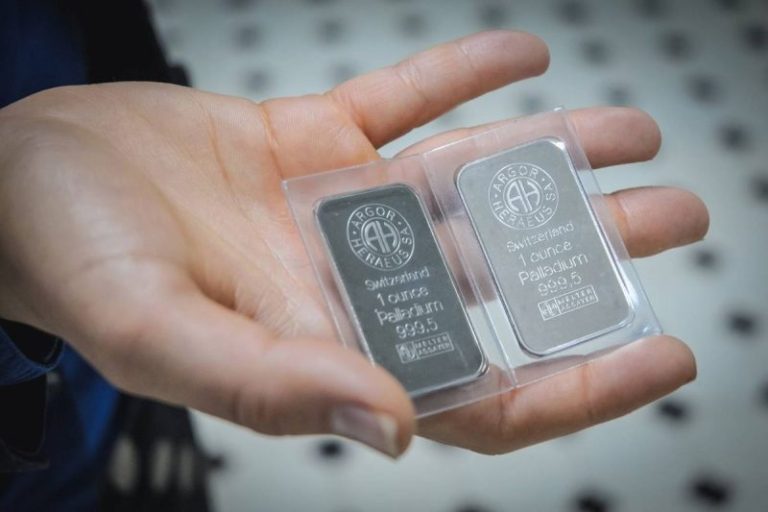
The palladium price surged upward in 2025 after three years of trending down and sideways.

More than 80 percent of palladium demand comes from the auto sector, where it is used in the production of catalytic converters. Platinum and palladium are mostly interchangeable for this end use, and typically swapped for each other as their prices fluctuate.

Strong growth in demand for electric and hybrid vehicles in recent years has placed downward pressure on palladium prices. On the supply side, Russia is one of the world’s top suppliers of palladium and other platinum-group metals.

In 2025, palladium prices soared by more than 83 percent as of mid-December on supportive demand signals from slowing electric vehicle (EV) adoption trends and concerns about Russian supply reliability.

The price of the metal reached a year-to-date high of US$1,675.50 per ounce on December 17.

What’s the outlook for palladium in 2026? Let’s see what the experts have to say.

Platinum demand depends on auto sector

As for China, data from the China Passenger Car Association shows retail auto sales fell by 8.1 percent in November and dropped by 1.1 percent month over month; however, exports rose 52 percent to a record high of 601,000 units.

“New-energy vehicle sales grew only 4.2 percent year over year, undershooting expectations and reinforcing the theme that the domestic EV momentum is cooling faster than previously assumed,” said Hasan.’The export boom, however, keeps Chinese production elevated and sustains global palladium demand through foreign-market supply chains.”

The global slowdown in EV sales is also beneficial to palladium’s demand prospects. Reuters reported that global EV sales rose by just 6 percent in November on flat sales out of China and a 42 percent drop in North America after the Trump Administration ended the EV tax credit scheme. That’s the slowest growth rate since February of 2024.

“Slower electrification limits the speed of substitution away from palladium-heavy combustionengines, extending the life cycle of auto catalyst demand at a time when supply growth remainsan open question,” Hasn stated.

Looking into 2026, S&P Global sees the outlook for light-vehicle production being dependent on changing US trade policies and emissions standards. Consumer demand could be weighed down by the extra costs brought about by tariffs.

“The broader pattern suggests flattish global production trends for 2026, a scenario that keeps palladium demand growth steady but not spectacular,” Hasn explained.

Another factor that may impact palladium demand in the coming year is the premium reversal and the potential for auto makers to swap platinum for palladium in autocatalysts. Historically, for the most part palladium has traded at a premium to platinum; however, this trend reversed in late 2025 as the platinum market is facing a large supply deficit for the year.

In its September 2025 market update, the World Platinum Investment Council (WPIC) reported at that time that platinum prices over the preceding twelve months were trading at an average premium of US$59 per ounce to palladium prices. The WPIC said it “expects reverse substitution (i.e. palladium for platinum) to reach 250 koz by 2029f. With palladium now benefitting from reverse substitution, palladium will also relatively benefit (versus platinum) from China 7 emission legislation which we have added into our forecasts from 2028f.”

As of December 17, platinum is trading at a premium of more than US$250 compared to palladium.

Palladium supply facing challenges

Palladium’s price peaks in 2025 are not all related to demand. Production and logistics challenges are also driving prices for the metal. The two geographic regions to watch for supply side trends are Russia and South Africa, by far the two biggest palladium producing countries. Together, they account for more than three-quarters of global palladium production. In Russia, palladium is mainly a by-product of nickel and copper mining, whereas in South Africa the metal is mined as a by-product or co-product of platinum.

In South Africa, platinum and palladium mining operations have been plagued by heavy rain and flooding in 2025. The nation’s mining industry has already been suffering under an energy crisis marked by frequent power outages. To further compound the supply problem, maturing deposits are becoming more expensive to mine and a lack of significant capital investment has led to a dearth of new projects.

In Russia, palladium output is traditionally dependent upon the economic and operational viability of its nickel mines. Since the country’s invasion of Ukraine, logistical challenges have erupted all along the palladium supply chain from mining to export as sanctions and trade restrictions have tightened. This includes the removal of Russian refiners from the London Platinum and Palladium Market ‘Good Delivery Lists’.

Another supply side challenge came in mid-2025 when American palladium producer Sibanye-Stillwater (NYSE:SBSW) headed up a petition requesting that the US International Trade Commission (ITC) investigate anti-dumping and countervailing duties on Russian unwrought palladium. Russian palladium represents about 40 percent of US imports of the metal.

The ITC found that dumped and subsidized Russian palladium imports do pose a threat to the US palladium industry. The Department of Commerce is now conducting a full investigation into the dumping margins and subsidies of Russian unwrought palladium. A determination is expected in January 2026, followed by the final phase of the ITC investigation to be completed in May 2026.

Sterck said the outcome could have an impact on the substitution of platinum for palladium in catalytic converters. “I think going into next year, we should get greater clarity on these investigations, and it’s certainly something that we’ll be watching in terms of trying to inform our estimates for 2026 as a whole,” he added.

In its September 20205 market update, the WPIC projected that the palladium market will likely post supply deficits for 2025 and 2026 before moving into a surplus. That’s with palladium mine supply forecast to decline by 1.1 percent CAGR between 2024 and 2029.

“Notably, the forecast of palladium going into surplus is entirely contingent on recycling supply growth. If this does not materialise then palladium could remain in a deficit for the foreseeable future, which could materially alter palladium value expectations,” stated the report.

Palladium price forecast for 2026

The palladium market is notoriously volatile and highly sensitive to economic swings and supply disruptions. All of this makes forecasting palladium prices challenging.

Precious metals industry service provider Heraeus Precious Metals’ 2026 palladium price forecast is representative of the uncertainty prevalent in this segment of the market. The firm is projecting that prices for the metal will trade in a range of US$950 to US$1,500 next year.

Palladium may face a widening surplus as battery electric vehicles gain market share,” said Henrik Marx, Head of Trading at Heraeus Precious Metals. This would likely place downward pressure on palladium price. However, the firm’s report points out that the metal’s price may receive a boost from a rally in platinum prices.

New York-based precious metals dealer Bullion Exchanges has a base case of US$1,300 to US$1,600 per ounce for palladium in 2026. If EV adoption grows faster than expected, its bearish case for the metal comes in at US$1,100 per ounce. If the supply deficit deepens and Russian palladium faces further sanctions, the firm sees a more bullish case for palladium to soar above US$1,800 per ounce.

Securities Disclosure: I, Melissa Pistilli, hold no direct investment interest in any company mentioned in this article.

This post appeared first on investingnews.com

Here’s a quick recap of the crypto landscape for Friday (December 19) as of 9:00 pm UTC.

Get the latest insights on Bitcoin, Ether and altcoins, along with a round-up of key cryptocurrency market news.

Bitcoin and Ether price update

Bitcoin (BTC) was priced at US$88,004.97, up by 3.6 percent over 24 hours.

Bitcoin price performance, December 19, 2025.

Chart via TradingView

Ether (ETH) was priced at US$2,991.30, up by 7.2 percent over the last 24 hours.

Altcoin price update

  • XRP (XRP) was priced at US$1.91, up by 5.7 percent over 24 hours.
  • Solana (SOL) was trading at US$126.85, up by 7.6 percent over 24 hours.

Today’s crypto news to know

MetaPlanet’s US expansion and OTC trading debut

American Depositary Receipts (ADRs) of BTC treasury company Metaplanet (TSE:3350,OTCQX:MPJPY) began trading today on the US OTC market under the ticker symbol MPJPY, replacing the previously unsponsored MTPLF ticker, according to an announcement from the company.

This step builds on earlier US expansions. The company, which is based in Tokyo, established a wholly-owned subsidiary called Metaplanet Treasury in Miami, Florida, in May 2025 to handle BTC accumulation and treasury operations with up to US$250 million in capital.

The launch is intended to enhance US investor participation in MetaPlanet’s BTC strategy.

Poland’s parliament approves MiCO-aligned crypto bill over veto

Poland’s lower house of parliament, called the Sejm, approved a crypto-asset market bill today, overriding President Karol Nawrocki’s prior veto. It now heads to the Senate for review, where it potentially faces another veto.

President Nawrocki vetoed the bill earlier in December, citing threats to civil liberties like easy website blocks. Prime Minister Donald Tusk’s government resubmitted the bill, unchanged. It passed with 241 votes.

The bill aligns Poland with the EU’s MiCA regulation by designating the Financial Supervision Authority (KNF) to oversee crypto exchanges, impose sanctions, and introduce criminal liability for offenses.

US Senate confirms Mike Selig as CFTC Chair

The US Senate has confirmed Mike Selig as the next chair of the Commodity Futures Trading Commission (CFTC), bringing permanent leadership back to an agency that has operated for months in near-limbo.

Selig’s confirmation passed 53–43 as part of a broader package of federal appointments. The CFTC had been functioning with a single commissioner, Acting Chair Caroline Pham, after multiple resignations hollowed out the five-member panel.

While Pham kept the agency operational, the lack of a Senate-confirmed chair constrained long-term planning, staffing, and coordination with other regulators.

That gap was especially acute as lawmakers debated expanding the CFTC’s role in overseeing spot crypto markets.

CLARITY Act heads for Senate markup in January

The Digital Asset Market Clarity Act is set to enter Senate markup in January, according to White House crypto and AI adviser David Sacks, putting the bill on a formal path toward passage.

‘We had a great call today with Chairmen @SenatorTimScott and @JohnBoozman who confirmed that a markup for Clarity is coming in January. Thanks to their leadership, as well as @RepFrenchHill and @CongressmanGT in the House, we are closer than ever to passing the landmark crypto market structure legislation that President Trump has called for,’ Sacks posted on X. ‘We look forward to finishing the job in January!’

Senate Banking Chair Tim Scott and Agriculture Chair John Boozman have agreed on the timeline. The bill, which cleared the House earlier this year, aims to settle long-running jurisdiction disputes by spelling out when a token is a security versus a commodity.

Lawmakers are expected to focus amendments on asset classification tests, investor protection standards, and how quickly platforms must register under the new regime.

Another key issue will be how the SEC and CFTC coordinate oversight during the transition period.

If the schedule holds, Congress could finalize a reconciled version later during the year.

Bybit re-enters UK Market via FCA-approved promotion route

Crypto exchange Bybit has resumed operations in the UK after a two-year absence triggered by tighter rules on crypto marketing and promotions.

The platform has restarted spot trading with 100 pairs, using a compliance structure designed to meet the Financial Conduct Authority’s (FCA) financial promotion standards.

Rather than holding its own UK authorization, Bybit is operating under an arrangement with London-based exchange Archax, which is licensed to approve crypto promotions for unauthorised firms.

This route has previously been used by other major exchanges seeking access to British users.

Securities Disclosure: I, Meagen Seatter, hold no direct investment interest in any company mentioned in this article.

Securities Disclosure: I, Giann Liguid, hold no direct investment interest in any company mentioned in this article.

This post appeared first on investingnews.com

As the world races to meet rising power demand driven by artificial intelligence and advanced computing, cleantech is stepping into a new era of opportunity.

Developing and scaling innovative energy technologies has never been more accessible or cost-efficient, thanks to breakthroughs in AI-driven design, automation and data analytics that are speeding up everything from materials science to grid optimization.

While US climate finance leadership appears uncertain, Canada is emerging as a strong contender for global influence, backed by supportive policy frameworks, abundant natural resources and a deep bench of innovation-focused companies.

Here’s a look at the best-performing Canadian cleantech stocks on the TSX 2025 by year-to-date gains. CSE-listed companies were considered, but none made the list at this time.

Data for this article was gathered on December 16, 2025, using TradingView’s stock screener. Only companies with market capitalizations greater than C$50 million were considered.

1. Anaergia (TSX:ANRG)

Year-to-date gain: 187.23 percent
Market cap: C$472.75 million
Share price: C$2.70

Anaergia is a global company that specializes in converting waste, including wastewater and agricultural and municipal solid waste, into renewable energy, clean water and organic fertilizer.

The company has operations in 17 countries spanning North America, Africa, Asia and Europe. In 2025, Anaergia has expanded its global reach through partnerships with companies in Italy and Spain, as well as through a partnership agreement to build a biogas facility in South Korea.

In July 2024, Anaergia closed the third tranche of a C$40.8 million investment deal with Marny Investissement that gave Marny a controlling interest of about 60 percent in Anaergia, supporting the company’s pivot to employ a greater focus on technology sales and operations and maintenance contracts.

The company’s September investor presentation highlights its new strategy of streamlined operations, expanding through global partnerships and selective Build-Own-Operate delivery.

In its Q3 2025 results, the company reported strong financials, with revenue increasing 77 percent year-over-year to C$51.4 million, gross margins expanding to 28.8 percent and adjusted earnings before interest, taxes, depreciation and amortization (EBITDA) of C$2.6 million.

2. Tantalus Systems (TSX:GRID)

Year-to-date gain: 150.53 percent
Market cap: C$250.03 million
Share price: C$4.76

Tantalus Systems provides technology that gives utilities greater control and insight into their electric grids.

This includes advanced metering infrastructure (AMI), load management systems and grid analytics, all of which contribute to a more efficient and reliable power grid.

One of its key products, TRUConnect AMI, provides real-time data on energy consumption and grid conditions. The TRUFlex Load+DER Management system helps manage energy demand and integrate distributed energy resources like solar power, while TRUGrid Automation optimizes grid operations and improves response to events like power failures.

On July 7, Tantalus announced that it was extending its partnership with EPB in Chattanooga, Tennessee, to deploy 20,000 TRUSense Ethernet Gateways over the next five years, integrating with EPB’s fiber network to enhance grid modernization and operational efficiency.

The company’s annual recurring revenue has grown at an approximate compound annual growth rate of 18 percent since 2016, according to its October presentation.

Its Q3 revenue hit C$14.2 million, up 22.5 percent year-over-year, driven by growth of 30 percent in connected devices and 10 percent in software and services. Its adjusted EBITDA doubled year-over-year to C$1.2 million.

3. Ballard Power Systems (TSX:BLDP)

Year-to-date gain: 50.21 percent
Market cap: C$1.09 billion
Share price: C$3.65

Ballard Power Systems is a hydrogen fuel cell technology company that develops, manufactures and sells proton exchange membrane (PEM) fuel cell products that convert hydrogen into clean electricity with zero emissions. The company targets heavy-duty applications like buses, trucks, trains, marine vessels and stationary power.

Recent deals include a December memorandum of understanding with Kolon Industries for fuel cell components and market expansion and a May multi-year agreement for 50 fuel cell engines with Egypt’s MCV to power its intercity buses.

In Q3 2025, Ballard’s revenue surged 120 percent year-over-year to C$32.5 million led by bus and rail deliveries, with gross margins improving to 15 percent and cash reserves at C$525.7 million. The company also cut total operating expenses by 36 percent.

4. Algonquin Power & Utilities (TSX:AQN)

Year-to-date gain: 32.29 percent
Market cap: C$613 billion
Share price: C$8.48

Algonquin Power & Utilities operates regulated electric, water, wastewater and natural gas utilities across the US, Canada, Bermuda and Chile, alongside a retained Hydro Group after divesting its larger renewables business as part of its pure-play regulated utility pivot.

The company completed the sale of its renewable energy assets, excluding hydro, to LS Power in January 2025 for approximately US$2.5 billion. The company declared a Q4 2025 dividend of US$0.065 per common share.

5. Brookfield Renewable Partners (TSX:BEP.UN)

Year-to-date gain: 15.41 percent
Market cap: C$11.41 billion
Share price: C$38.27

Brookfield Renewable Partners owns and operates a global portfolio of hydroelectric, wind, solar and energy storage assets. It also offers sustainable solutions such as nuclear services and carbon capture. The company’s strategy emphasizes long-term power purchase agreements and asset recycling.

Major 2025 deals include a hydropower framework with Brookfield Asset Management (TSX:BAM,NYSE:BAM) and Alphabet (NASDAQ:GOOGL) for up to 3 gigawatts of hydroelectricity capacity, starting with US$3 billion in contracts for 670 megawatts capacity in Pennsylvania.

Securities Disclosure: I, Meagen Seatter, hold direct investment interest in one or more companies mentioned in this article.

This post appeared first on investingnews.com

Nevada Sunrise Metals Corporation (TSXV: NEV,OTC:NVSGF) (OTC Pink: NVSGF) (‘Nevada Sunrise’ or the ‘Company’) announced today that it has granted a total of 3,250,000 stock options to directors, officers and consultants of the Company, exercisable at a price of $0.05 per share for a period of five years from the date of grant. The stock options have been granted in accordance with the Company’s stock option plan.

About Nevada Sunrise

Nevada Sunrise is a junior mineral exploration company with a strong technical team based in Vancouver, BC, Canada, that holds interests in gold, copper and lithium exploration projects located in the State of Nevada, USA.

Nevada Sunrise holds the right to purchase a 100% interest in the Griffon Gold Mine Project, located approximately 50 kilometers (33 miles) southwest of Ely, NV.

Nevada Sunrise holds the right to earn a 100% interest in the Coronado Copper Project, located approximately 48 kilometers (30 miles) southeast of Winnemucca, NV.

Nevada Sunrise owns 100% interests in the Gemini West, Jackson Wash and Badlands lithium projects, all of which are located in the Lida Valley in Esmeralda County, NV.

As a complement to its exploration projects in Esmeralda County, the Company owns Nevada Water Right Permit 86863, also located in the Lida Valley basin, near Lida, NV.

For Further Information Contact:
Warren Stanyer, President and Chief Executive Officer
email: warrenstanyer@nevadasunrise.ca
Telephone: (604) 428-8028
Website: www.nevadasunrise.ca

FORWARD-LOOKING STATEMENTS

This release may contain forward‐looking statements. Forward-looking statements are statements that are not historical facts and are generally, but not always, identified by the words ‘expects’, ‘plans’, ‘anticipates’, ‘believes’, ‘intends’, ‘estimates’, ‘projects’, ‘potential’ and similar expressions, or that events or conditions ‘will’, ‘would’, ‘may’, ‘could’ or ‘should’ occur and include disclosure of anticipated exploration activities. Although the Company believes the expectations expressed in such forward‐looking statements are based on reasonable assumptions, such statements are not guarantees of future performance and actual results may differ materially from those in forward looking statements. Forward‐looking statements are based on the beliefs, estimates and opinions of the Company’s management on the date such statements were made. The Company expressly disclaims any intention or obligation to update or revise any forward‐looking statements whether as a result of new information, future events or otherwise.

Such factors include, among others, risks related to future plans for the Company’s Nevada mineral properties; reliance on technical information provided by third parties on any of our exploration properties; changes in mineral project parameters as plans continue to be refined; current economic conditions; future prices of commodities; possible variations in grade or metallurgical recovery rates; failure of equipment or processes to operate as anticipated; the failure of contracted parties to perform; labor disputes and other risks of the mining industry; delays due to pandemic; delays due to weather; delays in obtaining governmental approvals, financing or in the completion of exploration, as well as those factors discussed in the section entitled ‘Risk Factors’ in the Company’s Management Discussion and Analysis for the Nine Months ending June 30, 2025, which is available under Company’s SEDAR+ profile at www.sedarplus.ca.

Although Nevada Sunrise has attempted to identify important factors that could cause actual actions, events or results to differ materially from those described in forward-looking information, there may be other factors that cause actions, events or results not to be as anticipated, estimated or intended. There can be no assurance that such information will prove to be accurate as actual results and future events could differ materially from those anticipated in such statements. Nevada Sunrise disclaims any intention or obligation to update or revise any forward-looking information, whether as a result of new information, future events or otherwise. Accordingly, readers should not place undue reliance on forward-looking information.

Neither TSX Venture Exchange nor its Regulation Services Provider (as that term is defined in the policies of TSX Venture Exchange) accepts responsibility for the adequacy or accuracy of this release.

To view the source version of this press release, please visit https://www.newsfilecorp.com/release/278754

News Provided by Newsfile via QuoteMedia

This post appeared first on investingnews.com

The push to bring the WNBA back to the city of Houston, where one of the league’s original franchises won four championships, is becoming more intense.

According to a new ESPN report, the Houston Rockets ownership group is in ‘substantive’ talks with the Connecticut Sun to purchase and relocate the franchise. Talks have been described as ‘positive,’ while Rockets ownership works on a purchase offer that is acceptable to the Sun. While an exclusivity agreement has not been signed, and a decision has not been made on the franchise’s, a formal offer has been discussed.

USA TODAY has reached out to the WNBA for comment.

News of the Rockets’ offer comes almost six months after WNBA commissioner Cathy Englebert specifically called out Houston during a June 30 expansion team announcement for Detroit, Cleveland and Philadelphia. Houston did not receive a bid at the time after entering into the picture later in the process.

‘There are a variety of cities that obviously bid, and one of those I wanted to shout out because they have such a strong history in this league and they are a great ownership group, is Houston,’ Engelbert said at the time.’

Over the last several months, the Sun have explored options to ‘strategically invest in the team,’ including a potential sale. In August, reports surfaced that a group led by Boston Celtics minority owner Steve Pagliuca had reached a deal to buy the Sun for a record $325 million and relocate the franchise to Boston. However, the WNBA reportedly blocked the deal, saying cities that applied for expansion first ‘have priority over Boston.’

Sun ownership then attempted to present multiple options to the WNBA in an attempt to salvage a deal to sell the team, including a plan that would allow the state of Connecticut to buy a stake in the team to keep the Sun there. According to the latest report from ESPN, there is a growing hope that Connecticut’s future can be determined before the start of the 2026 free agency period.

However, the date of free agency remains to be seen and cannot move forward until a new league CBA is in place. The WNBA and WNBA Players Association agreed to a January 9 deadline, but a recent vote to strike should talks continue as they are could further complicate negotiations.

The USA TODAY app gets you to the heart of the news — fastDownload for award-winning coverage, crosswords, audio storytelling, the eNewspaper and more.

This post appeared first on USA TODAY

Longtime NASCAR star Brad Keselowski broke his leg Thursday while on a family ski trip, his RFK Racing team said in a statement.

‘Keselowski has successfully completed routine surgery, and doctors expect a quick and full recovery,’ RFK Racing said.

In a statement, the 2012 NASCAR Cup Series champion said he was ‘grateful for the medical team who took great care of me and for the support system around me.

‘My attention now is fully on recovery. I’m motivated to get back to full strength as quickly as possible and will work relentlessly to be ready for Daytona,’ Keselowski said.

Keselowski, 41, subsequently took to his own social media channel and posted a photo of himself in the hospital in a hospital gown surrounded by his family, an X-ray of his leg showing screws going into it, and a video of himself walking down a hospital hallway while using a walker.

In his post he said he is ‘focused on Daytona’ and cracked that he is ‘now bionic.’

The 2026 Daytona 500 is scheduled for Feb. 15, giving Keselowski less than two months of recovery time before NASCAR’s most famous race.

The USA TODAY app gets you to the heart of the news — fastDownload for award-winning coverage, crosswords, audio storytelling, the eNewspaper and more.

This post appeared first on USA TODAY