Author

admin

Browsing

NEW YORK — American Ben Shelton, thought to be one of the favorites for the US Open outside of top-seed and defending champion Jannik Sinner and No. 2 seed Carlos Alcaraz, retired from his third-round match against Adrian Mannarino on Friday, Aug. 29, because of a shoulder injury.

Shelton, the No. 6 seed, gutted it out for the three-hour match and had to retire with the match square at two sets a piece. It was the first time in 178 career matches that Shelton was forced to retire.

Shelton said he couldn’t pinpoint when he got hurt, as he was healthy going into the match.

‘Really high,’ Shelton said after the match when he asked what his level of pain was. ‘I’m not sure. You know, I never retired before. I’m not a guy who would retire if I could continue. Even though I was in pain, I was just kind of in that competitive mindset of trying to find a way and push through it.’

Shelton was the first of two ranked American men to fall at the US Open on Friday. A short time after Shelton’s loss, No. 17 Frances Tiafoe was stunned by qualifier Jan-Lennard Struff of Germany, 7-6, 6-3, 7-6 (9-7) in his third-round match.

Mannarino, a 37-year-old from France and ranked No. 77 in the world, advances to the fourth round to face No. 20 seed Jiri Lehecka, a 6-4, 6-4, 6-4 winner over Raphael Collignon. It was Mannarino’s first win against a top-10 player in a Grand Slam tournament in 23 attempts.

“When he started to have pain, he was leading in the match,” Mannarino, who is the oldest man to break into the Top 20 in ATP Rankings history at age 35, after achieving a career-high No. 17 in 2024, said after his victory. “Honestly, he probably would’ve won that match. That’s unfortunate for him, and lucky for me. I don’t really know what to say right now. I’m happy to be through, but I wish him the best, of course.”

The 22-year-old Shelton was leading in the second game of the fourth set when he screamed in pain during a forehand shot. He called for a trainer and received treatment on the shoulder, and was in obvious discomfort and emotional on the bench.

“I did something to my shoulder. I don’t know what it is,’ Shelton could be heard saying to his coach’s box.

After losing the fourth set, and during the changeover before the fifth set, he was again visited by medical staff, and, in tears, he decided he couldn’t continue.

‘Usually I’ll play through anything and just kind of find a way. And whether it’s sickness or injury, like, if I can stay out there, I can stay out there. I never felt anything like this before,’ Shelton said.

Shelton made the semifinals of the 2023 US Open and reached the semifinals of the 2025 Australian Open in January.

The USA TODAY app gets you to the heart of the news — fastDownload for award-winning coverage, crosswords, audio storytelling, the eNewspaper and more.

This post appeared first on USA TODAY

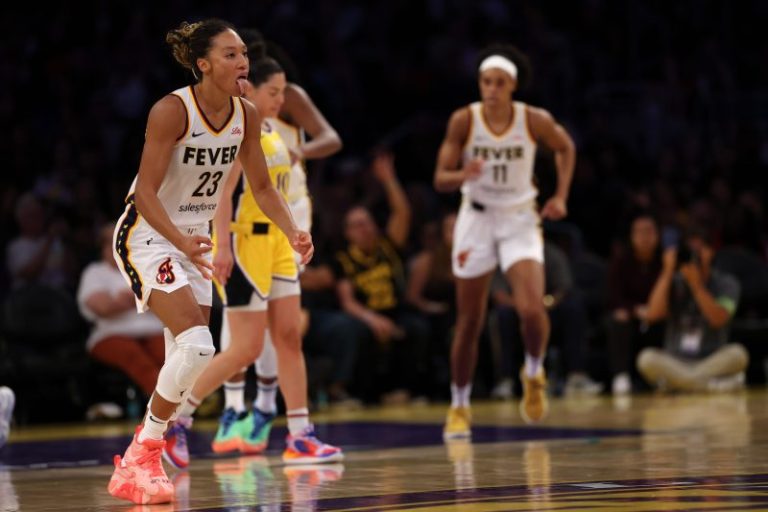
Aliyah Boston produced a game-high 22 points and 11 rebounds for the Indiana Fever on the road against the Los Angeles Sparks at Crypto.com Arena on Friday night.

Boston shot 11-of-18 from the field and created opportunities for Indiana with six steals. Odyssey Sims added 21 points and six rebounds in the victory.

Kelsey Plum and the Sparks held a lead throughout most of the game but weren’t able to hold on to it in the second half, including the final seconds of the fourth quarter.

Sims put the game away in the final seconds, scoring the final five points for the Fever, including a 10-foot jumper off an assist from Lexie Hull.

The Fever took their first lead of the game when Hull made a two-point shot to move the team ahead 50-49 with 6:41 left in the third quarter.

The two squads went back and forth in the final period. Plum had the ball in her hands near the basket and a chance to help facilitate a go-ahead shot, but Boston intercepted a bad pass by Plum to secure the victory.

Highlights: Fever vs. Sparks

Final: Fever 76, Sparks 75

Aliyah Boston produced a double-double with 22 points and 11 rebounds for the Fever. Odyssey Sims contributed to the victory with 21 points and six rebounds.

3Q: Sparks 58, Fever 57

The Sparks did enough to hold on to the lead at the end of the third quarter. Rae Burrell made a two-point shot off an assist from Sarah Ashlee Barker with 4.5 seconds left in the quarter to retake the lead.

The Fever took their first lead of the game when Lexie Hull made a two-point shot to move the team ahead 50-49 with 6:41 left in the third quarter.

Kelsey Plum continued to be the Sparks’ only double-digit scorer after three quarters of play. Plum has shot 5-of-10 from the field for 12 points in 26 minutes of play.

Aliyah Boston has a game-high 16 points and eight rebounds for the Fever. Odyssey Sims and Kelsey Mitchell each have 12 points.

Halftime: Sparks 47, Fever 44

Kelsey Plum had 12 points in the first half to lead the Sparks against the Fever. Azura Stevens and Rickea Jackson added eight points in the first half.

The Sparks compiled nine assists in the first quarter but just one in the second quarter.

Kelsey Mitchell and Aliyah Boston each scored 12 points for the Fever.

1Q: Sparks 31, Fever 24

The Sparks finished out the opening period with the lead against Indiana at home. Azura Stevens had eight points and two assists for the Sparks in the first quarter. Dearica Hamby added six points and two assists. Kelsey Mitchell led the Fever with seven points. Aliyah Boston had six points, three rebounds and two assists against L.A.

Sparks starting lineup vs. Fever

Rickea Jackson, Dearica Hamby, Azura Stevens, Kelsey Plum and Julie Allemand started for the Sparks at home against the Fever on Friday.

Fever starting lineup vs. Sparks

Odyssey Sims, Kelsey Mitchell, Lexie Hull, Natasha Howard and Aliyah Boston make up the Fever’s starting lineup for Friday’s game against the Sparks.

What time is Indiana Fever vs. Los Angeles Sparks?

The Los Angeles Sparks will host the Indiana Fever at 10 p.m. ET (7 p.m. PT) on Friday, Aug. 29, at crypto.com Arena in Los Angeles. The game will be broadcast nationally on ION.

How to watch Indiana Fever vs. Los Angeles Sparks: TV, stream

  • Time: 10 p.m. ET (7 p.m. PT)
  • Location: Crypto.com Arena (Los Angeles)
  • TV channel: ION
  • Streaming: Fubo (free trial to new subscribers)

The USA TODAY app gets you to the heart of the news — fastDownload for award-winning coverage, crosswords, audio storytelling, the eNewspaper and more.

This post appeared first on USA TODAY

The NFL world wasn’t the only one shocked by the Micah Parsons trade on Thursday evening – Kenny Clark was too.

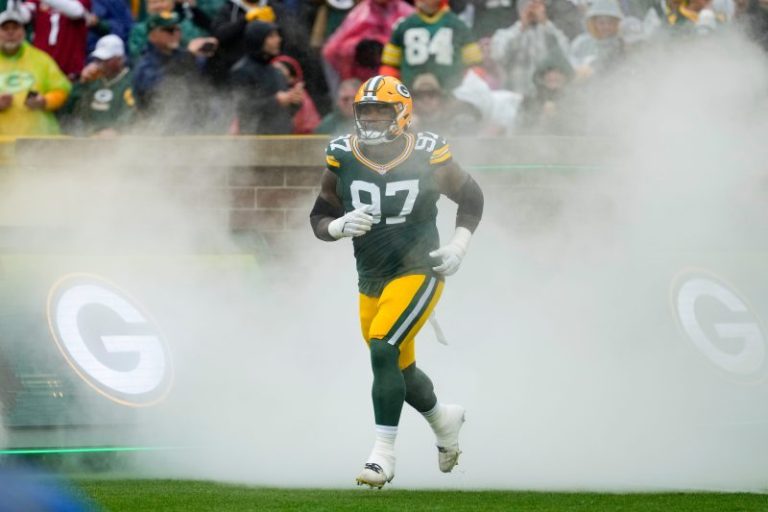
Less than 24 hours after being traded to the Dallas Cowboys in the blockbuster deal that sent Parsons to the Green Bay Packers, Clark detailed the life-changing call he received while getting some ice cream for his daughter, Kenaii. Clark was informed of the trade that would end a nine-year run for him in Green Bay – the only NFL team he has played for.

‘I was shocked, but once Jerry and all those guys called me, Schotty and everybody, I just felt wanted. It’s a blessing, I’m appreciative of it.’ Clark said, via the Cowboys’ official site.

The three-time Pro Bowl defensive tackle is ready to introduce himself to the Cowboys defense, saying he is prepared to be the best version of himself.

‘No nonsense, you’re going to get a dawg, somebody that’s just all about football,’ Clark said. ‘I’m here to ball. I’m here to be my best self. I feel like when I’m my best self, there’s nobody messing with me. That’s what I bring to the table, I’m here to play my (expletive) off.’

He won’t have a long time to do that, however, with the Week 1 kickoff set for Thursday, Sept. 4 against the Philadelphia Eagles.

Clark will have to cram an entire offseason’s worth of preparation into just a few days as he prepares for his Dallas debut.

‘First and foremost, just establishing myself by how I play,’ Clark said. ‘And just being myself, establishing myself as a leader. I lead by example, I truly believe in being a pro and doing things the right way.’

Jerry Jones pointed out during a press conference following the deal that stopping the run would be a point of emphasis for the team going forward and Clark is a big reason for that. The 29-year-old explained what it will take for the Dallas defense to accomplish that goal.

‘When it all comes down to stopping the run, it’s all about physicality and setting edges,’ Clark said. ‘I think as long as we’re doing our job as a defense, it all takes 11. It takes all of us understanding how to stop the run and it takes all of us holding each other accountable every day to know our responsibilities and play the run so we can be able to rush the passer.’

While Clark won’t be getting to the quarterback at will like Parsons, there is still some potential for sacks with the former Packer.

He set a career-high with 7.5 sacks in 2023 and has 35 for his career, noting that is part of his game.

‘I pride myself on being an all-around defensive tackle, but I’m primarily a nose tackle. That’s my bread and butter…’ Clark added. ‘I can slide out to three in pass rushing situations or whatever the case may be, but wherever they put me, I’m going to make plays.’

From one historic franchise to another, the goal remains the same – no matter the place.

‘It’s a historic franchise, I wouldn’t want no other thing other than to be sitting here,’ Clark said. I’ve got a chance to win a Super Bowl here and that’s all I could ask for. That’s what I want to do, I want to bring a Super Bowl back to the Cowboys.’

While the trade hasn’t drawn rave reviews from analysts, it will come down to what happens on the field. And if there’s one thing for certain about the NFL, it’s that anything can happen.

This post appeared first on USA TODAY

Genetics is the study of genes, their variations and hereditary characteristics, as well as how these traits are passed on through generations. So what is genetics investing?

When it comes to genetics investing, companies in this niche of the life science sector are mostly focused on four submarkets: DNA sequencing, genetic testing, gene therapy and genomics, which includes gene editing.

This life sciences submarket has gained much attention from investors over the past several years. It has provided a launching pad for a number of biotech firms developing and commercializing novel treatments and drugs addressing a wide range of diseases with unmet needs.

For those looking to dive into the genetics sector, there are numerous investment opportunities to consider. Investing in gene stocks is the most common route, but there are risks due to the market’s volatility, especially when it comes to wins or losses with the US Food and Drug Administration (FDA).

Exchange-traded funds (ETFs) are another popular option for gaining exposure to the industry, and come with less risk than investing in a single stock.

In this article

    What are the key areas of the genetics sector?

    Before diving into investment opportunities in the genetics market, it’s important to understand the industry and the key areas of genetics mentioned above.

      What investors should know about the genetics market

      In the biotech sector, gene therapy is one of the more advanced treatment options, and gene therapy pipeline candidates are robust in late-stage clinical trials.

      In terms of what will — and already has — disrupted the genetics industry, CRISPR gene-editing technology has been on the rise for quite some time. It uses short repeating DNA sequences with “spacers” dividing them to treat genetic diseases.

      While the use of the technology is still in its early stages, in the coming years it’s expected to have a big impact on how genetic diseases are treated, and there are a range of clinical trials underway involving CRISPR technology. So far, the only FDA approved CRISPR-based medicine is Casgevy, developed by Vertex Pharmaceuticals (NASDAQ:VRTX) and CRISPR Therapeutics (NASDAQ:CRSP). It was originally approved in late 2023 for the treatment of sickle cell disease.

      The prominence of gene therapies in the life science sector was a major theme at the 2025 JPMorgan Healthcare Conference in January 2025. Peter Marks, then-director of the FDA’s Center for Biological Evaluation and Research, told attendees that his agency is aiming to accelerate approvals for gene therapies.

      In 2024, the FDA expanded approvals for CRISPR-based Casgevy to beta-thalassemia, and it also approved Pfizer’s (NYSE:PFE) Beqvez and PTC Therapeutics’ (NASDAQ:PTC) Kebilidi.

      Despite experiencing a challenging year in 2024, there is still a lot of optimism in the gene therapy sector. Also speaking at the January conference, Alliance for Regenerative Medicine president Tim Hunt said he believes 10 new cell and gene therapy treatments could reach blockbuster status by 2030.

      “No one’s saying there aren’t headwinds, but we are seeing important signs of growth,” he added.

      Looking at DNA sequencing, this market is driven by advances in biotech, the increasing prevalence of cancer and rising demand for precision medicine, as well as higher investment in research and development. DNA sequencing has become a vital component of this growth and has played a key role in remodeling molecular biology and genomics research.

      Genetic testing is another segment of the genetics industry that is growing at a fast pace. Unsurprisingly, technological breakthroughs have had a huge impact on genetic testing, and so has the fact that governments and regulatory bodies are turning their attention to this market in order to regulate and raise awareness to treat diseases such as cancer, cystic fibrosis and sickle cell anemia.

      Biotech and pharmaceutical companies are also expressing interest in this sector, which is expected to further fuel genetics sector growth in the coming years. Mergers and acquisitions activity is also expected to increase as companies seek to expand their product portfolios new candidates and technologies.

      As can be seen, the genetics industry is vast and complex, but is also ripe with investment opportunities.

      How to invest in gene stocks

      Investors looking to invest in the field of genetics through stocks have many options, from large-cap biotech companies to pure-play gene therapy, gene editing and genetic testing stocks.

      See the list below for genetics companies to consider, and check out the linked stock lists for more options.

      Large-cap gene stocks

      There are a number of large-cap biotech companies that have significant focuses on the field of genomics. Here are a few to consider:

      Amgen (NASDAQ:AMGN)
      A global leader in biotech, Amgen uses advanced human genetics to develop and manufacture therapeutics targeting a variety of diseases with unmet medical needs. The company’s subsidiary deCODE Genetics is researching how human genetic diversity influences disease.

      AbbVie (NYSE:ABBV)
      Research-based global biopharmaceutical company AbbVie that addresses several key therapeutic areas: immunology, oncology, neuroscience, eye care, virology and gastroenterology. AbbVie is collaborating with ADARx Pharmaceuticals to develop siRNA therapeutics, viewed as a promising genetic medicine approach for silencing disease-causing genes.

      Regeneron Pharmaceuticals (NASDAQ:REGN)
      Regeneron Pharmaceuticals creates medicines for a wide variety of diseases. The Regeneron Genetics Center is conducting one of the world’s largest genetics sequencing efforts in collaboration with health organizations around the world.

      Gene editing (CRISPR) stocks

      There are a variety of options for investors looking to buy in on the field of gene editing stocks, including:

      CRISPR Therapeutics (NASDAQ:CRSP)
      CRISPR Therapeutics and its partner Vertex Pharmaceuticals co-developed drug Casgevy, a CRISPR/Cas9 genome-edited cell therapy. Casgevy is the first ever treatment based on CRISPR technology to be approved for the US market, as well as by the European Medicines Agency and Health Canada.

      Intellia Therapeutics (NASDAQ:NTLA)
      Intellia Therapeutics is a gene editing biotech company developing drugs for patients with genetic and autoimmune diseases. The company’s drug pipeline includes late-stage clinical programs for therapies targeting hereditary angioedema and transthyretin amyloidosis.

      Vertex Pharmaceuticals (NASDAQ:VRTX)
      Vertex Pharmaceuticals is the other half of the team behind Casgevy. It also offers exposure to other sectors of genomics, with approved treatments for cystic fibrosis and a pipeline of genetic and cell therapies. Its investigational VX-880 islet cell replacement therapy could restore insulin production in patients with type 1 diabetes.

      Gene therapy stocks

      Gene therapy stocks and stem cell stocks are also popular choices for genetics investing. Here are a few to get you started:

      Novartis (NYSE:NVS)
      Switzerland-based Novartis is focused on treatments for a wide range of diseases, including cancers, malaria, leprosy and sickle cell disease. Novartis is developing adeno-associated-virus (AAV)-based and CRISPR-based gene therapies. Its Kymriah treatment was the first CAR-T cell therapy to be approved by the FDA, and the agency also approved its AAV-based therapy Zolgensma.

      Gilead Sciences (NASDAQ:GILD)
      Global biopharmaceutical company Gilead Sciences is advancing breakthrough medicines to prevent and treat serious diseases such as HIV, viral hepatitis and cancer. Its cell-based gene medicine for blood cancer, the CAR T-cell therapy Yescarta, was the second gene therapy approved by FDA.

      uniQure (NASDAQ:QURE)
      Genomic medicine company uniQure develops and markets gene therapy products for patients with severe genetic diseases. The company’s AAV-based gene therapy platform targets liver-directed and central nervous system disorders.

      Genetic testing stocks

      For those interested in genetic testing stocks, these three stocks provide a snapshot on different ways to get exposure to the sector:

      Exact Sciences (NASDAQ:EXAS)
      Exact Sciences focuses on molecular diagnostic tests. The company has developed a molecular screening technology platform called Cologuard that detects a range of cancers, including breast cancer and colorectal cancer.

      Fulgent Genetics (NASDAQ:FLGT)
      A leader in clinical diagnostic genetic sequencing, Fulgent Genetics is a full-service genomics testing company. Its proprietary technology platform, Picture Genetics, allows for the identification of personal DNA health markers in individual patients.

      Illumina (NASDAQ:ILMN)
      Illumina develops, manufactures and markets life science tools and integrated systems that enable the implementation of genomic solutions for the healthcare sector. Its focus is on oncology testing, genetic disease testing, reproductive health and research.

      How to invest in genomics ETFs

      For those who would prefer to invest in the genetics industry overall rather than buying shares in an individual gene stock, investing in genomics ETFs is the way to go. Here are some available ETFs that offer exposure to companies in the biotech and genetics sectors to start you off:

      ARK Genomic Revolution ETF (ARCA:ARKG)
      This ETF tracks firms focused on CRISPR technology, targeted therapeutics, bioinformatics, molecular diagnostics, stem cells and agricultural biology. Its holdings include CRISPR Therapeutics and Guardant Health (NASDAQ:GH).

      Global X Genomics & Biotechnology ETF (NASDAQ:GNOM)
      The Global X Genomics & Biotechnology ETF invests in stocks that are involved in genomic science, which includes gene computational genomics and biotechnology. Its holdings include Illumina and Avidity Biosciences (NASDAQ:RNA).

      iShares Genomics Immunology and Healthcare ETF (ARCA:IDNA)
      The iShares Genomics Immunology and Healthcare ETF focuses on companies involved with genomics, immunology and bioengineering. Its holdings include Regeneron Pharmaceuticals and Arcellx (NASDAQ:ACLX).

      Securities Disclosure: I, Melissa Pistilli, hold no direct investment interest in any company mentioned in this article.

      This post appeared first on investingnews.com

      Kyle Schwarber could not be stopped against the Braves.

      The Philadelphia Phillies slugger launched four home runs against Atlanta on Aug. 28, bringing his season total up to 49. Only the Seattle Mariners’ Cal Raleigh (50) has hit more this season.

      Schwarber hit a solo homer in the first inning, a two-run shot in the fourth inning, a three-run shot in the fifth inning and another three-run shot in the seventh inning of the Phillies’ 19-4 win. His final line: an incredible 4-for-6 with nine RBIs, a Phillies record per MLB.

      He homered off three of the Braves’ four pitchers: starter Cal Quantrill and relievers Austin Cox (twice) and Wander Suero.

      Schwarber had a chance to become the first player to hit five homers in a game, but his final at-bat in the eighth inning ended in a pop-out.

      This marks just the 21st four-homer game in MLB history, though incredibly three have come this season. Athletics rookie Nick Kurtz did it last month and Eugenio Suarez did it in April, also against the Braves. Prior to this season, there hadn’t been a four-homer game since 2017.

      Watch: Kyle Schwarber hits four homers vs. Braves

      This story has been updated with new information.

      The USA TODAY app gets you to the heart of the news — fastDownload for award-winning coverage, crosswords, audio storytelling, the eNewspaper and more.

      This post appeared first on USA TODAY

      The shocking Micah Parsons trade is reminiscent of another blockbuster deal the Dallas Cowboys made over three decades ago.

      Go all the way back to 1989. When Jerry Jones and the Cowboys traded running back Herschel Walker, at the peak of his career, to the Minnesota Vikings in exchange for five players and six draft picks. The Cowboys would use their draft assets on players such as Emmitt Smith, Darren Woodson and Russell Maryland. The trade was genesis of their 90s dynasty. They would go on to win three Super Bowls in the decade.

      The Cowboys haven’t sniffed a Super Bowl since. Not even an NFC championship game appearance.

      Cowboys trade Micah Parsons to Packers in blockbuster

      Perhaps Jones harken back to his gamble in 1989 that was paid off by Super Bowl jewelry before he greenlit Thursday’s trade that sent another franchise player packing.

      The Cowboys got defensive tackle Kenny Clark and two first-round picks in exchange for Parsons. Time will reveal the players the Cowboys get with their newly-acquired picks, though, they are expected to be late first-round selections because Parsons and the Packers should be good. Dallas could get a Hall of Famer out of the draft like Smith. Or Pro Bowl-caliber players similar to Woodson and Maryland.

      But this trade doesn’t feel like it’ll yield the same results.  

      Parsons won Defensive Rookie of the Year in 2021, he’s a two-time first-team All-Pro and a four-time Pro Bowler, who at 26 years old might not even be in his prime yet.

      Parsons produced 52.5 sacks in his first four seasons. He and Hall of Famer Reggie White are the only two players in NFL history to compile 12 or more sacks in their first four NFL seasons. The Cowboys defense ranked first in defensive EPA per play when Parsons was on the field since 2021. When Parsons wasn’t on the field, the Cowboys ranked last.

      The Cowboys traded a generational defensive player in the aftermath of a 7-10 season.

      Maybe the biggest loser in the trade is Dallas sports fans.

      Within a calendar year, the Dallas Mavericks traded Luka Dončić to the Los Angeles Lakers and the Cowboys dealt Parsons to the Packers.

      Micah Parsons trade grades: Who won deal between Packers, Cowboys?

      Two franchise cornerstones in their respective sports and fan favorites are gone. Sorry Dallas sports fans.

      The Mavs appear to have made out well from their trade, aided by the NBA draft lottery and subsequent No. 1 overall pick, Cooper Flagg. The Cowboys are to be determined. But Thursday’s blockbuster trade feels like a major step back for the Cowboys and a simultaneously signals a rebuild for the franchise.

      This post appeared first on USA TODAY