Author

admin

Browsing

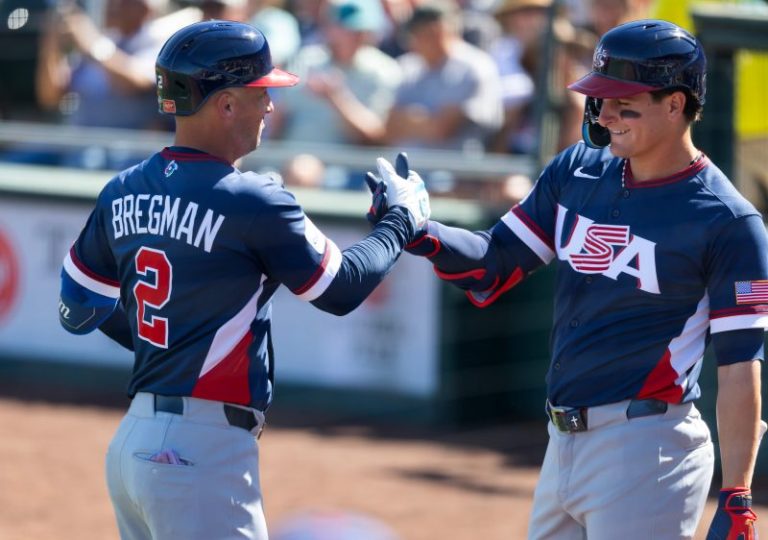
HOUSTON — If it wasn’t already clear from Dante Bichette Jr.’s jersey which contingent he was a part of at the World Baseball Classic, his head offered a less-than-subtle clue.

Two weeks ago, Bichette Jr. enlisted the help of a hairstylist friend in Los Angeles to dye his shoulder-length hair bright green, matching one of the main colors in the Brazilian flag.

During Team Brazil’s pre-WBC workout Thursday at Daikin Park, Bichette Jr. added a bandana of the Brazilian flag on top of his colorful mane prior to donning a blue-and-yellow cap.

“Last year I had green that turned into yellow, this year I put dark green so it would stay a little bit,” Bichette Jr. explained.

After going 3-1 in last year’s qualifiers, Team Brazil is back in the World Baseball Classic for the second time ever and first time since 2013. Brazil opens the tournament with a game against host country USA on Friday night in Houston.

The Brazilians are acutely aware of their underdog label. They wouldn’t have it any other way.

“Any good movie I’ve ever seen starts with an underdog story, you know?” Bichette Jr. said. “Now, this is a challenge, for sure. But nine innings and it’s a baseball game, and a lot of the time this type of games comes down to heart. When it comes to heart, we can hang.”

Brazilian pitcher Rodrigo “Bo” Takahashi added, “The pressure, it’s on them.”  

After a painstaking yearslong fight to get back into the WBC, though, Brazil is aware that the WBC presents a significant opportunity to showcase its baseball talent on a global stage and pave the way for the sport’s continued growth.

Leonardo Reginatto, 35, is a veteran infielder who played for Brazil in the 2013 WBC alongside many members of this year’s coaching staff, including manager Daniel Yuichi Matsumoto. Back then, Brazil was considered a sleeping baseball giant. It never fully awoke.

“It’s been tough, in a way, that we didn’t qualify twice. But I think that makes us better as a whole,” said Reginatto, Brazil’s team captain. “So now, it’s up to us to stay here and win a couple games.”

There have been just five Brazilian-born players to compete in the major leagues. The first, former MLB catcher Yan Gomes, is a catching coach on Brazil’s WBC staff.

While there aren’t any active MLB players on Brazil’s 2026 WBC roster, the team includes several notable connections to the majors. Bichette Jr. is the son of four-time All-Star Dante Bichette. Lucas Ramirez, the son of Manny Ramirez, plays for the Los Angeles Angels’ High-A team. High school prospect Joseph Contreras, whose father is José Contreras, is 17 and the youngest player on any WBC roster.

The American-born Ramirez, whose mother is Brazilian, could have chosen to play for the United States or for his father’s native country, the Dominican Republic. He chose Brazil for reasons both practical and sentimental. Ramirez figured he would get more playing time with Brazil, but he also has fond memories of Christmastime visits to Brazil, where his grandfather owns a livestock farm inhabited by cows and goats.

Ramirez said his aunt and uncle are flying from Brazil to Houston to watch him compete in the WBC, along with his parents. His grandparents will watch from Brazil on television.

“It’s awesome,” Ramirez said. “I would never expect that Brazil would fall in love with baseball, but I’m just grateful they did because it gave me the opportunity to come out here and showcase my abilities.”

Bichette and his brother, New York Mets infielder Bo Bichette, have both played for Brazil because their mother is a Brazilian native. Bo Bichette withdrew from the WBC this month to focus on transitioning to play third base for the Mets after signing there this offseason. But Dante Jr. said his family is ecstatic that he is representing Brazil – particularly his maternal grandparents, who both live there.

“My grandma, my vovó, is my best friend,” Dante Bichette Jr. said. “She’s the only person who we speak 100% transparently with each other. She is overwhelmed with joy that I’m even here. She loves to see the Brazil jersey on me.”

In 2025, MLB launched its development academy in the Brazilian state of São Paulo. But soccer remains the country’s pre-eminent sport.

On Thursday, Brazilian outfielder Osvaldo Carvalho delighted onlookers by using his feet to juggle a baseball on the grass down the third-base line.

Children in Brazil are usually only exposed to baseball if they know somebody who plays – and even then, it can be difficult to acquire the necessary equipment or find a field, explained Reginatto. He was introduced to the sport by Japanese neighbors in his hometown of Curitiba, Brazil, where today there are still only two baseball teams in the city with a population of one million people.

“There aren’t a lot of places to practice or things like that, but we always find a way,” Reginatto said. “The hardest part is that everybody was from a different area of the city and we all had to come from a different place to practice because there was only one field and only one cage.”

Japanese immigrants were responsible for helping popularize baseball in Brazil and developing infrastructure to help the game take root there. Many Brazilian baseball players play professionally in Japan; Matsumoto previously played for the Tokyo Yakult Swallows in Nippon Professional Baseball.

Reginatto said that while in recent years American influence has injected more power hitting into Brazil’s traditionally small-ball style, he described Brazilian baseball as a unique melting pot blended with Cuban and Venezuelan culture.

“We have players here who have never played professional baseball before and they’re facing big-league guys and having fun,” Reginatto said. “We know it’s hard but we have talent. We have a lot of Japanese people behind us, a lot of Cubans that came to Brazil, guys that came here to play in the major leagues, guys that play in the minors. Brazil is a big mix of baseball. Everything’s combined and we’re like a family. It means a lot to all of us.”

Describing the Brazilian game, Takahashi said, “It’s own style. It is something else, for sure.”

When Takahashi was a teenager, he woke up at 5 a.m. to watch the national team play in the 2013 WBC, which took place in Japan. Now Takahashi, a 29-year-old righthander, is preparing to pitch in the Classic himself.

“To have that memory, to watch them but now share the same field with them, that’s amazing for me,” Takahashi said.

Brazil is searching for its first WBC win after it went 0-3 in the 2013 tournament. But there is a sense of optimism stemming from Brazil’s second-place finish in the 2023 Pan American games and three wins in last year’s WBC qualifiers.

“This group is very special,” Bichette Jr. said. “The coaching staff all the way down to the players and then the additional people that have joined us on the way. Honestly, more than anything, this is a bit of a celebration.”

Brazilian players said they feel their country’s passion behind them and they hope their performance in the WBC can help sustain that excitement.

“Even people that didn’t know Brazil has baseball are commenting on social media and stuff like that, ‘Oh, we don’t understand the rules but we’re gonna be rooting for you guys!’” Reginatto said. “So that’s pretty cool. I hope that will expand baseball in the future at some point.”

This post appeared first on USA TODAY

  • Many of these contests have implications for conference tournament seeding and March Madness positioning.
  • Key matchups include North Carolina at Duke, Florida at Kentucky, and Michigan State at Michigan.
  • Several teams, including Duke and Florida, have already secured their conference’s regular-season titles.

The final weekend of the regular season in many collegiate sports usually means a rivalry game. That is indeed the case in many basketball hotbeds around the nation as the men’s campaign concludes.

While these contests always mean bragging rights, there’s a bit more on the line for some of the involved teams as they hope to improve their positions for upcoming conference tournaments and of course for March Madness. Our last edition of the Starting Five offers Saturday double dips in the ACC and SEC, and the weekend lineup concludes with a Sunday top-10 showdown in the Big Ten.

Here’s a look at our picks of games to watch.

No. 22 Vanderbilt at No. 25 Tennessee

Time/TV: Saturday, 2 p.m. ET, ESPN.

A Tennessee win would complete a sweep of its in-state foe as well as lock in an SEC tourney double bye for the Volunteers. The 4 seed could also be in play for the Commodores if some tiebreakers go their way, but toppling the archrival Vols will be incentive enough. Their first encounter in Nashville was played at Tennessee’s preferred deliberate pace resulting in a 69-65 victory, so Vandy’s back-court duo of Tyler Tanner and Duke Miles will need some early makes to increase the tempo. Tennessee hopes to have top scorer Nate Ament back in the lineup after he sat out the win at South Carolina, but if he can’t go the interior defense will still be formidable thanks to J.P. Estrella and Felix Okpara.

Louisville at No. 23 Miami (Fla.)

Time/TV: Saturday, 2 p.m. ET, ESPNU.

The Hurricanes’ win at SMU this week effectively locked them into the No. 3 seed for the ACC tournament, but they’d still like to close the regular season on a high note on their home floor. The Cardinals have dropped their last three league road contests and could use a confidence boost entering the postseason. While a healthy Mikel Brown is capable of going nuclear, Ryan Conwell has been the steady hand in the Louisville lineup who will also demand attention from the Miami defense. The Hurricanes are led by the inside-out combo of Malik Reneau and Tre Donaldson.

No. 5 Florida at Kentucky

Time/TV: Saturday, 4 p.m. ET, ESPN.

With the SEC regular-season title secured, the Gators now turn their attention to improving their path to a repeat NCAA crown with a top regional seed. They’ll look to take the next step toward that goal at the expense of the wildly inconsistent Wildcats, who have likely done enough to remain on the right side of the bubble but seem destined for a brief stay in the dance. The Gators’ nine-point triumph over Kentucky in Gainesville three weeks ago was part of the late-season scoring surge for Xaivian Lee, whose contributions from the perimeter have made Florida’s experienced front line even more dangerous. The Wildcats will have to count on Otega Oweh to take advantage of the friendly rims at Rupp Arena.

No. 18 North Carolina at No. 1 Duke

Time/TV: Saturday, 6:30 p.m. ET, ESPN.

Like the SEC, the ACC race is already settled with the Blue Devils again ahead of the field. That will hardly affect the charged atmosphere at Cameron Indoor Stadium as Duke looks to avenge its lone league loss at the expense of its most despised rival. The Tar Heels will likely see Duke again in less than a week, but again, there will be no lack of intensity on either side. There might be good news for UNC if Caleb Wilson is able to return from a month-long absence due to a hand injury. The Heels have handled several opponents without him, but that likely won’t apply to Duke. Expect another big night from the Blue Devils’ Cameron Boozer as he plays for what will almost certainly be the final time in front of the Crazies.

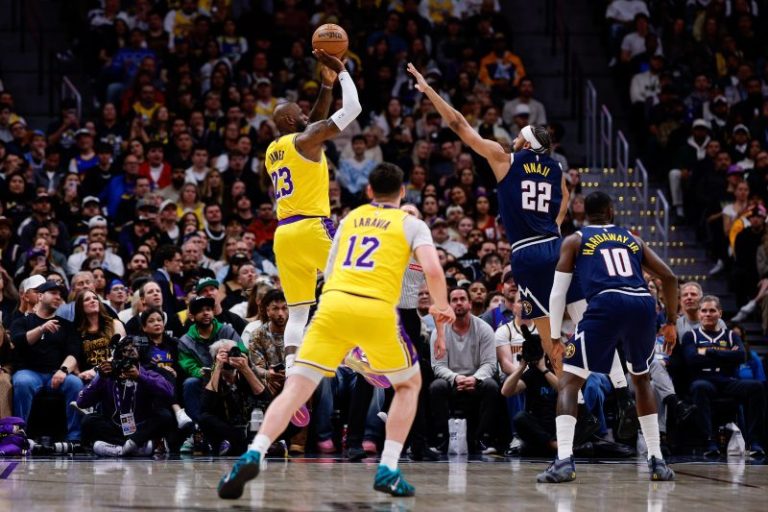
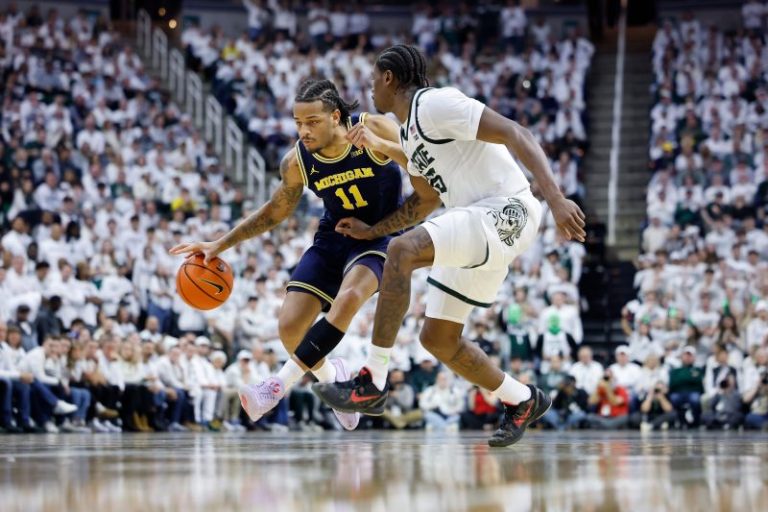
No. 8 Michigan State at No. 3 Michigan

Time/TV: Sunday, 4:30 p.m. ET, CBS.

The Big Ten race is – stop us if you’ve heard this one before – over. The Wolverines have the top seed in hand, and the Spartans also have a double bye clinched. But did we mention this is a rivalry game? This one is also a rematch, with the Wolverines taking the first meeting 83-71 in East Lansing on Jan. 30. The Spartans had no answer for Michigan’s Yaxel Lendeborg in that one, though they’re hardly alone in that regard. When Michigan State needs to make something happen, Jeremy Fears is usually involved.

This post appeared first on USA TODAY

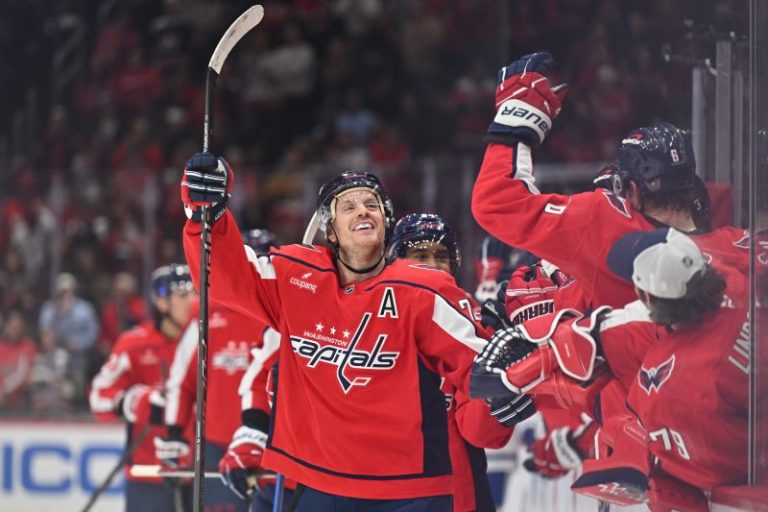
The Washington Capitals traded longtime defenseman John Carlson to the Anaheim Ducks early Friday morning in one of the surprise moves of the NHL trade deadline. At least on the surface.

Carlson, 36, has been a career Capital, appearing in 1,143 games for the franchise over 17 seasons after he was selected with the 27th overall pick in the 2008 NHL Draft. He owns basically every major franchise record for a defenseman — games played, goals (166), assists (605) and points (771) — and was a key component of the franchise’s breakthrough Stanley Cup win in 2018. He finished in the top five in Norris Trophy voting three times, including a runner-up finish in 2019-20.

‘Since joining our organization 17 years ago, John Carlson has exemplified what it means to be a Washington Capital every day,” Capitals GM Chris Patrick said in a statement. “John’s determination, leadership, persistence and skill helped our franchise reach new heights and cemented him as a cornerstone and one of the greatest players in Capitals history. His contributions to our organization and the Washington, D.C., community both on and off the ice have been immeasurable.

‘We are incredibly grateful for everything John has given to our team and wish him and his family nothing but the best moving forward with Anaheim.”

So … who won the deal?

Capitals trade grade: A-

Sentimentality aside, getting a first-round pick — either this summer if the Ducks make the playoffs or next year — and third-round pick for a 36-year-old defenseman who will be a free agent this summer is a tidy bit of business. The Capitals are just four points out of the playoffs, but they are tied for the most games played in the conference. They made a shrewd decision to throw in the towel in what seems to be a seller’s market, earlier on Thursday trading another veteran in Nic Dowd.

The Capitals now have 22 picks in the next three NHL drafts and clearly have their eyes on the future … which could also see franchise icon Alex Ovechkin depart this summer with the 40-year-old’s contract set to expire. A trade of a franchise icon is never fun, but this move helps set the Capitals up for more winning down the road.

Ducks trade grade: B+

This trade feels very much like a win-win as the Ducks are adding a defenseman who can still get it done, particularly on the offensive end. Carlson has been quite productive again this season, scoring 10 goals and dishing 36 assists for 46 points in 55 games. He carries a plus-11 rating.

He also brings loads of playoff experience for a team that hasn’t played spring hockey in a while, having appeared in 137 postseason contests, winning the Stanley Cup in 2018. That’s the last year the Ducks made the playoffs. Maybe you’d like to keep your first-round pick, but getting a player like Carlson comes at a price; plus, Anaheim is already oozing with young talent thanks to its years in the wilderness.

This post appeared first on USA TODAY
Sranan Gold Corp. (CSE: SRAN,OTC:SRANF) (OTCQB: SRANF) (‘Sranan’ or the ‘Company’) continues to work towards the filing of its annual audited financial statements, management’s discussion and analysis, and CEO and CFO certifications for the fiscal year ended September 30, 2025 (the ‘Required Filings’). The Company has obtained approval from the Alberta Securities Commission to extend the Management Cease Trade Order (‘MCTO’) under National Policy 12-203 Management Cease Trade Orders (‘NP 12-203’) until March 15, 2026.

The additional delay in filing is attributable to the timing of certain outstanding third-party confirmations, including from an international vendor and the Company’s bank in Suriname, which were received later than anticipated. As a result, completion of the audit was deferred by approximately one week. The audit is now in its final stages, with only minor outstanding items remaining. Sranan remains in ongoing communication with its auditor to confirm any remaining documentation requirements and has committed to providing any outstanding materials promptly upon request. Sranan anticipates that the Required Filings will be completed on or before March 13, 2026. The interim first-quarter financial statements are expected to be filed within 48 hours thereafter, and in any event no later than March 15, 2026.

The Required Filings were due to be filed by January 28, 2026. In connection with the anticipated delays in making the Required Filings, the Company made an application for a Management Cease Trade Order (‘MCTO‘) under National Policy 12-203 Management Cease Trade Orders (‘NP 12-203‘) to the Alberta Securities Commission, as principal regulator for the Company, and the MCTO was issued on January 29, 2026. The MCTO restricts all trading by the Company’s CEO and CFO in securities of the Company, whether direct or indirect. The issuance of the MCTO does not affect the ability of persons who are not directors, officers or insiders of the Company to trade their securities. The MCTO will remain in effect until the Required Filings are filed or until it is revoked or varied.

Both the Company and its auditors are working diligently towards the completion and filing of the Required Filings, and the Company will provide additional updates.

The Company confirms that it intends to satisfy the provisions of the alternative information guidelines described in NP 12-203 by issuing bi-weekly default status reports in the form of a news release until it meets the Required Filings requirement. The Company has not taken any steps towards any insolvency proceeding and the Company has no material information relating to its affairs that has not been generally disclosed.

For further information with respect to the MCTO, please refer to the Company’s news releases dated January 21, 2026, February 4, 2026, and February 18, 2026, available for viewing on the Company’s SEDAR+ profile at www.sedarplus.ca.

About Sranan Gold
Sranan is engaged in the business of mineral exploration and the acquisition of mineral property assets in Suriname. The Company’s flagship Tapanahony Project covers 29,000 hectares in one of Suriname’s most prolific artisanal gold mining districts and Sranan recently announced the acquisition of the 18,468-hectare Lawatino Project situated in southeastern Suriname along the Central Guiana Shear Zone.

For more information, please visit http://www.sranangold.com.

For further information, please contact:
Oscar Louzada, CEO
+31 6 25438975

THE CANADIAN SECURITIES EXCHANGE HAS NOT APPROVED NOR DISAPPROVED THE CONTENT OF THIS PRESS RELEASE.

Forward-looking statements
Certain statements made and information contained herein may constitute ‘forward-looking information’ and ‘forward-looking statements’ within the meaning of applicable Canadian and United States securities legislation. These statements and information are based on facts currently available to Sranan and there is no assurance that the actual results will meet management’s expectations. Forward-looking statements and information may be identified by such terms as ‘anticipates,’ ‘believes,’ ‘targets,’ ‘estimates,’ ‘plans,’ ‘expects,’ ‘may,’ ‘will,’ ‘could’ or ‘would.’

This news release contains forward-looking statements, including, but not limited to, statements regarding management’s expectations about obtaining the MCTO and completing the Required Filings within the anticipated timeline. Forward-looking statements are subject to various risks, uncertainties, and other factors that could cause actual results or events to differ materially from those expressed or implied by such statements. Sranan does not undertake any obligation to update forward-looking statements or information, except as required by applicable securities laws. For more information on the Company, investors should review the Company’s continuous disclosure filings that are available at www.sedarplus.ca.

To view the source version of this press release, please visit https://www.newsfilecorp.com/release/286289

News Provided by TMX Newsfile via QuoteMedia

This post appeared first on investingnews.com

First Majestic Silver (TSX:AG,NYSE:AG) CEO Keith Neumeyer’s silver price prediction of over US$100 per ounce came true in 2026. When will silver prices make a more lasting hold in triple digit territory?

The silver price was up over 189 percent year-on-year as of March 2, 2026, on the back of economic uncertainty and ongoing geopolitical tensions, as well as support from long-term demand fundamentals.

The silver price broke through its previous all-time high in October 2025, blasting through the US$50 per ounce mark. From then, it rallied to new highs again and again.

Only a few weeks into 2026, the price of silver finally hit triple digits when it overtook the US$100 level. It went on to rise to its latest all-time high of US$121.62, which it set on January 29, 2026.

The catalysts for silver’s price surge above the critical US$100 level included the trade tensions between the US and Europe following US President Donald Trump’s renewed bid for Greenland; Trump’s public statements about possible military airstrikes on Iran; and a significant structural supply deficit exacerbated by increased institutional investment demand.

Well-known figure Keith Neumeyer, CEO of First Majestic, had frequently said he believes the white metal could hit the US$100 mark or even reach as high as US$130 per ounce.

Neumeyer has voiced this opinion often over the past decade. He put up a US$130 price target in a November 2017 interview with Palisade Radio, when silver was just US$17 per ounce. He reiterated his triple-digit silver price forecast in multiple interviews with Kitco over the years, including one in March 2023.

In 2024, Neumeyer made his US$100 silver call in a conversation with ITM Trading’s Daniela Cambone at the Prospectors & Developers Association of Canada (PDAC) convention, and in April of that year he acknowledged his reputation as the ‘triple-digit silver guy’ on the Todd Ault Podcast.

Speaking with Chris Marcus of Arcadia Economics on January 16, 2026, a day after the price of silver had broken through US$93 per ounce for the first time, Neumeyer stated that “triple digits is definitely on its way.” He was finally proven right less than two weeks later.

At times Neumeyer has been even bolder, suggesting in 2016 that silver could reach US$1,000 if gold were to hit US$10,000.

In order to better understand where Neumeyer’s opinion comes from and why a triple-digit silver price finally materialized, it’s important to take a look at the factors that affect the metal’s movements, as well as where prices have been in the past and where other industry insiders think silver could be headed.

First, let’s dive a little deeper into Neumeyer’s US$100 silver prediction.

In this article

    Why has Neumeyer called for a US$100 silver price?

    Neumeyer’s belief that silver could hit US$100 is based on a variety of factors, including its consistent deficit, its industrial demand and how undervalued it is compared to gold.

    When he first made the prediction more than a decade ago, there was significant distance for silver to go before it could reach the success Neumeyer had boldly predicted.

    Neumeyer expected a triple-digit silver price in part because he believed the market cycle could be compared to the year 2000, when investors were sailing high on the dot-com bubble and the mining sector was down. He believed it was only a matter of time before the market corrected, like it did in 2001 and 2002, and commodities would see a big rebound in pricing. It was during 2000 that Neumeyer himself invested heavily in mining stocks and came out on top.

    “I’ve been calling for triple-digit silver for a few years now, and I’m more enthused now,” Neumeyer said at an event in January 2020, noting that there are multiple factors behind his reasoning. “But I’m cautiously enthused because, you know, I thought it would have happened sooner than it currently is happening.”

    Another factor driving Neumeyer’s position is his belief that the silver market is in a deficit at a time when demand is rising from new industrial sectors. In a December 2023 interview with Kitco, Neumeyer stressed that silver is more than just a poor man’s gold and he spoke to silver’s important role in electric vehicles and solar cells.

    In line with this view on silver, First Majestic is a member of a consortium of silver producers that in January 2024 sent a letter to the Canadian government urging that silver be recognized as a critical mineral.

    Silver’s inclusion on the list would allow silver producers to accelerate the development of strategic projects with financial and administrative assistance from the government.

    In this 2024 PDAC interview, Neumeyer once again highlighted what he says is a sizable imbalance in the silver’s supply-demand picture. “We’re six years into this deficit. The deficit in 2024 looks like it’s gonna be bigger than 2023, and why is that? Because miners aren’t producing enough silver for the needs of the human race,” he said.

    More controversially, Neumeyer is of the opinion that the white metal will eventually become uncoupled from its sister metal gold, and should be seen as a strategic metal due to its necessity in many everyday appliances, from computers to electronics, as well as the technologies mentioned above. He has also stated that silver production has gone down in recent years, meaning that contrary to popular belief, he believes the metal is actually a rare commodity.

    Neumeyer’s March 2023 triple-digit silver call was a long-term call, and he explained that while he believed gold would break US$3,000 that year, he thought silver will only reach US$30. However, once the gold-silver ratio is that unbalanced, he believes that silver will begin to take off, and it would just need a catalyst.

    ‘It could be Elon Musk taking a position in the silver space,’ Neumeyer said. ‘There’s going to be a catalyst at some time, and headlines in the Wall Street Journal might talk about the silver supply deficit … I don’t know what the catalyst will be, but investors and institutions will wake up to the fundamentals of the metal, and that’s when it will start to move.’

    In 2024, gold experienced a resurgence in investor attention as the potential for US Federal Reserve interest rate cuts came into view. In an interview with Cambone at PDAC 2024, Neumeyer countered that perception, stating, “There’s a rush into gold because of the de-dollarization of the world. It has nothing to do with the interest rates.”

    In an April 2025 Money Metals podcast, Neumeyer reiterated his belief that silver is in an extreme supply deficit and that eventually silver prices will have to rise in order to incentivize silver miners to dig up more of the metal.

    ‘You need triple-digit silver just to motivate the mining companies to start investing again because the mining companies aren’t going to make the investment because there’s just so much risk in it,’ he said.

    After the price of silver surged from the US$50 level up into more than US$70 per ounce in late December 2025, Neumeyer actually cautioned investors not to get too excited about a potential quick run to US$100 during an interview with The Deep Dive.

    “I’m crossing my fingers that it doesn’t go to US$100 on this move. I don’t think that would be particularly healthy at all. I would prefer to see it start to slow down here and chalk a little bit sideways for two to three months and find a level that people can get use to. It’s going to take sometime for people to get used to US$70 silver,” he advised.

    While he admitted high silver prices are great for silver producers such as First Majestic and their shareholders, he said “personally, I’d rather see some stability,” and have silver reach triple digits in 12 to 24 months out so that the mining sector has more time to react and better take advantage of higher silver prices.

    A month later, when silver was above US$100 per ounce, during an interview with Kitco at the 2026 Vancouver Resource Investment Conference (VRIC), Neumeyer said, “calling triple digit silver and it’s actually happening is pretty interesting,” but he believes it’s still early stages in this new bull market and he’s done predicting metals prices.

    “What we do know is that we’ve created a new pricing paradigm, we’re not going back to the old pricing that we’re all used to over the past 20 or 30 years,” he added.

    What factors affect the silver price?

    In order to glean a better understanding of the precious metal’s chances of breaching the US$100 range again, it’s important to examine the elements that could push it to that level or pull it further away.

    The strength of the US dollar and Fed rate changes are factors that will continue to affect the precious metal, as are geopolitical issues and supply and demand dynamics.

    Although Neumeyer believes that the ties that bind silver to gold need to be broken, the reality is that most of the same factors that shape the price of gold also move silver.

    For that reason, it’s helpful to look at gold price drivers when trying to understand silver’s price action. Silver is, of course, the more volatile of the two precious metals, but nevertheless it often trades in relative tandem with gold.

    First, it’s useful to understand that higher interest rates are generally negative for gold and silver, while lower rates tend to be positive. That’s because when rates are higher, investment demand shifts to products that can accrue interest.

    The Fed’s rate moves have played a key role in pumping up silver prices over the past year. However, Trump doesn’t think Fed Chair Jerome Powell is lowering rates fast enough.

    Trump’s feud with the Fed over interest rates escalated in early January 2026 when the US Department of Justice served the Fed with grand jury subpoenas targeting Powell with a criminal indictment. The uncertainty over Fed independence is driving gold prices higher as investors expect a weaker dollar.

    While central bank actions are important for gold, and by extension silver, another key price driver lately has been geopolitical uncertainty. The past decade has been filled with major geopolitical events such as the Israel-Hamas conflict, the Russia-Ukraine war, and rising tensions between the US and other countries including Russia, China and Iran, and more recently Venezuela, Canada and Denmark.

    Trump’s tariffs have also rattled stock markets and ratcheted up the level of economic uncertainty pervading the landscape in 2025 and continuing into this year. This has proved price positive for gold and silver, with silver outperforming gold in the last year.

    However, silver’s industrial side can not be ignored. In an economically uncertain environment, the industrial case of silver could weaken in the short term, but in the longer term silver’s demand side is still highly prospective for larger gains.

    Samuelson explained in March 2025 that silver is particularly vulnerable to a supply shock as the London Bullion Market Association’s physical silver supplies had already decreased by 30 to 40 percent, while gold had only lost 3 to 4 percent.

    The next month, Smirnova explained that silver has been in a supply deficit of 150 million to 200 million ounces annually, but production has been stagnant or declining over the past decade.

    Looking at the runup in silver prices into the triple digits that occurred in late 2025 to early 2026, this structural supply-demand deficit, magnified by an explosion in industrial demand for solar energy and AI data centers, played an outsized role. Further adding fuel to the fire was record-low physical inventory levels in COMEX and Shanghai vaults, which caused a shift from ‘paper’ silver to physical hoarding.

    Higher industrial demand from emerging sectors due to factors like the transition to renewable energy and the emergence of AI technology will be highly supportive for the metal over the next few years. Solar panels are an especially exciting sector as manufacturers have found increasing the silver content increases energy efficiency.

    Frank Holmes of US Global Investors (NASDAQ:GROW) said in a December interview that silver’s “ability to be a transformative part of renewable energy,” particularly in solar panels, is an outsized factor in the latest run in the silver price. “And I don’t think that is going to go away,” he added.

    Could silver hit US$100 per ounce again?

    It seems likely that we will reach a US$100 per ounce silver price again in 2026 as there is plenty of support for Neumeyer’s belief that the metal is undervalued and that “ideal conditions are present for silver prices to rise.”

    For much of 2025, silver and gold rose higher on factors including persistent inflationary pressures brought on by Trump’s aggressive tariff announcements and the ongoing geopolitical risks in the Middle East. The commodity’s price uptick also came on the back of very strong silver investment demand.

    In the fourth quarter, silver rapidly outpaced gold’s gains, and by early January silver reached US$95, more than doubling in value from its Q3 close of US$46. It continued higher to breach US$120 by the end of the month.

    While silver and gold prices both pulled back significantly over the following days, silver spent February consolidating and stabilized above the US$80 mark in the second half of the month.

    On March 1, the silver price once again approached the US$100 mark as the US started a war with Iran, peaking at US$96.40 before seeing a smaller pull back.

    As silver’s momentum continues upwards and the price stabilizes at these higher values, silver market experts are agreeing with Neumeyer’s triple-digit silver hypothesis that the price of silver still has further room to grow.

    “You know, whether in the short term or the long term, one way or another, we’re going to run into a supply demand brick wall. And when that day happens, we could see triple-digit silver prices in a very, very short period of time,” he said. “I figure it’s going to be US$200 to US$400 an ounce, at least, before this is all over.”

    This set up bodes well for those not only invested in physical silver, but in silver mining stocks as well.

    “I have to be honest, I was not necessarily expecting triple-digit silver this quite this fast,” he said. “I was saying, if and when we break through US$54 silver, then the path of least resistance becomes a conservative, measured move target of US$96 or within a few pennies … So, I’m not really surprised at all, and in fact, I think we’re headed higher in the fullness of time.’

    Penny sees Fed policy actions as a potential catalyst for silver’s next leg up.

    “I think it’ll be the Fed’s response to the next crisis that causes the big move, the 1979 moment where you go up,” he explained, noting that in 1979, the price of silver went up 700 percent in 12 months. “I think that that moment still lies ahead. It’ll be the Fed’s response to the next crisis that is the catalyst for that huge move.”

    Eugenia Mykuliak, founder and executive director of B2PRIME Group, shared another reason she believes Fed rate cuts are bullish for silver.

    In late January, Citigroup (NYSE:C) analysts upgraded their silver forecast to US$150 per ounce in the second quarter of 2026. ‘We expect the bullish factors to stay intact in the very near term, supporting strong investment/speculation demand and likely leading to further physical tightening in major ex-US trading hubs,’ said the firm.

    FAQs for silver

    Why is silver so cheap?

    The primary reason that silver is sold at a significant discount to gold is supply and demand, with more silver being mined annually. While silver does have both investment and industrial demand, the global focus on gold as an investment vehicle, including countries stockpiling gold, can overshadow silver.

    Additionally, jewelry alone is a massive force for gold demand.

    There is an abundance of silver — according to the US Geological Survey, to date 1,740,000 metric tons (MT) of silver have been discovered, while only 244,000 MT of gold have been found, a ratio of about 1 ounce of gold to 7.1 ounces of silver. In terms of output, 26,000 MT of silver were mined in 2025 compared to 3,300 MT for gold.

    Looking at these numbers, that puts gold and silver production at about a 1:7.88 ratio last year, while the price ratio on March 3, 2026, was around 1:62 — a huge disparity.

    Can silver hit $1,000 per ounce?

    As things are now, it seems unlikely, and at the same time almost a possibility, that silver will ever reach highs of US$1,000 per ounce, which Keith Neumeyer predicted in 2016 could happen if gold ever climbed to US$10,000 per ounce.

    This is related to the gold to silver production ratio discussed above. At the time of the 2016 prediction, this ratio was around 1 ounce of gold to 9 ounces of silver, or 1:9.

    If silver was priced according to production ratio today, when gold is at US$5,000 per ounce, then silver should be around US$555. However, the gold to silver pricing ratio today is around 1:62, although that’s a bit lower than the typical range of 1:70 to 1:90. In early March 2026, gold is trading around US$5,100 per ounce and silver is about US$82 per ounce.

    Is silver really undervalued?

    Many experts believe that silver is undervalued compared to fellow currency metal gold. As discussed, their production and price ratios are currently incredibly disparate.

    While investment demand is higher for gold, silver has seen increasing time in the limelight in recent years, including a 2021 silver squeeze that saw new entrants to the market join in.

    Another factor that lends more intrinsic value to silver is that it’s an industrial metal as well as a precious metal. It has applications in technology and batteries — both growing sectors that will drive demand higher.

    Silver’s two sides have remained prominent as the market navigates persistent supply shortages and shifting investor sentiment. Following a record high in 2022, according to data from the Silver Institute, silver demand reached 1.16 billion ounces in 2024, supported by a fourth consecutive year of record industrial fabrication at 680.5 million ounces. However, total 2024 demand saw a 3 percent decline due to a 22 percent drop in physical investment, which hit a five-year low as Western investors took profits at higher prices.

    Is silver better than gold?

    There are merits for both metals, especially as part of a well-balanced portfolio. As many analysts point out, silver has been known to outperform its sister metal gold during times of economic prosperity and expansion.

    On the other hand, during economic uncertainty silver values are impacted by declines in fabrication demand.

    Silver’s duality as a precious and industrial metal also provides price support. As a report from the CPM Group notes, “it can be seen that silver in fact almost always (but not always) out-performs gold during a gold bull market.”

    At what price did Warren Buffet buy silver?

    Warren Buffett’s Berkshire Hathaway (NYSE:BRK.A) bought up 37 percent of global silver supply between 1997 and 2006. Silver ranged from US$4 to US$10 during that period.

    In fact, between July 1997 and January 1998 alone, the company bought about 129 million ounces of the metal, much of which was for under US$5. Adjusted for inflation, the company’s purchases in that window cost about US$8.50 to US$11.50.

    How to invest in silver?

    There are a variety of ways to get into the silver market. For example, investors may choose to put their money into silver-focused stocks by buying shares of companies focused on silver mining and exploration, or even precious metals royalty stocks. As a by-product metal, investors can also gain exposure to silver through some gold companies.

    There are also silver exchange-traded funds that give broad exposure to silver companies and the metal itself, while more experienced traders may be interested in silver futures. And of course, for those who prefer a more tangible investment, purchasing physical bullion in silver bar and silver coin form is also an option.

    Securities Disclosure: I, Melissa Pistilli, hold no direct investment interest in any company mentioned in this article.

    This post appeared first on investingnews.com

    Modern society has a metals problem. The demands of modern consumer culture, the energy transition and the emergence of artificial intelligence (AI) and robotics have created a dilemma.

    As demand rises, the supply of many metals is at a bottleneck brought about by a number of factors, from government red tape to civil unrest, as well as lack of capital expenditures leading to fewer new discoveries and mines.

    On top of this, mining companies focused on essential metals like copper are facing additional challenges, as in many cases the easy discoveries have already been made and existing mines are seeing declining grades, causing further constraints to supply.

    BHP (ASX:BHP,NYSE:BHP,LSE:BHP) Digital Officer Mikko Tepponen suggests that the very technologies that rely on metals and mining can be the answer in his presentation at the 2026 Prospectors and Developers Association of Canada conference.

    Addressing data fragmentation in exploration

    Once companies open up capital expenditures to the exploration side of the mining sector, several questions arise, most notably: Where are the minerals?

    At its core, exploration relies on the geosciences, with a geologist in the field, sampling rocks, conducting surveys and using the data gathered to estimate where the best place is to put a drill for a look below the surface.

    Mining is a data-driven enterprise, and depending on the project, the information can come from a range of methods, from modern techniques to historic observations, meaning the data is fragmented across a variety of sources and formats.

    AI and machine learning can be good at processing and interpolating large quantities of information. However, data accessibility creates another roadblock.

    “Across our industry, vast volumes of exploration data are sealed in archive rooms, and legacy systems can’t read through third-party data sets,” Tepponen said. “That data is neither structured, searchable nor interoperable. That means AI cannot make easy sense of it, and in many cases, that data was never extracted.”

    For Tepponen, one of the challenges the mining industry needs to overcome is data fragmentation. Without enough data or proper information, there is an increased risk of making the wrong exploration decisions.

    “Time matters because capital is finite. Drill meters are expensive, and decisions about capital allocation have multi-year impacts down the line,” he said.

    The way BHP has implemented a data-centric approach is building a central data platform that integrates the decades of exploration data, standardizes it and makes it accessible through a central team within the company.

    Tepponen says the platform supports 52 standardized core geoscience types, backed by more than 100 years of data, helping its exploration teams save months of time.

    “Our geoscientists can access more than 4 million drill hole cores and 9,000 geophysical surveys through one portal,” he added.

    Using BHP’s in-house AI extraction tool, one team of geoscientists obtained data from thousands of drill holes from 30,000 legacy document records. They then used the central data platform to combine that with modern drilling data.

    According to Tepponen, the team completed the work in a few hours, while doing so manually would have taken months, and results were higher quality than the previous method.

    However, he stressed that the integration of AI into its workflow wasn’t about replacing geoscience teams, but about “amplifying the work of geoscientists by creating a digital tool that enables them to focus on higher value.”

    Additionally, the information in the platform is not limited to BHP’s data. Tepponen explained that the entire system is built on an open-source database designed to break down data silos and enable cross-sector collaboration.

    Using targeted optimizations to avoid disruptions

    While exploration poses a bottleneck to the development of new projects for future supply, disruptions to existing operations significantly impact current output.

    It’s often impossible to predict major events like extreme weather, civil unrest or regulatory changes. However, operators can foresee some disruptions that result in hundreds of hours of downtime throughout the industry every year.

    Tepponen outlined one persistent problem: oversized rocks and foreign objects making their way through processing plants.

    “If an uncrushable rock or piece of metal gets into the crusher, it can cause blockages, damage belts and create significant downtime,” he said. “If it travels downstream, it can damage equipment and create critical bottlenecks.”

    In Western Australia, BHP employs a hub-and-spoke model that connects five mines to a central processing facility. If one of the hazards disrupts operations at the facility, it can affect operations at the mines connected to it.

    Additionally, fixing these issues exposes maintenance teams to higher-risk tasks, so eliminating the problem in the first place improves both productivity and safety.

    Tepponen explained that historically, workers would be used to identify the hazards before they were loaded onto the truck, but once they reached the conveyor, they became much harder to remove.

    The company now employs a real-time monitoring system that detects objects, alerts controllers and can automatically stop the conveyor.

    “These are actually very simple technologies available commercially off the shelf. Cameras and machine learning control systems applied to a real world operational constraint,” he said.

    In the prior three years, these incidents had caused over 1,000 hours of downtime, according to Tepponen. However, since it installed the monitoring system, the company hasn’t experienced any major disruptions or destruction events caused by oversized rocks, a change that he said amounts to hundreds of thousands of metric tons per year of increased processing.

    “It’s a small system-level optimization that can deliver outsized returns on the AI journey. This is not a massive program. This is identifying simple constraints, applying proven technology,” he said, and emphasized the process of controlled testing, iteration and then deploying at scale. ‘That’s how systematic innovation actually happens.’

    Testing scenarios with digital twin simulations

    In his third use case example, he turned to BHP’s semi-autogenous grinding (SAG) mill at its Escondida operation in Chile, at which differing particle size and hardness in ore feed was impacting production.

    The company used AI to create a digital twin of the value chain, which included everything that was known about the operation, such as ore body knowledge, processing behavior and operational constraints.

    “That digital simulation enabled scenario testing and gave us the ability to inform blasting and blending strategies to predict granularity,” Tepponen said, noting that monthly production losses attributed to the problem fell by around 70 percent.

    “The lesson, when the ore body knowledge is connected directly to the processing decisions, the system becomes more stable and predictable.”

    BHP has since applied the approach to other operations, including ones in Australia and Chile.

    “The Gen AI integration is multicultural, so non-technical users and the technical users can run scenarios in their first language,” he said, an aspect that he said is very important for the local companies at its operations.

    Building foundations, collaboration key to AI usefulness

    Tepponen was emphatic that AI alone wasn’t a “superhero.” BHP needed to specifically design these AI platforms in order to achieve these results.

    “One of the most important lessons we have learned is we don’t actually get value from AI by starting with AI. The value comes from the foundations, consistent data standards, interoperability. You need to start at the bottom and make your way to the top.”

    Tepponen also stressed the value of collaboration, noting that companies tend to be protective of their intellectual property, but opportunities are being missed that could be mutually beneficial.

    “The hard truth is, no company can solve this problem of data fragmentation and system integration,” he said, and the industry would benefit from a collaborative approach on standards, interoperability and data throughout the value chain.

    Securities Disclosure: I, Dean Belder, hold no direct investment interest in any company mentioned in this article.

    This post appeared first on investingnews.com

    Wednesday, March 4, was a day for defensemen to change teams.

    Tyler Myers got the ball rolling by accepting a trade from the Vancouver Canucks to the Dallas Stars. The 6-foot-8 Houston native will be playing in his home state on the same team as 6-foot-7 defenseman Liam Bischel.

    Nick Blankenburg also moved from the Nashville Predators to the Colorado Avalanche for a 2027 fifth-round pick.

    But the biggest move of the day was the Utah Mammoth acquiring defenseman MacKenzie Weegar from the Calgary Flames.

    “Acquiring MacKenzie solidifies our back end as we continue to push towards the playoffs, and he will be a great addition to our team on and off the ice,” Mammoth general manager Bill Armstrong said.

    Here are the details and grades on the MacKenzie Weegar trade:

    MacKenzie Weegar trade details

    The Utah Mammoth acquire defenseman MacKenzie Weegar from the Calgary Flames for defenseman Olli Määttä, forward Jonathan Castagna and three 2026 second-round picks (Utah’s own and others previously acquired from the Ottawa Senators and New York Rangers). Both players had to waive their no-trade clauses for the deal to go through.

    Utah Mammoth trade grade: A-

    Armstrong has been aggressively remaking the defense since the team moved to Utah in 2024. He added Mikhail Sergachev, John Marino and Ian Cole that first season and Stanley Cup winner Nate Schmidt last summer. Weegar gives the Mammoth a solid top four as they try to hold onto their wild-card position. And the Mammoth landed him without trading Tij Iginla, who would seem a natural to be part of a trade to Calgary, where his father Jarome had starred.

    Calgary Flames trade grade: B-

    Considering that Weegar is signed through 2031, it’s surprising that the Flames didn’t pry away a first-round pick. But three second-rounders are good in what’s expected to be a deep draft. Olli Määttä is a pending unrestricted free agent and Castagna, a third-round pick, is averaging a point a game in his third season at Cornell.

    When is the NHL trade deadline?

    The NHL trade deadline is at 3 p.m. ET on Friday, March 6.

    This post appeared first on USA TODAY

    NEW YORK — Two looks, and they both hit rim.

    After clawing back from an eight-point deficit with just fewer than three minutes to play in the fourth quarter, the New York Knicks got a pair of clean looks with seconds left in their game against the Oklahoma City Thunder.

    Yet, in what could be a potential NBA Finals preview, it was the Thunder who escaped Wednesday, March 4 with a 103-100 victory to improve their record to 49-15, the best mark in the NBA.

    Thunder forward Chet Holmgren led all players with 28 points, 22 of which came in the first half.

    Reigning NBA MVP Shai Gilgeous-Alexander dropped 26 points and 8 assists, extending his streak of consecutive games with at least 20 points scored to 124.

    Throughout the game, the Knicks tried to force the ball out of Gilgeous-Alexander’s hands, and he repeatedly made the right pass to open Thunder players.

    The Knicks had six players reach double figures, with Karl-Anthony Towns leading the way with 17 points on 7-of-8 shooting. He also hauled in a game-high 17 rebounds, though he fouled out late in the game.

    The Knicks fell to 40-23.

    USA TODAY Sports provided updates and highlights from Wednesday night’s Oklahoma City Thunder-New York Knicks game:

    Thunder vs. Knicks highlights

    End Q4: Thunder 103, Knicks 100

    They got two open looks to tie the game, but both rimmed out.

    Coach Mike Brown drew up a play that got Jalen Brunson an open look at a would-be game-tying 3 in the left corner. Brunson put up the shot but it bounced off the rim. The ball was tipped out to Knicks forward OG Anunoby near the top of the key. Anunoby scooped the ball, stepped back, but the shot fell short and bounced off front rim.

    Simply put, the Knicks went cold at the wrong time. New York, which entered the fourth quarter with a three-point lead, shot just 33.3% in the final period, eventually ceding the lead to the Thunder.

    Oklahoma City capitalized and attacked the paint, with Shai Gilgeous-Alexander hitting a few big baskets late, none other than a stepback 3, Oklahoma City’s final bucket.

    Knicks down 3 with 6.0 seconds left to play

    New York has battled back and has the chance to tie the game at 103. Coach Mike Brown called a timeout to draw up a play. Both teams are in the bonus, so the Thunder may opt to put New York on the line.

    Thunder reclaim lead

    After getting a quick blow on the bench, Shai Gilgeous-Alexander has returned for Oklahoma City, which is now up 91-86, with 6:33 left to play in the game.

    Gilgeous-Alexander, who has 21 points, extended his streak of consecutive games with at least 20 points to 124, which is just two behind Wilt Chamberlain’s record of 126.

    Josh Hart returns to the floor

    After leaving the game early in the third quarter with an apparent back injury, Knicks forward Josh Hart has returned to the game.

    End Q3: Knicks 80, Thunder 77

    It’s not that the Thunder shot poorly in the third quarter — they converted their attempts at a 46.7% clip — it’s that they took seven fewer shots than the Knicks did.

    And with those attempts, New York capitalized. The Knicks shot 14-of-22 (63.6%) from the floor in the third quarter to erase a 10-point deficit at the start of the quarter. And with the final shot of the third, a corner 3 from Mikal Bridges, the Knicks took their first lead since very early in the second quarter. Five different Knicks are scoring double figures, with Karl-Anthony Towns — who remains a perfect 6-of-6 from the floor — leading the team with 15 points.

    For the Thunder, turnovers were the main issue in the third. After Chet Holmgren dropped 22 points in the first half, he failed to score a single point in the third. He continues to lead the team, though Shai Gilgeous-Alexander has added 19 points and 7 assists.

    Knicks tie it up

    The New York run in the third quarter has continued. The Thunder have committed several turnovers in the period, and a Jalen Brunson 3 that clanked off the rim before caroming off the backboard and through the net tied the game at 72 apiece with 2:56 left in the third quarter.

    Alex Caruso heads to locker room

    After taking a hard fall when attempting to haul in a rebound, Alex Caurso fell onto the court and immediately grabbed at his leg. He was slow to get up and trudged toward the bench, where he spoke briefly with a trainer. The two went into the locker room, though Caruso reemerged shortly after.

    Knicks close the gap

    New York has gone on an 11-4 run to close the deficit to 6 points with 5:28 left in the third quarter. Landry Shamet has come off the bench to spark the run with a couple of scoop layups, while Mikale Bridges and Karl-Anthony Towns have also added baskets.

    The Thunder are up 67-61.

    Josh Hart heads to locker room

    After airballing a corner 3 with 10:50 to play in the third quarter, Knicks forward Josh Hart immediately clutched at his lower back in apparent discomfort. At the next whistle, Hart took himself out of the game and headed into the New York locker room with a trainer.

    After several minutes, Hart reemerged and took his spot on the bench, still grimacing. A trainer placed a black band around his chest and back.

    Knicks post their lowest scoring first half of the season

    New York, which shot just 35.6% from the floor in the first half, scored just 40 points before intermission, marking its lowest scoring first half of the 2025-26 season so far. The previous low was 42 points, which came Feb. 6 in an eventual 38-point loss against the Pistons.

    End Q2: Thunder 50, Knicks 40

    Although both these teams are playing the second legs of back-to-backs that started in different cities, it was the Knicks who displayed that more in the first half.

    New York struggled to find the bottom of the net in the second period, shooting just 7-of-22 (31.8%) Oklahoma City emphasized closing out, contesting New York’s perimeter shots and rarely giving away an open look.

    Jalen Brunson shot just 1-of-8 in the half for 2 points, while center Karl-Anthony Towns attempted just 4 shots, though he made each one, scoring 9 points. Mohamed Diawara also has a team-high 9 points.

    The Thunder, meanwhile, are playing in control. They’re shooting a reasonable 46.3% from the floor, but they’re merely looking for the best shot available. As the Knicks have thrown bodies at Shai Gilgeous-Alexander, the ball has swung around to find the open player. More often than not, that has been Chet Holmgren, who leads all players with 22 points on 8-of-11 shooting, including a blistering 6-of-8 (75%) from 3-point range.

    Gilgeous-Alexander has added 11 points, but has a team-high 7 assists.

    The Knicks’ plan for SGA

    Shai Gilgeous-Alexander has started this game extremely well. He has been an efficient 4-of-7 from the floor — with no 3 pointers attempted — for 9 points. But the Knicks are closing his lanes to penetrate as soon as he attacks the paint. This is not at all dissimilar from the way other teams defend SGA, but he’s quickly getting the ball out of his hands to find open teammates.

    And, if they’re not immediately open, OKC players have swung the ball around to find that open look. Gilgeous-Alexander leads all Thunder players with 5 assists.

    As the Thunder have settled, they’ve also opened their biggest lead of the game, 13 points, at 44-31.

    End Q1: Thunder 25, Knicks 23

    In many ways, this was a quarter the Knicks should’ve lost by a lot more.

    They shot just 39.1% from the floor, and All-Star point guard Jalen Brunson finished the period just 1-of-5 for 2 points. They lost the rebounding battle by four. Yet, New York overcame early shooting struggles to get key stops on the Thunder late in the first to keep things manageable.

    Chet Holmgren was the star for Oklahoma City, leading all players with 14 points. Shai Gilgeous-Alexander chipped in 9 on 4-of-5 shooting and added 2 assists.

    The Knicks, meanwhile, have Mohamed Diawara to thank for this not being out of hand. He came off the bench and instantly drained a pair of 3s and also swiped the ball out of Jared McCain’s hands for a steal that led to a Landry Shamet bucket. His play seemed to invigorate the Knicks, who had six different players score at least one point in the first quarter. Diawara and OG Anunoby tied for a team-high 6 points in the period.

    Knicks coach Mike Brown was also called for a technical foul after he argued a non-call on a Shai Gilgeous-Alexander drive, when Brown thought that Jalen Brunson had drawn a charge. Brown appeared to make like contact with the official, who only assessed the one tech.

    Chet Holmgren comes out aggressive

    As Oklahoma City has moved the ball around, it has often found forward Chet Holmgren, who has started the game 5-of-7 (including 4-of-6 from 3) for a game-high 14 points.

    In fact, with 3:32 left to play in the period, he has outscored the Knicks entire team, which is 5-of-17.

    Thunder vs. Knicks is underway

    The Thunder came out strong and dictated pace, draining five of their first six field goal attempts. OKC pushed pace and moved the ball around to compromise New York’s defense, which was slow to help.

    The Knicks, however, made their first shot before having their following five clank out. New York is getting quality looks, they’re just not dropping, particularly from 3; the Knicks have started the game just 1-of-6 (16.7%) from beyond the arc.

    Despite that, New York is only down 17-10 midway through the period.

    The MVP shows up to MSG dressed to the nines

    Shai Gilgeous-Alexander and the Thunder, similar to many teams who get hyped up to play in this iconic venue, tend to play well here. It’s the one trip Gilgeous-Alexander and the Thunder will make here this season — barring any potential matchup in the NBA Finals.

    In case this is indeed his one trip here, SGA made it count with his pre-game look.

    Thunder vs. Knicks starting lineups

    Oklahoma City Thunder

    • Shai Gilgeous-Alexander
    • Luguentz Dort
    • Cason Wallace
    • Chet Holmgren
    • Isaiah Hartenstein

    New York Knicks

    • Jalen Brunson
    • Mikal Bridges
    • OG Anunoby
    • Josh Hart
    • Karl-Anthony Towns

    Thunder vs. Knicks injury report

    After missing Tuesday night’s game against the Bulls, reigning NBA MVP Shai Gilgeous-Alexander is not on the injury report and is expected to play.

    Oklahoma City Thunder

    • Branden Carlson, out (lower back strain)
    • Ajay Mitchell, out (left ankle sprain)
    • Thomas Sorber, out (ACL)
    • Nikola Topic, out (G League)
    • Jalen Williams, out (right hamstring strain)

    New York Knicks

    • Pacome Dadiet, questionable (G League)
    • Trey Jemison III, questionable (two-way)
    • Dillon Jones, questionable (two-way)
    • Miles McBride, out (core muscle surgery)
    • Kevin McCullar Jr., questionable (two-way)
    • Mitchell Robinson, out (left ankle)

    Thunder vs. Knicks odds

    • Spread: Thunder by 4.5 (-110)
    • Over/Under: 222.5 (O/U -114)
    • Moneyline: Thunder -184, Knicks +150

    How to watch Thunder vs. Knicks: TV channel, live stream

    • Start time: 7 p.m. ET
    • Location: Madison Square Garden (New York)
    • TV channel: ESPN
    • Live stream: ESPN, Fubo
    This post appeared first on USA TODAY

    College football lost a legendary coach when Lou Holtz, most known as a former Notre Dame coach in addition to preeminent college football pundit, died on Wednesday, March 4.

    Holtz, 89, died after being placed in hospice care on Thursday, Jan. 29. He will be remembered most recently for being an analyst on ESPN for college football.

    But for older college football fans, he will be remembered for coaching the storied Fighting Irish to their last national championship, coming in 1988.

    Here’s a look at highlights from Holtz’s Hall of Fame College Football coaching career:

    Lou Holtz hired at William & Mary

    After helping Ohio State win a national championship as an assistant coach in 1968, Holtz landed his first head coaching job. He was hired by William & Mary in 1969.

    He led the then-Indians (now the Tribe) to a Southern Conference title in 1970 and a berth in the Tangerine Bowl. Overall, he had a 13-20 record with William & Mary, including a 9-4 record in conference play.

    North Carolina State

    Following his successful stint with William & Mary, Holtz earned his first FBS job when he was hired by NC State in 1972. After winning just three games in three consecutive seasons, Holtz led the Wolf Pack to three straight top 20 rankings, which included a top-10 finish in the Coaches poll in 1974.

    Overall, he achieved a 33-12-3 record, with a 16-5-2 record in ACC play, including the ACC championship in 1973. His teams went 2-1-1 in bowl games.

    New York Jets, NFL

    On Feb. 10, 1976, Holtz made a move to the pros, taking a job as the head coach of the New York Jets. However, his one-and-only year in the NFL did not go well. He led the Jets to a 3-10 record, resigning with one game left in the season.

    Upon his departure from New York, Holtz commented: ‘God did not put Lou Holtz on this earth to coach in the pros.’

    Hired at Arkansas, wins Paul ‘Bear’ Bryant Coach of Year Award

    Holtz’s departure from college coaching was a brief one. After one season in the NFL, he was hired by Arkansas in 1977. He coached the Razorbacks to a 60-21-2 record over seven seasons, including a berth in six bowl games.

    In his very first season, Holtz led Arkansas to a 31-6 win over Oklahoma in the 1978 Orange Bowl. In 1979, Holtz was a candidate to replace Woody Hayes as the Ohio State head coach, but ultimately turned it down, not wanting to follow Hayes.

    Following a 6-5 record in 1983, Holtz was fired by the Razorbacks.

    Hired at Minnesota

    In 1984, one year after his firing from Arkansas, Minnesota hired Holtz before the 1984 season. The Golden Gophers were coming off a one-win season in 1983. In Holtz’s first year, they won four games, including three in Big Ten play.

    Holtz led Minnesota to an Independence Bowl berth in 1984. However, Holtz did not coach in that game, as he had at the time already accepted the job to become the next Notre Dame football head coach.

    Lou Holtz hired at Notre Dame

    Holtz was hired by Notre Dame in 1986 following a 30-26-1 mark under Gerry Faust between 1981-85. Holtz removed the names from the back of the Notre Dame uniforms to emphasize teamwork over individuals.

    He led the Fighting Irish to a 5-6 record in 1986, but five of the six losses came within a combined 14 points. They ended the season with a 38-37 comeback win over USC, which saw them down by as many as 17 points in the fourth quarter.

    The team went 8-4 in 1987, earning a berth in the Cotton Bowl. That set the stage for the 1988 season.

    1988 national championship

    Holtz’s signature season as a head coach came in 1988, leading Notre Dame to a 34-21 win over West Virginia in the Fiesta Bowl, to claim the program’s 11th national championship.

    On Oct. 15, 1988, the Fighting Irish defeated Miami to end their 36-game winning streak. That game is remembered as the ‘Catholics vs. Convicts’ game in pop culture today. The Hurricanes were the defending national champions and ranked No. 1 at the time.

    Notre Dame also had wins over No. 9 Michigan, No. 2 USC and No. 3 West Virginia en route to the 12-0 national championship season.

    Retirement from Notre Dame

    Following an 11-year run with Notre Dame, Holtz announced his retirement from coaching after the 1996 season. He finished his career with the Fighting Irish with a 100-32-2 record. Particularly, he posted a 64-9-1 record between 1988 and 1993. Overall, Holtz led Notre Dame to nine consecutive bowls, which is still the school record.

    Notre Dame began the 1989 season with 11 straight wins before losing to Miami in the regular-season finale. The 23 wins in a row are a school record. The Fighting Irish defeated Colorado 21-6 in the Orange Bowl to finish second in the polls. They also finished second in the polls in 1993, behind Florida State.

    Out of retirement to coach South Carolina

    Following a two-year stint with CBS Sports as a commentator, Holtz decided to come out of retirement in 1999 and was hired by South Carolina. He had served as an assistant coach for the Gamecocks in the 1960s.

    Holtz and the Gamecocks went 0-11 in 1999 in his first season, but the program had just one win in 1998. He led USC to a 19-7 combined record in 2000 and 2001, including back-to-back wins in the Outback Bowl.

    Second retirement from South Carolina

    The Gamecocks went 5-7 in consecutive seasons in 2002 and 2003 before Holtz ended his tenure with a winning 6-5 record in 2004. A major brawl with Clemson broke out in Holtz’s final game with South Carolina.

    In 2005, the NCAA put South Carolina on probation for three years after 10 admitted violations under Holtz, including five of which were considered to be major.

    ‘There was no money involved. No athletes were paid. There were no recruiting inducements. No cars. No jobs offered. No ticket scandal, etc,’ Holtz said after the sanctions were handed down.

    ‘There were five major violations, and four of them involved our academic office. Concerning these four violations, you will have to consult the university.

    Elected to College Football Hall of Fame

    Holtz was inducted into the College Football Hall of Fame in 2008. Along with the 1988 national championship, he finished his coaching career with 249 wins over 35 years with six different schools.

    He was joined by Billy Cannon and Troy Aikman in the 15-person calls in 2008.

    Lou Holtz awarded the Presidential Medal of Freedom

    On Dec. 3, 2020, Preisdent Dondald Trump awarded Holtz the Presidential Medal of Freedom.

    ‘America recognizes Lou Holtz as one of the greatest football coaches of all time for his unmatched accomplishments on the gridiron, but he is also a philanthropist, author, and true American patriot,’ the White House press release said. After growing up in a small town in West Virginia, Holtz attended Kent State University, becoming the first member of his family to enroll in college. At Kent State, Holtz played football, studied history, and joined the Army Reserve Officers’ Training Corps.

    ‘For the next 7 years, he honorably served as an Officer in the United States Army Reserves. When asked about his service during an interview with the American Legion, Holtz said, “I was taught at an early age that I had an obligation to serve my country.”

    Lou Holtz beef with Ryan Day

    In 2023, ahead of an Ohio State-Notre Dame matchup, Holtz called the Buckeyes and their head coach Ryan Day, ‘too soft.’

    “He has lost to Alabama, Georgia, Clemson, Michigan twice — and everybody who beats them does so because they’re more physical than Ohio State,” Holtz said in 2023. “I think Notre Dame will take that same approach.”

    Ohio State, of course, earned a 17-14 win over Notre Dame, and Day was quick to call out Holtz after the game.

    “I’d like to know where Lou Holtz is right now,” Day said postgame to NBC Sports. “What he said about our team, I cannot believe. This is a tough team right here. We’re proud to be from Ohio. It’s always been Ohio against the world, and it’ll continue to be Ohio against the world.’

    Lou Holtz coaching career record

    • 1969: William & Mary, 3-7
    • 1970: William & Mary, 5-7
    • 1971: William & Mary, 5-6
    • 1972: NC State, 8-3-1
    • 1973: NC State, 9-3
    • 1974: NC State, 9-2-1
    • 1975: NC State, 7-4-1
    • 1977: Arkansas, 11-1
    • 1978: Arkansas, 9-2-1
    • 1979: Arkansas, 10-2
    • 1980: Arkansas, 7-5
    • 1981: Arkansas, 8-4
    • 1982: Arkansas: 9-2-1
    • 1983: Arkansas, 6-5
    • 1984: Minnesota, 4-7
    • 1985: Minnesota, 6-5
    • 1986: Notre Dame, 5-6
    • 1987: Notre Dame, 8-4
    • 1988: Notre Dame, 12-0
    • 1989: Notre Dame, 12-1
    • 1990: Notre Dame, 9-3
    • 1991: Notre Dame, 10-3
    • 1992: Notre Dame: 10-1-1
    • 1993: Notre Dame, 11-1
    • 1994: Notre Dame: 6-5-1
    • 1995: Notre Dame, 9-3
    • 1996: Notre Dame, 8-3
    • 1999: South Carolina, 0-11
    • 2000: South Carolina, 8-4
    • 2001: South Carolina, 9-3
    • 2002: South Carolina, 5-7
    • 2003: South Carolina, 5-7
    • 2004: South Carolina, 6-5
    • TOTAL: 33 seasons, 249-132-7 (.651)
    This post appeared first on USA TODAY