Author

admin

Browsing

For someone who is the head of soccer’s global governing body, FIFA president Gianni Infantino sure does hate the sport. Or the players who play it, at least.

The expanded Club World Cup, the latest frontier in Infantino and FIFA’s incessant cash grab, kicks off Saturday. An idea that no one was clamoring for, the 32-team, month-long tournament adds to what is already an overcrowded calendar and threatens to dilute the quality of the game.

Well, yes. But what’s a little thing like risk of injury and exhaustion when Infantino and his FIFA cronies can stuff more money into their pockets?

Oh, Infantino will say the Club World Cup is meant to expand the game. To bring a spotlight to teams outside of Europe and broaden soccer’s appeal. But that is, to put it nicely, hogwash.

The Club World Cup is a glorified ego trip for Infantino, who put his name on the trophy and his face on a Panini sticker. He wants credit, and cash, and he doesn’t really care about the long-term consequences.

Players have, for years already, been complaining about the increasingly crowded calendar.

Say you’re a top men’s player from one of Europe’s powerhouse countries and you play in one of the top European leagues. The club schedule is 38 or 34 games, depending on the league. Champions League or Europa League games will add anywhere from eight to 17 more games. Domestic cups can mean another half-dozen or more.

Then there’s national team duty. There are qualifiers, for either the European championship or the World Cup. Friendlies. And, for the last seven years, the Nations League.

That adds up.

Even before the Club World Cup starts, France and Inter Milan striker Marcus Thuram has played 56 games this season, according to FBRef.com. After playing 58 last season. Should Inter reach the Club World Cup final, Thuram will have gone more than 12 months without a significant break.

His France teammate Kylian Mbappe has played a whopping 64 games since last July — and that’s with Real Madrid going out in the quarterfinals of the Champions League. Lamine Yamal, arguably the game’s brightest young star, played in 65 games this season between Spain and Barcelona.

These aren’t garbage minutes, either. Thuram, Mbappe, Yamal and the other top players are starting and playing most, if not all, of these games.

Christian Pulisic has gotten grief for asking out of the U.S. men’s national team roster for the Gold Cup so he can be in top form for next summer’s World Cup, but can you blame him? According to FBRef.com and U.S. Soccer, Pulisic has played in 118 games for club and country since signing with Milan in July 2023.

And that doesn’t even take into account the transatlantic travel required when he plays for the USMNT during the club season. Pulisic is banged up and he’s bone tired, and you can’t keep running him into the ground if you want him in top form for next summer’s World Cup in the United States, Canada and Mexico.

“After thoughtful discussions and careful consideration, we made the collective decision that this is the right moment for him to get the rest he needs,” said Matt Crocker, U.S. Soccer’s sporting director.

“The objective is to ensure he’s fully prepared to perform at the highest level next season.”

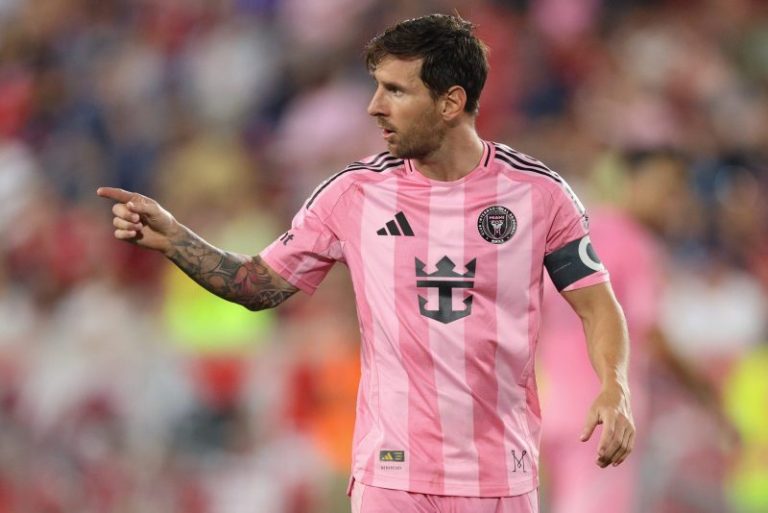
Players aren’t the only ones showing signs of fatigue. Broadcasters worldwide yawned at the media rights for the Club World Cup before the now-Saudi-backed DAZN agreed at the 11th hour to take them. Ticket sales have been anemic, with FIFA having to cut prices even for games featuring Lionel Messi’s Inter Miami.

This is a problem of FIFA’s own making.

Infantino is going heavy on the “historical” nature of the Club World Cup, but that’s a tough sell. Especially when the World Cup is just a year away and will be played in many of the same cities.

Fans don’t have Saudi sugar daddies like Infantino and his FIFA brethren. If the choice for their disposable income is between next year’s World Cup and a second-tier tournament that is not new, just revamped, and is being played in many of the same cities as the World Cup, that’s not really a choice at all.

“Football is such an important sport all over the world,” Infantino said Tuesday.

Be nice if he and FIFA treated it that way, rather than a means of feeding their own egos and bank accounts.

Follow USA TODAY Sports columnist Nancy Armour on social media @nrarmour.

This post appeared first on USA TODAY

Travis Kelce and Taylor Swift are in their hockey era.

Kelce, star tight end for the Kansas City Chiefs, and Swift, a 14-time Grammy winner, traded in a football for a hockey puck on Thursday and traveled to Sunrise, Florida, for Game 4 of the Stanley Cup Final between the Edmonton Oilers and Florida Panthers.

The duo was spotted walking to their suite at Amerant Bank Arena as nearby fans applauded. Kelce donned a red long-sleeve shirt and matching shorts, which he paired with a baseball cap and pair of white sneakers. Swift opted for an all-white, two-piece getup that she paired with white heeled boots and her signature red lip.

The power couple first broke the internet in September 2023 when Swift accepted Kelce’s invitation to watch him play at Arrowhead Stadium after he watched her rock the same stadium during her wildly popular ‘Eras Tour.’ She was prominently featured during FOX’s game broadcast while sitting next to Kelce’s mother Donna in a suite. Swift and Kelce were later spotted leaving together in a convertible after the Chiefs’ blowout win over the Chicago Bears, not only fueling dating rumors, but setting the entire internet on fire.

When Swift is not touring the world or cheering on Kelce at Kansas City’s Arrowhead Stadium, the duo has frequently held date nights at various sporting events. Kelce and Swift attended the 2024 U.S. Open men’s final alongside Chiefs quarterback Patrick Mahomes and wife Brittany Mahomes. One month later, the couple attended Game 1 of the ALCS between the New York Yankees and Cleveland Guardians. Swift was also at Kelce’s side after the Chiefs’ Super Bowl 59 loss to the Philadelphia Eagles in New Orleans in February.

Swift previously starred in a commercial for the NHL’s Nashville Predators in 2008. ‘Come on! Taylor Swift at a Predators game? You’re crazy,’ the commercial says. Some find themselves thinking that nearly two decades later.

The USA TODAY app gets you to the heart of the news — fastDownload for award-winning coverage, crosswords, audio storytelling, the eNewspaper and more.

This post appeared first on USA TODAY

Milwaukee Brewers pitcher Jacob Misiorowski had about as eventful an MLB debut as you’re going to see.

The Brewers’ top pitching prospect, a second-round pick in 2022, fired five innings of no-hit ball Thursday night against the St. Louis Cardinals before exiting in the sixth inning following a freak ankle injury. After throwing ball 3 to Victor Scott II, Misiorowski’s right ankle bent awkwardly as he moved to return to the mound.

The 6-foot-7, 197-pound pitcher exited with a trainer to a standing ovation. Misiorowski, 23, struck out five and walked four while allowing no hits on 81 pitches (49 strikes). The fireballer had 14 pitches meet or exceed 100 mph, per MLB — including the first three he threw.

Nick Mears came on in relief and Scott eventually walked. Mears got out of the frame, but the combined no-hitter bid ended in the seventh inning with Aaron Ashby allowing three hits. Misiorowski got the win as the Brewers shut out the Cardinals, 6-0.

This story has been updated with new information.

This post appeared first on USA TODAY

When DC Defenders wide receiver Jaydon Mickens takes the field for the 2025 UFL championship game, he will be the oldest player on the field.

‘That’s crazy,’ the 31-year-old told USA TODAY with a laugh after being informed of that fact. ‘I remember being the youngest.’

Indeed, Mickens broke into the NFL as a 22-year-old after going undrafted out of Washington in 2016. He latched on with the Oakland Raiders to begin an NFL odyssey that spanned six teams over eight seasons.

The NFL calls stopped coming for Mickens after his 2023 stints with the New York Giants and Indianapolis Colts. While some would have walked away from the game at that point, Mickens decided to go to the UFL.

‘I always knew I can keep playing,’ Mickens said when asked about joining the UFL. ‘I still have a lot of juice, and I still have a love for the game.”

‘For me, it’s just loving the game and appreciating the camaraderie and appreciating the structure and building chemistry with a lot of great players,’ he added.

Mickens’ comments highlight a common sentiment among UFL players. Most are hoping to eventually land NFL opportunities, whether it’s for the first time or the umpteenth.

But above all, they are grateful for everything the spring league provides.

Bryce Perkins

For Michigan Panthers quarterback Bryce Perkins, the UFL has provided a needed opportunity to get live game reps.

‘It gets you in the feel of playing again,’ Perkins said of the UFL. ‘It lets you sharpen things that you may not necessarily know you need to sharpen depending on the situation you’re in in the NFL.’

Perkins previously had a three-year stint with the Los Angeles Rams after going undrafted out of Virginia in 2020. He learned a great deal in Sean McVay’s system and credited his observations of Jared Goff and Matthew Stafford for teaching him how to prepare for games.

Even so, Perkins acknowledged it wasn’t easy to prove himself on the field after getting just one start during his three seasons as a third-string quarterback.

‘There’s a lot of things that throughout the two years before I played that you don’t even know that’s going to show up until it shows up,’ Perkins said. ‘Being able to play in this league (the UFL) allows you to play well and play ball.’

Jordan Ta’amu

Like Perkins, Defenders quarterback Jordan Ta’amu is playing for the love of the game. That said, he is also happy earning money to play.

‘I do not want to work in the real world,’ Ta’amu told USA TODAY. ‘And I just think what better way to work and to do what you love and play football for fun and also get paid for it?’

That’s one of the main reasons Ta’amu hopes to get another NFL chance. He relishes the financial security that comes with playing in the top professional league, where the minimum contract value for 2025 is $840,000 and practice squad players make $12,000 per week. By comparison, the UFL has a minimum salary of $62,005 for the 2025 season.

But even if Ta’amu can’t make it back to the NFL, the 27-year-old is happy to have spring football – which he has been a part of for five seasons in the XFL, USFL and now the UFL – as an option.

‘I want to keep playing football until someone tells me no,’ Ta’amu said. ‘If it’s in the spring league, if it’s in the NFL, I just want to keep playing because we don’t get a lot of opportunities like this.’

Toa Taua

Panthers running back Toa Taua knows how hard it is to make it professionally. He found himself cut by Michigan at both the start of the 2024 and 2025 UFL seasons. He only returned to the Panthers after some early-season running back injuries but has since blossomed into one of the league’s best backs.

Before returning to the UFL, Taua worked two jobs – one by day at a golf course and another at night at a 24-hour Planet Fitness. All the while, he attempted to stay ready to play and occasionally snuck in a mid-shift workout at the gym.

While Taua enjoyed both of his jobs, he acknowledged that they didn’t bring nearly the same level of camaraderie he experienced on the field. That has led him to cherish the bonds formed with his Panthers teammates on and off the field, including during barbecue sessions with his housemates, Kai Nacua, Samson Nacua, Mika Tafua and Javin White.

‘After you’re done playing sports, you don’t get those moments too much,’ Taua said. ‘So, just being around the guys and making memories with the boys is everything.’

Jaydon Mickens

Most players understand the mortality referenced by Taua. There will come a time when they are no longer able to suit up, whether it’s due to age, injury or it simply becomes financially unsustainable.

Even so, it isn’t stopping players like Mickens from continuing to play. The 31-year-old insists he isn’t too old to make it back to the NFL and finally get a chance to show his worth not just as a return man but also as a receiver.

‘I’m still getting better at my routes,” Mickens said. ‘I’m getting better at returning punts. I’m still growing as a player at 31 years old, and I’m getting faster, I’m getting stronger, I’m out-running people, I’m making catches.’

Will Mickens’ improvements be enough for him to get another chance in the NFL? He isn’t sure.

But even if not, he is content with where his football career has taken him.

‘There’s nothing I’m actually chasing,’ Mickens said. ‘There’s no dream that I haven’t already accomplished, and everything I’ve done has been tremendous in my book.’

This post appeared first on USA TODAY

The amount of pressure on a football field could make a volcano erupt. Players and coaches are under intense scrutiny, with people eyeing their every move and ready to burst with an emotionally-charged reaction for anything that happens.

The same goes for the officials.

Sports fans have their beloved franchises and their hated rivalries, but there’s one thing even lifelong enemies can seemingly agree on: referees suck.

Whether it’s a missed holding call or an uncertain first down, referees are under constant judgment. For most of the 60 minutes of play, coaches and players will argue their decisions, and fans will hurl endless expletives and threats at the calls they’re certain are wrong.

The life of a referee is not for the faint of heart. Some level above perfection is required to satisfy all parties involved – and it still isn’t enough. And no one knows that more than Dean Blandino, vice president of officiating for the United Football League and Fox Sports rules analyst.

‘What I’ve learned over a long time is it doesn’t matter if you could be really good at what you do, a lot of people are going to think you’re not very good at it, because officiating is just that,’ Blandino told USA TODAY Sports. ‘Half the people are going to be upset about the call, the other half are going to like the call, and then that’s going to switch the next time you make a decision.’

A never-ending list could be made of all the issues people have with officiating, and it would likely take forever to appease the complaints. Even worse, fans really don’t like referees.

But the UFL is trying to bridge the splintered gap between fans and refs. The spring football league has an officiating process you wouldn’t see in the NFL or college football, offering more access and insight into every call made on the field – and possibly pave the way for other leagues.

The UFL invited USA TODAY Sports to Fox Sports’ studio in Los Angeles to get an inside look at how the league’s officiating process works and the big issues in football’s rule enforcement.

How UFL officiating is different than NFL, college football

In the NFL, the head of officiating doesn’t communicate with the on-field officials unless a play is under replay review. It’s mostly the standard in college football as well, as conferences vary in their replay process.

What’s different in the UFL is there’s constant communication between the head official and those on the field. From just before kickoff until the game ends, Blandino is able to speak with the referees on the field.

‘Our goal is not to re-officiate every play from up here,’ he said. ‘We’re not there to check every spot. But if there is something significant, maybe it’s a third-down play going fourth down, or if there’s six or seven yards, something like that, we’ll communicate that.’

It makes for a smooth product. On nearly every play, Blandino can use a multitude of camera angles available at the stadium to ensure whatever call was made on the field is correct – all with an Xbox controller.

The UFL uses the Hawk-Eye cameras, a similar type the NFL will be using for first down measurements during the 2025 season. With the system, Blandino is able to sync several camera angles together to show a certain moment in a play and slow things down. A crew is alongside him to look at all available camera angles, and point him to the right ones that are critical to making the call. He touted the system allows him to ‘start to evaluate (plays) right away’ rather than put everything on hold.

Speed is the name of the game when reviewing. One of the biggest complaints with referees is reviews take too long. Drag it out and people get frustrated with all the time it takes.

Blandino said the speed of replay in the UFL has shortened how long the review process takes. He wants to have a decision made within 60 seconds – unless a commercial break is needed, in which he can take his time. Still, he said the replay center has averaged about 56 seconds per replay stoppage.

‘The goal is always, obviously, we want to be accurate, but we want to be efficient as well,’ he said.

Granted, the UFL is able to do this with a schedule that isn’t as chaotic as the NFL. While the NFL will have several games in the 1 p.m. and 4 p.m. ET Sunday window, the UFL typically has one game at a time, allowing Blandino and head of officiating Mike Pereira to have their undivided attention on one field rather than bouncing around.

What UFL officiating is like

It’s one thing to boast about how effective officiating is in the UFL, but it needs to be seen in action to put it to the test. USA TODAY Sports was in the command center for the final day of the regular season on June 1 for the Arlington Renegades vs. the San Antonio Brahmas and the Birmingham Stallions vs. the Memphis Showboats.

Over the course of the two games, the command center was able to have limited disruptions to the contest. In the first quarter between the Renegades and Brahmas, a play that was initially called a catch on the field was immediately reviewed by Blandino, and he overturned the call. The decision was made quick enough that the ensuing play wasn’t close to being snapped, and by the time he relayed the call to the referees, there wasn’t much time between re-spotting the ball.

“We’re really cognizant of that, and trying to keep those stoppages to a minimum, keep the game flowing,” Blandino said.

In the UFL, there’s super challenges where teams can challenge anything on the field. In the game, one was made by Arlington regarding a potential defensive holding. With the command center crew assisting in finding angles, Blandino was able to rule the challenge was unsuccessful in about 80 seconds. 

Another unique aspect about the UFL is the audience can hear what Blandino is looking at, giving viewers a peek into what key components are used to determine a call. He’s able to justify his reviews on-air with the broadcast team, and his deeper explanations to USA TODAY Sports weren’t something you’d get during a game with a replay center.  

The pressure on officiating

Even though the day ran smoothly, controversy did arise. In the first quarter of the Birmingham-Memphis contest, the Stallions turned a tip drill into a pick-six, but the Showboats challenged the play for potential hands to the face on quarterback Dresser Winn. While the defender’s hand made contact with Winn’s facemask, Blandino ruled it wasn’t grabbed.

The decision didn’t go well with Memphis, particularly Showboats defensive coordinator Jim Horton, who was visibly frustrated with thecall, pointing to a freeze frame of the play. It was just as tense in the command center as Blandino walked through his decision process, using slow motion replays to make his call. Slow motion and regular speed are the most optimal ways to review a play, as going frame-by-frame doesn’t give concise answers.

‘If I freeze it, I can see the hand here, but what’s happening? How can I tell the force if I freeze it?’ Blandino said. ‘Was it forcible? Was there a grab? The freeze frame does not tell the whole story.’

The call is just one of infinite examples of a decision making people quite upset. It’s pretty much been a thing since sports began, but Blandino believes the intensity of distaste with officials has risen.

He pointed to when he joined the NFL in the mid-1990s. At that time, there was just pressure for officials to make correct calls in real time. Whatever decision was made stood for eternity. Then instant replay was introduced, and it raised the expectation for officials, especially as technology became so advanced to where everything on the field is seen.

‘The technology continues to improve in terms of how we view the game, and I think that raises the expectation on the officials right there. If I can see it, right, why can’t the official see it?’ Blandino said.

Perfection is what everyone on a football field – including referees – strives for, and it doesn’t always happen, leading to concerning situations for officials. The National Association of Sports Officials noted in a 2023 survey more than half of respondents reported instances of not feeling safe as a result of players, coaches or spectators. Blandino added the rise of sports betting has raised tensions further, as one call could decide whether a bettor hits it big or not. 

While replay is available at the collegiate and professional level, it’s not in youth leagues and high school. But regardless of level, Blandino wants people to remember plays happen quickly, and on the field referees have to make a quick judgment based on their point of view – not yours.

‘I really feel there’s a disconnect in how we watch the game on television, and how the game is officiated or watched live. Because you see it once at full speed as an official and then you’re evaluated based on seven different angles, slow motion, all these different technological advancements that we have,’ he said. ‘The expectation continues to be perfection, which isn’t possible, right?

‘Coaches make mistakes. Players make mistakes. Officials make mistakes.’

Pushing toward more transparency in officiating

Despite the pressure facing officials, there is a silver lining being produced in the UFL in transparency. The league allows fans to see the process of its officiating, and viewers getting the scoop helps repair the relationship between the two sides.

The access has helped ‘a push for more transparency’ within officiating, Blandino said, and small steps are being made in other leagues, like how the Atlantic Coast Conference has cameras in its command center so viewers can see what’s going on during the broadcast.

It’s not like that at the NFL, and Blandino said he’s not sure it will ever get that much transparency on Sundays. But he noted the league has made strides, such as clueing him in on calls when he serves as a network rules analyst. It’s not everything, but it’s something as the world of officiating evolves.

The UFL has helped football fans get a better understanding of why certain calls are made – but that doesn’t mean they are satisfied with it. Sports will always need a scapegoat. The game is progressing in the right direction, but maybe the relationship between fans and officials is forever meant to be complicated.

‘They still disagree,’ Blandino said of fans. ‘They may think that I need my eyes checked or whatever. But, yeah, they understand the process and they have a better feel for it.’

This post appeared first on USA TODAY

Joe kicks off this week’s video with a multi‑timeframe deep dive into the 10‑year U.S. Treasury yield (TNX), explaining why a sideways coil just below the 5% level could be “downright scary” for equities. From there, he demonstrates precise entry/exit timingwith a combination of ADX, MACD, and RSI. Joe also covers the short-term divergence developing in the QQQ, takes a look at the IWM, and wraps up with some analyses of this week’s viewer symbol requests, including INTC, MU, and more.

The video premiered on June 11, 2025. Click this link to watch on Joe’s dedicated page.

Archived videos from Joe are available at this link. Send symbol requests to stocktalk@stockcharts.com; you can also submit a request in the comments section below the video on YouTube. Symbol Requests can be sent in throughout the week prior to the next show.

Energy sector innovators took center stage on Wednesday (June 11), with Eclipse Automation securing major deals in nuclear infrastructure, and Oklo (NYSE:OKLO) snagging a key US clean energy contract.

Eclipse Automation, part of Accenture (NYSE:ACN), has secured multiple contracts to design, manufacture and supply advanced automated tooling and equipment for upcoming CANDU nuclear reactor refurbishment projects.

The projects are at the Cernavoda plant in Romania and the Qinshan facility in China, and the agreements include automated inspection units, radioactive-handling systems, reactor-assembly tools and a remote-control center.

Based in Cambridge, Ontario, and backed by Accenture’s global footprint, Eclipse Automation is working to bolster nuclear safety and efficiency with cutting-edge technology.

“In the last decade, Eclipse has delivered automated solutions and equipment to support nuclear refurbishment work at the Embalse reactor in Argentina, and at the Darlington and Bruce nuclear generating stations in Canada,” said Steve Mai, CEO of Eclipse Automation, in the company’s press release.

Putting the ‘Can’ in CANDU

Canada’s CANDU (Canada deuterium uranium) reactors trace their origins back to the 1950s, with the first commercial unit, NPD, launching in 1962 using heavy water moderation and natural uranium fuel. Featuring pressure tubes and online refueling, CANDUs allow continuous operation, unlike light-water reactors that require shutdowns.

Today, 19 CANDU reactors operate in Canada, primarily in Ontario and New Brunswick, and over a dozen more are deployed abroad in South Korea, Romania, China, Argentina and India.

The design is prized for high reliability, clean power and the ability to burn natural uranium and alternative fuels.

Canada and other countries are now investing in life extensions and advancing next-generation designs like the Enhanced CANDU-6, the Advanced CANDU reactor and small modular reactors, supported by federal funding to sustain a domestic supply chain and global competitiveness.

Defense department eyes microreactors

Elsewhere, advanced nuclear company Oklo received a notice of intent to award from the US Department of Defense to deploy its Aurora microreactor at Eielson Air Force Base in Alaska.

The project, which will be led by the Defense Logistics Agency Energy, will serve as the Air Force’s pilot for enhancing energy resilience at remote sites. Under a long-term power purchase agreement, Oklo will design, build, own and operate the reactor, supplying both electricity and heat. The Aurora system uses fast reactor technology to deliver continuous, off-grid power — ideal for mission-critical infrastructure.

‘This Notice of Intent to Award reflects continued confidence in Oklo’s ability to deliver clean and secure energy solutions for mission-critical infrastructure,’ said Jacob DeWitte, co-founder and CEO of Oklo. ‘We are honored to support national defense resilience objectives while demonstrating the value of US-pioneered fast reactor technology.’

These contracts reflect a global resurgence in nuclear energy as countries look for ways to power their expanding grids with clean energy.

Securities Disclosure: I, Georgia Williams, hold no direct investment interest in any company mentioned in this article.

This post appeared first on investingnews.com

Peter Krauth, editor of Silver Stock Investor and Silver Advisor, outlines the factors driving silver’s recent price run, which has pushed the white metal to levels not seen in over a decade.

In his view, the current macroeconomic environment is combining with short supply and strong demand dynamics to create a ‘perfect storm.’

Securities Disclosure: I, Charlotte McLeod, hold no direct investment interest in any company mentioned in this article.

This post appeared first on investingnews.com

E-Power Resources Inc (CSE: EPR) (FSE: 8RO) (‘E-Power’ or the ‘Company’) announces its intention to complete a flow-through non-brokered private placement to raise gross proceeds of up to $150,000 (the ‘FT Offering’). The Company will also complete a Hard Dollar Private Placement to raise gross proceeds of up to $50,000 (the ‘Hard Dollar Offering’).

Securities to be issued pursuant to the FT Offering shall consist of an amount of up to 3,000,000 units of the Company (the ‘FT Units‘) issued at a price of $0.05 per FT Unit, each FT Unit being comprised of one common share in the capital of the Company (each a ‘FT Share‘) that will qualify as ‘flow-through shares’ (within the meaning of subsection 66(15) of the Income Tax Act (Canada)), and one-half Warrant, each Warrant entitling its holder thereof to acquire one Share at a price of $0.10 per Share for a period of 5 years from the closing date of the FT Offering.

The Hard Dollar Offering units ‘Hard Dollar Units’ shall consist of 1,000,000 units of the Company issued at a price of $0.05 per Hard Dollar Unit. Each Hard Dollar Unit shall consist of one common share in the capital of the Company and one full Warrant, each Warrant entitling its holder thereof to acquire one Share at a price of $0.10 per Share for a period of 5 years from the closing date of the Hard Dollar Offering.

In connection with both the FT Offering and Hard Dollar Offering, the Company may pay cash finder’s fees and issue broker warrants. The securities issued in connection with the FT Offering and Hard Dollar Offering are subject to the applicable statutory four-month and one-day hold period.

Net proceeds from the FT Offering will be used by the Company to incur eligible ‘Canadian exploration expenses’ that will qualify as ‘flow-through mining expenditures,’ as defined in subsection 127(9) of the Income Tax Act (Canada) and under section 359.1 of the Taxation Act (Quebec) (the ‘Qualifying Expenditures‘), related to the Company’s Tetepisca Graphite Property, located in the Tetepisca Graphite District of the North Shore Region of Quebec, on or before December 31, 2026. All Qualifying Expenditures will be renounced in favour of the subscribers to the FT Offering effective December 31, 2025. ‎ In addition, with respect to Quebec resident subscribers of FT Shares and who are eligible individuals under the Taxation Act (Quebec), the Canadian exploration expenses will also qualify for inclusion in the ‘exploration base relating to certain Quebec exploration expenses’ within the meaning of section 726.4.10 of the Taxation Act (Quebec) and for inclusion in the ‘exploration base relating to certain Quebec surface mining expenses or oil and gas exploration expenses’ within the meaning of section 726.4.17.2 of the Taxation Act (Quebec).

Subject to compliance with applicable regulatory requirements and in accordance with National Instrument 45-106 – Prospectus Exemptions (‘NI 45-106‘), the FT Shares and FT Units will be offered by way of private placement pursuant to applicable exemptions from NI 45-106. The FT Offering and Hard Dollar Offering are expected to close on or about June 20, 2025 (the ‘Closing Date‘), subject to the satisfaction or waiver of the customary closing conditions, including the approval of the Canadian Securities Exchange (‘CSE‘).

The securities to be offered pursuant to the FT Offering and Hard Dollar Offering have not been, and will not be, registered under the U.S. Securities Act of 1933, as amended (the ‘U.S. Securities Act‘) or any U.S. state securities laws, and may not be offered or sold in the United States or to, or for the account or benefit of, United States persons absent registration or any applicable exemption from the registration requirements of the U.S. Securities Act and applicable U.S. state securities laws.

This press release shall not constitute an offer to sell or the solicitation of an offer to buy nor shall there be any sale of the securities in any jurisdiction in which such offer, solicitation or sale would be unlawful.

About E-Power Resources Inc.

E-Power Resources Inc. is an exploration stage company engaged principally in the acquisition, exploration, and development of graphite properties in Quebec. Its flagship asset, the Tetepisca Graphite Property, is located in the Tetepisca Graphite District of the North Shore Region of Quebec, approximately 215 kilometers from the Port of Baie-Comeau. For further information, please refer to the Company’s disclosure record on SEDAR (www.sedarplus.ca) or contact the Company by email at info@e-powerresources.com.

On Behalf of the Board of Directors

James Cross
President & CEO
+1 (438) 701-3736
info@e-powerresources.com

Disclaimer for Forward-Looking Information

This news release contains certain forward-looking statements within the meaning of applicable securities laws. All statements that are not historical facts, including without limitation, statements regarding future estimates, plans, programs, forecasts, projections, objectives, assumptions, expectations or beliefs of future performance are ‘forward-looking statements.’ These forward-looking statements reflect the expectations or beliefs of management of the Company based on information currently available to it. Forward-looking statements are subject to a number of risks and uncertainties, including those detailed from time to time in filings made by the Company with securities regulatory authorities, which may cause actual outcomes to differ materially from those discussed in the forward-looking statements. These factors should be considered carefully and readers are cautioned not to place undue reliance on such forward-looking statements. The forward-looking statements and information contained in this news release are made as of the date hereof and the Company undertakes no obligation to update publicly or revise any forward-looking statements or information, whether as a result of new information, future events or otherwise, unless so required by applicable securities laws.

The CSE has not reviewed, approved or disapproved the contents of this news release.

To view the source version of this press release, please visit https://www.newsfilecorp.com/release/255269

News Provided by Newsfile via QuoteMedia

This post appeared first on investingnews.com

Here’s a quick recap of the crypto landscape for Wednesday (June 11) as of 9:00 p.m. UTC.

Get the latest insights on Bitcoin, Ethereum and altcoins, along with a round-up of key cryptocurrency market news.

Bitcoin and Ethereum price update

Bitcoin (BTC) was priced at US$108,710, a slight decrease of 0.8 percent in 24 hours. The day’s range for the cryptocurrency brought a low of US$108,574 and a high of US$110,269.

Bitcoin price performance, June 11, 2025.

Chart via TradingView.

Bitcoin has surged over 10 percent since June 5, briefly reaching US$110,000 on Wednesday.

If Bitcoin breaks its US$112,000 all-time high, analysts believe it could make a rapid rise to US$114,000, with further gains predicted if momentum continues. Experts’ targets range from US$120,000 to US$150,000 in the short term, while long-term forecasts sit between US$1 million and US$2.4 million.

This week’s on-chain analysis from Glassnode shows a deviation from past bull markets, with long-term holders continuing to buy instead of selling. This points to growing institutional interest and a shift toward long-term thinking. Price swings are unusually low, suggesting a stable market, but moves could be sharp if demand shifts.

Ethereum (ETH) ended the day at US$2,810.96, a 1.6 percent increase over the past 24 hours. The cryptocurrency reached an intraday low of US$2,796.60 and saw a daily high of US$2,870.74

Altcoin price update

  • Solana (SOL) closed at US$162.72, down 0.5 percent over 24 hours. SOL experienced a low of US$163.05 and reached a high of US$167.80 on Wednesday.
  • XRP was trading at US$2.29, down by 0.3 percent to its lowest valuation in 24 hours. The cryptocurrency reached a high of US$2.33 for the day.
  • Sui (SUI) was trading at US$3.42, showing a decreaseof 0.7 percent over the past 24 hours and its lowest valuation of the day. It peaked at US$3.51.
  • Cardano (ADA) closed at its lowest price of the day at US$0.7041, down 0.5 percent over the past 24 hours. Its highest valuation was US$0.7285.

Today’s crypto news to know

Experts make ETF approval calls

Bloomberg exchange-traded fund (ETF) analysts Eric Balchunas and James Seyffart are calling for a ‘potential Alt Coin ETF Summer,’ according to a note released on Wednesday.

“Get ready for a potential Alt Coin ETF Summer with Solana likely leading the way (as well as some basket products) via @JSeyff note this morning which includes fresh odds for all the spot ETFs,” an X post from Balchunas states.

They predict that the US Securities and Exchange Commission (SEC) could approve exchange-traded funds (ETFs) tracking broad crypto indexes by July. The SEC could also “act early on spot Solana and staking ETF filings” after REX-Osprey filed for Solana and Ethereum ETFs with staking components using a C-Corp structure on May 30.

Seyffart and Balchunas now place the approval odds of SOL and Litecoin ETFs at 90 percent. Spot Solana ETF approval odds also jumped to 91 percent on Wednesday on Polymarket.

Stripe to acquire Privy

Stripe has announced plans to acquire Privy, a specialized cryptocurrency wallet infrastructure developer, for an undisclosed amount in a deal signaling Stripe’s deepening involvement in the digital asset space.

Under the terms of the purchase, Privy will operate as a subsidiary within Stripe, focusing on providing infrastructure for developers engaged in building solutions on cryptocurrency rails. According to Privy’s announcement, this transition to Stripe’s umbrella will empower the company with “more resources, flexibility, and firepower.”

Privy’s core expertise lies in offering comprehensive infrastructure for companies involved in the development and management of digital asset wallets. Its tech enables millions of secure crypto wallets on a global scale.

This acquisition aligns with the broader trend of established financial institutions and tech giants integrating blockchain and cryptocurrency technologies into their portfolios.

Ukraine considers adding crypto to national reserves

The Verkhovna Rada, Ukraine’s parliament, received a draft bill on Tuesday (June 10) that proposes modifications to banking laws. These changes would permit the National Bank of Ukraine to incorporate cryptocurrencies into its reserves, standing alongside gold and foreign currencies. According to Yaroslav Zhelezniak, a member of parliament who confirmed the introduction of the bill via Telegram, bill 13356 would allow crypto to be included, but the central bank would retain full discretion over how much of its reserves to allocate to crypto and would not be required to add it.

Zhelezniak clarified in a video interview with Kyrylo Khomiakov, Binance’s regional head for Central and Eastern European countries and Central Asia, that while the draft bill has been introduced, the Ukrainian government isn’t pushing for cryptocurrency, but wants to keep pace with its increasing global usage.

“This story has the right to life, and, as we see, many countries are implementing it,” he said.

Bullish confidentially files for US IPO amid pro-crypto climate

Crypto exchange Bullish has confidentially filed for a US initial public offering (IPO), signaling renewed optimism in digital assets as Donald Trump’s administration ushers in a more crypto-friendly regulatory landscape.

Backed by billionaire Peter Thiel and led by former NYSE President Tom Farley, Bullish’s IPO plans mark a major comeback after its failed SPAC merger in 2021. The company’s move follows Circle’s (NYSE:CRCL) blockbuster US$1.1 billion IPO and coincides with a wave of new filings, including Gemini’s confidential application last week.

Jefferies is slated to lead underwriting for Bullish, though the bank has declined to comment.

Ondo brings tokenized US treasuries to XRP ledger

Ondo Finance has launched its tokenized short-term US Treasury product, OUSG, on the XRP Ledger (XRPL), using Ripple’s new RLUSD stablecoin for settlement. This marks the first time tokenized Treasuries are accessible on XRPL, allowing institutional investors to mint and redeem around the clock with instant settlement.

OUSG provides exposure to low-risk, short-term Treasuries and is already live on Ethereum and Solana, with a combined US$670 million in assets across chains. With US$30 million in total value locked already on XRPL, this expansion could significantly scale institutional DeFi on public ledgers.

Strategy hit with lawsuit over alleged misleading Bitcoin strategy

Strategy (NASDAQ:MSTR) is facing a class-action lawsuit alleging that the Michael Saylor-led firm misled shareholders about the risks of its Bitcoin-heavy investment approach.

Law firm Levi & Korsinsky filed the suit on Tuesday, calling on investors who bought shares between April 2024 and April 2025 to join the case, with a lead plaintiff deadline set for July 15.

The complaint cites the company’s recent US$5.91 billion unrealized loss due to Bitcoin’s volatility and claims executives downplayed risk while hyping upside potential. On April 7, the company dropped nearly 9 percent after disclosing a Q1 loss; by May 1, Strategy had formally admitted to the nearly US$6 billion hit.

A second lawsuit, filed by Anas Hamza, is also underway for alleged violations of the Securities Exchange Act.

Saylor has defended the firm’s strategy, arguing that its capital structure is resilient even in the face of a 90 percent Bitcoin crash. Strategy has not issued an official comment on the lawsuits.

Securities Disclosure: I, Giann Liguid, hold no direct investment interest in any company mentioned in this article.

Securities Disclosure: I, Meagen Seatter, hold no direct investment interest in any company mentioned in this article.

This post appeared first on investingnews.com