Author

admin

Browsing

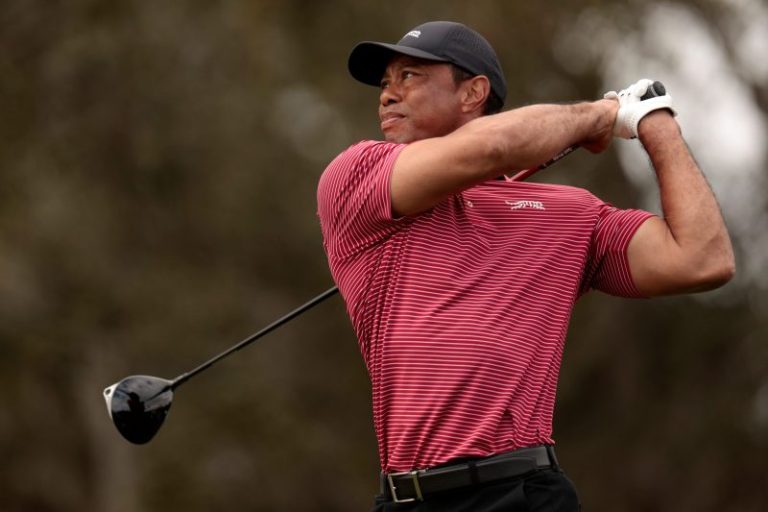
Tommy Fleetwood had participated in 163 PGA Tour events heading into the Tour Championship this weekend. That’s more than a full Major League Baseball schedule. Yet somehow, Fleetwood had managed zero wins.

While this streak is far from the longest winless streak in PGA Tour history, Fleetwood’s first career win came at one of the biggest moments of the PGA Tour season. It might not have been a major, but it was the next best thing: a culmination of the 2025 season. Not only did he prevent Scottie Scheffler from becoming the first back-to-back FedEx Cup champion, but Fleetwood did so in dominating fashion, carrying a three-stroke lead into the 18th hole. He’d maintained a multi-stroke lead for most of the final day of competition, forcing others to put forth Herculean efforts of their own for even a chance of catching him.

Fleetwood finished his day with a par. He had a long birdie opportunity but left the putt short, obviously playing it as safe as he possibly could with a three-stroke lead. He finished Sunday with a two-under 68, his worst round of the tournament, good for 18-under on the weekend.

But when all was said and done, Fleetwood stood alone. The English golfer has won his first PGA Tour event and the FedEx Cup on the same day.

Here’s everything that went down during Sunday’s Round 4 at the Tour Championship, the final event of the FedEx Cup playoffs:

Tour Championship leaderboard

  • 1. Tommy Fleetwood -18 (F)
  • T2. Patrick Cantlay -15 (F)
  • T2. Russell Henley -15 (F)
  • T4. Scottie Scheffler -14 (F)
  • T4. Cameron Young -14 (F)
  • T4. Corey Conners -14 (F)

Tour Championship highlights

Tour Championship purse breakdown

For winning the Tour Championship, Tommy Fleetwood earned a five-year PGA Tour exemption and the largest first-place check on tour: $10 million.

Total purse for the tournament was $40 million.

Tommy Fleetwood on his FedEx Cup win

During his post-tournament interview, Fleetwood didn’t waste any time talking about his failures on the PGA Tour before talking about his win, reminiscing ‘You know, there was Travelers. There was Memphis. Obviously plenty before.’ Those were examples of tournaments where he came up just short.

Fleetwood continued, explaining that after falling short so many times, he wasn’t even sure he could hold a three-stroke lead on the 18th hole. Of course, Fleetwood did just that, even giving himself an opportunity for a four-stroke win, had he not left his first putt short of the hole.

Before finishing off his interview, Fleetwood even started to get visibly emotional when talking about his fans. They came out in droves to support him as he walked in the final putt. He made sure to give appreciation to his fans. ‘The buzz that’s been around me when I’ve been in contention has been amazing,’ Fleetwood said. ‘It’s just so special. I never want to leave.’

Fleetwood wins FedEx Cup

What a time for a first career win!

Despite playing in 163 career PGA Tour events coming into the weekend, Fleetwood had never managed a win. After shooting a two-under 68 on Sunday, good for an 18-under finish, three strokes ahead of second-place.

Keegan Bradley finishes with a birdie

After flirting with a top-five finish for most of Sunday, the Ryder Cup captain started to fall apart on the back nine, posting a bogey, double bogey, and six pars before heading to 18.

Bradley made sure he didn’t leave fans with a sour taste in their mouth though. Bradley capped off his tournament with a birdie on the final hole to pull to even par on the day. Bradley’s birdie also pushed him into the top-10 for the weekend, massively bumping up his winnings.

Scottie Scheffler double bogeys on 15

After his first birdie in five holes on 14, Scheffler looked like he was ready to make a move on first place. That dream came crashing down almost immediately though. Scheffler’s tee shot wound up in the water, and his long bogey attempt wound up left of the hole.

Scheffler wsa forced to settle for a double bogey, pushing him out of the top-five with only three holes to play.

Fleetwood birdies 12

With Patrick Cantlay hot on his heels, Fleetwood needed to make a move in order to keep his two-stroke lead over the field. Fleetwood did exactly that on 12, hammering an easy birdie to stay two strokes ahead of Cantlay, and three strokes ahead of the rest of the field.

Given how well Fleetwood has played on the back nine all weekend long, a two-stroke lead seems near insurmountable.

Scheffler moves within two of leader, immediately in the water

After a flurry of pars − four straight between 10 and 13 − Scheffler finally broke through on the 14th hole, tallying a birdie, and pulling himself into a tie for second place. However, that tie was short-lived. Scheffler pulled his tee shot into the water on 15. There is always a chance he can par out, but it’s practically given he’ll fall back in the field.

Brian Harman’s 63 the round of the day

Although he began the day 13 strokes off the lead, 2023 British Open champion Brian Harman shot up the standings – and earned a sizable amount of money in the process – with a 7-under-par 63.

He capped the stellar round with his eighth birdie of the day on 18, finishing the tournament at 9-under.

Hole No. 9: Scottie Scheffler … from way downtown!

Defending FedEx Cup champion Scottie Scheffler isn’t giving up his crown voluntarily. Trailing leader Tommy Fleetwood by four strokes at the par-3 ninth hole, Scheffler landed his tee shot just short of the green, but with a puttable lie.

Channeling the magic he showed by chipping in for a crucial birdie in last week’s win at the BMW Championship, Scheffler knocked his 42-foot putt into the hole for a birdie 2 to get him to within three shots of the lead.

Hole No. 2: Tommy Fleetwood stands alone at the top

A three-shot swing on the second hole has Tommy Fleetwood atop the leaderboard two shots clear of the field.

Fleetwood became the only golfer of the day to birdie the par-3, 208-yard second hole when he stuck his tee shot to within 20 feet and nailed the putt to get to 17-under par for the tournament.

Meanwhile, third-round co-leader Patrick Cantlay got off to a disastrous start, bogeying the opening hole to fall one shot back, and then taking a double-bogey 5 on the second when he missed the green off the tee and three-putted.

Russell Henley is now in second place at -15.

How to watch Tour Championship: TV channel, streaming 

The 2025 Tour Championship, the final event of the PGA Tour’s FedEx Cup Playoffs, will be televised nationally on the Golf Channel and NBC. It can be live streamed via ESPN+, Peacock and Fubo depending on the time. Here’s the full broadcast schedule: 

(All times Eastern) 

Sunday, Aug. 24 

  • 11 a.m.-6 p.m. on ESPN+ 
  • Noon-1:30 p.m. on Golf Channel, Fubo 
  • 1:30-6 p.m. on NBC, Peacock and Fubo

Watch the Tour Championship with Fubo

Can Scottie Scheffler mount another final-round rally?

If anyone is going to come from off the pace to win the Tour Championship, World No. 1 Scottie Scheffler is the most likely one to do it.

Scheffler has made a habit of staging similar comebacks, such as last week at the BMW Championship — when he started the final round four shots behind Robert MacIntyre, but took the lead for good on the seventh hole and won by two.

Scheffler’s round didn’t get off to an optimal start when he hit his tee shot out of bounds to the right on No. 1. However, after a perfect second drive in the fairway, he hit an approach to three feet and nailed the butt for bogey.

Tour Championship tee times, pairings 

Final Round — Sunday

(All times Eastern) 

  • 11 a.m. — Hideki Matsuyama, Sepp Straka
  • 11:11 a.m. — J.J. Spaun, Sungjae Im
  • 11:22 a.m. — Justin Rose, Jacob Bridgeman
  • 11:33 a.m. — Andrew Novak, Brian Harman
  • 11:44 a.m. — Ludvig Åberg, Viktor Hovland
  • 12 p.m. — Rory McIroy, Harry Hall
  • 12:11 p.m. — Collin Morikawa, Maverick McNealy
  • 12:22 p.m. — Harris English, Corey Conners
  • 12:33 p.m. — Chris Gotterup, Robert MacIntyre
  • 12:44 p.m. — Justin Thomas, Akshay Bhatia
  • 1 p.m. — Shane Lowry, Nick Taylor
  • 1:11 p.m. — Ben Griffin, Sam Burns
  • 1:22 p.m. — Scotte Scheffler, Cameron Young
  • 1:33 p.m. — Russell Henley, Keegan Bradley
  • 1:44 p.m. — Patrick Cantlay, Tommy Fleetwood

What are the playing conditions Sunday at East Lake?

The 2½ inches of rain that’s pounded the Atlanta area over the past several days has resulted in soggy conditions throughout the Tour Championship. Mowers haven’t been able to cut the fairways for three consecutive days so golfers once again will play what’s called ‘preferred lies’ where they can lift, clean and place their balls in the fairway.

Greens are running at 13½ on the Stimpmeter, according to PGA Tour rules analyst Mark Dusbabek.

How is the weather Sunday at East Lake Golf Club?

It should be a very comfortable afternoon for golf at East Lake Golf Club outside Atlanta. The AccuWeather forecast for Sunday calls for warm temperatures with intervals of clouds and sunshine.

Look for a high temperature around 85 degrees with winds 5-10 mph out of the northwest. Chance of precipitation is 25%.

What time does the Tour Championship begin today?

The 2025 Tour Championship concludes Sunday, Aug. 24. The first tee time on Sunday is 11 a.m. ET, with broadcast coverage also starting at 11 a.m. ET. 

Tour Championship prize purse, payouts

The winner’s share at the Tour Championship is a whopping $10 million. The winner is also named the FedEx Cup champion, which comes with a five-year PGA Tour exemption. The top eight finishers will take home more than $1 million. Last place (30th) is good for $335,000.

  1. $10 million
  2. $5 million
  3. $3.705 million
  4. $3.2 million
  5. $2.75 million
  6. $1.9 million
  7. $1.4 million
  8. $1.065 million
  9. $900,000
  10. $735,000
  11. $695,000
  12. $660,000
  13. $625,000
  14. $590,000
  15. $560,000
  16. $505,000
  17. $490,000
  18. $475,000
  19. $460,000
  20. $445,000
  21. $430,000
  22. $415,000
  23. $400,000
  24. $390,000
  25. $380,000
  26. $375,000
  27. $370,000
  28. $365,000
  29. $360,000
  30. $335,000

Tour Championship odds

The odds to win the 2025 Tour Championship, according to DraftKings before the start of Round 4:

  • Tommy Fleetwood +160
  • Patrick Cantlay +190
  • Scottie Scheffler +550
  • Russell Henley +550
  • Keegan Bradley +1400
  • Cameron Young +12000

FedEx Cup standings 

Here are the 30 players who qualified for the 2025 Tour Championship and their FedEx Cup points following last week’s BMW Championship, won by Scottie Scheffler: 

  1. Scottie Scheffler: 7,456 points 
  1. Rory McIlroy: 3,687 points 
  1. J.J. Spaun: 3,493 points 
  1. Justin Rose: 3,326 points 
  1. Tommy Fleetwood: 2,923 points 
  1. Ben Griffin: 2,798 points 
  1. Russell Henley: 2,795 points 
  1. Sepp Straka: 2,783 points 
  1. Robert MacIntyre: 2,750 points 
  1. Maverick McNealy: 2,547 points 
  1. Harris English: 2,512 points 
  1. Justin Thomas: 2,477 points 
  1. Cameron Young: 2,185 points 
  1. Ludvig Aberg: 2,179 points 
  1. Andrew Novak: 2,030 points 
  1. Keegan Bradley: 1,993 points 
  1. Sam Burns: 1,871 points 
  1. Brian Harman: 1,735 points 
  1. Corey Conners: 1,719 points 
  1. Patrick Cantlay: 1,661 points 
  1. Collin Morikawa: 1,656 points 
  1. Viktor Hovland: 1,637 points 
  1. Hideki Matsuyama: 1,630 points 
  1. Shane Lowry: 1,607 points 
  1. Nick Taylor: 1,564 points 
  1. Harry Hall: 1,475 points 
  1. Jacob Bridgeman: 1,475 points 
  1. Sungjae Im: 1,422 points 
  1. Chris Gotterup: 1,414 points 
  1. Akshay Bhatia: 1,409 points 
This post appeared first on USA TODAY

A broad selloff in heavyweight tech stocks at the start of the week abruptly reversed after US Federal Reserve Chair Jerome Powell delivered a speech that bolstered expectations of a September interest rate cut.

Speaking at the Jackson Hole Economic Policy Symposium, Powell took a more dovish tone than investors may have been expecting, noting a slowdown in both worker supply and demand that could lead to employment risks.

He stated that the shifting balance of risks may warrant adjusting the Fed’s policy stance, stressing the need to balance both sides of the central bank’s dual mandate when goals are in tension.

This is a change from the Fed’s previous stance, which had been more focused on the need to keep rates high to fight inflation. Powell acknowledged the visible, though likely temporary, effects of tariffs, cautioning about the potential for persistent inflation, but signaled that the Fed is now also seriously considering the downside risks to employment.

A risk-on rally ensued, impacting various market sectors: the S&P 500 (INDEXSP:.INX), Dow Jones Industrial Average (INDEXDJX:.DJI) and Nasdaq Composite (INDEXNASDAQ:.IXIC) all closed up by more than 1.5 percent.

Bitcoin climbed above US$116,800, the Russell 2000 Index (INDEXRUSSELL:RUT) surged by 3.9 percent and 10 year treasury yields decreased by 0.07 percentage points to 4.26 percent. Traders now have higher expectations for a September rate cut, with probabilities exceeding 83 percent according to CME Group’s (NASDAQ:CME) FedWatch tool.

Here’s a look at the other drivers that shaped the tech sector this week.

1. Softbank to invest US$2 billion in Intel

Intel’s (NASDAQ:INTC) share price got a boost this week after a series of major announcements, beginning with SoftBank Group’s (TSE:9984) Monday (August 18) announcement that it plans invest US$2 billion in the company.

“Semiconductors are the foundation of every industry. For more than 50 years, Intel has been a trusted leader in innovation,’ said Masayoshi Son, chairman and CEO of SoftBank, in a press release.

‘This strategic investment reflects our belief that advanced semiconductor manufacturing and supply will further expand in the United States, with Intel playing a critical role,” he added.

Following that news, sources confirmed last week’s reports that the US government was seeking an equity stake in Intel in exchange for Biden-era Chips Act funding. Then, on Friday (August 22), US Secretary of Commerce Howard Lutnick announced that Intel had agreed to sell an 8.9 percent stake to the federal government, a move that will convert billions of dollars in previously awarded grants into a passive ownership stake.

Intel performance, July 28 to August 18, 2025.

Chart via Google Finance.

These developments have sent Intel’s market value soaring, with its share price increasing over 28 percent from the start of the month. Shares of Intel closed up on Friday at US$24.80.

2. Figure files for Nasdaq IPO

Figure Technology filed for an initial public offering (IPO) on the Nasdaq on Monday under the ticker symbol FIGR, joining a growing list of crypto-related companies looking to access public markets following the successful debut of stablecoin issuer Circle Internet Group (NYSE:CRCL).

Figure leverages blockchain to streamline financial services. The company’s filing reveals a strong financial performance, with profit reaching US$29 million in the first half of 2025, compared to a US$13 million loss in the same period last year. Its revenue for the first half of the year was US$191 million.

Goldman Sachs (NYSE:GS), Jefferies Financial Group (NYSE:JEF) and Bank of America Securities are acting as lead underwriters for the offering. The number of shares and price ranges are yet to be confirmed.

3. Google unveils new Pixel and more

Google (NASDAQ:GOOGL) made headlines this week with several new developments spanning its business lines.

The week kicked off with the tech giant announcing it has increased its stake in data center operator and Bitcoin miner TeraWulf (NASDAQ:WULF) to roughly 14 percent, worth US$3.2 billion.

The company also revealed a partnership with advanced nuclear startup Kairos Power and the Tennessee Valley Authority to power its data centers in Tennessee and Alabama using a new nuclear reactor.

On Wednesday (August 20), Google unveiled its latest Pixel smartphone, the Pixel 10, and accessories, with upgrades including a health coach powered by artificial intelligence (AI).

The week culminated with reports of a US$10 billion cloud computing agreement with Meta Platforms (NASDAQ:META) to provide the necessary servers and infrastructure for Meta’s expanding AI operations. The news sent Google’s share price up by over 3 percent and Meta’s up by over 2 percent.

4. NVIDIA tumbles amid China tension and chip sales

NVIDIA (NASDAQ:NVDA) experienced a volatile week, with its share price slipping in early trading on Monday following reports of renewed tensions with China. The downturn was triggered by news that Beijing will move to restrict sales of the H20 AI chip, the company’s most advanced product approved for the Chinese market.

China’s internet and telecom regulator, as well as the state planning agency, issued informal guidance to major tech companies, instructing them to halt new orders of the H20 chips, citing security concerns.

According to unnamed officials who spoke to the Financial Times, the decision was also influenced by “insulting” remarks from US Secretary of Commerce Howard Lutnick.

In response to the Chinese directive, NVIDIA has reportedly instructed its component suppliers, including Foxconn Technology (TPE:2354), Samsung Electronics (KRX:005930) and Amkor Technolgy (NASDAQ:AMKR), to suspend production of the H20 chip; the company also said it is working on a new AI chip for China.

Alphabet, NVIDIA, Palo Alto Networks and Meta Platforms performance, August 19 to 22, 2025.

Chart via Google Finance.

NVIDIA saw the greatest losses midweek, falling over 4 percent between Tuesday and Thursday. The company recovered some of its losses during Friday’s rally, but finished the week over one percent lower.

5. Palo Alto Networks rises on strong forecast

Palo Alto Networks (NASDAQ:PANW) surged over 7 percent on Tuesday after the cybersecurity company forecast that revenue and profit for its 2026 financial year will come in above estimates.

The company gave a strong performance in its 2025 fiscal year, with total revenue increasing 15 percent year-on-year to US$9.2 billion, fueled by an increase in revenue from newer, cloud-based security products. This growth occurred alongside a 24 percent rise in its future contracted business to US$15.8 billion.

The company also surpassed a US$10 billion revenue run rate while maintaining its “Rule-of-50” status — a measure of the balance between growth and profitability — for the fifth consecutive year.

Securities Disclosure: I, Meagen Seatter, hold no direct investment interest in any company mentioned in this article.

This post appeared first on investingnews.com

Statistics Canada released July’s consumer price index (CPI) data on Tuesday (August 19). The figures show that inflation decelerated in the month, posting a 1.7 percent year-on-year gain, down from the 1.9 percent recorded in June.

The most significant contributor to the fall was a 16.1 percent decline in gasoline prices from the same period last year.

Excluding the lower costs at the pumps, CPI remained steady at 2.5 percent, the same increase as May and June.

The national reporting agency released June’s mineral production survey on Wednesday (August 20).

The data indicates that production and shipments increased across the board, with copper production rising to 39.17 million kilograms, gold rising to 16,935 kilograms and silver increasing to 29,081 kilograms.

For shipments, copper increased to 45.96 million kilograms from 34.38 million kilograms, gold shipments rose to 18,554 kilograms from 16,725, and silver jumped to 31,391 kilograms from 27,614 kilograms.

On Thursday (August 21), Canadian Prime Minister Mark Carney had a phone call with US President Donald Trump. Although the prime minister’s office has provided few details, the two leaders reportedly had a “productive and wide-ranging conversation” about the current trade dispute, as well as economic and security relations.

Carney and Trump are expected to speak again soon.

South of the border, US Federal Reserve Chair Jerome Powell gave his speech at the Jackson Hole Economic Policy Symposium on Friday (August 22). In his remarks, he said that the Fed’s dual mandate goal is in balance, with the labor market remaining near maximum employment, while inflation has eased from post-pandemic highs.

However, he also said that “a shifting balance of risks may warrant adjusting our policy stance,” hinting at a near-term cut to the Fed’s benchmark interest rate. Expectations are high for a 25 basis point cut in September.

Markets and commodities react

Canadian equity markets were positive this week. The S&P/TSX Composite Index (INDEXTSI:OSPTX) was in record territory, closing the week up 1.44 percent to set at another all-time high of 28,333.13. The S&P/TSX Venture Composite Index (INDEXTSI:JX) did even better, climbing 2.45 percent to finish Friday at 803.61. The CSE Composite Index (CSE:CSECOMP) slumped mid-week but recovered on Friday to post a slight gain of 0.48 percent to 158.82.

US equity markets were mixed this week, but strong gains on Friday following Powell’s comments kept them in record high territory. The S&P 500 (INDEXSP:INX) was up 1.52 percent on Friday, but down by 0.16 percent over the past five days to 6,466.92, while the Nasdaq 100 (INDEXNASDAQ:NDX) rose 1.51 percent on Friday, but sank 1.33 percent on the week to 23,497.83 on Wednesday. Meanwhile, the Dow Jones Industrial Average (INDEXDJX:.DJI) was the sole weekly gainer, rising 1.89 percent on Friday and 1.04 percent on the week to post a new record high of 45,631.73.

The gold price was largely flat this week, but also surged on Friday after Powell hinted at a near-term rate cut, rising 1.11 percent on the week to US$3,373.21 per ounce by 4:00 p.m. EDT on Friday.

Silver saw similar movements, but ended the week with a more significant gain of 2.62 percent US$38.90 per ounce.

Copper saw little change again this week, posting a 0.22 percent decrease to US$4.52 per pound. The S&P GSCI (INDEXSP:SPGSCI) commodities index posted an increase of 1.92 percent by close on Friday, finishing at 545.11.

Top Canadian mining stocks this week

How did mining stocks perform against this backdrop?

Take a look at this week’s five best-performing Canadian mining stocks below.

Stock data for this article was retrieved at 4:00 p.m. EDT on Friday using TradingView’s stock screener. Only companies trading on the TSX, TSXV and CSE with market caps greater than C$10 million are included. Mineral companies within the non-energy minerals, energy minerals, process industry and producer manufacturing sectors were considered.

1. StrategX Elements (CSE:STGX)

Weekly gain: 63.64 percent
Market cap: C$11.57 million
Share price: C$0.18

StrategX Elements is advancing a portfolio of projects in the Northwest Territories and Nunavut, Canada.

Its most recent focus has been its Nagvaak project in Nunavut, which hosts a 6 kilometer mineralized zone with deposits of nickel, vanadium, cobalt, copper, silver and platinum-group metals.

On March 3, the company discovered a wide zone of high-grade graphite mineralization at Nagvaak, with one assay returning an average of 15 percent graphitic carbon over 32 meters, including an intersection of 22 percent graphitic carbon over 17 meters. StrategX said the hole also returned encouraging concentrations of other minerals, including nickel, copper and silver, supporting potential for a multi-mineral system.

The most recent news from the project came on July 30, when the company announced it was in the process of mobilizing for a 2025 drill program intended to delineate and validate the discoveries.

On Tuesday, the company completed a non-brokered private placement for 3.71 million shares, raising gross proceeds of C$296,960. It announced the placement on August 7 and said funds would be used for general working capital.

2. Max Resource (TSXV:MAX)

Weekly gain: 62.5 percent
Market cap: C$12.59 million
Share price: C$0.065

Max Resource is an explorer working to advance a portfolio of projects in Colombia.

Its Sierra Azul property is a district-scale copper and silver project consisting of 20 mining concessions covering an area of 188 square kilometers in northeastern Colombia.

The asset is covered by a May 2024 earn-in agreement with Freeport-McMoRan (NYSE:FCX), in which Freeport can receive up to an 80 percent stake by funding of C$50 million over 10 years. The site hosts multiple target areas with high-grade copper and silver mineralization, including a 20 kilometer red-bed style copper system at the AM district.

Max also owns the Florália hematite direct-shipping ore iron project located in the Minas Gerais region. The company completed the acquisition of the property in October 2024 from Jaguar Mining (TSX:JAG,OTCQX:JAGGF) for total cash considerations of US$1 million and 4 million performance share units, contingent upon reaching certain milestones. The site hosts hematite deposits with grades over 60 percent iron. Max intends to use a direct-shipping ore process to mine, crush and screen the ore before exporting the material directly to steel mills.

The company’s most recent announcement came this past Tuesday, when it secured the right to acquire Mora title, which lies adjacent to Aris Mining’s (TSX:ARIS,NYSEAMERICAN:ARMN) Marmato mine. The property hosts 40 historic workings with five active mines, with reserves with grades of 3.2 grams per metric ton (g/t) gold from 31.3 million metric tons and a resource of 9 million ounces of gold grading 3 g/t from 61.5 million metric tons.

3. Maple Gold Mines (TSXV:MGM)

Weekly gain: 50 percent
Market cap: C$45.6 million
Share price: C$0.105

Maple Gold Mines is a gold exploration company focused on the advancement of its Douay and Joutel projects located in the Abitibi greenstone belt in Québec, Canada.

The Douay project covers an area of 357 square kilometers. In a 2022 technical report, the company said the site hosts an indicated resource of 511,000 ounces of gold from 10 million metric tons with an average grade of 1.59 g/t gold, with an additional inferred resource of 2.53 million ounces from 76.7 million metric tons at 1.02 g/t.

Joutel is located directly south of Douay. The company announced on May 5 that it had staked an additional 128 mining claims, bringing the total land area at the property to 111 square kilometers from the original 39. The site hosts Agnico Eagle Mines’ (TSX:AEM,NYSE:AEM) past-producing Eagle-Telbel gold mine, which operated from 1974 to 1993. To date, the company has used 250,000 meters of historic drill results to create 3D models to aid in current exploration efforts.

The most recent news from Maple came on Wednesday when it announced a C$5 million non-brokered private placement led by strategic investor Michael Gentile. Additionally, the company reported that Agnico Eagle has indicated it intends to participate in the offering to maintain its pro rata ownership interest in Maple Gold.

The release also said that it has appointed Marc Legault and Chris Adams to the board of directors.

4. Capitan Silver (TSXV:CAPT)

Weekly gain: 40.45 percent
Market cap: C$113.2 million
Share price: C$1.25

Capitan Silver is an explorer focused on advancing silver and gold projects in Durango, Mexico.

The company’s flagship asset is the 100 percent owned Cruz de Plata project, in the heart of Mexico’s historic Penoles Mining District. The district is known for hosting significant silver mineralization and historic mining.

The Cruz de Plata project encompasses two historic silver mines — Jesus Maria and San Rafael — and the El Capitan oxide gold prospect, all within a 22.9 square kilometer land package.

To date, the company has completed 86 diamond drill holes totaling over 11,550 meters.

A 2020 technical report demonstratesd an inferred resource of 16.99 million ounces of contained silver and 331,000 ounces of contained gold from 28.3 million metric tons of ore with grades of 18.7 g/t silver and 0.36 g/t gold.

The most recent news from Capitan came on Friday, when it announced it executed a definitive agreement to acquire a strategic land package at its Cruz de Plata property from Fresnillo (LSE:FRES,OTC Pink:FNLPF) for total cash considerations of US$4 million. The transaction was initially announced in June.

The new parcel consists of seven mineral concessions covering an area of 2,171.4 hectares and increases its total holdings in the area by 85 percent and the surface expression of the silver and gold trend by 1.2 kilometers to the east.

5. District Metals (TSXV:DMX)

Weekly gain: 36.9 percent
Market cap: C$163.98 million
Share price: C$1.15

District Metals is a uranium exploration company focused on advancing a portfolio of assets in Sweden.

Its flagship Viken property covers an area of 38,657 hectares in Jämtland County and in addition to uranium hosts mineral deposits of vanadium, molybdenum, nickel, copper and zinc.

On June 13, District filed a technical report for the project’s updated mineral resource estimate. It shows an indicated resource of 176 million pounds of U3O8 from 456 million metric tons of ore with a grade of 175 parts per million (ppm) U3O8 and an inferred resource of 1.54 billion pounds of U3O8 from 4.3 billion metric tons with a grade of 161 ppm.

The company has also been advancing its Tomtebo-Stollberg zinc project in South-Central Sweden. The project is part of an October 2023 definitive agreement in which Boliden (STO:BOL) can earn an 85 percent interest in the property by spending C$10 million over four years and District can earn a 15 percent stake in Boliden’s Stollberg property.

Tomtebo covers an area of 5,144 hectares and hosts the historic Tomtebo and Lovas mines, while Stollberg covers an area of 5,180 hectares and is located near Boliden’s Garpengerg mine.

The most recent update from Tomtebo came on July 29, when District released assays from a five hole, 2,485 meter drill program conducted between February and April. One highlighted drill hole recorded multiple zones of silver and base metals mineralization, including 88 g/t silver, 3 percent zinc and 1.9 percent lead over 7.85 meters.

The company has not released any news since.

FAQs for Canadian mining stocks

What is the difference between the TSX and TSXV?

The TSX, or Toronto Stock Exchange, is used by senior companies with larger market caps, and the TSXV, or TSX Venture Exchange, is used by smaller-cap companies. Companies listed on the TSXV can graduate to the senior exchange.

How many mining companies are listed on the TSX and TSXV?

As of February 2025, there were 1,572 companies listed on the TSXV, 905 of which were mining companies. Comparatively, the TSX was home to 1,859 companies, with 181 of those being mining companies.

Together the TSX and TSXV host around 40 percent of the world’s public mining companies.

How much does it cost to list on the TSXV?

There are a variety of different fees that companies must pay to list on the TSXV, and according to the exchange, they can vary based on the transaction’s nature and complexity. The listing fee alone will most likely cost between C$10,000 to C$70,000. Accounting and auditing fees could rack up between C$25,000 and C$100,000, while legal fees are expected to be over C$75,000 and an underwriters’ commission may hit up to 12 percent.

The exchange lists a handful of other fees and expenses companies can expect, including but not limited to security commission and transfer agency fees, investor relations costs and director and officer liability insurance.

These are all just for the initial listing, of course. There are ongoing expenses once companies are trading, such as sustaining fees and additional listing fees, plus the costs associated with filing regular reports.

How do you trade on the TSXV?

Investors can trade on the TSXV the way they would trade stocks on any exchange. This means they can use a stock broker or an individual investment account to buy and sell shares of TSXV-listed companies during the exchange’s trading hours.

Article by Dean Belder; FAQs by Lauren Kelly.

Securities Disclosure: I, Dean Belder, hold no direct investment interest in any company mentioned in this article.

Securities Disclosure: I, Lauren Kelly, hold no direct investment interest in any company mentioned in this article.

This post appeared first on investingnews.com

The Minnesota Vikings are preparing to start J.J. McCarthy at quarterback to begin the 2025 NFL season. The order of the quarterback depth chart may be in flux behind him.

Case in point, the Vikings worked out veteran quarterback Carson Wentz on Saturday, ESPN’s Lindsey Thiry reports.

Wentz spent the 2024 NFL season backing up Patrick Mahomes with the Kansas City Chiefs. The 32-year-old didn’t play much, making just one start in Kansas City’s Week 18 loss to the Denver Broncos. He completed 12 of 19 passes for 118 yards and an 80.6 passer rating across his limited action.

The Chiefs replaced Wentz with Gardner Minshew during the 2025 offseason. The No. 2 overall pick in the 2016 NFL Draft has remained unsigned as he looks to play for a sixth different team over the last six seasons, but he hadn’t drawn much interest before his workout with the Vikings.

Could Wentz be a fit with the Vikings? Here’s what to know about Minnesota’s current quarterback depth chart:

Will the Vikings sign Carson Wentz?

Wentz’s workout with the Vikings doesn’t necessarily mean the team is interested in signing him imminently. NFL teams host workouts throughout the year to keep tabs on players in whom they might have interest should injuries ravage their roster.

As such, Wentz’s workout could have been a typical due diligence move by Kevin O’Connell and Co.

That said, there are two points of interest in Wentz’s workout. Notably, the veteran spent the 2023 NFL season with Sean McVay and the Los Angeles Rams. O’Connell worked as McVay’s offensive coordinator during the 2020 and 2021 seasons and runs a similar offense to his former mentor. That should allow Wentz to seamlessly ingratiate himself into O’Connell’s offense were he to sign.

Additionally, the Vikings could use some veteran quarterback depth on their roster behind the inexperienced McCarthy. Wentz has made just two starts over the last couple of seasons, but he has made 94 starts dating back to his rookie season in 2016.

Comparatively, the entire four-man Vikings quarterback room has combined to make 22 total NFL starts, with McCarthy and undrafted rookie Max Brosmer each sporting zero to their names.

So, a logical case could be made for Minnesota to add another quarterback to the fray, especially if it is seeking a veteran to help mentor McCarthy. Wentz could fit the bill, whether it’s as a backup on the 53-man roster or as a veteran presence with upside on the practice squad.

Vikings QB depth chart

Below is a look at the current pecking order in Minnesota’s quarterback room, according to the Vikings’ official website.

  1. J.J. McCarthy
  2. Sam Howell
  3. Brett Rypien
  4. Max Brosmer

Minnesota spent a first-round pick in the 2024 NFL Draft on McCarthy. The Vikings also let Sam Darnold walk in free agency to clear the path for the Michigan product to start in 2025.

The Vikings traded a fifth-round pick to the Seattle Seahawks for Howell and a later fifth-round pick during the offseason with the expectation of making the 24-year-old their backup quarterback. Howell likely remains ahead in the race for that role but endured a disappointing preseason, completing 12 of 18 passes for 118 yards, one interception and a 61.8 passer rating.

Meanwhile, Rypien is listed third on Minnesota’s depth chart but may be in danger of missing the cut. The 29-year-old completed just 15 of 29 passes for 151 yards, an interception and a 52.5 passer rating during the preseason.

Brosmer, 24, was the best of Minnesota’s backup signal-callers during the preseason. The undrafted rookie completed 35 of 58 passes for 364 yards, two touchdowns, one interception and an 82.8 passer rating in extensive action.

That may be enough to make Brosmer the team’s third-string quarterback over Rypien. Still, it isn’t clear whether the Vikings will be willing to consider the inexperienced signal-caller as their primary backup to McCarthy.

Carson Wentz stats

Wentz has posted a 47-46-1 record across his 94 career starts with a respectable 89.3 passer rating. Below is a full look at his stats from his 9-year NFL career to date:

  • Completion %: 62.7%
  • Passing yards: 22,410
  • Passing TDs: 153
  • INTs: 67
  • Passer rating: 89.3
  • Yards per attempt: 6.7
  • Carries: 357
  • Rushing yards: 1,418
  • Rushing TDs: 11

Wentz also finished third in the NFL MVP voting during the 2017 season. He played in just 13 games that season before suffering a season-ending torn ACL.

Carson Wentz teams

Wentz began his career with the Philadelphia Eagles but has played for six teams in total. Below is a look at his career timeline:

  • Philadelphia Eagles (2016-20)
  • Indianapolis Colts (2021)
  • Washington Commanders (2022)
  • Los Angeles Rams (2023)
  • Kansas City Chiefs (2024)

Wentz won Super Bowl 52 as a member of the Eagles. He did not play in that game while recovering from a torn ACL.

This post appeared first on USA TODAY

Maria Sharapova was inducted into the Tennis Hall of Fame in Newport, R.I., on Saturday, Aug. 23. 

Sharapova amassed a 645-171 record during her career and won 36 singles titles. She’s earned close to $39 million.

The Russian started her professional career at the age of 14 in 2001, just a few years shy of her epic rivalry with Serena Williams.

Williams appeared as a surprise inductee for Sharapova.

“There are only a few players in my career who challenged me to be the very best, every single time we stepped out on the court,” Williams said of Sharapova. “Maria Sharapova was one of them. Whenever I saw her name next to mine in the draw, I made sure I practiced harder.”

The women were at the top of their game together for several years and had played 22 matches against each other since 2004. 

Their last match was in 2019. Williams has managed to get the best of Sharapova with a 20-2 record. Williams also holds an 8-1 record in major events against Sharapova, including a 3-1 record in major finals.

Sharapova’s only two victories against Williams came in the Wimbledon finals and the WTA Championships final in 2004.

This post appeared first on USA TODAY
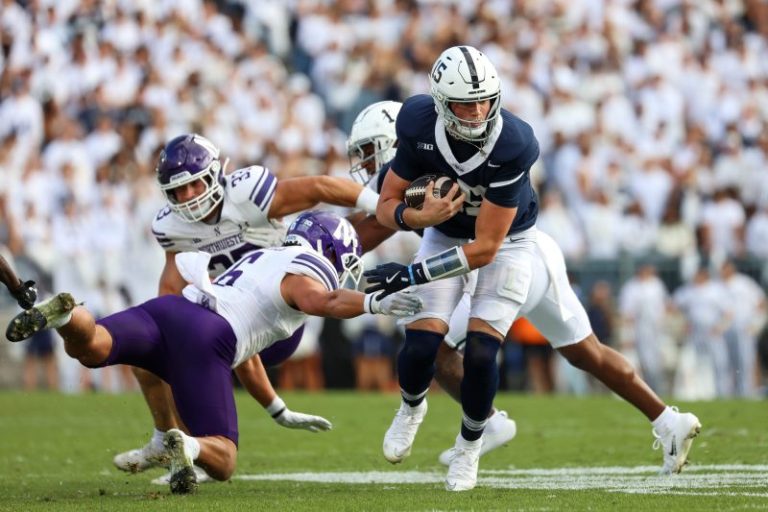
Stanford football’s Clay Patterson made quite the play against Hawai’i on Saturday, Aug. 23, blowing up an attempted trick play for a 12-yard loss late in the second half.

Then his celebration came.

The seventh-year senior broke out a hilarious celebration, busting out a TikTok dance on the field after the sack. However, the celebration was penalized, resulting in an automatic first down for the Rainbow Warriors.

‘Clay Patterson aura farming right now,’ said CBS color commentator Logan Ryan, a former NFL defensive back.

“Hawaii goes with the trickeration,” Logan added. “Clay Patterson has been in college seven years. You can’t fool him. But then he does the foolish TikTok dance that looks like it’s gonna be a taunting call. Welcome to Week 0 football, people.

‘Clay Patterson, trying to get trending real quick, cost his team. That might get you a seat next to the coach on the bench … and then you get the infamous hand on the head. ‘Oh, doy. What did I do?’”

While Patterson’s dance moves might have been elite, it was a substantial blunder for Stanford. Hawai’i avoided the negative play and later scored on the drive, taking a 14-13 lead into halftime after quarterback Micah Alejado found Jackson Harris for a 19-yard score.

Patterson had already impacted the game in a strong way before the penalty, though, as he strip sacked Alejado in the end zone in the first quarter before linebacker Wilfredo Aybar recovered the ball for a touchdown.

Patterson has two sacks against Hawai’i through three quarters, although he’d have three if it wasn’t for the penalty.

The 6-foot-3, 280-pound defensive tackle is making his presence felt against the Rainbow Warriors, but he should probably leave the TikTok dances on the internet rather than the gridiron.

This post appeared first on USA TODAY

Tampa Bay Buccaneers safety Shilo Sanders was ejected from the team’s preseason finale against the Buffalo Bills after throwing a punch at Bills tight end Zach Davidson.

Sanders’ ejection occurred at the end of a play that saw Bills quarterback Shane Buechele throw a 1-yard pass to Elijah Moore. Sanders was engaged with Davidson, who was blocking him and continued to push the rookie safety down the field after Moore had already been tackled.

After Davidson delivered a final push to Sanders, the Colorado product took a swing at the 6-7 tight end. He landed a blow to the left side of Davidson’s helmet, prompting an immediate flag from the officials.

Sanders was quickly disqualified from the contest, bringing to an end his first NFL preseason. The Bills scored an 11-yard touchdown one play after his exit from the game.

Buccaneers coach Todd Bowles was asked during a postgame news conference about his message to Sanders after the play.

‘You can’t throw punches in this league. I mean, that’s inexcusable,’ Bowles said. ‘They’re gonna get you every time. Gotta grow from that.’

Sanders racked up three total tackles across his three preseason games with the Buccaneers, as he battled for a spot on Tampa Bay’s 53-man roster. He was listed as a third-string safety behind Antonie Winfield Jr., Tykee Smith, Kaevon Merriweather and Christian Izien on the Buccaneers’ most recent depth chart update.

Now, the 25-year-old rookie’s wait to see if he made Tampa Bay’s 53-man roster will begin in earnest.

All the NFL news on and off the field. Sign up for USA TODAY’s 4th and Monday newsletter.

This post appeared first on USA TODAY
Caitlin Clark and the Indiana Fever have battled the injury bug all season long.

The 2024 Rookie of the Year has missed 23 of the Fever’s 36 games this season due to various injuries, including a right groin injury that has sidelined her 14 consecutive games. And that number will grow as Clark will the Fever’s matchup against the league-leading Minnesota Lynx on Sunday in Minneapolis.

Clark last played for the Fever on July 15, when she suffered a right groin injury in Indiana’s 85-77 win over the Connecticut Sun. She subsequently tweaked her ankle during recovery on Aug. 7, adding another hurdle to her return.

The Fever (19-17) have stumbled upon hard times and dropped five of their last seven games.

Here’s the latest on Clark’s status:

Is Caitlin Clark playing Sunday? Injury status for Fever-Lynx

Clark (right groin injury) has been ruled out of the Fever’s matchup against the Minnesota Lynx on Sunday in Minneapolis, which is set to tip off at 7 p.m. ET on ION. There is not timetable for her return.

How was Caitlin Clark injured?

Clark suffered a right groin injury in the final minute of the Fever’s 85-77 victory over the Sun at TD Garden in Boston on July 15. With 39.1 seconds remaining in the contest, Clark completed a bounce pass to Kelsey Mitchell to put the Fever up 84-75. After the pass, Clark immediately grabbed for her right groin and grimaced as she gingerly walked over and headbutted the stanchion. She did not return. 

Caitlin Clark injury timeline

  • May 24: Clark suffered a left quad injury during the Fever’s 90-88 loss to the New York Liberty, where she recorded a double-double with 18 points and 10 assists. Clark couldn’t pinpoint the specific play that caused her injury, but noted that it happened early in the contest. Clark said, ‘Adrenaline covers up a lot of stuff when you’re in the heat of battle. After the game, I had some pain, and then we got an MRI, and that kind of gave me the result that I didn’t want to see.’ She missed the Fever’s next five games.
  • June 14: Clark returned to Indiana’s lineup in the Fever’s 102-88 win over the Liberty and dropped 32 points, nine assists and eight rebounds in her first game back. 
  • June 24: Clark suffered a left groin injury in the Fever’s 94-86 win over the Seattle Storm, which resulted in Clark missing the team’s next four games. Fever coach Stephanie White said she learned of Clark’s groin injury the following night after Clark alerted team trainers of discomfort.
  • July 1: Clark was ruled out of the Fever’s 2025 Commissioner’s Cup win over the Minnesota Lynx in Minneapolis. That didn’t stop Clark from rightfully celebrating the team’s hardware.
  • July 9: Clark returned to the Fever’s lineup in the Fever’s 80-61 loss to the Golden State Valkyries. Clark was limited to 10 points, shooting 4 of 12 from the field and 2 of 5 from the 3-point line, in addition to six assists, five rebounds and four turnovers. Following the blowout loss, Clark said it was ‘going to take me a second to get my wind back. … Just trying to get my legs under me.’
  • July 15: Clark suffered a right groin injury in the final minute of the Fever’s 85-77 victory over the Sun at TD Garden in Boston. White later confirmed Clark ‘felt a little something in her groin.’ This marked the last game for which Clark suited up.
  • July 18: Clark announced that she would sit out the 2025 WNBA All-Star Game in Indianapolis, where she was named a team captain. Clark was also set to participate in the 3-point contest. She said, ‘I am incredibly sad and disappointed to say I can’t participate … I have to rest my body.’
  • July 24: The Fever said Clark’s medical evaluations confirmed there’s ‘no additional injuries or damage,’ but the team said it will be cautious with Clark’s rehab and recovery.
  • August 7: Clark reportedly suffered a mild bone bruise in her left ankle while during an individual workout session in Phoenix on Aug. 7, according to The Indianapolis Star, part of the USA TODAY Network.
  • August 8: During an appearance on Sue Bird’s podcast, ‘Bird’s Eye View,’ Clark spoke about the frustrations of her injury-filled season: “It’s not like I have a training camp to build up to play in my first game again. It’s like no, you’re tossed into Game 30 — like, ‘Go try to play well.’ It’s hard, it really is.”
  • August 10: Fever coach Stephanie White said Clark has progressed in her recovery and has started running full court again, but Clark hasn’t returned to practice just yet: an important step in her ramp-up. ‘She’s been able to get a little bit more in her full-court running with all of her body weight… She’s been able to do a little more on the court in terms of how she moves, but not into practice yet,’ White said.
  • August 20: White confirmed that Clark has not returned to practice yet.

Caitlin Clark stats

Clark is averaging 16.5 points, 5.0 rebounds and a career-high 8.8 assists in 13 games this season. Her assists average is the second-highest in the league, behind Phoenix’s Alyssa Thomas (9.0).

The USA TODAY app gets you to the heart of the news — fast. Download for award-winning coverage, crosswords, audio storytelling, the eNewspaper and more.

This post appeared first on USA TODAY

By Darren Brady Nelson

One of former President Ronald Reagan’s most famous quotes is “trust, but verify.” He made that remark on December 8, 1987, to then-Soviet General Secretary Mikhail Gorbachev as the audience gathered on that historic day for a nuclear arms treaty.

In the wake of US President Donald Trump’s April “Liberation Day” tariffs, it is time once again to “trust, but verify.” That is, that the economy is still on track for a new “golden age of America.” And that we will continue in a “golden age,” pun intended, for investing in gold.

Source: the White House.

Tariffs are not inflation

Trump’s tariffs have added to uncertainty, but they are not inflationary per se. The famous Nobel Prize-winning monetary economist, Milton Friedman, summarized what he had learned from the most comprehensive empirical study ever undertaken on inflation in the following quote:

“Inflation is always and everywhere a monetary phenomenon in the sense that it is and can be produced only by a more rapid increase in the quantity of money than in output. A steady rate of monetary growth at a moderate level [may allow] little inflation and much growth.”

Another monetary economist of the 20th century, but not quite as famous as Friedman, was Ludwig von Mises. He agreed with the first half of the quote above, but not the second. He also supported a gold standard, as seen below, as protection from inflation and accompanying boom-bust cycles:

“All economic activity is based upon an uncertain future. It is therefore bound up with risk.” Thus: “There is no such thing as a safe investment.” But: “The…gold standard alone is a truly effective check on the power of the government to inflate the currency.”

Tariffs are just taxes

A student of Mises was Murray Rothbard. The latter wrote in Power and Market that the burden of a sales tax falls entirely on the supplier and supply chain, not the consumers, yet tariffs inexplicably do the opposite. The former is closer to the truth, depending on elasticities.

Media pundits often claim that businesses pass forward tax increases, like tariffs, to consumers. This is a half-truth. The other half of this half-truth is that businesses take a hit, so that they invest and hire less. This means foreign businesses, more than American consumers.

And rather than just a 50/50 split between supply and demand, as per the graph below, economics and history show it is more like an 80/20 situation. That 80 includes a pass backward in the supply chain. This means foreign supply chains, more than American supply chains.

Source: SlidePlayer.

Rationale for Trump’s tariffs

Trump’s tariffs have created extra uncertainty, but not nearly as much as the neoliberals, on the left or right, would suggest by their outrage and alarm. Firstly, imports and import elasticities are relatively low in the US.

Secondly, Trump’s strategy is consistent with the same three exceptions to free trade, and in the same order, as did the classical liberal, and godfather of free trade economics, Adam Smith.

The first exception is not only about directly decoupling from communist China, for targeted defense purposes, but also indirectly, for broader strategic purposes, by weakening the Communist Party of China to the point of regime change, as Reagan did to the USSR.

The second and third exceptions, of reciprocity and retaliation, are part of the “art of the deal.” This three-pronged strategy, despite the outcry as being anti-free trade, is not only trying to put America first, but also to restore genuine free trade. It is a well-calculated risk.

Impact of these tariffs

According to the US Bureau of Labor Statistics (BLS) in its press release of July 17: “Import prices ticked up 0.1% in June, following a decrease of 0.4% in May, and an advance of 0.1% in April.”

The BLS added that: “Prices for US imports fell 0.2% from June 2024 to June 2025, matching the 12- month decline for the year ended May 2025. Those were the largest annual decreases since the index fell 0.9% for the year ended February 2024.”

The BLS also provided an interactive chart of the Import Price Index (IPI). Highlights from the Trump 47 era for “all imports” include: IPI increased, but at a declining rate, by 1.7 percent in February, 0.8 percent in March and 0.1 percent in April; then decreased by -0.2 percent in May and -0.2 percent in June.

“Consumer goods” are also illuminating: IPI dropped from 1.2 percent in November 2024 to -0.8 percent in March 2025; then sunk further to -1.2 percent in May before rising to -0.6 percent in June, but still negative.

The story with “industrial supplies and materials” was that: IPI grew at 5.7 percent in February, then plunged to 1.9 percent in March; followed by shrinking down into negative territory of -2 percent in April, -3.6 percent in May and -3.2 percent in June.

Source: BLS.

Conclusion

Many Main Street investors, and even those on Wall Street, are aware that gold is a great hedge against both inflation and uncertainty; and it is. But few on either streets also know that it is a great investment that outperforms the S&P Index; and it does.

Gold is very rare indeed, and not just in terms of its physical scarcity, but in its unique ability to be both a safe-haven investment and a performance investment as well. The two charts at the end demonstrate gold’s protection and gold’s growth over the decades.

Therefore, for American investors it is still the right time to “trust” in gold growth to come, “but verify” through gold protection in the meantime. Thus, when one has gold, “heads” you win and “tails” you don’t lose.

Sources: FRED (CPI) (GDP) (M3); Shiller Data (S&P); World Bank (gold).

About Darren Brady Nelson

Darren Brady Nelson is chief economist with Fisher Liberty Gold and policy advisor to The Heartland Institute. He previously was economic advisor to Australian Senator Malcolm Roberts. He authored the Ten Principles of Regulation and Reform, and the CPI-X approach to budget cuts.

Read the rest of the series: Goldenomics 101: Follow the Money, Goldenomics 102: The Shadow Price of Gold, Goldenomics 103: Gold Protects and Performs.

This post appeared first on investingnews.com

Easement to Facilitate Near-Term Exploration Logistics for New Amalga Gold Project & Secure Road Route Spanning One-Third of Distance from Public Highway to Project Site

Grande Portage Resources Ltd. (TSXV:GPG)(OTCQB:GPTRF)(FSE:GPB) (‘Grande Portage’ or the ‘Company’) is pleased to announce that it has applied for a State of Alaska easement related to its New Amalga Gold project in southeast Alaska. This easement application incorporates a proposal for development of approximately 1.3 miles (2 km) of gravel road along with two equipment staging areas.

Extending from Glacier Highway across State of Alaska property, development of this road segment will greatly facilitate the Company’s helicopter-supported exploration efforts by establishing an equipment staging area much closer to the project site. The helicopter shuttle distance for transporting drilling equipment and supplies would be reduced by over 60% for each cycle compared to the previous staging area located in the Juneau Mendenhall Valley suburbs.

Ian Klassen, President and CEO comments: ‘The submission of this easement application is an important step for the project. The proposed road development and equipment staging areas will not only enhance the efficiency of our exploration efforts but will also reduce the impact of helicopter noise on residential areas of the Mendenhall Valley. Furthermore, this road segment will comprise a significant proportion of the overall road development required to ultimately establish surface access to the project site.’

This initial road segment would span approximately one-third of the total distance from Glacier Highway to the project site, ending at the boundary between State of Alaska and US Forest Service land. Further road development will require separate federal environmental review and permitting. Baseline environmental studies are ongoing in order to support future federal submissions.

The future facilities at the project site are envisioned to include a small-footprint underground mining operation without an ore processing plant or tailings disposal landfill. Due to the resource location near tidewater and less than 4 miles (6.5km) from existing paved highway (Fig. 1), the Company considers off-site processing by a third party to be the most favorable configuration for the project.

Kyle Mehalek, P.E.., is the QP within the meaning of NI 43-101 and has reviewed and approved the technical disclosure in this release. Mr. Mehalek is independent of Grande Portage within the meaning of NI 43-101.

About Grande Portage:

Grande Portage Resources Ltd. is a publicly traded mineral exploration company focused on advancing the New Amalga Mine project, the outgrowth of the Herbert Gold discovery situated approximately 25 km north of Juneau, Alaska. The Company holds a 100% interest in the New Amalga property. The New Amalga gold system is open to length and depth and is host to at least six main composite vein-fault structures that contain ribbon structure quartz-sulfide veins. The project lies prominently within the 160km long Juneau Gold Belt, which has produced over eight million ounces of gold.

The Company’s updated NI#43-101 Mineral Resource Estimate (MRE) reported at a base case mineral resources cut-off grade of 2.5 grams per tonne gold (g/t Au) and consists of: an Indicated Resource of 1,438,500 ounces of gold at an average grade of 9.47 g/t Au (4,726,000 tonnes); and an Inferred Resource of 515,700 ounces of gold at an average grade of 8.85 g/t Au (1,813,000 tonnes), as well as an Indicated Resource of 891,600 ounces of silver at an average grade of 5.86 g/t Ag (4,726,000 tonnes); and an Inferred Resource of 390,600 ounces of silver at an average grade of 7.33 g/t silver (1,813,000 tonnes). The MRE was prepared by Dr. David R. Webb, Ph.D., P.Geol., P.Eng. (DRW Geological Consultants Ltd.) with an effective date of July 17, 2024.

ON BEHALF OF THE BOARD

‘Ian Klassen’
Ian M. Klassen
President & Chief Executive Officer
Tel: (604) 899-0106
Email: Ian@grandeportage.com

Cautionary Statement Regarding Forward-Looking Information

This news release includes certain ‘forward-looking statements’ under applicable Canadian securities legislation. Forward-looking statements include estimates and statements that describe the Company’s future plans, objectives or goals, including words to the effect that the Company or management expects a stated condition or result to occur. Forward-looking statements may be identified by such terms as ‘believes’, ‘anticipates’, ‘expects’, ‘estimates’, ‘may’, ‘could’, ‘would’, ‘will’, or ‘plan’. Since forward-looking statements are based on assumptions and address future events and conditions, by their very nature they involve inherent risks and uncertainties as described in the Company’s filings with Canadian securities regulators. There can be no assurance that such statements will prove to be accurate, as actual results and future events could differ materially from those anticipated in such statements. Accordingly, readers should not place undue reliance on forward-looking statements. The Company disclaims any intention or obligation to update or revise any forward-looking information, whether as a result of new information, future events or otherwise, other than as required by law.

Please note that under National Instrument 43-101, the Company is required to disclose that it has not based any production decision on NI 43-101-compliant reserve estimates, preliminary economic assessments, or feasibility studies, and historically production decisions made without such reports have increased uncertainty and higher technical and economic risks of failure. These risks include, among others, areas that are analyzed in more detail in a feasibility study or preliminary economic assessment, such as the application of economic analysis to mineral resources, more detailed metallurgical and other specialized studies in areas such as mining and recovery methods, market analysis, and environmental, social, and community impacts. Any decision to place the New Amalga Mine into operation at levels intended by management, expand a mine, make other production-related decisions, or otherwise carry out mining and processing operations would be largely based on internal non-public Company data, and on reports based on exploration and mining work by the Company and by geologists and engineers engaged by the Company.

NEITHER THE TSX VENTURE EXCHANGE NOR ITS REGULATION SERVICE PROVIDER (AS THAT TERM IS DEFINED UNDER THE POLICIES OF THE EXCHANGE) ACCEPTS RESPONSIBILITY FOR THE ADEQUACY OR ACCURACY OF THIS NEWS RELEASE

Source

Click here to connect with Grande Portage Resources Ltd. (TSXV:GPG)(OTCQB:GPTRF)(FSE:GPB) to receive an Investor Presentation

This post appeared first on investingnews.com