Author

admin

Browsing

Evaluating NHL draft prospects at the world juniors is always an interesting process.

You’re watching players who are 17 or just recently turned 18 years old play up against the top under-20 talent in the world. It’s also a two-week tournament, which means there’s a small sample for what we are actually evaluating.

Whether it should be or shouldn’t be, NHL scouts value this tournament and other high-pressure events like the Under-18 World Championship quite highly. They look at how these players perform in high-leverage situations. They are looking to answer questions about the player.

Can they show up when it matters? Do they keep doing the small things when they are winning or losing a lopsided game? Are they able to elevate their game when they are playing the best competition?

Scouts inevitably make judgments on NHL draft-eligible prospects, so let’s look at how the stock for some of the top players changed at the World Junior Championship.

Stock up: Ivar Stenberg, LW, Sweden

In arguably his worst game of the tournament, Stenberg scored the game-winning goal in Sweden’s tournament-opening victory over Slovakia.

Then it was Stenberg, in one of his best games of the world juniors, who scored the empty-netter to seal the gold medal in the final.

Throughout this tournament, Stenberg got better and began to take over shifts and then periods and in the semifinal and gold medal game, he took over the game at times. 

Finishing with 10 points in seven games was impressive, good for fifth in scoring, but it was everything else that Stenberg did that bumps his stock up. His defensive intensity, excellent puck-carrying ability in transition and intelligent forechecking were all major factors throughout this event.

When Sweden needed someone to answer the bell, Stenberg was right there to do so. By the end of the tournament, he was arguably one of the best players on the gold medal-winning squad.

Stock down: Gavin McKenna, LW, Canada

It’s hard to say McKenna’s stock is down when he was second in tournament scoring with 14 points, and he helped Canada to a bronze medal. The reason that his stock is down is that his game was on full display with all of the eyes fixated on him at the highest level, and although his offensive game was evident, his play away from the puck left many questioning his ability to be the potential generational talent that he was once deemed to be. 

McKenna is a stud. His puckhandling and vision are elite among the elite. He sees the ice in a way very few players do. He exploits the opposing team’s small defensive mistakes with his passing.

He’s an unreal offensive talent, but when you’re a player looked at as a potential first overall franchise-altering player, NHL teams want a more complete game.

Stock up: Viggo Bjorck, C, Sweden

The unsung hero of Sweden, Bjorck, took on a massive role for the Swedes, playing down the middle on the second line when Anton Frondell and Eric Nilson moved to the wing.

The undersized forward has been viewed as too small or unable to play a pro-style game, but between the way he’s adapted in the Swedish League against men in Sweden and the two-way prowess that he displayed at the world juniors, Bjorck’s name should be moving up NHL draft boards. 

Bjorck has been an offensive juggernaut at every level as an underage player. He destroyed Sweden’s U-18 level and then proceeded to annihilate the U-20 level, setting the single-season scoring record at both levels as a 15 and 16-year-old.

Now at 17, he’s added a great deal of strength, defensive acumen and a work ethic that has overcome any issues scouts felt his size would impact.

Bjorck ended the world juniors with a gold medal around his neck while getting plenty of talk about whether he should have been on the tournament all-star team. 

Stock down: Adam Novotny, RW, Czechia

It wasn’t that Novotny had a bad tournament. But on a team where everyone seemed to make a big impact, Novotny wasn’t really a factor for much of the tournament.

He had two assists against Denmark and one against Canada in the semifinal. Only one of his assists, one of the two against Denmark, was primary. Novotny just seemed like he wasn’t getting bounces all tournament long. 

His speed wasn’t nearly as big a factor as expected coming into this tournament, and he wasn’t really comfortable being the primary puck carrier through the middle of the ice, one of his strengths.

Novotny ended up leading the tournament in shots on goal but didn’t have a single goal to show for it. Many of his shots came from distance, and he wasn’t getting to the middle of the ice much. A very weird, ineffective tournament for Novotny. 

Stock up: Alberts Smits, D, Latvia

Hands down, Alberts Smits was Latvia’s best player at the World Junior Championship.

There is a reason we will see him featured on the men’s team at the Olympics next month. Smits showed he has everything you could want in a defenseman. He has size, mobility and the ability to play effective hockey at both ends of the ice. Smits was a big reason Latvia pushed Canada to overtime in their round-robin game. 

Smits flexed his offensive chops as the tournament went on, adding five points in his last three games. Smits showed himself to be a defensively steady presence on the back end whenever the Latvians needed him to be, playing over 24 minutes a night.

All in all, Smits might be the closest thing to a Moritz Seider-level prospect that we’ve seen since the big German.

Stock steady: Oliver Suvanto, C, Finland

It was a bit of a head scratcher for some that Suvanto was named one of Finalnd’s best three players. He ended up with just two goals at the tournament, but it must be noted that the coaches vote on the top three players for each team, and coaches are suckers for a guy who does the little things right. 

Suvanto was a constant defensive presence for the Finns. He was a constant force in shutting down the opposition, using his size and strength to lean on puck carriers.

The Finnish center was always in the right position in both zones. He wasn’t able to get on the scoresheet often, but the 17-year-old pivot was a big reason the Finns were able to play their typical structured game, earning them a trip to the bronze medal game. 

Stock up: Tomas Chrenko, C, Slovakia

Chrenko isn’t a perfect player by any means, but for much of this tournament, he led the way in goals and points.

He is a bit on the smaller side, but he plays with pace, works hard to get the puck back, and he’s got some really nice finishing ability. Playing alongside his club teammate Adam Nemec, they both had a very solid tournament as draft eligibles. 

The Slovak team couldn’t keep up against the top-end teams, but Chrenko gave them a very solid counterpunch. His speed allowed him to put pressure on defenders in transition. When they were in the attacking zone, Chrenko was buzzing around the zone looking to get open.

Even though his team was eliminated in the quarters, Chrenko finished second in goal-scoring at the WJC. 

Stock steady: Chase Reid, D, USA

This was an interesting tournament for Reid. He’s the perfect example of why small samples shouldn’t be taken too seriously.

He was excellent early in the tournament, particularly against the lower-end teams, such as Germany or Slovakia.

But when the competition increased in difficulty, his impact fell off. He had a few notable turnovers against Sweden and Finland, looked a bit overwhelmed in his own end and showed his youth more often than not.

The positives were really great. He was pinching and activating, looking to be the player who dictates play. The lows were worrisome, though. All of that culminates to the opinion that Reid was fine overall. Anyone who got too high early or too low late needs to remember that this was a five-game sample and nothing more. 

Stock steady: Carson Carels, D, Canada

It was a bit of a surprise when Carels was added to Canada’s training camp roster, but not only did he make the team, he started the tournament in the top six over fellow draft-eligible prospect Keaton Verhoeff.

Carels was fine throughout the tournament, but he was often playing in a reduced role and was eventually healthy scratched for a couple of games. He looked his best when paired with Verhoeff, but both draft-eligible defenders had some ups and downs. 

Carels will get the boost from just having made this team, but his on-ice results brought some of the hype back down to reality. He is a 17-year-old defender on a team that wasn’t particularly strong in its own end.

Carels looked like a player worthy of a first-round pick, but the top-10 hype at the start of the world juniors may have been a bit premature.

Stock up: Tomas Galvas, D, Czechia

It’s very rare that an overage prospect is included here, but the tournament that Galvas just had justifies his inclusion.

Galvas was arguably the most effective two-way defenseman at this tournament. He was deservedly named to the tournament all-star team, the only undrafted player in the group. His mobility is elite, and he uses it at both ends of the ice. 

Galvas is a small defenseman who plays sound defensive hockey because of how he reads plays and cuts opponents off.

His offensive skill is incredibly fun to watch, firing passes through traffic and generating chances all over the zone.

Galvas getting drafted as a 19-year-old is gaining more steam. An NHL club is going to try to find a way to get this kind of person in their organization, somehow or another. He’s been too good not to at least take a late-round flyer.

For action-packed issues, access to the entire magazine archive and a free issue, subscribe to The Hockey News at THN.com/free. Get the latest news and trending stories by subscribing to our newsletter here. And share your thoughts by commenting below the article on THN.com or creating your own post in our community forum.

This post appeared first on USA TODAY
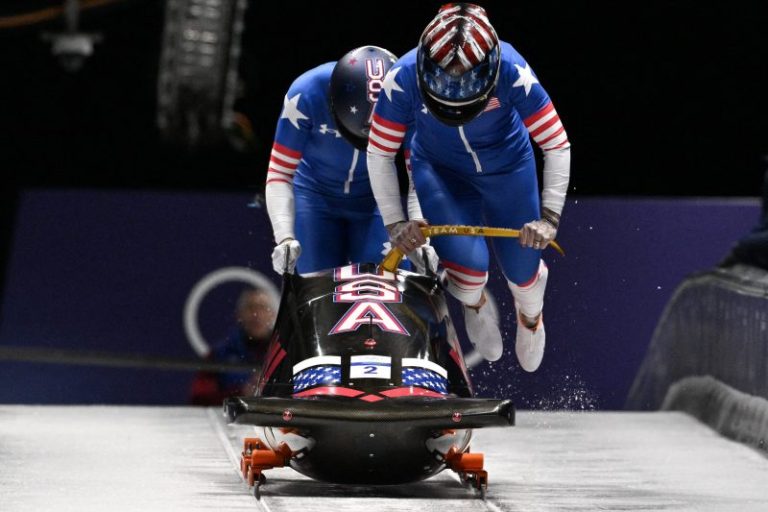
  • Nick Saban is not around to save SEC football anymore. But, would Saban coming out of retirement rally the SEC? Probably not much.
  • As the SEC descends, the Big Ten grows in strength.
  • Saban saw writing on the wall: NIL and transfer free agency would strip away at Alabama and SEC chokehold on power.

In any case, he’s not around to save SEC football anymore. The once-mighty conference is knee-deep in a postseason flop, while the GOAT who helped propel the SEC as Alabama’s coach breaks it all down on a television set.

As the SEC descends, the Big Ten grows in strength.

Is the SEC’s loss on its grip of power as simple as Saban retiring? No. That barely scratches the surface.

On this edition of ‘SEC Football Unfiltered,’ a podcast from the USA TODAY Network, hosts Blake Toppmeyer and John Adams debate why the SEC has fallen off its throne as college football’s overlord and why not even Saban could have prevented this.

Toppmeyer says Alabama’s whimpering finish under Indiana’s fist at the Rose Bowl shows just how far the SEC has fallen. He compares the Tide to a Big Ten team that finished 9-4.

Even Paul Finebaum, generally a staunch supporter of the SEC, says this postseason has been a “terrible” showing for the conference where it “Just Means More.”  

The SEC’s humbling outcomes include Tennessee losing to Illinois and Vanderbilt falling to Iowa, a pair of Big Ten flexes in bowl games. Indiana didn’t just flex on Alabama. It annihilated the Tide.

Here’s the upshot:

Did the SEC relinquish its perch because Nick Saban retired?

Toppmeyer: No. It’s the other way around. Saban had the foresight to realize the SEC and Alabama would have a tougher time maintaining its edge in a landscape where donors could openly pay players and athletes could transfer without penalty. He saw the writing on the wall and got out.

Give Saban his flowers. From the 2006 through 2022 seasons, a 17-year span, the SEC produced 13 national champions. Saban delivered six of those titles. His last came in the 2020 season. Notably, that was the final season before NIL and transfer free agency began.

Saban perfected the blueprint for the landscape before NIL and transfer free agency. Kirby Smart learned Saban’s blueprint and used it to win back-to-back national titles at Georgia.

College football’s evolutions since 2021 made it so that Saban’s sign, stockpile and develop blueprint isn’t the only way to pursue greatness.

Adams: No. The SEC didn’t stumble because Saban retired. Saban retired, because he knew the SEC (and Alabama) would stumble. Once it became harder for coaches to control the athletes, Saban wanted no part of this.

Why has the SEC slipped?

Toppmeyer: You can’t point to just one thing. A number of factors contributed to this. The SEC’s gleaming facilities, competitive recruiting budgets, unbridled fan and donor passion, and prime location in a portion of the country that pumps out premier recruits gave it a leg up in the era before NIL and transfer free agency.

Plus, the SEC sort of mastered the art of recruiting in a time before above-board pay-for-play, if you catch my drift. Even beyond the SEC’s footprint, before NIL, why wouldn’t a top prospect from California or Texas want to play for a blue blood like Alabama and compete inside the SEC’s cathedrals, while prepping for the NFL?

SEC schools, by and large, acquired the most high school talent, and retaining talent was easier within the old rules structure. Plus, the SEC generally attracted the nation’s best coaches.

Now that anyone can buy players, booster bucks are spreading out the talent to places like Texas Tech, Miami and lands in between. Schools that don’t sit in fertile high school recruiting terrain (see Indiana) can pack a punch by nabbing instant-impact transfers who come with experience.

The SEC still holds good cards, but it doesn’t horde them like before the 2021 rules changes.

Adams: Well said. I’ll add one more item for consideration. Used to be, players aimed to use college ball to set them up for NFL value. The best players were in the SEC, so that’s where the top recruits wanted to be, too.

It’s like Frank Sinatra sang about New York: If you can make it there, you can make it anywhere.

If you could make it in the SEC, you could make it in the NFL.

Now, players don’t have to wait for the NFL to cash in on their value. They can cash checks from a West Texas billionaire just as easily as they can cash checks in Alabama. Oregon’s got money, too. And Indiana. And Miami.

The talent’s getting spread out, because players are cashing in on their value now, and striking deals across the land, instead of everyone gravitating to one conference that served as the NFL’s minor leagues.

So, is the SEC still the top football conference?

Toppmeyer: No. The Big Ten has that claim right now.

You can’t argue the facts. The Big Ten has produced the past two national champions and is well positioned to produce another, with Indiana and Oregon in the semifinals. The B1G’s crème de la crème has become sweeter than the SEC’s. The SEC’s down-ballot depth advantage eroded, too. Iowa showed us that by handling Vanderbilt. The SEC remains a top-two conference, but it’s staring up at the Big Ten.

Adams: No. Advantage, Big Ten.

The SEC’s best argument at the moment might amount to: “Our last-place team is better than the Big Ten’s last-place team.” What a meek argument that is. That’s a loser’s battle cry.

Later in the episode

∎ Toppmeyer fesses up: He wishes he could make one change to his Heisman ballot, involving an SEC quarterback.

CFP semifinal picks against the spread!

Toppmeyer’s CFP picks (picks in bold):

∎ Oregon vs. Indiana (-4)

∎ Miami (-3.5) vs. Mississippi

Season record: 42-41 (3-1 last week)

Adams’ CFP picks (picks in bold):

Oregon vs. Indiana (-4)

∎ Miami (-3.5) vs. Mississippi

Season record: 44-39 (2-2 last week)

Blake Toppmeyer is the USA TODAY Network’s national college football columnist. John Adams is the senior sports columnist for the Knoxville News Sentinel. Subscribe to the SEC Football Unfiltered podcast, and check out the SEC Unfiltered newsletter, delivered straight to your inbox.

This post appeared first on USA TODAY
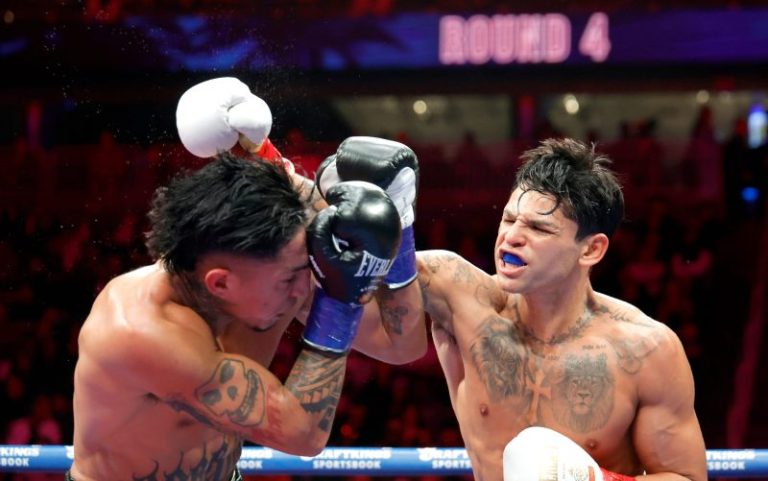
There’s an old saying about what NFL means for players and coaches who fail to meet expectations – Not For Long.

While there’s a short list of coaches with real staying power, the ranks of longest-tenured NFL head coaches is being rearranged this week, most notably after the Baltimore Ravens on Jan. 6 fired John Harbaugh, ending the Super Bowl-winning coach’s 18-year run with the franchise.

Harbaugh’s tenure was second-longest among active NFL coaches, behind only Mike Tomlin of the Pittsburgh Steelers. Tomlin is preparing the Steelers for an AFC wild-card showdown against the Houston Texans on Jan. 12 after Ravens kicker Tyler Loop missed the potential game-winning kick in the Steelers’ 26-24 win over the Ravens that clinched the AFC North title on Jan. 4.

Tomlin hasn’t been immune to calls for the Steelers to part ways with their longtime coach this season, but that conversation will be shelved as long as the Steelers remain Super Bowl contenders.

For now, here’s a look at the longest-tenured NFL coaches, which aside from Harbaugh was also changed by the Cleveland Browns’ firing of Kevin Stefanski (six years in Cleveland) on Jan. 5, this year’s ‘Black Monday.’

For those wondering, Curly Lambeau in Green Bay (1921-49) and Tom Landry in Dallas (1960-88) are tied for the longest tenure leading one team at 29 seasons.

1. Mike Tomlin, Pittsburgh Steelers

  • Age: 53
  • Number of seasons: 19
  • Record with Steelers (through 2025 regular season): 193-114-2 (.628)
  • Playoff berths (Super Bowls): 13 (2; won Super Bowl 43, lost Super Bowl 45)

2. Andy Reid, Kansas City Chiefs

  • Age: 67
  • Number of seasons: 13
  • Record with Chiefs: 149-64 (.700)
  • Playoff berths (Super Bowls): 10 (4; won Super Bowl 54, lost Super Bowl 55, won Super Bowl 57, won Super Bowl 58, lost Super Bowl 59)

T3. Sean McDermott, Buffalo Bills

  • Age: 51
  • Number of seasons: 9
  • Record with Bills: 98-50 (.662)
  • Playoff berths: 8

T3. Sean McVay, Los Angeles Rams

  • Age: 39
  • Number of seasons: 9
  • Record with Rams: 92-57 (.617)
  • Playoff berths (Super Bowls): 7 (2; lost Super Bowl 53, won Super Bowl 56)

T3. Kyle Shanahan, San Francisco 49ers

  • Age: 46
  • Number of seasons: 9
  • Record with 49ers: 82-67 (.550)
  • Playoff berths (Super Bowls): 5 (1; lost Super Bowl 54, lost Super Bowl 58)

T6. Matt LaFleur, Green Bay Packers

  • Age: 46
  • Number of seasons: 7
  • Record with Packers: 76-40-1 (.654)
  • Playoff berths: 6

T6. Zac Taylor, Cincinnati Bengals

  • Age: 42
  • Number of seasons: 7
  • Record with Bengals: 52-63-1 (.453
  • Playoff berths (Super Bowls): 2 (1; lost Super Bowl 56)

T8. Dan Campbell, Detroit Lions

  • Age: 49
  • Number of seasons: 5
  • Record with Lions: 48-36-1 (.571)
  • Playoff berths: 2

T8. Nick Sirianni, Philadelphia Eagles

  • Age: 44
  • Number of seasons: 5
  • Record with Eagles: 59-26 (.694)
  • Playoff berths (Super Bowls): 5 (2; lost Super Bowl 57, won Super Bowl 59)

T10. Mike McDaniel, Miami Dolphins

  • Age: 42
  • Number of seasons: 4
  • Record with Dolphins: 35-33 (.515)
  • Playoff berths: 2

T10. Todd Bowles, Tampa Bay Buccaneers

  • Age: 62
  • Number of seasons: 4
  • Record with Buccaneers: 35-33 (.515)
  • Playoff berths: 3
This post appeared first on USA TODAY
Ottawa Senators GM Steve Staios’ ‘state-of-the-union’ speech to local reporters last week raised eyebrows as his club tries to stay in contention for a playoff berth in the Eastern Conference.

Staios attempted to temper fan expectations, citing the club’s struggles, the parity around the league and their goaltending situation.

Meanwhile, reports from Postmedia say Staios continues to shop aggressively in the trade market seeking a right-shot defenseman and a depth forward, with the defense being the priority.

The Senators revisited their interest in Calgary Flames defenseman Rasmus Andersson, per a report. They’re not the only club interested in the 29-year-old blueliner, as the Vegas Golden Knights, Dallas Stars, Toronto Maple Leafs and Los Angeles Kings are believed to be among the suitors.

Some teams have asked Staios about prospect defensemen Carter Yakemchuk and Logan Hensler, but he doesn’t want to part with those promising youngsters. That’s understandable, as the Senators’ prospect pipeline is not as well-stocked as it once was.

Meanwhile, speculation persists over Kiefer Sherwood’s future with the Vancouver Canucks.

On Saturday, Sportsnet’s Elliotte Friedman reported the Canucks made another contract offer to the30-year-old right winger. However, he said that a significant gap remains between the two sides, adding that there’s no timetable for a trade or an agreement on a contract.

According to Ben Kuzma and Patrick Johnston of The Province, the possibility of the Canucks retaining Sherwood is “highly unlikely.” There’s not much interest in tripling his $1.5-million cap hit, and his style of play could fetch a good return from contenders such as the Dallas Stars and Boston Bruins.

Friedman also provided an update on Edmonton Oilers winger Andrew Mangiapane after he was a healthy scratch on Saturday for the second time in three games.

The Oilers signed Mangiapane to a two-year contract last July, but the 29-year-old left winger struggled to produce despite seeing top-six minutes during the first two months of this season. Being scratched from a Dec. 29 game against the Winnipeg Jets stoked speculation that he could be traded.

Friedman believes there are some clubs interested in Mangiapane, mentioning the Anaheim Ducks had been poking around. Meanwhile, David Staples of the Edmonton Journal indicated that NHL insider Frank Seravalli suggested the Winnipeg Jets and New Jersey Devils as potential trade partners.

For action-packed issues, access to the entire magazine archive and a free issue, subscribe to The Hockey News at THN.com/free. Get the latest news and trending stories by subscribing to our newsletter here. And share your thoughts by commenting below the article on THN.com or creating your own post in our community forum.

This post appeared first on USA TODAY

Perth, Australia (ABN Newswire) – Altech Batteries Ltd (ASX:ATC,OTC:ALTHF) (FRA:A3Y) (OTCMKTS:ALTHF) announced that binding conditional funding approval in the amount of 46.11 million Euro has now been granted for the CERENERGY(R) Sodium-Chloride Solid-State battery project in Saxony, Germany. The grant approval materially derisks project funding and supports progression toward construction of the planned 120 MWh CERENERGY(R) battery manufacturing facility in Saxony, Germany.

Highlights

– Altech Batteries GmbH’s CERENERGY(R) battery project has received conditional binding funding approval under Germany’s federal ‘STARK’ economic development program.

– The approval relates to a grant covering approximately 30% of eligible project CAPEX, with funding of up to EUR46.11M.

– The funding commitment is conditional on achieving full project financial close by 30 June 2026 and parliamentary approval of funds under Germany’s 2026 Federal Budget.

Conditional Binding Funding Commitment

The funding is being provided as part of the federal STARK program, which is supported by the Federal Ministry for Economic Affairs and Energy in cooperation with the EU. The aim of this program is to lead regions undergoing structural change into an ecologically, economically and socially sustainable future.

With the approval of the funding, the project has successfully completed the second and decisive stage of the approval process. The funding covers approximately 30% of the eligible investment costs and represents a significant milestone for the construction of the planned 120 MWh CERENERGY(R) battery factory in Germany.

This decision underscores the importance of the innovative CERENERGY(R) technology, which is being developed in collaboration with the Fraunhofer Society. The Sodium-Chloride Solid-State battery offers a safe, sustainable and strategically independent alternative to lithium-ion batteries and is expected to play an important role in future stationary energy storage solutions – especially for the European market.

Mr Daniel Raihani, Managing Director & Chief Executive Officer, commented ‘Securing conditional binding funding approval of up to EUR46.11 million under Germany’s STARK program is a major milestone for the CERENERGY(R) project. The support reflects the strategic importance of establishing advanced, nonlithium energy storage manufacturing capability in Europe and recognises the technical progress achieved to date in collaboration with Fraunhofer IKTS.

‘Importantly, the grant materially de-risks the project’s capital structure by covering approximately 30% of eligible investment costs and provides a strong foundation as we progress toward full project financing and construction of the planned 120 MWh production facility in Saxony, Germany.

‘We remain focused on completing financial close by mid-2026 and advancing the CERENERGY(R) technology toward commercial deployment to support long-duration, safe and sustainable stationary energy storage solutions for the European market’.

As is customary for projects of this size, the funding commitment is subject to final financial close of the CERENERGY(R) battery project by June 2026 and budgetary approval of the funds in the 2026 federal budget.

*To view tables and figures, please visit:
https://abnnewswire.net/lnk/918BT5H8

About Altech Batteries Ltd:

Altech Batteries Limited (ASX:ATC,OTC:ALTHF) (FRA:A3Y) is a specialty battery technology company that has a joint venture agreement with world leading German battery institute Fraunhofer IKTS (‘Fraunhofer’) to commercialise the revolutionary CERENERGY(R) Sodium Alumina Solid State (SAS) Battery. CERENERGY(R) batteries are the game-changing alternative to lithium-ion batteries. CERENERGY(R) batteries are fire and explosion-proof; have a life span of more than 15 years and operate in extreme cold and desert climates. The battery technology uses table salt and is lithium-free; cobalt-free; graphite-free; and copper-free, eliminating exposure to critical metal price rises and supply chain concerns.

The joint venture is commercialising its CERENERGY(R) battery, with plans to construct a 100MWh production facility on Altech’s land in Saxony, Germany. The facility intends to produce CERENERGY(R) battery modules to provide grid storage solutions to the market.

Source:
Altech Batteries Ltd

Contact:
Daniel Raihani
Managing Director
Altech Batteries Limited
Tel: +61-8-6168-1555
Email: info@altechgroup.com

Martin Stein
Chief Financial Officer
Altech Batteries Limited
Tel: +61-8-6168-1555
Email: info@altechgroup.com

News Provided by ABN Newswire via QuoteMedia

This post appeared first on investingnews.com

Here’s a quick recap of the crypto landscape for Monday (January 5) as of 9:00 p.m. UTC.

Get the latest insights on Bitcoin, Ether and altcoins, along with a round-up of key cryptocurrency market news.

Bitcoin and Ether price update

Bitcoin (BTC) was priced at US$94,127.01, up by 3.2 percent over 24 hours.

Bitcoin price performance, January 6, 2025.

Chart via TradingView.

Bitcoin started Monday strong, rising above US$92,000 in early trading before briefly breaking US$94,600, signaling a potential shift in near-term momentum after a bruising finish to 2025.

Research firm 10X said the move reflects a return to more normalized trading volumes and early signs of renewed institutional positioning at the start of the year. The firm notes that Bitcoin is holding above key moving averages, with the 21 day line emerging as a critical support level for maintaining upside bias.

It added that the shift suggests growing expectations for a push toward the US$100,000 level. The rebound follows three consecutive monthly declines — a historically rare pattern that has often preceded January recoveries.

“The strength across crypto and traditional safe havens reflects a rebalancing phase driven by geopolitical risk and liquidity positioning,” said Lacie Zhang, a research analyst at Bitget Wallet.

“In this setup, Bitcoin has room to push toward US$105,000, while Ethereum could test US$3,600, as traders balance inflation risks with crypto’s deflationary characteristics and long-term adoption narrative.’

Zhang said DeFi is currently driving significant growth, with protocols such as Uniswap (UNI) and Aave (AAVE) seeing benefits from improved governance, new revenue-sharing frameworks and institutional investor involvement.

“For large-cap altcoins, XRP and Solana stand out: XRP’s role in cross-border payments and improving regulatory clarity, combined with ETF inflows, could support price ranges of US$5 – US$10, while Solana’s high-throughput ecosystem and network expansion position it for US$500 – US$800 over the next growth phase.

“The renewed surge in memecoin activity reflects improving retail risk appetite,” she added. “It’s not a long-term thesis, but often a precursor to liquidity rotating into higher-quality, utility-driven altcoins as the cycle matures.”

Ether (ETH) was priced at US$3,239.82, up by 3.2 percent over the last 24 hours.

Altcoin price update

  • XRP (XRP) was priced at US$2.31, up by 10.4 percent over 24 hours.
  • Solana (SOL) was trading at US$137.92, up by three percent over 24 hours.

Today’s crypto news to know

Crypto investment products pull in US$47.2 billion in 2025

Global crypto exchange-traded products attracted US$47.2 billion in net inflows in 2025, falling just short of the prior year’s record despite a noticeable slowdown in Bitcoin demand, according to CoinShares.

Bitcoin-focused products added US$26.9 billion, a sharp drop from 2024 levels, as price weakness dampened inflows and modest interest emerged in short-bitcoin vehicles. The cooling in Bitcoin was offset by a surge into select altcoins, led by Ethereum products, which posted US$12.7 billion in inflows.

Meanwhile, XRP and Solana funds followed closely as each recorded multibillion-dollar inflows and triple-digit percentage growth year over year.

Japan signals crypto integration across traditional markets

Satsuki Katayama, Japan’s finance minister, has signaled stronger government backing for integrating digital assets into the country’s stock and commodities exchanges.

Speaking at the Tokyo Stock Exchange, she emphasized the role of exchanges in expanding public access to blockchain-based assets and modern investment tools. She pointed to the US experience with crypto-linked exchange-traded funds (ETFs) as a reference point, even as Japan currently lacks domestically listed crypto ETFs.

Katayama described 2026 as a “digital year,” pledging policy support for exchanges adopting advanced trading technologies. The remarks build on regulatory reforms already underway, including discussions on allowing banks to hold crypto assets and the approval of Japan’s first yen-pegged stablecoin.

Bitget’s tokenized stock milestone and TradFi launch

Bitget’s new Universal Exchange vision has reached two major milestones that signal a major shift in how digital and traditional assets are traded in one place. Bitget announced last week that its tokenized stock volume surpassed US$1 billion, with 95 percent of that total volume occurring in December alone.

Building on that momentum, and following a successful private beta with over 80,000 users, today Bitget officially opened its TradFi trading suite to the public, allowing customers access to 79 different instruments across forex, metals, indices and commodities. These products are traded as contracts for difference and are settled entirely in USDT, meaning crypto-native traders can execute macro strategies without leaving the platform or converting to fiat currency.

During the test phase, XAU/USD recorded over US$100 million in single-day trading volume, one of the highest daily figures observed during the beta.

“Traders want the flexibility to choose between assets in a unified ecosystem,” said Chen.

“They want the freedom to move between crypto and traditional markets as conditions change. TradFi going public is about giving them that accessibility in one place, without friction.”

The move signals a broader shift in how exchanges are evolving, not just as venues for speculation, but as comprehensive gateways to global markets under a unified trading experience.

Securities Disclosure: I, Meagen Seatter, hold no direct investment interest in any company mentioned in this article.

Securities Disclosure: I, Giann Liguid, hold no direct investment interest in any company mentioned in this article.

This post appeared first on investingnews.com

From established players to up-and-coming firms, Canada’s pharmaceutical landscape is diverse and dynamic.

Canadian drug companies are working to discover and develop major innovations amidst an increasingly competitive global landscape. Rising technologies such as artificial intelligence are playing a role in the landscape as well.

Read on to learn about what’s been driving the share prices of the best-performing Canadian pharma stocks.

1. HLS Therapeutics (TSX:HLS)

Year-on-year gain: 26.6 percent
Market cap: C$149.8 million
Share price: C$4.76

HLS Therapeutics focuses on drugs for cardiovascular and central nervous system problems, often through partnerships. The company specializes in acquiring and commercializing pharmaceuticals that address unmet needs, including Vascepa to reduce cardiovascular risk and Clozaril for treatment-resistant schizophrenia.

HLS in-licensed the exclusive rights to the treatments Nilemdo and Nexlizet, both of which are already approved in other countries, from Esperion (NASDAQ:ESPR) in May.

The November 2025 Health Canada approval of LDL-cholesterol lowering treatment Nilemdo represents the most significant catalyst for the company since the launch of Vascepa, positioning HLS as a dominant leader in the Canadian cardiovascular market. The company is targeting Nilemdo’s commercial launch in Q2 2026.

Along with the approval, Health Canada issued a notice of non-compliance for its Nexlizet cholesterol-reducing treatment. According to HLS, the decision was related to chemistry, manufacture and controls data, not clinical data or safety.

Additionally, the company generates revenue from a diversified portfolio of royalty interests on various products marketed by third parties.

2. Satellos Bioscience (TSXV:MSCL)

Year-on-year gain: 14.49 percent
Market cap: C$141.04 million
Share price: C$0.79

Satellos Bioscience is a Canadian pharmaceutical company expanding treatment options for muscle disorders. The company has focused specifically on Duchenne muscular dystrophy, developing therapies that target the specific biological pathways involved in regenerating and repairing muscle tissue.

Its lead candidate, SAT-3247, targets a protein called AAK1, which regulates the activity of stem cells that activate and differentiate new muscle fibers.

In Q4 2025, Satellos administered the first dose to a patient in its 11-month open-label follow-up study for adults who completed its initial Phase 1b trial. The study seeks to demonstrate the lasting impact of the significant functional improvements observed earlier in the year.

On December 9, the company received Investigational New Drug (IND) clearance from the US Food and Drug Administration (FDA) and several other global regulators to initiate BASECAMP, a global Phase 2 randomized, placebo-controlled study to evaluate SAT-3247 in pediatric patients.

3. Knight Therapeutics (TSX:GUD)

Year-on-year gain: 14.29 percent
Market cap: C$592.59 million
Share price: C$6.00

Knight Therapeutics is a specialty pharmaceutical company headquartered in Montreal, Québec. It operates on an acquisition and in-licensing model, obtaining the rights to innovative medicines from global pharmaceutical companies and commercializing them across Canada and Latin America.

The company was originally founded by the former leaders of Paladin Labs, which was acquired by Endo International in 2014. In June 2025, Knight bought the Paladin business back from Endo for C$107 million, adding over 40 products to Knight’s Canadian roster.

The additions, helped drive 32 percent revenue growth year-over-year to a record C$122.55 million in Q3. The company projects its Knight Canada subsidiary will be the company’s top revenue-contributor within two years.

4. BioSyent (TSXV:RX)

Year-on-year gain: 10.07 percent
Market cap: C$146.89 million
Share price: C$12.90

BioSyent is a specialty pharmaceutical company focused on in-licensing or acquiring established, high-margin healthcare products for the Canadian and international markets. Its growth is anchored by brands in iron health and women’s wellness. Its flagship brand, FeraMAX, has been Canada’s leading iron supplement for over a decade.

The company’s 2024 acquisition of Tibella, a treatment for menopausal symptoms, has been a major growth driver. According to its Q3 earnings report. BioSyent’s sales grew 19 percent year-over-year in Canada and 94 percent in the international market.

5. NurExone Biologic (TSXV:NRX)

Year-on-year gain: 6.45 percent
Market cap: C$47.54 million
Share price: C$0.66

NurExone Biologic is behind ExoTherapy, a drug-delivery platform that uses exosomes, which are nano-sized extracellular vesicles, to create treatments for central nervous system disorders, spinal cord injuries and traumatic brain injuries. It is a less invasive alternative to cell transplantation, which requires surgery and carries the risk of rejection.

NurExone’s first nano-drug, ExoPTEN, uses a proprietary sIRNA sequence delivered with the ExoTherapy platform to treat spinal cord injuries. ExoPTEN received orphan drug designation from the US FDA in October 2023.

The company expects to initiate its Phase 1/2a first-in-human trial for acute spinal cord injury in the second half of 2026, targeting patients with traumatic injuries.

It continues to make significant progress, with recent preclinical studies demonstrating strong, dose-dependent vision recovery in glaucoma models and improved motor function in spinal cord injury models.

The company announced plans for a US exosome production facility in Indianapolis, Indiana, in September. According to the release, ‘The GMP compliant site would produce exosomes both for NurExone’s therapeutic pipeline and for a growing business-to-business opportunity in regenerative aesthetics.’

In December, the company began planning for small-scale production of ExoPTEN in Israel to support its clinical trial.

Securities Disclosure: I, Meagen Seatter, hold no direct investment interest in any company mentioned in this article.

This post appeared first on investingnews.com

Investor Insight

Centurion Minerals offers investors an early-stage entry point into a strategically located gold exploration company positioned within one of North America’s most prolific and active mining districts. With a restructured corporate foundation, and a highly experienced geological and corporate finance team, the company is primed for value-creating discoveries.

investingnews.com

Overview

Centurion Minerals (TSXV:CTN) is a Canadian exploration company focused on the acquisition, exploration and development of precious metals projects in the Americas.

The company’s strategy is centered on advancing high-quality, early-stage gold assets through systematic exploration to define drill-ready targets and unlock the discovery potential inherent in its three-part claim package: the Newman, Noseworthy and Hepburn properties. Situated near major operations and new discoveries, these claims benefit from excellent infrastructure, year-round road access and proximity to proven mineralized structural corridors. Centurion intends to increase shareholder value through targeted geophysics, ground truthing and drilling programs designed to reveal new high-grade zones, as well as through potential future acquisitions of complementary gold assets across the Americas.

Backed by a leadership team with decades of exploration, geology, corporate finance and project development experience, Centurion is positioned to capitalize on strong gold market fundamentals and renewed investor interest in junior exploration companies. With a low current valuation and advancing work program, the company provides leverage to both exploration success and broader trends in the gold sector.

Company Highlights

  • Highly prospective gold project in a world-class district located in the central north Abitibi greenstone belt, adjacent to major deposits and producing mines including Hecla Mining’s (NYSE:HL) Casa Berardi mine and Agnico Eagle’s (TSX:AEM) Detour Lake operations.
  • Exceptional closeology advantage, with its Casa Berardi West project situated just 12 km from AMEX Exploration’s (TSXV:AMX) 1.6 Moz “Perron” discovery and along the same structural corridors that have produced multi-million-ounce deposits.
  • Significant historic drilling across the three claim groups, including results up to 38 g/t gold and multiple intervals indicating gold-bearing iron formations and shear zones.
  • Clear exploration strategy including historic data compilation, geophysical surveys, target generation and a planned program to define new mineralized zones.
  • Experienced management and technical team with decades of experience in mineral exploration, and international corporate finance, enhances the potential of uncovering additional exploration opportunities.
  • Low market capitalization and recently reactivated corporate structure, offering investors a low entry point ahead of meaningful upside catalysts.

Key Project

Casa Berardi West Gold Project

The Casa Berardi West project is Centurion’s flagship gold exploration asset, encompassing approximately 6,732 hectares across three contiguous claim groups – Newman, Noseworthy and Hepburn – located 66 km northeast of Cochrane, Ontario. The project sits along structural corridors that host some of the region’s most significant deposits, including Hecla Mining’s Casa Berardi mine (3 Moz past production, plus 4 Moz in reserves and resources), Agnico Eagle’s Detour Lake mine (15 Moz reserve, producing ~659,000 oz of gold per year ), and AMEX Exploration’s Perron discovery (1.6 Moz measured and indicated resource at 6.14 g/t gold).

Location of the three claim groups at Casa Berardi West

Geological Setting & Closeology Advantage

The project is situated within the central north Abitibi Subprovince, an Archean greenstone belt known globally for its prolific endowment of gold and base metals. The claims lie adjacent to geological features associated with multiple major deposits – iron formations, shear zones and VMS trends – creating strong analogues to high-grade gold mines such as the Musselwhite mine in Northern Ontario.

This “closeology” positioning significantly enhances the potential for Centurion’s ground to host similar mineralization.

Historic Results & Target Areas

Historic exploration across the Casa Berardi West project – spanning more than 70 RC and diamond drill holes – has already confirmed the presence of gold-bearing structures and favorable host rocks. Notably, previous work returned multiple samples above 1 g/t gold, including a standout result of 38 g/t gold, demonstrating strong mineralization potential across the claim area.

Significant historic drill results at Newman target

Across the three claim groups, drilling and geophysical surveys have identified key geological features associated with major deposits in the region, including iron formations, shear zones and sulphidized horizons. Several zones of interest remain untested or underexplored, particularly along structural trends that extend from nearby high-grade gold and VMS systems such as the Perron and Normetal areas.

These findings provide Centurion with multiple high-priority target areas for follow-up exploration, forming the foundation for its next phase of geophysical work and upcoming drill targeting.

Management Team

David Tafel – Director, President and CEO

David Tafel brings over 30 years of experience in corporate structuring, strategic planning, financing and executive management across multiple public and private resource companies. He has raised several hundred million dollars for ventures in mining, technology and life sciences, and previously managed private investment funds at Canada’s largest independent securities firm.

Jeremy Wright – Director and CFO

A seasoned financial executive with more than 20 years of experience, Jeremy Wright serves as president & CEO of Seatrend Strategy Group and has held CFO roles across numerous public companies in the resource and technology sectors. His background includes financial management, negotiations and environmental economics, supported by extensive board leadership experience.

Joseph Del Campo – Director

Joseph Del Campo has served as CFO and Interim CEO across several mining companies, including Unigold and First Nickel. With decades of corporate financial leadership and board experience, he contributes deep governance, audit and operational oversight expertise to Centurion’s board.

Mike Kilbourne – Geological Consultant

A veteran geologist with 40+ years of industry experience, Mike Kilbourne has managed over 100,000 metres of drilling across North America and Mexico, worked as a production geologist in multiple mining environments, and generated over 700 exploration targets for private and public companies.

Jamie Lavigne – Geological Consultant

Jamie Lavigne is a senior exploration geologist with more than 30 years of experience in base and precious metals. He has held senior technical roles with major mining companies and specializes in advanced exploration, resource delineation and geological modeling across global mineral belts.

This post appeared first on investingnews.com

MILWAUKEE, WI —The U.S. Speedskating team is complete.

Sarah Warren, who narrowly missed the Olympic team four years ago, secured her spot at the Milano Cortina Games by winning the 500-meter race on Monday night. She was one of four skaters added to the U.S. team in the final day of the Olympic trials.

Zach Stoppelmoor qualified in the 500 meters; Ethan Cepuran got a spot in the mass start; and Giorgia Birkdale was nominated as a team pursuit specialist. They join:

  • Jordan Stolz (500, 1,000, 1,500 meters and mass start)
  • Cooper McLeod (500 and 1,000 meters)
  • Casey Dawson (1,500, 5,000, 10,000 meters and team pursuit)
  • Emery Lehman (1,500 meters and team pursuit)
  • Conor McDermott-Mostowy (1,000 meters)
  • Erin Jackson (500 and 1,000 meters)
  • Brittany Bowe (1,000 and 1,500 meters)
  • Mia Manganello (mass start and team pursuit)
  • Greta Myers (1,500 meters and team pursuit)

Stolz will be a gold-medal favorite in all of his events, while the men’s team pursuit also will be favorites for gold. Jackson and Bowe will be contenders at both of their distances, while Mia Manganello has a chance to medal in the mass start. The women’s team pursuit also has medal potential.

‘I think it’s really good,’ Stolz said when asked to assess the team. ‘I think we have some good (medal) opportunities.’

Warren earning her spot was one of the more emotional moments of the night.

After playing soccer at the University of Illinois, Warren returned to speed skating in 2021. She nearly made the U.S. team for the 2022 Olympics in Beijing, finishing fourth in the 500 meters and fifth in both the 1,000 and 1,500 meters.

She’s had nine knee surgeries over the course of her career, and another on her ankle.

Jackson, the reigning Olympic champion in the 500 meters, had pre-qualified her spot through her success in the World Cups this season. The person with the next-fastest time after a 500-meter race Sunday and another Monday would join her.

Warren was second to Jackson on Sunday. With Jackson not racing Monday, Warren posted the fastest time to clinch her Olympic spot. When she crossed the finish line, Warren screamed and began crying.

The 2026 Milano Cortina Winter Olympics are coming! Sign up for our Chasing Gold newsletter.

This post appeared first on USA TODAY