Author

admin

Browsing

var adServerUrl = “”;
var $el = $( “#video_container-678763” );
var permalink = $el.closest(‘.snet-single-article’).data(‘permalink’);

$el.after( unescape(“%3Cscript src=”” + (document.location.protocol == “https:” ? “https://sb” : “http://b”) + “.scorecardresearch.com/beacon.js” %3E%3C/script%3E”) );

$( document ).one( ‘ready’, function() {
$( “#video_container-678763” ).SNPlayer( {
bc_account_id: “1704050871”,
bc_player_id: “JCdte3tMv”,
//autoplay: false,
//is_has_autoplay_switch: false,
bc_videos: 6404099606112,
is_has_continuous_play: “false”,
section: “”,
thumbnail: “https://www.sportsnet.ca/wp-content/uploads/2026/08/6404099606112-1024×576.jpg”,
direct_url: “https://www.sportsnet.ca/mlb/video/blue-jays-lukes-belts-towering-three-run-homer-to-right-field/”
});
});

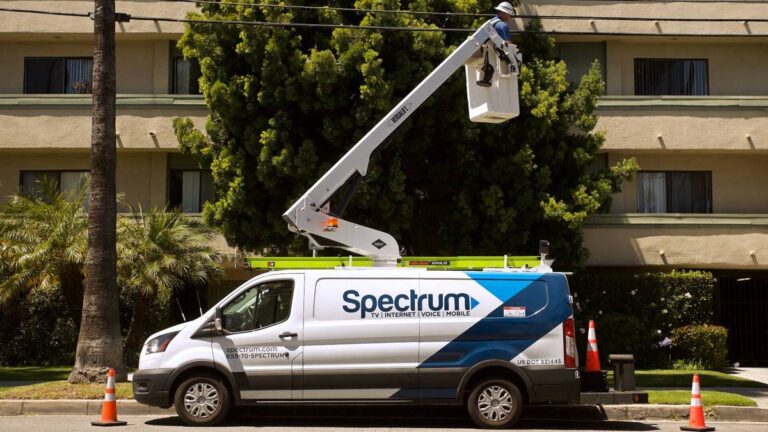
Charter Communications, which operates Spectrum, has completed a billion-dollar acquisition of one of its top rivals as it looks to improve customer retention. 

Spectrum’s cable and broadband businesses have faced significant customer losses for years, and the trend has continued in recent months. In the second quarter of this year, the company lost 172,000 internet customers and 21,000 cable TV customers, according to its most recent earnings report.

The losses come as Spectrum faces growing competition from wireless carriers that are increasingly attracting customers to their fixed wireless and fiber internet services with lower-priced plans and bundled deals. 

Spectrum is also struggling to keep cable TV customers amid the decades-long cord-cutting trend, in which consumers cancel their cable services and switch to streaming platforms to save money. Against this backdrop, the U.S. pay TV industry lost more than 2 million customers in the first quarter of 2026, according to data from MoffettNathanson shared with TheStreet.

Charter completes Cox Communications acquisition

Amid recent headwinds, Charter Communications has finally closed its $34.5 billion acquisition of Cox Communications.

The deal was first announced in May 2025. At the time, Charter CEO Chris Winfrey said in a press release that combining both companies will “create an industry leader” in telecommunications and “augment our ability to innovate and provide high-quality, competitively priced products” to millions of homes and businesses.

The Federal Communications Commission approved the acquisition in February, requiring Charter to commit to several conditions, such as upgrading and expanding its network in rural areas, onshoring Cox’s offshore jobs and adding safeguards to protect against DEI (diversity, equity and inclusion) discrimination. 

Related: Spectrum makes significant decision as customer losses mount

The deal was finalized on Aug. 20 after the California Public Utility Commission (CPUC) voted to approve the transaction on Aug. 13, the last approval needed for the deal to clear. 

In a recent press release, Charter Communications revealed that now that the acquisition has closed, it will change its name to Cox Communications within a year, but will continue to operate as Spectrum across all markets.

“The market has changed considerably over the past decade, and regional providers like Spectrum are competing with national and even global connectivity and entertainment companies,” said Winfrey in the press release.

“Today, with expanded scale, we are better positioned to compete and continue investment in our products and service, tools and platforms, and to further the capability and reach of our Spectrum Fiber Broadband Network,” he continued.

The telecom market has indeed become more challenging for operators to navigate in recent years. In January, Bernstein senior analyst Laurent Yoon warned in an analyst note that the telecom industry is “entering a new era of competition” following a difficult 2025, when quarterly results demonstrated “worsening competitive dynamics,” according to a report from Investing.com.

Charter Communications has completed its acquisition of Cox Communications, a deal worth $34.5 billion.

Elliott Cowand Jr./Shutterstock

What the Charter-Cox merger means for customers 

The Charter-Cox acquisition has created a cable giant that operates in 45 states, serving about 37 million customers.

Spectrum is now offering Cox internet customers a free year of mobile service to those who aren’t already subscribed to Cox Mobile, according to the press release. Spectrum also plans to roll out “its entire suite of products” to all consumers, including existing customers, in former Cox markets. 

Within a year, Spectrum also said that Cox customers will be able to benefit from its “industry-first Customer Service Commitments.” 

This includes its 100% U.S.-based customer service team, which is available 24/7. It also promises to resolve service disruptions “quickly, including same-day technician dispatch when requested before 5:00 p.m.; if not, the next day.”

Additionally, Spectrum commits to crediting customers for outages lasting longer than two hours.

“The addition of Cox to the Spectrum footprint is one that can be celebrated by customers, employees and investors alike,” said Winfrey. “Together, we will bring the best products, at the best price, coupled with the highest level of customer service to more customers across our expanded 45-state Spectrum footprint.”

Charter-Cox merger follows growing telecom trend

The acquisition reflects growing consolidation in the telecom market. More telecom companies have recently opted to join forces to better weather elevated competition. 

For instance, after merging with Sprint in 2020 for $26 million, T-Mobile acquired US Cellular’s wireless operations for $4.3 billion last August

Verizon also closed its $20 billion acquisition of Frontier Communications in January. The carrier also announced in June that it is purchasing Carolina West Wireless, which is shuttering its services on Sept. 30.

More Telecom News:

According to a recent report from consulting firm PwC, 58 U.S. telecom deals were completed through May 2026, showing renewed merger and acquisition momentum.  

PwC said this trend was fueled by increased consolidation among fiber operators, intensifying bundled mobile and broadband offerings from telecom providers, and heightened demand for high-capacity networks to support AI workloads.

“Telecom is at an inflection point,” said Chase Bice, U.S. telecommunications sector deals leader at PwC, in the report. “Operators that build, scale, and secure strategic network assets can better position themselves for consumer and AI-driven growth.”

Related: Spectrum rolls out free offer after steep customer losses

Dogecoin cryptocurrency can be expected to fall further to the next support level 0.8500 – target price for the completion of the active minor corrective wave iv.

  • Dogecoin reversed from round resistance level 0.1000
  • Likely to fall to support level 0.8500

Dogecoin cryptocurrency recently reversed down from the resistance zone between the strong round resistance level 0.1000 (former support from May, as can be seen from the daily Dogecoin chart below), upper daily Bollinger Band and the 61.8% Fibonacci correction of the downward impulse C May. The downward reversal from this resistance zone stopped the previous minor impulse waves 1 – that belongs to the intermediate impulse wave (3) from the end of July.

Given the weakening of the bullish sentiment across the crypto markets today and overbought daily RSI, Dogecoin cryptocurrency can be expected to fall further to the next support level 0.8500 – target price for the completion of the active minor corrective wave iv.

The subject matter and the content of this article are solely the views of the author. FinanceFeeds does not bear any legal responsibility for the content of this article and they do not reflect the viewpoint of FinanceFeeds or its editorial staff.

The information does not constitute advice or a recommendation on any course of action and does not take into account your personal circumstances, financial situation, or individual needs. We strongly recommend you seek independent professional advice or conduct your own independent research before acting upon any information contained in this article.

By almost every measure, Walmart is the country’s largest big-box retailer, which makes it an important barometer for consumer spending.

Which is why its latest earnings report caught some attention.

Comparable sales were up just 2.6% for Q2 FY2027, down from 4.1% during Q1 and marking its slowest comparable sales growth since the start of the pandemic.

But the news wasn’t all bad.

Walmart has continued to gain ground with high-income households, and e-commerce sales jumped 23% globally. Even more importantly, it’s identified several categories beyond grocery where significant growth may be possible.

Fashion is one of them.

Walmart announces Scenario

Walmart has plans to launch an all-new, inexpensive women’s clothing line in the coming weeks, according to an exclusive report from the Wall Street Journal.

The line, called Scenario, will include clothing, bags, and accessories geared at younger shoppers. Most items in the line will be priced at $25 or less in an effort “to appeal to the discount shoppers who are the foundation of Walmart’s business,” WSJ says. 

Traditionally, Walmart hasn’t dominated in the fashion space. 

Shoppers may head to the big-box store to stock up on basics like socks and t-shirts, but they’re heading to other retailers such as Target and Amazon for trendy, fashion-forward pieces to round out their closets.

But now, it seems, Walmart is working to change that.

Over the last seven quarters, the retailer has seen consistent growth in its clothing and accessory categories, WSJ reports. 

Celebrity partnerships, like last spring’s Lee and Kacey Musgraves collaborative line “Kacey Lee,” have played a role in this, but Walmart is on the hunt for an owned, house brand that could provide a stable foundation for long-term growth.

The retailer has had some success with its existing brand, Tried and True, which brings in around $2 billion annually and tends to appeal to shoppers in the 55+ age bracket. 

The line, which primarily consists of elevated basics, is serviceable, but not necessarily widely appealing to a younger, trendier crowd.

“We knew [Walmart wasn’t] servicing all their closet needs,” Denise Incandela, executive vice president of fashion for Walmart U.S., told WSJ. “While our customer gave us credit for extraordinary value, they weren’t giving us credit for style and quality.”

Scenario, then, is the retailer’s attempt to marry the two.

Walmart is adding Scenario, a new owned clothing line, to its offerings this fall. Aimed at younger, more fashion-forward consumers, items will be priced at $25 or less.

Getty Images

Walmart wants more of its shoppers’ fashion spending

Historically, Walmart has earned the bulk of its revenues through grocery, a category with small margins.

But as the retailer navigates more cautious consumers and capitalizes on the recent influx of high-income shoppers, it’s been working to grow higher-margin areas.

More Walmart:

Fashion was identified as a particularly lucrative category fairly early on. Incandela was tasked with rejuvenating Walmart’s approach to apparel nearly a decade ago.

“80% of the money existing Walmart shoppers spent on apparel was at higher-priced retailers, not Walmart,” she told WSJ

That number implies that the retailer’s customers were willing to spend on fashion, just not on the sorts of fashions the company currently offers. 

So Walmart opened a fashion design studio in New York City and got to work building lines like Scenario to attract younger consumers who were shopping for clothes elsewhere.

But launches like Scenario don’t mean the retailer is fully doing away with budget-friendly basic lines such as Tried and True.

“This is an ‘and’ strategy,” Incandela said. “We’re still going to cover those big-volume driving socks and underwear and denim and Ts,” to serve budget shoppers alongside the more elevated items. 

Essentially, the strategy reflects a broader shift in how Walmart views its fashion business. 

The retailer isn’t trying to entirely abandon the value proposition that made it successful. Instead, it’s working to convince shoppers they don’t have to choose between affordability and style.

If Scenario can help Walmart close that gap, the retailer could have an opportunity to capture more of the fashion spending its customers are already doing elsewhere, boosting its overall revenues and establishing it as a go-to spot for the fashion-focused.

Related: DoorDash partners with iconic brands for back-to-school prep

Bitcoin (BTC/USD) remains close to three-month highs after a strong rebound brought digital assets back into focus. The cryptocurrency has gained more than 20% over the past week and approached $80,000, supported by changing conditions in the US bond market, renewed investor demand and a return of the debasement trade. Bitcoin opened above $77,500 on Monday, 24 August, after reaching around $79,500 on Friday. 

US Treasury policy has played an important role in the latest move. The Treasury Department recently announced that it will at least double the maximum size of liquidity-support buybacks for longer-dated government securities from September, increasing the cap to at least $4 billion per operation from $2 billion. The announcement initially pressured longer-term Treasury yields lower and weakened the dollar, creating a more supportive environment for bitcoin and other alternative assets. However, the effect proved relatively short-lived as yields recovered, with concerns around government borrowing, inflation, and the US fiscal outlook continuing to influence the bond market. 

The development has also strengthened interest in debasement trades. Concerns about government debt and the longer-term purchasing power of traditional currencies can increase demand for assets perceived as scarce or less directly tied to sovereign balance sheets. Bitcoin has benefited from this narrative alongside other alternative assets, while the initial decline in US yields provided another tailwind. Short covering also contributed to the speed of the rally, suggesting that positioning has amplified the underlying improvement in sentiment.

Investor demand has provided additional support. US spot bitcoin ETFs recorded strong net inflows over the latest week, indicating that investors have increased their exposure during the rebound. This demand could become particularly important after such a rapid advance, as sustained ETF inflows may help provide a stronger foundation for the rally once the impact of short covering and the initial reaction to the Treasury announcement begin to fade. 

At the same time, activity among existing bitcoin holders presents a more cautious signal. Long-term holders reduced their positions by around 15,800 BTC over the same period, not taking into account the Coldcard-related movements, suggesting some investors are using the latest rise to realise profits accumulated at lower prices. With bitcoin approaching the psychologically area of $80,000, additional distribution could increase selling pressure and make further gains more dependent on fresh demand entering the market. 

The broader macroeconomic environment remains mixed. US Treasury yields have somewhat recovered on Monday, but longer-term borrowing costs remain elevated and the dollar has regained some ground. This leaves bitcoin facing a less straightforward backdrop than during the initial breakout. Expectations of additional Treasury measures and continued institutional demand could remain supportive, while renewed upward pressure on yields or the dollar could challenge the recent momentum. 

“Bitcoin’s latest rally reflects a combination of stronger institutional demand and renewed interest in the debasement trade as investors reassess developments in the US bond market. However, the initial impact of the Treasury’s buyback announcement on yields has started to fade, while long-term holders appear to be taking advantage of higher prices to realise some profits. This makes the strength of fresh demand increasingly important. Continued ETF inflows could help absorb additional supply and keep bitcoin supported, while higher US yields, a stronger dollar or more pronounced profit-taking could make it harder to sustain the recent pace of gains,” says Christopher Tahir, Senior Financial Markets Strategist at Exness. 

The focus now remains on whether institutional demand can continue to absorb selling from long-term holders following bitcoin’s sharp advance. Developments in the US Treasury market will also remain important as investors assess whether expanded buybacks can have a lasting influence on longer-term yields. With bitcoin already recording substantial gains over the past week, the balance between fresh demand and profit-taking could determine whether prices make another attempt at $80,000 or move into a period of consolidation.

Verizon is once again raising its prices, this time impacting several discounted customer perks. 

The carrier raised eyebrows earlier this year when it increased the monthly price of its Netflix and HBO Max streaming bundle from $10 to $13 on May 6. A day later, it hiked the price of its Unlimited Ultimate wireless plan, which has a three-year price lock guarantee, by $5.

The pricing changes came after Verizon CEO Dan Schulman vowed to be more cautious about enforcing price increases following the loss of roughly 2.25 million wireless customers over the past three years. He reaffirmed this promise on an earnings call in July.

“We will not raise prices without adding corresponding value for our customers,” said Schulman. 

Verizon increases prices of several streaming perks

Despite this effort, Verizon has decided to hike the monthly prices of its Disney+, Hulu, ESPN+ plan perks. 

Its Disney+, Hulu, ESPN+ (with ads) perk is increasing from $10 per month to $12 per month, according to a new notice on Verizon’s website

The monthly price of its Disney+, Hulu, ESPN+ (premium upgrade ad-free) perk will also climb from $20 to $23, while For Movie Lovers on Simplicity will be $25 per month, up from $23. 

Verizon’s non-perk Legacy Disney Bundle will also spike from $24.99 to $27.99 per month. However, the Legacy Disney Bundle perk will remain at $15. 

Related: Verizon hits a snag in attracting customers to a key service

On its website, Verizon states that the rate adjustments take effect on Sept. 17 and blames Disney for these upcoming changes. 

“At Verizon, we’re dedicated to bringing you the best entertainment for the best price,” said Verizon. “As our partners at Disney invest in new content and adjust the rates of their services, we periodically need to adjust our perk rates.”

Disney recently confirmed several price increases for its streaming bundles. Beginning on Sept. 17, its Disney+, Hulu, ESPN Select Bundle Basic plan (includes ads) will spike from $19.99 per month to $21.99. 

The premium version of this plan (without Disney+ and Hulu ads) is also jumping from $29.99 to $32.99.

Additionally, its legacy Disney+, Hulu, ESPN Select bundle will increase from $24.99 to $27.99. This bundle includes Disney+ without ads and Hulu and ESPN Select with ads. It is no longer available to new customers, and existing customers cannot enroll in it.

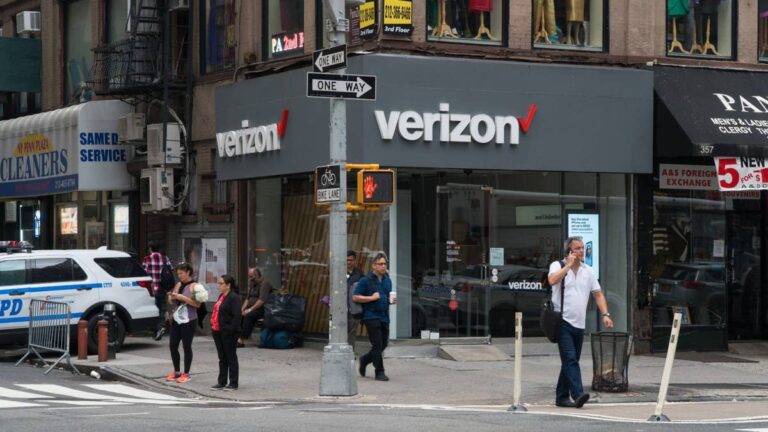
Verizon is raising the monthly prices of its Disney+, Hulu, ESPN+ plan perks.

Shutterstock/Brandon Klein

Verizon customers aren’t happy about the upcoming changes

The upcoming pricing changes are already frustrating some Verizon customers, with a few taking to social media platform Reddit to reveal they are canceling their streaming perk to cut costs.

“These costs are crazy. And they wonder why people are jumping ship. Streaming has become as bad as basic cable, and they keep cancelling shows prematurely too!” wrote one consumer on Reddit

More Verizon News:

“I cancelled my perk. I get espn unlimited through youtube tv, so no reason for me to pay verizon extra and not just sign up for disney+ and hulu no ads directly through disney for $20,” wrote a Verizon customer.

“I was keeping my play more plan for Disney and espn. I don’t give a sh-t about hulu. Now that YouTube tv (I’m not dropping that any time soon) has espn unlimited I think I’m gonna drop Verizon for us mobile and just get stand alone Disney. Should still work out a bit cheaper,” wrote another.

It is no surprise that customers are irritated by rising streaming costs. According to a survey by Reviews.org in June, 52% of Americans have canceled or downgraded a streaming service because of a price hike.

Also, 43% said they are likely to cancel at least one streaming service in the next three months, while 55% said they use free ad-supported streaming services because they cannot justify paying for another subscription.

Michael Goodman, a senior analyst at Parks Associates, said in a report from TheWrap in April that U.S. consumers are reaching their limit with streaming price increases amid economic uncertainty. 

“We are in a period of trade-offs from a consumer’s perspective,” said Goodman. “The cost of everything is going up. There’s a lot of uncertainty both in the world and in the U.S. as to where things are going to go.

“People are holding onto their dollars a little bit tighter because of that uncertainty and it’s going to lead them to make really hard decisions on what is necessary and what’s a must-have and what’s a nice-to-have,” he continued. “And those nice-to-haves, frankly, are where cuts are going to be.”

Related: Verizon acquires 35-year-old wireless carrier as it shuts down

var adServerUrl = “”;
var $el = $( “#video_container-692083” );
var permalink = $el.closest(‘.snet-single-article’).data(‘permalink’);

$el.after( unescape(“%3Cscript src=”” + (document.location.protocol == “https:” ? “https://sb” : “http://b”) + “.scorecardresearch.com/beacon.js” %3E%3C/script%3E”) );

$( document ).one( ‘ready’, function() {
$( “#video_container-692083” ).SNPlayer( {
bc_account_id: “1704050871”,
bc_player_id: “JCdte3tMv”,
//autoplay: false,
//is_has_autoplay_switch: false,
bc_videos: 6403978291112,
is_has_continuous_play: “false”,
section: “”,
thumbnail: “https://www.sportsnet.ca/wp-content/uploads/2026/08/6403978291112-1024×576.jpg”,
direct_url: “https://www.sportsnet.ca/mlb/video/how-blue-jays-are-in-control-of-their-own-destiny-heading-into-final-stretch/”
});
});

Tesla’s December options board prices a 37% rally and a 31% collapse as very nearly the same bet. The $500 call, 37.4% above Friday’s close, carries a risk-neutral probability of about 10.5%. The $250 put, 31.3% below it, prices at about 10.8%. Both are heavily owned — 17,062 and 11,341 contracts of open interest on the 18 December 2026 expiry. For most large-cap equities the downside tail is priced meaningfully fatter than the upside one. In Tesla’s case the two tails are, to within a third of a percentage point, the same size. That symmetry is the single most useful input into any TSLA price prediction, and it is not what the volatility surface of a normal $1.4tn company looks like.

The reason is that Tesla’s implied-volatility curve is a smile that leans right. At-the-money implied volatility for December is 45.1%, per Cboe delayed quotes. The $200 put — a 45% crash — trades at 58.0%, a 12.9-point premium. But the $800 call trades at 62.8% and the $990 call at 70.7%, a 25.6-point premium over at-the-money. The market charges more to insure Tesla’s upside than its downside. Tesla closed Friday 21 August at $362.86, up 5.14% after Nevada regulators cleared a permit for up to 5,000 Cybercab robotaxis in Las Vegas — but still 25.9% below its December 2025 high and below both its 50-day and 200-day moving averages. This is not being traded as an equity. It is being traded as a long-dated call option on outcomes that have not happened yet.

The Insight: 41% of the Call Interest Is a Lottery Ticket

Run the December call chain by strike and the positioning is extraordinary. Excluding a handful of dead adjusted-option strikes that carry open interest but no live market — the $5 and $10 lines quote 0.00 bid against 0.01 ask with zero volume — 40.7% of Tesla’s December call open interest sits at strikes of $600 or higher. That is more than 65% above spot, with four months to run.

The single largest call position on the entire board is the $990 strike, with 19,369 contracts. It is a genuine market, not a stale artefact: 51 cents bid against 56 cents offered, with 684 contracts traded on Friday. Its implied probability of finishing in the money is 0.4%. Behind it sit 12,782 contracts at $710 (1.6%) and 10,332 at $800 (0.9%).

Set that against the $500 strike used as this article’s bull case — 17,062 contracts at a 10.5% probability — and the shape of the demand becomes clear. A meaningful share of Tesla’s option flow is not expressing a view on whether the company earns more money next year. It is buying convexity on a discontinuous outcome: robotaxi at scale, Optimus at scale, or neither.

Having tracked how this stock reprices around news, that framing explains something the fundamentals cannot. Tesla fell 14.5% in a single session on 23 July, its worst day of the year, the day after publishing a shareholder deck that told investors the company was entering “its largest and most exciting period of investment.” Alphabet fell 7% the same day. As we wrote at the time, the market punished AI spending. Six sessions later Tesla printed its 52-week closing low of $298.32. It has since recovered 21.6%. Nothing about the earnings base changed across that 35% round trip.

Key Facts

  • TSLA closed at $362.86 on Friday 21 August 2026, +5.14%; 52-week closing range $298.32–$489.88 — daily closes via stockanalysis.com
  • Market capitalisation $1.43tn on 3.9495bn shares outstanding — Tesla 10-Q, 16 July 2026
  • Trailing twelve-month diluted EPS $1.08336x earnings; the $250 bear case is still 231xderived from Tesla SEC filings
  • Diluted EPS fell from $4.30 (FY2023) to $1.08 (FY2025), a 75% decline; H1 2026 EPS of $0.45 is exactly flat against H1 2025 — Tesla SEC filings
  • December at-the-money implied volatility 45.1%; $990 call implied volatility 70.7%Cboe delayed quotes, 21 August 2026
  • 40.7% of December call open interest sits at strikes ≥ $600; largest single call strike is $990 with 19,369 contracts — Cboe
  • Tesla passed $100bn of trailing-twelve-month revenue for the first time; Cybercab production began at Gigafactory Texas — Tesla Q2 2026 shareholder deck, 22 July 2026

Where the $500 Bull and $250 Bear Numbers Come From

These are not analyst targets. They are two of the most heavily owned strikes on Tesla’s December expiry, and the probabilities are calculated from each strike’s own implied volatility using N(d₂) — the risk-neutral probability of finishing in the money, which is a lower and more honest number than the option’s delta that most commentary quotes instead.

Strike Implied vol Skew vs ATM Probability at 18 Dec Open interest Move
Above $990 70.7% +25.6pp 0.4% 19,369 +172%
Above $800 62.8% +17.7pp 0.9% 10,332 +120%
Above $600 52.7% +7.6pp 3.7% 12,944 +65%
Above $500 — bull case 48.1% +3.0pp 10.5% 17,062 +37%
Above $400 45.2% +0.2pp 32.7% 13,167 +10%
Below $300 46.1% +1.0pp 25.5% 11,920 −18%
Below $250 — bear case 49.7% +4.7pp 10.8% 11,341 −31%
Below $200 58.0% +12.9pp 4.5% 11,268 −45%

A one-standard-deviation move at 45.1% implied volatility spans roughly $282 to $470 by expiry. Both the bull and bear cases sit just outside that band — which is precisely why both price near 10%, and why anyone quoting $500 as a base case is quoting a one-in-ten outcome.

The comparison that makes this concrete is a stock we analysed two days ago. In our Apple bull and bear analysis, at-the-money implied volatility for the same expiry was 26.7% and the skew ran the conventional way: downside strikes dearer than at-the-money, upside strikes cheaper. Tesla inverts that. Same expiry, same market, opposite shape — because Apple’s uncertainty is about a multiple and Tesla’s is about whether two entirely new product categories exist at scale.

Company Response: Building Through the Punishment

Tesla’s own Q2 2026 shareholder deck is unusually direct about what it is doing with shareholder money. The company reported $0.4bn of GAAP operating income, $1.1bn of GAAP net income, and passed $100bn of trailing-twelve-month revenue for the first time. It also confirmed that Cybercab production began at Gigafactory Texas, that Tesla Semi remains on track for production this year in Nevada, and that Optimus construction started at Fremont after the Model S and X lines were decommissioned.

The deck identifies its own bottleneck plainly: battery pack capacity is “the main limiting factor to near-term vehicle production volume increase.”

On the earnings call the same day, Elon Musk, Tesla’s chief executive, was blunt about the hardest of the three ramps. “This is going to be the hardest product to scale manufacturing that we’ve ever made at Tesla, because everything on the robot is new,” he said of Optimus.

Ashok Elluswamy, Tesla’s vice-president of AI, gave the robotaxi programme’s record on the same call: more than “380,000 miles of unsupervised Robotaxi across six cities in two different states with zero notable incidents.”

Worth noting that those two figures are not the same measure and do not quite line up — the shareholder deck states robotaxi “is now live in seven major metros,” while Elluswamy’s unsupervised-mileage figure covers six cities in two states. The deck’s count includes supervised operation; the call’s figure is the narrower unsupervised record. Anyone modelling the robotaxi ramp should use the second number, not the first.

Retail positioning has meanwhile been rotating. As we reported, retail investors piled into SpaceX while dumping Tesla, and the Musk complex has since seen 319 million SpaceX shares unlock. For a stock whose valuation rests on belief in a single operator’s execution, where that operator’s other assets are absorbing retail capital is not a trivial detail.

Market Impact and Data Analysis: Even the Bear Case Is Expensive

Here is the number that reframes the bear case entirely.

Tesla’s trailing twelve-month diluted EPS is $1.08, derived from its SEC earnings-per-share filings with Q4 2025 backed out of the FY2025 annual figure. At $362.86 the stock trades on 336 times trailing earnings. At the $500 bull case it would be on 463 times. And at the $250 bear case it would still be on 231 times.

That is the whole point. A 31% decline in Tesla does not produce a cheap stock. It produces a stock at 231x earnings — still one of the most expensive large caps in the market. The bear case is not a de-rating to value; it is a partial deflation of an option premium. Investors reaching for $250 as a “floor” are reaching for a level that still embeds enormous expectations.

Tesla Apple (same expiry)
Dec ATM implied vol 45.1% 26.7%
Skew direction Right-leaning (upside dearer) Left-leaning (downside dearer)
Trailing P/E 336x 35.5x
P/E at the bear case 231x 28.7x
Bull / bear probability 10.5% / 10.8% 20.4% / 11.7%
What the bear case requires Optionality deflates Multiple compresses

The synthesis that matters, though, is on the earnings line, and it cuts against the bearish read. Tesla’s diluted EPS collapsed from $4.30 in FY2023 to $2.04 in FY2024 to $1.08 in FY2025 — a 75% decline over two years. But H1 2026 EPS of $0.45 is exactly flat against H1 2025’s $0.45. The collapse has stopped. It has not reversed, and flat is not growth, but the second derivative turned some time in the last twelve months while the narrative was still about decline.

Technically the stock has not confirmed that. At $362.86 Tesla sits just below its 50-day moving average of $365.86 and well below its 200-day of $403.32 — the structure of a downtrend that has bounced hard rather than an uptrend that has resumed. Realised volatility over the last 30 sessions is 57.6%, above the 45.1% the December options are charging, which is one reason those options do not look obviously expensive despite the headline level.

Regulatory Tension: Permission Is Now the Product

Friday’s 5.14% move came from a regulator, not a factory. Nevada approved a permit allowing up to 5,000 Cybercab robotaxis in Las Vegas, alongside confirmation that Tesla Semi is heading to Europe.

That is the structural shift in this story. For most of Tesla’s life the binding constraint was manufacturing. For the robotaxi business the binding constraint is jurisdictional approval, granted state by state and city by city, on timelines no company controls. A permit in Nevada does not generalise to California, and an incident anywhere resets the clock everywhere.

This is also why the AI-spending question is sharper for Tesla than for its peers. Tesla’s investment programme runs through its relationship with xAI as well as its own silicon and factories, and the payoff depends on permissions that are not on any capex schedule. Compare that with a pure infrastructure build such as our Nvidia analysis, where demand is contracted and the risk is digestion rather than authorisation.

What Happens Next: Three Predictions

1. Realised volatility stays above implied into December. Tesla has printed six sessions of ±6% or worse in the last 90 trading days, including −14.5% and +8.5%. Thirty-day realised volatility is 57.6% against 45.1% implied for December. With robotaxi permits, Optimus milestones and Semi production all landing inside the window, the historical pattern says the December options are more likely to prove cheap than rich.

2. The stock resolves between $300 and $470 at expiry, with $350–$420 most likely. That band captures the bulk of the risk-neutral distribution: roughly 33% above $400, about 26% below $300, leaving the middle as the modal outcome. Both headline cases are one-in-ten events and should be treated as such.

3. The next repricing comes from a permit or an incident, not from earnings. Q3 results, which Tesla will post to its investor relations site, will show whether operating expenses decelerate, and that matters. But Friday demonstrated the sensitivity clearly: a single state permit moved $70bn of market capitalisation. With 40.7% of call open interest sitting more than 65% out of the money, the positioning is built for exactly that kind of discontinuous headline — which is also why the downside is nastier than the 45% implied volatility suggests if the headlines run the other way.

The honest summary: Tesla is priced as an option, its option market knows it, and both tails are priced alike. The earnings base has stopped deteriorating, which the bears have not fully absorbed, and it has not started growing, which the bulls have not fully absorbed either. At 336 times earnings, the burden of proof sits with the ramps.

Frequently Asked Questions

What is the TSLA stock prediction for the end of 2026?
Tesla’s December 2026 option chain implies roughly a 10.5% probability of finishing above $500 and about a 10.8% probability of finishing below $250, calculated from each strike’s implied volatility. A one-standard-deviation range at 45.1% at-the-money implied volatility spans approximately $282 to $470 by the 18 December expiry.

Why did Tesla stock jump on 21 August 2026?
Tesla rose 5.14% to close at $362.86 after Nevada regulators approved a permit for up to 5,000 Cybercab robotaxis in Las Vegas, and after the company confirmed its electric Semi is heading to Europe. The move added roughly $70bn of market capitalisation on regulatory news rather than financial results.

What is Tesla’s P/E ratio?
Using trailing twelve-month diluted EPS of $1.08 derived from Tesla’s SEC filings, TSLA trades at about 336 times earnings at $362.86. The $500 bull case equates to 463x and the $250 bear case to 231x — meaning even a 31% decline would leave Tesla on more than 200 times trailing earnings.

Are Tesla’s earnings still falling?
They have stopped falling. Diluted EPS dropped from $4.30 in FY2023 to $2.04 in FY2024 and $1.08 in FY2025. But first-half 2026 EPS of $0.45 is exactly flat against the same period of 2025. The decline has flattened rather than reversed.

Why is Tesla’s implied volatility higher on calls than puts?
Because a large share of Tesla option demand is buying upside convexity on robotaxi and Optimus outcomes rather than hedging downside. The $990 December call carries 70.7% implied volatility against 45.1% at the money, and 40.7% of December call open interest sits at strikes of $600 or above. That is the opposite of the usual equity skew.

How many robotaxis is Tesla actually running?
Tesla’s Q2 2026 shareholder deck states the robotaxi rollout “is now live in seven major metros.” On the same day’s earnings call, VP of AI Ashok Elluswamy cited more than 380,000 miles of unsupervised robotaxi driving across six cities in two states. The two figures measure different things — the deck’s count includes supervised operation.

This article is informational analysis and does not constitute investment advice. Equity prices are volatile and you may lose capital. Prices and option data are as of the close on 21 August 2026 and move continuously.

Walmart just handed Wall Street a mixed bag. 

Despite rising revenue and profits, shares of the big-box retailer fell more than 9%, following its recent quarterly results. 

Soon after, JPMorgan adjusted its stock price target for Walmart (WMT). 

Walmart stock price target drops to $125

At the time of writing, WMT stock trades around $104. Valued at a market cap of $825 billion, Walmart has returned more than 400% to shareholders over the past decade, after adjusting for dividend reinvestments. 

The stock’s decade-long outperformance has meant it trades at 35x forward earnings, which is steep for a company projected to grow earnings at a compounded annual rate of 8.7% over the next five years.

Related: Walmart shoppers must consider one major shift coming to prices

By comparison, Walmart’s 10-year average P/E multiple is much lower at 25x. 

According to Investing.com:

  • JPMorgan lowered its price target on Walmart to $125 from $137, while maintaining its “Overweight” rating on the blue-chip stock.
  • JPMorgan had already cut its same-store sales estimate for Walmart three weeks before earnings. When the actual number landed, it came in below the lowered projection. 
  • The analyst described the setup heading into results as a “hairball,” a messy tangle of moving pieces that made the stock hard to call. 

Why Walmart stock is under pressure

Walmart’s health and wellness business has weighed on revenue and margins in fiscal Q2 of 2027 (ended in July). 

Walmart’s chief financial officer, John David Rainey, told analysts on the company’s second-quarter fiscal 2027 earnings call that new maximum fair pricing regulation impacted total comparable sales by 125 basis points in the quarter, worse than the 100 basis point hit the company had planned for entering the year.

Walmart U.S. comparable sales came in at 2.6% for the quarter. Strip out health and wellness, and that number looks a lot healthier, closer to the 3% to 4% range the company has posted consistently over the past two and a half years. 

CEO John Furner called it a good quarter overall, with sales growth at the top end of guidance and adjusted operating income up 17.4% in constant currency. 

Furner said the pharmacy headwind masked otherwise strong performance across grocery, general merchandise and e-commerce.

John Furner, CEO, Walmart, expects new revenue streams to drive growth

Paul Morigi/Getty Images

Walmart C-suite looks beyond pharmacy drag

JPMorgan’s keeping an outperform rating while cutting its short term price target rests on a simple idea. Walmart has more ways to make money than it used to, and those newer businesses are growing fast enough to offset the pharmacy drag.

  • Global advertising revenue jumped 38% in the quarter 
  • Marketplace sales in the U.S. climbed 52%. 
  • Membership income grew nearly 17% worldwide, and 
  • Walmart Plus posted its best first-half membership growth in the program’s history.

Rainey told analysts that almost half of Walmart’s profit growth in the quarter came from areas like membership, advertising and marketplace, not the core retail business. 

He also said e-commerce advertising is now growing faster than e-commerce sales overall, pushing incremental margins higher. 

Furner stated:

“The mix of eCommerce for Walmart International is now 30%, with strong growth again this quarter in China, India and Canada. Growth in Q2 was 19%. Sam’s Club U.S. grew eCommerce 26%, with delivery from Club up triple digits following the launch of our 1-hour delivery back in April.”

Moreover, Furner pointed to price investments as a driver of future growth. 

Walmart ran more than 11,000 rollbacks during the quarter, up from 7,200 at the end of the first quarter. 

More Walmart:

He said those cuts tend to boost unit volume first, with market share gains following over the next few months.

The investment bank noted that the bearish case on Walmart assumes there’s no lagging benefit from these price cuts, meaning bears expect the rollbacks to cost Walmart money without ever paying off in higher traffic or share gains. 

Furner’s comments suggest management sees it differently, and the company’s food-category share numbers this quarter, which Furner called among the strongest in some time, appear to support that.

What next for Walmart stock price

JPMorgan isn’t alone in trimming its number. The investing.com report states:

  • BMO Capital cut its target to $126, pointing to the same comparable sales slowdown and health and wellness weakness. 
  • TD Cowen lowered its WMT stock price target to $125, also citing the 2.6% comp figure. 
  • Bernstein held its Outperform rating and pointed to Walmart’s strong margins as a reason for confidence.

Out of the 32 analysts covering Walmart stock, 29 recommend “Buy”, and three recommend “Hold”. The average WMT stock price target is $130, indicating an upside potential of 25% from current levels. 

Notably, JPMorgan’s takeaway is that the selloff has run its course. 

The firm expects Walmart’s trends to improve as advertising, marketplace and membership keep scaling, giving the stock a path forward even with a lower price target attached.

Related: Walmart makes key move to compete with Amazon