
After seven seasons, plenty of tumult, and too little progress, the Yzerplan has officially come to an end in Detroit.
Sonny Sachdeva looks back at the highs and lows of the franchise legend’s tenure at the helm.
After seven seasons, plenty of tumult, and too little progress, the Yzerplan has officially come to an end in Detroit.
Sonny Sachdeva looks back at the highs and lows of the franchise legend’s tenure at the helm.
IBM shares extended their sharp decline on Wednesday after suffering one of the biggest one-day selloffs in the company’s history, with analysts warning that changing corporate technology spending priorities could continue to weigh on the stock despite its long-term artificial intelligence ambitions.
The shares fell more than 2.7% on Wednesday, adding to Tuesday’s 25% plunge that wiped out between $67 billion and $70 billion in market value.
The stock has now fallen more than 27% this year after the company released preliminary second-quarter results that missed Wall Street expectations.
The technology company reported adjusted earnings of $2.93 per share on revenue of $17.2 billion, below FactSet estimates of $3.01 per share on revenue of $17.86 billion.
While software revenue rose 5% during the quarter, consulting revenue was broadly flat, increasing 1% at constant currency, and infrastructure revenue declined 7%.
Investors appeared to focus less on the headline earnings miss than on management’s explanation for the disappointing performance.
Chief executive Arvind Krishna said customers unexpectedly redirected spending toward AI-related hardware investments during the closing weeks of the quarter.
“In the last few weeks of June, we saw clients shift their quarterly capex spend toward servers, storage, and memory purchases to secure supply-constrained infrastructure ahead of expected price increases,” Krishna wrote in a letter to investors.
“While we anticipated some supply chain-related impact in our expectations, we did not anticipate the magnitude of the capex reprioritization,” he said.
The comments reinforced concerns that enterprises are prioritising foundational AI infrastructure over broader software and consulting projects, leaving companies such as IBM exposed to shifting IT budgets.
The spending trend has also been cited by other technology companies as customers race to secure computing capacity amid surging demand for AI workloads.
Following the earnings disappointment, Oppenheimer downgraded IBM to Perform from Outperform and removed its $350 price target.
The brokerage noted that software revenue growth of 5% fell well short of its own 12% estimate.
According to Oppenheimer, IBM attributed much of the weakness to delays in closing large mainframe-related software deals rather than outright cancellations, with stronger-than-expected growth at Red Hat and continued momentum from HashiCorp and Confluent partially offsetting the shortfall.
Infrastructure revenue decline of 7% was also higher than Oppenheimer’s expectation for a 5% decline.
The brokerage said consulting growth of just 1% also came in below forecasts.
Oppenheimer warned that it would be “difficult for IBM to get ‘double-digit’ CC growth in software for CY26/27 without additional large acquisitions or a material catch-up in large deals.”
“The bull thesis will take longer to materialize, and we anticipate the stock will be range-bound near term,” analyst Ittai Kidron Singh wrote.
The firm added that the migration of enterprise spending toward servers and storage should benefit hardware suppliers while creating near-term risks for infrastructure software companies facing tighter IT budgets.
HSBC also turned more cautious, cutting its recommendation from Hold to Reduce while lowering its price target to $191.
CNBC’s Jim Cramer said IBM has found itself on the wrong side of an important shift in enterprise technology spending.
“That’s the new reality, and I have no idea when it will change, which is why I can’t recommend IBM, not even after today’s severe decline,” the “Mad Money” host said on Tuesday.
Cramer argued that businesses are increasingly concentrating their technology budgets on three areas: cybersecurity, AI hardware and AI token consumption costs.
“Unfortunately for IBM, they have too many products and services that fall into the ‘other types of spending’ categories, even if they also have a decent overall AI narrative,” he said.
While praising Krishna for taking responsibility for the weak quarter and acknowledging IBM’s attractive dividend yield of more than 3%, Cramer said those positives were insufficient to offset broader concerns.
“I’m too worried about these trends to say that IBM’s now safe to buy,” he said.
“We’re at the point in the year where IT managers are putting together their budgets for 2027, and you have to assume that these three priorities I just identified will continue to dominate, which means anything outside of them has a real problem.”
“I hope that IBM truly is just seeing its deals get delayed, and not canceled,” he added. “But I can’t tell you to buy a stock because I hope something is true.”
Citi analyst Fatima Boolani said the weak quarter had increased uncertainty around IBM’s growth outlook.
“In what we garner is now a likely wider-dispersion for 2026/2027 expectations, renewed and emboldened ‘AI-disruptee/AI-loser’ concerns, we anticipate shares to be tethered,” she said.
Goldman Sachs analyst James Schneider said the results reflected broader spending shifts across the industry rather than purely company-specific challenges.
“We believe the mainframe shortfall reflects client demand re-prioritization toward near-term server and other hardware purchases given surging memory and component prices, a dynamic consistent with what peers such as Dell and HP have cited,” Schneider said.
He added that weaker transaction processing revenue stemmed from fewer new mainframe purchases, while IBM’s Data & Automation software business also faced company-specific execution issues.
The post Is IBM stock a buy after its historic 25% single-day crash? Here is what analysts say appeared first on Invezz
The cryptocurrency market is currently navigating a period of significant supply-side adjustment as Pump.fun, the Solana-based memecoin launchpad, completes its first major insider token distribution. On July 15, 2026, the platform successfully transitioned from a one-year lock-up period to a three-year vesting cycle for its team and early investors. Despite widespread market apprehension regarding potential “dumping” behavior, the token has demonstrated remarkable stability and sustained trading volume, fueling a broader discussion on the PUMP Price Prediction and the sustainability of revenue-backed tokens.
The unlock event involved the distribution of 57.279 billion PUMP tokens, valued at approximately $86.49 million at the time of the transfer. These assets were moved across 121 individual wallets, marking the official commencement of a three-year release schedule for insider allocations.
Pumpfun Completes First Team and Investor Token Unlock Worth $86.49 Million PUMP
According to @EmberCN, Pumpfun’s one-year lock-up for team and investor tokens expired today, marking the start of a three-year vesting period. Earlier today, Pumpfun completed its first team and… pic.twitter.com/mlw4SuM7OU
— Wu Blockchain (@WuBlockchain) July 15, 2026
While earlier market forecasts had warned of an even larger potential cliff—with some estimates suggesting up to 82.5 billion tokens—the actual completed distribution was significantly more modest. The dispersal of these tokens into a wide array of wallets has provided a sense of relief to the market, as it lacks the centralized “whale” footprint often associated with immediate, aggressive liquidation.
Pumpfun Releases $86M In Insider Tokens
Pumpfun has completed its first team and investor token unlock after the project’s one year lock up period expired.
According to EmberCN, 57.279 billion $PUMP tokens worth about $86.49 million were distributed.
The tokens were… https://t.co/AKgo92qwDq pic.twitter.com/ERfg39z6Qo
— BSCN (@BSCNews) July 15, 2026
A critical factor in the current PUMP Price Prediction is the protocol’s aggressive buyback-and-burn mechanism. Unlike many speculative assets that suffer from infinite inflationary pressure, Pump.fun has institutionalized a 50% revenue-to-buyback policy.
As co-founder Alon previously emphasized, the current buyback model is built to ensure long-term sustainability, aiming to create a supply environment where protocol revenue can effectively absorb new token emissions.
Technical indicators for PUMP currently present a mixed but cautiously optimistic profile. On the daily time frame, the 50-day moving average is sloping upward, suggesting underlying structural strength.
Key Technical Levels:
Market participants appear to be adopting a “sell the unlock, buy the dip” strategy. By clearing the anticipated supply overhang, the market has removed a major source of uncertainty.
“The unlock is large ($86M+), but the current lack of a pre-unlock collapse and the resilience of the Solana memecoin ecosystem suggest a structural bottom may be forming,” noted one recent market assessment.
🚀 The top 7 tokens with the largest unlocks this week total $183.94M, led by $PUMP with $138.85M, per Cryptorank. pic.twitter.com/axpcmsGSJb
— Customized Trader (@Customized_Fix) July 15, 2026
However, investors should exercise caution. While the initial unlock did not trigger a crash, the three-year vesting cycle means that additional tokens will enter circulation periodically. Success for PUMP holders will ultimately depend on whether the platform’s fee-generating activity can outpace the incremental supply increases.
The PUMP Price Prediction for the remainder of 2026 is heavily contingent upon two variables: consistent protocol adoption and the absence of massive exchange inflows from the 121 recipient wallets. As long as Pump.fun remains the primary venue for memecoin creation on Solana, the buyback mechanism acts as a powerful counterbalance to inflationary pressures.
For the average investor, monitoring on-chain wallet movements of the “insider” addresses will be the most reliable indicator of near-term price direction. Provided the platform avoids further regulatory headwinds and maintains its current trajectory, PUMP remains a high-beta asset that could see significant upside if liquidity continues to rotate into high-utility memecoin infrastructure.
Drive-ins, which were also called “carhops,” predated the drive-through. People parked, ordered from their car, and ate inside their automobile.
“The popularity of carhop dining evolved in America in tandem with the popularity of the automobile itself, predating the fast-food drive-through and reaching a peak in the years following World War II,” CNN reported.
Drive-ins had a brief resurgence during the Covid pandemic, when many restaurants had to close their dining rooms, but the format has been in a general decline for decades.
“It was when McDonald’s opened its first take-out window in Arizona in 1975 that the real crossover occurred. By that time, drive-in restaurants were already few and far between. By early 2020, they were virtually obsolete,” according to Smithsonian Magazine.
Now, another drive-in icon, Skyway Drive-In Restaurant, has quietly closed its final location.
Skyway Drive-in Restaurants has a long history in Ohio.
“It all started In 1952, when the Large and Schaaf families founded Skyway Drive-In Restaurant in Fairlawn. We continue to make our sandwiches with pride, using custom-prepared beef and the best sweet bun in Akron,” the company shared on its website.
The chain used original recipes created by “Aunt” Ruth Schaaf, and Skyway’s homemade onion rings, chili, and vegetable soup are made the same way they have been since they were first served.
“Our creamy milkshakes are made with real dairy, just like they were in 1952,” Skyway added.
Now, the chain’s final location has closed its doors.
“After nearly 75 years in business, the remaining Skyway Drive-In location in Fairlawn has officially closed. With the previous closures of the Green, Stow, and Medina locations, the burger restaurant is now extinct,” reported the Akron Beacon Journal.
The restaurant’s owners confirmed the shutdown plans on their Facebook page.
“What began in 1952 with Pop Ross’s dream and hard work grew into something truly special,” Skyway said in a July 11 post. “…Pop Ross and Aunt Ruth built more than a business. They built a legacy founded on hard work, quality, and treating every customer like family. That legacy was lovingly passed from one generation to the next, each carrying forward the same pride, dedication, and commitment to serving the community.”
Owner Steve Large closed the post with a message to the community.
“Some places feed a town. Others become part of its history. Skyway did both. Our doors may close, but our legacy never will,” he wrote.
Shutterstock
Over 850 people responded to the post about Skyway’s closure on its Facebook page.
“Please make a cookbook so we can carry on the flavors of those burgers and the best onion rings in our homes,” Rebecca Younis shared.
Some shared their memories of the chain.
“My heart is breaking is so many places I may never have the time to pick up all of the pieces. My Mom grew up with the original owners and went to high school with some of the gang. She told me stories of the Copley side and the Buchtel side of the parking lot for weekend visits. She was a single mom in the early 60s and would save each month enough to take me there and split a meal,” wrote Erin Radcliffe.
More Restaurants:
Zandra Buser delivered a message that was repeated, at least in spirit, by many who posted.
“Please know how much you meant to so many people. I will always cherish the memories and forever attempt to recreate the comfort flavor that has been Skyway Drive-In,” she posted.
It’s easy to see why drive-through, takeout, and delivery have replaced drive-ins.
“During the pandemic, drive-thru was the go-to option by necessity,” Richard Delvallée, senior vice president of consulting services at RMS, shared in Revenue Management’s report. “But in 2025, customers have more choices, and they’re using them, from dine-in and takeout to off-premises dining via delivery.”
More people, data shows, are simply picking up food or getting it delivered and eating at home.
“Nearly 75% of all restaurant traffic now happens off-premises — meaning that almost 3 out of 4 restaurant orders are taken to go, according to data from the National Restaurant Association’s 2025 Off-Premises Restaurant Trends report.
RTM Nexus CEO Dominick Miserandino thinks drive-in restaurants have struggled for an obvious reason.
“It’s just a lot of acreage that is worth exponentially more to a national chain that wants to build something hyper-dense. And the other concern is the samification of America. Every place you go now, a family-run anchor is changing to a chain, so it’s really sad to start losing these iconic places,” he told TheStreet.
Skyway Drive-In restaurant did not close because of any of these trends.
Planning Commission member Denis VanDoros said Dutch Bros Coffee, a national chain, is buying the land and will raze the building, according to the Akron Beacon Journal.
VanDoros said Skyway owner “Steve Large sent a letter that he was retiring and no family member wanted to take over the business.”
Related: McDonald’s offers popular menu item you often can’t get
Some more Messi magic combined with some questionable tactics from England’s manager has Argentina back in the World Cup final.
Devang Desai has the takeaways from yet another comeback win for Argentina.
BlackRock (BLK) shares climbed in premarket trading on Wednesday after the world’s largest asset manager reported second-quarter earnings, revenue and assets under management that exceeded Wall Street expectations.
The company reported adjusted net income of $2.3 billion for the quarter, up 22% from a year earlier, while assets under management (AUM) rose 22% year over year to a record $15.3 trillion, marking the first time the firm has crossed the $15 trillion milestone.
Adjusted earnings per share came in at $13.91, well above analysts’ estimates of about $12.65.
Revenue increased 31% from the prior year to $7.1 billion, beating consensus expectations of roughly $6.7 billion.
BlackRock shares rose 5% in premarket trading following the results.
BlackRock delivered stronger-than-expected financial results across its key metrics, extending the momentum seen earlier this year.
Revenue growth was supported by growth across the firm’s investment businesses and contributions from its private markets platform.
The company also reported adjusted net income of $2.3 billion, reflecting continued growth in profitability.
Chief Executive Officer Larry Fink said the firm’s operating environment remains favorable.
“Market fundamentals are strong and well supported, with higher margins and earnings momentum catalyzed by new technology,” Fink said in a statement. “Flows in the first six months of 2026 more than doubled year-over-year.”
He added: “Our momentum is accelerating, and I’ve never been more optimistic about the growth ahead.”
Client inflows remained a major driver of BlackRock’s growth during the quarter.
The firm attracted $192 billion of net client inflows during the second quarter, while total long-term net inflows reached $199 billion, exceeding the $170 billion average estimate compiled by Bloomberg.
BlackRock’s exchange-traded fund business accounted for the majority of new client money, bringing in $178 billion of net inflows.
Actively managed investment strategies also attracted strong demand, with investors adding $53 billion on a net basis.
For the first half of 2026, BlackRock reported record net inflows of $321 billion.
The growth lifted total assets under management to $15.3 trillion, up from $13.9 trillion at the end of the first quarter and $12.5 trillion a year earlier.
BlackRock also continued expanding its higher-margin private markets and alternatives businesses.
The company reported 8% growth in organic base fees, marking the eighth consecutive quarter in which organic base fee growth exceeded 5%.
Performance fees increased by $211 million compared with the prior-year period, primarily due to stronger revenue from alternative investment products.
Alternative and liquid private assets generated $22 billion of inflows during the quarter, compared with $14.6 billion in the previous quarter.
Private markets accounted for $15.4 billion of those inflows.
BlackRock said revenue also benefited from fees associated with its acquisition of HPS Investment Partners, the private credit firm it agreed to acquire for $12 billion in 2025.
Reflecting confidence in its growth outlook, the company increased its planned share repurchases for 2026 to $2 billion.
The post BlackRock stock jumps 5% as Q2 earnings, AUM and inflows top estimates appeared first on Invezz
Ethereum cryptocurrency can be expected to rise to the next round resistance level 2000.00 (target for the completion of the active impulse wave C).
Ethereum cryptocurrency recently broke the resistance area located between the strong resistance level 1835.00 (which stopped the previous short-term correction a in the middle of June, as can be seen from the daily Ethereum chart below) and the 38.2% Fibonacci correction of the downward impulse from the start of May. The breakout of this resistance area accelerated the active minor impulse wave C of the intermediate ABC corrective wave 2 from the start of June.
Given the strength of the active impulse wave C and the bullish sentiment seen across the crypto markets today, Ethereum cryptocurrency can be expected to rise to the next round resistance level 2000.00 (target for the completion of the active impulse wave C).
The subject matter and the content of this article are solely the views of the author. FinanceFeeds does not bear any legal responsibility for the content of this article and they do not reflect the viewpoint of FinanceFeeds or its editorial staff.
The information does not constitute advice or a recommendation on any course of action and does not take into account your personal circumstances, financial situation, or individual needs. We strongly recommend you seek independent professional advice or conduct your own independent research before acting upon any information contained in this article.
As a fan of Guy Fieri’s “Diners, Drive-Ins, and Dives,” you can’t help but notice that it’s very rare that he actually visits a drive-in.
Drive-ins, which were also called “carhops,” predated the drive-through. People parked, ordered from their car, and ate inside their automobile.
“The popularity of carhop dining evolved in America in tandem with the popularity of the automobile itself, predating the fast-food drive-through and reaching a peak in the years following World War II,” CNN reported.
Drive-ins had a brief resurgence during the Covid pandemic, when many restaurants had to close their dining rooms, but the format has been in a general decline for decades.
“It was when McDonald’s opened its first take-out window in Arizona in 1975 that the real crossover occurred. By that time, drive-in restaurants were already few and far between. By early 2020, they were virtually obsolete,” according to Smithsonian Magazine.
Now, another drive-in icon, Skyway Drive-In Restaurant, has quietly closed its final location.
Skyway Drive-in Restaurants has a long history in Ohio.
“It all started In 1952, when the Large and Schaaf families founded Skyway Drive-In Restaurant in Fairlawn. We continue to make our sandwiches with pride, using custom-prepared beef and the best sweet bun in Akron,” the company shared on its website.
The chain used original recipes created by “Aunt” Ruth Schaaf, and Skyway’s homemade onion rings, chili, and vegetable soup are made the same way they have been since they were first served.
“Our creamy milkshakes are made with real dairy, just like they were in 1952,” Skyway added.
Now, the chain’s final location has closed its doors.
“After nearly 75 years in business, the remaining Skyway Drive-In location in Fairlawn has officially closed. With the previous closures of the Green, Stow, and Medina locations, the burger restaurant is now extinct,” reported the Akron Beacon Journal.
The restaurant’s owners confirmed the shutdown plans on their Facebook page.
“What began in 1952 with Pop Ross’s dream and hard work grew into something truly special,” Skyway said in a July 11 post. “…Pop Ross and Aunt Ruth built more than a business. They built a legacy founded on hard work, quality, and treating every customer like family. That legacy was lovingly passed from one generation to the next, each carrying forward the same pride, dedication, and commitment to serving the community.”
Owner Steve Large closed the post with a message to the community.
“Some places feed a town. Others become part of its history. Skyway did both. Our doors may close, but our legacy never will,” he wrote.
Shutterstock
Over 850 people responded to the post about Skyway’s closure on its Facebook page.
“Please make a cookbook so we can carry on the flavors of those burgers and the best onion rings in our homes,” Rebecca Younis shared.
Some shared their memories of the chain.
“My heart is breaking is so many places I may never have the time to pick up all of the pieces. My Mom grew up with the original owners and went to high school with some of the gang. She told me stories of the Copley side and the Buchtel side of the parking lot for weekend visits. She was a single mom in the early 60s and would save each month enough to take me there and split a meal,” wrote Erin Radcliffe.
More Restaurants:
Zandra Buser delivered a message that was repeated, at least in spirit, by many who posted.
“Please know how much you meant to so many people. I will always cherish the memories and forever attempt to recreate the comfort flavor that has been Skyway Drive-In,” she posted.
It’s easy to see why drive-through, takeout, and delivery have replaced drive-ins.
“During the pandemic, drive-thru was the go-to option by necessity,” Richard Delvallée, senior vice president of consulting services at RMS, shared in Revenue Management’s report. “But in 2025, customers have more choices, and they’re using them, from dine-in and takeout to off-premises dining via delivery.”
More people, data shows, are simply picking up food or getting it delivered and eating at home.
“Nearly 75% of all restaurant traffic now happens off-premises — meaning that almost 3 out of 4 restaurant orders are taken to go, according to data from the National Restaurant Association’s 2025 Off-Premises Restaurant Trends report.
RTM Nexus CEO Dominick Miserandino thinks drive-in restaurants have struggled for an obvious reason.
“It’s just a lot of acreage that is worth exponentially more to a national chain that wants to build something hyper-dense. And the other concern is the samification of America. Every place you go now, a family-run anchor is changing to a chain, so it’s really sad to start losing these iconic places,” he told TheStreet.
Skyway Drive-In restaurant did not close because of any of these trends.
Planning Commission member Denis VanDoros said Dutch Bros Coffee, a national chain, is buying the land and will raze the building, according to the Akron Beacon Journal.
VanDoros said Skyway owner “Steve Large sent a letter that he was retiring and no family member wanted to take over the business.”
Related: 99-year-old convenience store chain closing 645 stores
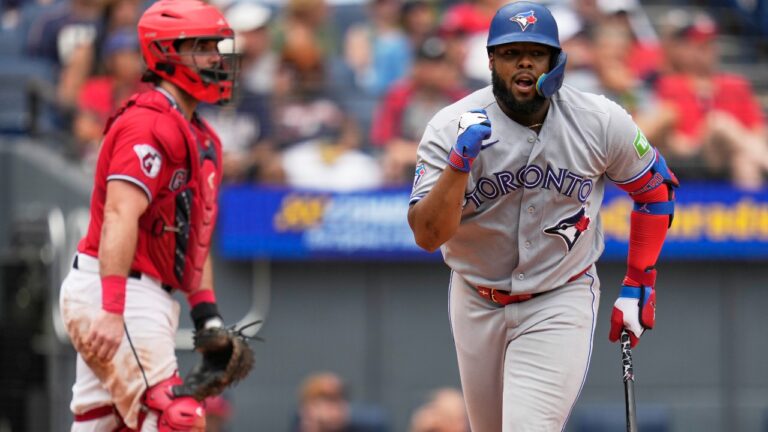
There is a dissonance around baseball right now that’s difficult to reconcile.
While the product on the field is tremendous, like it was in Tuesday’s All-Star Game, the ongoing labour dispute is a reminder that the path forward for MLB is an immensely bumpy one.
HOUSTON — Kevin Durant’s first Houston Rockets season did not go as intended.
On Friday night at Toyota Center, while his teammates attempted to force a decisive Game 7 against the Los Angeles Lakers, Durant sat on the bench in street clothes with a sprained left ankle. He could only watch as the Lakers shifted into cruise control and the Rockets staggered toward the end of their season.
When the final buzzer sounded on the Lakers’ 98-78 win, the Rockets were right back where they were at the end of last season: exiting the playoffs in the first round.
In Houston’s locker room after the game, players exchanged hugs and gifted each other jerseys, relics of a season that failed to meet the raised expectations set when the Rockets traded last summer for Durant, who was injured for all but one playoff game against the Lakers.
The Rockets have suffered first-round playoff exits in back-to-back seasons, both in series where coach Ime Udoka said it felt like his team “got behind the eight ball.”
Against the Lakers, who were missing Luka Doncic, the Rockets lost the first three games – two without Durant – but avoided elimination by winning the next two games to force the series back to Houston for Game 6. Friday’s blowout 20-point loss was the Rockets’ lowest-scoring game of the season and among the lowest-scoring playoff games in franchise history.
Udoka highlighted the growth of Houston’s young core, including the group that started the last three games of the series against the Lakers – Alperen Şengün, Amen Thompson, Reed Sheppard, Jabari Smith Jr. and Tari Eason – and said he was proud of his team’s resilience to battle back in the series. But he also acknowledged that change is necessary going forward.
“We do need to address some needs,” Udoka said. “The lack of shooting at times, whether it’s a backup point guard or our young guys did enough this year to kind of run that with Fred (VanVleet) back. And so we’ll take a look at all those things, I think, and have some very interesting conversations on having a little bit of more of a mix instead of some duplicates out there.”
The Rockets’ fate this season was accompanied by plenty of hypotheticals. What if Durant had been healthy in the playoffs? What if the Rockets had not lost VanVleet, their starting point guard, and center Steven Adams to injuries earlier in the season?
Şengün said none of those questions crossed his mind in the dying moments of Houston’s season.
“We cannot think about (that) stuff. Whoever is in the court, we fight with them,” Şengün said. “Losing them, it wasn’t good, but you stay with it. The goal is always same: just fight, go to the end. We did it with the young guys, including myself in the young guys, too.”
In the end, the Rockets’ main issues boiled down to offense. In the playoff series against the Lakers, Houston shot 46.2% from the field in its two wins and 38.6% in its four losses. The Game 3 loss was particularly excruciating, a last-minute meltdown that felt achingly familiar to anyone who watched the Rockets struggle throughout the season to execute at the end of games.
In Game 6, the Rockets didn’t grab offensive rebounds at their typical rate and reverted to bad habits that plagued them earlier in the season. When the Lakers switched, the Rockets failed to create advantages and became stagnant. The ball stuck. Isolation play prevailed.
“It’s a team thing. It’s not any blame to them (players) or myself,” Udoka said. “It’s a little combination of both, no doubt, understanding what works for us, what’s worked well, and then not deviating from that. So on me to get them into the sets, on them to run them and do the things we worked on leading into the series.”
Udoka reportedly signed a six-year contract extension last summer. Udoka said he and Rockets general manager Rafael Stone will sit down “ASAP” to discuss the roster.
The Rockets have eight players under contract for next season, including Durant, but the team has plenty of decisions to make this summer. Thompson is extension-eligible ahead of his fourth NBA season while Eason, who was drafted by the Rockets with the 17th overall pick in 2022, will become a restricted free agent this offseason.
“I was drafted here, I’ve grown up here, my family’s here,” Eason said. “I love Houston. As far as everything else, God knows.”
When the Rockets were eliminated by the Golden State Warriors in last season’s playoffs, it was clear that Houston lacked a go-to scorer to catalyze the offense. Durant was brought in to solve that problem. This season, it’s not as easy to identify one main area of need, Smith said.
“I ain’t gonna say we need to make a trade or go out and get somebody, you know what I’m saying? I just think everything we need is in house,” Smith said. “Everything that we need is on the bench, coaching us. Everything we need is on the bench behind us, coaching. I think we got it all, but it’s just on us to not have those mental lapses where we lose leads in the fourth quarter early in the season, where you have random three-game losses and stuff like that.”
He continued, “I think maturity’s a big part of it but I think if everybody’s going into the offseason and do what they’ve been doing – that’s improving every year, get better, come back a little smarter, come back a little stronger, a little older – I think everything we need is in house right in front of us.”
Whether the Rockets decide to run it back or go for a major change, the sting of how the season ended is sure to linger.
“Back-to-back first-round exits, it’s just – it’s rough,” Thompson said. “It’s motivation, for sure. I feel like I’m going to be thinking about this all summer.”